
Dario Argento (born 7 September 1940) is an Italian film director, screenwriter, producer and occasional actor best known for The Bird with the Crystal Plumage (1970), Deep Red (1975), Suspiria (1977), Inferno (1980), Tenebrae (1982), Phenomena (1985), Opera (1987) and The Stendhal Syndrome (1996). Born in Rome into a family closely associated with photography and the Italian film industry, he began his professional career as a film critic before working as a screenwriter and making his directorial debut in 1970. His films helped establish the visual language of the Italian giallo thriller and became influential within international horror cinema, particularly through their use of architecture, elaborate camera movements, colour, music and unusually violent murder sequences. Although Rome has remained the principal centre of his personal and professional life, he has developed a particularly strong relationship with Turin, where several of his most important films were photographed. His productions have also taken him to Germany, Switzerland, Hungary, the United States and other European countries, often transforming actual historic buildings and modern urban environments into unsettling fictional locations.
Dario Argento was born in Rome at Via del Tritone 197, where his maternal family’s photographic business, Studio Luxardo, occupied premises during the period. His father, Salvatore Argento, worked within the Italian film industry, initially through organisations involved in promoting Italian cinema internationally and subsequently as a producer. His mother, Elda Luxardo, was a Brazilian-born fashion and portrait photographer of Italian descent whose family had established a reputation for photographing actors, models and other prominent cultural figures. Her brother Elio Luxardo also became a distinguished photographer, particularly known for his portraits of Italian film stars. The studio had been established by Dario’s maternal grandparents, Alfredo and Margherita Luxardo, and attracted performers and public figures during the 1930s and 1940s. Growing up around photographers, lighting equipment, costumes and carefully arranged portraits exposed him to the visual construction of images long before he began directing films. He later recalled watching women being prepared for photographic sessions, observing the adjustments of lighting, makeup and composition that became important elements of his own filmmaking.
His childhood was spent in Rome during the final years of the Second World War and the difficult period of reconstruction that followed. The city’s film industry underwent considerable changes during these years, with Cinecittà Studios gradually resuming regular production after wartime disruption. Italian neorealism became internationally influential through directors including Roberto Rossellini, Vittorio De Sica and Luchino Visconti, while commercial filmmakers continued producing comedies, melodramas, thrillers and adventure films. Argento developed an enthusiasm for cinema at an early age, encouraged by his father’s professional connections and the photographs of actors displayed in his mother’s studio. He was also fascinated by frightening stories and illustrations, reading mystery fiction and supernatural literature whenever he could obtain them. He later recalled retreating to an attic in his family’s home, where he could read books that his religious grandmother considered unsuitable for a child. The secluded room became an important part of his memories of discovering literature and developing an imagination shaped by crime, fantasy and horror.
One of his earliest experiences of theatrical fear occurred when his parents took him to see Shakespeare’s Hamlet in Rome. Argento was approximately four years old when the appearance of the ghost of Hamlet’s father frightened him so intensely that he began crying and had to be taken out of the theatre. He subsequently described the incident as one of the first occasions when he recognised the power of a fictional image to create a strong emotional reaction. His later interests included Edgar Allan Poe, Arthur Conan Doyle, American crime fiction and the films of Alfred Hitchcock, alongside German Expressionist cinema and French thrillers. These influences helped develop his fascination with apparently ordinary environments concealing disturbing secrets, a theme that would become central to many of his films.
Argento attended a classical secondary school in Rome but left during his second year, deciding that conventional academic education was not suited to his interests. He moved to Paris as a teenager and spent approximately a year living independently, supporting himself through casual employment that included washing dishes in restaurants. The French capital offered access to a different cultural environment, particularly through its cinemas, film societies and extensive programme of international screenings. Argento attended screenings whenever possible and became increasingly interested in the work of filmmakers whose visual approaches differed from conventional Italian commercial cinema. His time in Paris also exposed him to the emerging French New Wave and the growing influence of directors such as Jean-Luc Godard and François Truffaut. Although he did not remain in France permanently, the experience contributed to his decision to pursue a professional career connected with cinema rather than return to his previous education.
After returning to Rome in 1957, Argento began writing about theatre, music and film for entertainment publications before establishing himself as a critic for the newspaper Paese Sera. The Rome-based daily provided opportunities for younger writers interested in subjects outside the traditional cultural establishment, and Argento became particularly associated with enthusiastic coverage of crime films, horror, science fiction and Westerns. He frequently defended genre productions that received little attention from more academically oriented critics, arguing that their directors could develop distinctive visual styles despite working within commercial conventions. His journalism also brought him into contact with filmmakers, producers and distributors, gradually establishing the professional relationships that allowed him to begin writing screenplays. Rather than studying at a formal film school, Argento learned about filmmaking through criticism, practical observation and conversations with people already working in the industry.
His earliest screenwriting assignments developed during the middle of the 1960s, when he contributed to Italian comedies, crime films and Westerns. One important early project was Pardon, Are You For or Against? (1966), directed by and starring Alberto Sordi. He also contributed to Death Rides a Horse (1967), Cemetery Without Crosses (1969) and several other genre productions, gaining experience of the Italian film industry’s rapid approach to developing commercial screenplays. His most influential collaboration came when Sergio Leone invited him and Bernardo Bertolucci to help develop the story for Once Upon a Time in the West (1968). The three men worked together in Rome, discussing American Westerns, revenge narratives and the visual possibilities of constructing a story around familiar genre situations. Although the finished screenplay was subsequently written by Leone and Sergio Donati, Argento and Bertolucci received story credits for their contribution.
Once Upon a Time in the West was filmed in Spain, Italy and the United States, including locations around Almería, Monument Valley and Cinecittà Studios in Rome. Argento was involved in developing the story rather than directing the location photography, but the collaboration provided valuable experience of working with an established filmmaker whose visual style relied heavily on camera placement, editing and the relationship between faces and landscapes. Leone’s elaborate compositions and careful construction of suspense became particularly relevant to Argento’s later work. He also contributed to Giuseppe Patroni Griffi’s Metti, una sera a cena (1969), an adaptation of the director’s own stage play. More than half a century later, Argento returned to the Cannes Film Festival in May 2026 for a presentation of a restored version of the film, discussing his early screenwriting career and the circumstances surrounding his involvement.
His ambition to become a director was realised with The Bird with the Crystal Plumage (1970), produced by his father Salvatore and starring Tony Musante, Suzy Kendall and Eva Renzi. The film follows an American writer living in Rome who witnesses an attempted murder inside an art gallery and becomes involved in identifying the attacker. Drawing partly on Fredric Brown’s novel The Screaming Mimi, Argento developed a screenplay that concentrated on the unreliability of visual memory and the significance of details initially misunderstood by the principal character. The production was filmed extensively in Rome, using actual streets, apartment buildings and public institutions alongside studio interiors. Cinematographer Vittorio Storaro helped establish the film’s distinctive appearance, while Ennio Morricone composed a score combining experimental vocal arrangements with unsettling instrumental passages.
One of the film’s most important sequences takes place outside a brightly illuminated art gallery, where the protagonist watches a violent encounter through enormous glass windows but is unable to intervene. The scene established Argento’s interest in transparent barriers, reflections and the relationship between spectators and violence. Other filming took place around Rome’s residential and commercial districts, including the distinctive Quartiere Coppedè in the Trieste neighbourhood. Designed by architect Gino Coppedè during the early twentieth century, the district combines Art Nouveau, medieval, Baroque and other architectural influences around Piazza Mincio. Its unusual entrances, decorated façades and ornamental details offered a visual environment considerably different from the ancient monuments usually associated with Rome in international cinema. The production also used the Museo Civico di Zoologia and the adjoining zoological gardens, where the investigation leads to the unusual bird responsible for the film’s title. The Bird with the Crystal Plumage became a major commercial success in Italy and abroad, establishing Argento as a director at the age of twenty-nine and helping popularise the modern giallo thriller.
He followed his debut with The Cat o’ Nine Tails (1971), starring Karl Malden and James Franciscus, and Four Flies on Grey Velvet (1971), featuring Michael Brandon and Mimsy Farmer. The films continued exploring murder investigations and the limitations of human perception, but their geographical settings became increasingly important. The Cat o’ Nine Tails was produced at Cinecittà Studios, with exterior filming in Rome and Turin, while Four Flies on Grey Velvet incorporated locations across several Italian cities. In Turin, the latter production used Piazza Castello, Galleria Umberto I, Galleria Subalpina and Caffè Mulassano, the historic café situated in the covered arcade near Piazza Castello. Other scenes were filmed around the Turin Conservatory and the RAI Auditorium, while the Rome material incorporated the EUR district and Ponte Marconi. The production also used the Milan Metro, Villa d’Este in Tivoli and Teatro Nuovo in Spoleto, combining geographically separate places into a fictional urban environment.
These early films established Argento’s particular interest in Turin, the principal city of the Piedmont region in northwestern Italy. Founded during the Roman period and subsequently developed as the capital of the Kingdom of Sardinia, Turin contains extensive Baroque architecture, long arcaded streets and unusually regular urban squares. Its history also includes associations with spiritualism, occult traditions and esoteric societies, subjects that attracted Argento’s attention. He frequently described the city as particularly suitable for horror because its formal architecture could acquire an unsettling character through lighting, movement and unusual camera positions. The relationship eventually became one of the most distinctive geographical features of his career, with several later productions returning to buildings and public spaces he had first encountered during the early 1970s.
After completing his first three thrillers, Argento briefly departed from the genre with The Five Days (1973), also known as The Five Days of Milan. The historical comedy-drama starred Adriano Celentano and Enzo Cerusico and portrayed the popular uprising against Austrian rule in Milan during March 1848. Although the story takes place within the Lombard capital, much of the production was filmed in Pavia, approximately thirty kilometres south of Milan. Important locations included the Collegio Borromeo, whose historic courtyard and surrounding square represented buildings occupied by Austrian soldiers, and the Biblioteca Universitaria, where an interior scene was photographed in its eighteenth-century reading room. Other filming took place around Piazza Collegio Ghislieri and the Basilica of San Teodoro, while actual Milan locations included Palazzo Belgioioso and streets near the Royal Palace. The film attracted mixed responses and remained an unusual entry in Argento’s career, combining political satire with a historical setting rather than the murder mysteries that had established his reputation.
His return to the thriller genre came with Deep Red (1975), originally released in Italy as Profondo rosso. The film starred David Hemmings as Marcus Daly, a British pianist who witnesses a murder and attempts to uncover the killer’s identity, alongside Daria Nicolodi as journalist Gianna Brezzi. Production began in September 1974 and continued until December, with filming concentrated in Turin and additional work in Rome and Perugia. Argento selected several of Turin’s most distinctive public spaces, particularly Piazza CLN near Via Roma, where the large fountains representing the rivers Po and Dora provided the setting for conversations between Marcus and his friend Carlo. The surrounding buildings were used for exterior scenes associated with the apartment where an important murder takes place, transforming an ordinary central square into one of the film’s most recognisable environments.
The production also used Teatro Carignano at Piazza Carignano 6, an eighteenth-century theatre associated with Turin’s cultural history, for the parapsychology conference that introduces the film’s supernatural suggestions. The opening jazz rehearsal was photographed inside the ancient Mausoleum of Santa Costanza in Rome, while the funeral sequence took place in the Jewish section of Perugia’s monumental cemetery. One of the most distinctive locations was Villa Scott at Corso Giovanni Lanza 57 in Turin, a historic Art Nouveau residence constructed during the early twentieth century. The building represented the abandoned house where Marcus discovers evidence concealed beneath the plaster of an interior wall. At the time of filming, the villa was being used by a religious order as a boarding institution, and the production arranged alternative accommodation for the residents while the building was transformed for the film.
Deep Red became one of Argento’s most successful productions and established several important professional relationships. He worked closely with cinematographer Luigi Kuveiller, whose compositions emphasised the architectural details of the locations, and began collaborating with the progressive rock group Goblin. The band had developed from earlier musical projects involving Claudio Simonetti, Massimo Morante, Fabio Pignatelli and Walter Martino. Their music gave Deep Red an unusually forceful identity, combining synthesiser passages, electric guitars and complex rhythmic patterns with the film’s violent visual sequences. The soundtrack became commercially successful in Italy and developed a following independent of the film. Argento’s collaboration with Goblin subsequently became one of the defining relationships of his career, with the group’s music contributing substantially to the atmosphere of several later productions.
Deep Red also marked the beginning of Argento’s relationship with actress and screenwriter Daria Nicolodi. The two met during the film’s production and subsequently became partners, although they never married. Their daughter Asia Argento was born in Rome in September 1975 and later developed her own career as an actress, director and musician. Argento had previously been married to artist Marisa Casale, with whom he had his elder daughter, Fiore, born in 1970. His relationship with Nicolodi became both personal and professional, with the actress appearing in several of his films and contributing to the development of their stories. Their collaboration was particularly important during the second half of the 1970s, when Argento began moving from comparatively realistic crime thrillers towards more elaborate supernatural horror.
That transition became fully apparent in Suspiria (1977), starring Jessica Harper as Suzy Bannion, an American ballet student arriving at a prestigious dance academy in Germany. Argento and Nicolodi developed the screenplay around a supernatural organisation concealed within the school, combining their interest in occult stories with images drawn from fairy tales and children’s literature. The production was filmed primarily at De Paolis Studios in Rome, where elaborate interiors and exterior sets were constructed. Rather than relying on actual German buildings for every scene, Argento wanted complete control over colour, lighting and architectural proportions. Cinematographer Luciano Tovoli employed unusually intense red, blue and green lighting, while the set designers created exaggerated corridors, rooms and staircases that made the academy appear both theatrical and threatening.
The exterior of the fictional Tanz Akademie was based on the Haus zum Walfisch, a sixteenth-century Renaissance building on Franziskanerstraße in Freiburg im Breisgau, southwestern Germany. The original building had served as a residence for important historical figures, including the humanist Erasmus of Rotterdam, and survived extensive wartime damage in the city. For Suspiria, its distinctive red façade and Gothic-influenced windows were recreated as a substantial set in Rome. Actual German locations also contributed to the film, particularly Munich, where the opening airport sequence was photographed at the former Munich-Riem Airport. Königsplatz, a monumental square surrounded by Neoclassical buildings, provided the setting for the murder of a blind pianist, while the exterior of the BMW headquarters appeared during a sequence involving Suzy’s investigation. The production therefore combined German architectural references and selected actual locations with artificial environments created entirely within Italian studios.
Suspiria was released in 1977 and became Argento’s most internationally recognised supernatural horror film. Its soundtrack, composed and performed by Goblin with Argento’s involvement, combined progressive rock, unusual percussion and whispered vocal effects, creating a distinctive relationship between music and imagery. The film also introduced the mythology of the Three Mothers, three ancient supernatural beings associated with different cities. Its combination of elaborate sets, saturated colours and violent imagery had a considerable influence on later horror filmmakers, while its geographical ambiguity contributed to the dreamlike quality of the story. Although Freiburg provided the architectural inspiration for the academy, the film’s principal school interiors and much of its exterior environment were constructed in Rome. The distinction is important because the surviving Haus zum Walfisch is the historical model for the fictional building rather than the location where all its principal scenes were photographed.
During the same period, Argento became involved with American filmmaker George A. Romero, whose Night of the Living Dead (1968) had established an important model for independent horror cinema. Argento encouraged Romero to develop a sequel and became a financial and creative partner in Dawn of the Dead (1978). The screenplay was developed partly in Rome before the production moved to Pennsylvania, where the filmmakers used Monroeville Mall, a large shopping centre east of Pittsburgh, as the principal location. Opened in 1969, the mall provided actual shops, corridors, escalators and public spaces for the story of survivors attempting to establish a refuge during a zombie apocalypse. Filming took place largely at night after the shopping centre had closed to customers, with substantial practical difficulties caused by Christmas decorations and the need to reopen the building each morning.
Argento visited the Monroeville production during filming and subsequently prepared an alternative international version of Dawn of the Dead, released in Italy as Zombi. He also brought Goblin into the project, with the band contributing music that was used more extensively in his version than in Romero’s American cut. The collaboration connected Argento with the independent horror industry of Pittsburgh and gave him direct experience of American production methods outside the Hollywood studio system. Although Romero directed the film and was principally responsible for its actual location photography, Argento’s role as producer and editor made Dawn of the Dead an important part of his career. He continued collaborating with Romero during later years and helped support the work of other Italian horror filmmakers, including Lamberto Bava and Michele Soavi.
Argento returned to the Three Mothers mythology with Inferno (1980), which follows events in Rome and New York City. The screenplay was developed partly during a stay in a New York hotel overlooking Central Park, where Argento became interested in the possibility of ordinary urban buildings concealing supernatural environments. Principal photography took place largely on studio sets in Rome, although a small number of sequences were filmed in New York. One of the most recognisable is the death of an antique dealer near the Pond in Central Park, close to Gapstow Bridge, where the character is attacked by rats after attempting to drown a bag of cats. The scene was photographed during the summer of 1979, with additional animal and special-effects material completed in Europe.
The Roman locations of Inferno included Piazza Mincio in the Quartiere Coppedè, where the elaborate Palazzo Coppedè represented the entrance to a mysterious library. The library’s interior was photographed at the Biblioteca Angelica beside the Basilica of Sant’Agostino, one of Rome’s oldest public libraries, whose historic shelves and reading rooms provided an appropriate setting for the characters’ investigation. Other scenes used buildings around Via Po and the George Eastman dental hospital in Rome, while elaborate underwater chambers and supernatural interiors were constructed at studio facilities. The production became particularly difficult when Argento developed hepatitis and was forced to reduce his participation in filming. Mario Bava contributed special effects and other technical work, helping complete some of the more elaborate sequences. Although Inferno did not achieve the commercial success of Suspiria, its architecture and visual style subsequently attracted considerable critical attention.
His next major thriller, Tenebrae (1982), returned to contemporary Rome but deliberately avoided the historic buildings and picturesque streets associated with many Italian films. Starring Anthony Franciosa, Giuliano Gemma, John Saxon and Daria Nicolodi, it follows an American crime novelist who becomes involved in a series of murders apparently inspired by his work. Principal photography took place in Rome during the spring and summer of 1982, with extensive filming in the EUR district. Originally developed during the Fascist period for an international exhibition that was cancelled because of the Second World War, EUR is characterised by monumental modern architecture, broad roads and planned residential developments. Argento used these environments to create an unusually bright and artificial urban setting, contrasting with the darker supernatural interiors of Suspiria and Inferno.
Important Tenebrae locations included the commercial centre Le Terrazze in Casal Palocco, where a murder takes place in broad daylight, and the La Rinascente department store near Piazza Fiume, where a character steals a copy of the novelist’s book. Other scenes were photographed around Viale Cesare Pavese, residential properties in the southern suburbs and a villa in Formello north of Rome. The elaborate final sequence used a modern residence on Via Groenlandia, where the filmmakers combined actual architecture with practical effects. The production became particularly associated with a lengthy camera movement around the exterior of a house, demonstrating Argento’s interest in transforming ordinary modern buildings into unsettling spaces through camera placement. The film was also influenced by the director’s experience of receiving threatening telephone calls from an obsessive admirer, which contributed to its themes of violence, spectatorship and the relationship between writers and their audiences.
He subsequently directed Phenomena (1985), starring Jennifer Connelly as a teenager attending a Swiss boarding school who develops an unusual connection with insects. The production was filmed between August and October 1984, using actual locations in Switzerland alongside studio facilities in Rome. The fictional Richard Wagner School was represented externally by Villa Wesendonck in Zürich, a nineteenth-century residence associated with the German composer Richard Wagner and now part of the Rietberg Museum complex. The building’s substantial façade and landscaped grounds provided the school setting, while additional interiors were completed at Marymount International School and studio facilities in Rome. The combination allowed Argento to present the fictional institution within an apparently isolated Alpine environment without conducting every scene in Switzerland.
The mountainous locations of Phenomena included Schwägalp in the Appenzell region and the Thur waterfalls at Unterwasser in the canton of St Gallen, where the film’s opening murder was photographed. A rural property near Urnäsch provided another important location for the initial sequence involving a young tourist. The production also used wooded valleys, isolated houses and mountain roads to create the setting for its investigation. Connelly worked alongside Donald Pleasence, Daria Nicolodi and Fiore Argento, who played the first victim. The film required unusually complex animal work, particularly sequences involving insects and a trained chimpanzee. Some practical effects were developed in Rome, where the production maintained large numbers of insects for controlled photography. Phenomena became one of Argento’s most unusual horror films, combining the Swiss landscape with elements of fantasy, crime fiction and supernatural suggestion.
His interest in music and performance returned with Opera (1987), starring Cristina Marsillach as a young soprano whose involvement in a production of Verdi’s Macbeth becomes connected with a series of murders. The film was photographed between May and October 1987, primarily in Rome, Parma and Switzerland. Its principal location was the Teatro Regio in Parma, an important Italian opera house opened in 1829. The building’s Neoclassical façade, ornate auditorium, boxes and backstage areas provided the setting for the fictional production, allowing Argento to incorporate actual theatrical architecture into elaborate scenes of murder and pursuit. Rather than construct an entirely fictional opera house, the filmmakers used the real venue for many of the most important sequences, adapting its working spaces to accommodate cameras and special effects.
Additional Opera locations included Palazzo Sacchetti in Rome, a sixteenth-century aristocratic residence on Via Giulia, which provided interiors for a violent sequence involving one of the characters. Other scenes were filmed around Via Nazionale, where the principal character crosses a busy road, while the concluding sequence was photographed in a mountainous Swiss environment near Lugano. The production became particularly demanding because of the elaborate practical effects and the need to coordinate large numbers of actors, musicians and technical personnel within an actual opera house. Goblin’s Claudio Simonetti contributed to the soundtrack, which also incorporated heavy metal music alongside classical opera. Opera became one of Argento’s most substantial late-1980s productions, while the Teatro Regio remained closely associated with the film in histories of the building.
Argento’s association with the horror genre also extended beyond feature films through television productions and his work as a producer. During the 1980s, he helped support the development of Demons (1985) and Demons 2 (1986), directed by Lamberto Bava, contributing to projects that combined elaborate makeup effects with supernatural stories. The first film was set principally inside a cinema, while the second moved its action into a modern apartment building. Argento also produced Michele Soavi’s The Church (1989), a horror film that used actual German architecture, including the Gothic St Maria zur Wiese church in Soest, alongside elaborate studio interiors. These projects reflected his interest in developing younger Italian directors and technical specialists, particularly those working within horror, fantasy and practical special effects.
His next major directorial collaboration with George A. Romero came with Two Evil Eyes (1990), an anthology film based on stories by Edgar Allan Poe. Romero directed an adaptation of The Facts in the Case of M. Valdemar, while Argento directed The Black Cat, starring Harvey Keitel as a photographer whose life becomes increasingly disturbed by a black cat. The production was filmed in and around Pittsburgh, Pennsylvania, during the summer of 1989, returning Argento to the city associated with Dawn of the Dead. Locations included Market Square in downtown Pittsburgh and residential properties in the North Side neighbourhoods, particularly a house at 954 Beech Avenue that represented the home of Keitel’s character. Other scenes were photographed around Shadyside, with buildings on Copeland Street and Bellefonte Street providing the exterior and interior environments of a bar. The production allowed Argento to direct within actual American urban settings for the first time on a substantial scale, working with local crews and performers rather than creating an American city through Italian studios.
He subsequently directed Trauma (1993), another American production, starring his daughter Asia Argento alongside Christopher Rydell and Piper Laurie. The film follows a young woman involved in an investigation into a series of murders in Minneapolis. Principal photography took place during August and September 1992 in Minnesota, particularly around Minneapolis, Saint Paul and Hopkins. Locations included Irvine Park in Saint Paul, where surviving Victorian houses provided a distinctive residential environment, and the former Hopkins House hotel at 1501 Highway 7 in Hopkins. Other scenes used actual city streets, riverside locations and commercial buildings across the Twin Cities. Argento had previously concentrated much of his filmmaking in Italy, making the Minnesota production an important geographical departure. Its American setting was also reflected in the English-language performances and the involvement of local technicians, although the film retained the visual and narrative conventions associated with his earlier gialli.
His work with Asia Argento became increasingly important during the 1990s. She had begun acting as a child and subsequently established an independent screen career, but appeared regularly in films directed by her father. Their most substantial collaboration during this period was The Stendhal Syndrome (1996), in which Asia played Anna Manni, a police officer pursuing a serial killer whose experiences become connected with an overwhelming reaction to works of art. The production was filmed in Florence, Rome, Viterbo and surrounding areas during the summer of 1995. Its most significant location was the Uffizi Gallery in Florence, one of Europe’s most important art museums, where the opening sequence places Anna among Renaissance paintings before she becomes disoriented and loses consciousness. The actual museum interiors were used for photography, allowing Argento to incorporate recognised masterpieces into a story concerned with the psychological effects of visual art.
Other filming locations for The Stendhal Syndrome included Viterbo, where Palazzo dei Papi and Palazzo dei Priori provided historic environments associated with the protagonist’s family, and Rome, where Villa Giulia and Villa Doria Pamphilj appeared in later sequences. The production also used buildings around Via del Tritone and the city’s northern districts, while additional work was completed at Cinecittà Studios. The film became notable for its early use of computer-generated imagery, particularly sequences representing the protagonist’s disturbing experiences of paintings and architectural spaces. Its locations were central to the story rather than simply background scenery, connecting actual museums and historic buildings with the fictional psychological condition that gives the film its title.
Argento returned to a major Gothic literary adaptation with The Phantom of the Opera (1998), starring Julian Sands and Asia Argento. Although the story takes place beneath the Paris Opera, the production was filmed primarily in Italy, Hungary and Slovakia. The principal opera-house location was the Hungarian State Opera House at 22 Andrássy Avenue in Budapest, a nineteenth-century building designed by Miklós Ybl and opened in 1884. Its elaborate auditorium and decorated interiors provided a substitute for the Palais Garnier in Paris, where Argento had originally hoped to film. Additional scenes were photographed at Cinecittà Studios in Rome, while underground environments were represented partly through the Pertosa Caves in southern Italy and cave systems in Slovakia. The production required extensive sets and practical effects, combining actual subterranean locations with constructed tunnels and chambers. Although the film received largely negative reviews, its international locations continued Argento’s interest in Gothic architecture and the relationship between buildings and supernatural stories.
His later return to Turin came with Sleepless (2001), originally titled Non ho sonno, starring Max von Sydow as a retired detective investigating a series of murders. The production was filmed principally in Turin, reusing several locations associated with Argento’s earlier career. Teatro Carignano, which had appeared in Deep Red, became an important setting once again, while other scenes used the city’s railway stations, residential streets and the Monumental Cemetery. The film also featured music by Goblin, reuniting Argento with musicians whose sound had been central to several of his most successful productions. Although Sleepless did not attract the same international attention as his earlier work, it marked a deliberate return to the atmosphere and geography of his 1970s thrillers.
He continued making crime and horror films during the following years, including The Card Player (2004), Do You Like Hitchcock? (2005) and two episodes of the American television anthology Masters of Horror. The Card Player was filmed in Rome and followed a police investigation involving murders transmitted through the internet, while Do You Like Hitchcock? returned to Turin and drew directly on the themes of voyeurism and mistaken identity associated with Alfred Hitchcock. His contributions to Masters of Horror, Jenifer (2005) and Pelts (2006), were produced within the American television industry and distributed internationally, allowing him to experiment with shorter stories outside the financial demands of European theatrical productions. These projects received mixed responses but demonstrated his continued interest in crime fiction, contemporary technology and the increasingly elaborate possibilities of practical special effects.
The Three Mothers trilogy was finally completed with The Mother of Tears (2007), originally titled La terza madre, nearly thirty years after Suspiria. Asia Argento played Sarah Mandy, a woman who becomes involved in the awakening of an ancient supernatural force in Rome. Principal photography began in October 2006, with filming in Rome, Turin and Terni, together with interiors constructed at studio facilities. The production used actual Roman streets and public spaces rather than limiting the story to the more artificial environments of Suspiria and Inferno. The film also included appearances by Daria Nicolodi and Udo Kier, bringing together performers associated with different periods of Argento’s career. Although the concluding film attracted divided critical responses, it completed a mythology that had developed from his collaboration with Nicolodi during the middle of the 1970s.
He returned to Turin once again for Giallo (2009), an English-language thriller starring Adrien Brody and Emmanuelle Seigner. Filming took place during May and June 2008, with the production using the city’s streets and residential districts to tell a contemporary serial-killer story. The project experienced considerable difficulties during casting and distribution, and Brody subsequently became involved in a legal dispute over payment and the exploitation of the film. Giallo received only a limited theatrical release in several territories, eventually appearing on home video and television. It became part of a period in Argento’s career when changing audience tastes and the financial difficulties of independent European horror production made it increasingly difficult to obtain substantial funding for new projects.
His next feature, Dracula 3D (2012), was a new adaptation of Bram Stoker’s novel starring Thomas Kretschmann as Count Dracula, Rutger Hauer as Abraham Van Helsing and Asia Argento as Lucy. The production was filmed during the summer of 2011, principally in the Piedmont region of northern Italy and at facilities in Hungary. One of its most important locations was the Ricetto di Candelo, a fortified medieval settlement near Biella whose surviving stone buildings and narrow streets were used to represent the fictional Transylvanian community. The castle of Montalto Dora, near Ivrea, provided the exterior of Dracula’s residence, with its medieval towers and elevated position above the surrounding countryside supplying an appropriate Gothic environment. Additional interiors were constructed in studio facilities, while visual effects were used to create supernatural creatures and other fantastic elements. The film premiered out of competition at the Cannes Film Festival in May 2012 and received a largely negative critical response, becoming Argento’s last completed theatrical feature as director for almost a decade.
Outside cinema, Argento began directing opera productions during the 2010s, bringing his established interest in music, theatrical architecture and supernatural imagery into live performance. His stage work included a production of Verdi’s Macbeth in 2013, followed by Donizetti’s Lucia di Lammermoor in 2015 and Richard Strauss’s Salome in 2017. The productions allowed him to work with singers, orchestras and theatrical designers in an environment where performances unfolded continuously before an audience rather than being constructed through editing. His earlier films had frequently incorporated opera houses, musicians and elaborate performances, particularly Deep Red and Opera, making the transition a development of interests that had been present throughout his career rather than an entirely new artistic direction.
Another permanent connection between Argento and Rome developed through the Profondo Rosso Store and the Museo degli Orrori di Dario Argento. The shop, situated at Via dei Gracchi 260 in the Prati district, was established in association with Argento and fellow filmmaker Luigi Cozzi and became a specialised business devoted to horror, fantasy and science-fiction cinema. Its name refers to Deep Red, one of Argento’s most recognisable films. Beneath the shop is a small horror museum, founded in 1989, containing reconstructed environments, props and special-effects material associated with Argento’s productions and other horror films. The underground exhibition includes objects and displays connected with Demons, Phenomena, The Church and The Stendhal Syndrome, together with representations of characters from international horror cinema.
The museum is accessed through a spiral staircase leading into a corridor of darkened exhibition spaces. Unlike a conventional film museum organised primarily around written information and historical documents, its displays recreate the unsettling atmosphere of horror productions through sound effects, lighting and carefully arranged objects. The collection became an unusual physical continuation of Argento’s filmmaking, preserving elements of the practical-effects tradition that had been central to his work before digital technology became widespread. The business also maintained connections with the Italian horror community through books, publications and meetings with filmmakers. Its location in Prati, close to the Vatican and the historic centre of Rome, established a permanent public place associated with Argento outside the studios and film locations where his productions had been made.
His personal life has remained closely associated with Rome despite extensive international travel. Following his marriage to Marisa Casale, which ended in divorce in the early 1970s, Argento’s long relationship with Daria Nicolodi became central to both his family life and professional work. Their partnership ended during the middle of the 1980s, although Nicolodi continued appearing in some of his subsequent productions. She died in Rome in November 2020, aged seventy, leaving an important body of work as an actress and screenwriter. Their daughter Asia subsequently developed an independent international career, appearing in films by Abel Ferrara, Patrice Chéreau and other directors, while Fiore pursued acting and other creative interests. Argento has two grandchildren through Asia, extending the family’s connection with performing arts into another generation. His relationship with his daughters has occasionally included professional disagreements, but both have participated in his films and other projects over several decades.
In 2014, Argento published his autobiography Paura, recalling his childhood in Rome, his early career in journalism, the development of his films and his experiences within the Italian entertainment industry. The book also discussed his personal relationships and the anxieties and dreams that had influenced his filmmaking. He subsequently published Horror: Storie di sangue, spiriti e segreti in 2018, a collection of stories continuing his interest in crime, supernatural incidents and frightening situations. That same year, he contributed to the Italian horror comic Dylan Dog, writing a story titled Profondo nero. These publications reflected his continuing interest in literature and illustrated storytelling, returning him to the reading habits and photographic imagery that had shaped his childhood.
Argento’s later career also included acting, particularly his leading role in Vortex (2021), directed by Gaspar Noé. The French drama follows an elderly couple living in a Paris apartment while struggling with declining health and the difficulties of ageing. Argento played the husband opposite Françoise Lebrun, with Alex Lutz portraying their son. Filming took place during April and May 2021 in northeastern Paris, particularly around the neighbourhood near Stalingrad Métro station, where the filmmakers used a confined residential environment for much of the story. The production employed split-screen photography, frequently presenting the two principal characters simultaneously as they moved through separate parts of the apartment. Argento had relatively little previous experience carrying a feature film as an actor, and the largely improvised dialogue required him to perform in French. Vortex premiered at the Cannes Film Festival in July 2021 and received strong reviews, marking a significant departure from his usual position behind the camera.
His return to directing came with Dark Glasses (2022), originally titled Occhiali neri, starring Ilenia Pastorelli as a woman who becomes blind following an attack by a serial killer. Asia Argento played Rita, a social worker who helps the protagonist adapt to her changed circumstances. The project had originally been developed approximately twenty years earlier but was abandoned after financing difficulties. Asia rediscovered an early version of the screenplay while preparing her autobiography, encouraging her father to return to the material. Principal photography took place in Rome and the surrounding Lazio region during 2021, with locations including Via Veneto, the EUR district and residential communities north of the city.
Among the most identifiable Dark Glasses locations was the Marriott Grand Hotel Flora on Via Vittorio Veneto, used during a sequence in which the principal character leaves the hotel and encounters the killer. Another property, Hotel Flora in Frascati, southeast of Rome, represented a hotel visited by one of the murderer’s earlier victims. The car accident that blinds the protagonist was filmed around Viale della XVII Olimpiade in the northern part of Rome, while Piazza Gian Lorenzo Bernini provided the setting for a later encounter involving the suspicious vehicle associated with the killer. Other scenes were photographed in Formello and rural locations outside the city, including properties used for the protagonist’s attempts to evade her attacker. Dark Glasses premiered at the Berlin International Film Festival in February 2022, becoming Argento’s first completed feature as director since Dracula 3D.
The renewed international interest in his career was also reflected in exhibitions, restorations and retrospectives. In 2022, the Museo Nazionale del Cinema in Turin organised Dario Argento – The Exhibit, a major exhibition at the Mole Antonelliana exploring his work through costumes, posters, photographs, props and other production materials. The museum occupies the nineteenth-century landmark originally designed as a synagogue before its conversion into one of Italy’s principal film institutions. The exhibition was particularly appropriate because Turin had supplied locations for many of Argento’s most important productions. The city also developed an established route connecting sites associated with his films, including Teatro Carignano, Piazza CLN, Villa Scott and Galleria Subalpina. Film at Lincoln Center in New York organised a substantial retrospective during the same year, with Argento attending screenings and discussions devoted to his work.
His career became the subject of Dario Argento Panico (2023), a documentary directed by Simone Scafidi and released internationally through Shudder in February 2024. The production followed Argento as he reflected on his films, professional relationships and creative methods, incorporating interviews with collaborators and directors who had been influenced by his work. Participants included Guillermo del Toro, Nicolas Winding Refn and Gaspar Noé, alongside members of his family and colleagues from the Italian film industry. The documentary also revisited his relationship with Daria Nicolodi and the contributions of cinematographers, composers and special-effects artists who helped establish the distinctive appearance of his productions. Rather than treating Argento’s career solely as a sequence of successful films, it explored the practical working relationships and personal difficulties associated with making cinema over several decades.
His contribution to Italian filmmaking was recognised with a career achievement award at the David di Donatello ceremony in Rome in March 2019. Although his films had achieved international recognition and influenced generations of horror directors, they had frequently been neglected by institutions more closely associated with mainstream Italian dramatic cinema. Subsequent restorations of Deep Red, Suspiria, Tenebrae and other productions introduced his work to new audiences through international festivals, cinematheques and home-video releases. His influence extended particularly to filmmakers interested in the expressive possibilities of colour, sound and unusual architecture, including directors working in European and American horror cinema.
Argento remained professionally active during his eighties, continuing to develop screenplays and participate in film projects. In May 2026, he appeared at the Cannes Film Festival, where a restored version of Metti, una sera a cena was presented as part of Cannes Classics. During interviews, he also discussed a proposed new feature involving French actress Isabelle Huppert, describing a project influenced by surrealist cinema and Mexican films of the 1940s. The production had not yet been completed, and its proposed involvement with Huppert remained part of his plans rather than an established release.
At the same festival, Argento introduced a group of three Italian thrillers associated with his writing and artistic supervision. The first, Flesh of My Flesh, was in post-production after filming during 2026 and featured performers including Ilenia Pastorelli, Matilde Gioli and Angela Molina. The remaining projects, The Girl with Crystal Eyes and The Black Velvet Mask, were announced for later production. Unlike Dark Glasses and his earlier features, these films were presented as productions developed with other directors and filmmakers rather than three new films that Argento would necessarily direct himself. The announcement nevertheless demonstrated his continuing involvement in the Italian film industry more than fifty-five years after his directorial debut.
Throughout his life, Dario Argento’s career has remained unusually connected with the actual buildings and streets used in his films. The photographic studio on Via del Tritone and the cinemas of Rome were central to his childhood, while the modern districts of the Italian capital provided the settings for his earliest thrillers. Turin became particularly important through Deep Red and the films that followed, with Piazza CLN, Teatro Carignano and Villa Scott acquiring international recognition through their screen appearances. The historic Haus zum Walfisch in Freiburg inspired the fictional dance academy of Suspiria, the Teatro Regio in Parma became central to Opera, and Villa Wesendonck in Zürich provided the school exterior for Phenomena. His later productions incorporated the Uffizi Gallery in Florence, the Hungarian State Opera House in Budapest, the forests and streets of Minnesota, and the historic castles of Piedmont.
Rome has nevertheless remained the principal geographical centre of his career, from the early photographic environment of the Luxardo family to the film studios, residential districts, museums and shops associated with his productions. The Profondo Rosso Store and its underground museum established a permanent public connection with his work, while exhibitions and international restorations continued introducing his films to new generations. His approach to filmmaking transformed ordinary locations into environments where architecture, colour, music and movement became as important as the characters themselves, establishing a distinctive relationship between real places and fictional horror that has remained central to his work for more than five decades.

Deep Red
Deep Red was filmed primarily on location in Turin, Italy, over a 16-week period. Director Dario Argento chose Turin because he felt its "magical" atmosphere.
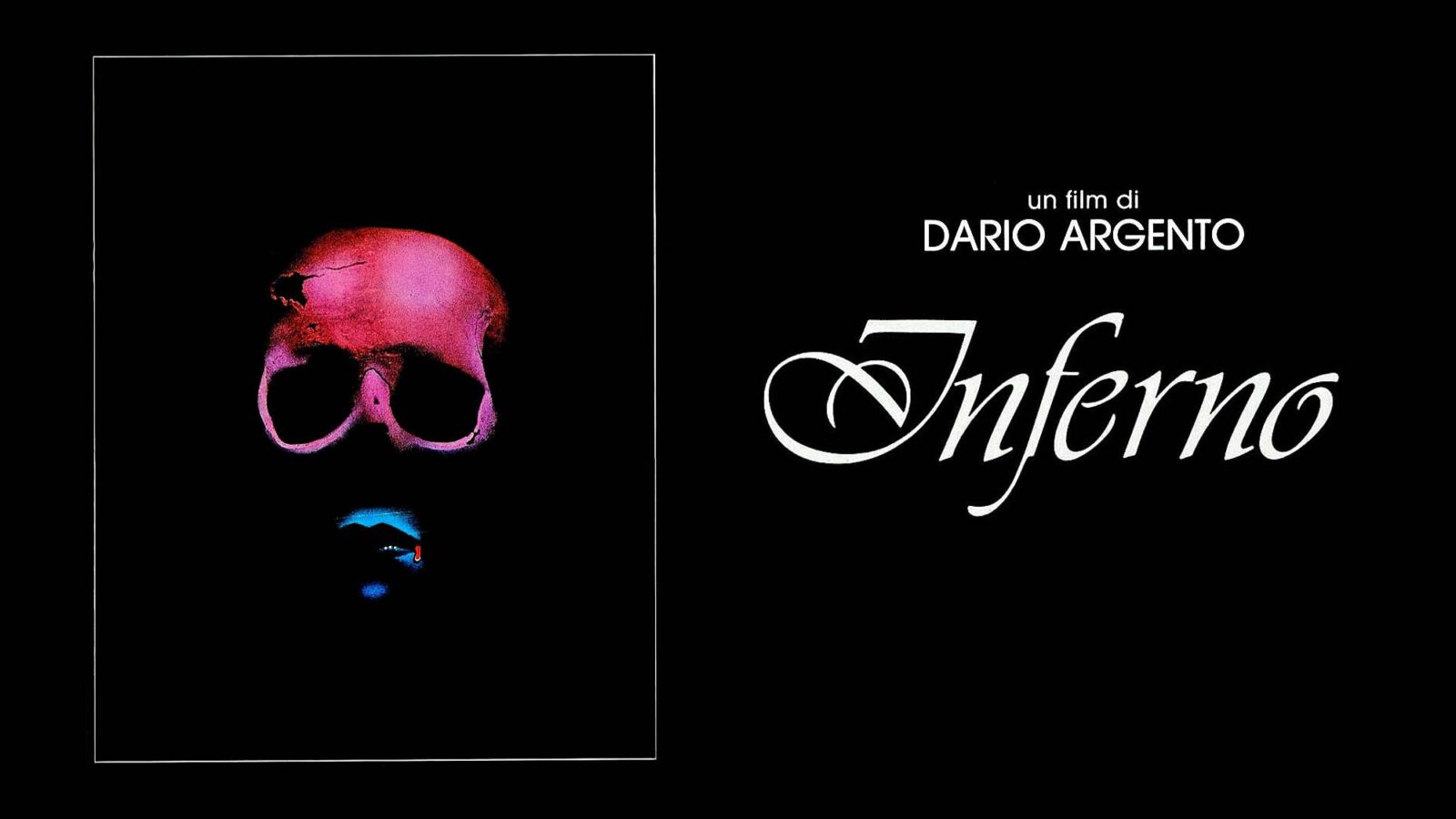
Inferno
Inferno was filmed mainly in Rome and New York, with much of the production built around studio-controlled interiors in Rome and selected real locations.

Opera
Opera is closely tied to Parma, where the Teatro Regio di Parma was used as the main opera-house location and gives the film much of its visual identity.
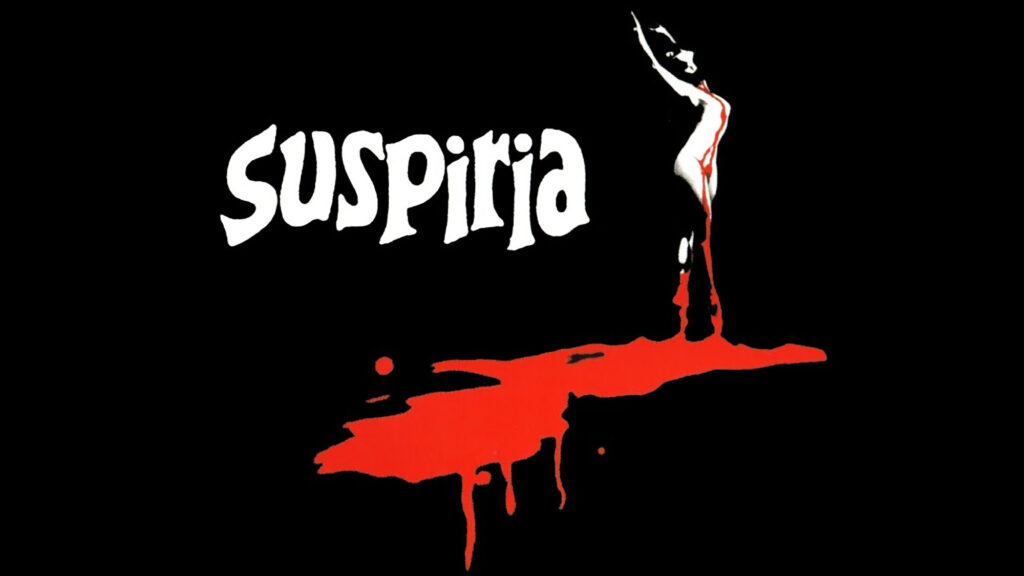
Suspiria
Suspiria (1977) was primarily filmed in Italy, with studio work done at De Paolis Studios in Rome and exteriors shot in Munich, Germany.