
Christopher Lloyd (born 22 October 1938) is an American actor best known for portraying Dr. Emmett “Doc” Brown in the Back to the Future trilogy (1985–1990), Reverend Jim Ignatowski in Taxi (1978–1983) and Uncle Fester in The Addams Family (1991) and Addams Family Values (1993). Born Christopher Allen Lloyd in Stamford, Connecticut, he is the son of Samuel R. Lloyd Jr., a lawyer, and Ruth Lapham Lloyd, a singer and philanthropist. He grew up in the nearby coastal town of Westport, where his family had connections to business, politics and the arts. His maternal grandfather, Lewis Henry Lapham, was among the founders of the Texas Company, later known as Texaco, while his uncle Roger Lapham served as mayor of San Francisco from 1944 to 1948. Through his maternal family, Lloyd is also a descendant of John Howland, one of the passengers who arrived in North America aboard the Mayflower in 1620.
Lloyd attended Staples High School in Westport, becoming involved in its developing theatre programme during the 1950s. He was among the early participants associated with the Staples Players, a student theatre company that became an important part of the school’s cultural life. His interest in acting began even earlier, and by the age of fourteen he was working as an apprentice at summer stock theatres. His early experience included productions in Mount Kisco, New York, and Hyannis on Cape Cod, Massachusetts. These regional theatre engagements introduced him to professional actors and directors while he was still a teenager.
At nineteen, Lloyd moved to New York City to study acting at the Neighborhood Playhouse School of the Theatre, where he trained under Sanford Meisner. He began performing in Off-Broadway productions during the early 1960s, including Fernando Arrabal’s And They Put Handcuffs on the Flowers (1961). His Broadway debut came in Red, White and Maddox (1969), which opened at the Cort Theatre on West 48th Street in Manhattan. He subsequently appeared in numerous productions of classical and experimental plays, including Macbeth, The Seagull and King Lear. In 1973, his performance in the Off-Broadway production of Kaspar earned him both an Obie Award and a Drama Desk Award. His theatrical work also took him to Connecticut, where he appeared at Yale Repertory Theatre in New Haven, including a production of A Midsummer Night’s Dream alongside a young Meryl Streep.
Lloyd made his feature film debut in Miloš Forman’s One Flew Over the Cuckoo’s Nest (1975), portraying Max Taber, one of the patients in a psychiatric hospital dominated by Nurse Ratched, played by Louise Fletcher. The film was shot primarily at Oregon State Hospital in Salem, Oregon, rather than on constructed Hollywood sets. The hospital’s director, Dr. Dean Brooks, allowed the filmmakers to use two vacant wards, and actual patients and staff members participated in the production. Brooks himself appeared as Dr. John Spivey. Lloyd and the other actors spent time observing patients and learning about daily life inside the institution before filming began.
The Oregon State Hospital’s wards, corridors and communal rooms became central to the film’s claustrophobic atmosphere. Additional filming took place around Salem and at Depoe Bay on the Oregon coast, where the fishing-trip sequence was staged. The hospital’s historic main building subsequently underwent extensive redevelopment, and the Oregon State Hospital Museum of Mental Health now preserves objects associated with the production. Lloyd’s first film therefore established a connection with a real institution whose history extends far beyond its appearance on screen. One Flew Over the Cuckoo’s Nest won five Academy Awards, including Best Picture.
After several additional film roles, Lloyd became a familiar television actor through the sitcom Taxi (1978–1983), in which he played the eccentric former minister Jim Ignatowski. Although the series follows a group of New York City taxi drivers, most of its production took place at Paramount Studios on Melrose Avenue in Hollywood, Los Angeles. The fictional Sunshine Cab Company garage was constructed as a studio set, while footage of Manhattan established the New York setting. One of the real locations associated with the series was the former Dover Garage at 534 Hudson Street in Greenwich Village, whose exterior was used to represent the taxi company’s premises. Lloyd won two Primetime Emmy Awards for his performance, helping establish his reputation for unconventional comic characters.
His science fiction career expanded with Star Trek III: The Search for Spock (1984), directed by Leonard Nimoy. Lloyd portrayed Commander Kruge, a Klingon officer attempting to obtain the secret of the Genesis Project. Most of the film was shot at Paramount Studios in Hollywood, where elaborate spacecraft interiors and alien landscapes were constructed. The Genesis planet sequences were filmed on sound stages, while the volcanic environment was created with practical effects, miniatures and optical compositing. One of the production’s few genuine exterior locations was Occidental College in Los Angeles, where steps on the campus were used to represent the planet Vulcan. The film illustrated how a relatively small number of physical locations could be transformed into several different fictional planets and spacecraft environments.
Lloyd achieved his greatest international recognition with Robert Zemeckis’s Back to the Future (1985), playing eccentric inventor Dr. Emmett Brown opposite Michael J. Fox as Marty McFly. The story takes place in Hill Valley, a fictional California town presented in two different periods, 1985 and 1955. Although Hill Valley does not exist, many of its most recognisable buildings can be found around Los Angeles County. The town centre, including its courthouse and clock tower, was constructed on Universal Studios’ Courthouse Square backlot in Universal City. The production repeatedly altered the same square to represent the town at different stages of its history.
One of the most significant real locations associated with Lloyd’s character is the Gamble House in Pasadena. Designed by architects Charles and Henry Greene and completed in 1909, the Arts and Crafts residence was used as the exterior of Doc Brown’s home in 1955. Its distinctive wooden architecture and landscaped surroundings established the appearance of the eccentric scientist’s family estate. Interior scenes were filmed at the nearby Robert R. Blacker House, another Greene and Greene residence, while Doc’s workshop was represented using additional sets and locations.
The famous shopping centre car park where Doc demonstrates the DeLorean time machine was filmed at Puente Hills Mall in the City of Industry, east of Los Angeles. The production renamed the shopping centre Twin Pines Mall, changing it to Lone Pine Mall after Marty’s interference with events in 1955. Hill Valley High School was represented by Whittier High School in Whittier, while the McFly family home was filmed on Roslyndale Avenue in Arleta. The Enchantment Under the Sea dance was filmed inside a church gymnasium in Hollywood. The climax, in which Doc struggles to connect the cable needed to send Marty back to 1985, was filmed using Universal Studios’ clock tower façade and additional specially constructed sections of the building.
That same year, Lloyd portrayed Professor Plum in Clue (1985), a murder mystery comedy based on the board game. The film takes place almost entirely inside an isolated country mansion, but the elaborate building seen on screen was assembled from several different filming environments. Most interiors were constructed at Paramount Studios in Hollywood, including sets on Stages 16, 17 and 18. The production created a large interconnected interior containing corridors, secret passages, bedrooms, a library and other rooms essential to the film’s mystery.
The mansion’s exterior and ballroom were filmed at the Max Busch House on South San Rafael Avenue in Pasadena, California. The historic residence supplied the entrance gate, parts of the driveway and the ballroom used in the film, while other exterior sections were recreated at Paramount. The real building was destroyed by a fire in October 2005, although the original gate and retaining wall survived. Clue therefore preserves images of a historic Pasadena residence that can no longer be seen in its original form.
Lloyd reunited with Robert Zemeckis for Who Framed Roger Rabbit (1988), portraying the sinister Judge Doom in a film combining live-action actors with traditional animation. Although the story takes place in Los Angeles in 1947, much of the live-action production was filmed in England. Elstree Studios in Borehamwood, Hertfordshire, provided the principal studio facilities, where elaborate sets recreated Hollywood streets, the Ink and Paint Club and the fictional entrance to Toontown. The production’s animation department was based in Camden Town, London, where artists worked on integrating the animated characters into the filmed performances.
Several authentic Los Angeles locations also appeared in Who Framed Roger Rabbit. The entrance to Ren-Mar Studios on North Cahuenga Boulevard represented Maroon Cartoon Studios, while the Mount Hollywood Drive Tunnel in Griffith Park became the entrance to Toontown. The former Wood Lane Power Station in Shepherd’s Bush, London, was used for industrial warehouse scenes. Lloyd’s portrayal of Judge Doom required him to perform alongside actors interacting with cartoon characters that would be added during post-production, a technically demanding process involving practical props, puppetry and carefully planned camera movements.
During the same period, Lloyd appeared in Eight Men Out (1988), directed by John Sayles and based on the 1919 Black Sox baseball scandal. The film follows members of the Chicago White Sox who became involved in a conspiracy to fix the World Series. Lloyd portrayed Bill Burns, one of the figures associated with the gambling operation. Although the events took place principally in Chicago and Cincinnati, much of the production was filmed at Bush Stadium in Indianapolis, Indiana. The historic baseball ground was temporarily transformed to resemble Comiskey Park, while additional filming took place in Cincinnati and Louisville, Kentucky. The use of an actual historic stadium gave the production a more authentic period setting than could have been achieved with modern sporting facilities.
Lloyd returned to a New York setting in The Dream Team (1989), a comedy starring Michael Keaton, Peter Boyle and Stephen Furst as psychiatric patients who become separated from their doctor during an outing. The film was shot in New York City and Ontario, Canada, combining genuine Manhattan locations with Canadian production facilities. Several scenes used streets and residential buildings around Central Park, including a property at 151 Central Park West. The production was another example of Lloyd working on a film in which actual New York locations were supplemented by filming elsewhere.
He reprised the role of Doc Brown in Back to the Future Part II (1989), which revisited Universal Studios’ Courthouse Square to portray Hill Valley in 1955, an imagined 2015 and an alternative version of 1985. The production substantially redesigned the same studio buildings to create its different time periods. The second film also returned to established locations around Los Angeles, including residential streets in Pasadena and the San Fernando Valley.
Back to the Future Part III (1990) took Lloyd to the American West, with much of the story set in Hill Valley in 1885. Instead of relying on the familiar courthouse square, the filmmakers constructed a large nineteenth-century town set at Red Hills Ranch near Sonora, California. The surrounding hills and open countryside provided the landscape for Doc and Marty’s adventures among cowboys, outlaws and early settlers.
The film also used the historic Sierra Railway near Jamestown, California, for its climactic railway sequence. Locomotive No. 3, preserved at Railtown 1897 State Historic Park, was used to portray the steam engine that pushes the DeLorean along the tracks towards the unfinished railway bridge. The locomotive had previously appeared in numerous Western films and television productions. Monument Valley, on the border between Arizona and Utah, supplied the distinctive desert landscape for Marty’s arrival in the nineteenth century, connecting the film visually with classic Westerns directed by John Ford and others. Lloyd’s character also develops a romantic relationship with schoolteacher Clara Clayton, played by Mary Steenburgen, who becomes closely associated with the film’s railway setting.
Another defining role came with Barry Sonnenfeld’s The Addams Family (1991), in which Lloyd portrayed Uncle Fester opposite Anjelica Huston, Raul Julia and Christina Ricci. The film was produced largely in Southern California, combining studio interiors with a purpose-built Gothic mansion façade. The Addams family residence was not an existing mansion. Production designer Richard MacDonald constructed a roughly 75-foot-tall exterior façade in the hills above Burbank, giving the building its exaggerated towers, crooked rooflines and imposing silhouette.
The mansion interiors were created across several sound stages at Hollywood Center Studios, now known as Sunset Las Palmas Studios, and additional facilities in Studio City and Hollywood. Other locations included the Brentwood Theatre at the Veterans Affairs complex in West Los Angeles, which represented the school theatre, and the Wampum Court Motel in Sylmar. The production’s use of temporary exterior construction and elaborate studio interiors created a fictional property that appeared far older and more substantial than any single building used during filming.
Lloyd returned as Uncle Fester in Addams Family Values (1993), which expanded the Addams family’s world beyond their mansion. Several sequences involving Fester and his new wife Debbie, played by Joan Cusack, used grand residential properties around Pasadena and the Palos Verdes Peninsula, while the fictional Camp Chippewa attended by Wednesday and Pugsley was filmed around Sequoia Lake in the Sierra Nevada mountains of California. The production also used Long Beach Airport and studio facilities around Los Angeles. The combination of historic estates, forest camps and constructed Gothic interiors provided a broader geographical setting than the first film.
In Dennis the Menace (1993), Lloyd portrayed the dangerous drifter Switchblade Sam, who encounters the mischievous young Dennis Mitchell. The film was shot extensively in the northern suburbs of Chicago, Illinois, using real residential neighbourhoods to create the familiar world of the comic-strip character. The neighbouring Mitchell and Wilson houses were filmed at 1624 and 1618 Ashland Avenue in Evanston. Other locations included streets in Wilmette and Hinsdale, and forest preserves around Cook County. The railway bridge associated with Switchblade Sam’s introduction was located near Elgin, west of Chicago, while the surrounding woodland and railway environment were supplemented by specially constructed sets. The film brought Lloyd back to the American Midwest, although his character was considerably more threatening than many of his earlier comic roles.
Lloyd played the angel Al in the Disney fantasy comedy Angels in the Outfield (1994), which follows a struggling baseball team in Anaheim, California. Although the story centres on the California Angels and their home stadium, the filmmakers used two different major-league baseball grounds for the production. Anaheim Stadium, now known as Angel Stadium, supplied the principal exterior shots, while most of the baseball action was filmed at the Oakland Coliseum in the San Francisco Bay Area. The difference between the two stadiums was disguised through editing, production design and careful selection of camera angles. The film also used residential locations in Oakland and Alameda, California.
Another 1994 comedy, Camp Nowhere, placed Lloyd in the role of Dennis Van Welker, an out-of-work drama teacher recruited by a group of children to operate a fictitious summer camp. The film was shot at Walt Disney’s Golden Oak Ranch in Newhall, California, where existing rural landscapes and purpose-built facilities provided the camp setting. Additional scenes were filmed around Sierra Madre, including a local market. Golden Oak Ranch had already been used extensively in film and television production, and the property’s rolling hills and wooded areas provided a convincing summer-camp environment without travelling to a remote wilderness location.
Lloyd continued working in film, television and theatre throughout the late 1990s and 2000s. He appeared in the Canadian television series Road to Avonlea, based on the fictional Prince Edward Island community created by Lucy Maud Montgomery. Although the story takes place in Canada’s Maritime provinces, much of the series was filmed in southern Ontario. An elaborate village set was constructed on farmland near Uxbridge, northeast of Toronto, while additional locations included Westfield Heritage Village near Rockton. The production’s designers even coloured roads to resemble the reddish soil characteristic of Prince Edward Island. Lloyd won another Primetime Emmy Award for a guest performance in the series.
He also returned to Broadway in the 2002 revival of Morning’s at Seven, staged at the Lyceum Theatre in Manhattan. The production reunited him with the theatre world in which he had established himself before moving into film and television. His later stage appearances included productions of A Christmas Carol and Death of a Salesman, demonstrating his continued interest in live performance despite his long Hollywood career.
In Piranha 3D (2010), directed by Alexandre Aja, Lloyd portrayed Mr. Goodman, a scientist investigating a prehistoric species of predatory fish. Although the film takes place at the fictional Lake Victoria during an American spring-break celebration, it was shot around Lake Havasu City in Arizona. The Bridgewater Channel, a narrow waterway beside the city’s relocated London Bridge, provided much of the setting for the film’s elaborate aquatic action sequences. Filming took place during the summer of 2009, with large numbers of extras participating in scenes around the waterfront. The production combined practical effects, underwater photography and digital creatures, transforming a genuine Arizona holiday destination into the setting of a fictional natural disaster.
Lloyd took on a more restrained and unsettling role in I Am Not a Serial Killer (2016), directed by Irish filmmaker Billy O’Brien. Based on Dan Wells’s novel, the film follows a troubled teenager living in the fictional Midwestern town of Clayton. Although the book places the community in North Dakota, the adaptation was filmed primarily in Virginia, Minnesota, on the Mesabi Iron Range. The production used the town’s residential streets, commercial buildings and winter landscape to create the isolated environment of the story.
Filming began in February 2015 and continued into March, with additional scenes completed elsewhere in Minnesota, including Saint Paul and Golden Valley. The filmmakers chose Virginia partly because of its distinctive industrial history and its appearance as a small northern American community. Lloyd portrayed Bill Crowley, an elderly neighbour whose relationship with the central character gradually takes a disturbing turn. The production was a notable departure from his more familiar family-film roles and made extensive use of actual locations rather than elaborate studio sets.
Lloyd appeared opposite Bob Odenkirk in Nobody (2021), playing David Mansell, the elderly father of a seemingly ordinary suburban man who is secretly a former government assassin. Although the film presents an unnamed American urban environment, principal photography took place largely in Winnipeg, Manitoba, Canada. The production used the city’s residential neighbourhoods, industrial buildings and downtown streets for its action sequences. A particularly memorable confrontation aboard a public bus was filmed around Princess Street in Winnipeg’s Exchange District, while additional scenes were shot in local houses and converted industrial spaces. The film combined Canadian locations with American action-thriller conventions, giving Lloyd another opportunity to play a character whose apparent frailty conceals an unexpected capacity for violence.
He reprised the role in Nobody 2 (2025), which follows the Mansell family during a holiday at a fictional amusement park and waterpark. The production returned to Winnipeg and surrounding areas of Manitoba, using local facilities and elaborate temporary sets to recreate the fictional resort town of Plummerville. Filming took place during August and September 2024, with the amusement-park environments designed to accommodate destructive action sequences and elaborate stunt work.
In 2023, Lloyd appeared in the Star Wars television series The Mandalorian, portraying Commissioner Helgait in the episode “Guns for Hire”. The episode takes place on Plazir-15, a fictional planet whose highly developed society relies on droid labour. Like much of the series, the production used studio sets and virtual environments to create its extraterrestrial locations. His appearance connected him to another long-running science fiction franchise nearly four decades after his role in Star Trek III: The Search for Spock.
An unusual return to the Addams Family universe came with the second season of Wednesday (2025), in which Lloyd portrayed Professor Orloff, a teacher whose severed head is preserved inside a transparent container. The character required a combination of live-action performance and digital visual effects, with Lloyd’s facial movements captured using volumetric technology. Although the series is set primarily in Vermont, its second season was produced in Ireland. Principal photography was based at Ashford Studios in County Wicklow, with additional filming around Dublin, County Offaly and County Wicklow. Locations associated with the season included Powerscourt Estate, Charleville Castle and several historic Irish buildings, demonstrating the use of Ireland’s Gothic architecture and wooded landscapes to recreate a fictional American setting.
Outside acting, Lloyd has maintained personal connections with Connecticut, California and New Mexico. For many years, he owned a substantial estate in Montecito, a coastal community near Santa Barbara, California. The property included several acres of landscaped gardens and an unusual adobe residence constructed in the early 1970s. Lloyd took a personal interest in the grounds, particularly the cultivation of rare plants. In November 2008, the property was severely damaged during the Tea Fire, a wildfire that swept through Montecito and destroyed more than one hundred homes. Lloyd was away filming in Vancouver, Canada, when the fire occurred.
Following the destruction of the original house, Lloyd commissioned a new residence on the same property. Inspired by traditional architecture from Umbria in central Italy, the replacement house included approximately 4,600 square feet of living space, with gardens, terraces, fountains and views towards the Pacific Ocean and surrounding mountains. The estate was offered for sale in 2012 and sold in January 2013 for approximately $5.1 million. During this period, Lloyd also spent increasing amounts of time in New Mexico, where he maintained a personal connection away from the film industry.
Lloyd has been married five times. In 2016, he married real estate agent Lisa Loiacono, who had previously represented him during the sale of his Montecito property. His extended family also includes several figures associated with entertainment and public life. His nephew Sam Lloyd, the son of his brother Samuel Lloyd III, was an actor best known for portraying lawyer Ted Buckland in the television comedy Scrubs (2001–2010). Sam Lloyd died in 2020.
Christopher Lloyd’s career has connected him with numerous historically and geographically distinctive places, beginning with the theatre communities of Connecticut and New York and extending to filming locations across the United States, Canada and Britain. From the genuine psychiatric wards of Oregon State Hospital and the historic houses of Pasadena to the Sierra Railway, the studios of Elstree and the streets of Winnipeg, his work illustrates the variety of real environments used to create fictional worlds on screen.
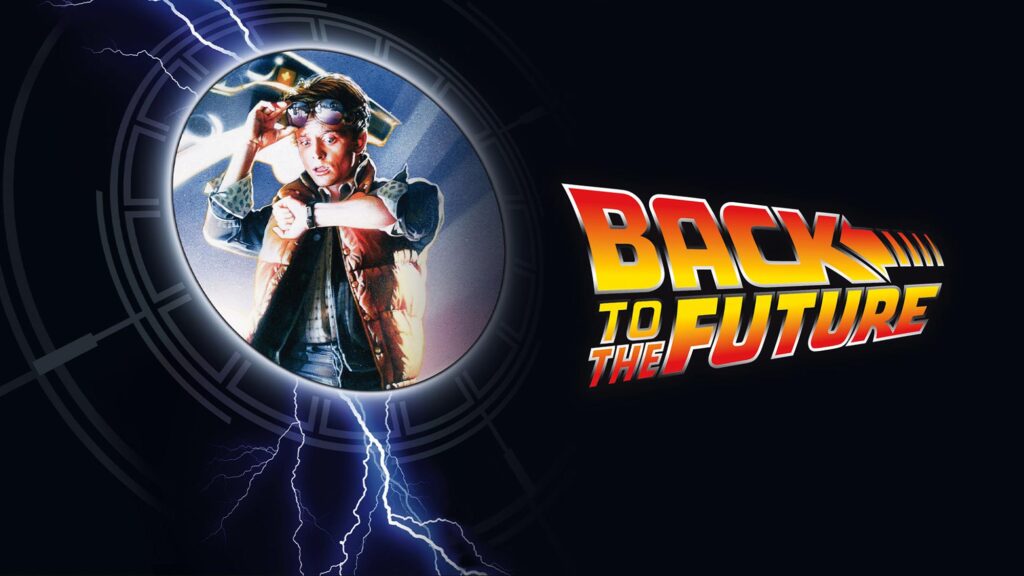
Back to the Future
Back to the Future was shot mainly in California, using a mix Los Angeles-area locations and Universal Studios backlot sets to create the fictional Hill Valley.
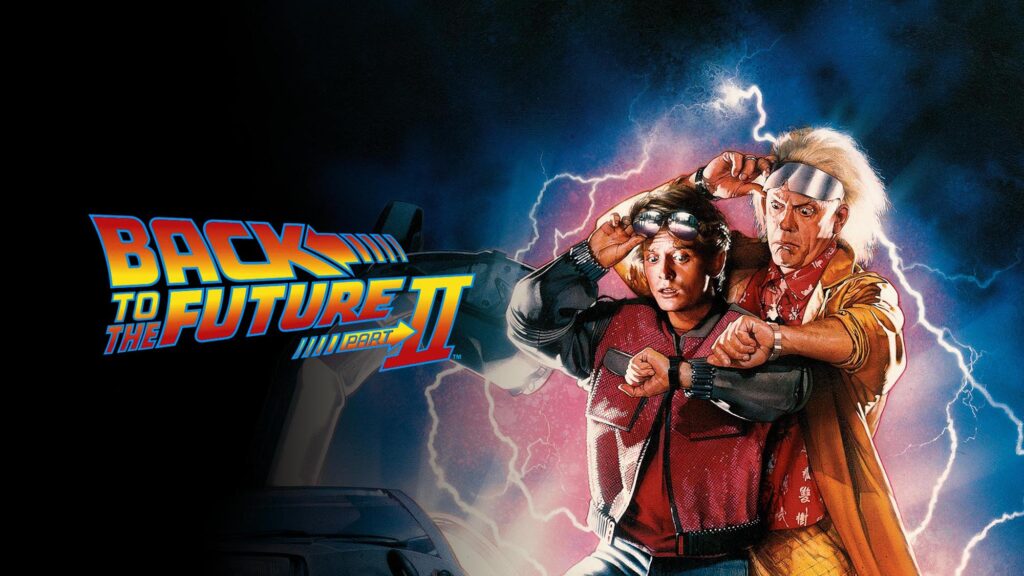
Back to the Future Part II
Back to the Future Part II was shot mainly in California, with Universal Studios’ Courthouse Square backlot again serving as the centre of Hill Valley.
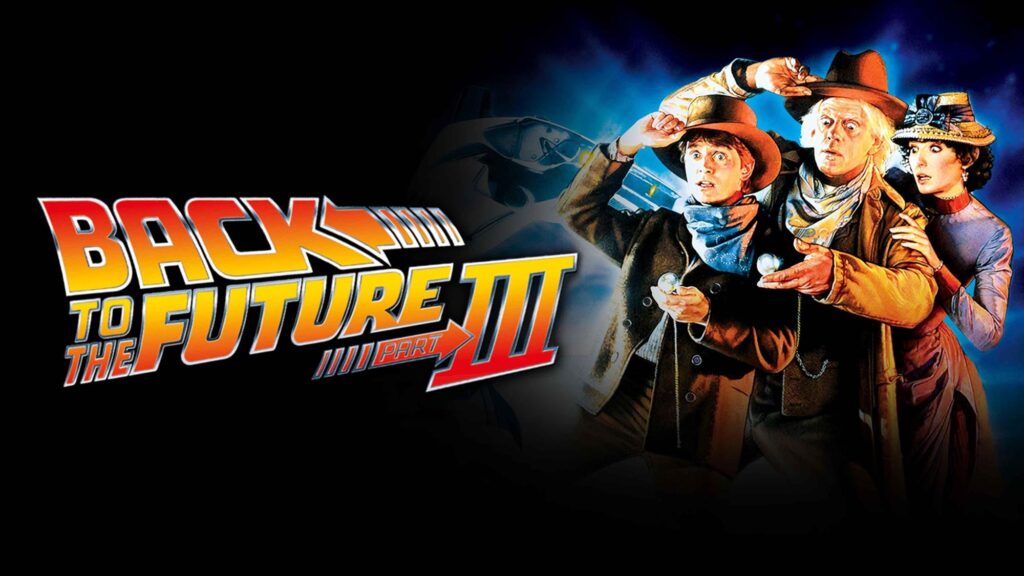
Back to the Future Part III
Back to the Future Part III was shot mainly in California and Arizona, with Universal Studios’ Courthouse Square still used for the familiar 1955 Hill Valley.