
Al Pacino (born 25 April 1940) is an American actor and filmmaker known for The Godfather (1972), Serpico (1973), The Godfather Part II (1974), Dog Day Afternoon (1975), Scarface (1983), Scent of a Woman (1992), Carlito’s Way (1993), Heat (1995), Donnie Brasco (1997), The Insider (1999) and The Irishman (2019). Born in East Harlem and raised in the South Bronx, he began acting in small New York theatres before becoming one of the leading performers of the New Hollywood era. His career has remained closely connected with New York City, where many of his best-known films were shot, although his work has also taken him to Sicily, the Dominican Republic, California, Britain, Canada and other locations. A winner of the Academy Award, two Tony Awards and two Primetime Emmy Awards, Pacino has maintained a substantial involvement in theatre throughout his career, particularly through his association with the Actors Studio and his performances of Shakespeare.
Alfredo James Pacino was born in East Harlem, Manhattan, the only child of Rose Gerardi and Salvatore Pacino, both from Sicilian-American families. His parents separated when he was two, and his mother took him to live with her parents, Kate and James Gerardi, in the South Bronx. The family occupied a three-room apartment on the top floor of a six-storey tenement building on Bryant Avenue, where several relatives sometimes stayed together. His maternal grandfather had been born Vincenzo Giovanni Gerardi in Corleone, Sicily, before emigrating to the United States as a young child. The town would later become famous internationally through The Godfather, although Pacino had not visited Sicily during his childhood. His paternal family came from San Fratello, another Sicilian town in the province of Messina. His father moved to California following the separation, eventually working as an insurance salesman and restaurateur in the Los Angeles area. Pacino remained with his mother and grandparents in the Bronx, growing up within an Italian-American community where extended family relationships were an important part of everyday life.
The South Bronx of the 1940s and 1950s was a densely populated working-class district, with apartment buildings, small shops, cinemas and recreational spaces occupying much of the surrounding neighbourhood. Pacino spent considerable time playing baseball in the streets and developing friendships with other local children. His mother, who worked in factories and other relatively low-paid jobs, regularly took him to the cinema from the age of three or four. He became fascinated by the actors and would return home to imitate their performances. She called him Sonny Boy, after the song popularised by Al Jolson, and the nickname remained associated with his childhood. His early life was affected by financial insecurity and his mother’s recurring mental health difficulties. In his memoir Sonny Boy (2024), he recalled her struggle with depression, including a suicide attempt, and the importance of his grandparents in providing stability. His grandfather became a particularly important figure, encouraging him and helping him navigate the difficulties of growing up without his father.
Pacino attended Herman Ridder Junior High School in the Bronx, where teacher Blanche Rothstein recognised his interest in performing. She encouraged him to appear in school plays and read passages aloud at assemblies, eventually visiting his grandmother to recommend that he pursue acting. He subsequently auditioned successfully for the High School of Performing Arts in Manhattan, the specialist institution established in 1948 to educate young performers. The move took him from his Bronx neighbourhood into a different part of the city’s cultural life, where students were preparing for professional careers in music, dance and theatre. However, he struggled academically and left school at seventeen without graduating. His mother opposed his decision to concentrate on acting, and the resulting disagreements contributed to his leaving home. He supported himself through a succession of jobs, including work as a messenger, busboy, janitor, cinema usher and postal clerk, while attending auditions and appearing in small theatrical productions.
During the late 1950s, Pacino moved into the Greenwich Village theatre community, which was becoming an important centre of experimental drama and independent performance. He began studying at HB Studio, founded by German-born actor and teacher Herbert Berghof and located at 120 Bank Street in the West Village. His most influential teacher there was Charlie Laughton, who became both a mentor and a close friend. Pacino frequently lacked the money to pay for lessons, sometimes cleaning the studio in exchange for attending classes. He also spent periods without a permanent residence, staying with friends, sleeping in theatres and occasionally spending nights outdoors. Although his financial circumstances were difficult, he became increasingly committed to the stage, rehearsing monologues and performing in small productions around Manhattan. In 1959, he formally settled in Greenwich Village, establishing a connection with the neighbourhood that would continue throughout his professional life. His mother died in 1962, followed by his grandfather, leaving him without two of the most important people from his childhood.
Pacino’s early stage work included William Saroyan’s Hello, Out There in 1963 and productions developed within New York’s Off-Broadway scene. In 1966, he was admitted to the Actors Studio, the organisation founded by Elia Kazan, Cheryl Crawford and Robert Lewis in 1947. He studied under Lee Strasberg, whose approach to acting emphasised emotional preparation and the relationship between a performer’s personal experiences and fictional characters. The organisation maintained facilities in Manhattan, eventually establishing its headquarters at 432 West 44th Street in Hell’s Kitchen. Pacino also worked with the Theatre Company of Boston and appeared in Israel Horovitz’s The Indian Wants the Bronx, first performed at the Astor Place Theatre at 434 Lafayette Street in Greenwich Village in 1968. The production subsequently travelled to the Festival dei Due Mondi in Spoleto, Italy, giving Pacino his first opportunity to perform professionally in the country from which his grandparents had emigrated. His performance attracted considerable critical attention and helped establish him among younger actors working outside Broadway’s commercial mainstream.
His breakthrough on Broadway came in February 1969 with Does a Tiger Wear a Necktie?, a drama by Don Petersen about young people in a rehabilitation institution. The production opened at the Belasco Theatre at 111 West 44th Street, where Pacino played Bickham, a troubled young man struggling with drug addiction. Although the play ran for only five weeks, his performance earned him the Tony Award for Best Featured Actor in a Play. The recognition led to film auditions, and he made his feature debut in Me, Natalie (1969), starring Patty Duke. The film was produced in New York, allowing Pacino to continue working within the city where he had established his theatrical career. He subsequently received his first significant film role in The Panic in Needle Park (1971), directed by Jerry Schatzberg, a former fashion photographer who had developed an interest in independent cinema. Pacino played Bobby, a heroin user living around the Upper West Side, opposite Kitty Winn as a young woman drawn into his life.
The Panic in Needle Park was filmed entirely in New York City during the autumn of 1970, using actual streets and locations associated with the heroin epidemic. Its title refers to Sherman Square, the small public space at the intersection of Broadway, Amsterdam Avenue and West 72nd Street, which had acquired the nickname Needle Park because of the drug activity in the area. The production also filmed around Verdi Square, Riverside Park, the East Village and the Staten Island Ferry, incorporating the neighbourhoods and public transport facilities used by the characters. Rather than constructing apartment interiors and street scenes in a studio, Schatzberg photographed the film in occupied buildings and public spaces, giving Pacino an opportunity to perform within an environment familiar from his own years in Manhattan. His work attracted the attention of Francis Ford Coppola, who was preparing an adaptation of Mario Puzo’s novel The Godfather. Despite opposition from Paramount Pictures executives, Coppola insisted on casting the relatively unknown Pacino as Michael Corleone, the youngest son of a powerful New York crime family.
The Godfather (1972) became the defining breakthrough of Pacino’s career. Principal photography began in March 1971, with extensive filming across New York City, Long Island and New Jersey. Michael Corleone’s family residence was represented by a property at 110 Longfellow Avenue in the Todt Hill neighbourhood of Staten Island, where the opening wedding celebrations were filmed in the surrounding garden and street. The restaurant where Michael kills Virgil Sollozzo and police captain Mark McCluskey was represented by a property at 3531 White Plains Road in the Bronx, returning Pacino professionally to the borough where he had grown up. The baptism sequence near the end of the film included the Basilica of St Patrick’s Old Cathedral on Mulberry Street in Manhattan, together with other church locations on Staten Island. Additional filming used the streets of Little Italy, including Mott Street, where a building at number 128 represented the Genco Olive Oil Company. The film’s numerous New York locations were important to Coppola’s approach, which presented the Corleone family within a recognisable Italian-American community rather than a fictional Hollywood setting.
The production also took Pacino to Sicily, where Michael lives in exile after killing Sollozzo and McCluskey. Rather than filming in the actual town of Corleone, Coppola selected Savoca and Forza d’Agrò, two historic hilltop villages near Taormina in the province of Messina. Their older stone buildings and narrow streets provided the setting for the fictional Sicilian community. Bar Vitelli in Savoca, occupying part of Palazzo Trimarchi, was used for the scene in which Michael meets the father of Apollonia, while their wedding was photographed at the Church of San Nicolò, also known as Santa Lucia, overlooking the surrounding countryside. The Castello degli Schiavi estate near Fiumefreddo di Sicilia represented Michael’s residence and the location of the car bombing that kills his wife. For Pacino, the Sicilian production was a significant geographical connection with his family ancestry, although his maternal grandparents had come from Corleone, considerably farther west on the island. The Godfather was released in March 1972, winning three Academy Awards, including Best Picture. Pacino received his first Oscar nomination, for Best Supporting Actor, and became internationally recognised at the age of thirty-one.
He followed the success with Scarecrow (1973), reuniting with Jerry Schatzberg in a road drama co-starring Gene Hackman. Pacino played Francis Lionel Delbuchi, a former sailor travelling across the United States with a recently released prisoner. The production was unusual because the filmmakers photographed the story largely in chronological order and travelled between locations as the characters moved across the country. Filming took place in Northern California, Reno in Nevada, Denver and Cañon City in Colorado, and Detroit, Michigan, with additional work in Bakersfield. The crew worked in actual streets, rural communities and inexpensive accommodation rather than building extensive studio sets. The film won the Palme d’Or at the Cannes Film Festival in May 1973, reinforcing Pacino’s growing reputation in Europe even as he continued developing his career in New York theatre.
His next major film returned him to the city’s streets with Serpico (1973), directed by Sidney Lumet. Pacino played Frank Serpico, the real New York police officer who exposed corruption within the New York City Police Department. The production was filmed during the summer of 1973, using more than one hundred locations across the city’s boroughs. Pacino’s character lived at 5–7 Minetta Street in Greenwich Village, although the real Serpico had lived nearby at the intersection of Perry and Greenwich streets. Other filming took place around Washington Square Park, the Dakota building at 1 West 72nd Street, and Joyce Kilmer Park in the Bronx. The former John Jovino Gun Shop at 183 Grand Street in Little Italy was used for a firearms purchasing scene, while the building where Serpico is shot was represented by a property on South Eighth Street in Williamsburg, Brooklyn. The production also incorporated the Williamsburg Bridge, the streets of Greenpoint and several actual police facilities. Lumet’s decision to film in so many recognisable places made Serpico one of the most geographically detailed New York crime dramas of its period. Pacino received an Academy Award nomination for Best Actor and won the Golden Globe for his performance.
During the same period, he continued acting on stage, playing the title character in Shakespeare’s Richard III and appearing in productions of Tennessee Williams’s Camino Real. He also worked with director David Wheeler and other figures associated with the Theatre Company of Boston, maintaining his interest in live performance despite the success of his films. His second appearance as Michael Corleone came in The Godfather Part II (1974), which extended the story across several countries and two generations. The scenes involving the older Michael were filmed extensively at the former Henry J. Kaiser estate at Fleur du Lac on the western shore of Lake Tahoe, near Homewood, California. The waterfront property represented Michael’s secluded residence, with its gardens, stone buildings and boathouse incorporated into several important scenes. The film also depicts political events in Havana during the final days of the Batista government, but the Cuban sequences were filmed primarily in Santo Domingo, Dominican Republic, where historic streets and hotels represented the Cuban capital. Pacino worked on the Dominican production alongside other principal cast members, while the earlier sections involving Robert De Niro as the young Vito Corleone were filmed separately. The Godfather Part II won six Academy Awards, including Best Picture, and earned Pacino another Best Actor nomination.
He returned to Sidney Lumet for Dog Day Afternoon (1975), a crime drama based on a real bank robbery in Brooklyn in August 1972. Pacino played Sonny Wortzik, a character inspired by robber John Wojtowicz, who attempts to hold up a bank with an accomplice portrayed by John Cazale. Rather than recreating Brooklyn inside a studio, Lumet selected an actual street beside Prospect Park. The bank exterior was constructed at 285 Prospect Park West, between 17th and 18th streets, using the ground floor of a former automotive workshop. The production built a bank interior within the existing building, allowing the filmmakers to move between the street and the interior without changing locations. Much of the filming took place in September and October 1974, with neighbouring residents regularly gathering to watch the production. Additional scenes were photographed in Queens and at John F. Kennedy International Airport, where the story reaches its conclusion. Dog Day Afternoon became one of Pacino’s most acclaimed performances, earning another Academy Award nomination. It also reunited him with Cazale, his friend and former Godfather co-star, whose career would be cut short by his death from cancer in 1978.
Pacino’s success during the first half of the decade brought considerable public attention, but he continued alternating between film and theatre rather than committing exclusively to Hollywood. His relationship with actress Diane Keaton began during The Godfather and continued intermittently over many years, while he maintained close connections with New York’s theatrical community. He also travelled to Europe for Bobby Deerfield (1977), directed by Sydney Pollack and co-starring Marthe Keller. Pacino played an American motor-racing driver competing on the European circuit, with filming taking place in France, Italy and Switzerland. The production incorporated actual racing environments, including circuits and roads associated with international motorsport. Keller and Pacino subsequently began a relationship that continued for several years. During this period, he returned to Broadway in David Rabe’s The Basic Training of Pavlo Hummel, which opened at the Longacre Theatre on West 48th Street in April 1977. His portrayal of a young soldier undergoing military training earned him a second Tony Award, reinforcing his position as one of the relatively few major American film stars who remained consistently involved in serious theatre.
His next films included …And Justice for All (1979), directed by Norman Jewison and filmed in Baltimore, Maryland. Pacino played Arthur Kirkland, a defence lawyer working within the city’s legal system. The production made use of actual Baltimore streets, courthouses and institutional buildings, incorporating the city’s distinctive urban environment rather than representing it through conventional Hollywood sets. The film earned Pacino another Academy Award nomination. He subsequently appeared in Cruising (1980), directed by William Friedkin, playing an undercover police officer investigating murders within New York’s gay leather community. Filming took place around Greenwich Village and the Meatpacking District, using actual streets and establishments associated with the city’s nightlife. The production attracted demonstrations and criticism from LGBTQ+ activists concerned about its portrayal of gay men, and several scenes were disrupted during filming. The film represented a different side of New York from the neighbourhoods of Pacino’s childhood, although he remained professionally connected with the city where he had begun his career.
Pacino returned to the crime genre with Scarface (1983), directed by Brian De Palma and written by Oliver Stone. He played Tony Montana, a Cuban immigrant who becomes a powerful drug dealer in Miami. Despite the film’s Florida setting, much of the production was photographed in Los Angeles and Santa Barbara County because local authorities in Miami were reluctant to cooperate with a film depicting the city as a centre of organised crime and drug trafficking. Principal photography began in November 1982 and continued until May 1983. The exterior of Tony Montana’s mansion was represented by El Fureidis, a Mediterranean-style estate at 631 Para Grande Lane in Montecito, near Santa Barbara. The property’s formal gardens, fountains and grand architectural features provided the setting for the character’s increasingly extravagant lifestyle, while substantial interiors were constructed at Universal Studios in Universal City. The production also used Los Angeles restaurants and commercial buildings, including the former Perino’s restaurant at 4101 Wilshire Boulevard, where Tony delivers his notorious speech during a public confrontation.
Some sequences were filmed in Florida, particularly around Miami Beach and Key Biscayne. The Sun Ray Hotel at 728 Ocean Drive supplied the exterior associated with the violent motel encounter early in the film, while the interior was recreated at Universal Studios. Other Florida locations included properties on Key Biscayne and the commercial districts of greater Miami. Pacino’s performance involved a substantial physical and vocal transformation, including the development of Tony Montana’s distinctive accent. During an action sequence, he injured his hand on a firearm, temporarily interrupting production. Scarface received mixed reviews on its initial release but subsequently became one of the most influential crime films of the 1980s, attracting a particularly strong following within hip-hop culture. Its association with Miami has remained substantial despite the majority of its filming having taken place in Southern California.
After Scarface, Pacino accepted the leading role in Revolution (1985), directed by Hugh Hudson. The historical drama follows a fur trapper drawn into the American Revolutionary War during the late eighteenth century. Although the story begins in colonial New York, the production was filmed almost entirely in Britain. Principal photography took place between March and July 1985, with the historic waterfront of King’s Lynn in Norfolk transformed into eighteenth-century New York. The town’s surviving Georgian buildings, narrow streets and former maritime warehouses provided an appropriate setting for the period without requiring the construction of an entirely new city. King Street and the surrounding harbour district were extensively altered for filming, with temporary wooden structures, market stalls and other details added to represent the colonial settlement. Additional scenes were photographed at Burrator Reservoir on Dartmoor in Devon, the coastal cliffs near Challaborough Bay and the Stanford military training area near Thetford. The production also used Ely in Cambridgeshire, with its historic buildings representing Philadelphia. Revolution was a major commercial failure, and Pacino withdrew from feature filmmaking for several years, concentrating on theatre and other projects before returning to the screen.
His comeback came with Sea of Love (1989), a New York crime thriller directed by Harold Becker and co-starring Ellen Barkin. Pacino played a detective investigating a series of murders connected with personal advertisements. The film returned him to familiar Manhattan streets and residential neighbourhoods, although the production also used locations outside the city. Its commercial success re-established him as a leading screen actor. He then appeared in Dick Tracy (1990), directed by Warren Beatty, playing the extravagant gangster Big Boy Caprice opposite Beatty and Madonna. The comic-strip adaptation was filmed primarily in Hollywood studio facilities, where stylised city streets and interiors were constructed to resemble the brightly coloured world of Chester Gould’s original drawings. Pacino received an Academy Award nomination for Best Supporting Actor, demonstrating that he could continue attracting critical recognition through roles very different from the restrained characters associated with his earlier career.
He also returned to Michael Corleone in The Godfather Part III (1990), completing a trilogy that had begun almost twenty years earlier. Production took place in New York, Rome and Sicily, with some of the most important scenes filmed in Palermo. The Teatro Massimo on Piazza Verdi, one of Europe’s largest opera houses, provided the setting for the film’s climactic performance of Pietro Mascagni’s Cavalleria Rusticana. Pacino’s character appears in the theatre’s auditorium, staircases and exterior steps, where the tragedy involving his daughter Mary unfolds. Other Sicilian locations included Villa Malfitano Whitaker at 167 Via Dante in Palermo, used as a family residence, and Taormina-Giardini railway station, which represented the station at Bagheria. Additional filming took place at the historic Palazzo Farnese in Caprarola, north of Rome, whose elaborate interiors were used to represent Vatican buildings. The production brought Pacino back to Sicily for the first time since the original Godfather films, while also concluding his long professional association with Diane Keaton’s character Kay Adams. The film received seven Academy Award nominations, although it was not as successful critically as its predecessors.
The early 1990s brought another important period in Pacino’s career. He appeared in Frankie and Johnny (1991), a romantic drama starring Michelle Pfeiffer and filmed in New York City, and Glengarry Glen Ross (1992), adapted from David Mamet’s play about struggling real estate salesmen. The latter reunited him with Jack Lemmon and featured an ensemble cast including Alec Baldwin, Alan Arkin, Ed Harris and Kevin Spacey. Although the story is confined largely to a restaurant and office environment, the production was filmed in New York, using actual commercial buildings and studio interiors to create the setting. Pacino played salesman Ricky Roma, earning another Academy Award nomination for Best Supporting Actor. He continued working in theatre during the same period, returning to David Mamet’s plays and remaining closely associated with the Actors Studio, where he increasingly became involved in mentoring younger performers.
His most important film of the decade was Scent of a Woman (1992), directed by Martin Brest and co-starring Chris O’Donnell. Pacino played Frank Slade, a blind retired Army officer who travels to New York with a student from a prestigious boarding school. Although the fictional Baird School is located in New England, the production used several actual educational institutions in New York state and New Jersey. The Emma Willard School at 285 Pawling Avenue in Troy provided important exterior locations, while the historic Hempstead House at Sands Point Preserve on Long Island represented parts of the school’s buildings. Additional scenes were filmed at Princeton University in New Jersey and within New York City. The elaborate ballroom sequence in which Frank dances the tango with a young woman was filmed at the Pierre Hotel on Fifth Avenue at East 61st Street, while other scenes used the Waldorf-Astoria hotel and the Oak Room at the Plaza Hotel. The climactic disciplinary hearing was photographed at the New York Society for Ethical Culture on West 64th Street. The performance earned Pacino the Academy Award for Best Actor in March 1993, following seven previous acting nominations.
His next major collaboration with Brian De Palma was Carlito’s Way (1993), in which he played Carlito Brigante, a former drug dealer attempting to escape his criminal past. The production was filmed extensively throughout New York City during the spring and summer of 1993, using locations associated with the city’s Puerto Rican and Italian-American communities. The film’s principal nightclub was represented through a combination of actual locations and constructed interiors, while scenes involving Carlito’s personal life were photographed around Greenwich Village and East Harlem. The former Le Figaro Café at the corner of Bleecker and MacDougal streets provided the setting for a meeting with Gail, played by Penelope Ann Miller, while Gay Street in Greenwich Village was used for the area around her apartment. The production also incorporated Kings Point on Long Island, the subway system in Brooklyn and Grand Central Terminal in Manhattan.
The final chase sequence in Carlito’s Way made particularly extensive use of the actual New York subway and railway environment. The filmmakers photographed scenes at the Fourth Avenue subway station in Brooklyn, followed by an elaborate pursuit through Grand Central Terminal, where Carlito attempts to reach a departing train. The sequence required considerable coordination with the Metropolitan Transportation Authority and the operators of the historic railway terminal. For Pacino, the film returned him to a style of urban crime drama that had shaped his career during the 1970s, although the character was older and considerably more experienced than his earlier protagonists. The production was also notable for the amount of filming conducted in public spaces while the city continued functioning around the crew.
Pacino’s first substantial on-screen confrontation with Robert De Niro came in Heat (1995), directed by Michael Mann. The two had previously appeared in The Godfather Part II but had not shared any scenes because their characters lived in different periods. In Heat, Pacino played Los Angeles police lieutenant Vincent Hanna, who pursues a professional criminal portrayed by De Niro. Mann filmed extensively across Los Angeles County, incorporating the city’s commercial districts, residential neighbourhoods, freeways and industrial areas. The most celebrated scene involving the two actors was photographed at Kate Mantilini, a restaurant at 9101 Wilshire Boulevard in Beverly Hills, where Hanna and Neil McCauley sit across from one another and discuss their lives. The restaurant had opened in 1987 and was a familiar late-night establishment within the Los Angeles entertainment industry before closing in 2014.
Other Heat locations included the streets around Fifth Street, Flower Street and Figueroa Street in downtown Los Angeles, where the film’s large bank-robbery shootout was staged. The production used an actual commercial building to represent the bank, while nearby streets were temporarily closed for extensive action filming. Additional scenes took place around Los Angeles International Airport, the industrial districts of East Los Angeles and residential areas of the San Fernando Valley. Pacino’s character was also associated with several police and institutional locations, including the Los Angeles County Hall of Justice. The film became one of the defining Los Angeles crime dramas of the 1990s, using the city’s actual geography rather than treating it as an anonymous urban setting. Pacino’s collaboration with Mann continued with The Insider (1999), in which he played Lowell Bergman, the investigative television producer involved in exposing misconduct within the tobacco industry. That production filmed in several states, including Kentucky, Mississippi, California and New York, with the Seelbach Hotel in Louisville among its identifiable locations.
Between those productions, Pacino made his feature directorial debut with Looking for Richard (1996), an exploration of Shakespeare’s Richard III combining filmed dramatic scenes with interviews and discussions about the play. The project developed from his longstanding involvement in theatre and his earlier stage performances as Richard. Production took place over several years in New York, Los Angeles, Montreal and Britain, incorporating interviews with actors, scholars and members of the public. Among the British locations were Shakespeare’s birthplace on Henley Street in Stratford-upon-Avon and sites associated with London’s theatrical history. The film premiered at the Sundance Film Festival in January 1996 and subsequently screened at Cannes. Although it was not a conventional scripted feature, the project was an important development in Pacino’s career as a director, allowing him to examine Shakespeare through both performance and documentary techniques.
He also worked with Johnny Depp on Donnie Brasco (1997), directed by Mike Newell and based on the experiences of undercover FBI agent Joseph Pistone. Pacino played Benjamin Ruggiero, known as Lefty, a member of the Bonanno crime family who befriends the undercover agent. The production was filmed in New York, New Jersey and Florida, using actual neighbourhoods associated with organised crime during the 1970s. Locations included Mulberry Street in Little Italy, Katz’s Delicatessen at 205 East Houston Street on the Lower East Side and commercial streets around Clifton, New Jersey. The Florida portion included the Palm Beach Kennel Club in West Palm Beach, Rapids Water Park in Riviera Beach and locations around Captiva Island. Donnie Brasco gave Pacino another role closely associated with New York’s Italian-American criminal communities, although the performance was considerably more understated than his portrayal of Tony Montana in Scarface.
In The Devil’s Advocate (1997), directed by Taylor Hackford, Pacino played John Milton, the head of a powerful New York law firm whose character is gradually revealed to be Satan. The production was filmed extensively in Manhattan, using buildings that reflected the wealth and status of Milton’s fictional legal organisation. The Continental Plaza near Wall Street and office space at 180 Maiden Lane represented the firm’s headquarters, while the area around Fifth Avenue and East 94th Street supplied residential exteriors. Other scenes were filmed in actual Manhattan churches, including the Church of the Most Holy Redeemer, where Pacino’s character appears during a disturbing religious sequence. The production also used several historic courthouses in New York and New Jersey, together with studio interiors designed to accommodate the film’s elaborate supernatural effects. Pacino continued working in New York and California throughout the late 1990s, maintaining a home in Sneden’s Landing, a riverside community in Rockland County north of Manhattan, while renting accommodation in Los Angeles during extended film assignments.
His work on Any Given Sunday (1999), directed by Oliver Stone, took him to Florida and Texas. Pacino played Tony D’Amato, the coach of the fictional Miami Sharks American football team. The production used actual stadiums, including the Orange Bowl at 1501 Northwest Third Street in Miami and Texas Stadium in Irving, near Dallas. The Orange Bowl had opened in 1937 and was demolished in 2008, making the film a record of the stadium during its final decade. Additional scenes were photographed at the Vizcaya Museum and Gardens in Miami and at facilities around the city’s commercial districts. The film required Pacino to work within large stadium environments, frequently alongside professional players and former American football figures appearing in supporting roles. Its production marked another period of extended work away from New York, although he continued returning there for theatre commitments and other projects.
The early 2000s brought several films with locations beyond the United States. In Insomnia (2002), directed by Christopher Nolan, Pacino played Los Angeles detective Will Dormer, who travels to a small Alaskan town to investigate a murder. Although the story takes place in Alaska, much of the production was filmed in British Columbia during the spring of 2001. The town of Squamish represented the fictional community of Nightmute, with the Chieftain Hotel on Cleveland Avenue among the principal locations. Other scenes were photographed around Port Alberni on Vancouver Island, Britannia Beach and the mountainous coastline north of Vancouver. The production also used actual Alaskan locations for selected exterior and aerial photography, including Valdez and the Columbia Glacier, but the principal dramatic scenes involving Pacino were concentrated within the Canadian production. The final confrontation was filmed near Strohn Lake in British Columbia, where the crew constructed a temporary lakeside house and dock before removing them after filming. The combination of long summer daylight and remote natural environments created a working experience quite different from the urban locations associated with most of Pacino’s earlier films.
He returned to the American entertainment industry as a subject in S1m0ne (2002), a science-fiction satire about a filmmaker who creates a computer-generated actress, and appeared in the crime thriller The Recruit (2003), alongside Colin Farrell. His television work became increasingly substantial, particularly through HBO productions. He played lawyer Roy Cohn in Mike Nichols’s adaptation of Angels in America (2003), based on Tony Kushner’s play about American society during the AIDS crisis. Although much of the story takes place in New York City during the 1980s, substantial filming was completed in studio facilities and on locations in the United States and Italy. Pacino’s performance earned him the Primetime Emmy Award for Outstanding Lead Actor in a Miniseries or Movie, one of several major honours associated with the production.
He also returned to Shakespeare with The Merchant of Venice (2004), directed by Michael Radford, playing the Jewish moneylender Shylock. Principal photography was carried out in Venice, Italy, and Luxembourg, using historic buildings and purpose-built sets to recreate the city during the sixteenth century. The production filmed around the Grand Canal, the Rialto area and several historic Venetian properties, while studio facilities at Esch-sur-Alzette in Luxembourg supplied additional period environments. Castello di Thiene near Vicenza and the gardens of Villa Barbarigo in Valsanzibio, south of Padua, represented important country-house settings. The project brought Pacino back to Italy for an extended production and allowed him to combine his theatre experience with international filmmaking. His involvement in Shakespeare continued through stage productions in New York, including a 2010 revival of The Merchant of Venice at the Delacorte Theater in Central Park. The production subsequently transferred to the Broadhurst Theatre on West 44th Street, where Pacino again played Shylock and received another Tony Award nomination.
During the following decade, Pacino alternated between independent films, larger studio projects and television dramas. His work included Ocean’s Thirteen (2007), directed by Steven Soderbergh, in which he played casino owner Willy Bank. Although the story takes place in Las Vegas, much of the production was filmed at Warner Bros. Studios in Burbank, where the filmmakers constructed elaborate casino interiors. The project reunited him with an ensemble cast that included George Clooney, Brad Pitt, Matt Damon and Andy García. He also appeared in Righteous Kill (2008), reuniting with Robert De Niro in a New York police thriller, and took the leading role in You Don’t Know Jack (2010), portraying controversial American physician Jack Kevorkian. The HBO film earned him a second Primetime Emmy Award and another Golden Globe, demonstrating his continuing success in dramatic television roles.
His later stage appearances included the Broadway revival of Glengarry Glen Ross in 2012, in which he played Shelley Levene rather than Ricky Roma, the character he had portrayed in the 1992 film. The production opened at the Gerald Schoenfeld Theatre on West 45th Street, returning Pacino to David Mamet’s material and the Manhattan theatre district. He subsequently starred in David Mamet’s China Doll (2015), also at the Schoenfeld Theatre. These projects were part of a continuing relationship with Broadway that had begun in 1969, long before his international film success. Pacino has repeatedly described theatre as an essential part of his professional life, and his relationship with the Actors Studio has continued through teaching, mentoring and public discussions about acting.
He also appeared in several smaller films during the 2010s, including Danny Collins (2015), Manglehorn (2014) and The Humbling (2014). Danny Collins, directed by Dan Fogelman, was filmed primarily in Los Angeles and New Jersey, with Pacino playing an ageing musician attempting to reconnect with his estranged son. The production used actual suburban homes, hotels and music venues to represent the character’s changing circumstances. In the same period, he developed further projects as a director, including Wilde Salomé (2011), an examination of Oscar Wilde’s Salomé combining theatrical performance with documentary material. The project reflected his continuing interest in the relationship between stage acting and cinema, although it attracted more limited attention than his major commercial films.
Pacino’s professional relationship with Martin Scorsese, which had developed over several decades without resulting in a feature collaboration, finally produced The Irishman (2019). He played labour union leader Jimmy Hoffa opposite Robert De Niro as Frank Sheeran and Joe Pesci as Russell Bufalino. Principal photography took place between September 2017 and March 2018, primarily around New York City and its surrounding region. Locations included Brooklyn, Queens, Long Island, the Hudson Valley and northern New Jersey, with additional work in Pennsylvania. The production used actual neighbourhoods, diners, hotels and industrial areas to represent several decades of American history. Scenes set in cities such as Philadelphia, Detroit and Miami were often filmed elsewhere, with buildings and streets adapted for the different periods. The film also employed digital technology to make its leading actors appear younger, allowing Pacino, De Niro and Pesci to portray their characters over several decades. Pacino received another Academy Award nomination for Best Supporting Actor, his first Oscar nomination in more than twenty-five years.
The same year, he appeared in Quentin Tarantino’s Once Upon a Time in Hollywood (2019), playing Marvin Schwarz, a Hollywood agent who advises a declining television actor portrayed by Leonardo DiCaprio. The film was set in Los Angeles during 1969, and Pacino’s principal scene was photographed at Musso & Frank Grill at 6667 Hollywood Boulevard. Established in 1919, the restaurant has been closely associated with the American film industry for more than a century and was a regular meeting place for writers, directors and actors during the studio era. Tarantino filmed extensively in central Hollywood, temporarily transforming streets and businesses to recreate the city as it appeared during Pacino’s early professional career. His casting therefore placed him within a fictionalised version of the industry he had entered as a young actor, although his actual breakthrough had taken place in New York rather than Hollywood.
His later international work included House of Gucci (2021), directed by Ridley Scott and filmed extensively in Italy. Pacino played Aldo Gucci, one of the senior members of the family that established the luxury fashion company. The production photographed scenes in Rome, Milan, Florence and the Lake Como region, with additional filming in the Alpine communities of Gressoney-Saint-Jean and Gressoney-La-Trinité in the Aosta Valley. Villa del Balbiano at Ossuccio, on the western shore of Lake Como, represented an important family residence, while streets and buildings around Milan were used for the commercial and fashion-industry settings. The production also incorporated Via dei Condotti in Rome and historic properties elsewhere in northern Italy. Pacino appeared alongside Lady Gaga, Adam Driver, Jeremy Irons and Jared Leto, returning to a story involving an Italian family whose personal relationships become entangled with the ownership and management of a major business. The film’s production brought him back to Italy, where he had worked repeatedly since his early stage appearance at Spoleto.
His personal life has involved several long-term relationships, although he has never married. He had a daughter, Julie Marie, with acting coach Jan Tarrant in 1989. Julie subsequently developed her own career as a filmmaker, establishing production companies and working on independent projects in New York and California. Pacino later had twins, Anton James and Olivia Rose, with actress Beverly D’Angelo in January 2001. Their relationship ended in 2003, but they continued sharing responsibility for their children. In June 2023, Pacino became a father for the fourth time when his son Roman was born in Los Angeles to film producer Noor Alfallah. He has maintained strong connections with his children while continuing to work professionally, and his residences have increasingly reflected the demands of a family life divided between New York and California. Although he has spent substantial periods living in Los Angeles, including in the Beverly Hills area, he has retained a strong personal attachment to Manhattan and the theatrical community where he began his career.
In 2024, Pacino published his memoir Sonny Boy, named after the childhood nickname given to him by his mother. The book revisited his early years on Bryant Avenue in the South Bronx, his education, his struggle to establish himself as an actor and the circumstances surrounding his breakthrough in The Godfather. It also examined his relationships, financial difficulties and the experience of becoming famous while still closely associated with the neighbourhoods of his childhood. The autobiography was published by Penguin Press in October and became an international bestseller. Pacino’s recollections offered an unusually detailed account of the streets, schools, cinemas and small theatres that had shaped his early life, providing important context for a career frequently identified with New York even after decades of international film work.
He continued accepting acting assignments during his eighties. In The Ritual (2025), directed by David Midell, Pacino played Father Theophilus Riesinger, a Catholic priest involved in an exorcism during the 1920s. Although the story was based on events in Iowa, principal photography took place in Natchez, Mississippi, beginning in January 2024. The city’s historic buildings and churches provided settings suitable for recreating the period, with the production using actual locations rather than relying entirely on studios. Pacino also appeared in Dead Man’s Wire (2025), directed by Gus Van Sant and based on the 1977 Indianapolis hostage crisis involving Tony Kiritsis. He played M. L. Hall, the businessman whose family became involved in the confrontation. The production was filmed in the United States and premiered at the Venice International Film Festival in September 2025, before receiving a theatrical release in January 2026. His participation reunited him professionally with a tradition of American crime dramas based on actual events, although the story was set in Indianapolis rather than the New York neighbourhoods associated with many of his earlier roles.
Another important later project was Lear Rex, an adaptation of Shakespeare’s King Lear written and directed by Bernard Rose. Pacino took the title role, with Jessica Chastain playing Goneril and an ensemble cast including Peter Dinklage, Ariana DeBose and Rachel Brosnahan. Principal photography began in Los Angeles in August 2024 and concluded in October, with the production filmed primarily within the city’s established studio and production facilities. The project continued Pacino’s lifelong association with Shakespeare, following earlier performances as Richard III, Shylock and Mark Antony. In June 2026, Shakespeare’s Globe in London named him the recipient of its Sam Wanamaker Award, recognising his contribution to theatre and film, particularly his work interpreting Shakespeare. The honour connected him with the reconstructed Globe Theatre on the south bank of the River Thames, an institution devoted to the playwright whose work had been central to his career since his earliest years in New York.
In October 2026, the Screen Actors Guild announced that Pacino would receive its Life Achievement Award at the 33rd Actor Awards ceremony, scheduled for 28 February 2027 at the Shrine Auditorium in Los Angeles. The award recognised his work across film, theatre and television, together with his charitable activities. At eighty-six, he remained professionally active, with more than six decades separating his early Off-Broadway performances from his recent film and stage projects. His continued involvement with Shakespeare, independent productions and major studio films reflected a career that had never been confined to a single genre or production system.
Throughout his life, Pacino has maintained unusually strong connections with the places where he began acting. The South Bronx tenement on Bryant Avenue, HB Studio in Greenwich Village, the Belasco Theatre and the Actors Studio in Manhattan were central to his development before he became a film star. His breakthrough films subsequently brought him back to actual New York streets, from Sherman Square in The Panic in Needle Park and the Brooklyn locations of Dog Day Afternoon to Grand Central Terminal in Carlito’s Way. The Sicilian villages of Savoca and Forza d’Agrò, the former Kaiser estate at Lake Tahoe, the streets of Santo Domingo and the historic Teatro Massimo in Palermo became connected with Michael Corleone’s changing fortunes, while Southern California supplied locations for Scarface and Heat. His later work took him to the Canadian wilderness, historic Italian cities, British theatres and the American South. Despite these international assignments, New York has remained the principal geographical thread running through his life, from childhood in the Bronx to the stages and streets where he established one of the most influential careers in American acting.
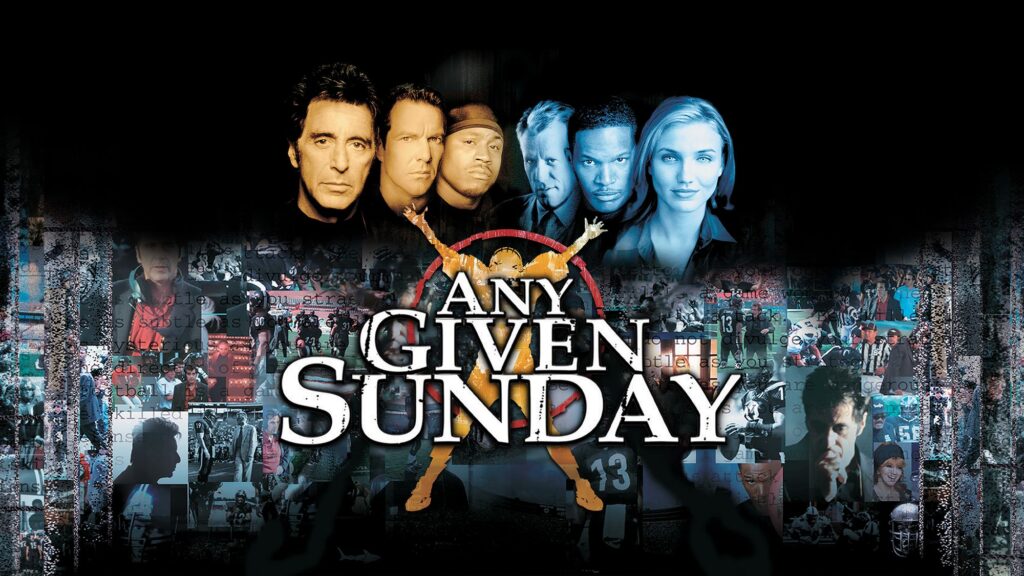
Any Given Sunday
Any Given Sunday was filmed mainly in Florida and Texas, with Miami forming the centre of the film’s fictional football world.
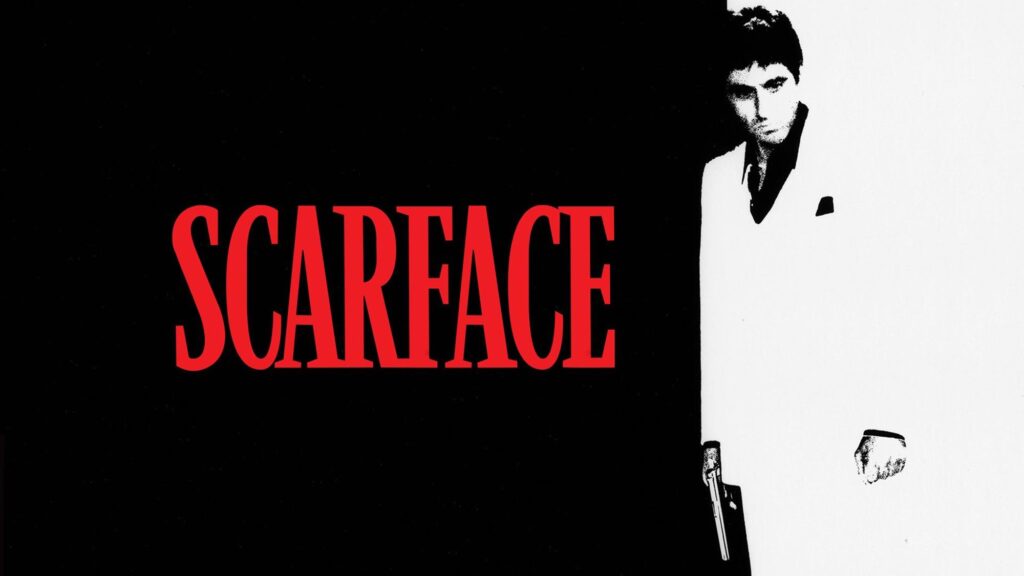
Scarface
Scarface is a 1983 American crime drama directed by Brian De Palma and written by Oliver Stone, with Al Pacino starring as Tony Montana.
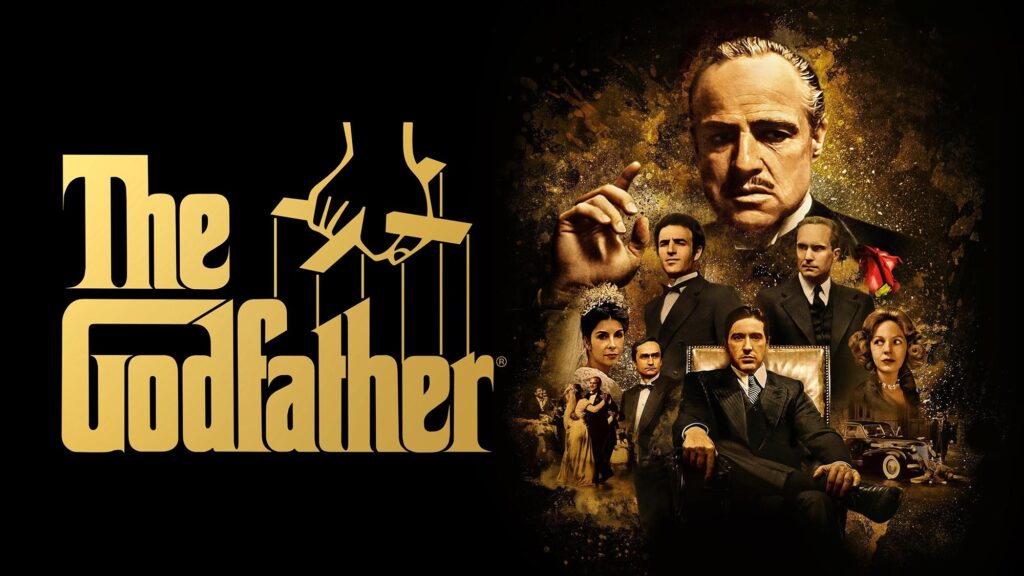
The Godfather
The Godfather was shot mainly in New York and Sicily, with additional work in California, and that combination is central to its atmosphere.