
Pont du Gard is an ancient Roman aqueduct bridge crossing the Gardon River near Vers-Pont-du-Gard in southern France. Built around AD 50 during the reign of Claudius or Nero, it formed the most spectacular section of the approximately 50-kilometre aqueduct constructed to carry water from the Fontaine d’Eure near Uzès to the Roman city of Nemausus, modern Nîmes. Water travelled entirely by gravity along an exceptionally shallow gradient, with the system capable of supplying an estimated 30,000 to 40,000 cubic metres each day. The bridge rises almost 49 metres above the river and consists of three superimposed tiers of arches, making it the highest surviving Roman aqueduct bridge and the only ancient three-level example still standing. After the aqueduct ceased operating, the lower level continued to be used for crossing the Gardon, and damage caused by cart traffic eventually required substantial repairs. Between 1743 and 1747, engineer Henri Pitot constructed a separate road bridge directly alongside the Roman structure, allowing traffic to cross without further altering the ancient piers. Pont du Gard was included on France’s first list of protected historic monuments in 1840 and underwent major nineteenth-century restorations. Motor vehicles continued crossing the adjoining road bridge until 1996. The monument was inscribed as a UNESCO World Heritage Site in 1985 and remains one of the best-preserved examples of Roman hydraulic engineering.
Pont du Gard has appeared in Les Mistons (1957), The Lady in the Car with Glasses and a Gun (1970), Quo Vadis (2001), Mr. Bean’s Holiday (2007), Paris Can Wait (2016) and The Walking Dead: Daryl Dixon (2023–). François Truffaut uses the aqueduct at the beginning of Les Mistons (1957), with Bernadette cycling directly across it, while The Lady in the Car with Glasses and a Gun (1970) places an extended roadside stop beneath the monument. Quo Vadis (2001) takes advantage of the genuine Roman structure for several scenes set in ancient Rome, including Marcus Vinicius crossing the aqueduct and Nero performing with it behind him. Mr. Bean’s Holiday (2007) turns the bridge into the setting for one of the film’s darker visual jokes, while Paris Can Wait (2016) allows Pont du Gard to appear simply as itself during Anne and Jacques’s leisurely journey through France. More recently, The Walking Dead: Daryl Dixon (2023–) uses the monument as part of Daryl Dixon’s journey across post-apocalyptic France, with the surviving Roman aqueduct still standing while walkers roam below.
In Les Mistons (1957), Pont du Gard appears near the beginning of François Truffaut’s seventeen-minute short film. Bernadette, played by Bernadette Lafont, cycles out of Nîmes while the group of mischievous boys who obsess over her secretly follow and watch her. She rides directly across the lower level of Pont du Gard, passing through alternating bands of sunlight and shadow created by the arches above her. The camera then reveals two of the boys watching her before following Bernadette away from the aqueduct and towards the river, where she leaves her bicycle while going down towards the water. One of the boys approaches the unattended bicycle and kisses its saddle, establishing the mixture of childish curiosity and emerging sexuality that runs through the film. The Pont du Gard sequence is among the earliest location scenes in Truffaut’s career and forms part of an extended opening built around Lafont cycling through Nîmes and the surrounding countryside.
In The Lady in the Car with Glasses and a Gun (1970), originally titled La Dame dans l’auto avec des lunettes et un fusil, Pont du Gard appears during Dany Lang’s increasingly disturbing road trip through southern France. Dany has impulsively taken her employer’s large American car towards the Mediterranean, only to encounter people who insist that they have already seen her travelling the same route despite her having no memory of being there. At Pont du Gard, she stops with Philippe and the two have lunch on a terrace directly overlooking the Roman aqueduct. The bridge dominates the background as their conversation continues, making it one of the most visually distinctive stops on Dany’s journey. The location was important enough to receive its own musical cue, «Le Pont du Gard», in Michel Legrand’s score.
In Quo Vadis (2001), Pont du Gard is used extensively to provide genuine Roman architecture for Jerzy Kawalerowicz’s adaptation of Henryk Sienkiewicz’s novel. Rather than functioning only as an establishing shot, the aqueduct and surrounding landscape appear in several scenes involving the film’s Roman characters. Marcus Vinicius is shown crossing the aqueduct, while other material filmed around the site includes scenes involving Acte and Poppaea, the gardens associated with Aulus Plautius and Petronius, and Emperor Nero singing and reciting poetry with Pont du Gard visible behind him. The production spent part of June 2000 filming in southern France and deliberately incorporated the real first-century structure into its recreation of Nero’s Rome, while large-scale sets for the Forum, imperial buildings and arena sequences were constructed elsewhere. The result gives these exterior scenes an architectural authenticity that would have been difficult to reproduce entirely on a studio backlot.
In Mr. Bean’s Holiday (2007), Pont du Gard appears during Mr. Bean’s attempt to reunite the young Stepan with his father after accidentally separating them at a railway station. Bean has only an incomplete telephone number for Stepan’s father and systematically tries different final digits in the hope of reaching the correct mobile phone. One of these calls instead reaches a distressed man standing high on Pont du Gard and apparently preparing to jump. Believing the unexpected telephone call may be from the person he is waiting to hear from, the man answers hopefully, only for Bean to realise that he has the wrong number and abruptly end the call. The disappointed man then jumps from the bridge into the river below. The brief sequence makes Pont du Gard instantly recognisable while using the enormous drop from the Roman aqueduct as the basis for one of the film’s unusually dark jokes.
In Paris Can Wait (2016), Pont du Gard appears as one of the many unplanned stops made by Anne Lockwood and Jacques Clement during what is supposed to be a straightforward drive from Cannes to Paris. Jacques repeatedly extends the journey to introduce Anne to French food, wine, history and architecture, and brings her to Pont du Gard early in their trip. The two leave the car and walk towards the aqueduct, where Jacques explains the Roman structure while Anne photographs details of the monument and surrounding landscape. The scene establishes the rhythm that defines the rest of their journey: Anne initially expects to reach Paris quickly, while Jacques regards the journey itself as more important than the destination. Unlike several earlier productions that use Pont du Gard to represent another period or location, Paris Can Wait allows the monument to play itself and makes its history part of the conversation between the two characters.
In The Walking Dead: Daryl Dixon (2023–), Pont du Gard appears in the first-season premiere «L’âme Perdue» (2023), shortly after Daryl Dixon has washed ashore in southern France and begun making his way across the country. Travelling alone through the abandoned landscape, Daryl reaches the Roman aqueduct and walks across its lower level, carrying his crossbow and supplies as he continues inland. Walkers can be seen moving around beneath and alongside the ancient structure, turning one of southern France’s best-preserved Roman monuments into part of the series’ overgrown post-apocalyptic landscape. Unlike many productions that disguise Pont du Gard as another place or period, the series allows it to remain recognisably itself, using the monument as a visual marker of Daryl’s unfamiliar journey through France. The scene was filmed at the real Pont du Gard during the extensive French location shoot for the first season.
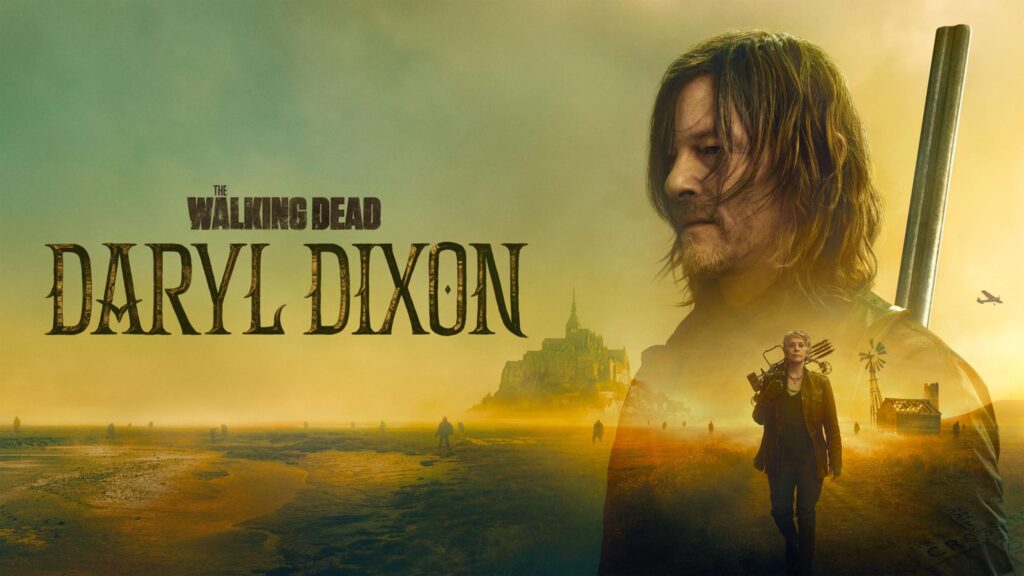
The Walking Dead: Daryl Dixon
The Walking Dead: Daryl Dixon is closely tied to France, and the country is far more than a generic backdrop.
Montmajour Abbey
Montmajour Abbey has appeared in The Lion in Winter (1968), Mystère (2007), Inquisitio (2012) and The Walking Dead: Daryl Dixon (2023–).
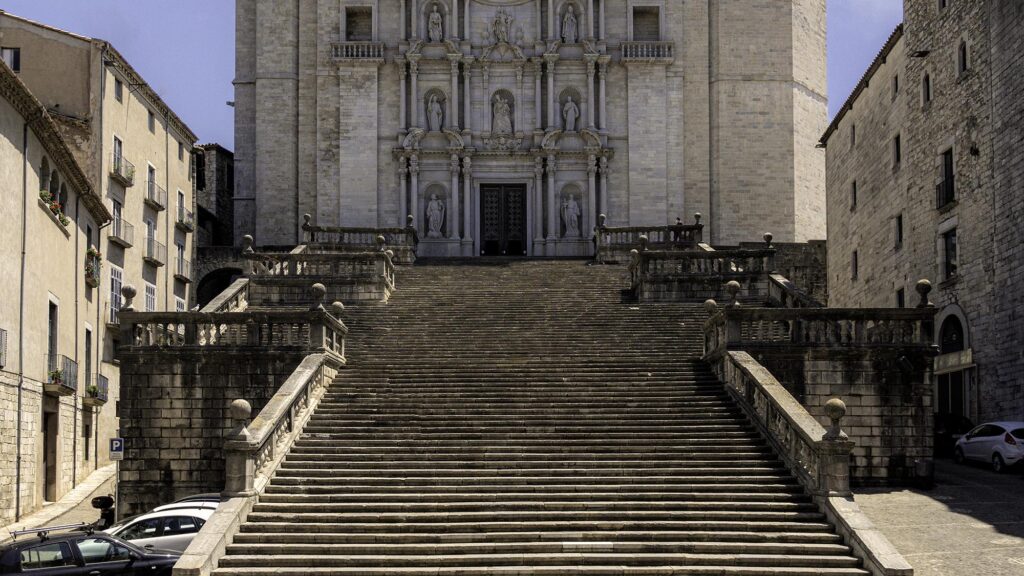
Girona Cathedral
Girona Cathedral is best known on screen from "Game of Thrones" (2011–2019), where it appears in season 6 as the Great Sept of Baelor in King’s Landing.
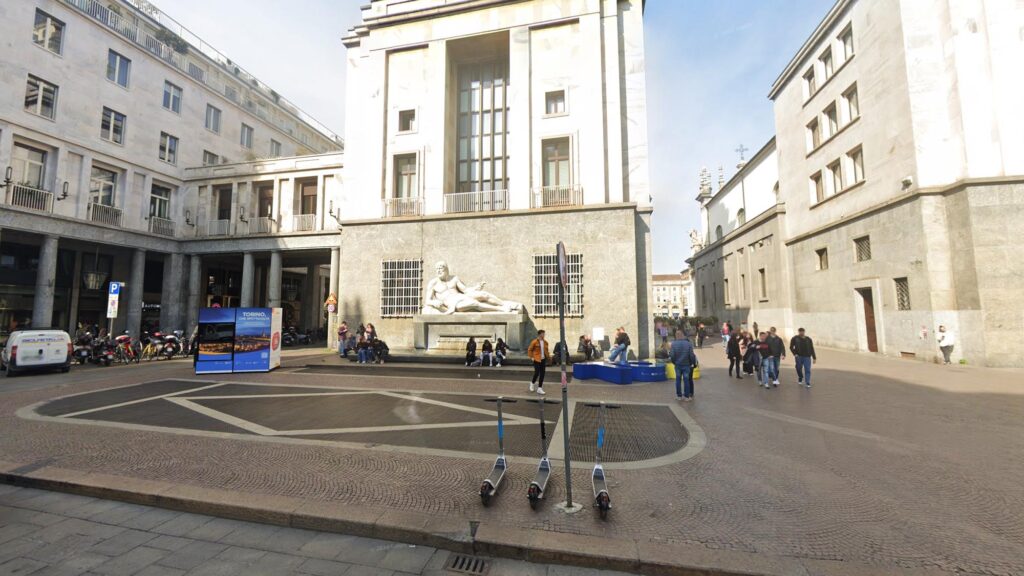
Piazza C.L.N.
Piazza C.L.N. in Turin is most famously known as a filming location for Dario Argento’s 1975 horror masterpiece Profondo Rosso (Deep Red).
Piz Gloria
Piz Gloria has appeared in On Her Majesty’s Secret Service (1969). The summit building is Ernst Stavro Blofeld’s remote research institute and headquarters.
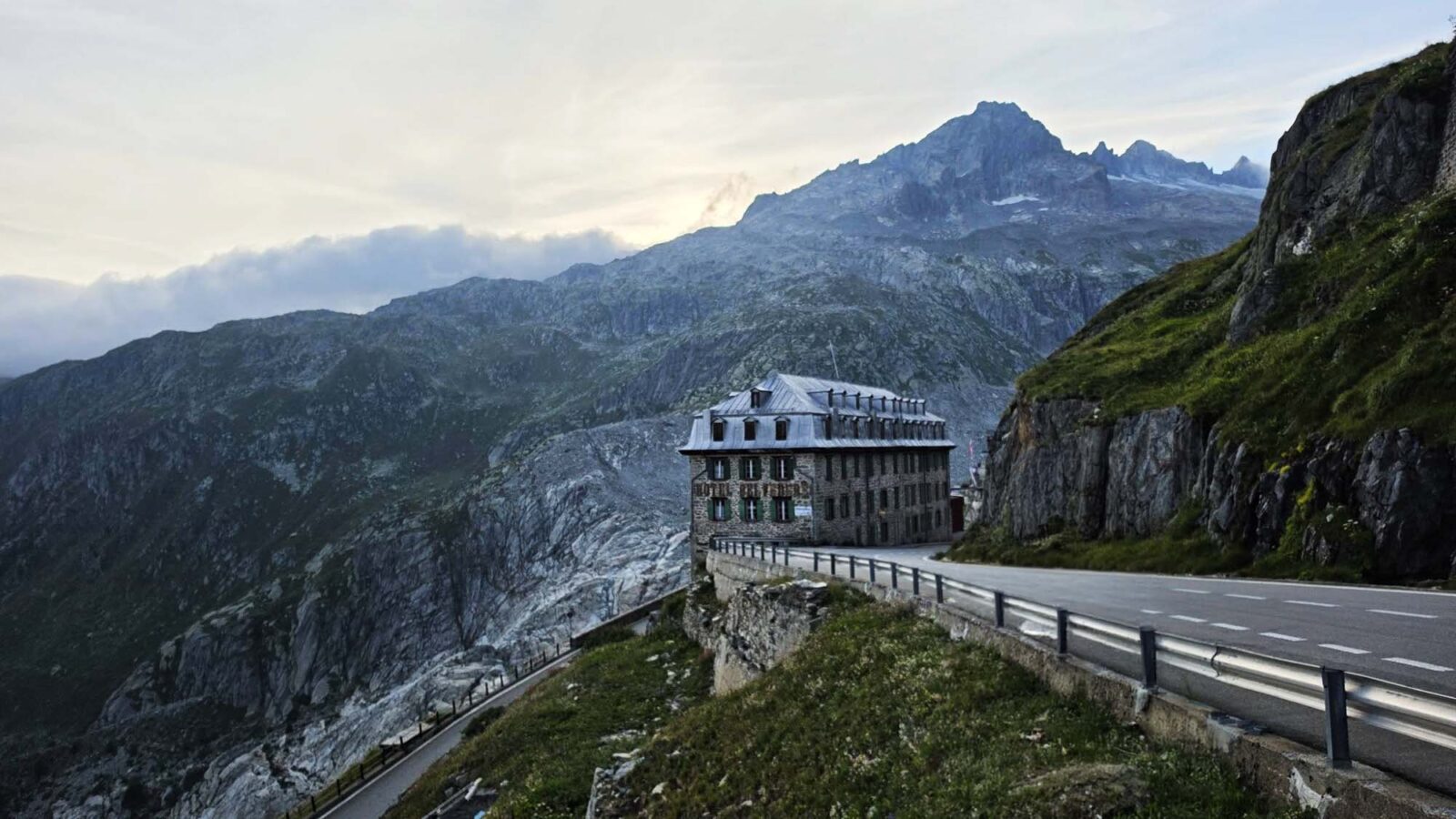
Furka Pass
Furka Pass is a high mountain pass in the Swiss Alps, and has appeared in Goldfinger (1964) and the short film Under the Ice (2024).

Villa del Balbianello
Villa del Balbianello has appeared in several films, most famously A Month by the Lake, Star Wars: Episode II – Attack of the Clones and Casino Royale.
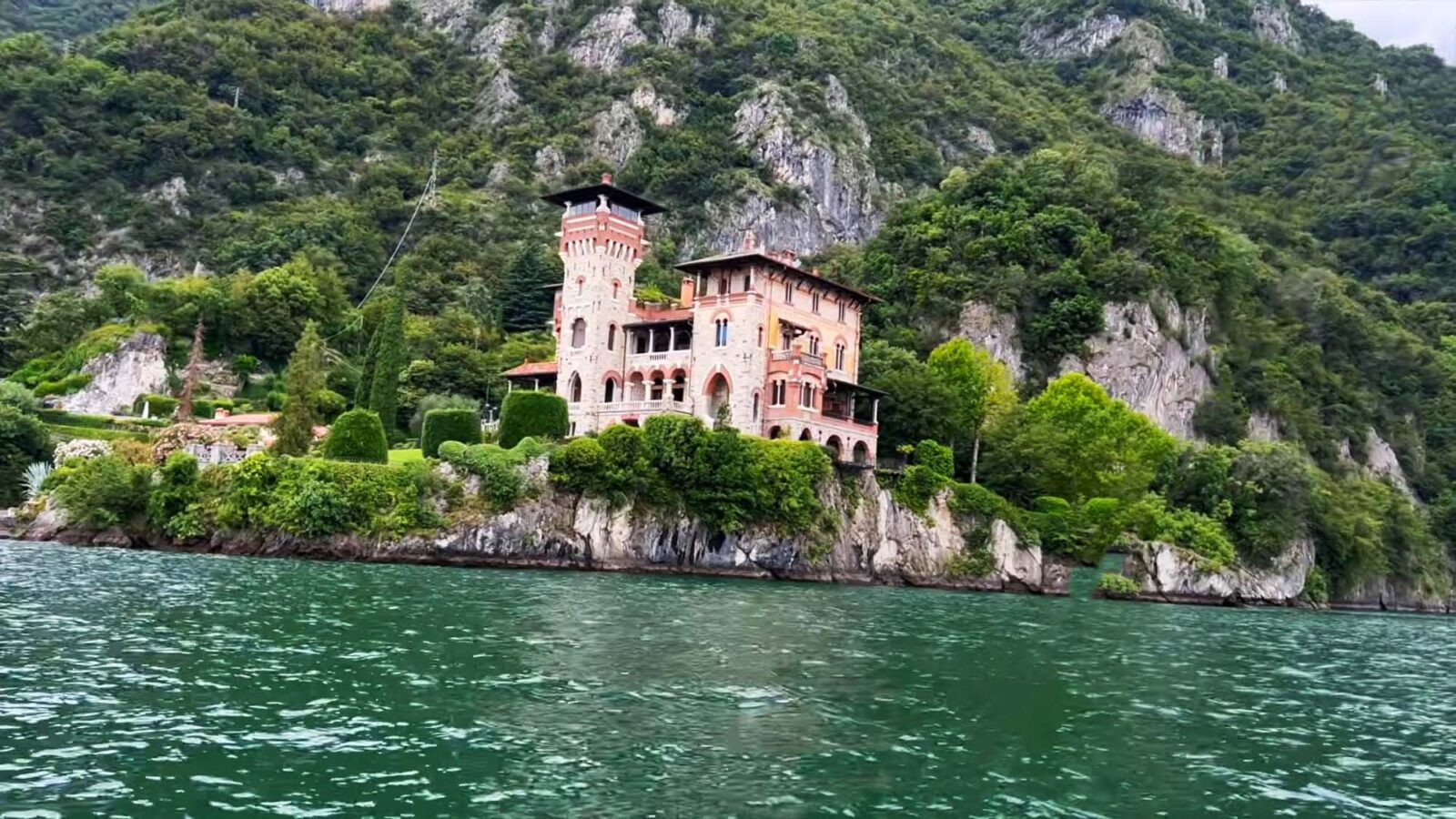
Villa La Gaeta
Villa La Gaeta, an early twentieth-century villa on the western shore of Lake Como, has appeared in The Final Contract (1993) and Casino Royale (2006).
Torrechiara Castle
Torrechiara Castle is in Condottieri, Women and Soldiers, ’Tis Pity She’s a Whore, Tragedy of a Ridiculous Man, Ladyhawke, The Charterhouse of Parma and more.
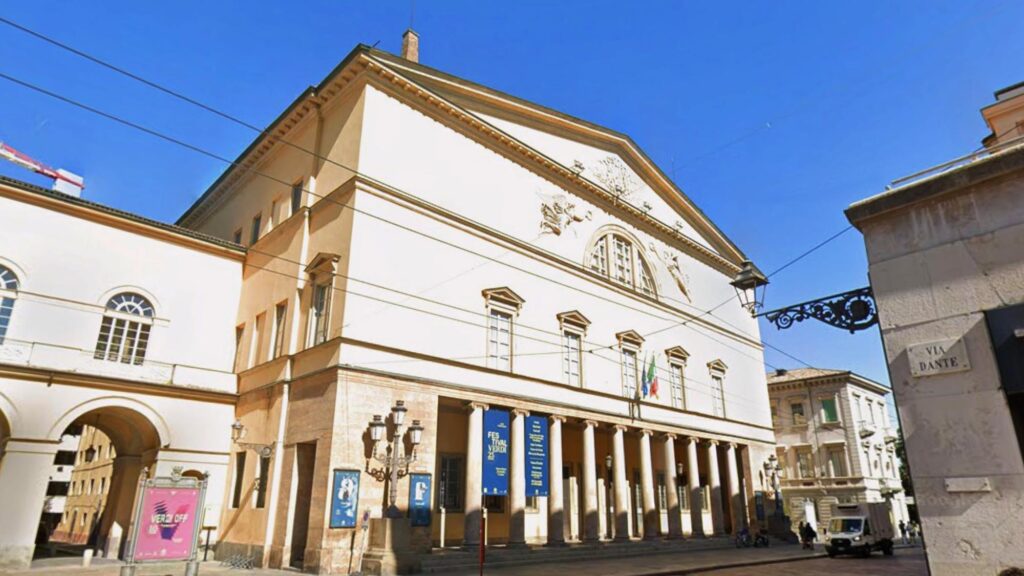
Teatro Regio di Parma
Teatro Regio di Parma has been used in several films, most notably Dario Argento’s Opera from 1987 and Bernardo Bertolucci’s Before the Revolution from 1964.