
Orford Castle is a medieval royal fortress in the small coastal town of Orford, Suffolk, England, overlooking the marshes and the estuary of the River Ore. Built between 1165 and 1173 on the orders of King Henry II, it was intended to strengthen royal authority in East Anglia and counter the influence of powerful local noblemen, particularly Hugh Bigod, Earl of Norfolk, who controlled nearby Framlingham and Bungay castles. Construction was carefully recorded in the royal financial accounts known as the Pipe Rolls, which give a total expenditure of £1,413, nine shillings and two pence, making Orford one of the earliest English castles for which detailed construction records survive. The most distinctive feature of the fortress is its unusual polygonal keep, consisting of an eighteen-sided central tower with three rectangular projecting turrets. Built from local septaria stone with limestone dressings, the keep contains several levels connected by narrow spiral staircases, including a basement, kitchen, chapel, chambers and an upper hall. Originally, the tower stood within a fortified enclosure surrounded by curtain walls, defensive towers, a gatehouse and ditches, although most of these structures have disappeared. The castle remained an important royal stronghold throughout the twelfth and thirteenth centuries, particularly during periods of rebellion against the English monarchy. Richard I’s mother, Eleanor of Aquitaine, assembled a fleet at Orford while arranging the ransom for her imprisoned son, and King Edward I spent the night at the castle on 11 April 1277. In 1336, Edward III granted the fortress to Robert de Ufford, who subsequently became Earl of Suffolk, ending its long period of direct royal ownership. By the late sixteenth century, the castle had lost much of its military importance, and sections of its defensive walls were dismantled for building materials. The keep survived largely because its prominent position made it a useful navigational landmark for ships approaching the Suffolk coast. During the Napoleonic Wars, it was used as a coastal signalling station, while the Second World War saw the installation of radar equipment. The castle also has an unusual place in English folklore through the legend of the Wild Man of Orford, a mysterious creature supposedly captured by local fishermen during the twelfth century and imprisoned inside the fortress. According to an account recorded by the chronicler Ralph of Coggeshall, the creature was tortured in an attempt to make it speak but eventually escaped back into the sea. In 1928, the castle was presented to Orford Town Trust by Sir Arthur Churchman, and it came under the guardianship of the Ministry of Works in 1962. Now managed by English Heritage, the surviving keep is protected as a Grade I listed building and scheduled monument.
Orford Castle appears in Witchfinder General (1968), the British historical horror film directed by Michael Reeves and starring Vincent Price. The castle provides the setting for the film’s final sequence, in which the notorious witchfinder Matthew Hopkins and his assistant John Stearne imprison Richard Marshall and Sara Lowes on accusations of witchcraft. Both the castle exterior and its authentic medieval interior were used for filming, including the narrow stairways and underground chamber where the characters are tortured. The sequence culminates in the violent confrontation between Marshall and Hopkins, bringing the film to its disturbing conclusion.
In Witchfinder General (1968), also released in the United States as The Conqueror Worm, Orford Castle serves as the stronghold where Matthew Hopkins, played by Vincent Price, brings Richard Marshall, played by Ian Ogilvy, and Sara Lowes, played by Hilary Dwyer, after accusing them of witchcraft. Set during the English Civil War in 1645, the film follows Hopkins and his sadistic assistant John Stearne, played by Robert Russell, as they travel through East Anglia extracting confessions from suspected witches through torture. Richard, a soldier in Oliver Cromwell’s Parliamentary army, has sworn revenge against the two men after they persecuted Sara and arranged the execution of her uncle, the village priest John Lowes. Having learned of Richard’s intentions, Hopkins sets a trap and has both Richard and Sara arrested on fabricated charges of consorting with the Devil. The final sequence begins with the prisoners being escorted towards Orford Castle, where the distinctive polygonal keep rises above the surrounding landscape. The exterior shots clearly show the building’s medieval stonework and projecting towers. Once inside, Richard and Sara are taken down the narrow stone stairways into the castle’s underground chamber, where Hopkins intends to force them to confess. Richard is restrained while Stearne begins torturing Sara, repeatedly piercing her back with needles in an attempt to discover the supposed mark of the Devil. Hopkins watches the interrogation and demands that Richard confess to witchcraft, but the soldier refuses and repeatedly threatens to kill him. As Richard is forced to witness Sara’s suffering, several of his fellow Parliamentary soldiers approach the castle and begin fighting their way inside. Hearing the disturbance, Stearne becomes increasingly nervous, but Hopkins insists that they continue the interrogation. Richard eventually manages to free himself from his restraints and attacks Stearne, knocking him to the ground and stamping violently on his face. With Stearne incapacitated, Richard seizes an axe and turns on Hopkins, repeatedly striking the witchfinder as he attempts to escape across the chamber floor. By the time Richard’s comrades reach the dungeon, Hopkins has been horribly wounded but is still alive. Trooper Swallow, played by Nicky Henson, is so appalled by the spectacle that he shoots Hopkins to end his suffering. Rather than expressing relief, Richard becomes hysterical, repeatedly accusing the soldier of depriving him of his revenge. Sara, meanwhile, begins screaming uncontrollably, and the film ends with her cries echoing through the chamber. Reeves filmed the sequence inside the actual medieval keep during the autumn of 1967, using the existing staircases and underground rooms rather than recreating them entirely in a studio. The basement chamber, often described as the castle’s dungeon, was furnished with torture equipment and additional props for the production, but much of its original stonework remains recognisable today. The film also uses the real staircase leading down into the chamber, allowing the movement of prisoners and soldiers through the building to follow its actual architectural layout. Orford Castle consequently provides both the exterior establishing shots and the principal interior location for the film’s climax, which is remembered as one of the bleakest endings in British horror cinema.
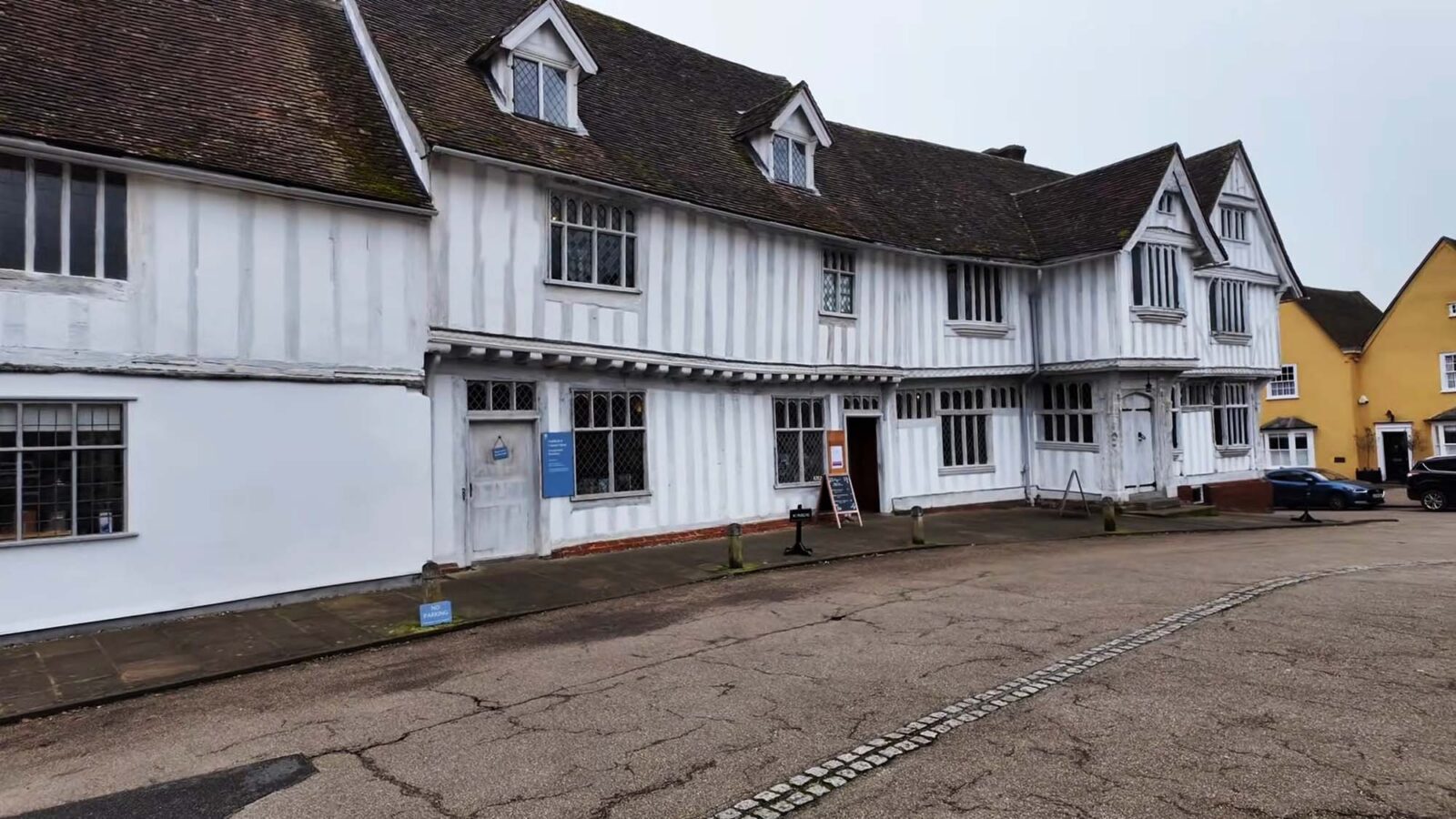
Lavenham Guildhall
Lavenham Guildhall is in Witchfinder General (1968), The Canterbury Tales (1972), Barry Lyndon (1975) and Harry Potter and the Deathly Hallows: Part 1 (2010).
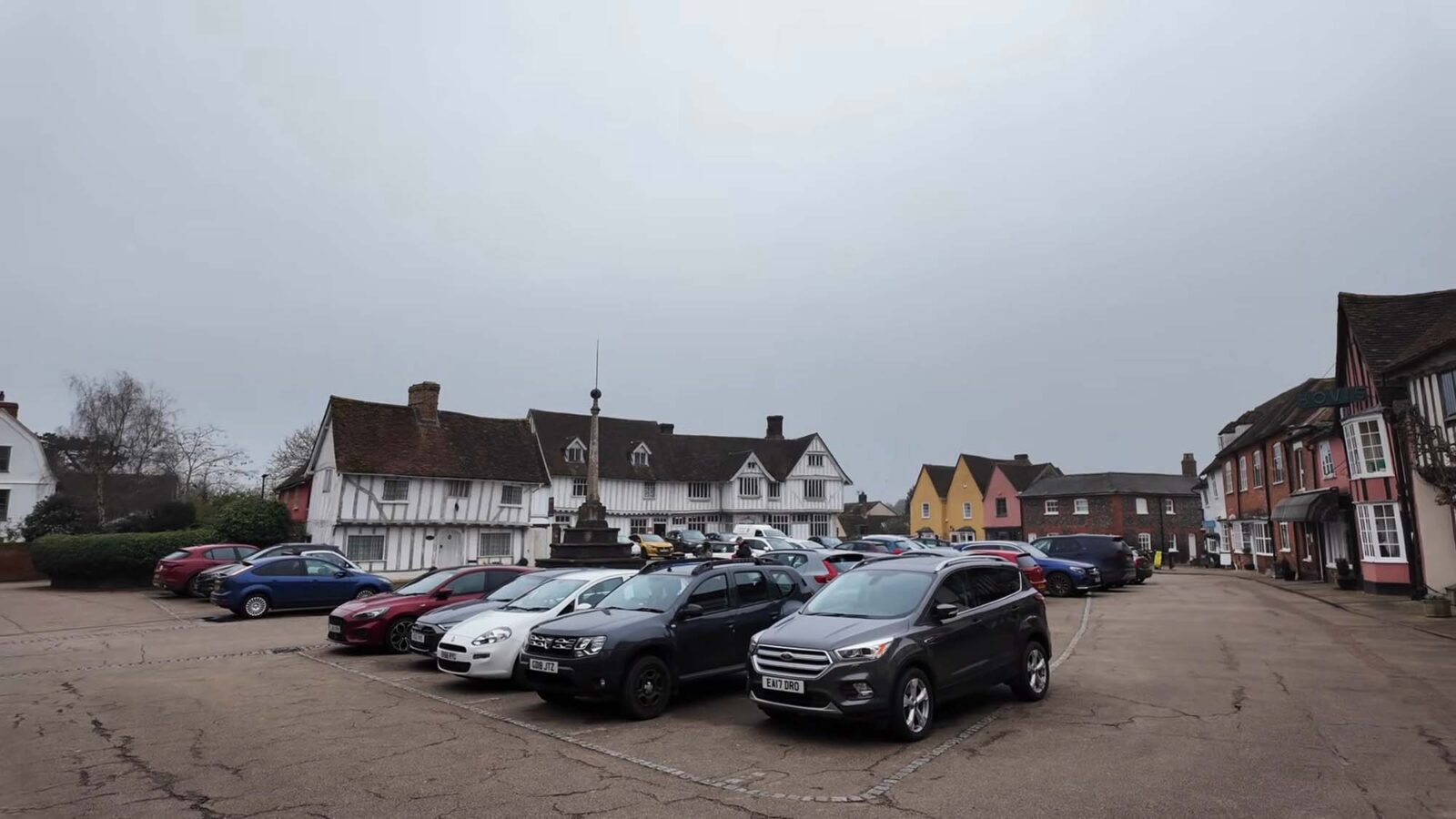
Lavenham Market Square
Lavenham Market Square is in Witchfinder General, The Canterbury Tales, Playing Away, Lovejoy, Harry Potter and the Deathly Hallows: Part 1 and The Strays.
St John the Evangelist Church
St John the Evangelist Church appears in Witchfinder General (1968), the British historical horror film directed by Michael Reeves and starring Vincent Price.
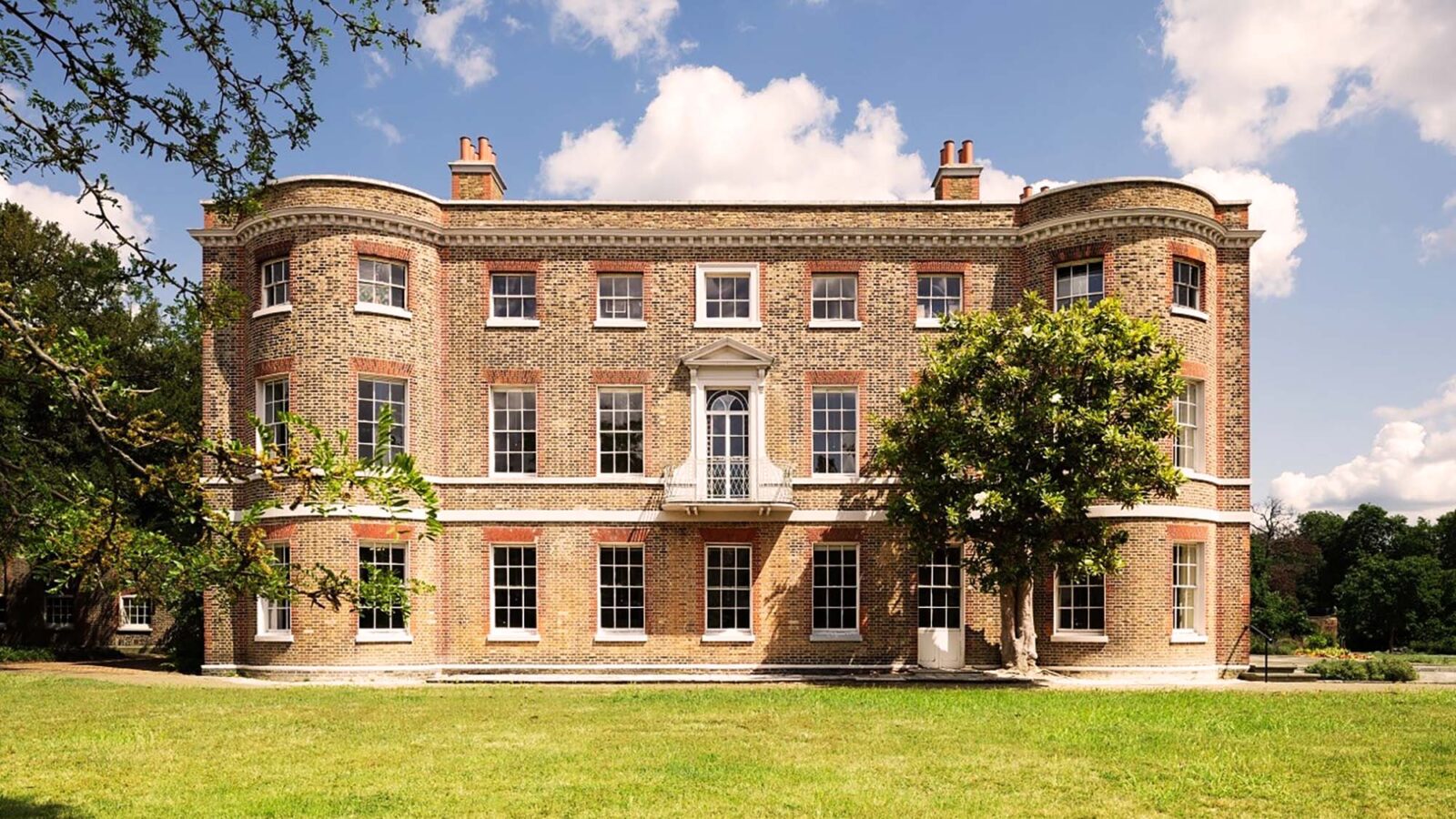
Valentines Mansion and Gardens
Valentines Mansion and Gardens is a historic mansion and garden estate in Ilford, in the London Borough of Redbridge. The house stands…
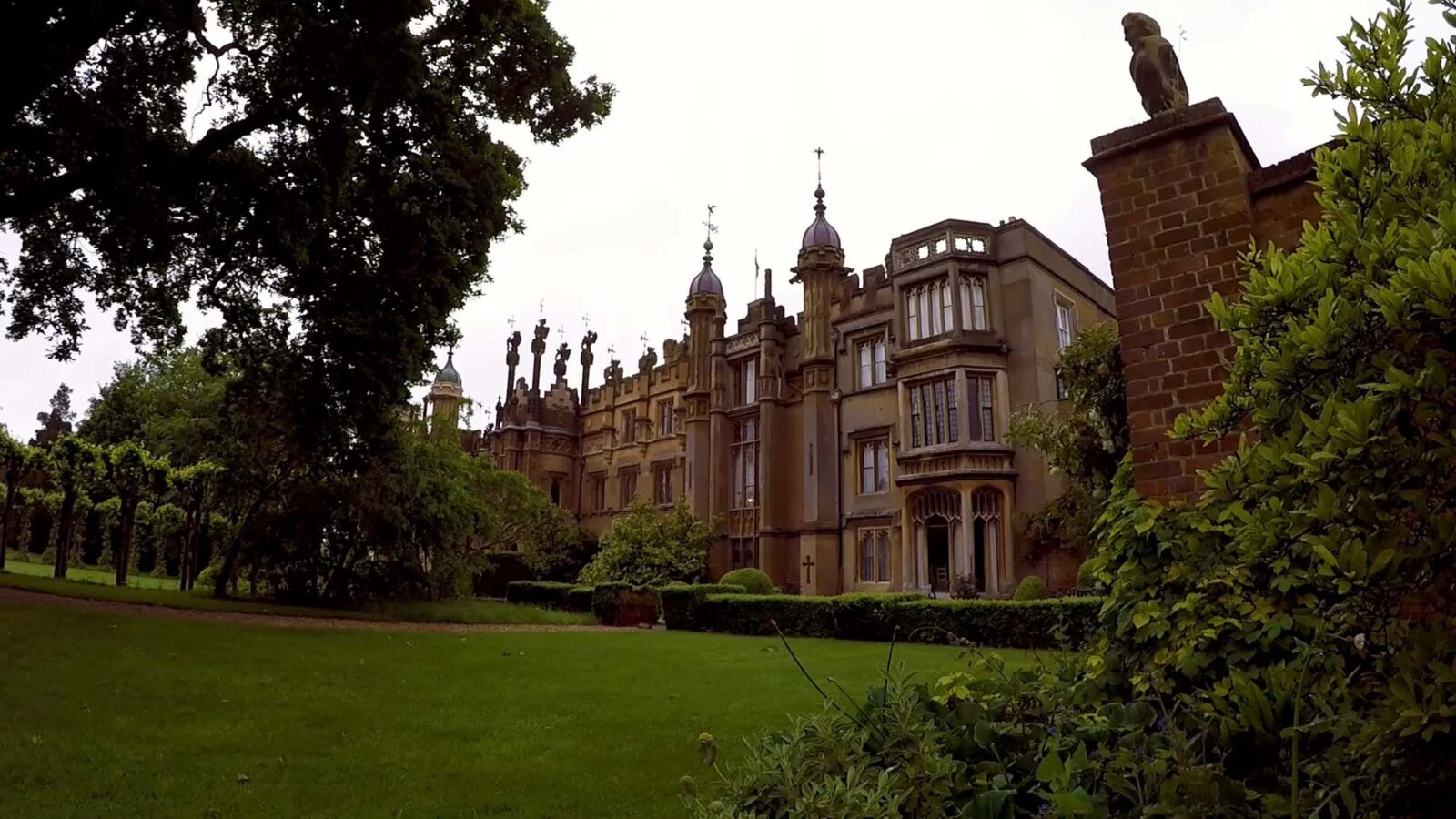
Knebworth House
Knebworth House appeared in The Great Muppet Caper, The Shooting Party, The Lair of the White Worm, Batman, The Wings of the Dove, and many more.
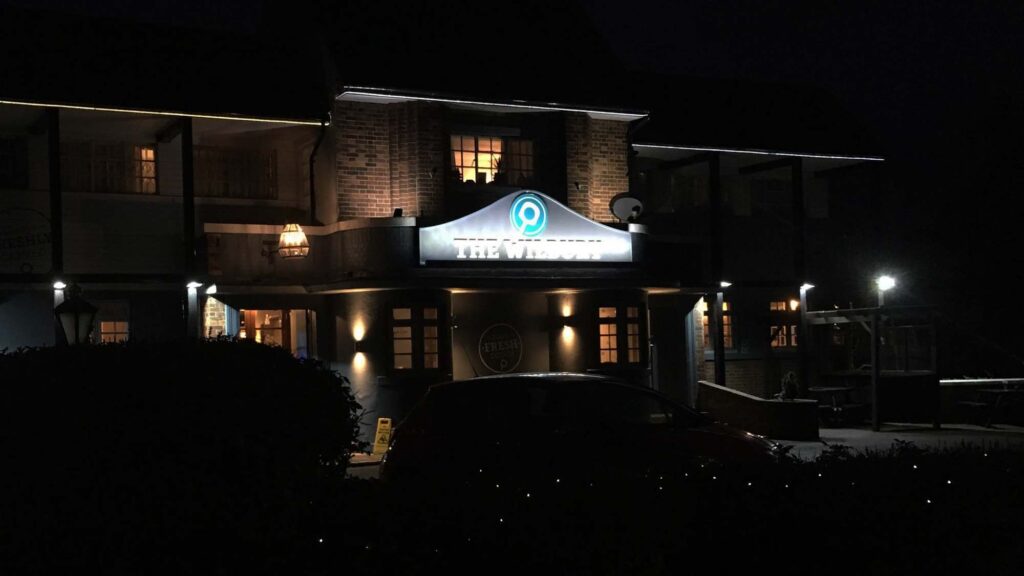
The Wilbury
The Wilbury has appeared in The World’s End (2013), where it was used as the fictional pub that gives the film its title and serves as the final destination.
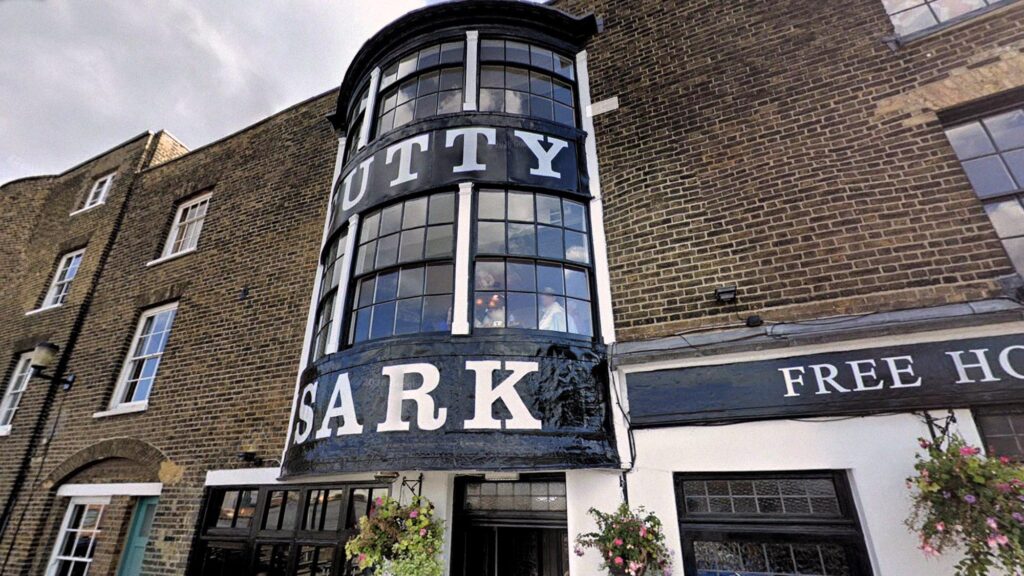
Cutty Sark
Cutty Sark is best known on screen from Beautiful Thing, where it is disguised as The Anchor. It is also used in The List of Adrian Messenger.
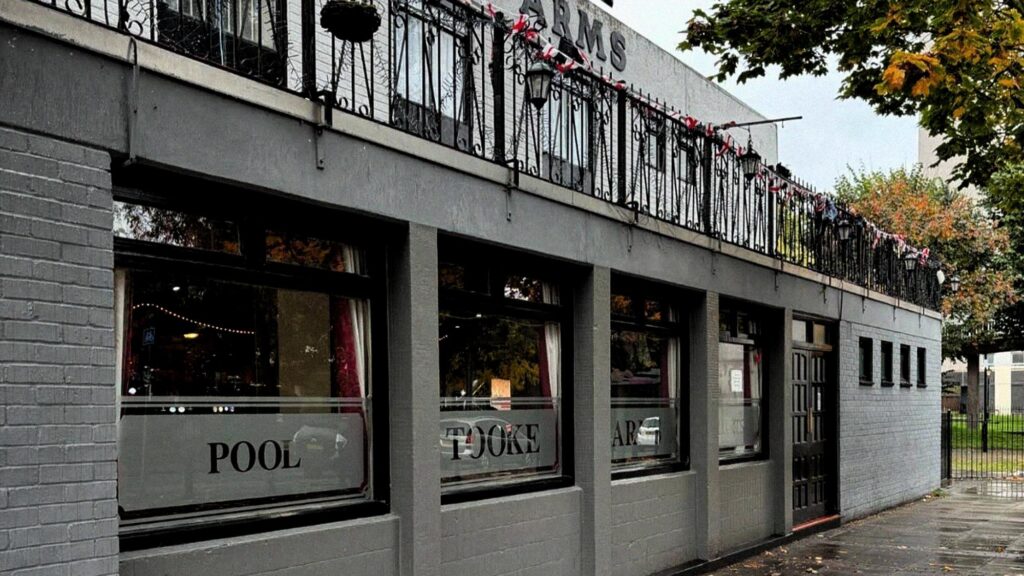
The Tooke Arms
The Tooke Arms appears in MobLand (2025–), where it is used as The Sinful Monkey, the criminal base of Richie Stevenson.
Chislehurst Caves
Chislehurst Caves is an extensive network of man-made tunnels beneath Chislehurst in the London Borough of Bromley, England. Despite the name, the…