
Musso & Frank Grill is a historic restaurant at 6667 Hollywood Boulevard in Hollywood, Los Angeles, California. Established in 1919, it is the oldest continuously operating restaurant in Hollywood and one of the few surviving establishments from the early years of the American film industry. The restaurant was founded by Frank Toulet as Frank’s Café at 6669 Hollywood Boulevard, with Joseph Musso subsequently joining the business and giving it the name by which it became famous. French chef Jean Rue was hired in 1922 and developed a menu combining traditional American dishes with French influences, including grilled steaks, lamb chops, Welsh rarebit, chicken pot pie and seafood. Rue remained with the restaurant for more than fifty years, and many of his original dishes have survived with relatively few changes. In 1927, the business was purchased by Italian immigrants John Mosso and Joseph Carissimi, whose descendants continued to operate it. During the 1930s, the restaurant moved to its present premises at 6667 Hollywood Boulevard, where its dark wooden panelling, red leather booths, white tablecloths, counter seating and mahogany bar became familiar surroundings for generations of Hollywood actors, directors and writers. In 1934, the owners opened a private dining area known as the Back Room, which quickly developed into an unofficial meeting place for the entertainment industry. Among its regular patrons were Charlie Chaplin, Douglas Fairbanks, Mary Pickford, Rudolph Valentino, Greta Garbo, Humphrey Bogart, Lauren Bacall and Marilyn Monroe. Chaplin was particularly associated with a booth near the front of the restaurant and is said to have challenged Fairbanks to horse races along Hollywood Boulevard, with the loser paying for lunch. Musso & Frank also became an important meeting place for writers working in Hollywood during the 1930s and 1940s. Raymond Chandler, Dashiell Hammett, F. Scott Fitzgerald, William Faulkner and Nathanael West were among the authors associated with its dining rooms. The proximity of the Screen Writers Guild and Stanley Rose Bookshop helped establish the restaurant as a gathering place where writers could escape the studios and meet publishers, producers and fellow authors. When the original Back Room closed in the mid-1950s, much of its furniture, lighting and bar fittings were transferred into the adjoining New Room, preserving an important part of the restaurant’s history. The building forms part of the Hollywood Boulevard Commercial and Entertainment District, which was added to the National Register of Historic Places in 1984. Musso & Frank remains family-owned, with the descendants of John Mosso maintaining many of the traditions established during its first decades. Its largely unchanged interior has also made it particularly valuable to filmmakers recreating earlier periods of Hollywood history, while its genuine connections to the film industry have made it an equally suitable setting for contemporary productions.
Musso & Frank Grill has appeared in Ed Wood (1994), Swingers (1996), Sex and the City (1998–2004), Ocean’s Eleven (2001), The Man Who Wasn’t There (2001), Hollywood Homicide (2003), Charlie’s Angels: Full Throttle (2003), Mad Men (2007–2015), Greenberg (2010), 90210 (2008–2013), Scandal (2012–2018), Bosch (2014–2021), Better Things (2016–2022), The Kominsky Method (2018–2021), Once Upon a Time in Hollywood (2019) and Blonde (2022). The restaurant has been used both as itself and as a fictional establishment, with Mad Men employing its interior to represent several restaurants in 1960s New York. Ocean’s Eleven features two conversations between Danny Ocean and Rusty Ryan, while Greenberg uses the dining room for an uncomfortable birthday celebration. In Once Upon a Time in Hollywood, Quentin Tarantino returns the restaurant to its late-1960s surroundings for a meeting between a fading television actor and a Hollywood agent. Other productions have used the exterior or parking lot rather than the dining room, including Ed Wood and Swingers. Its appearances across several decades provide an unusual continuity, with many of the same furnishings and architectural details visible in productions filmed more than twenty years apart.
In Ed Wood (1994), the biographical comedy-drama directed by Tim Burton, Musso & Frank Grill appears during one of the film’s most memorable scenes, when struggling filmmaker Edward D. Wood Jr., played by Johnny Depp, meets legendary director Orson Welles, played by Vincent D’Onofrio. Wood is attempting to complete Plan 9 from Outer Space, but production has been repeatedly interrupted by financial difficulties, unreliable investors and disagreements over his filmmaking methods. After a particularly frustrating confrontation with the film’s religious backers, who object to his habit of wearing women’s clothing, Wood leaves the studio wearing an angora sweater and asks a taxi driver to take him to the nearest bar. The taxi delivers him to Musso & Frank Grill on Hollywood Boulevard. Inside, Wood orders a whiskey and notices Orson Welles sitting alone at a nearby table. Initially overwhelmed by the opportunity to meet one of his greatest filmmaking heroes, Wood approaches Welles and begins talking about the problems he has encountered while making his latest picture. Welles, himself frustrated by studio interference and the difficulty of financing independent productions, sympathises with the younger filmmaker. Their conversation turns to the conflict between artistic ambition and the commercial realities of filmmaking, with Wood discovering that even the director of Citizen Kane has encountered resistance from producers and studio executives. Encouraged by Welles’s determination to make films on his own terms, Wood regains his enthusiasm and returns to complete Plan 9 from Outer Space. The encounter is fictional, with no evidence that the two directors ever met in this manner. Although Musso & Frank is clearly identified as the restaurant where the meeting takes place, only the exterior was filmed at the actual establishment. The interior scene was shot at Boardner’s, another historic Hollywood bar, after production restrictions made filming inside Musso & Frank impractical. The sequence nevertheless associates the restaurant with the history of independent filmmaking and the difficulties faced by two directors whose careers developed in very different directions.
In Swingers (1996), the comedy-drama directed by Doug Liman and written by Jon Favreau, the rear parking lot of Musso & Frank Grill was used for a confrontation outside the Dresden Room, another historic Los Angeles restaurant and nightclub. The film follows Mike Peters, played by Favreau, a struggling actor who has moved from New York to Los Angeles and remains depressed after the end of a long-term relationship. His friends, particularly the confident and outspoken Trent Walker, played by Vince Vaughn, encourage him to become more involved in the city’s nightlife. During an evening at the Dresden, Mike and his friends encounter a group of aggressive young men known as the House of Pain. After exchanging insults inside the nightclub, the confrontation continues outside, where Sue, played by Patrick Van Horn, becomes involved in a fight with members of the rival group. The altercation takes place in what appears to be the parking area behind the Dresden, but the production actually used the rear parking lot of Musso & Frank Grill on Hollywood Boulevard. The restaurant’s rear entrance was temporarily disguised with an awning identifying it as the Dresden, allowing the scene to be combined with footage filmed at the real nightclub on North Vermont Avenue. Parts of Musso & Frank’s existing signage and brickwork remain visible in the sequence. Unlike the restaurant’s appearances in most other productions, Swingers makes no use of the famous dining rooms or bar, relying entirely on the exterior parking area to represent a different Los Angeles establishment.
In Sex and the City (1998–2004), the HBO comedy-drama created by Darren Star, Musso & Frank Grill appears in «Sex and Another City» (2000), the fourteenth episode of the third season. Carrie Bradshaw, played by Sarah Jessica Parker, has travelled to Los Angeles with Samantha Jones and Miranda Hobbes following the emotional aftermath of her relationship with Mr Big. While Carrie becomes involved in the city’s entertainment industry and Samantha enjoys its celebrity culture, Miranda, played by Cynthia Nixon, reconnects with an old acquaintance named Lew, played by Sam Seder. Lew is a former New Yorker who has moved to California and adopted what he considers a healthier lifestyle. The two arrange to have dinner at Musso & Frank, where they sit together in the restaurant’s New Room. Miranda is pleased to discover that Lew still enjoys traditional New York-style food, particularly steak, despite the dietary obsessions she associates with Los Angeles. However, their evening becomes increasingly uncomfortable when she notices that he is behaving strangely while eating. Lew eventually explains that he follows an unusual diet in which he chews his food for the flavour but avoids swallowing it, discreetly disposing of the food instead. Miranda is disgusted by the discovery, especially because the two have been discussing the possibility of renewing their romantic connection. What initially appears to be a promising evening with a familiar New Yorker becomes another example of the eccentric behaviour the women encounter during their visit to California. The sequence was filmed inside the actual Musso & Frank Grill, using the New Room rather than the older dining area. Its traditional steakhouse surroundings provide a particularly appropriate setting for a scene built around Miranda’s frustration with Los Angeles health trends.
In Ocean’s Eleven (2001), the crime comedy directed by Steven Soderbergh, Musso & Frank Grill appears twice during the early stages of Danny Ocean’s plan to rob three Las Vegas casinos. Danny, played by George Clooney, has recently been released from prison and immediately begins planning an elaborate robbery targeting the Bellagio, the Mirage and the MGM Grand, all owned by casino magnate Terry Benedict, played by Andy Garcia. Danny approaches his former criminal associate Rusty Ryan, played by Brad Pitt, hoping to persuade him to participate in the scheme. Their initial meeting takes place in a booth in the restaurant’s front dining room, where Danny explains the basic outline of his plan. Rusty is initially sceptical, questioning the feasibility of stealing such an enormous amount of money from three heavily protected casinos. Danny nevertheless convinces him that the simultaneous heist is possible if they assemble a sufficiently skilled team. The restaurant returns later when the two men sit together at its bar, discussing the number of specialists required for the operation. Danny initially suggests that a team of ten should be sufficient, but Rusty’s reaction persuades him that they need an additional member. The conversation establishes the eleven-person group that gives the film its title. Both scenes were filmed inside the actual restaurant, using its recognisable leather booths and wooden bar. The location provides a comparatively understated setting for the planning stages of an exceptionally ambitious robbery, with the two experienced criminals discussing their scheme as casually as ordinary customers enjoying a meal or drink.
In The Man Who Wasn’t There (2001), the black-and-white crime drama written and directed by Joel and Ethan Coen, Musso & Frank Grill was used to represent a restaurant called Da Vinci’s in the fictionalised Northern California setting of the film. Billy Bob Thornton plays Ed Crane, a quiet barber working in Santa Rosa in 1949 who becomes entangled in a series of increasingly disastrous events after discovering that his wife Doris, played by Frances McDormand, is having an affair with her employer, department-store owner Big Dave Brewster, played by James Gandolfini. Hoping to obtain money for a business investment, Ed anonymously blackmails Brewster, but the scheme leads to a violent confrontation in which Ed kills him. When Doris is subsequently arrested and accused of Brewster’s murder, Ed and his brother-in-law Frank, played by Michael Badalucco, hire the expensive defence attorney Freddy Riedenschneider, played by Tony Shalhoub. Ed’s first meeting with Riedenschneider takes place at Da Vinci’s, with Musso & Frank Grill providing the restaurant interior. Riedenschneider arrives with the confidence of a lawyer accustomed to dealing with important clients and immediately demonstrates his expensive tastes by ordering an elaborate meal. He explains that he intends to challenge the prosecution’s evidence rather than simply argue the facts of the case, relying on the uncertainty and complexity of the legal process to create reasonable doubt. He also makes it clear that Ed must follow his instructions and leave the talking to him. The restaurant sequence introduces one of the film’s most distinctive supporting characters and establishes the financial burden his services will place on Ed and Frank. Musso & Frank’s period interior was particularly suitable for the production, allowing the filmmakers to recreate a late-1940s restaurant without extensive modifications to the building.
In Hollywood Homicide (2003), the action comedy directed by Ron Shelton, the parking area behind Musso & Frank Grill appears among the Hollywood locations used during the film’s police investigation and action sequences. Harrison Ford plays Joe Gavilan, a veteran Los Angeles Police Department detective who supplements his income by working as a real estate agent, while Josh Hartnett plays his younger partner K. C. Calden, an aspiring actor who also teaches yoga. The two investigate the murder of four members of a rap group at a Hollywood nightclub, gradually uncovering connections between the killings, the music industry and corrupt police officers. The film makes extensive use of actual Hollywood streets, parking areas, businesses and entertainment landmarks, particularly during its later action sequences. Musso & Frank’s rear parking lot is visible in the production, although the restaurant’s famous dining room does not play a comparable role. The precise action associated with the parking-lot footage is less thoroughly documented than the restaurant scenes in Ocean’s Eleven or Greenberg.
In Charlie’s Angels: Full Throttle (2003), the action comedy directed by McG, Musso & Frank Grill provides the setting for a meeting involving several international criminal organisations. The film stars Cameron Diaz, Drew Barrymore and Lucy Liu as Natalie Cook, Dylan Sanders and Alex Munday, three private investigators working for the mysterious Charlie Townsend. Their latest assignment involves recovering two stolen titanium rings containing encrypted information about people enrolled in the United States Federal Witness Protection Program. The information is extremely valuable to organised crime figures who want to identify protected witnesses and eliminate former associates who have cooperated with authorities. Several criminal organisations become involved in attempts to purchase the information, including the Diablo Cartel, the Tanaka Yakuza, the Antonioni crime family and the O’Grady clan. Musso & Frank Grill is used for a sequence in which representatives of these organisations deliver briefcases containing money as part of the arrangements surrounding the sale. Among the participants is Seamus O’Grady, played by Justin Theroux, a dangerous Irish criminal who has a personal connection to Dylan’s past. The restaurant’s dark wooden interiors and traditional booths provide the setting for the clandestine transaction. The location is particularly appropriate given its longstanding cinematic association with Hollywood crime stories, although here the criminal activity involves an international conspiracy rather than the local gangsters more commonly found in classic film noir.
In Mad Men (2007–2015), the period drama created by Matthew Weiner, Musso & Frank Grill appears in several episodes as different restaurants in New York City during the 1960s. One of its most memorable appearances is in «Red in the Face» (2007), the seventh episode of the first season. Advertising executive Don Draper, played by Jon Hamm, and his senior colleague Roger Sterling, played by John Slattery, are drinking together at a restaurant represented by Musso & Frank. Roger has recently shown an interest in Don’s wife Betty, played by January Jones, and Don becomes increasingly resentful of his inappropriate behaviour. Later, Don invites Roger to an extended lunch, encouraging him to drink heavily and eat a substantial meal of oysters. Both men consume large quantities of alcohol before returning to their offices, where Don has arranged for the building’s elevator operator to make the lift temporarily unavailable. Forced to climb the stairs after their excessive lunch, Roger becomes physically exhausted and ultimately vomits in front of important business associates. The incident allows Don to humiliate Roger without openly confronting him about his behaviour towards Betty. Musso & Frank provides the setting for both the earlier drinking scene and the later oyster lunch, with its period furnishings allowing the production to represent an upscale Manhattan restaurant without substantial alteration.
The restaurant returns in «The New Girl» (2008), the fifth episode of Mad Men’s second season, where it stands in for Sardi’s, the celebrated theatre-district restaurant in Manhattan. Don meets Bobbie Barrett, played by Melinda McGraw, who is married to television comedian Jimmy Barrett and has become romantically involved with Don. Bobbie is celebrating the sale of a television pilot and has invited Don to join her at Sardi’s. During their meal, the couple unexpectedly encounter Rachel Menken, played by Maggie Siff, with whom Don previously had an affair. Rachel introduces her husband Tilden Katz, creating an awkward moment for Don, who had not known that she was married. After Rachel and Tilden leave, Don and Bobbie continue drinking and discussing her role in managing Jimmy’s career. Their conversation reveals that Bobbie is a more capable and ambitious businesswoman than Don had previously assumed. The evening eventually ends in a car accident after the two leave the restaurant together. Musso & Frank’s interior was dressed to represent Sardi’s, with the Hollywood restaurant standing in for one of New York’s best-known theatrical establishments.
Musso & Frank appears twice more in «The Rejected» (2010), the fourth episode of Mad Men’s fourth season. In one scene, Pete Campbell, played by Vincent Kartheiser, meets his father-in-law Tom Vogel, played by Joe O’Connor, to discuss a problem involving the Clearasil advertising account. Pete has been instructed to terminate the agency’s relationship with the brand because of a conflict with a more valuable client. Before he can deliver the news, Tom unexpectedly congratulates him on the pregnancy of his wife Trudy, played by Alison Brie. Pete is stunned because Trudy has not yet told him that they are expecting a child. Overwhelmed by the news, he abandons his original purpose and allows Tom to believe that the meeting concerns only routine business matters. Later in the episode, Musso & Frank represents Jim Downey’s Steak House, another New York restaurant. Pete meets fellow advertising executives Harry Crane, played by Rich Sommer, and Ken Cosgrove, played by Aaron Staton, who now works for a competing agency. Their conversation becomes increasingly tense as Ken confronts Pete over an insulting remark suggesting that Ken owes his professional success to luck rather than ability. The two scenes demonstrate the flexibility of Musso & Frank’s historic interior, which was used to represent several distinct Manhattan restaurants throughout the series.
In Greenberg (2010), the comedy-drama written and directed by Noah Baumbach, Musso & Frank Grill provides the setting for an uncomfortable birthday celebration involving Roger Greenberg, played by Ben Stiller. Roger is a former musician who has returned to Los Angeles from New York after experiencing a psychological breakdown. He is staying at his brother’s Hollywood Hills home while the family is travelling abroad and has begun a complicated relationship with Florence Marr, played by Greta Gerwig, his brother’s much younger personal assistant. Roger’s old friend Ivan Schrank, played by Rhys Ifans, takes him to Musso & Frank to celebrate his forty-first birthday. Florence also joins them, and the three sit together at one of the restaurant’s tables. Rather than enjoying the occasion, Roger spends much of the evening complaining about the people around him and expressing his frustration with his life. At one point, he leaves the table to telephone his former girlfriend Beth, played by Jennifer Jason Leigh, demonstrating that he remains emotionally attached to relationships that ended many years earlier. When the restaurant’s waiters approach the table carrying a birthday dessert and begin singing to him, Roger reacts angrily, cutting short the celebration and insulting Ivan for arranging the surprise. Florence, still getting to know Roger’s unpredictable personality, witnesses another example of his inability to accept affection without becoming defensive. The scene was filmed inside the real Musso & Frank Grill, which was specifically written into Baumbach’s screenplay. The production secured permission to close the restaurant for filming on a Tuesday, an unusual arrangement for the historic establishment. Several longtime employees, including a waiter who had worked there for approximately fifty years, appeared in the sequence, while regular customers participated as background performers. The real restaurant consequently became part of the film’s portrayal of contemporary Los Angeles rather than simply serving as a recognisable landmark.
In 90210 (2008–2013), the television drama developed by Rob Thomas, Gabe Sachs and Jeff Judah, Musso & Frank Grill appears in «Nerdy Little Secrets» (2011), the nineteenth episode of the third season. Annie Wilson, played by Shenae Grimes, has begun working as an assistant to Marla Templeton, played by Sally Kellerman, an ageing former Hollywood actress who lives alone in a large house filled with memories of her career. Although Marla initially appears demanding and eccentric, Annie gradually develops a friendship with her and becomes interested in her experiences during Hollywood’s earlier decades. Marla takes Annie to Musso & Frank Grill, a restaurant she remembers from the height of her acting career. Annie admits that she is unfamiliar with the establishment, prompting Marla to explain its importance to the Hollywood social scene. During their meal, Marla reminisces about the years when she regularly visited the restaurant and enjoyed the company of actors and other entertainment figures. Their conversation is interrupted when Annie receives a telephone call from her mother. Annie initially considers ignoring it, but Marla advises her never to neglect a call from her mother. When Annie returns to the table, Marla suddenly appears confused and momentarily fails to recognise her. The incident is one of the first clear indications that Marla is experiencing serious memory problems. She eventually recovers her composure and resumes the conversation, but Annie remains troubled by the sudden change in her behaviour. Later, Annie discovers that Marla has been researching assisted suicide and learns that the actress has Alzheimer’s disease. The scene at Musso & Frank uses the restaurant’s genuine Hollywood history as part of Marla’s personal memories, making the establishment particularly meaningful to a character struggling with the gradual loss of her past.
In Scandal (2012–2018), the political thriller created by Shonda Rhimes, Musso & Frank Grill appears repeatedly as a restaurant where Washington, D.C., political fixer Olivia Pope, played by Kerry Washington, meets her father Rowan Pope, played by Joe Morton. Although the series is set primarily in the American capital, the restaurant scenes were filmed in Hollywood. One of the most dramatic appearances takes place in «The Fluffer» (2014), the sixteenth episode of the third season. Olivia and Rowan are having dinner together when Olivia’s mother Maya Lewis, played by Khandi Alexander, unexpectedly approaches their table. Maya has recently escaped from imprisonment and remains involved in dangerous activities connected to international terrorism. Her arrival transforms what initially appears to be a relatively ordinary family dinner into a confrontation between three people who have repeatedly betrayed and manipulated each other. Maya helps herself to wine and provokes Rowan by commenting on his forced retirement from B613, the secret government organisation he previously controlled. Rowan responds with barely concealed hostility, and the two reach towards the knives on the table as their argument escalates. Olivia attempts to control the situation, but the confrontation becomes even more disturbing when she receives news that Claire, a woman involved in obtaining documents for Maya, has been murdered. Maya makes it clear that she will not tolerate interference in her activities. The restaurant’s formal dining room provides a particularly effective setting for the confrontation, contrasting its familiar surroundings with the threats exchanged across the table.
Musso & Frank returns in Scandal’s «Randy, Red, Superfreak and Julia» (2014), the opening episode of the fourth season. Olivia has returned to Washington after spending several months living on a remote island with Jake Ballard, played by Scott Foley. She is still struggling with the death of her colleague Harrison Wright, played by Columbus Short, and suspects that Rowan may have been responsible. During a meeting at the restaurant, Rowan attempts to persuade Olivia that he had nothing to do with Harrison’s murder. She confronts him directly, explaining that she can no longer trust his explanations and fears that he has been manipulating her once again. Rowan denies ordering the killing and attempts to redirect their conversation towards the fate of her mother. The restaurant appears again in «It’s Hard Out Here for a General» (2016), the tenth episode of the fifth season. Six months have passed since Olivia ended her relationship with President Fitzgerald Grant, and she is attempting to adjust to life outside the White House. During dinner with Rowan, she insists that she is happy with her newfound independence, although her father remains unconvinced. Olivia has become a celebrity following the public exposure of her relationship with the president, and nearby diners recognise her and attempt to photograph her. Rowan observes that she appears to be enjoying the attention while also questioning whether her behaviour is an attempt to conceal her unhappiness. Across these three episodes, Musso & Frank serves as a recurring location for private meetings between father and daughter, with the restaurant’s traditional booths and dining tables providing a consistent setting for their complicated relationship.
In Bosch (2014–2021), the Amazon crime drama developed by Eric Overmyer from the novels of Michael Connelly, Musso & Frank Grill appears in «Chapter One: ‘Tis the Season» (2014), the first episode of the series. Titus Welliver plays Hieronymus «Harry» Bosch, a veteran Los Angeles Police Department homicide detective who is facing a civil lawsuit following the fatal shooting of a suspected serial killer. While the legal case threatens his career, Bosch becomes involved in an investigation after the discovery of human remains in the Hollywood Hills. During the search for additional evidence, he works alongside Julia Brasher, played by Annie Wersching, a relatively inexperienced police officer who has recently joined the department. Following a day spent searching the hillside, Bosch invites Brasher to join him for a drink at Musso & Frank Grill. The two sit together at the restaurant’s bar, drinking martinis and discussing their backgrounds. Brasher explains that she previously attended law school and worked as an attorney with her father’s firm before deciding to become a police officer. Bosch is surprised by her decision to abandon a potentially lucrative legal career for police work. Their conversation also turns to the shooting for which Bosch is being sued. Although Brasher is aware of the accusations against him, she expresses respect for homicide investigators and describes their work as one of the few remaining professions in which a person can make a genuine difference. Bosch appears pleased by her assessment but remains guarded when she asks about the scars on his knuckles and other details of his past. Their meeting establishes the beginnings of a personal relationship that becomes increasingly complicated during the first season. The scene was filmed at the actual Musso & Frank Grill, making use of the restaurant’s bar and its longstanding association with Los Angeles crime fiction. The location is particularly appropriate given that Michael Connelly’s novels frequently draw upon the real geography and history of Hollywood.
In Better Things (2016–2022), the comedy-drama created by Pamela Adlon and Louis C.K., Musso & Frank Grill appears in «Rising» (2017), the second episode of the second season. Pamela Adlon plays Sam Fox, a working actress and single mother raising three daughters in Los Angeles while also dealing with the demands of her ageing mother and an unpredictable personal life. Sam has recently begun dating Robin, played by Henry Thomas, but their relationship is already becoming strained. The two have been seeing each other for only a few weeks when an argument develops outside Musso & Frank Grill. Their disagreement takes place in the restaurant’s parking area, where their increasingly hostile exchange attracts the attention of people nearby. Rather than resolving the situation privately, Sam and Robin find themselves having an uncomfortable public confrontation in which neither seems particularly interested in compromising. The argument reveals how poorly matched they are and leads to the breakdown of their short relationship. Unlike productions that use Musso & Frank’s dining room as a setting for intimate conversations, Better Things employs the exterior parking area for a scene in which a private disagreement becomes an embarrassing public spectacle. The restaurant is also associated with the episode «Phil» (2017), although the precise nature of that appearance is less clearly documented.
In The Kominsky Method (2018–2021), the Netflix comedy-drama created by Chuck Lorre, Musso & Frank Grill is one of the recurring locations associated with ageing acting coach Sandy Kominsky, played by Michael Douglas, and his longtime friend and agent Norman Newlander, played by Alan Arkin. The restaurant first appears in «Chapter 1: An Actor Avoids» (2018), the opening episode of the series. Sandy and Norman meet for lunch at Musso & Frank, where they exchange the sarcastic remarks and familiar insults that characterise their friendship. Sandy has recently experienced another professional disappointment after auditioning for a television role, while Norman is dealing with the terminal illness of his wife Eileen, played by Susan Sullivan. Although their conversation includes jokes about ageing, acting and the frustrations of working in Hollywood, Norman eventually confronts Sandy about his reluctance to visit Eileen. Sandy has avoided the situation because her illness forces him to acknowledge his own mortality, something he has become increasingly uncomfortable confronting. Their meeting at the restaurant introduces the relationship that forms the emotional centre of the series, with Musso & Frank functioning as a familiar gathering place where the two men have presumably shared meals and conversations for many years.
The restaurant returns in «Chapter 5: An Agent Crowns» (2018), when Sandy and Norman arrange to meet actor Elliott Gould, appearing as himself, to discuss a screenplay. The meeting once again places the two friends in the traditional surroundings of Musso & Frank, where professional conversations involving actors, agents and filmmakers have taken place for generations. Norman is attempting to resume his professional responsibilities following Eileen’s death, while Sandy continues struggling with the realities of his diminishing acting career. Musso & Frank becomes particularly significant again in «Chapter 17: In All the Old Familiar Places» (2021), the opening episode of the third and final season. Norman has died, and Sandy is attempting to come to terms with the loss of his closest friend. During a gathering at the restaurant, Sandy raises a toast in Norman’s memory, recalling their long friendship and the years they spent navigating Hollywood together. The same establishment that introduced their relationship in the opening episode thus becomes a place of remembrance after Norman’s death. The use of the actual historic restaurant gives the series an additional connection to the ageing Hollywood industry that its principal characters represent.
In Once Upon a Time in Hollywood (2019), the comedy-drama written and directed by Quentin Tarantino, Musso & Frank Grill is one of the film’s principal Hollywood locations. In the opening section of the film, Rick and Cliff drive along Hollywood Boulevard and arrive at Musso & Frank Grill, entering through the restaurant’s rear parking area. Rick has arranged a meeting with Hollywood agent Marvin Schwarz, played by Al Pacino, who believes he may be able to offer Rick opportunities outside the American television industry. Rick initially waits at the bar with Cliff before Schwarz arrives and invites him to sit down for a more private discussion. Schwarz explains that he has recently watched several of Rick’s performances, including episodes of his former Western television series Bounty Law and his role in the fictional war film The 14 Fists of McCluskey. Although Schwarz praises Rick’s acting ability, he also points out that his recent appearances on television have largely consisted of playing villains who are defeated by younger stars. This pattern, he explains, is gradually destroying Rick’s reputation as a leading man. Schwarz suggests that Rick should travel to Italy and appear in spaghetti Westerns, where he could potentially rebuild his career as a film actor. Rick reacts badly to the proposal, regarding European Westerns as inferior productions and interpreting the suggestion as confirmation that his Hollywood career is effectively over. As Schwarz continues describing the opportunities available in Italy, Rick becomes increasingly distressed and begins to drink more heavily.
After the meeting, Rick leaves Musso & Frank and returns to the parking lot, where Cliff is waiting. He tells his friend that his career is finished and struggles to hold back tears, convinced that he has become an ageing actor whose best years are behind him. Cliff attempts to reassure him, pointing out that he is still working and that appearing in Italian films may offer new opportunities. The conversation takes place outside the restaurant beneath its recognisable signage, with the rear parking area providing the setting for Rick’s emotional breakdown. The restaurant also appears briefly during a later montage of Hollywood neon signs. Tarantino chose Musso & Frank partly because its interior had changed so little since the period depicted in the film. Production designer Barbara Ling and supervising location manager Rick Schuler worked closely with the restaurant’s owners to preserve its appearance, and original plates and other period details were brought out for filming. The crew spent several days at the establishment, shooting in the dining room, bar and exterior areas. Tarantino was already a regular customer, which helped secure permission for the extensive filming. The restaurant’s genuine connection to the Hollywood of the late 1960s makes it an important part of the film’s recreation of the city before the cultural changes of the following decade.
In Blonde (2022), the biographical psychological drama written and directed by Andrew Dominik, Musso & Frank Grill appears in scenes involving Norma Jeane Mortenson, played by Ana de Armas, during her transformation into Marilyn Monroe. Based on the novel by Joyce Carol Oates, the film presents a fictionalised and frequently disturbing interpretation of Monroe’s life, concentrating on her troubled childhood, exploitation within the entertainment industry and increasingly unstable personal relationships. In an early restaurant sequence, Norma Jeane meets Charles «Cass» Chaplin Jr., played by Xavier Samuel, and Edward «Eddy» Robinson Jr., played by Evan Williams. The two men are the sons of famous Hollywood actors and become closely involved with Norma Jeane during her early career. Their meeting at Musso & Frank establishes a connection between the aspiring actress and a younger generation of Hollywood figures who have grown up in the shadow of their famous fathers. Norma Jeane becomes romantically and sexually involved with both men, forming a complicated relationship that contributes to her increasingly troubled emotional life. The restaurant appears again later when Cass and Eddy meet Joe DiMaggio, played by Bobby Cannavale, after he has begun a relationship with Monroe. During their meeting, they show DiMaggio nude photographs of Norma Jeane, exposing details of her past and provoking his jealousy and possessiveness. The disclosure becomes another source of tension in a relationship already affected by DiMaggio’s discomfort with Monroe’s public image and professional success. Both scenes were filmed at the actual Musso & Frank Grill, whose surviving mid-twentieth-century interior allowed the production to recreate Hollywood during Monroe’s early career without constructing an entirely new restaurant set.
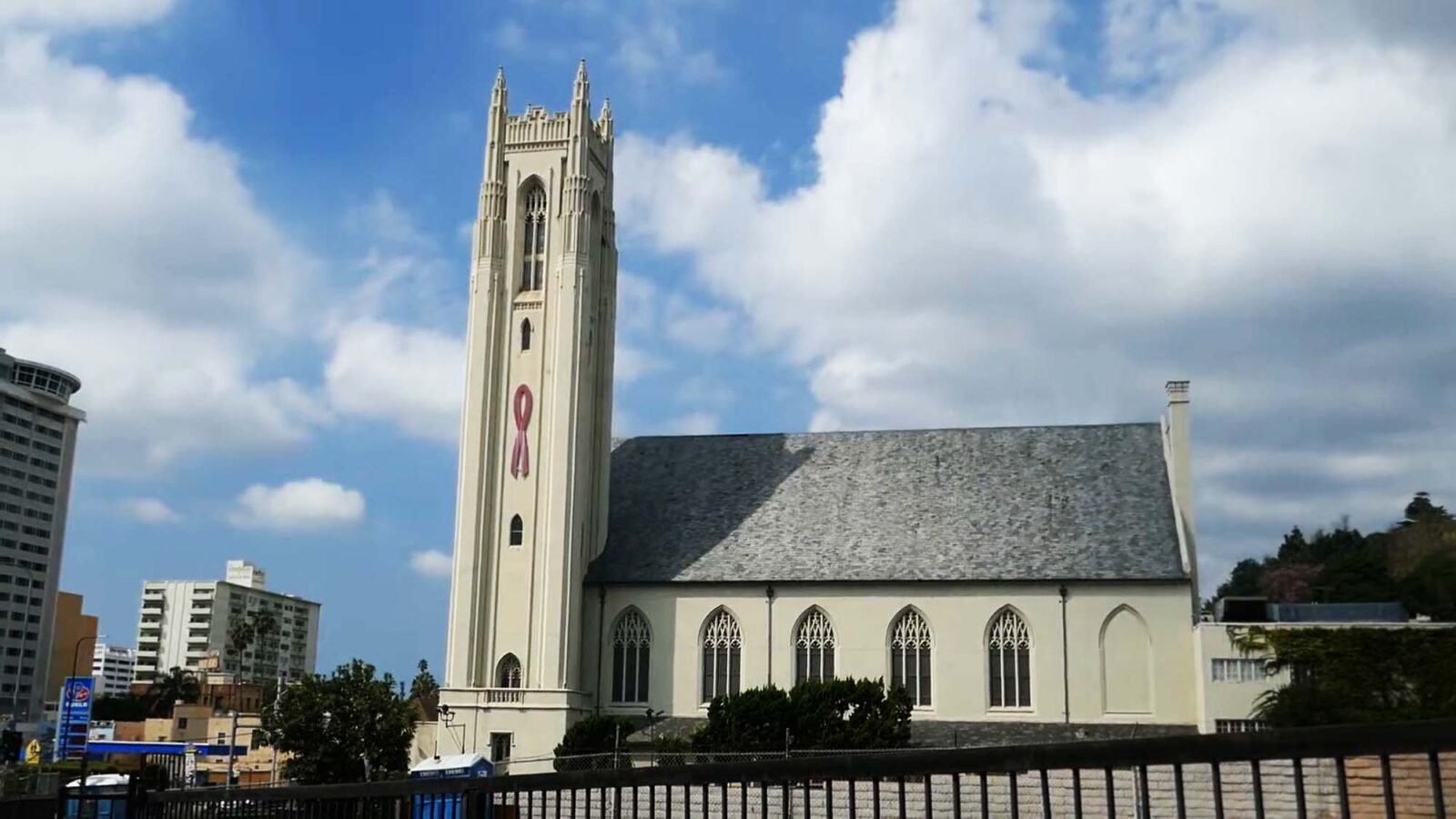
Hollywood United Methodist Church
Hollywood United Methodist Church is in What Price Hollywood?, Imitation of Life, Back to the Future, Back to the Future Part II, Sister Act and many more.
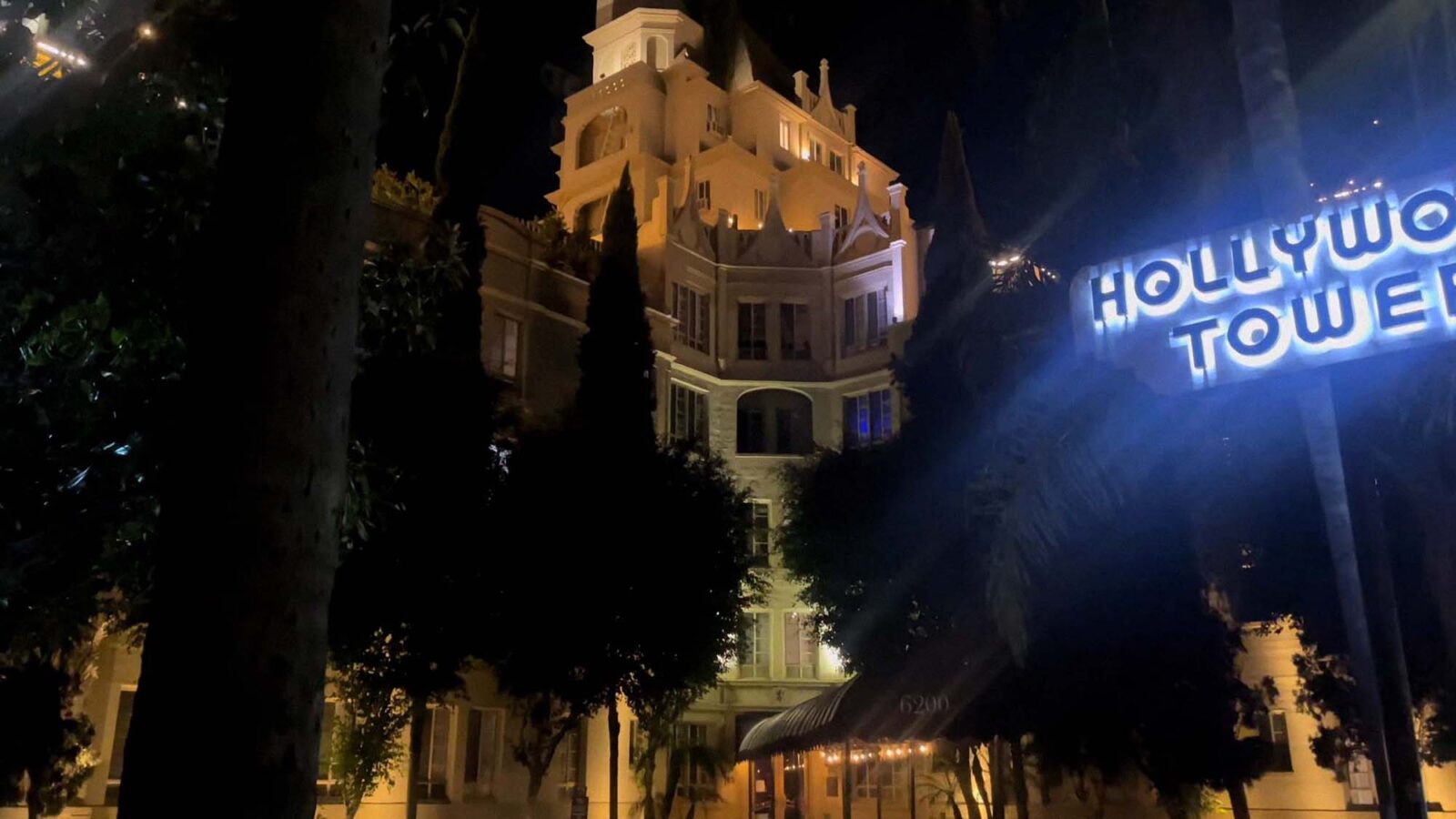
Hollywood Tower Apartments
Hollywood Tower Apartments, also known simply as Hollywood Tower, is a historic apartment building at 6200 Franklin Avenue in Hollywood, Los Angeles,…
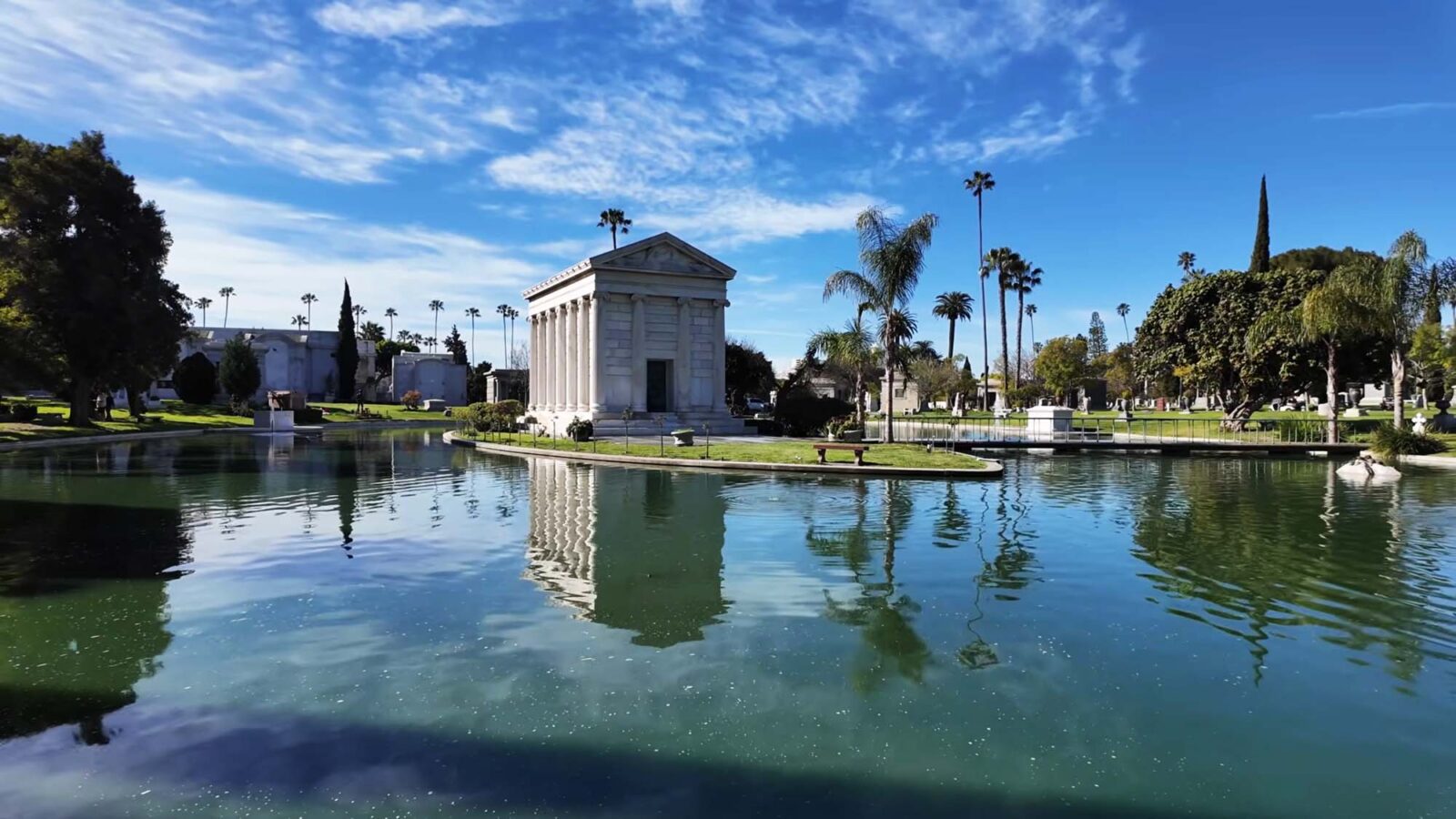
Hollywood Forever Cemetery
Hollywood Forever Cemetery appeared in The Player, Charmed, The Prestige, Dexter, 90210, Valentine’s Day, Under the Silver Lake, Bosch: Legacy and MaXXXine.
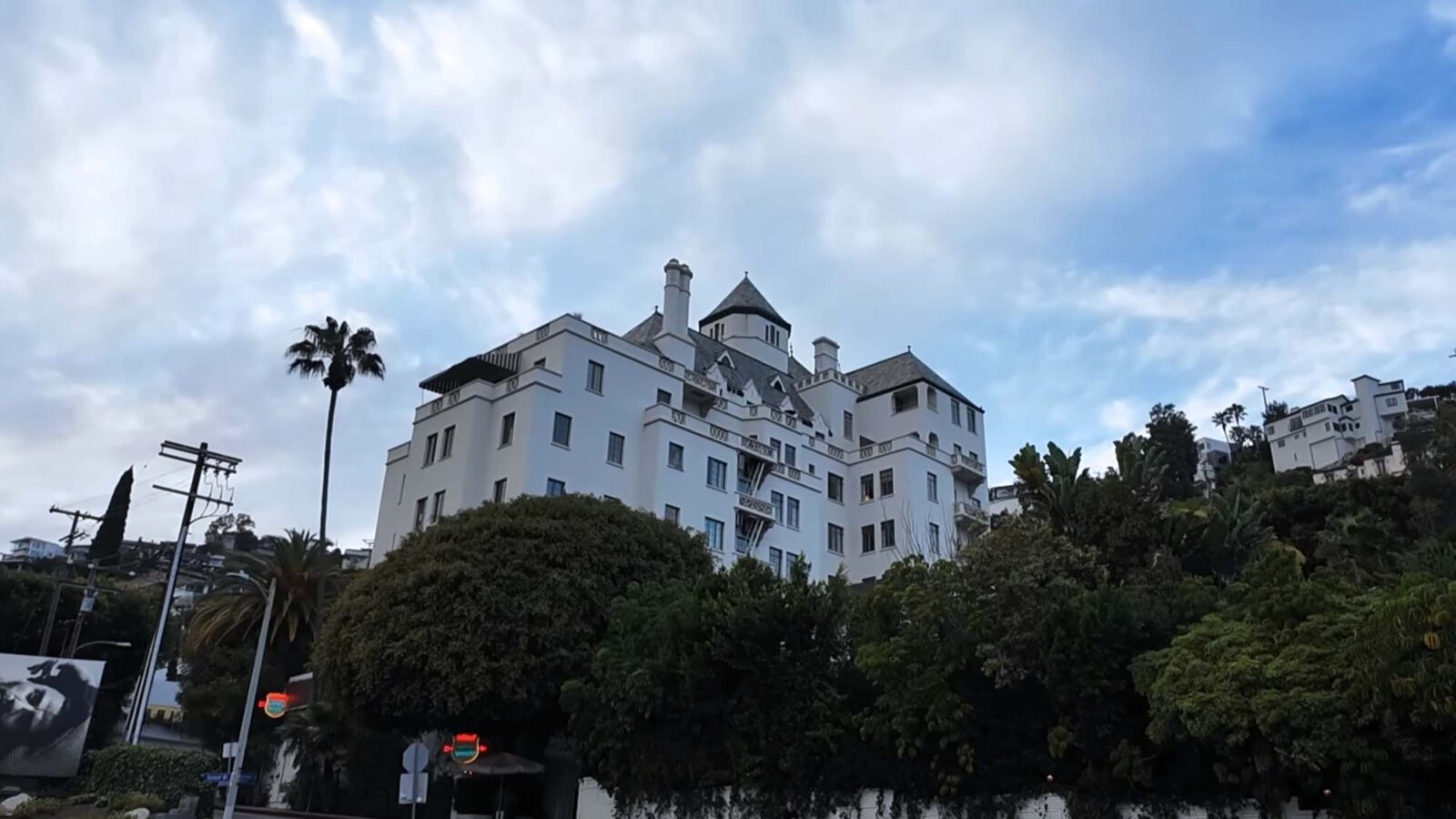
Chateau Marmont
Chateau Marmont is in The Strip, The Night Walker, Myra Breckinridge, Blume in Love, Barfly, The Doors, Dangerous Game, Four Rooms, Modern Vampires and more.

Garcia House
Garcia House has appeared in such movies as Out of Sight (1966) and Lethal Weapon 2 (1989).
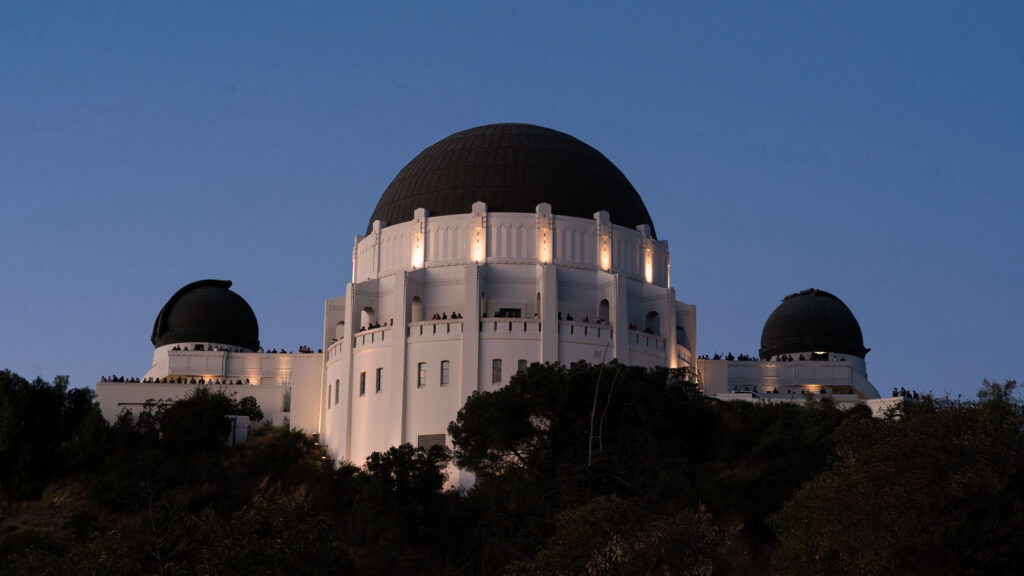
Griffith Observatory
Griffith Observatory is in Rebel Without a Cause, Midnight Madness, The Terminator, Charlie’s Angels: Full Throttle, La La Land, Transformers, and many more.
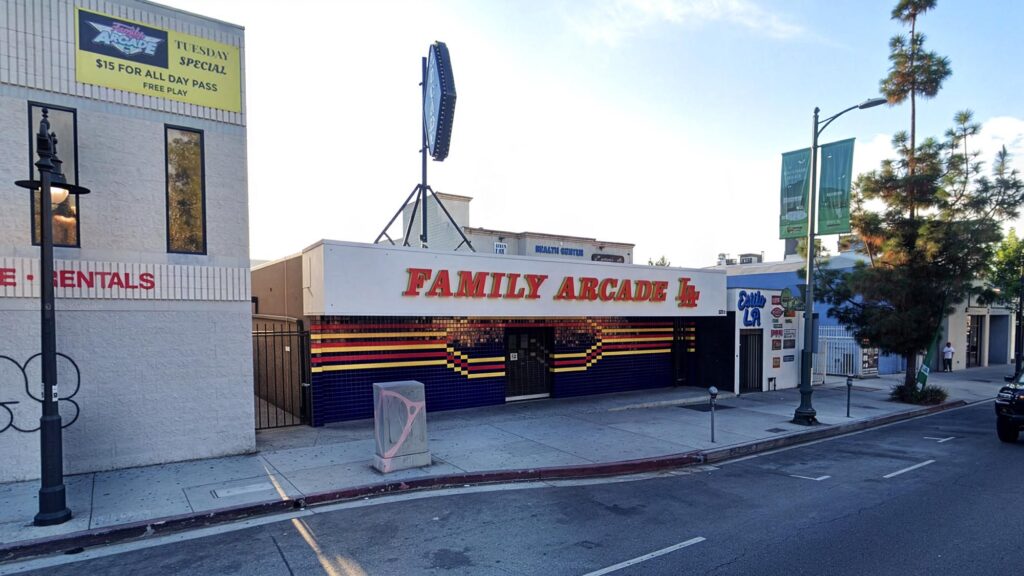
Family Arcade LA
In Dexter: Original Sin, Family Arcade LA appears in episode 9, Blood Drive. Dexter lures Captain Spencer to the arcade, transforming it into a kill room.
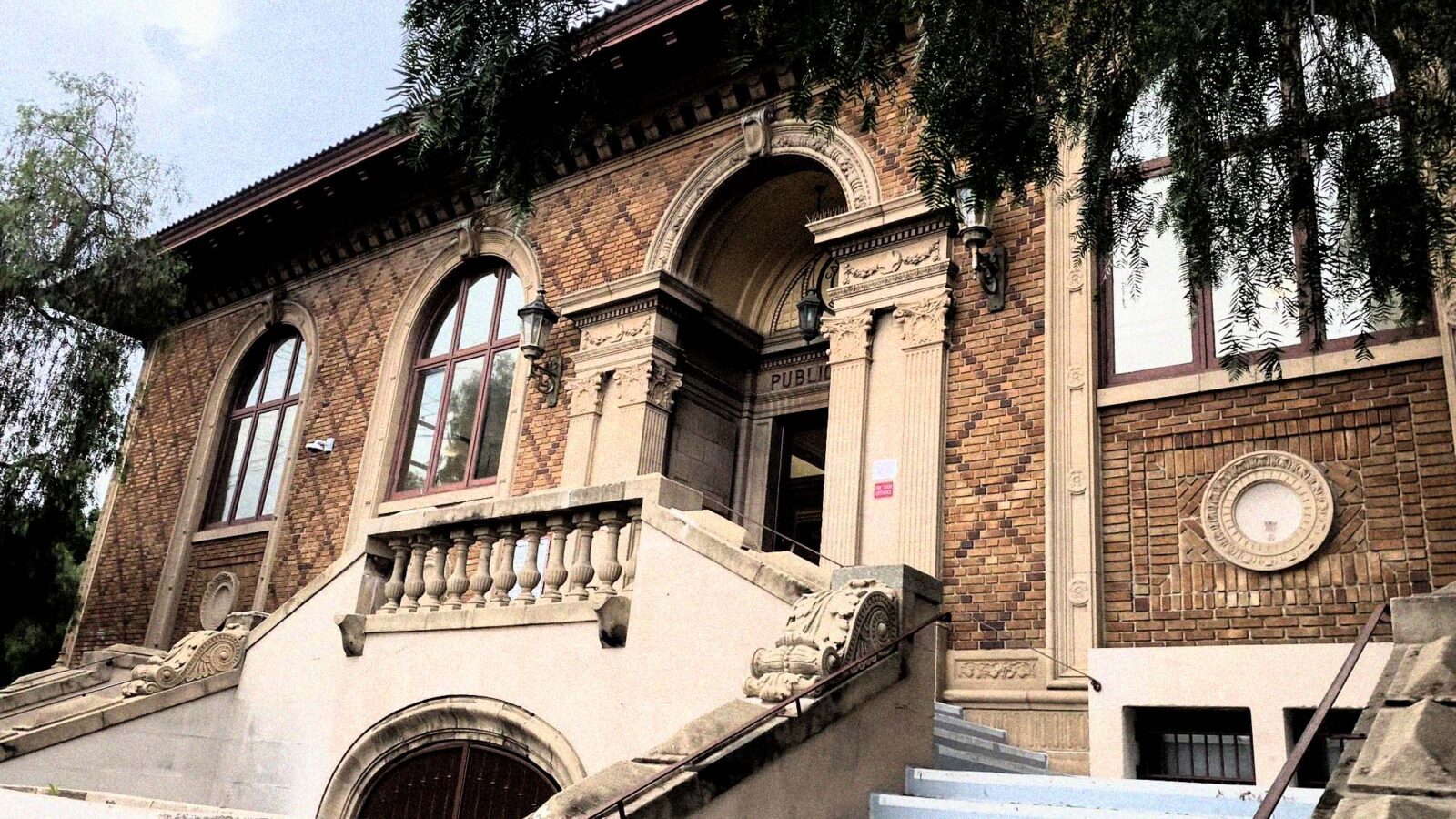
Cahuenga Branch Library
Cahuenga Branch Library, a historic public library at in East Hollywood, has appeared in Carrie (1976) and A Nightmare on Elm Street (1984).

The Viper Room
The Viper Room appears in Valley Girl (1983), The Doors (1991), Be Cool (2005), Daisy Jones & the Six (2023), and Walking the Edge (1985).