
Dallas City Hall is the seat of municipal government in Dallas, Texas, and one of the city’s most distinctive examples of modern architecture. Located at 1500 Marilla Street in Downtown Dallas, the building was designed by I. M. Pei and Partners after Pei was selected for the project in 1966. Construction began in June 1972, the building itself was accepted by the city in December 1977, and the first Dallas City Council meeting was held there on 1 February 1978 before the complex was formally dedicated on 12 March. The enormous concrete structure occupies an 11.8-acre site and contains approximately one million square feet of space, including municipal offices, the City Council Chamber and the vast Great Court. Its most recognisable feature is its dramatic inverted-pyramid profile, with the upper floors projecting progressively farther outward above the plaza. The building is surrounded by a large public plaza with a reflecting pool, fountains and monumental flagpoles, while its monumental exposed-concrete architecture has made it one of Dallas’s most immediately recognisable civic landmarks.
Dallas City Hall has appeared in The Lathe of Heaven (1980), RoboCop (1987), Walker, Texas Ranger: Trial by Fire (2005), and And Then Everything Turned Itself Inside Out (2026). The building’s unusual futuristic appearance has made it particularly effective in science-fiction productions: The Lathe of Heaven (1980) uses it as part of Dr. William Haber’s increasingly imposing dream-research institute, while RoboCop (1987) famously transforms the exterior into the headquarters of Omni Consumer Products. Walker, Texas Ranger: Trial by Fire (2005) uses the building for the office of district attorney Alex Cahill-Walker, and And Then Everything Turned Itself Inside Out (2026) makes extensive use of its interiors as the headquarters of the fictional Office of Personal History.
In The Lathe of Heaven (1980), Dallas City Hall is used as one of the increasingly grand versions of the workplace of psychiatrist and dream researcher Dr. William Haber. The television film, adapted from Ursula K. Le Guin’s novel, takes place in a near-future Portland but was largely filmed around Dallas and Fort Worth, whose modern architecture was used to create a slightly unfamiliar futuristic city. George Orr discovers that some of his dreams have the power to alter reality retroactively, and Haber initially treats him but soon begins deliberately directing those dreams for his own purposes. Each alteration changes the world around them, and Haber himself becomes progressively more powerful and important. Dallas City Hall provides what co-director Fred Barzyk later described as Haber’s “most expansive” laboratory, using the building’s enormous concrete spaces to represent the increasingly prestigious Oneirological Institute. The growing scale of Haber’s surroundings becomes a visual reflection of his ambitions and of the increasingly dangerous control he exercises over Orr’s dreams. Other versions of Haber’s workplace were filmed elsewhere in Dallas, including the Hyatt Regency, so Dallas City Hall represents a particular stage in the film’s continually changing reality rather than every scene set in Haber’s laboratory.
In RoboCop (1987), Dallas City Hall becomes the exterior of the headquarters of Omni Consumer Products, the enormous corporation that effectively controls the privatised police force of the film’s dystopian Detroit. The building appears in establishing shots throughout the film and is particularly memorable during the final act, when RoboCop enters OCP headquarters to confront executive Dick Jones with evidence connecting him to the murder of Bob Morton. Dallas City Hall was already striking enough to suggest a futuristic corporate fortress, but the filmmakers made it considerably more imposing through matte paintings that extended the seven-storey building upward into a huge skyscraper. The real structure therefore forms only the lower portion of the OCP tower seen on screen. Although the exterior is Dallas City Hall, the scenes inside OCP headquarters were filmed at other Dallas locations: offices and the boardroom were created using spaces in Renaissance Tower, while the distinctive OCP elevators were filmed at Plaza of the Americas. Dallas City Hall is therefore most closely associated with the exterior establishing shots, including the approach to the building before RoboCop’s climactic confrontation with Jones.
In Walker, Texas Ranger: Trial by Fire (2005), Dallas City Hall is used for the office of Alex Cahill-Walker, played by Sheree J. Wilson. The television movie reunites the characters from Walker, Texas Ranger several years after the original series ended and places Alex at the centre of one of its two principal investigations. Ranger Rhett Harper is accused of murdering a woman who was last seen leaving a bar with him, and further evidence later appears to connect him to another killing. As district attorney, Alex is forced to pursue the case despite Walker’s belief that Harper has been framed. Dallas City Hall provides Alex’s workplace during this part of the story, where the legal case and evidence against Harper are handled as the conspiracy develops. The investigation eventually reveals that Assistant District Attorney Garrett Evans has engineered the evidence against Harper as part of a personal vendetta. Other Dallas government buildings were also used in the production, including Dallas Police Headquarters for the Texas Rangers’ headquarters, making the film unusually rooted in real Dallas civic locations.
In And Then Everything Turned Itself Inside Out (2026), Dallas City Hall becomes the headquarters of the fictional Office of Personal History, a government-like social-services agency at the centre of the film’s surreal science-fiction premise. Written and directed by Dallas filmmaker Merced Elizondo, the short film imagines a world in which birthmarks can be investigated to reveal information about a person’s previous life and the manner in which that person died. Raúl Castillo plays Lázaro, who has been selected for the procedure but becomes fearful that the birthmark on the back of his neck may uncover a forgotten past capable of changing his present life. The bureaucratic architecture of Dallas City Hall was deliberately chosen for the Office of Personal History, giving the fantastic concept a cold and institutional setting rather than the appearance of conventional futuristic science fiction. The production spent three of its four shooting days inside Dallas City Hall, meaning that the building is not merely an establishing exterior but one of the short film’s principal locations.
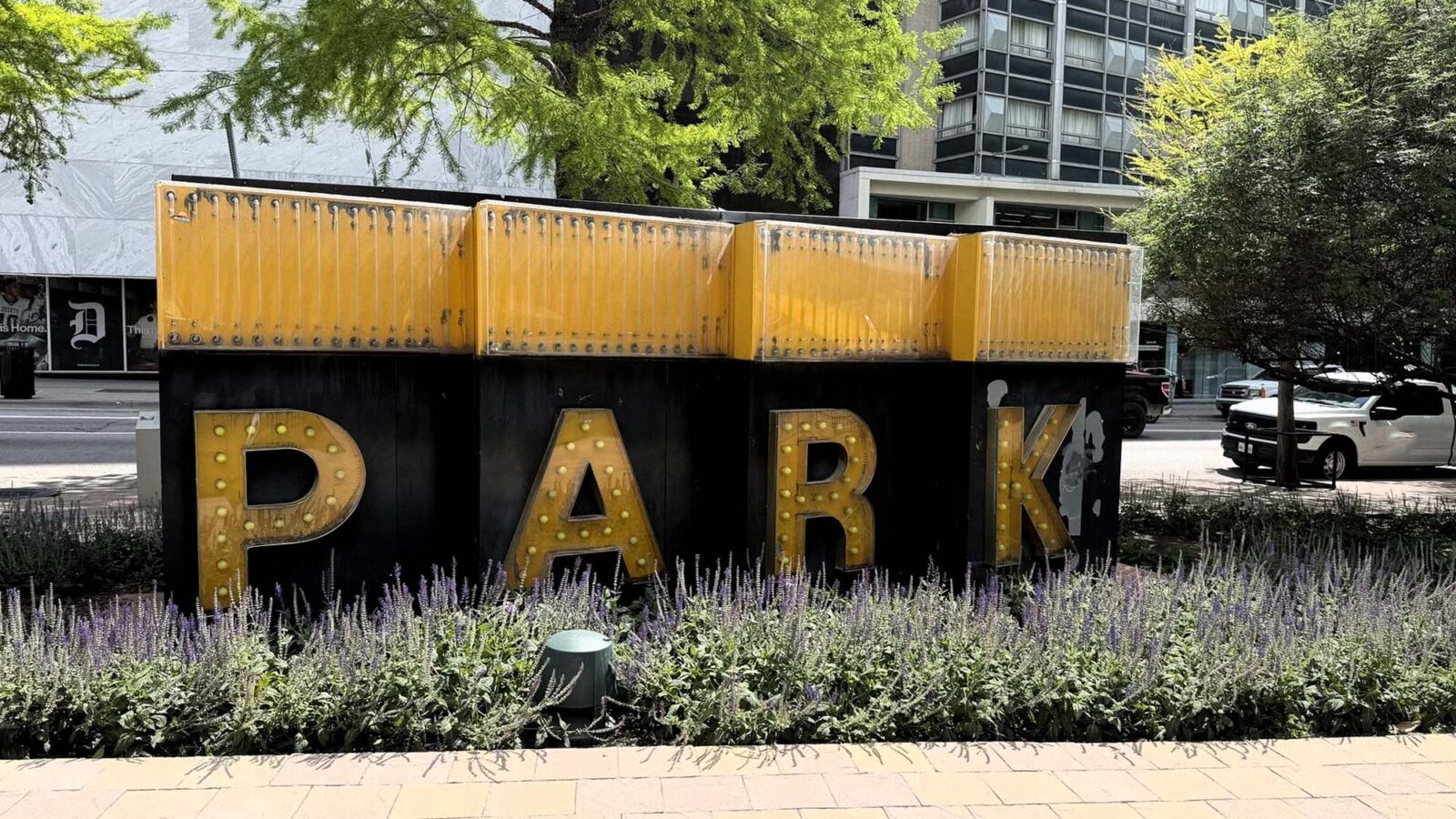
Main Street Garden Park
The site of Main Street Garden Park appears in RoboCop (1987), while the park itself was later used in Queen of the South (2016–2021).
The Oasis Bar and Grill
The Oasis Bar and Grill appears in Dutton Ranch (2026). The series was filmed across North Texas, with Midlothian used for this specific bar scene in season 1.
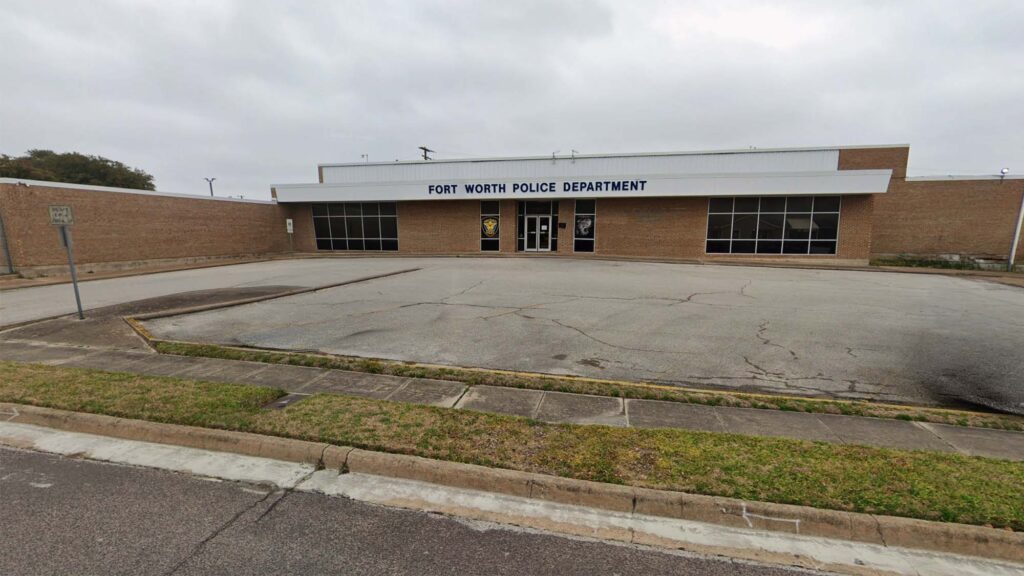
Fort Worth Police Department – West Division
Fort Worth Police Department – West Division has appeared in Dutton Ranch (2026–), where it stands in for the fictional Rio Paloma Sheriff’s Office.

Roughnecks
Roughnecks appears in Dutton Ranch, the Yellowstone spin-off and sequel series about Beth Dutton and Rip Wheeler. Roughnecks is used as Split Heart Bar.

The Hewitt House
The Hewitt House appears in the remake, The Texas Chainsaw Massacre (2003) and it's sequel The Texas Chainsaw Massacre: The Beginning (2006).
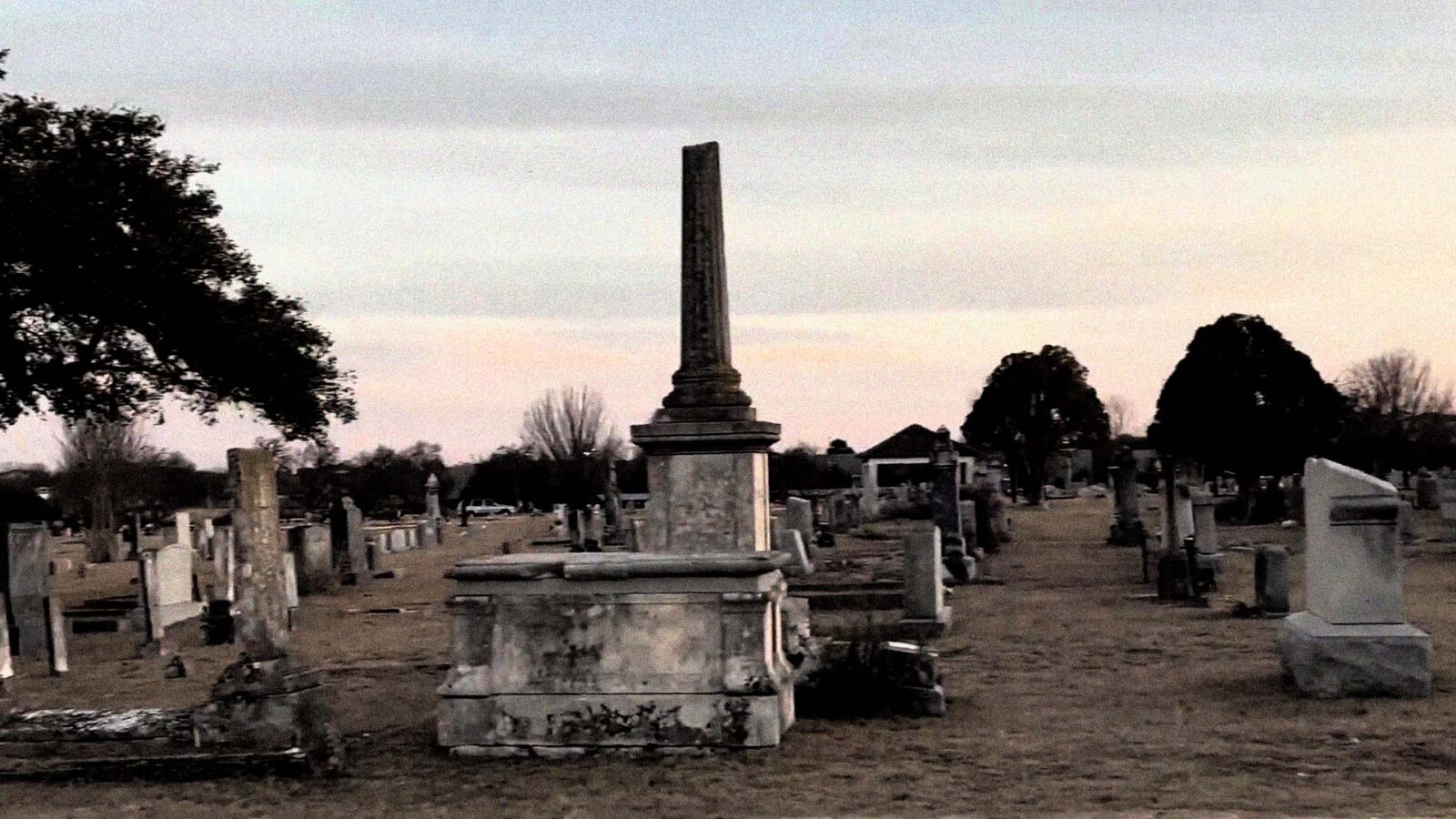
Bagdad Cemetery
Bagdad Cemetery has appeared in The Texas Chain Saw Massacre (1974). The cemetery is used for the film’s disturbing opening images of grave desecration.

Hooper’s
Hooper’s appears in The Texas Chain Saw Massacre. The film was not shot at the house’s current Kingsland location, but the building itself is the same house.
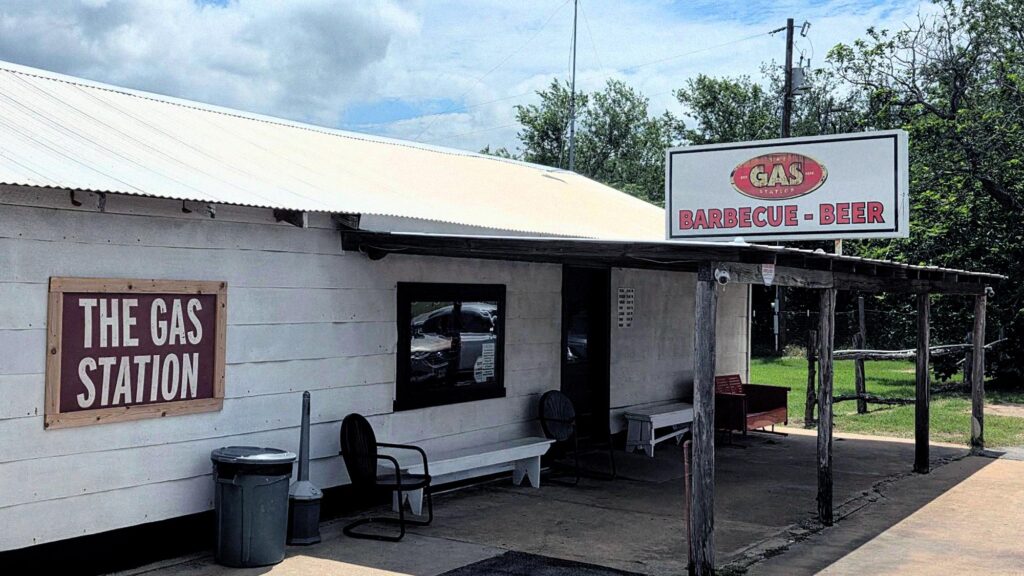
The Gas Station
The Gas Station appears in The Texas Chain Saw Massacre (1974), where it is used as the Last Chance Gas Station. The location is one of the main stops.
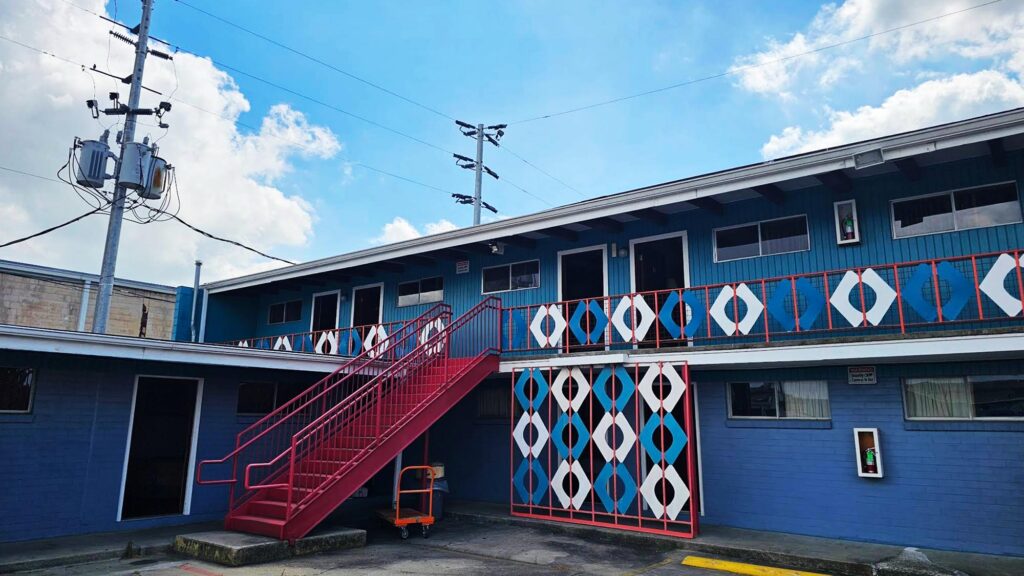
Oasis Motel
Oasis Motel in Gretna, Louisiana, appears in "Dallas Buyers Club". In the film, the motel becomes one of the places connected to Ron’s underground operation.