
Blackness Castle is a fifteenth-century fortress standing on a rocky promontory beside the village of Blackness on the southern shore of the Firth of Forth in Scotland. It was built during the 1440s for Sir George Crichton, Admiral of Scotland, close to the medieval port that served the royal burgh of Linlithgow. The castle passed to the Scottish Crown in 1453 and was extensively strengthened for James V between 1537 and 1542, when its walls were thickened and new artillery positions were added under the direction of Sir James Hamilton of Finnart. Its pointed seaward end, central tower and broad southern range resemble the bow, mast and stern of a stone ship, giving Blackness its nickname, “the ship that never sailed”. The fortress later served as a royal castle, military garrison, state prison and ammunition depot. It was captured by Oliver Cromwell’s forces in 1650 and remained in military use until the early twentieth century.
Blackness Castle has appeared in Hamlet (1990), The Bruce (1996), Ivanhoe (1997), Macbeth (1997), Doomsday (2008), Outlander (2014–2026), Mary Queen of Scots (2018) and Outlaw King (2018). Its towers, courtyard, gate passages, spiral staircases, ramparts and position beside the Firth of Forth have represented the Danish castle of Elsinore, medieval Scottish and English strongholds, a post-apocalyptic fortress, Fort William, Holyrood Palace and the castle in which Elizabeth de Burgh is imprisoned.
In Hamlet (1990), Blackness Castle forms part of Elsinore, the Danish royal fortress occupied by King Claudius, Queen Gertrude and Prince Hamlet. Director Franco Zeffirelli assembled Elsinore from several historic locations rather than using a single castle throughout the film. Blackness was combined with Dover Castle, Dunnottar Castle and Rochester Castle to create the fortified royal residence in which Hamlet investigates the death of his father. The enclosed courtyard, heavy masonry, towers and narrow passages at Blackness contribute to the succession of castle interiors and exterior spaces through which the characters move, although the individual locations are edited together as one continuous complex.
In The Bruce (1996), Blackness Castle contributes to the medieval setting of the story of Robert the Bruce. The film follows Bruce’s transformation from a Scottish nobleman divided by competing loyalties into the leader of the rebellion against English rule. Blackness was used alongside several other Scottish historic locations to provide the castles, fortified residences and military surroundings encountered during his struggle for the crown. Its stone courtyard, towers and defensive walls form part of the film’s wider collection of medieval strongholds rather than consistently representing one clearly identified castle throughout the story.
In Ivanhoe (1997), Blackness Castle appears as one of the fortified locations in the television adaptation of Sir Walter Scott’s novel. The story follows the Saxon knight Wilfred of Ivanhoe after his return from the Third Crusade to an England controlled by Prince John and divided by conflict between the Saxon population and the ruling Normans. Blackness was filmed together with Craigmillar Castle, Hermitage Castle and other Scottish locations to create the castles and walled residences occupied by the Norman lords. Its courtyards, gateways and austere stone architecture contribute to the military and aristocratic world surrounding Ivanhoe, Rowena, Rebecca, Brian de Bois-Guilbert and the supporters of Prince John.
In Macbeth (1997), starring Jason Connery as Macbeth, Blackness Castle contributes to the network of royal and military strongholds used in the Shakespeare adaptation. The production also filmed at locations including Dunfermline Abbey and Warwick Castle, combining their interiors, courtyards and defensive architecture to create the residences occupied by King Duncan, Macbeth and the other Scottish nobles. Blackness supplies part of the severe stone environment surrounding Macbeth’s rise to power, the murder of Duncan and the subsequent conflict against Macduff and Malcolm rather than appearing under its own name.
In Doomsday (2008), Blackness Castle provides the interior of the medieval-style fortress controlled by the former doctor Marcus Kane. Decades after a deadly virus caused Scotland to be sealed behind a border wall, Major Eden Sinclair and her team discover that Kane has established a feudal society among the survivors. The castle’s courtyard is transformed into an execution arena where Sinclair is forced to fight Kane’s armoured champion, Telamon, in front of the settlement’s inhabitants. The production covered the ground with bark chippings, artificial rocks and bloodied wooden stakes to disguise the recognisable courtyard and give it a more primitive appearance. While the large exterior of Kane’s fortress was created with visual effects, the interior rooms and arena sequences were filmed at Blackness.
In Outlander (2014–2026), Blackness Castle represents Fort William, the British Army headquarters commanded by Captain Jonathan “Black Jack” Randall. The inner courtyard is used for the flashbacks showing Jamie Fraser tied to a post and publicly flogged by Randall, first as punishment for defending his sister and then again after Jamie refuses to beg for mercy. Jamie’s father, Brian Fraser, witnesses the second beating and collapses after believing that his son has been killed. The castle returns after Claire is taken to Randall’s room at Fort William. Jamie enters through the window, threatens Randall with an unloaded pistol and leads Claire down the castle stairs, but their escape route is blocked by British soldiers. They continue onto the ramparts and jump from the wall, with editing making the escape appear to end in the water below. Blackness’s courtyard, towers, staircases, gate passages and wall walks are used throughout the Fort William sequences.
In Mary Queen of Scots (2018), Blackness Castle represents Holyrood Palace, the principal Scottish residence of Mary Stuart. The exterior walls, rocky surroundings and courtyard establish the severe fortified palace to which Mary returns after living at the French court. Several exterior and courtyard scenes involving Mary, her attendants, guards and members of the Scottish court were filmed at Blackness, together with material inside some of its stone rooms. The production designer selected the castle because its walls appear to rise directly from the rock, creating a visual contrast with the more refined English surroundings associated with Elizabeth I. Additional Holyrood interiors were constructed at Pinewood Studios, with their design influenced by the architecture and textures of Blackness.
In Outlaw King (2018), Blackness Castle represents the Yorkshire fortress in which Elizabeth de Burgh, the wife of Robert the Bruce, is imprisoned by the English. The castle appears during scenes connected to her arrival, confinement and treatment by the English guards after Bruce declares himself King of Scots and begins his rebellion against Edward I. Filming took place principally in the outer courtyard and around the towers and gateways overlooking the Firth of Forth. The production temporarily added several structures to the preserved fortress, including a wooden balcony outside the water gate and a platform above the North Tower, while other modern or historically unsuitable elements were concealed or removed. Blackness’s isolated position, enclosed courtyards and waterside defences make Elizabeth’s prison appear remote and difficult to escape.
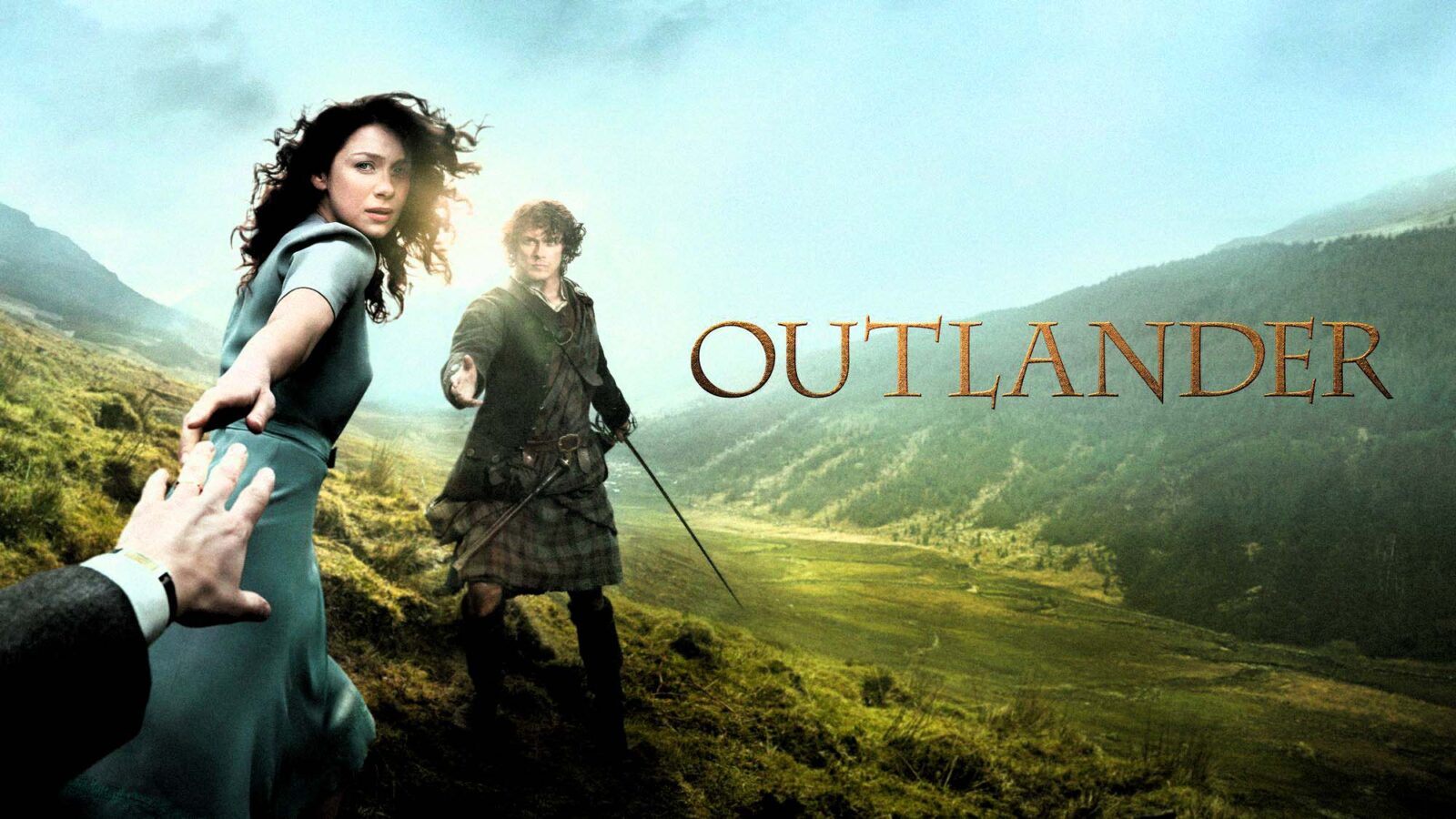
Outlander
Outlander is associated with Scotland, and many of its most recognisable locations were filmed there, even when the story later moves to other countries.
Midhope Castle
Midhope Castle is a ruined tower house in Scotland, and has appeared in Outlander (2014–2026) and Outlander: Blood of My Blood (2025–).
Hopetoun House
Hopetoun House appeared in Shoebox Zoo, Rebus, Arn: The Knight Templar, Starting Over, The 39 Steps, Outlander, The Secret Agent and many more.
Linlithgow Palace
Linlithgow Palace appeared in Outlander (2014–2026) and Outlaw King (2018). Its entrance passage, stone corridors and staircases represented Wentworth Prison.
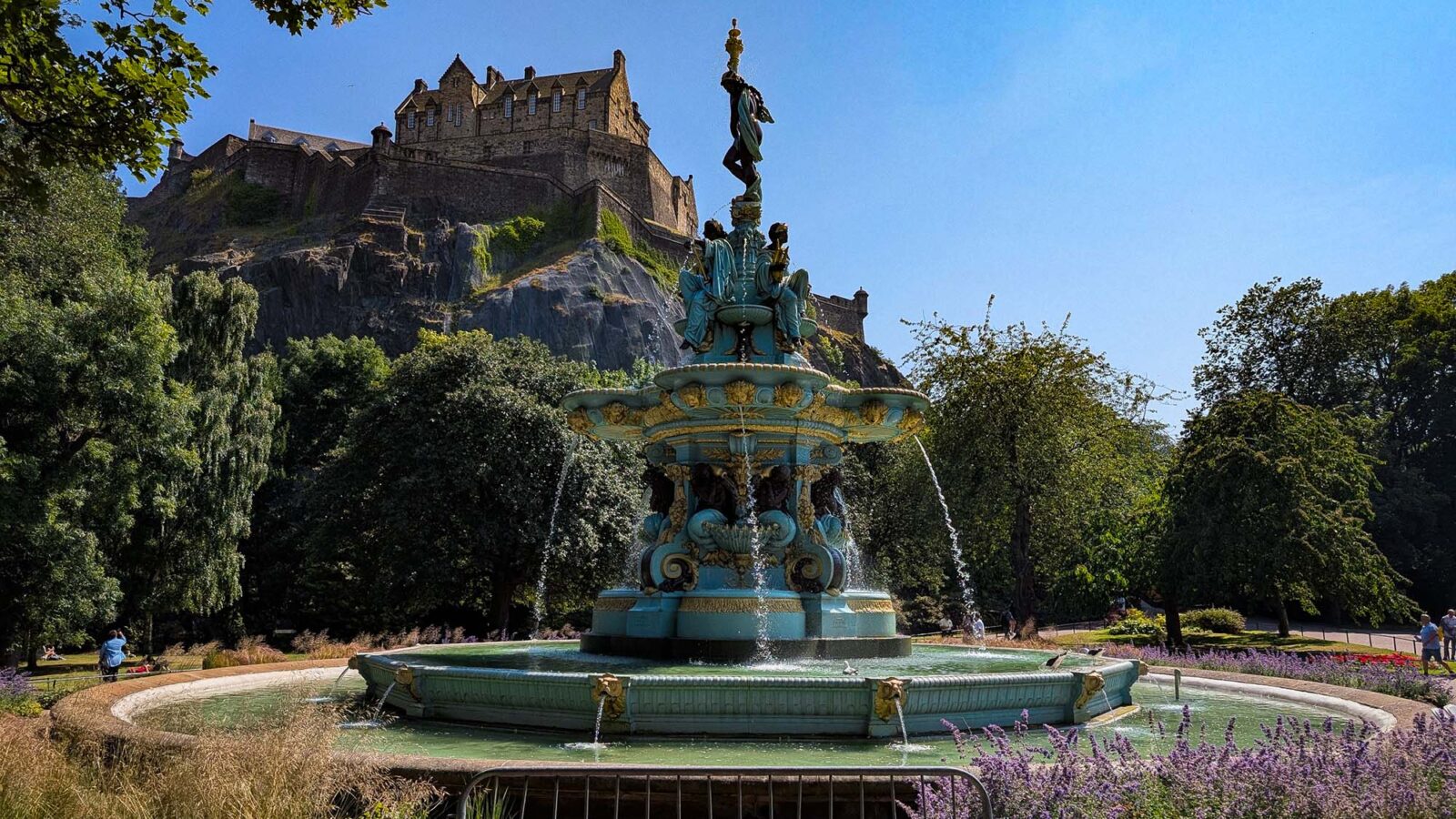
Ross Fountain
Ross Fountain appears in Eurovision Song Contest: The Story of Fire Saga (2020), where Edinburgh stands in for the host city of the Eurovision Song Contest.
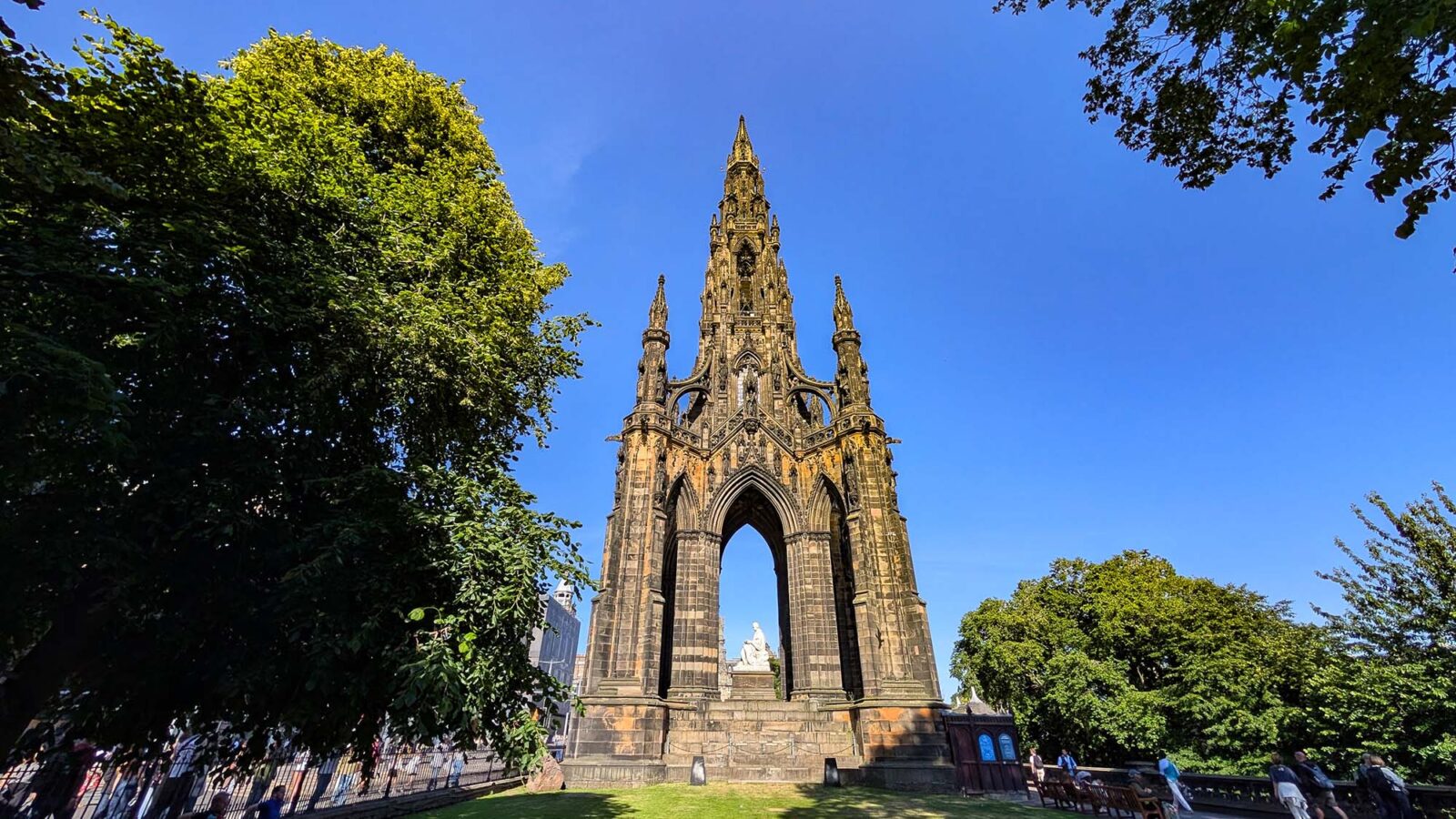
Scott Monument
Scott Monument appears in Cloud Atlas (2012). Frobisher climbs the monument and writes to Sixsmith that he climbs the steps every morning.
Victoria Terrace
Victoria Terrace has appeared in Cloud Atlas (2012) and is also connected to Edinburgh’s wider screen geography through productions filmed around.
Makars’ Court
Makars’ Court appears in Frankenstein (2025), Guillermo del Toro’s adaptation of Mary Shelley’s novel. The production filmed several Edinburgh locations.
Victoria Street
Victoria Street has appeared in F9: The Fast Saga (2021) and Eurovision Song Contest: The Story of Fire Saga (2020).
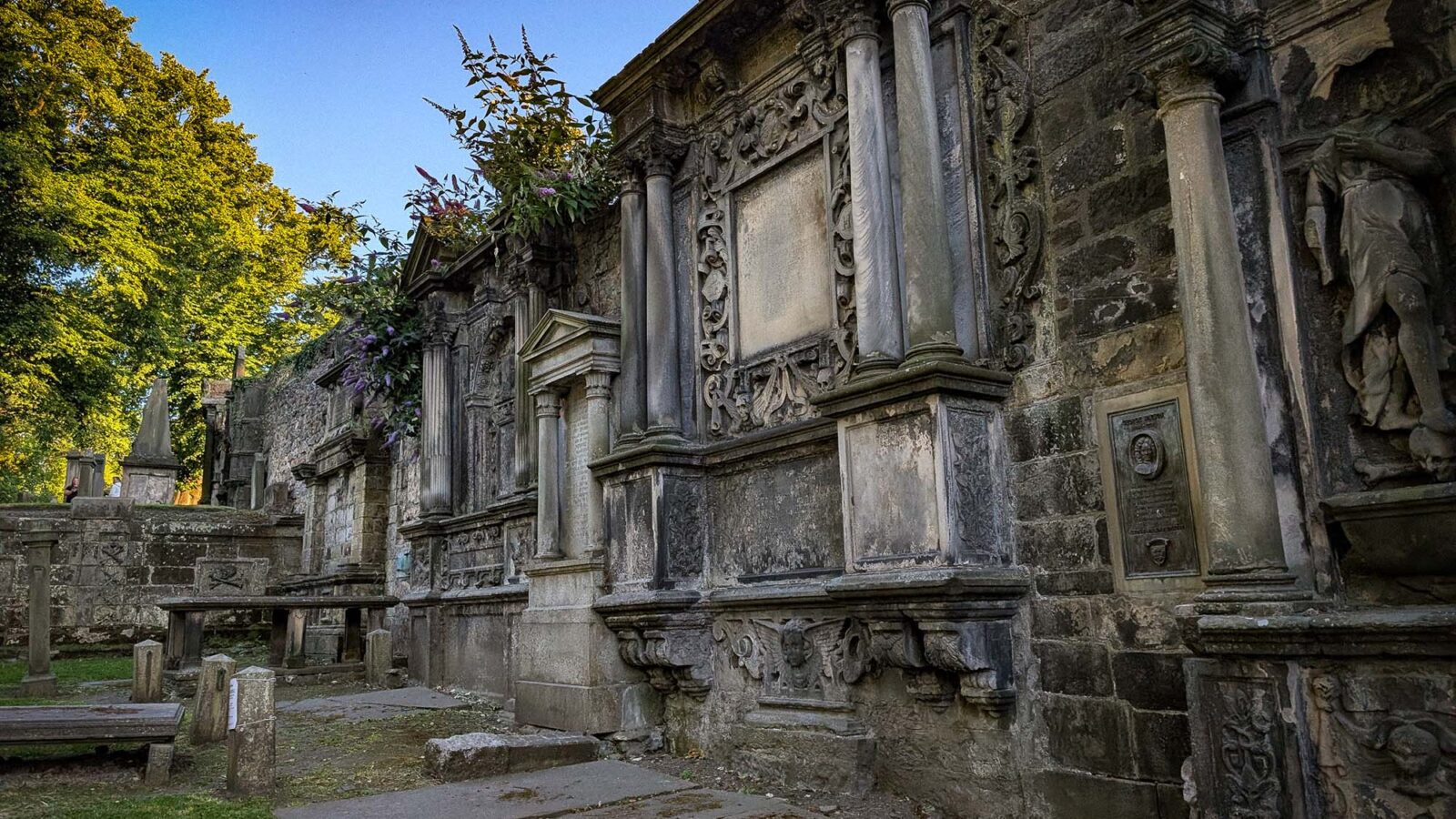
Greyfriars Kirkyard
Greyfriars Kirkyard has appeared in Greyfriars Bobby: The True Story of a Dog, The Prime of Miss Jean Brodie, Jude and The Adventures of Greyfriars Bobby.