
Licence to Kill (1989) is a British spy thriller directed by John Glen and the sixteenth film in the James Bond series produced by Eon Productions. Timothy Dalton returns for his second and final appearance as James Bond, who abandons his duties with British intelligence after his friend Felix Leiter, played by David Hedison, is brutally attacked by the powerful drug lord Franz Sanchez. Robert Davi portrays Sanchez, while Carey Lowell plays former CIA pilot Pam Bouvier and Talisa Soto appears as Sanchez’s girlfriend Lupe Lamora. The supporting cast includes Anthony Zerbe as marine researcher and drug smuggler Milton Krest, Benicio Del Toro as the young assassin Dario, and Desmond Llewelyn as Q. Originally developed under the title Licence Revoked, the film takes a considerably darker direction than many earlier Bond adventures, replacing international espionage with a personal revenge story involving drug trafficking, corruption and organised crime. It also marked John Glen’s fifth and final Bond film as director.
Licence to Kill was filmed in Mexico and the United States between 18 July and 18 November 1988, with principal photography based at Estudios Churubusco in Mexico City. It was the first James Bond production to complete its filming without shooting in the United Kingdom, although post-production was subsequently carried out at Pinewood Studios in England. The decision to work primarily in Mexico was partly financial, with producer Albert R. Broccoli reportedly saving approximately $5 million by moving the production away from Britain. Several destinations had been considered during development, including China, where the filmmakers initially planned sequences involving the Great Wall and the Terracotta Army. The eventual screenplay concentrated on Florida and a fictional Central American country called the Republic of Isthmus. Mexico City became the main setting for Isthmus City, with additional filming in Acapulco, the mountains of Baja California and the Caribbean waters around Isla Mujeres. Florida provided the locations for the opening part of the film, particularly the towns, marinas, bridges and coastal landscapes of the Florida Keys.
The opening sequence introduces Bond and Felix Leiter travelling to Leiter’s wedding in Key West. Their journey is interrupted when Drug Enforcement Administration officers inform Leiter that Sanchez has been located nearby. The opening helicopter landing was filmed around Knight’s Key near Marathon, while the confrontation with Sanchez and his men takes place at an airfield supposedly situated in the Bahamas. The airfield scenes were actually filmed at Sugarloaf Key in Florida, where the production used a small private airport and its surrounding coastal terrain. The characters discover Sanchez attempting to escape with Lupe Lamora and her lover, prompting a gunfight before the drug lord makes his escape aboard a small aircraft. Additional tropical footage was photographed around Isla Mujeres near Cancún, helping the filmmakers establish the fictional Caribbean setting.
Bond and Leiter pursue Sanchez in a United States Coast Guard helicopter, eventually catching his aircraft using a cable lowered from the helicopter. The aerial capture was one of the film’s most difficult opening stunts, combining genuine helicopter flying with a specially constructed full-sized aircraft model. Stunt performer Jake Lombard was lowered towards the aircraft, while Dalton performed additional close-up shots showing Bond securing the cable. Special-effects supervisor John Richardson oversaw the construction of the aircraft model, which was suspended beneath the helicopter for the more demanding shots. The sequence was photographed above the Florida Keys, where the open sea and islands provided a convincing setting for an operation supposedly taking place near the Bahamas. Once Sanchez has been captured, Bond and Leiter parachute back towards Key West, determined not to miss the wedding.
The wedding takes place at the Basilica of St. Mary Star of the Sea, located at 1010 Windsor Lane in Key West. The large Catholic church, completed in 1905, provided the setting for Felix’s marriage to Della Churchill, played by Priscilla Barnes. Bond and Leiter make a spectacular arrival, descending by parachute onto the grounds outside the church while the wedding guests look on in surprise. The production combined aerial footage with closer shots filmed using suspended harnesses near the church entrance. During one attempt, the equipment supporting David Hedison malfunctioned and the actor fell onto the pavement, injuring himself. He reportedly continued filming with a limp for the remainder of the production. The accident was one of several physical mishaps that occurred during the elaborate Florida filming.
The wedding reception was filmed at a private residence at 707 South Street in Key West, a property subsequently known as Stephano’s House. Its gardens, terrace and swimming pool represent Felix and Della’s home, where the newlyweds celebrate with their guests before departing on their honeymoon. Bond receives a specially engraved cigarette lighter from the couple, a seemingly minor gift that becomes important during the film’s climax. Later, after Sanchez escapes from custody, his men return to the house and murder Della while Felix is taken away to be tortured. Bond discovers the aftermath when he returns to the property, finding the celebration violently interrupted and the house deserted. Several of the darker interior scenes associated with the attack were completed at Churubusco Studios, where the production had constructed the rooms needed for the action.
The Florida Keys also provide the setting for Sanchez’s escape from police custody. After being arrested, the drug lord is transported in an armoured vehicle along the Overseas Highway, the road connecting the islands between mainland Florida and Key West. The corrupt officer Ed Killifer assists Sanchez by arranging for the vehicle to be driven into the sea from the Seven Mile Bridge, close to Pigeon Key. The scene uses the actual bridge and the surrounding shallow turquoise water, creating one of the film’s most recognisable early action sequences. Divers subsequently recover the submerged vehicle, but Sanchez has already escaped. The bridge, completed in 1982 as part of the modern Overseas Highway, runs alongside sections of the older railway bridge built during Henry Flagler’s early twentieth-century development of the Florida Keys.
Bond’s investigation takes him into the working waterfront of Key West. Garrison Bight Marina, on the northern side of the island, was used for the scenes involving Milton Krest’s marine research operation. Bond arrives with his local contact Sharkey, played by Frank McRae, to investigate Krest’s activities and the mysterious research vessel Wavekrest. The marina’s docks, fishing boats and working waterfront provide a very different setting from the luxury resorts more commonly associated with the Bond series. Additional scenes were filmed around the old harbour, including sections of Greene Street, where a waterfront warehouse was used during Bond’s investigation of Sanchez’s drug-smuggling network. The production also used the United States Coast Guard facilities at Key West for harbour footage later incorporated into scenes supposedly taking place in Isthmus City.
One of the film’s most recognisable Key West locations is the Ernest Hemingway Home and Museum at 907 Whitehead Street. The house, built in 1851, was the residence of the American novelist during the 1930s and is known for its tropical gardens and population of cats, many descended from animals associated with Hemingway’s household. In the film, Bond is summoned to the property for a meeting with M, played by Robert Brown. The British intelligence chief orders him to abandon his pursuit of Sanchez and return to his official duties. When Bond refuses, M revokes his licence to kill, prompting Bond to resign from the Secret Service and escape through the gardens. The scene was filmed at the actual museum, with its white exterior, balconies, staircases and surrounding vegetation clearly visible. The writers also included a deliberate literary joke when M warns Bond that his conduct could mean a farewell to arms, referring to Hemingway’s famous novel.
Bond subsequently meets Pam Bouvier at the fictional Barrelhead Bar, supposedly located on the Bahamian island of Bimini. The scene was actually filmed at the former Harbor Lights Bar overlooking Garrison Bight Marina, at 711 Eisenhower Drive in Key West. The waterfront establishment later became Thai Island Restaurant. Bond arrives hoping to obtain information about Sanchez, but his meeting with Pam is interrupted by Dario and other armed men. The confrontation develops into a gunfight before Pam helps Bond escape. The interior was used to establish an ordinary Caribbean waterfront bar, with its wooden furnishings and views towards the marina. Its actual location in Key West demonstrates how the filmmakers continued to use Florida as a substitute for the Bahamas even after Bond’s investigation had supposedly taken him outside the United States.
The action then moves offshore as Bond infiltrates Milton Krest’s research vessel Wavekrest, which is secretly being used to transport cocaine. The production converted a working marine research ship into the fictional vessel, adding the equipment and interior arrangements necessary for the smuggling operation. A contemporary report from the Key West filming described the ship serving not only as a location but also as a base for the production crew during the lengthy days at sea. The underwater filming was particularly demanding and was divided between separate surface and diving units. Experienced underwater photographer Ramón Bravo supervised material filmed around Isla Mujeres, where the clear Caribbean waters were used for the sequences involving divers and the submerged drug-transport equipment.
Bond’s escape from the Wavekrest culminates in one of the film’s most unusual water stunts. After fighting underwater and attaching himself to a departing seaplane, Bond is pulled across the surface of the sea without water-skis before climbing aboard the aircraft. The barefoot water-skiing was performed by world champion Dave Reinhart, whose experience allowed him to remain upright at high speed while being dragged behind the plane. According to second-unit director Arthur Wooster, the spray created by the stunt made it possible to film close shots without clearly revealing the performer’s identity. Additional footage of Dalton was then incorporated to complete the sequence. The underwater and surface action combined real stunt work, specially prepared equipment and carefully matched footage of the actor.
With Pam’s assistance, Bond travels to the fictional Republic of Isthmus, where Sanchez controls much of the government through his criminal organisation. The country’s capital, Isthmus City, was assembled primarily from locations around Mexico City’s historic centre. The filmmakers selected several large public buildings whose elaborate architecture could represent the headquarters of a wealthy, authoritarian regime. Their interiors and exteriors were combined with additional footage from elsewhere in Mexico, including the coastal city of Veracruz. Production designer Peter Lamont and his team altered signs, shopfronts and interiors to establish the fictional country, while Churubusco Studios provided the more elaborate sets. The result combines Mexican colonial and early twentieth-century architecture with the exaggerated wealth associated with Sanchez’s criminal empire.
Bond and Pam check into the fictional El Presidente Hotel, one of the most interesting examples of the production combining separate buildings into a single location. The hotel’s exterior was filmed at the Biblioteca del Banco de México, the historic library of the Bank of Mexico in central Mexico City. Its entrance was used for scenes showing the characters arriving and departing. The impressive interior, however, belongs to the Gran Hotel Ciudad de México at 82 Calle 16 de Septiembre, overlooking the Zócalo. Originally opened in 1899 as the Centro Mercantil department store, the building later became a hotel and retains its elaborate Art Nouveau decoration, ornate ironwork and spectacular stained-glass ceiling designed by Jacques Grüber. Its grand interior provided the setting for Bond and Pam’s stay in Isthmus City, although the exterior and interior belong to entirely different properties. The same hotel lobby would later appear in another Bond film, Spectre (2015), during the opening sequence with Daniel Craig.
Another important Mexico City location is the Palacio Postal, the Central Post Office on Calle Tacuba, close to the Palacio de Bellas Artes. Completed in 1907, the building is known for its richly decorated interior, marble staircases, elaborate metalwork and mixture of architectural styles. In Licence to Kill, it represents the Banco de Isthmus, the financial institution controlled by Sanchez. Bond enters the bank and deposits an enormous sum of money stolen from the drug operation, using the transaction to attract Sanchez’s attention. The impressive banking hall seen in the film is actually part of the historic post office, with the production making relatively modest alterations to disguise its normal function. The location provides another example of the filmmakers using an existing landmark to suggest the wealth and power of the fictional republic.
The Casino de Isthmus, where Bond attempts to establish contact with Sanchez and encounters Lupe Lamora again, was created using two different historic buildings. The exterior was filmed at the Teatro de la Ciudad Esperanza Iris on Calle Donceles, a grand theatre that opened in 1918. Its elaborate façade provides the entrance to the fictional casino, where wealthy guests and government officials gather. The interior was filmed at the Casino Español de México on Calle Isabel la Católica, a historic Spanish social club established during the nineteenth century. Despite its name, the Casino Español is not a conventional gambling casino. Its richly decorated rooms, chandeliers and ornamental details provided the setting for Sanchez’s lavish gambling establishment. The production also constructed supplementary casino interiors at Churubusco Studios, allowing the filmmakers to stage the scenes involving Bond, Lupe and Sanchez’s security staff with greater control over lighting and camera movement.
The Teatro de la Ciudad was also used for parts of Sanchez’s offices and private rooms, making the historic building one of the production’s principal locations in Mexico City. Bond attempts to gain Sanchez’s trust by presenting himself as a professional security specialist and assassin, while secretly creating suspicion among the drug lord’s associates. Other Mexico City scenes involve Q, who arrives disguised as Bond’s uncle and provides equipment to assist the unofficial operation. Desmond Llewelyn consequently appears in considerably more location material than in many earlier Bond films, with Q becoming an active participant in the investigation rather than remaining in his usual British workshop. The scenes supposedly set in London, including the offices of M and Miss Moneypenny, were also recreated at Churubusco rather than photographed at Pinewood.
Sanchez’s luxurious residence was filmed at Villa Arabesque in Acapulco, overlooking the Pacific Ocean. The enormous private estate belonged to Baron Enrico di Portanova and was known for its extravagant design and extensive leisure facilities. Built into the steep coastal hillside, the property includes multiple swimming pools, a rooftop helipad and a private funicular railway descending towards the beach. It also contains an elaborate underwater-themed nightclub known as the Poseidon Discotheque. Its unusual architectural arrangement made it particularly suitable for Sanchez, whose wealth and influence are displayed through the scale of his private residence. The production used the actual villa and its surrounding terraces, rather than constructing a substitute on a soundstage.
The residence appears when Bond is brought before Sanchez after surviving an assassination attempt and subsequently earns the drug lord’s confidence. Its open rooms, balconies, swimming pools and extensive views of the coast are visible during several conversations between the characters. The villa returns near the end of the film, when Sanchez’s surviving associates gather for a celebration following the apparent success of his drug operation. By this point, Bond has succeeded in destroying the organisation and killing Sanchez, leaving the remaining characters to confront the consequences of their involvement. Villa Arabesque provides the setting for the final party, including Bond’s reunion with Pam beside the swimming pool. The property remains one of the more unusual private residences used in the Bond series, with architecture and facilities that required little additional decoration to appear extravagantly fictional.
The investigation eventually leads Bond to the Olimpatec Meditation Institute, a mysterious religious retreat operated by television evangelist Professor Joe Butcher, played by Wayne Newton. The building was actually the Centro Ceremonial Otomí, located near Temoaya in the mountains northwest of Mexico City. Constructed during the late 1970s and early 1980s as a cultural and ceremonial centre for the Indigenous Otomí people, the enormous complex combines monumental stone structures, terraces, staircases and a distinctive circular arrangement of architectural elements. Its appearance is unlike a conventional religious institution, which made it an ideal setting for the fictional meditation centre. The filmmakers used the actual exterior, with its large ceremonial platforms and surrounding mountain landscape clearly visible.
In the film, the Olimpatec institute conceals Sanchez’s main cocaine-processing operation beneath its apparently peaceful religious activities. Professor Butcher uses television broadcasts to promote the centre and communicate coded information about drug prices, while visitors are encouraged to make generous financial contributions. Bond and Pam eventually discover that the complex contains an elaborate industrial laboratory, where Sanchez demonstrates a process for dissolving cocaine into petrol before transporting it inside fuel tankers. The exterior of the Otomí ceremonial centre was combined with extensive interiors constructed at Churubusco Studios. These included industrial machinery, processing equipment, storage areas and the conveyor system used during the violent confrontation between Bond and Dario. The production also created miniature effects for the sequence involving a concealed opening that swallows Sanchez’s helicopter, combining model photography with the actual architecture of the Mexican location.
The interior scenes at Churubusco required considerable special-effects work, particularly those involving the destruction of the drug laboratory. The complex contained working machinery and several dangerous mechanical devices, including a large industrial grinder into which Dario falls during his final confrontation with Bond. Dalton and Benicio Del Toro performed parts of the fight themselves and both reportedly suffered minor injuries during filming. Another particularly disturbing scene, in which Sanchez murders Milton Krest by rapidly increasing the pressure inside a decompression chamber, was also created at the studios. Special-effects supervisor John Richardson and his team constructed a prosthetic head based on a cast of actor Anthony Zerbe’s face. The resulting effect was considered so graphic that portions of the sequence were shortened to satisfy film classification requirements. These studio scenes contributed to the film’s reputation as one of the most violent entries in the series.
The climax takes place on the mountain roads of La Rumorosa in Baja California, near Mexicali and the United States border. The region is famous for its winding roads, steep granite mountains and dramatic drops into the surrounding desert. The production used a disused section of the old mountain highway to represent Paso del Diablo, where Sanchez’s convoy of fuel tankers attempts to escape from the destroyed laboratory. The road had been bypassed because of its dangerous bends and history of accidents, allowing the filmmakers to close it entirely for the production. Its combination of narrow turns, steep gradients and rocky cliffs provided a demanding natural setting for the enormous truck chase.
The tanker sequence was one of the most ambitious practical stunt operations undertaken for a Bond film. The production acquired a fleet of Kenworth articulated trucks, with approximately ten of them destroyed during filming. Special modifications were made to several vehicles, including strengthened engines, reinforced suspension systems and additional controls concealed within the cabs. Some trucks were fitted with extra weight to allow them to lift their front wheels, while another was modified so a stunt driver could control it without being visible beside Carey Lowell. French stunt coordinator Rémy Julienne supervised the driving sequences, working closely with Richardson and special-effects technician Chris Corbould. The entire operation required 46 filming days in extremely hot conditions, with the second unit spending several weeks on the isolated mountain road.
One of the first major stunts in the sequence shows Bond leaping from a low-flying aircraft onto a moving tanker. The stunt was performed by Simon Crane, who doubled for Timothy Dalton, while pilot Corkey Fornof flew the aircraft and doubled for Pam Bouvier. The plane had to approach the tanker at high speed, allowing Crane to move from the aircraft onto the roof of the truck without the protection of safety cables. The stunt was filmed on 30 August 1988, after several earlier attempts had been cancelled because conditions were unsuitable. Temperatures approached 49 degrees Celsius, making the already dangerous operation even more demanding. The camera crews followed the action from additional vehicles travelling at approximately 70 miles per hour, while emergency personnel remained close to the convoy. Fornof wore a dress and wig to resemble Lowell while piloting the aircraft.
Another famous stunt involves Bond driving a tanker onto its side to avoid an incoming missile. The production initially designed a mechanical rig that could tilt the enormous vehicle, but Julienne decided to attempt the manoeuvre himself using a ramp. The truck balanced on the wheels along one side before falling back onto the road, creating one of the sequence’s most spectacular images. Other stunts involved tankers lifting their front wheels, colliding with one another and crashing down steep mountain slopes. The weight and size of the vehicles made even apparently straightforward manoeuvres difficult to control, and mechanical breakdowns repeatedly interrupted filming.
Not every collision went according to plan. During filming on 1 September, two trucks were attempting to pass one another around a sharp bend when one was accidentally forced into the rock face beside the road. The collision was captured by the cameras, and second-unit director Arthur Wooster contacted John Glen to suggest incorporating it into the finished sequence. Glen agreed after reviewing the footage, and the accident became part of the action. Other problems included vehicles catching fire unexpectedly and persistent mechanical failures. Several members of the crew later recalled stories about the road being haunted, partly because of its history of fatal accidents. Richardson remembered a photograph of one explosion in which the flames appeared to form an enormous claw-like hand, although he believed the effect was simply caused by the movement of the fire.
The final confrontation between Bond and Sanchez was filmed at La Rumorosa during the first week of October 1988. After the destruction of the tanker convoy, the injured Sanchez confronts Bond beside the wreckage. Bond uses the engraved cigarette lighter given to him by Felix and Della to ignite the petrol covering Sanchez, bringing his revenge to an end. The sequence required carefully controlled pyrotechnics and stunt work, with coordinator Paul Weston doubling for Robert Davi during the fire effects. Richardson’s team arranged the explosions using a system of remotely triggered charges, allowing flames to spread across the wrecked tankers in a predetermined order. Dalton was filmed running away from the explosions in the foreground, with each successive detonation sending him farther from the burning vehicles. The sequence was completed over three days beginning on 5 October.
After the extensive location filming, production returned to Estudios Churubusco to complete the remaining interiors and action scenes. Although the film was made almost entirely by the familiar British Bond production team, working in Mexico introduced different conditions, equipment and logistical difficulties. Director John Glen later recalled problems caused by the country’s infrastructure, including unexpected damage to studio buildings during effects work. Producer Albert R. Broccoli also became ill during the production, marking the first occasion in the Bond series when he was unable to remain present throughout filming. Principal photography finished in November 1988, after which editing, sound mixing and other post-production work took place at Pinewood Studios.
Licence to Kill was released in June 1989 in Britain and the following month in the United States. Its darker violence resulted in the first British 15 certificate awarded to an Eon-produced Bond film, even after cuts were made. It was also the final Bond film directed by John Glen, and the last to feature the main titles designed by Maurice Binder. The series would not return to cinemas until GoldenEye in 1995, with Pierce Brosnan replacing Dalton.
The film’s locations distinguish it from earlier Bond adventures in several ways. The Florida Keys provide a collection of genuine coastal settings, from the historic Hemingway House and St. Mary Star of the Sea to marinas, bridges and working waterfronts. Mexico City supplies the elaborate buildings of Isthmus City, with real theatres, hotels and a post office standing in for the fictional republic’s casino, financial institutions and government offices. Acapulco contributes Sanchez’s extraordinary private residence, while the Centro Ceremonial Otomí and the mountain road at La Rumorosa provide the settings for the film’s largest action sequences. By combining these locations with extensive work at Churubusco Studios, Licence to Kill created a distinctive geographical world without relying on the traditional British production base of the James Bond series.

Key West Lighthouse
Key West Lighthouse is most closely connected to "Licence to Kill" (1989), where it appears during the Key West section of the James Bond film.
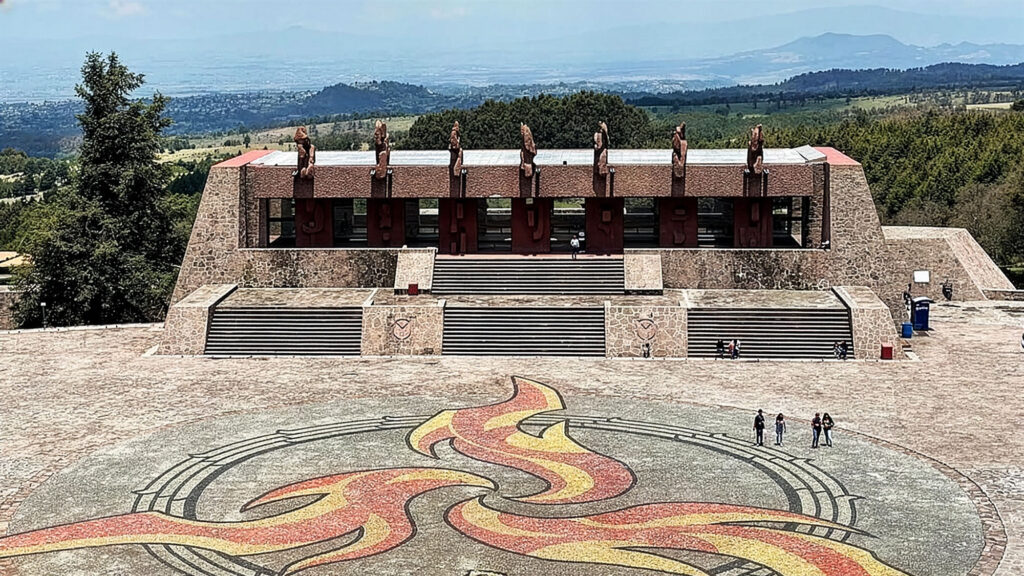
Otomi Ceremonial Center
The Otomi Ceremonial Center served as the filming location for Franz Sanchez’s drug factory/laboratory in the 1989 James Bond film Licence to Kill.
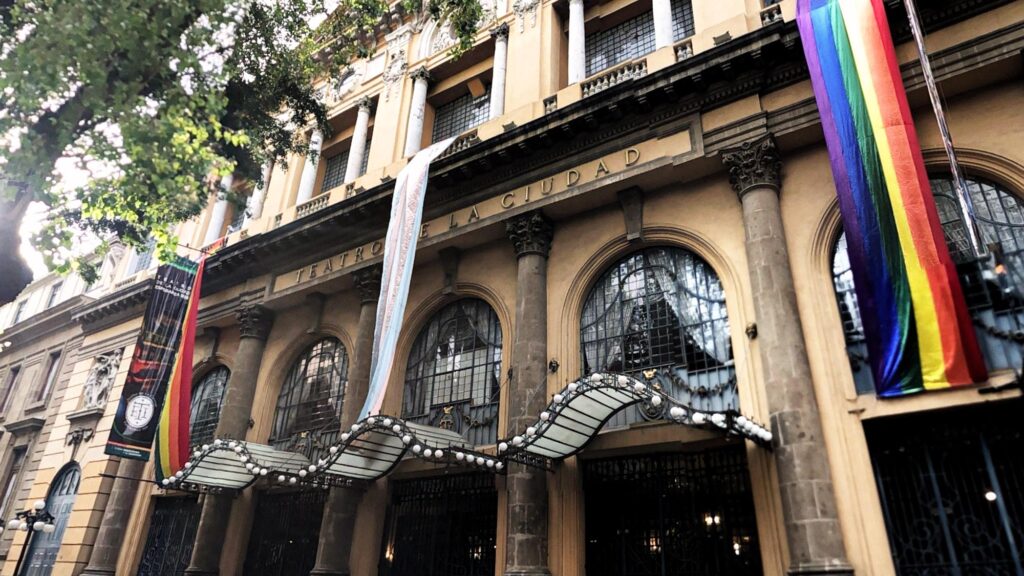
Teatro de la Ciudad
Teatro de la Ciudad is used in Licence to Kill, where Mexico City stands in for the fictional Isthmus City. Several real locations in the capital are used.
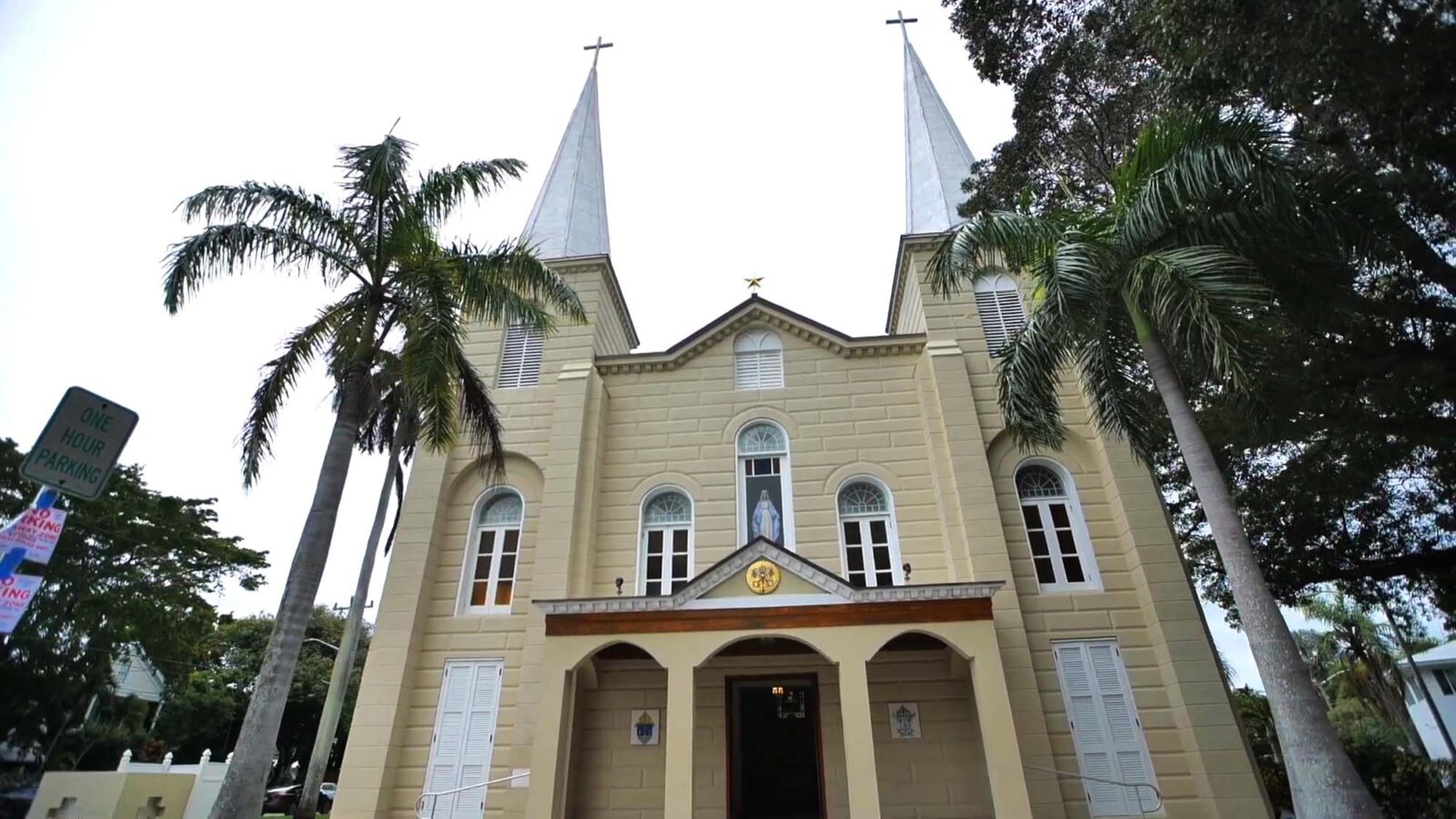
The Basilica of St. Mary Star of the Sea
The Basilica of St. Mary Star of the Sea is best known to film fans from Licence to Kill, where it appears during the opening section of the James Bond film.

The Ernest Hemingway Home
The Ernest Hemingway Home has appeared in films including "Licence to Kill" (1989) and "The Leisure Seeker" (2017).