
John Rhys-Davies is a Welsh actor born on 5 May 1944 in Salisbury, Wiltshire, England, to Welsh parents. His father, Rhys Davies, was a mechanical engineer and colonial officer, while his mother, Phyllis Jones, worked as a nurse. Although born in England, Rhys-Davies has always identified strongly with his Welsh heritage. His family moved to Tanganyika, now part of Tanzania, when he was five years old, travelling to East Africa aboard the SS Medura in 1949. His father’s employment brought the family to several communities across the territory, including Dar es Salaam, Kongwa, Moshi and Mwanza. Rhys-Davies spent much of his childhood in the African countryside, an experience quite different from the British environment in which he would later receive his education. His family also maintained connections with Ammanford in Carmarthenshire, Wales, where they lived following their time in Africa.
Rhys-Davies was sent to Truro School, an independent boarding school in Cornwall, England, where he initially struggled with the strict discipline and separation from his family. He has described his early years at the school as difficult, although he eventually became head boy. It was at Truro that he developed an interest in theatre, particularly the works of William Shakespeare, whose language and dramatic characters appealed to him during his adolescence. After completing his schooling, he enrolled at the newly established University of East Anglia in Norwich, Norfolk, becoming one of its first 105 students in 1963. He studied English literature and history and helped establish the university’s dramatic society, taking leading roles in student productions. He also became involved with the Maddermarket Theatre in central Norwich, gaining practical experience in a professional theatrical environment. After graduating, Rhys-Davies spent a year teaching at a secondary school in Watton, Norfolk, before winning a place at the Royal Academy of Dramatic Art in London.
Rhys-Davies completed his training at RADA in 1969 and immediately began working at the Belgrade Theatre in Coventry, where he joined the repertory company in July of that year. His early professional career was concentrated in British theatre, with appearances in productions ranging from contemporary dramas to Shakespearean classics. He performed at the Mermaid Theatre in London in a production of The Tempest in 1970 and subsequently became associated with the Royal Shakespeare Company. During the late 1970s, he appeared in productions at the Royal Shakespeare Theatre in Stratford-upon-Avon and the Aldwych Theatre in London, including As You Like It, Henry IV and The Lorenzaccio Story. His theatrical repertoire eventually included leading Shakespearean roles such as Macbeth, Othello and Falstaff. These years established him as a versatile stage performer while television and film gradually became more important parts of his career.
His early screen appearances included episodes of British television dramas and supporting parts in films such as The Black Windmill (1974), a thriller starring Michael Caine. He gained wider recognition playing Naevius Sutorius Macro, the ambitious commander of the Praetorian Guard, in the BBC historical drama I, Claudius (1976). The series, adapted from Robert Graves’s novels, was filmed primarily at the BBC Television Centre in London and became an international success. Rhys-Davies continued working in British television throughout the late 1970s before securing a prominent role in Shōgun (1980), an American television miniseries based on the novel by James Clavell. He portrayed Vasco Rodrigues, a Portuguese sailor who befriends the English navigator John Blackthorne, played by Richard Chamberlain. Unlike many historical productions of the period, Shōgun was filmed extensively in Japan, with production work at studios in Kyoto and locations including Himeji Castle and Hikone Castle. The demanding shoot involved large Japanese and international casts, elaborate period sets and considerable logistical difficulties. Rhys-Davies received a Primetime Emmy Award nomination for Outstanding Supporting Actor for his performance, significantly raising his profile in the American entertainment industry.
His breakthrough in international cinema came with Steven Spielberg’s Raiders of the Lost Ark (1981), in which he played Sallah, an Egyptian excavator and trusted friend of archaeologist Indiana Jones, portrayed by Harrison Ford. The production was filmed across several countries, with the Egyptian sequences shot primarily in Tunisia. Rhys-Davies worked in and around Kairouan, whose historic streets represented Cairo, while the desert landscapes near Tozeur were used for the archaeological excavations at Tanis. Interior scenes, including those involving the Well of Souls, were constructed at Elstree Studios in Borehamwood, Hertfordshire. Filming in Tunisia was particularly difficult because of extreme temperatures and widespread illness among the cast and crew. Rhys-Davies was among those who suffered from the conditions, but the production was completed in time for the film’s release in June 1981. Raiders of the Lost Ark became an enormous commercial success, establishing Sallah as one of the franchise’s most recognisable supporting characters and introducing Rhys-Davies to a worldwide cinema audience.
Following Raiders of the Lost Ark, Rhys-Davies began spending more time in the United States, eventually establishing himself in Los Angeles. His next films included Blake Edwards’s musical comedy Victor/Victoria (1982), in which he appeared alongside Julie Andrews and Robert Preston, and the adventure comedy Sahara (1983), starring Brooke Shields. He reunited with Richard Chamberlain in King Solomon’s Mines (1985), an adaptation of H. Rider Haggard’s adventure novel, playing the villainous Dogati. Rhys-Davies also appeared in the James Bond film The Living Daylights (1987), the first instalment starring Timothy Dalton as the British secret agent. He portrayed General Leonid Pushkin, a Soviet intelligence officer whose apparent involvement in an assassination plot becomes central to the story. The film’s international production included locations in Gibraltar, Austria, Morocco and England. Rhys-Davies filmed scenes in Tangier, where streets around Rue Riad Sultan were used for Bond’s pursuit of Pushkin, while the general’s apparent assassination at a diplomatic reception was filmed at Elveden Hall in Suffolk, England. The building’s elaborate interiors represented a Moroccan venue, illustrating how the production combined authentic North African streets with British locations standing in for other countries.
Rhys-Davies returned to the Indiana Jones series in Indiana Jones and the Last Crusade (1989), once again appearing alongside Harrison Ford and working with Spielberg and producer George Lucas. His character Sallah joins Indiana Jones and his father, played by Sean Connery, during their search for the Holy Grail. Filming took place in England, Spain, Italy and Jordan, with Rhys-Davies participating in scenes at Petra, the ancient Nabataean city in southern Jordan. The Treasury, known as Al-Khazneh, represented the exterior of the temple containing the Grail, while its elaborate interior was constructed at Elstree Studios. Production photographs from Petra show Rhys-Davies and Connery on horseback in the surrounding canyon, with Lucas overseeing the filming. The Jordanian sequences provided one of the most recognisable settings in the Indiana Jones series and established a direct connection between Rhys-Davies and a major archaeological landmark. He subsequently appeared in the American television miniseries Noble House (1988), set in Hong Kong, and War and Remembrance (1988–1989), before portraying federal agent Michael Malone in the television crime drama The Untouchables (1993–1994).
During the 1990s, Rhys-Davies became particularly associated with science-fiction and fantasy television. He starred as Professor Maximillian Arturo in Sliders (1995–1997), a series about a group of travellers moving between parallel versions of Earth. The first two seasons were filmed principally in Vancouver, British Columbia, where Canadian streets, buildings and studios represented alternative versions of San Francisco and other American locations. Production moved to Los Angeles for the third season, shortly before Rhys-Davies departed the series. He later explained that he had become dissatisfied with the direction of the scripts and believed the programme was failing to develop the scientific and philosophical possibilities of its central premise. Alongside Sliders, he continued appearing in films and television productions while developing an extensive career as a voice actor. His animated roles included Macbeth in Disney’s Gargoyles (1994–1997) and Cassim in Aladdin and the King of Thieves (1996), while he also contributed voices to television series, animated films and computer games.
The defining role of his later career came when Peter Jackson cast him as the dwarf Gimli in The Lord of the Rings trilogy, adapted from J. R. R. Tolkien’s novels. Rhys-Davies had initially expressed interest in playing Denethor, the Steward of Gondor, but Jackson instead offered him the part of Gimli, a warrior whose friendship with the elf Legolas becomes an important element of the story. The actor was initially uncertain about accepting the role and later credited his son with persuading him to participate. Principal photography took place in New Zealand between October 1999 and December 2000, with additional filming continuing during the following years. The production was based in Wellington, particularly around the Miramar peninsula, where studio facilities, workshops and post-production companies were responsible for constructing much of Tolkien’s fictional world. Outdoor scenes were filmed across both the North and South Islands, including locations around Wellington, Queenstown and Canterbury. The Putangirua Pinnacles in the Wairarapa region, for example, represented the entrance to the Paths of the Dead, through which Gimli travels with Aragorn and Legolas in The Lord of the Rings: The Return of the King (2003).
At approximately six feet tall, Rhys-Davies was one of the tallest actors in the principal cast, despite playing a dwarf. The filmmakers used differences in camera perspective, specially designed sets, scale doubles and other techniques to make Gimli appear considerably shorter than the human and elven characters around him. The transformation also required extensive facial prosthetics, including a large artificial nose, beard and additional makeup around his eyes. Rhys-Davies developed a severe allergic reaction to the adhesive used to attach the prosthetics, resulting in painful skin irritation and occasional interruptions to filming. New Zealand performer Brett Beattie worked as his scale and stunt double in numerous sequences, particularly those requiring physically demanding action or shots emphasising Gimli’s size. Rhys-Davies also supplied the deep voice of Treebeard, the ancient Ent who appears in The Lord of the Rings: The Two Towers (2002) and The Return of the King. The trilogy became one of the most successful film productions of its era, with The Return of the King winning eleven Academy Awards in 2004. Rhys-Davies shared the Screen Actors Guild Award for Outstanding Performance by a Cast in a Motion Picture with his fellow actors for the final instalment.
The extended production in New Zealand proved significant beyond Rhys-Davies’s professional career. He developed a lasting attachment to the country and eventually established a home there. In 2004, he met New Zealand television journalist and presenter Lisa Manning during an appearance on TVNZ’s Good Morning programme. Their relationship developed while Rhys-Davies continued travelling internationally for film and television work. The couple established a rural property near Lake Whangape in the northern Waikato region of New Zealand, where they raised their daughter, Maia. The property comprised approximately forty acres of farmland and became one of his principal homes. Rhys-Davies had previously married Suzanne Wilkinson in December 1966, and they had two sons, Ben and Tom. Although the marriage had effectively ended in 1985, they remained legally married until Wilkinson’s death from Alzheimer’s disease in 2010. Rhys-Davies remained involved in her care during her illness. He and Manning subsequently married in New Zealand in 2011.
Rhys-Davies continued working regularly after The Lord of the Rings, with roles in films including The Medallion (2003), starring Jackie Chan, and The Princess Diaries 2: Royal Engagement (2004), in which he played Viscount Mabrey opposite Julie Andrews and Anne Hathaway. Despite its fictional European setting, The Princess Diaries sequel was filmed in Southern California, with an elaborate royal palace set constructed at Disney’s Golden Oak Ranch. He also appeared in the historical drama One Night with the King (2006), playing Mordecai in an adaptation of the biblical story of Esther. His subsequent work included the fantasy adventure In the Name of the King: A Dungeon Siege Tale (2007), along with numerous independent productions, television films and voice performances. By this stage, he had accumulated a large number of credits across several countries, frequently alternating between major studio productions and smaller films.
Alongside his life in New Zealand, Rhys-Davies developed another long-term residential connection with the Isle of Man. Having grown tired of the pace of life in Los Angeles, he purchased a traditional Manx cottage during a visit to the island and used it as a base for several years. He subsequently acquired a larger house in the village of Kirk Michael, on the island’s western coast, and began dividing his time between the Isle of Man and New Zealand. The arrangement allowed him to maintain connections with the British film and theatre industries while living away from major cities. He also developed an interest in local affairs on the island, including its political relationship with Britain and the European Union. His professional commitments, however, continued to involve frequent international travel, and he remained particularly active in projects associated with fantasy, historical drama and adventure.
In the 2010s, Rhys-Davies appeared in productions including the historical television film Killing Jesus (2015), in which he portrayed the high priest Annas, and The Shannara Chronicles (2016), an adaptation of Terry Brooks’s fantasy novels. The latter series brought him back to New Zealand, where production was based around Auckland, and he played Eventine Elessedil, the ageing ruler of the Elven kingdom of Arborlon. He also appeared in the New Zealand black comedy Fresh Eggs (2019), portraying Cutter Anderson, a self-important crime novelist who becomes involved in a murder investigation. Filmed in New Zealand during 2018, the series starred Claire Chitham, Cohen Holloway and Danielle Cormack. These productions allowed Rhys-Davies to work closer to his Waikato home, in contrast to the extensive international travel that had characterised much of his earlier career. His voice work continued with the animated fantasy series Wizards: Tales of Arcadia (2020), in which he portrayed Galahad, and the superhero films Aquaman (2018) and Aquaman and the Lost Kingdom (2023), in which he voiced the Brine King.
Rhys-Davies returned to one of his earliest internationally successful roles in Indiana Jones and the Dial of Destiny (2023), directed by James Mangold. More than forty years after Raiders of the Lost Ark, he once again appeared as Sallah opposite Harrison Ford. The story finds Sallah living in New York City in 1969, having moved to the United States with assistance from Indiana Jones after the Second World War. His scenes included a journey through Manhattan in a taxi, filmed in London’s Hatton Garden district, where streets around Hatton Garden and Leather Lane stood in for New York. Other sections of the production were filmed in Glasgow, Scotland, and at Pinewood Studios in Buckinghamshire, with additional international filming in Italy and Morocco. Rhys-Davies also appeared in The Gates (2023), a British horror film set in a Victorian prison, and returned to the voice of Gimli for the computer game The Lord of the Rings: Return to Moria (2023). The game follows an expedition to reclaim the ancient Dwarven kingdom beneath the Misty Mountains, allowing him to revisit the character without the demanding facial prosthetics required by Jackson’s films.
Rhys-Davies remained active in his eighties, continuing to accept roles in independent films and television productions while attending international film conventions. Among his later projects was the comedy-drama Seniors (2026), directed by Lance Clark, in which he portrayed Albert Vernon opposite Paris Brosnan. The film concerns a teenager assigned to community service at a retirement home who becomes involved in an unexpected treasure hunt with one of its residents. It was scheduled for a limited American theatrical release in October 2026. Rhys-Davies also remained attached to Terrence Malick’s biblical drama The Way of the Wind, in which he was cast as Uriah the Chief Elder, although the production had not received a confirmed release date. His working life continued to be divided between acting commitments in different countries and his family homes on the Isle of Man and in New Zealand, two locations that had become increasingly important following his decades of work in London and Los Angeles.
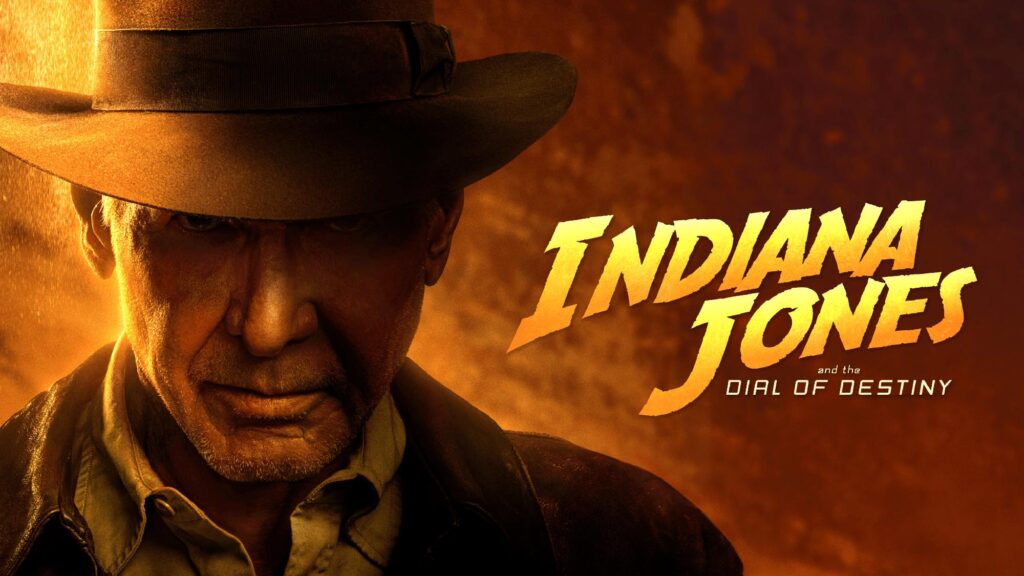
Indiana Jones and the Dial of Destiny
Indiana Jones and the Dial of Destiny was shot across England, Scotland, Italy, Morocco and studio facilities at Pinewood, giving it a wide geographical range.
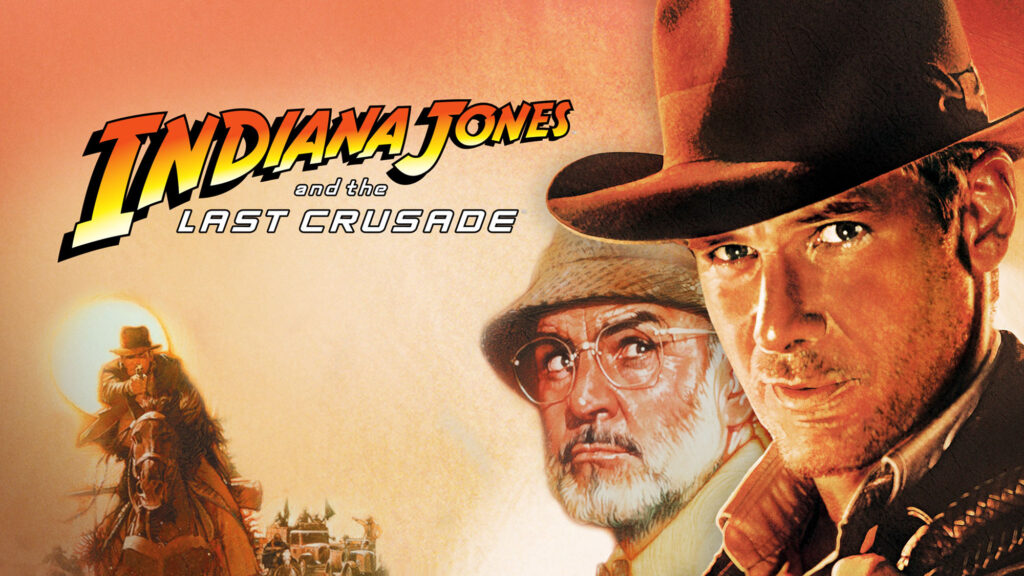
Indiana Jones and the Last Crusade
Indiana Jones and the Last Crusade was filmed in Spain, England, Italy, West Germany, Jordan and the United States.
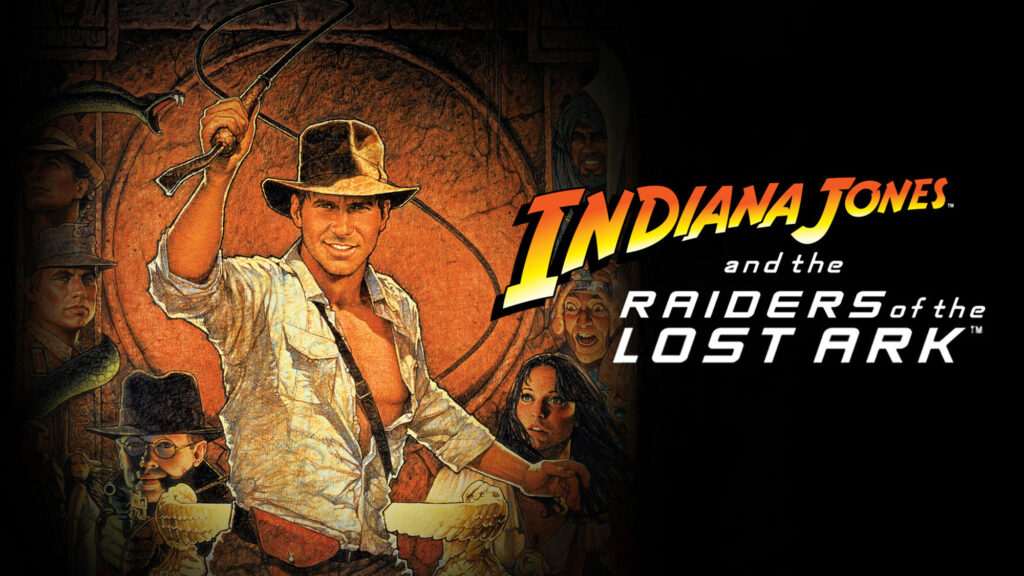
Raiders of the Lost Ark
Raiders of the Lost Ark was filmed in England, Tunisia, France, Hawaii and California, with each place contributing a very different part of Indy's journey.