
Lavenham Guildhall, also known as the Guildhall of Corpus Christi, is a historic timber-framed building overlooking Market Place in the village of Lavenham, Suffolk, England. Completed in 1529, it was built as the meeting place of the Guild of Corpus Christi, one of four religious and charitable guilds established by the wealthy merchants of Lavenham during the height of the town’s medieval wool and cloth industry. The building was financed by the prosperity generated through the production of Lavenham Blew, a high-quality blue woollen broadcloth that was exported throughout Europe. Constructed with a substantial oak frame and plaster infill, the two-storey Guildhall is distinguished by its closely spaced vertical timbers, projecting upper floors, carved wooden beams, leaded windows and an elaborate two-storey entrance porch facing the market square. Its architecture reflects the considerable wealth accumulated by local merchants during the late fifteenth and early sixteenth centuries, when Lavenham was among the richest towns in England. Following the dissolution of the religious guilds during the English Reformation, the building passed into secular use and became parish property in 1596. It subsequently served as a town hall, wool store, prison and workhouse, reflecting the changing fortunes of the community. Between 1655 and 1836, part of the building accommodated a workhouse providing shelter, food and training for impoverished residents. During the eighteenth century, it also functioned as a bridewell, or local prison, where offenders could be detained before trial or transportation. One of its recorded prisoners was Anne Baker, a twelve-year-old girl sentenced in the 1780s to imprisonment and eventual transportation to Australia after escaping from a workhouse. By the nineteenth century, the building had suffered from neglect and inappropriate alterations, but it survived the widespread demolition of medieval structures that transformed many other English towns. In 1887, it was purchased by Sir Cuthbert Quilter, who undertook a substantial restoration around 1911. The Guildhall eventually passed into the care of the National Trust in 1951 and is now protected as a Grade I listed building. Its rooms contain exhibitions exploring Lavenham’s medieval prosperity, the history of the wool trade and the lives of people who occupied the building during its later centuries. The surviving medieval structure, together with the largely unchanged buildings surrounding Market Place, has also made the Guildhall an important filming location for historical dramas and fantasy films.
Lavenham Guildhall has appeared in Witchfinder General (1968), The Canterbury Tales (1972), Barry Lyndon (1975) and Harry Potter and the Deathly Hallows: Part 1 (2010). In Witchfinder General, the building provides the background for the public execution of a woman accused of witchcraft in the neighbouring Market Square. The Canterbury Tales uses both its exterior and interior as the home of the Wife of Bath, while Stanley Kubrick’s Barry Lyndon transforms the building into an eighteenth-century inn where the wounded protagonist learns that his leg must be amputated. The Guildhall also contributed to the digitally reconstructed village of Godric’s Hollow in Harry Potter and the Deathly Hallows: Part 1, with its historic façade incorporated into scenes depicting the ruined home of Harry Potter’s parents. These productions make use of different aspects of the same building, from its medieval appearance to its surviving interior spaces.
In Witchfinder General (1968), the British historical horror film directed by Michael Reeves, Lavenham Guildhall appears during the notorious witch-burning sequence filmed in Market Square. Set during the English Civil War in 1645, the film follows Matthew Hopkins, played by Vincent Price, and his assistant John Stearne, played by Robert Russell, as they travel through East Anglia persecuting people accused of witchcraft. The scene takes place in a Suffolk village where a crowd has gathered to witness the execution of a woman named Elizabeth Clark, played by Maggie Kimberly. A wooden execution apparatus has been erected in the square directly outside the Guildhall, with a ladder suspended above a large pile of burning wood. Hopkins supervises the proceedings alongside a local magistrate, who confirms that the preparations have been completed and orders the execution to begin. Elizabeth is brought forward despite her protests and forcibly secured to the ladder. As the crowd watches, the executioners begin lowering her towards the flames. The Guildhall’s distinctive timber-framed façade is prominently visible in several shots, particularly when Reeves photographs Hopkins and the assembled spectators from the opposite side of the square. Other camera angles reveal the surrounding medieval buildings and the open marketplace where the execution apparatus has been constructed. After Elizabeth is lowered into the fire, the magistrate informs Hopkins that additional prisoners are awaiting execution and pays him for his services. Hopkins subsequently speaks with Stearne about their activities and his ambition to receive official recognition as Witchfinder General. The sequence was filmed in Lavenham during the autumn of 1967, with the production temporarily removing or concealing modern television aerials and telephone wires to preserve the seventeenth-century appearance of the square. A hydraulic cherry picker was used to obtain elevated camera angles overlooking the execution apparatus and surrounding buildings. The scene was also associated with a dangerous incident during filming when shifting winds carried the flames dangerously close to Kimberly, reportedly scorching her eyebrows. Although the execution itself takes place in Market Square rather than inside the Guildhall, the building is a prominent and readily identifiable part of the sequence. Its original sixteenth-century exterior survives with relatively few changes and can be recognised in the film’s wider shots of Hopkins overseeing the burning.
In The Canterbury Tales (1972), originally titled I racconti di Canterbury, the Italian historical comedy-drama directed by Pier Paolo Pasolini, Lavenham Guildhall represents the home of the Wife of Bath, played by Laura Betti. The film adapts several stories and characters from Geoffrey Chaucer’s medieval collection, with Pasolini presenting an earthy and frequently outrageous interpretation of English society during the Middle Ages. The Guildhall appears in the section devoted to the Wife of Bath, a wealthy and outspoken woman who has been married several times and considers physical pleasure an essential part of married life. The village of Lavenham stands in for the city of Bath, while the Guildhall’s substantial timber-framed exterior establishes the woman’s comfortable home. Both the exterior and interior of the building were used for filming. The domestic scenes show the Wife of Bath asserting her authority over her household and pursuing her considerable sexual appetites. Her ageing fourth husband struggles to satisfy her demands, and their relationship eventually ends with his death during an exhausting sexual encounter. The Guildhall provides the setting for these scenes, with its surviving medieval rooms helping to establish the domestic surroundings of a prosperous woman. Following her husband’s death, the Wife of Bath begins pursuing Jenkin, a much younger student played by Tom Baker, whom she eventually marries. Their wedding was filmed at Wells Cathedral rather than at the Guildhall, but the scenes in Lavenham establish the household and circumstances from which the new relationship develops. Pasolini’s production made extensive use of genuine medieval buildings throughout England, frequently combining locations from different counties to represent a single place within the story. Lavenham Guildhall was particularly suitable for the Wife of Bath’s home because its large timber-framed structure could plausibly represent the residence of a wealthy medieval merchant family. Filming took place in 1971, only a few years after the building had appeared in Witchfinder General, although Pasolini made more extensive use of its interior than Michael Reeves had done.
In Barry Lyndon (1975), the historical drama written and directed by Stanley Kubrick, Lavenham Guildhall represents a roadside inn where Redmond Barry, played by Ryan O’Neal, is taken after being seriously wounded in a pistol duel. The scene takes place towards the end of the film, after Barry has spent years attempting to establish himself within eighteenth-century British aristocratic society through his marriage to the wealthy Lady Lyndon, played by Marisa Berenson. His increasingly troubled relationship with his stepson, Lord Bullingdon, played by Leon Vitali, culminates in a formal duel in which Bullingdon shoots Barry in the left leg. The wounded Barry is subsequently carried to an inn, represented by Lavenham Guildhall, where a surgeon is summoned to examine his injury. Lying in bed and visibly suffering, Barry watches anxiously as the doctor inspects the damage caused by the bullet. After completing his examination, the surgeon explains that the bone below Barry’s knee has been shattered and an artery severed. The injury is too severe to repair, and the doctor tells Barry that his leg must be amputated below the knee if he is to survive. Barry responds with disbelief, struggling to understand why such drastic treatment is necessary. The surgeon calmly explains that without amputation he will be unable to stop the bleeding. As the reality of his situation becomes clear, Barry is left devastated, realising that the injury has permanently changed his life. The sequence is photographed in Kubrick’s characteristic restrained style, allowing the surgeon’s clinical explanation and Barry’s increasingly distressed reaction to carry the emotional weight of the scene. The amputation itself is not shown. The inn also features in the subsequent events surrounding Barry’s recovery and his final departure from England. Lord Bullingdon sends Graham, the Lyndon family’s steward, to present Barry with an offer of an annual allowance of 500 guineas on the condition that he leave England permanently and never return. Graham meets Barry and his mother, played by Marie Kean, and explains that the alternative is financial ruin and possible imprisonment for outstanding debts. Unable to recover his former position and now permanently disabled, Barry reluctantly accepts the arrangement. The scenes associated with Lavenham Guildhall therefore occur at the point when Barry’s ambitions finally collapse, transforming the historic building into the modest inn where the former social climber confronts the loss of his health, fortune and place in English society.
In Harry Potter and the Deathly Hallows: Part 1 (2010), the fantasy film directed by David Yates, Lavenham Guildhall was used to help create the fictional village of Godric’s Hollow, the birthplace of Harry Potter and the location where his parents were murdered by Lord Voldemort. Harry, played by Daniel Radcliffe, travels to the village with Hermione Granger, played by Emma Watson, on Christmas Eve while searching for information about the mysterious symbol associated with the Deathly Hallows. Disguised to avoid attracting attention, the two arrive in the snow-covered village and walk through its narrow streets, passing traditional timber-framed buildings and Christmas decorations. They encounter villagers leaving a church service before entering the graveyard, where Harry discovers the graves of his parents, James and Lily Potter. Their journey also brings them past the ruined remains of the cottage where Harry lived as an infant and where Voldemort murdered his parents. The production used footage of Lavenham’s historic buildings to construct the appearance of Godric’s Hollow, including the façade of Lavenham Guildhall and architectural elements from De Vere House on Water Street. The Guildhall’s distinctive white plaster walls, exposed oak timbers and projecting upper floors contributed to the appearance of the ruined Potter family home and the surrounding village. Location filming took place in Lavenham in January 2010, with the crew recording exterior material that could later be combined with additional scenery and digital effects. The buildings were altered during post-production to create a fictional settlement covered in snow and illuminated by Christmas decorations. Neither Daniel Radcliffe nor Emma Watson filmed their performances at the Guildhall. The principal scenes involving Harry and Hermione were photographed separately on studio sets, with the Lavenham footage incorporated into the completed sequences. Consequently, the Guildhall appears as part of the digitally assembled environment rather than as an unaltered building in which the actors performed. Its use demonstrates a different approach from the earlier historical productions, with the filmmakers selecting individual architectural features from the actual location to construct a village that does not exist in reality.
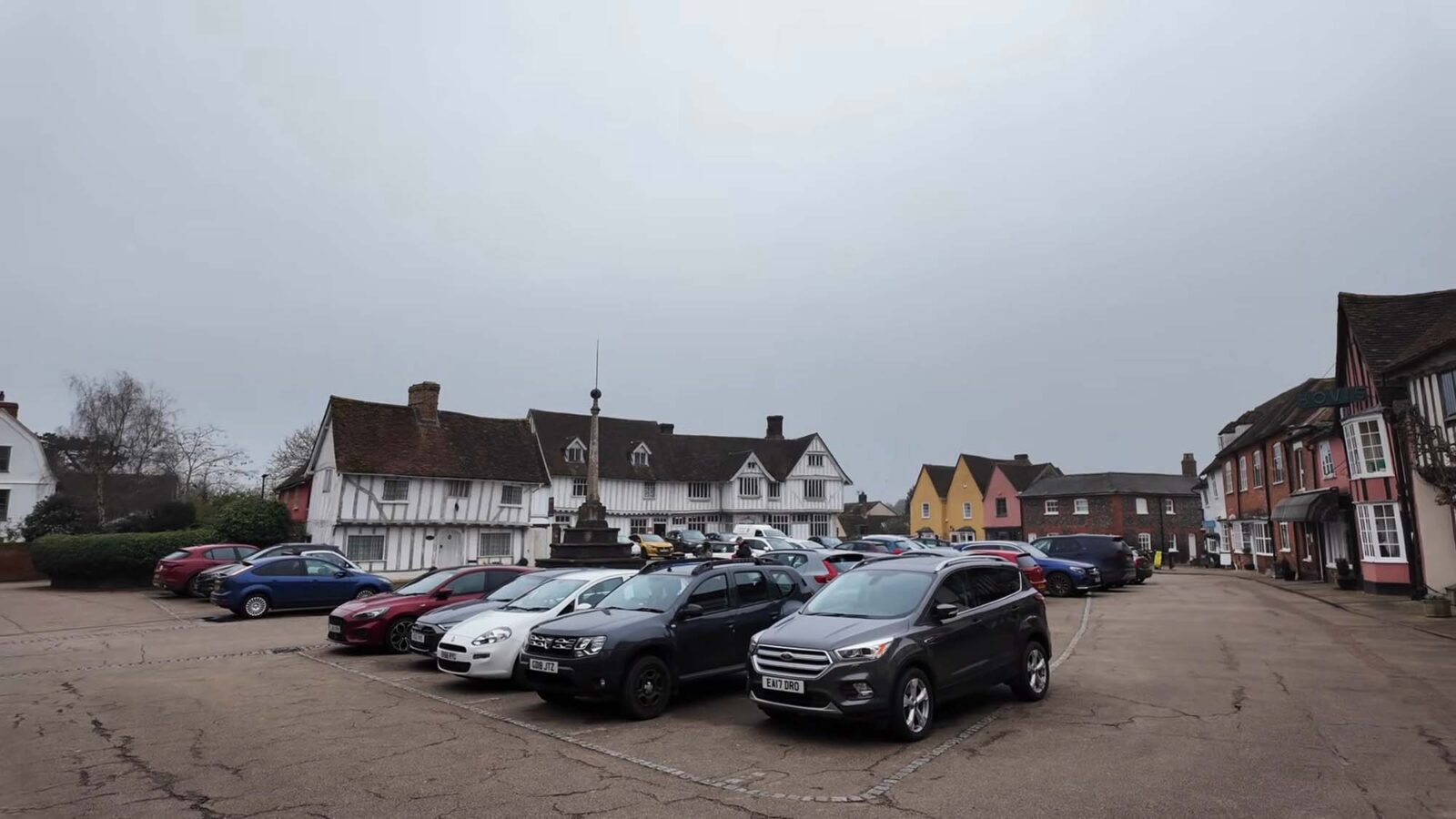
Lavenham Market Square
Lavenham Market Square is in Witchfinder General, The Canterbury Tales, Playing Away, Lovejoy, Harry Potter and the Deathly Hallows: Part 1 and The Strays.
St John the Evangelist Church
St John the Evangelist Church appears in Witchfinder General (1968), the British historical horror film directed by Michael Reeves and starring Vincent Price.
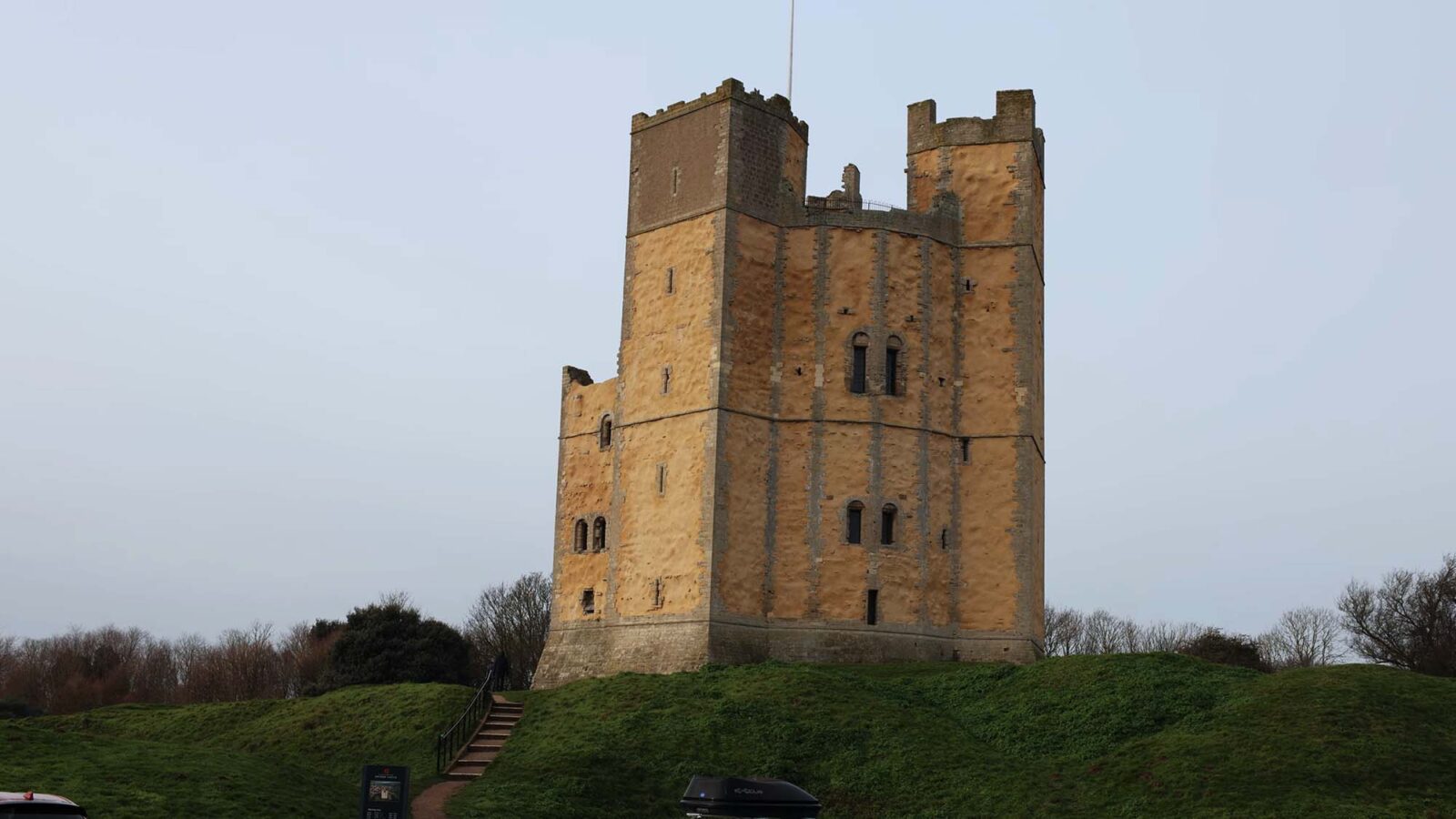
Orford Castle
Orford Castle appears in Witchfinder General (1968), the British historical horror film directed by Michael Reeves and starring Vincent Price.
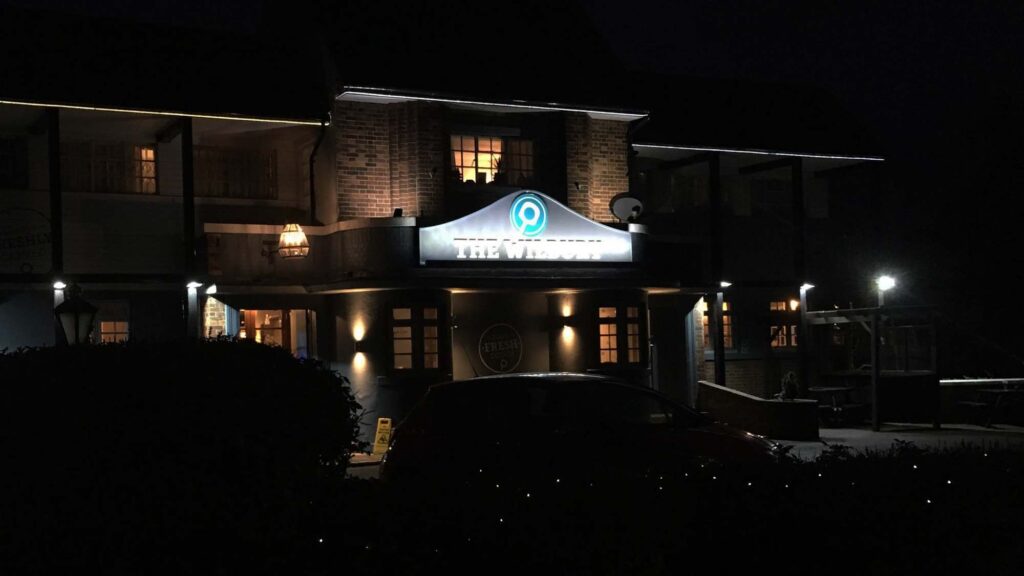
The Wilbury
The Wilbury has appeared in The World’s End (2013), where it was used as the fictional pub that gives the film its title and serves as the final destination.
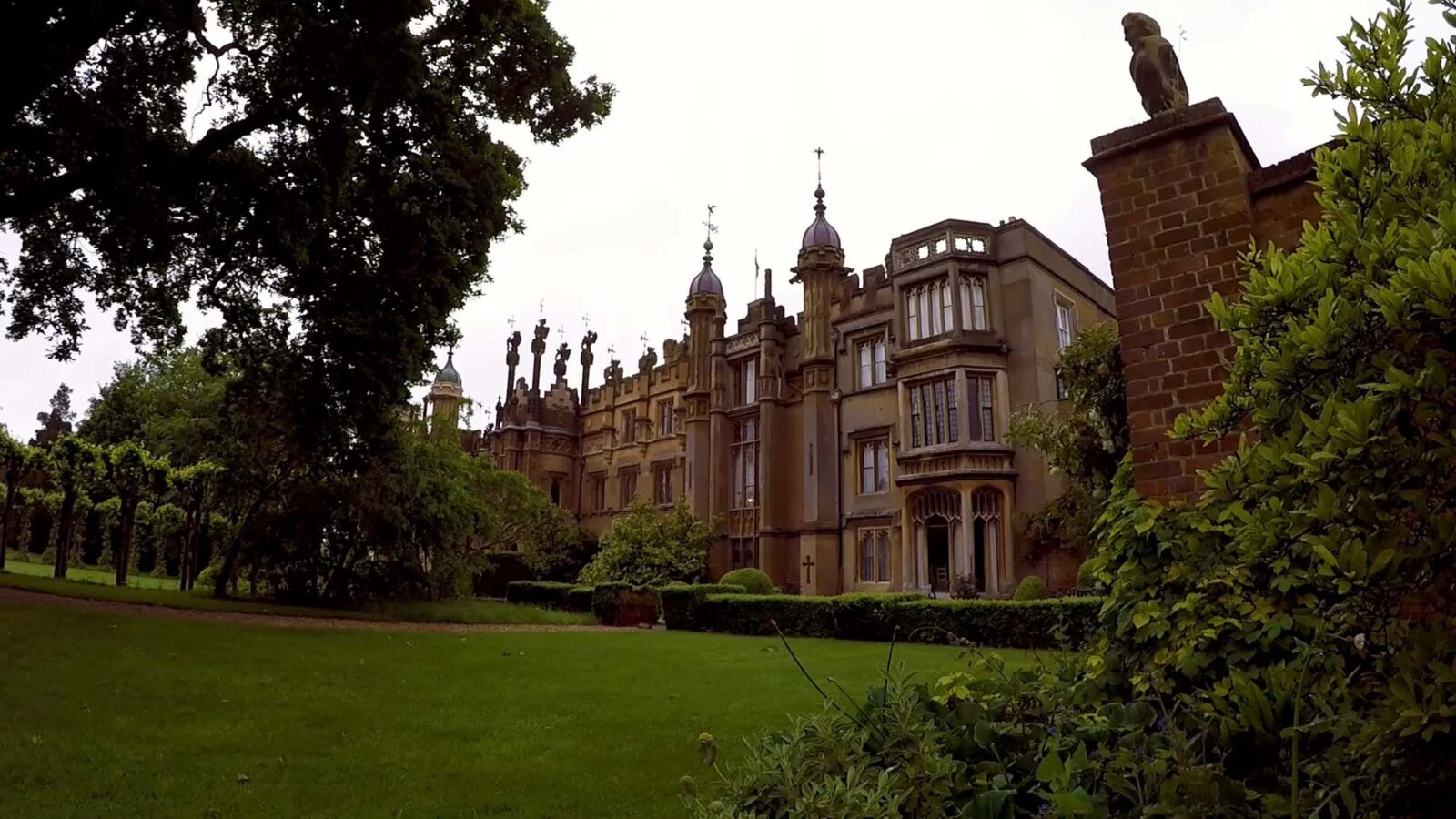
Knebworth House
Knebworth House appeared in The Great Muppet Caper, The Shooting Party, The Lair of the White Worm, Batman, The Wings of the Dove, and many more.
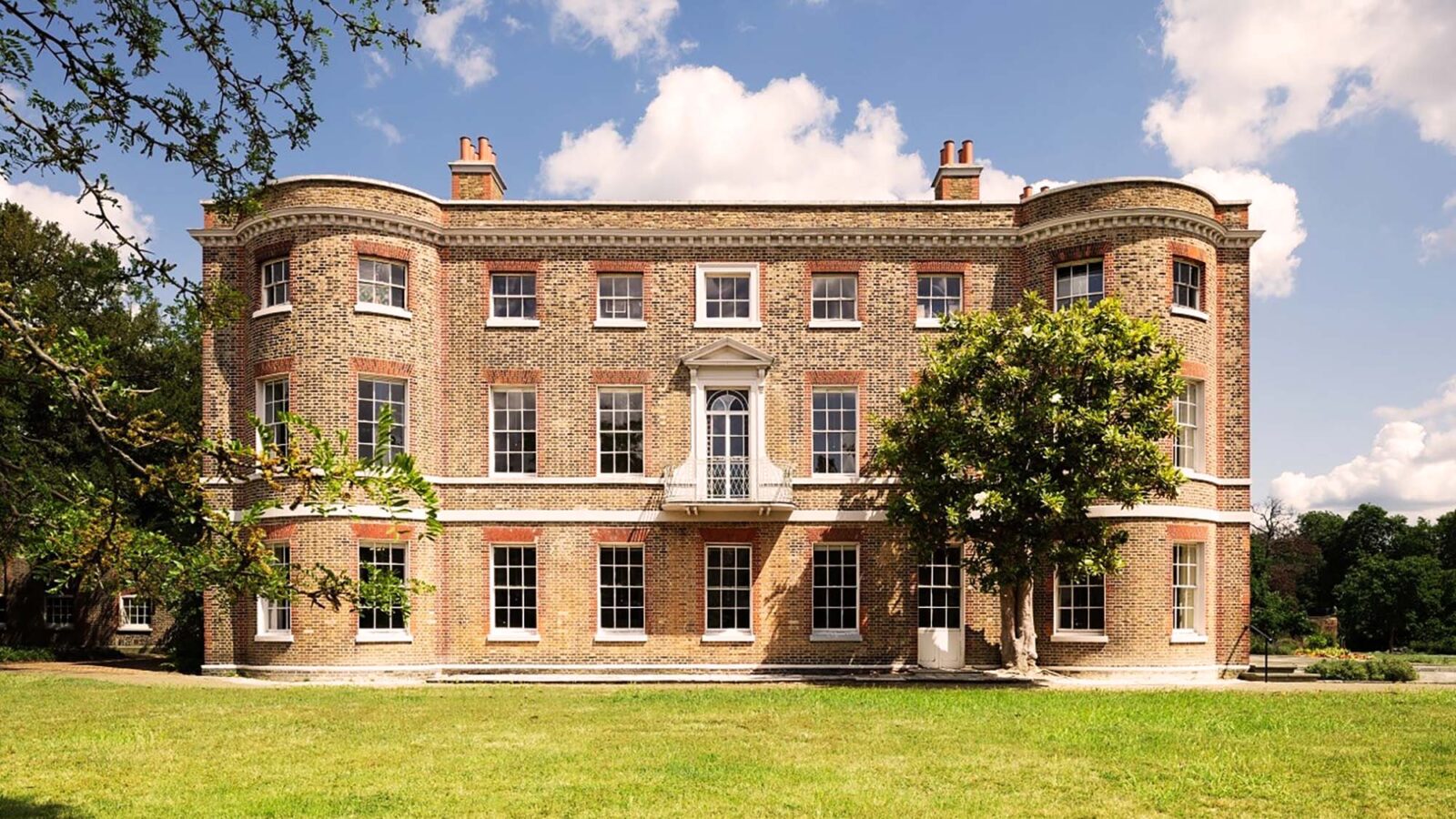
Valentines Mansion and Gardens
Valentines Mansion and Gardens is a historic mansion and garden estate in Ilford, in the London Borough of Redbridge. The house stands…
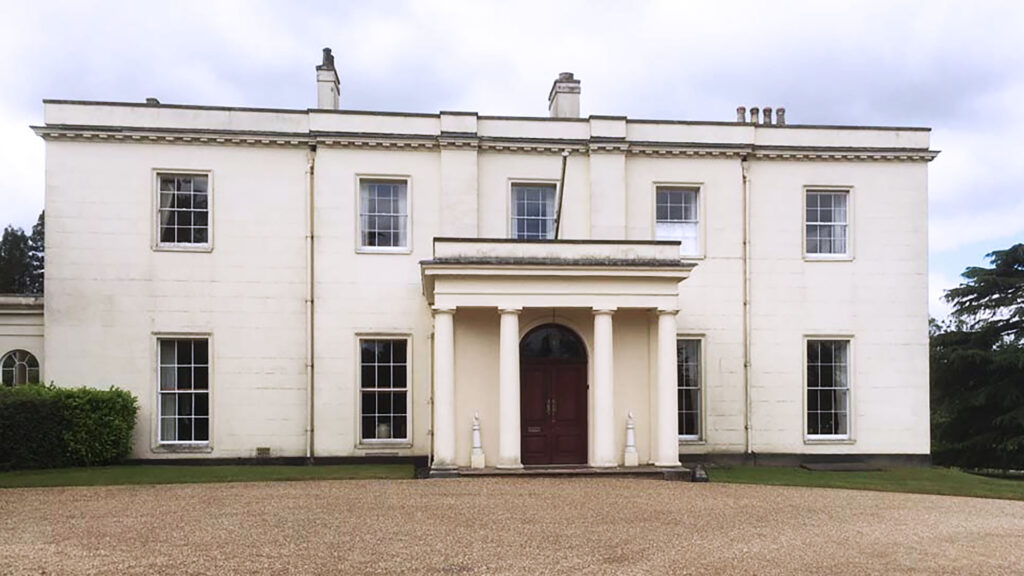
High Canons
High Canons appears in The Devil Rides Out, The Satanic Rites of Dracula, Murder on the Orient Express, Half Moon Street, and many more.
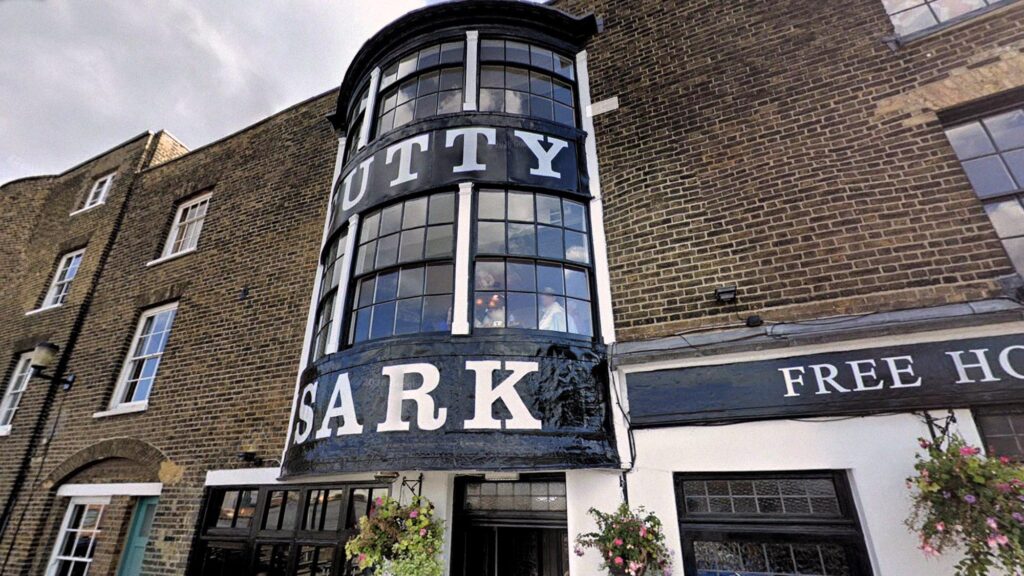
Cutty Sark
Cutty Sark is best known on screen from Beautiful Thing, where it is disguised as The Anchor. It is also used in The List of Adrian Messenger.
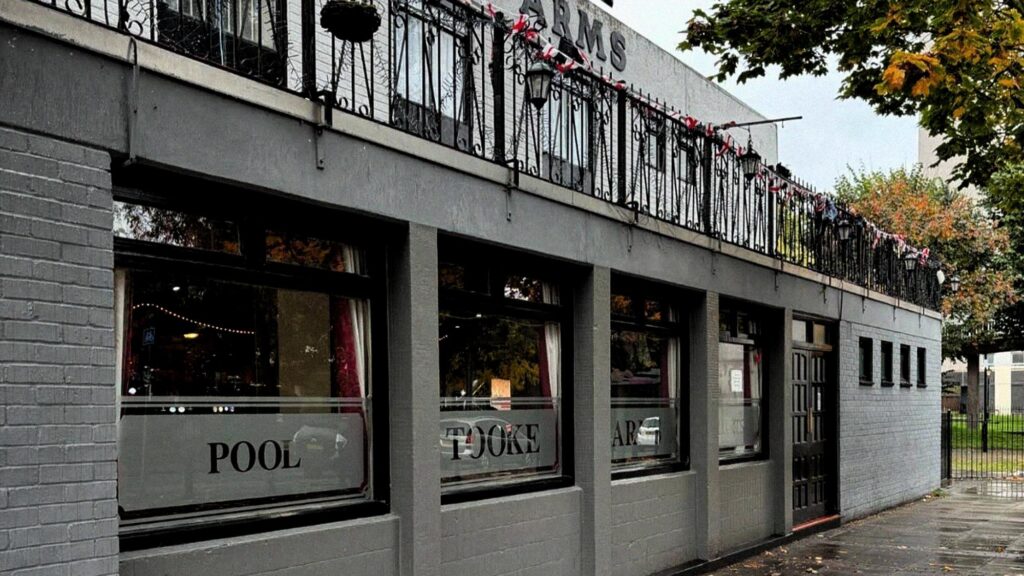
The Tooke Arms
The Tooke Arms appears in MobLand (2025–), where it is used as The Sinful Monkey, the criminal base of Richie Stevenson.