
Sissy Spacek (born Mary Elizabeth Spacek on 25 December 1949) is an American actress and singer whose career has encompassed more than five decades in film and television. She was born in Quitman, a small town in Wood County, north-east Texas, to Edwin Arnold Spacek Sr., the county agricultural agent, and Virginia Frances Spilman, who worked at the county courthouse. Her father was of Czech and German ancestry, while her mother came from a family with English and Irish roots. Spacek grew up with two older brothers, Edwin Jr. and Robert, known as Robbie, in a close-knit community where her family had longstanding connections. Her paternal grandfather, Arnold Spacek, had served as mayor of Granger, Texas. Nicknamed Sissy by her brothers, she spent much of her childhood outdoors, riding horses, fishing and exploring the surrounding countryside. She attended Quitman High School, where she participated in school plays, sang in talent shows, performed as a baton twirler and was elected homecoming queen. Although she enjoyed music and performing from an early age, she initially had little interest in becoming a professional actress. Her ambitions centred on singing, particularly the country and folk music she had grown up hearing in Texas.
A significant turning point came when her oldest brother, Robbie, developed leukaemia and died at the age of eighteen. The experience affected Spacek profoundly, and she later described how losing him had influenced her willingness to take risks and pursue opportunities. In 1967, aged seventeen, she travelled to New York City, where her cousin, actor Rip Torn, and his wife, actress Geraldine Page, encouraged her interest in entertainment. Torn helped introduce her to people working in the music industry, while Page provided support during her early attempts to establish a career. Spacek began performing in Greenwich Village clubs, including the Bitter End on Bleecker Street, and recorded music under the name Rainbo. Her 1968 single “John, You Went Too Far This Time”, released by Roulette Records, was a novelty protest song about John Lennon and Yoko Ono’s controversial album cover for Unfinished Music No. 1: Two Virgins. The record attracted little attention, and her recording contract was not renewed. Spacek subsequently began working as a photographic model and studying acting at the Lee Strasberg Theatre and Film Institute. She also attended classes at the Actors Studio, gradually shifting her ambitions from music towards cinema.
Her first significant film appearance came in Michael Ritchie’s crime thriller Prime Cut (1972), starring Lee Marvin and Gene Hackman. Spacek played Poppy, a young woman caught up in a criminal operation involving human trafficking in the American Midwest. Although the part was relatively small, it brought her into contact with filmmakers who recognised her potential. She subsequently auditioned for Terrence Malick’s directorial debut Badlands (1973), inspired by the real killing spree of Charles Starkweather and Caril Ann Fugate in Nebraska and Wyoming during the late 1950s. Cast as Holly Sargis, a fifteen-year-old girl who accompanies an older man, played by Martin Sheen, on a journey involving a series of murders, Spacek took on a role that became central to her early reputation. Filming took place during 1972 in south-eastern Colorado, particularly around Rocky Ford, La Junta, Las Animas and Trinidad. The production used the Bloom Mansion in Trinidad for exterior scenes involving a wealthy man’s residence, while its interiors were filmed at the Rosemount Museum in Pueblo. Other sequences were shot along the Arkansas River and on the plains surrounding the small Colorado communities. Although the story eventually takes its characters towards Montana, the production relied principally on Colorado locations. Spacek’s own experience of growing up in rural Texas helped her understand Holly’s background and speech patterns, while her childhood baton-twirling skills were incorporated into the character.
Badlands also marked the beginning of Spacek’s relationship with production designer Jack Fisk, who was working on the film’s art department. Fisk had grown up in Virginia and established himself in the American film industry through collaborations with directors including Malick and David Lynch. He and Spacek began a relationship during production and married on 12 April 1974. Their partnership subsequently extended into several film projects, with Fisk working as production designer or art director on productions featuring his wife. Spacek’s career continued developing through the mid-1970s, including a supporting appearance in Ginger in the Morning (1974), before Brian De Palma cast her in Carrie (1976), adapted from Stephen King’s debut novel. She played Carrie White, a socially isolated teenager whose telekinetic powers emerge during a period of bullying and religious repression. Spacek secured the role after an audition in which she deliberately altered her appearance to resemble an awkward schoolgirl, wearing an old dress and arriving with greasy hair. De Palma had initially considered other actresses but was impressed by her performance. Filming took place in Southern California during 1976, with the exterior of Carrie’s family home located on North Seventh Street in Santa Paula. The production also used streets in Santa Paula, schools in Hermosa Beach and Pacific Palisades, and interiors constructed at Culver Studios in Culver City. Spacek participated in the demanding climactic prom sequence, spending long periods covered in artificial blood while the filmmakers worked on the destruction of the school. Her performance earned her first Academy Award nomination for Best Actress, an unusual achievement for a leading performance in a horror film.
Following Carrie, Spacek worked with Robert Altman on 3 Women (1977), portraying Pinky Rose, a young woman whose personality gradually becomes intertwined with that of her colleague and roommate, played by Shelley Duvall. Altman developed the film from a dream and allowed considerable improvisation during production. Filming took place in the Coachella Valley of California, particularly in Palm Springs and Desert Hot Springs, where the actresses worked in actual residential and spa properties. The production used the Sunbeam Inn in Palm Springs and the former Coffées Hotel Public Spa in Desert Hot Springs, along with locations around Thousand Palms. Spacek’s performance contrasted sharply with her portrayal of Carrie White, demonstrating her ability to play apparently innocent characters whose behaviour becomes increasingly disturbing. She subsequently appeared in Welcome to L.A. (1976), directed by Alan Rudolph, and Heart Beat (1980), based on the lives of Jack Kerouac, Neal Cassady and Carolyn Cassady. By the end of the decade, she had established herself through collaborations with several prominent directors of the New Hollywood movement, although her next major role would draw directly on the musical ambitions she had pursued before becoming an actress.
In Coal Miner’s Daughter (1980), directed by Michael Apted, Spacek portrayed country singer Loretta Lynn, tracing her life from a childhood in the coal-mining communities of eastern Kentucky to international musical success. Lynn had personally supported Spacek’s casting, and the actress spent approximately a year preparing for the role, travelling with the singer, visiting her home and studying her voice and mannerisms. Rather than relying on dubbed recordings, Spacek performed the songs herself, working closely with Lynn and producer Owen Bradley to reproduce the singer’s distinctive style. The production began filming in March 1979 and spent several weeks in the Appalachian region around eastern Kentucky and south-western Virginia. The crew established a base at the Wise Inn in Wise, Virginia, while rural communities including Blackey and Bottom Fork in Kentucky provided locations representing Lynn’s childhood home in Butcher Hollow. The production constructed a replica of the family cabin in Letcher County, and concert sequences were filmed at Nashville’s Ryman Auditorium, the former home of the Grand Ole Opry. Spacek worked alongside Tommy Lee Jones, who played Lynn’s husband, Oliver “Doolittle” Lynn, and Levon Helm, drummer of The Band, who portrayed her father. Coal Miner’s Daughter earned seven Academy Award nominations, and Spacek won Best Actress at the ceremony in Los Angeles on 31 March 1981. The film’s soundtrack was also successful, bringing her renewed recognition as a singer.
The success of Coal Miner’s Daughter was followed by several projects that kept Spacek closely connected to rural American settings. She starred in Raggedy Man (1981), directed by her husband Jack Fisk, portraying Nita Longley, a divorced mother working as a telephone operator in a small Texas community during the Second World War. Adapted from William D. Wittliff’s screenplay, the film was shot entirely on location in Texas during the autumn of 1980, with principal filming around Maxwell, Seguin, Lockhart and Corpus Christi. The production brought Spacek back to the state where she had grown up and gave Fisk his feature-film directing debut. She subsequently appeared opposite Jack Lemmon in Costa-Gavras’s political drama Missing (1982), playing Beth Horman, whose American husband disappears during the military coup in Chile in September 1973. Based on the disappearance of journalist Charles Horman, the film follows Beth and her father-in-law as they investigate his fate. Although the story takes place in Chile, the production was filmed principally in Mexico because of the political circumstances surrounding the subject. Mexico City represented Santiago, while Acapulco stood in for Viña del Mar, and studio interiors were constructed at Estudios Churubusco. Filming began in April 1981, with Spacek working alongside Lemmon and John Shea. Missing won the Palme d’Or at the Cannes Film Festival in 1982 and earned her another Academy Award nomination for Best Actress.
Spacek’s musical career continued briefly alongside acting. In 1983, she released the country album Hangin’ Up My Heart, which included material recorded with Nashville musicians. Although it did not establish her as a major recording artist, the album allowed her to pursue an interest that had preceded her film career. During the same period, she and Fisk began spending increasing amounts of time in Virginia, where they had purchased a farm near Charlottesville, in the foothills of the Blue Ridge Mountains. Their first daughter, Schuyler Fisk, was born in 1982, and the couple subsequently made the Virginia property their principal family home. Spacek later explained that they had initially intended the farm to be a retreat from Los Angeles but gradually spent longer periods there before deciding to settle permanently. The move also reflected Fisk’s connection with Virginia, where he had grown up. Rather than raising their children in the Hollywood environment where both parents worked, they chose a rural community in which the family could maintain a greater degree of privacy. Their second daughter, Madison, was born in 1988. Both children grew up on the property, and Schuyler later pursued a career in acting and music.
During the mid-1980s, Spacek returned to the American South for several demanding dramatic roles. She starred opposite Mel Gibson in Mark Rydell’s The River (1984), portraying Mae Garvey, a Tennessee farmer’s wife whose family struggles to retain its land during repeated flooding and economic hardship. The production was filmed extensively in eastern Tennessee during 1983, particularly on farmland along the Holston River in Hawkins County. Additional filming took place in Jonesborough and Kingsport, Tennessee, Gate City in Virginia and Birmingham, Alabama. Rather than creating the agricultural setting entirely on studio property, the filmmakers used working farmland and the surrounding communities. The demanding outdoor production included sequences involving floodwaters, agricultural machinery and physically exhausting labour. Spacek’s performance earned another Academy Award nomination for Best Actress. She also appeared in Marie (1985), directed by Roger Donaldson, portraying Marie Ragghianti, a Tennessee state official who exposed corruption involving Governor Ray Blanton. The political drama was based on real events in Nashville and brought Spacek another substantial role associated with the region.
Her next Academy Award nomination came for Crimes of the Heart (1986), directed by Bruce Beresford and adapted from Beth Henley’s Pulitzer Prize-winning play. Spacek played Babe Magrath, the youngest of three sisters reunited at their family home after she shoots her abusive husband. Diane Keaton and Jessica Lange portrayed her older sisters, while the story was set in the fictional Mississippi town of Hazlehurst. Despite its Mississippi setting, principal photography took place in Southport, North Carolina, during the spring and summer of 1986. The production used several local residences and historic buildings, including the Harper House in Southport and Orton Plantation near Winnabow. Spacek worked with Keaton and Lange over a nine-week schedule, with the film’s limited cast allowing the actresses to concentrate on the relationships between the sisters. During the same year, she appeared opposite Anne Bancroft in the screen adaptation of Marsha Norman’s ‘night, Mother (1986), portraying a woman who tells her mother that she intends to end her life. Both films explored difficult family relationships, although through very different dramatic approaches.
Spacek reduced the frequency of her film appearances during the following years, concentrating increasingly on her family in Virginia. She nevertheless continued working with established directors and appearing in selected television productions. In Richard Pearce’s The Long Walk Home (1990), she portrayed Miriam Thompson, a white housewife in Montgomery, Alabama, whose relationship with her African-American domestic worker, played by Whoopi Goldberg, changes during the Montgomery bus boycott of 1955–1956. The film was based on a screenplay by John Cork and involved location filming in Alabama and Georgia. She subsequently played Liz Garrison, the wife of New Orleans district attorney Jim Garrison, portrayed by Kevin Costner, in Oliver Stone’s JFK (1991). Further roles followed in the drama A Place for Annie (1994), the historical adaptation The Grass Harp (1995) and Paul Schrader’s Affliction (1997), in which she played Margie Fogg opposite Nick Nolte. The latter was filmed principally in Quebec, Canada, although its story takes place in rural New Hampshire. Spacek also accepted occasional lighter material, including the comedy Blast from the Past (1999), in which she played the wife of a man portrayed by Christopher Walken who keeps his family isolated in an underground fallout shelter for decades.
One of Spacek’s most significant late-1990s roles came in David Lynch’s The Straight Story (1999), based on the real journey of Alvin Straight, an elderly Iowa man who travelled hundreds of miles on a lawnmower to visit his estranged brother in Wisconsin. Spacek portrayed Rose Straight, Alvin’s daughter, opposite Richard Farnsworth in the title role. The production was filmed in Iowa and Wisconsin during the autumn of 1998, following locations associated with the original journey, including Laurens, Clermont and Lansing in Iowa and communities across the Mississippi River in Wisconsin. Unlike Lynch’s more disturbing and surreal productions, the film presented a relatively straightforward account of an elderly man’s determination to reunite with his brother. Spacek’s role was comparatively small but important to the film’s portrayal of the family’s history and circumstances. Her collaboration with Lynch also renewed a professional relationship dating back to the early 1970s, when both had been involved in the independent filmmaking community of Los Angeles. Lynch had previously worked with Jack Fisk, including on Eraserhead (1977), and remained connected to the couple through their shared professional circles.
A major return to leading dramatic roles came with Todd Field’s In the Bedroom (2001), in which Spacek played Ruth Fowler, a New England woman whose family is devastated by the murder of her teenage son. Tom Wilkinson portrayed her husband, while Nick Stahl and Marisa Tomei appeared as the younger couple whose relationship leads to the tragedy. Adapted from Andre Dubus’s short story Killings, the film was shot entirely on location in Maine during the summer of 2000. Production took place around Camden, Rockland, Belfast, Owls Head and other communities in Knox and Lincoln counties. Field also used his own family’s cabin near Rockland for some scenes, incorporating real local buildings and businesses into the story. Spacek and Wilkinson spent time working within these communities rather than relying on constructed studio environments, an approach that suited the film’s intimate scale. The performance brought Spacek her sixth Academy Award nomination for Best Actress, as well as a Golden Globe Award and recognition from several critics’ organisations. The film itself received five Academy Award nominations, including Best Picture.
Following In the Bedroom, Spacek continued taking supporting roles in films that allowed her to work with a variety of established and emerging directors. She appeared alongside William Hurt in Tuck Everlasting (2002), a fantasy drama filmed in Maryland, and later portrayed a mother in the independent ensemble film Nine Lives (2005), directed by Rodrigo García. Her television work included the HBO drama Pictures of Hollis Woods (2007), in which she played a retired teacher who becomes a foster parent, and the comedy series Big Love (2006–2011), where she appeared as Marilyn Densham. She also starred in the dramatic anthology series Four Christmases and a Wedding’s contemporaries rather than maintaining a fixed pattern of screen appearances. Her roles during the decade increasingly reflected her age, often involving mothers, widows and women confronting difficult events in their past. In 2008, she appeared in Lake City, a family drama set in rural Virginia, a setting closely connected to the region where she had lived for more than twenty years.
Spacek reunited with Robert Duvall for Aaron Schneider’s Get Low (2009), playing Mattie Darrow, a woman with a complicated past relationship with a reclusive man who decides to arrange his own funeral while still alive. Set in the American South during the 1930s, the film was produced in Georgia during February and March 2009, with filming around Newnan, Crawfordville, Dallas and Pickett’s Mill Battlefield State Park. Spacek worked alongside Duvall and Bill Murray, returning to the type of small-town Southern drama in which she had often appeared during the earlier decades of her career. She subsequently joined the ensemble cast of The Help (2011), directed by Tate Taylor and adapted from Kathryn Stockett’s novel. Set in Jackson, Mississippi, during the civil rights movement of the early 1960s, the film was shot extensively in Greenwood, Mississippi, where local houses, businesses and streets represented the state capital. Spacek played Mrs Walters, the outspoken mother of the socially ambitious Hilly Holbrook, portrayed by Bryce Dallas Howard. The production also starred Viola Davis, Octavia Spencer, Emma Stone and Jessica Chastain, and became one of the major commercial successes of 2011.
In 2012, Spacek published her memoir My Extraordinary Ordinary Life, written with journalist Maryanne Vollers. The book traced her childhood in Quitman, the loss of her brother, her early musical ambitions in New York, her marriage to Jack Fisk and their decision to raise their daughters in Virginia. Rather than concentrating exclusively on Hollywood, she devoted considerable attention to family history and the experiences that had shaped her life outside acting. The farm near Charlottesville became an important part of the narrative, reflecting the couple’s decision to establish a permanent home away from the centres of the American entertainment industry. Their daughter Schuyler had by then developed her own acting and recording career, appearing in films including Orange County (2002) and I’m Reed Fish (2006), while Madison pursued interests in art and design. Spacek and Fisk remained involved in the local community and continued dividing their time between Virginia and the locations required by their professional work.
A more substantial return to television came when Spacek joined the Netflix drama Bloodline (2015–2017), created by Todd A. Kessler, Daniel Zelman and Glenn Kessler. She portrayed Sally Rayburn, the matriarch of a wealthy Florida family operating a waterfront inn whose history is dominated by secrets, resentment and the death of a child. The ensemble included Kyle Chandler, Ben Mendelsohn, Linda Cardellini and Norbert Leo Butz. Although the story is fictional, the production was filmed extensively in the Florida Keys, particularly around Islamorada and Key Largo. The family residence and guesthouse were represented by the Moorings Village resort in Islamorada, while locations including the Caribbean Club in Key Largo and the Green Turtle Inn in Islamorada appeared throughout the series. Spacek spent extended periods working in South Florida, where the production used real coastal properties rather than relying entirely on studio sets. The character of Sally was also informed by Spacek’s personal experience of family bereavement, particularly the loss of her brother during adolescence. She later discussed how that experience had influenced her approach to a woman whose family never fully recovers from the death of a child.
Her subsequent television work included Castle Rock (2018), a psychological horror series developed for Hulu and inspired by the fictional Maine town that appears throughout Stephen King’s writings. Spacek played Ruth Deaver, a woman experiencing dementia and increasingly uncertain about the sequence of events in her life. The production was filmed principally in Massachusetts, with the town of Orange representing Castle Rock. A Victorian house in Orange was used as Ruth’s residence, while other local buildings and streets were temporarily altered for filming. The role brought Spacek back to material associated with King more than forty years after Carrie, although her character was created specifically for the television series. She also appeared in the drama The Old Man & the Gun (2018), directed by David Lowery and starring Robert Redford as ageing bank robber Forrest Tucker. Spacek played Jewel, a woman who develops a relationship with Tucker without fully understanding his criminal activities. The film was shot largely in Ohio and Kentucky, including Cincinnati and Covington, with the two actors sharing several extended conversational scenes. Her performance offered a comparatively restrained romantic role at a stage of her career when she had become more selective about accepting film work.
Spacek returned to science fiction with Night Sky (2022), an Amazon Prime Video series in which she starred opposite J. K. Simmons. The pair portrayed Irene and Franklin York, a married couple who discover that a concealed chamber beneath their property provides access to another planet. The story takes place in a small Illinois town, and production was based in the Chicago region during 2021. Filming took place at Cinespace Chicago Film Studios and in communities including Woodstock, Illinois, where local streets provided the series’ principal small-town setting. The production also involved locations outside the United States for scenes connected to the wider science-fiction mystery. Night Sky marked one of Spacek’s longest-running television commitments since Bloodline, although the series was cancelled after its first season. Later in 2022, she appeared in Sam & Kate, a family drama directed by Darren Le Gallo and filmed in Thomasville, Georgia. She played Tina, a woman who develops a relationship with an older man portrayed by Dustin Hoffman, while their respective adult children were played by Schuyler Fisk and Jake Hoffman. The production was especially meaningful because it brought Spacek and her daughter together in a substantial film project, alongside another real-life parent and child.
Her later work included a guest appearance in the FX miniseries Dying for Sex (2025), starring Michelle Williams as Molly Kochan, a woman confronting terminal cancer while attempting to regain control over her personal life. Spacek portrayed Gail, Molly’s mother, whose relationship with her daughter is complicated by guilt and unresolved experiences from the past. The series was filmed in New York City during 2024 and premiered in April 2025. It brought Spacek back to a contemporary family drama and another character struggling with the consequences of personal loss. That same year, she appeared in Lynne Ramsay’s Die My Love (2025), opposite Jennifer Lawrence, Robert Pattinson and Nick Nolte. Spacek portrayed Pam, the mother of Pattinson’s character, whose relationship with a young woman suffering from severe psychological distress becomes increasingly difficult. Although the film takes place in rural Montana, principal photography was carried out around Calgary, Alberta, between August and October 2024. The production used an isolated farmhouse and other locations outside the city, including areas around Didsbury, Okotoks and Balzac. Die My Love premiered in competition at the Cannes Film Festival in May 2025 and received its American theatrical release in November that year.
In 2026, Spacek continued her association with Texas through Love Letter to Texas, a short film written and directed by Jeff Nichols for the western clothing company Tecovas. She provided the narration for the production, which also featured Ryan Bingham and Michael Shannon. The project drew on Texas landscapes, music and local traditions, returning her professionally to the state where she had grown up and first developed an interest in performing. She also joined the cast of The Catch, a romantic comedy directed by Dave McCary and starring Emma Stone, Chris Pine and Tim Robbins. Spacek was cast as an aunt of Stone’s character, while Robbins was cast as her father. The film began principal photography in New York City during July 2026, with locations including Citi Field in Queens. Universal Pictures scheduled its theatrical release for 21 May 2027. The project represented another substantial film commitment for Spacek more than fifty years after her first major screen appearances.
Away from acting, Spacek has maintained a longstanding interest in music, gardening, animals and the rural life she established with Fisk in Virginia. Their marriage, which began during the early years of their careers, has continued for more than five decades, while Fisk has remained active as a production designer on films by directors including Terrence Malick, Paul Thomas Anderson and Martin Scorsese. The couple have generally kept their family life separate from Hollywood publicity, although Spacek has frequently spoken about the importance of their home near Charlottesville. Her childhood in Quitman, early years in New York and later life in Virginia have all remained closely connected to her professional choices. Throughout her career, she has repeatedly returned to stories involving rural American communities and complicated family relationships, while also undertaking demanding roles in political dramas, horror films and contemporary television. By 2026, she remained professionally active, with her career extending from the independent cinema of the early 1970s to international productions involving several generations of filmmakers.
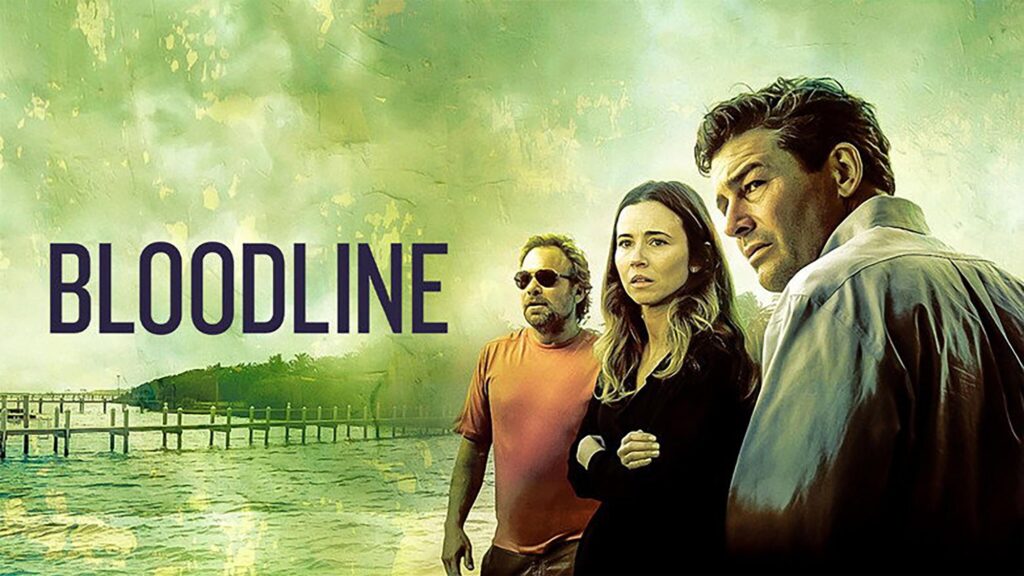
Bloodline
Bloodline is closely tied to the Florida Keys and was filmed largely in and around Islamorada, whit turquoise water, mangroves, and low-rise island roads.