
Ronald William Howard (born 1 March 1954) is an American film director, producer, screenwriter and former actor whose career has spanned more than seven decades. Born in Duncan, Oklahoma, he was the eldest son of Rance Howard, an actor, writer and director, and Jean Speegle Howard, an actress. His father, originally named Harold Rance Beckenholdt, had adopted the surname Howard for his professional career, while his mother had studied acting in New York City. Both parents were pursuing theatrical work when Ron was born, and the family travelled frequently during his early childhood. His first appearance on stage came at eighteen months in a production of The Seven Year Itch, while his first substantial screen role was in Anatole Litvak’s drama The Journey (1959), filmed partly in Vienna, Austria. The production took the family to Europe, where Ron’s parents decided that the experience offered an unusual opportunity to travel while continuing their professional work. Following their return to the United States, they moved to Burbank, California, in 1958, settling close to the Hollywood studios where television production was expanding rapidly. His younger brother, Clint Howard, was born the following year and also became a professional actor.
Although Howard spent much of his childhood working in television, his parents attempted to provide an ordinary upbringing outside the entertainment industry. He attended Robert Louis Stevenson Elementary School and David Starr Jordan Junior High School in Burbank, while receiving additional education from studio teachers during filming. His father accompanied him to auditions and helped him understand dialogue and character motivation, but avoided treating his son’s work as the family’s principal source of income. Rance continued accepting relatively small acting roles, while Jean concentrated increasingly on raising their two sons. Howard’s early television appearances included Dennis the Menace, The Twilight Zone and General Electric Theater. The latter brought him to the attention of producer Sheldon Leonard, who was developing a new situation comedy starring Andy Griffith. Howard was subsequently cast as Opie Taylor, the young son of widowed sheriff Andy Taylor, in The Andy Griffith Show (1960–1968). The series was set in the fictional North Carolina town of Mayberry but filmed largely at Desilu Studios in Culver City and on the studio’s nearby exterior sets. Howard spent eight years working with Griffith, Don Knotts and other members of the ensemble, gradually learning about television production while growing from a small child into a teenager.
The Andy Griffith Show established Howard as one of America’s most recognisable child actors, although his professional success occasionally complicated his school life. He later recalled being teased by classmates who associated him almost entirely with Opie, and occasionally becoming involved in fights with boys who challenged him because of his television reputation. His parents continued insisting that he attend public schools rather than receive all his education privately. During the same period, he appeared in several feature films, including The Music Man (1962), directed by Morton DaCosta, in which he played Winthrop Paroo opposite Robert Preston and Shirley Jones. The musical was filmed principally at Warner Bros. Studios in Burbank, where elaborate sets recreated the fictional Iowa town of River City. He also appeared opposite Glenn Ford in Vincente Minnelli’s The Courtship of Eddie’s Father (1963), further developing his experience with established Hollywood directors. Although acting provided financial security, Howard became increasingly interested in what happened behind the camera. He began experimenting with his own films using a Super 8 camera during his teenage years, often recruiting his brother and friends to participate.
Howard graduated from John Burroughs High School in Burbank in 1972, having developed a longstanding relationship with fellow student Cheryl Alley. The couple had met as teenagers, and Cheryl subsequently became an important influence on his personal and professional decisions. After graduating, Howard enrolled at the University of Southern California’s School of Cinematic Arts in Los Angeles, intending to pursue directing rather than remain exclusively an actor. His studies were interrupted when George Lucas cast him as Steve Bolander in American Graffiti (1973), a comedy-drama following a group of young people during a summer night in California in 1962. Although the story is set in Modesto, principal photography took place in Petaluma, north of San Francisco, during the summer of 1972. Howard worked alongside Richard Dreyfuss, Cindy Williams, Paul Le Mat, Candy Clark and Harrison Ford, with much of the production filmed between late evening and sunrise. The crew also briefly worked in San Rafael before moving to Petaluma, where streets and businesses provided the setting for the film’s extended cruising sequences. Howard later recalled observing Lucas’s relatively unconventional approach to lighting, camera placement and performance, which differed considerably from the carefully controlled television productions where he had spent his childhood.
American Graffiti became an important professional experience for Howard, reinforcing his determination to direct his own films. Its commercial success also contributed to a renewed interest in 1950s American culture, helping create the conditions for the television comedy Happy Days (1974–1984). Howard was cast as Richie Cunningham, a relatively conventional teenager whose friends included Arthur Fonzarelli, played by Henry Winkler. Set in Milwaukee, Wisconsin, during the 1950s and early 1960s, the series was produced in Los Angeles, principally at Paramount Studios on Melrose Avenue. Howard remained a regular cast member until 1980, developing a close friendship with Winkler and gaining further experience with television directors and production crews. During this period, he also appeared opposite John Wayne in The Shootist (1976), directed by Don Siegel. Filmed in Nevada and California, the Western became Wayne’s final feature film, with Howard playing Gillom Rogers, a teenager who becomes fascinated by an ageing gunfighter. Although he received positive attention for his performance, Howard was increasingly concerned that his reputation as a familiar television personality would prevent him from becoming a serious filmmaker.
He married Cheryl Alley on 7 June 1975, beginning a partnership that continued throughout his professional career. Around the same time, he approached independent producer Roger Corman about directing a feature film. Corman initially offered him an acting role in Eat My Dust! (1976), a low-budget car-chase comedy directed by Charles B. Griffith. Howard agreed to star in the production in exchange for an opportunity to direct a subsequent film. The arrangement resulted in Grand Theft Auto (1977), an action comedy in which Howard also played the leading role opposite Nancy Morgan. He co-wrote the screenplay with his father, Rance Howard, and directed the film on a limited budget with a demanding shooting schedule. Production took place around Southern California, including Victorville, Reseda and Los Angeles, with additional scenes in Las Vegas. Corman provided Howard with considerable practical advice concerning budgets, scheduling and the organisation of action sequences, although the twenty-three-year-old director was largely responsible for supervising the production. Grand Theft Auto became a profitable release for Corman’s New World Pictures and gave Howard the professional directing credit he needed to pursue more ambitious projects.
Howard continued developing his directing career while completing his commitment to Happy Days. He directed the television films Cotton Candy (1978) and Through the Magic Pyramid (1981), gaining further experience working with actors and production crews before his next theatrical feature. Night Shift (1982), a comedy starring Winkler, Michael Keaton and Shelley Long, marked the beginning of his professional partnership with producer Brian Grazer. The film follows two employees of a New York City morgue who become involved in running an unconventional business from their workplace. Location filming took place in Manhattan and Queens during late 1981 and early 1982, including around Times Square, Broadway and residential streets in Ridgewood. Additional production work was completed in California. The film introduced Keaton to a wider cinema audience and demonstrated Howard’s ability to direct adult comedy rather than concentrate solely on material involving teenagers. His collaboration with Grazer subsequently developed into one of Hollywood’s most enduring production partnerships.
Their next major project, Splash (1984), starred Tom Hanks as a New York businessman who falls in love with a mermaid portrayed by Daryl Hannah. Howard directed the romantic fantasy for Walt Disney’s newly established Touchstone Pictures label, which had been created to release films intended for older audiences. Principal photography began in March 1983, with seventeen days of location filming in New York City. The production used Liberty Island, the American Museum of Natural History, Bloomingdale’s department store and Columbus Circle, while underwater scenes were filmed around Nassau in the Bahamas. Additional interiors and other scenes were produced in Los Angeles. Splash became a substantial commercial success and established Hanks as a leading film actor, while strengthening Howard’s relationship with the Disney organisation. The production also had unexpected consequences for his family life. During his time in New York, Hannah suggested that Howard and his wife explore towns in nearby Connecticut as possible places to live. The couple subsequently drove from New York into Greenwich, a prosperous coastal community where they began considering a permanent home outside Los Angeles.
Howard followed Splash with Cocoon (1985), a science-fiction drama about residents of a retirement community whose lives change after encountering extraterrestrial visitors. The film starred Don Ameche, Wilford Brimley, Hume Cronyn and Jessica Tandy, bringing Howard into contact with several actors whose careers had begun decades before his own. Principal photography started in St Petersburg, Florida, in August 1984, with the production using actual retirement communities, residential properties, city parks and the historic Coliseum ballroom. A large bayside estate provided one of the principal locations, while additional underwater sequences were filmed in the Bahamas. Howard had encouraged revisions to the screenplay that placed greater emphasis on the relationships between the elderly characters and the visitors. Cocoon became another major success and earned him a Directors Guild of America nomination. He subsequently directed Gung Ho (1986), a comedy starring Michael Keaton that examined industrial employment and the cultural differences between American workers and Japanese management. The production’s setting in a struggling Pennsylvania factory town reflected Howard’s interest in working-class communities, a subject with parallels to his father’s upbringing and the industrial regions where the family had lived before moving to California.
In 1986, Howard and Grazer formally established Imagine Entertainment, creating a production company through which they could develop films and television programmes independently of the major studios. Their partnership brought together Howard’s experience as an actor and director with Grazer’s interests in producing and developing screenplays. The company subsequently became involved in numerous commercially successful productions, while Howard continued accepting directing assignments for other studios. One of his most ambitious early projects was Willow (1988), a fantasy adventure developed by George Lucas and starring Warwick Davis and Val Kilmer. Howard reunited with Lucas more than fifteen years after American Graffiti, this time working as director on an elaborate international production. Principal photography began at Elstree Studios in Borehamwood, Hertfordshire, in April 1987, with location filming in Wales, New Zealand and England. Brocket Hall in Hertfordshire was used for a sequence involving the Nelwyn village, while other landscapes and historical buildings provided settings for the fictional fantasy world. The production involved extensive practical effects, elaborate costumes and some of the emerging digital technologies that would become increasingly important in Hollywood filmmaking.
Howard’s own experiences of marriage and raising children became central to Parenthood (1989), a comedy-drama starring Steve Martin, Mary Steenburgen, Dianne Wiest and Jason Robards. Working with Grazer and screenwriters Lowell Ganz and Babaloo Mandel, he developed the story from discussions about the difficulties, anxieties and unexpected pleasures of family life. Although the film takes place in St Louis, Missouri, production was based in Orlando, Florida, where Universal Studios was constructing a new filmmaking complex. Principal photography began in January 1989, with three weeks of studio work followed by approximately seven weeks filming around central Florida. Locations included residential neighbourhoods in Orlando and sporting facilities used for scenes involving the family’s children. Parenthood became the first feature film produced at Universal’s Orlando studios, helping establish the city’s ambitions as a centre for film and television production. By this time, Howard and Cheryl were raising four children: Bryce Dallas, born in 1981; twins Jocelyn and Paige, born in 1985; and Reed, born in 1987. The family had settled in Greenwich, Connecticut, in 1985, seeking a community where their children could grow up away from the concentrated entertainment industry of Los Angeles.
The Howards developed a lasting connection with Greenwich, where their children attended local schools and participated in activities outside show business. The family lived in the town’s backcountry area, eventually constructing a substantial house on the Conyers Farm estate in 1994. Howard later explained that he and Cheryl had wanted their children to meet people from a variety of professional backgrounds rather than grow up surrounded almost exclusively by actors and filmmakers. They became familiar with Greenwich Avenue, the town’s commercial centre, and frequently visited Stamford Museum & Nature Center. Although Howard continued travelling extensively for professional commitments, Connecticut became an important family base and a place where he could work on scripts and production plans away from Hollywood. Their eldest daughter, Bryce Dallas Howard, eventually followed her parents and grandparents into the entertainment industry, establishing a successful career as an actress and director.
During the early 1990s, Howard began directing increasingly large productions requiring extensive location work and complicated technical arrangements. Backdraft (1991), starring Kurt Russell, William Baldwin and Robert De Niro, examined the lives of Chicago firefighters investigating a series of suspicious fires. Production began in Chicago in July 1990, with the cooperation of the Chicago Fire Department. Howard filmed at working fire stations and locations throughout the city, including a former firehouse on South Michigan Avenue and buildings around the Near West Side. Additional sets and controlled fire sequences were constructed at production facilities, allowing the filmmakers to simulate dangerous conditions without exposing the actors and crew to unnecessary risks. Howard worked closely with experienced firefighters and stunt specialists, studying the movement of smoke and flames before designing the action scenes. He subsequently directed Far and Away (1992), starring Tom Cruise and Nicole Kidman as Irish immigrants pursuing new lives in nineteenth-century America. Filming took him to Ireland, including the Dingle Peninsula in County Kerry, Connemara in County Galway and Kilruddery House near Bray in County Wicklow. The film’s climactic Oklahoma land rush was staged near Billings, Montana, where hundreds of horses, wagons and extras were assembled for the sequence.
Howard reached another important point in his career with Apollo 13 (1995), adapted from the experiences of the astronauts aboard NASA’s unsuccessful April 1970 Moon mission. The film starred Tom Hanks as commander Jim Lovell, alongside Kevin Bacon and Bill Paxton as fellow astronauts Jack Swigert and Fred Haise. Howard spent considerable time researching the mission, meeting astronauts and NASA personnel and visiting facilities associated with the American space programme. During pre-production, he travelled to the U.S. Space & Rocket Center in Huntsville, Alabama, and Johnson Space Center in Houston, Texas, where he examined training equipment and the workings of Mission Control. The production reconstructed spacecraft interiors at Universal Studios in California, but Howard wanted the scenes involving weightlessness to appear more convincing than those in earlier space films. NASA therefore allowed him and the actors to film aboard a KC-135 aircraft flying repeated parabolic manoeuvres. Each flight provided brief periods of genuine weightlessness, allowing Hanks, Bacon and Paxton to perform scenes without conventional suspension equipment. The production involved hundreds of such manoeuvres, while the historical research also informed the reconstruction of Mission Control and other NASA facilities.
Apollo 13 became one of Howard’s most critically successful films, receiving nine Academy Award nominations, including Best Picture, and winning for Best Film Editing and Best Sound. Although Howard was not nominated for Best Director at the Academy Awards, he won the Directors Guild of America Award for Outstanding Directing in a Feature Film in 1996. He subsequently directed Ransom (1996), starring Mel Gibson as a wealthy airline executive whose son is kidnapped, followed by the television-themed comedy EDtv (1999), starring Matthew McConaughey. These projects continued his interest in characters placed under public pressure, although their scale and subject matter differed considerably from the historical material of Apollo 13. His next major production returned him to fantasy with Dr. Seuss’ How the Grinch Stole Christmas (2000), starring Jim Carrey. Rather than relying on existing towns to represent Whoville, Howard supervised the construction of an elaborate fictional community at Universal Studios in Universal City, California. Extensive sound stages and backlot areas were used for the village and the Grinch’s mountain home, while Rick Baker developed the elaborate make-up worn by Carrey. The film became one of the highest-grossing releases of 2000.
A Beautiful Mind (2001) brought Howard back to biographical drama and became one of the defining films of his directorial career. Adapted from Sylvia Nasar’s biography of mathematician John Forbes Nash Jr., the film starred Russell Crowe as Nash and Jennifer Connelly as his wife, Alicia. Howard worked with screenwriter Akiva Goldsman to develop a narrative that explored Nash’s mathematical achievements and experiences with schizophrenia while concentrating on his family relationships. Principal photography took place in New Jersey and New York during 2001, with substantial filming at Princeton University, where Nash had studied and worked. The university permitted access to actual campus buildings and outdoor spaces, and auditions for thousands of extras were organised in McCosh Hall. Other filming locations included Fairleigh Dickinson University’s Florham campus in Madison and buildings in the New York metropolitan area. Howard met the real John and Alicia Nash while researching the production, although the screenplay substantially fictionalised aspects of their lives. A Beautiful Mind won four Academy Awards at the ceremony held in March 2002, including Best Picture and Best Director. Howard shared the Best Picture award with Grazer and received his first Academy Award for directing.
The success of A Beautiful Mind was followed by further projects combining historical material with commercial filmmaking. Howard directed the Western The Missing (2003), starring Tommy Lee Jones and Cate Blanchett, before reuniting with Russell Crowe for Cinderella Man (2005). The latter followed the life of heavyweight boxer James J. Braddock during the Great Depression, with Renée Zellweger playing his wife. Although the story takes place principally in New Jersey and New York, the production was filmed largely in Toronto, Ontario, where historical streets and buildings represented the American locations. Howard and his production team used period architecture and elaborate interior sets to recreate Depression-era neighbourhoods and boxing venues. The film’s boxing sequences required extensive preparation, and Crowe trained with professional boxing instructors to portray Braddock’s fighting style. Howard subsequently returned to the subject of political and media history with Frost/Nixon (2008), adapted from Peter Morgan’s stage play about the televised interviews conducted by British broadcaster David Frost with former US president Richard Nixon in 1977.
Frost/Nixon starred Michael Sheen and Frank Langella, reprising the roles they had originated on stage. Howard filmed largely in Southern California, using locations associated with Nixon’s life and recreating other settings in studios. One of the most significant locations was La Casa Pacifica in San Clemente, the former presidential residence where Nixon had lived following his resignation. The property had not previously been used for feature-film production, and Howard negotiated permission to film there in September 2007. Other locations included the Beverly Hilton hotel, the Cinerama Dome in Hollywood and buildings around Los Angeles, while a residence in Westlake Village represented the house where the original interviews were recorded. Howard received another Academy Award nomination for Best Director, and the film was nominated for Best Picture. Its relatively contained subject contrasted with the scale of his next major franchise, which had already taken him to several historic European locations.
In 2006, Howard directed The Da Vinci Code, adapted from Dan Brown’s bestselling novel and starring Tom Hanks as Harvard symbologist Robert Langdon. The production followed a fictional investigation through Paris, London and Scotland, with filming at actual historical buildings as well as studio sets. Howard obtained permission to work inside the Louvre in Paris, where filming was arranged around the museum’s operating schedule. Other French locations were used to recreate the story’s journey through the city, while England provided numerous buildings associated with the investigation. Lincoln Cathedral stood in for Westminster Abbey during scenes that could not be filmed at the London monument, and Rosslyn Chapel near Edinburgh was used for the film’s conclusion. The chapel’s trustees permitted filming inside the historic building in September 2005, with Hanks and Audrey Tautou present for several days. Some exterior views were recreated using miniature models and visual effects because restoration scaffolding surrounded parts of the property. The film became a major international commercial success despite considerable controversy surrounding its fictional treatment of religious history.
Howard returned to Brown’s novels with Angels & Demons (2009), again starring Hanks. The story takes place principally in Rome and Vatican City, but the production encountered considerable difficulties securing permission to film at religious buildings. Officials associated with the Roman Catholic Church refused access to several churches, while filming within the Vatican itself was unavailable. Howard consequently combined selected Roman location photography with extensive sets constructed in California. A large recreation of St Peter’s Square was built on the grounds of the former Hollywood Park racetrack in Inglewood, with visual effects used to complete the surrounding architecture. The production demonstrated the practical limitations of filming stories set in internationally recognised historical buildings. Howard later directed Inferno (2016), another adaptation of a Robert Langdon novel, with location filming in Florence, Venice, Istanbul and other European cities. The production continued his interest in combining actual historic environments with reconstructed interiors and digital effects, although he remained involved in projects outside the franchise.
Among his other substantial productions during the 2010s was Rush (2013), a biographical sports drama about the rivalry between Formula One drivers James Hunt and Niki Lauda during the 1976 championship season. Starring Chris Hemsworth and Daniel Brühl, the film required Howard to recreate races held at circuits across Europe and Japan. Principal photography began in February 2012, with most of the racing sequences filmed in Britain. Brands Hatch in Kent, Donington Park in Leicestershire, Snetterton in Norfolk and Cadwell Park in Lincolnshire were adapted to represent different historical circuits, while a specially constructed pit complex at Blackbushe Airport in Hampshire allowed production staff to recreate numerous Grand Prix settings. Howard also filmed at the Nürburgring in Germany, where Lauda had suffered his near-fatal accident in August 1976. The production used genuine period racing cars alongside replicas, requiring close cooperation with drivers, engineers and owners of historic Formula One vehicles. Howard subsequently travelled to the Canary Islands for In the Heart of the Sea (2015), a historical maritime drama starring Hemsworth and based on the sinking of the American whaling ship Essex in 1820. Filming took place around Lanzarote and La Gomera, with additional studio work in Britain.
Howard also became increasingly involved in documentary filmmaking through Imagine Entertainment. The Beatles: Eight Days a Week – The Touring Years (2016) examined the band’s development during their years of live performances between 1962 and 1966. The film combined archival footage with interviews and was produced with the cooperation of Paul McCartney, Ringo Starr and the estates of John Lennon and George Harrison. Howard subsequently directed Pavarotti (2019), a documentary about Italian opera singer Luciano Pavarotti, using family interviews, concert footage and material from the singer’s personal archive. These projects allowed him to explore the lives of artists without the fictional reconstructions necessary for feature-film biography. Imagine also expanded into television, producing programmes including Arrested Development (2003–2019), for which Howard served as narrator and executive producer, and Friday Night Lights (2006–2011). He also became involved in National Geographic’s historical anthology Genius (2017–), directing the opening episode about Albert Einstein and serving as an executive producer.
His longstanding relationship with George Lucas and the Star Wars franchise brought another major assignment in 2017. Lucasfilm appointed Howard to direct Solo: A Star Wars Story (2018) after original directors Phil Lord and Christopher Miller left the production because of creative differences. Filming had already been underway for several months at Pinewood Studios in Buckinghamshire, and Howard took over in June 2017, supervising further principal photography, revisions and additional scenes. The production involved locations in England, Spain and Italy, including Fuerteventura in the Canary Islands and the Dolomites. Howard had previously worked with Lucas on American Graffiti and Willow, making the project another chapter in a professional relationship stretching back to the early 1970s. Although Solo received mixed commercial results compared with earlier Star Wars productions, the assignment demonstrated Howard’s willingness to take responsibility for a large project already underway under difficult circumstances.
Howard subsequently directed Hillbilly Elegy (2020), adapted from the memoir by J. D. Vance and starring Amy Adams, Glenn Close and Gabriel Basso. The story follows three generations of an Appalachian family whose lives become closely connected to the industrial town of Middletown, Ohio, and communities in eastern Kentucky. Howard’s own childhood in north-eastern Ohio gave him some familiarity with the industrial environment depicted in the story, although the production’s principal base was in Georgia. Filming began in June 2019, with locations in Atlanta, Macon and Clayton representing Ohio and Kentucky, while additional exterior scenes were shot in Middletown and at Yale University in New Haven, Connecticut. The film received mixed critical reviews, but Close’s performance earned an Academy Award nomination for Best Supporting Actress. The same year, Howard and his younger brother Clint were developing a memoir examining their childhood experiences in Hollywood. Published in October 2021, The Boys: A Memoir of Hollywood and Family explored their parents’ careers, the family’s move from Oklahoma to California and the unusual experience of growing up as professional actors. Their father, Rance, had died in 2017, while their mother, Jean, had died in 2000, and the brothers explained that preparing their father’s memorial encouraged them to reconsider the family’s history.
Howard returned to large-scale historical drama with Thirteen Lives (2022), based on the international rescue operation carried out at Tham Luang cave in northern Thailand in 2018. The film starred Viggo Mortensen, Colin Farrell and Joel Edgerton as divers involved in rescuing twelve members of a youth football team and their coach from a flooded cave system. Although the events took place in Chiang Rai Province, principal photography was conducted in Queensland, Australia, beginning in March 2021. The Gold Coast region provided environments resembling northern Thailand, with locations including Mudgeeraba, Yatala, Numinbah Valley and Carrara. Extensive artificial cave systems were constructed inside warehouses in Yatala, allowing the filmmakers to recreate narrow passages, changing water levels and difficult underwater conditions. Howard worked with divers and technical advisers associated with the real rescue to develop the sequences, while filming during the COVID-19 pandemic created additional production restrictions. The project became one of his most demanding films involving water, joining a career that had already included underwater work in Splash and elaborate maritime sequences in In the Heart of the Sea.
His growing interest in documentary subjects continued with We Feed People (2022), examining chef José Andrés and the humanitarian organisation World Central Kitchen, which provides meals to people affected by natural disasters and other emergencies. Howard followed it with Jim Henson Idea Man (2024), a documentary exploring the life and career of puppeteer and filmmaker Jim Henson. The production used material from Henson’s personal archives and interviews with family members and professional collaborators, including Frank Oz. It premiered at the Cannes Film Festival in May 2024 and subsequently appeared on Disney+. The documentary won the Primetime Emmy Award for Outstanding Documentary or Nonfiction Special, providing further recognition for Howard’s work outside fictional cinema.
His next dramatic feature, Eden (2025), developed from a story he had encountered during a family visit to the Galápagos Islands. Inspired by the experiences of European settlers who attempted to establish isolated lives on Floreana Island during the 1930s, the film starred Jude Law, Vanessa Kirby, Ana de Armas, Daniel Brühl and Sydney Sweeney. Howard had researched the historical events for several years before developing the screenplay with Noah Pink. Rather than filming principally in Ecuador, he returned to Queensland, Australia, where production began on the Gold Coast in November 2023. Locations around the region represented the Galápagos landscape, while Village Roadshow Studios provided facilities for additional work. The film premiered at the Toronto International Film Festival in September 2024 and received its American theatrical release in August 2025. Its darker treatment of isolation, conflict and human behaviour marked a departure from the more optimistic dramas and comedies most commonly associated with Howard’s directing career.
In 2026, Howard returned to documentary filmmaking with Avedon, a portrait of American photographer Richard Avedon. Developed with the cooperation of the Richard Avedon Foundation, the film examines the photographer’s career in fashion, portraiture and documentary photography, drawing on previously unavailable archival material and interviews with people who knew him. Howard presented the documentary as a special screening at the Cannes Film Festival in May 2026, returning to the event where he had previously introduced several of his projects. The film was also presented at the Hamptons International Film Festival in October, and Netflix scheduled its streaming premiere for 11 November 2026. Howard’s work on Avedon continued his interest in artists whose professional achievements were closely connected to their personal histories and working methods.
At the same time, Howard completed another historical feature, Alone at Dawn, adapted from the book by Dan Schilling and Lori Longfritz about United States Air Force combat controller John A. Chapman, who died during the Battle of Takur Ghar in Afghanistan in March 2002. The film stars Adam Driver, Anne Hathaway and Betty Gilpin and follows the circumstances of Chapman’s final mission and the subsequent investigation into his actions. Produced by Amazon MGM Studios and Imagine Entertainment, the film was in post-production by October 2026. Its theatrical release was scheduled to begin on 25 December 2027, followed by wider distribution in January 2028. The production continued Howard’s work with historical subjects involving extensive research and collaboration with people connected to the real events.
Away from professional filmmaking, Howard has maintained close relationships with his children and their families. His daughter Bryce Dallas Howard became an internationally recognised actress through films including The Village (2004), Jurassic World (2015) and Rocketman (2019), before developing her own directing career. She has directed episodes of The Mandalorian (2019–) and other Star Wars television productions, creating another family connection with a franchise associated with her father’s longtime collaborator George Lucas. The Howard children spent much of their childhood in Greenwich, where the family lived for approximately three decades. In 2014, Ron and Cheryl placed their large Conyers Farm estate on the property market, having begun spending more of their time in California as their children reached adulthood. Howard has continued dividing his professional and personal activities between the East and West Coasts, while maintaining connections with the communities and institutions associated with his family’s earlier life.
Over his career, Howard has received numerous industry honours in recognition of his work in acting, directing and producing. He was awarded the National Medal of Arts in 2003 and received two stars on the Hollywood Walk of Fame, one recognising his television career and another honouring his work in motion pictures. His acting career began in the early years of American television, while his directing work developed during the emergence of independent filmmakers such as Lucas, Spielberg and Francis Ford Coppola. Through Imagine Entertainment, which he continues to lead with Brian Grazer, he has also supported a large body of work by other filmmakers and television creators. By October 2026, Howard remained professionally active more than seventy years after his earliest stage appearances, with an established career encompassing acting, screenwriting, directing and documentary production.
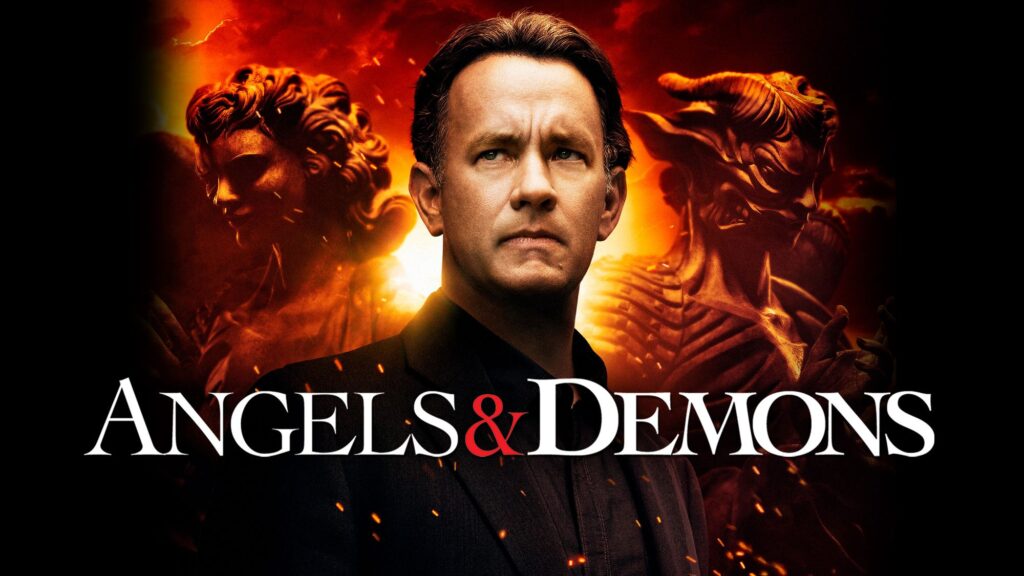
Angels & Demons
Angels & Demons is associated with Rome and Vatican City, but uses a mixture of real Roman locations, palace interiors, studio sets and recreated spaces.
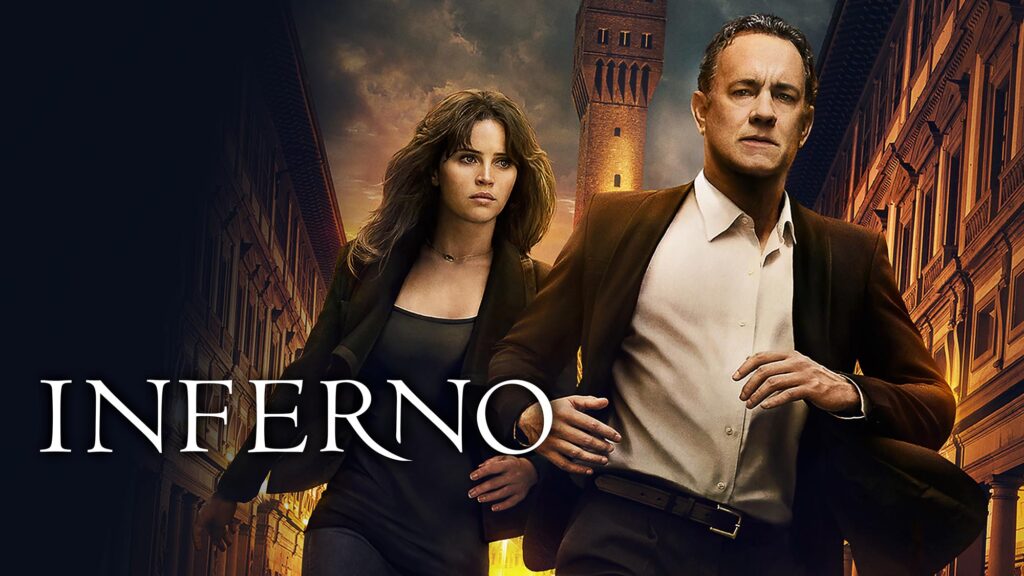
Inferno
Inferno (2016) was shot across Florence, Venice, Budapest and Istanbul, with Florence providing the most important real-world setting.