
Willem Dafoe is an American actor born William James Dafoe on 22 July 1955 in Appleton, Wisconsin. He was raised in a large family as one of eight children born to Dr William Alfred Dafoe, a surgeon, and Muriel Isabel Sprissler, a nurse who worked alongside her husband. Because both parents spent long hours at the hospital, Dafoe was frequently cared for by his older sisters, who became important influences during his childhood. His brother Donald also pursued medicine, eventually becoming a surgeon and researcher. The family lived in a relatively comfortable Midwestern environment, although Dafoe developed interests that differed considerably from the conventional professional expectations surrounding him. During his teenage years, he began using the name Willem, a variation of William that had originated as a nickname among friends. He eventually became so accustomed to it that he retained the name professionally. His childhood coincided with considerable social and political change in the United States, and visits to his older siblings at the University of Wisconsin introduced him to the student protest movement, alternative music and experimental artistic culture of the late 1960s.
Dafoe attended Appleton East High School, where he developed an interest in theatre and filmmaking. He participated in amateur productions and began making experimental films with friends, activities that occasionally brought him into conflict with school authorities. He subsequently enrolled at the University of Wisconsin–Milwaukee in 1973, studying drama and appearing in student productions. However, he became increasingly dissatisfied with conventional academic training and left after approximately eighteen months to join Theatre X, an experimental performance company based in Milwaukee. The group drew inspiration from European avant-garde theatre, particularly the work of Jerzy Grotowski and the Living Theatre, emphasising physical movement, improvisation and collaborative development rather than traditional scripted performance. Dafoe worked with director John Schneider and appeared in productions including Peter Handke’s Offending the Audience. Theatre X also toured internationally, allowing him to travel to Europe while still in his early twenties. In 1976, he performed at the Mickery Theatre in Amsterdam, an important centre for experimental performance that introduced European audiences to unconventional theatre companies from around the world.
The following year, Dafoe moved to New York City, where he became involved with Richard Schechner’s experimental company The Performance Group. Its performances took place at the Performing Garage on Wooster Street in SoHo, a former industrial building converted into a performance space during the development of Lower Manhattan’s alternative arts community. Dafoe initially worked on productions in relatively minor capacities, helping construct sets and participating in rehearsals while becoming familiar with the company’s approach to collaborative performance. He developed a relationship with theatre director Elizabeth LeCompte, who was among the members seeking greater independence from Schechner. Following disagreements within the company, LeCompte and several collaborators established the Wooster Group in 1977, with Dafoe becoming one of its founding performers. Other early members included Spalding Gray, Ron Vawter and Jim Clayburgh. The company retained the Performing Garage as its principal base, developing productions that combined theatre, dance, music, video and experimental approaches to established dramatic texts.
The Wooster Group became central to Dafoe’s professional life for more than twenty-five years. Its productions were developed through extended rehearsal periods, with performers frequently contributing to the creation of the material rather than simply interpreting an existing screenplay or play. Dafoe appeared in works including Rumstick Road, Nayatt School, L.S.D. (…Just the High Points…), Frank Dell’s The Temptation of St. Antony and The Hairy Ape, while continuing to travel with the company to theatres and festivals throughout Europe. The experience established his interest in physical performance, an approach that would later become particularly important in his cinema work. During these years, he and LeCompte lived together in New York, developing a personal and professional relationship that lasted until 2004. Their son, Jack, was born in 1982. Although the couple never married, they continued collaborating through the Wooster Group while Dafoe’s film career gradually expanded. He later credited the organisation with teaching him to approach acting as a practical process of experimentation rather than a fixed method of character interpretation.
Dafoe’s transition into cinema began when director Michael Cimino cast him in a small role in the Western Heaven’s Gate (1980). He travelled to Montana for the production, which involved elaborate historical sets, large numbers of extras and an unusually demanding filming schedule. His appearance was largely removed during editing, however, and he received no screen credit. A more substantial opportunity came with The Loveless (1981), a low-budget drama co-directed by Kathryn Bigelow and Monty Montgomery. Dafoe played Vance, the leader of a motorcycle gang travelling through a small Southern town during the 1950s. The film was shot around Midway in Liberty County, Georgia, particularly along U.S. Highway 17, where motels, garages and roadside businesses provided the setting for the bikers’ encounter with local residents. The production gave Dafoe his first major screen role and introduced him to filmmakers working independently of the established Hollywood system. His appearance attracted attention for its mixture of physical confidence and emotional detachment, qualities that subsequently became important to the unconventional characters he frequently portrayed.
During the middle of the 1980s, Dafoe began receiving more prominent roles in American cinema. He played Raven Shaddock, the leader of a violent motorcycle gang, in Walter Hill’s Streets of Fire (1984), a stylised action film that combined elements of 1950s youth culture with contemporary rock music. He subsequently portrayed counterfeiter Eric Masters in William Friedkin’s To Live and Die in L.A. (1985), opposite William Petersen as a Secret Service agent investigating an elaborate counterfeiting operation. The production was filmed extensively around Los Angeles, using industrial buildings, warehouses, streets and waterways associated with the city’s less familiar commercial districts. Dafoe’s character operates within a world of expensive art, criminal networks and carefully manufactured appearances, and the film includes scenes showing the technical process of producing counterfeit currency. Working with Friedkin introduced him to a director known for demanding performances and extensive practical location filming. The film became an important early example of Dafoe’s ability to portray dangerous characters without relying on conventional physical intimidation.
His breakthrough came with Oliver Stone’s Vietnam War drama Platoon (1986), in which he played Sergeant Elias Grodin, an experienced American soldier whose comparatively compassionate approach to the war places him in conflict with the brutal Sergeant Barnes, portrayed by Tom Berenger. Charlie Sheen played Chris Taylor, a young recruit whose experiences are shaped by the competing influence of the two men. The film was shot on the island of Luzon in the Philippines during 1986, with jungle sequences filmed around Mount Makiling in Laguna Province, river and village scenes in Cavite, and additional work near Manila. Before principal photography, Stone arranged an intensive military training programme supervised by Vietnam veteran Dale Dye. Dafoe and the other principal actors spent several weeks undertaking patrols, digging defensive positions, carrying military equipment and living under conditions designed to approximate the physical exhaustion experienced by soldiers. The production began during considerable political upheaval in the Philippines, with President Ferdinand Marcos leaving the country shortly before filming commenced.
Platoon became an international success and won four Academy Awards, including Best Picture and Best Director. Dafoe received his first Academy Award nomination for Best Supporting Actor, while Berenger was nominated in the same category. One of the film’s most recognisable sequences involves Elias being pursued through the jungle after being abandoned by members of his unit, with the character’s final moments becoming central to the emotional structure of the story. The performance transformed Dafoe’s career, bringing him recognition among mainstream audiences while allowing him to continue accepting unconventional roles. Rather than concentrating exclusively on military and action films, he subsequently worked with filmmakers whose material placed greater emphasis on psychological, political and moral conflict. His continued association with the Wooster Group also distinguished him from many actors who had entered cinema through the conventional Hollywood studio system.
Martin Scorsese cast Dafoe as Jesus in The Last Temptation of Christ (1988), adapted from Nikos Kazantzakis’s novel. The film portrays Jesus as a man experiencing fear, uncertainty and temptation while struggling to understand the responsibilities associated with his religious calling. Harvey Keitel played Judas Iscariot, while Barbara Hershey portrayed Mary Magdalene. Principal photography took place in Morocco during the autumn of 1987, with locations around Meknès, Marrakech and the Atlas Mountains representing ancient Judea. The former royal stables of Moulay Ismail in Meknès were used for interiors associated with the Temple and the Roman authorities, while surrounding landscapes provided settings for journeys and encounters described in the story. Dafoe underwent extensive preparation for the role, concentrating on the character’s physical experiences and emotional conflicts rather than attempting to reproduce the familiar visual conventions of religious painting. Released in August 1988, The Last Temptation of Christ provoked considerable controversy among religious organisations, particularly because of its treatment of Jesus’s humanity and imagined personal desires. Despite the protests, the film became an important work in Dafoe’s career and established a professional relationship with Scorsese.
The same year, Dafoe starred opposite Gene Hackman in Alan Parker’s Mississippi Burning (1988), a fictionalised drama inspired by the murders of three civil rights workers in Mississippi in 1964. He played FBI agent Alan Ward, whose strict adherence to official procedures repeatedly conflicts with the more confrontational approach of Hackman’s character, Rupert Anderson. Production took place in Mississippi and Alabama, using actual Southern communities to recreate the social environment of the civil rights era. Filming began around Jackson, Mississippi, before continuing to Vaiden, Vicksburg and other locations associated with the investigation. The historic Carroll County Courthouse in Vaiden represented the fictional county courthouse, while the town of LaFayette in Alabama supplied streets and buildings used for the principal community setting. The film received several Academy Award nominations and generated debate over its historical interpretation, particularly because it emphasised the FBI investigation rather than the activities of local African-American civil rights organisers. For Dafoe, it represented another important leading role in a politically charged production.
During the following decade, Dafoe increasingly alternated between larger American films and independent productions by directors working outside Hollywood conventions. He appeared in Oliver Stone’s Born on the Fourth of July (1989) and played the disturbing criminal Bobby Peru in David Lynch’s Wild at Heart (1990), opposite Nicolas Cage and Laura Dern. The latter film was shot around Los Angeles, Pasadena and other parts of California, with additional location work in Texas and Louisiana. Dafoe’s grotesque appearance as Bobby Peru, particularly his exaggerated teeth and unsettling manner of speaking, became one of the film’s distinctive elements. His interest in physically transforming himself for a role was also evident in Paul Schrader’s Light Sleeper (1992), in which he played John LeTour, a drug dealer approaching middle age and questioning the direction of his life. Set and filmed in New York City, the film followed LeTour through apartments, restaurants and late-night streets, returning Dafoe to the urban environment where he had established his theatre career. He subsequently worked again with Schrader on Affliction (1997), portraying Rolfe Whitehouse, whose account of his brother’s troubled life provides the narrative framework for the film.
Dafoe’s international career expanded further through films such as The English Patient (1996), directed by Anthony Minghella and adapted from Michael Ondaatje’s novel. He played David Caravaggio, a Canadian intelligence operative whose experiences during the Second World War connect several of the story’s principal characters. The production was filmed in Italy and Tunisia, with locations around Arezzo, Pienza and the Tuscan countryside representing wartime Italy, while desert landscapes in Tunisia supplied the North African setting. Although much of the film was structured around characters separated by geographical distance and time, Dafoe’s role connected the wartime investigation with the later events at an isolated Italian monastery. The English Patient won nine Academy Awards, including Best Picture, and became one of the most successful historical dramas of the decade. Dafoe continued working across different genres, appearing in the aviation drama Flight of the Intruder (1991), the political thriller Clear and Present Danger (1994) and the science-fiction horror film eXistenZ (1999), directed by David Cronenberg.
His second Academy Award nomination came with Shadow of the Vampire (2000), directed by E. Elias Merhige. Dafoe portrayed Max Schreck, the German actor who played Count Orlok in F. W. Murnau’s silent horror film Nosferatu (1922). The fictional story imagines that Schreck is an actual vampire whose presence becomes increasingly dangerous to the film crew. John Malkovich played Murnau, while Cary Elwes and Catherine McCormack appeared in supporting roles. Production took place primarily in Luxembourg, with interiors filmed around Vianden Castle and at studios in Contern. Other sequences used locations near Dudelange, allowing the filmmakers to recreate the atmosphere of early European cinema without returning to all the places used in the original Nosferatu. Dafoe underwent elaborate makeup preparation to resemble Schreck’s distinctive appearance, including a bald head, pointed ears and elongated fingers. His performance combined physical comedy with disturbing supernatural behaviour, earning him an Academy Award nomination for Best Supporting Actor. The film was particularly significant because it brought his background in experimental physical theatre into a production explicitly concerned with the relationship between acting and illusion.
Dafoe also appeared in Mary Harron’s American Psycho (2000), playing private investigator Donald Kimball, whose questions threaten to expose the activities of Christian Bale’s character Patrick Bateman. The film was set in Manhattan during the 1980s and used locations around New York alongside production work in Toronto. Another substantial change came when Sam Raimi cast him as industrialist Norman Osborn in Spider-Man (2002), starring Tobey Maguire as Peter Parker. Dafoe portrayed a scientist whose experiments transform him into the Green Goblin, a violent alter ego that threatens both Spider-Man and Osborn’s own family. The production combined filming in New York City with extensive studio work in Los Angeles, where sets and visual effects recreated the streets and rooftops of Manhattan. Dafoe performed much of the character’s physical movement himself, including scenes involving the Green Goblin costume and mechanical glider. Spider-Man became an enormous commercial success and introduced him to a substantially younger international audience. He reprised the character in later appearances, eventually returning for Spider-Man: No Way Home (2021), almost two decades after the original film.
Despite the commercial opportunities created by Spider-Man, Dafoe continued working regularly with independent and international filmmakers. Wes Anderson cast him as Klaus Daimler, a loyal but volatile member of an oceanographic expedition, in The Life Aquatic with Steve Zissou (2004). The film starred Bill Murray as an eccentric documentary filmmaker whose personal and professional relationships become increasingly complicated during an expedition aboard the research vessel Belafonte. Much of the production took place in Italy, with the ship’s elaborate interiors constructed at Cinecittà Studios in Rome. Additional filming took place around Naples, Ponza and Torre Astura on the Lazio coast, whose islands and harbours represented fictional locations associated with the expedition. Dafoe developed Klaus as a physically awkward but emotionally committed member of the crew, often using restrained gestures and sudden outbursts of frustration for comic effect. The film began a professional association with Anderson that later continued through Fantastic Mr. Fox (2009), The Grand Budapest Hotel (2014), The French Dispatch (2021) and The Phoenician Scheme (2025).
The period surrounding The Life Aquatic also brought an important change in Dafoe’s personal life. His relationship with Elizabeth LeCompte ended in 2004, after more than twenty-five years together, although they continued sharing responsibility for their son and retained professional respect for one another. While spending time in Rome, Dafoe met Italian actress and filmmaker Giada Colagrande, whose work he already knew through mutual acquaintances. They married on 25 March 2005 in a small civil ceremony in New York City, deciding to proceed with the wedding only shortly beforehand. Their relationship developed into a professional collaboration, with Dafoe appearing in several films directed by Colagrande. They co-wrote and starred in Before It Had a Name (2005), later released under the title The Black Widow, a psychological drama about a woman who inherits an isolated house in the New York countryside. He subsequently appeared in her films A Woman (2010) and Padre (2016), maintaining a creative partnership that allowed them to work together outside the demands of large international productions.
Dafoe’s marriage to Colagrande also strengthened his longstanding connection to Italy. Having spent decades based in New York, he increasingly divided his time between the United States and Rome, where his wife maintained professional and family connections. The couple eventually established a residence on a rural property outside the Italian capital, keeping alpacas, sheep, goats, chickens and other animals. Dafoe has spoken about the importance of physical work, gardening and daily routines away from filmmaking, particularly after years of international travel and extended production schedules. He also maintained properties in New York, including a distinctive house in Accord in the Hudson Valley that he purchased in 1988. Known as the Rubber House because of its unusual neoprene exterior, the building had originally been designed for choreographer Eugene Loring and became associated with Dafoe’s interest in unconventional architecture. He sold the property in 2008 and subsequently maintained another residence in Ulster County, along with apartments in Manhattan. The combination of New York and rural Italy became an important feature of his later life, allowing him to remain connected to the American theatre community while spending increasing periods in Europe.
His international film work during the 2000s included Abel Ferrara’s New Rose Hotel (1998) and Go Go Tales (2007), as well as Lars von Trier’s Manderlay (2005) and Antichrist (2009). The latter was a psychological horror film starring Dafoe and Charlotte Gainsbourg as a married couple who retreat to an isolated woodland cabin after the death of their young son. Although the story takes place in an unspecified forest setting, the production was filmed entirely in North Rhine-Westphalia, Germany, during the summer of 2008. Most exterior scenes were shot in the wooded countryside around Eitorf in the Sieg Valley, with additional filming around Cologne, Wuppertal and neighbouring communities. The difficult physical and psychological material required an unusually intense collaboration between the two actors, who appear in almost every scene. Antichrist premiered in competition at the Cannes Film Festival in May 2009 and became one of the most controversial productions of Dafoe’s career because of its explicit violence and sexuality. He nevertheless continued working with von Trier, later appearing in Nymphomaniac (2013), while maintaining an interest in filmmakers whose work challenged conventional expectations about cinema.
During the 2010s, Dafoe continued appearing in both independent productions and major Hollywood films. He played the sinister organiser of a criminal operation in John Wick (2014), starring Keanu Reeves, and portrayed the assassin J. G. Jopling in Wes Anderson’s The Grand Budapest Hotel (2014). The latter was set in a fictional Central European country but filmed extensively in eastern Germany, particularly around Görlitz in Saxony. The interior of the Grand Budapest Hotel was constructed within the former Görlitzer Warenhaus, a historic department store whose multilevel atrium provided the elaborate setting for much of the action. Additional filming took place around Dresden, Zwickau and Schloss Waldenburg. Dafoe’s character was frequently seen moving through the film’s stylised interiors and snowy landscapes, combining threatening behaviour with the highly controlled visual style associated with Anderson. He also appeared in the action thriller A Most Wanted Man (2014), adapted from John le Carré’s novel, and provided voice performances for animated films including Finding Nemo (2003), in which he played Gill, the leader of a group of aquarium fish.
A particularly important role came with Sean Baker’s The Florida Project (2017), in which Dafoe played Bobby Hicks, the manager of a budget motel near Walt Disney World in central Florida. The story follows a young girl, Moonee, played by Brooklynn Prince, and her mother, portrayed by Bria Vinaite, who live in temporary accommodation along the commercial highway serving Orlando’s tourist industry. The film was shot almost entirely on location around Kissimmee in Osceola County, where the actual Magic Castle Inn & Suites at 5055 West Irlo Bronson Memorial Highway represented the fictional motel. The production also used nearby roadside businesses, including the Twistee Treat ice-cream shop, Orange World and other tourist-oriented establishments. Dafoe spent time observing the work of motel employees while preparing for the role, developing a character who combines practical responsibility for the property with concern for the families living there. Unlike the exaggerated criminals and supernatural figures he had frequently portrayed, Bobby was a comparatively ordinary man dealing with difficult social circumstances. Dafoe received his third Academy Award nomination, again for Best Supporting Actor, while the film attracted attention for its depiction of poverty within the tourist economy surrounding Disney World.
His fourth Academy Award nomination followed with Julian Schnabel’s At Eternity’s Gate (2018), in which he portrayed Dutch painter Vincent van Gogh during the final years of his life in France. The film also starred Rupert Friend as Theo van Gogh and Oscar Isaac as Paul Gauguin, with the story concentrating on the painter’s emotional experiences and his relationship with the landscapes surrounding him. Principal photography took place in southern France and the Île-de-France region, including Arles, Auvers-sur-Oise and the countryside around both communities. Locations included Rue du Cloître in Arles and rural areas near Auvers-sur-Oise, where Van Gogh had lived and worked before his death in 1890. Dafoe underwent painting instruction with Schnabel, himself an established visual artist, and performed many of the painting sequences using actual brushes and canvases. The production frequently used handheld cameras and natural light, placing the actor directly within landscapes associated with Van Gogh’s work. Dafoe won the Volpi Cup for Best Actor at the Venice International Film Festival in September 2018 and subsequently received an Academy Award nomination for Best Actor, his first nomination in the leading category.
Dafoe returned to working with director Robert Eggers in The Lighthouse (2019), a psychological horror drama starring Robert Pattinson as a young lighthouse keeper assigned to work alongside an older, increasingly domineering colleague portrayed by Dafoe. The film takes place on an isolated New England island during the late nineteenth century but was shot primarily in Nova Scotia, Canada. The production constructed a functioning lighthouse complex at Cape Forchu, a rugged coastal headland near Yarmouth, while interior scenes were filmed on specially built sets in Halifax. The lighthouse was designed to withstand severe Atlantic weather, and much of the production took place in strong winds, heavy rain and low temperatures. Dafoe grew a beard, studied historical maritime speech and learned to perform complicated monologues in an archaic dialect inspired partly by the writings of nineteenth-century sailors. The demanding physical conditions became an important part of the performances, with both actors spending extended periods working in the exposed coastal environment. The Lighthouse premiered at the Cannes Film Festival in May 2019 and earned widespread recognition for its cinematography, acting and unusual visual style.
Dafoe subsequently appeared in several productions that extended his collaboration with filmmakers associated with independent and experimental cinema. These included Abel Ferrara’s Tommaso (2019) and Siberia (2020), in which he played characters whose experiences reflected aspects of the director’s personal interests and methods of filmmaking. He also appeared in Paul Schrader’s The Card Counter (2021), playing a former military officer connected with the traumatic experiences of a professional gambler portrayed by Oscar Isaac. Another major Hollywood role came with his return as Norman Osborn in Spider-Man: No Way Home (2021), directed by Jon Watts. The production reunited characters from earlier versions of the Spider-Man franchise, with Dafoe once again playing the Green Goblin alongside Tom Holland’s Peter Parker. Despite being in his mid-sixties, he participated in physically demanding action sequences and worked closely with the stunt team to preserve elements of the character’s distinctive movement. The film became one of the highest-grossing productions of the decade and introduced his performance to audiences born after the release of the original Spider-Man.
During this period, Dafoe also worked with Eggers on The Northman (2022), a historical revenge drama inspired by Scandinavian legend. He played Heimir the Fool, a court entertainer and ritual figure connected with the family of the young prince Amleth, portrayed as an adult by Alexander Skarsgård. The production was filmed largely in Northern Ireland, where extensive sets recreated Viking settlements and royal buildings, with additional location work in Iceland. Dafoe subsequently took the leading role in Vasilis Katsoupis’s psychological thriller Inside (2023), playing an art thief who becomes trapped inside a luxurious New York penthouse after a robbery goes wrong. Although set in Manhattan, the film was produced largely in Germany, where an elaborate apartment set was constructed to accommodate the character’s increasingly desperate attempts to escape. The role was particularly demanding because Dafoe appears alone for much of the story, using physical movement and changes in behaviour to convey the effects of prolonged isolation. His continuing interest in such material reflected the experimental theatre training that had shaped his earliest professional experiences.
One of his most prominent later roles came in Yorgos Lanthimos’s Poor Things (2023), an adaptation of Alasdair Gray’s novel starring Emma Stone as Bella Baxter, a young woman whose unusual circumstances lead her to explore the world with little understanding of its social conventions. Dafoe played Dr Godwin Baxter, an eccentric scientist whose experiments are central to Bella’s existence. The film also starred Mark Ruffalo and Ramy Youssef, with much of the production filmed in Hungary. Elaborate sets representing a fictionalised version of Victorian London, Lisbon and other European cities were constructed at Origo Studios in Budapest, where the filmmakers developed an artificial visual world combining nineteenth-century architecture with elements of fantasy and science fiction. Dafoe underwent extensive makeup preparation to create the character’s scarred face, whose appearance reflects his own experiences of medical experimentation. Poor Things premiered at the Venice International Film Festival in September 2023, winning the Golden Lion, before receiving four Academy Awards, including Best Actress for Stone. Dafoe’s performance earned additional awards recognition and strengthened his professional relationship with Lanthimos.
He continued that collaboration with Kinds of Kindness (2024), a collection of three interconnected stories featuring the same ensemble in different roles. The film was shot around New Orleans, Louisiana, during late 2022, with locations throughout the city used to create contemporary settings rather than the elaborate artificial environments of Poor Things. Dafoe appeared alongside Emma Stone, Jesse Plemons, Margaret Qualley and Hong Chau, playing different characters across the three narratives. The production allowed the actors to explore contrasting personalities and relationships within a comparatively short filming schedule. During the same period, Dafoe appeared in Tim Burton’s Beetlejuice Beetlejuice (2024), portraying Wolf Jackson, a deceased action-film actor who has become a detective in the afterlife. Much of the production was filmed at Warner Bros. Studios Leavesden in Hertfordshire, England, where elaborate sets represented the supernatural bureaucracy associated with the original film. He also played NBC executive David Tebet in Jason Reitman’s Saturday Night (2024), a dramatisation of the events surrounding the first broadcast of Saturday Night Live in October 1975.
Dafoe reunited with Robert Eggers for Nosferatu (2024), a new adaptation of the Gothic vampire story associated with F. W. Murnau’s 1922 silent film. He portrayed Professor Albin Eberhart von Franz, an eccentric scholar who investigates the supernatural events affecting a young woman played by Lily-Rose Depp. The cast also included Bill Skarsgård as Count Orlok and Nicholas Hoult as Thomas Hutter. Principal photography took place in the Czech Republic between February and May 2023, with Barrandov Studios in Prague serving as the main production base. The filmmakers also used historic buildings and landscapes across the country, including the Invalidovna complex in Prague, Pernštejn Castle in Moravia and the medieval castle at Rožmitál pod Třemšínem. Additional exterior footage was filmed at Corvin Castle in Romania. Eggers again placed considerable emphasis on historically inspired costumes, practical sets and elaborate lighting, creating a visual environment intended to recall nineteenth-century European Gothic literature. For Dafoe, the production also created an unusual connection to Shadow of the Vampire, in which he had portrayed the actor associated with the original Nosferatu more than two decades earlier.
In 2025, Dafoe appeared in several international productions, including Isaiah Saxon’s fantasy adventure The Legend of Ochi. He played Maxim, a father living in a remote island community whose daughter discovers an unusual creature feared by the local population. The film was shot entirely in Romania, with locations including the Apuseni Mountains, Bâlea Lake and the Transfăgărășan mountain road, while studio work took place at Castel Film Studios near Bucharest. The production combined elaborate puppetry and animatronics with digital effects, placing the performers within extensive natural landscapes rather than relying entirely on computer-generated environments. Dafoe also starred in The Birthday Party (2025), directed by Miguel Ángel Jiménez and adapted from Panos Karnezis’s novel. He played Marcos Timoleon, a wealthy Greek shipping magnate whose celebration of his daughter’s birthday on a private island becomes a confrontation involving family relationships and business interests. The film was shot in Greece, particularly on Corfu and in Athens, and premiered at the Locarno Film Festival in August 2025.
Two other films from this period returned Dafoe to the subjects of ageing, artistic ambition and personal identity. In Kent Jones’s Late Fame (2025), he played Ed Saxberger, an ageing New York postal worker who had published a book of poetry during his youth and unexpectedly becomes the subject of renewed interest from a group of younger artists. Greta Lee appeared as Gloria Gardner, an actress connected with the circle that begins celebrating his largely forgotten literary work. The film was shot in New York City, where Dafoe had spent the formative decades of his own artistic career, and premiered at the Venice International Film Festival in September 2025 before receiving a wider theatrical release in 2026. He also appeared in Gastón Solnicki’s The Souffleur (2025), playing Lucius, the longtime manager of the InterContinental Hotel in Vienna, who struggles to accept the building’s planned redevelopment. Principal photography took place in Vienna during October and November 2024, with the actual hotel and its surrounding urban environment forming an important part of the story. The film premiered at Venice in 2025 and was released in Austrian cinemas in February 2026.
Dafoe also appeared opposite Corey Hawkins in Nadia Latif’s The Man in My Basement (2025), an adaptation of Walter Mosley’s novel. The psychological thriller follows Charles Blakey, a financially troubled man who agrees to rent the basement of his inherited family home to a mysterious stranger portrayed by Dafoe. Although the story is set in Sag Harbor, New York, the production develops its central conflict largely through the interior of the house, where the relationship between the two men becomes increasingly disturbing. The film premiered at the Toronto International Film Festival in September 2025. Dafoe’s involvement continued his longstanding interest in characters whose behaviour cannot easily be explained through conventional distinctions between sympathy and threat. He also made a brief appearance in Wes Anderson’s The Phoenician Scheme (2025), maintaining a professional collaboration that had continued across more than twenty years and several countries.
His most recent film work included Tenzing (2026), a historical drama directed by Jennifer Peedom about Tenzing Norgay and the first successful ascent of Mount Everest in 1953. Genden Phuntsok portrayed Norgay, while Tom Hiddleston played New Zealand mountaineer Edmund Hillary. Dafoe appeared as British expedition leader John Hunt, whose organisation of the climbing party helped make the expedition possible. The production was filmed extensively in Nepal and New Zealand, using actual mountain landscapes to recreate the conditions encountered by the climbers. Locations included Kathmandu and Mustang in Nepal, along with the Aoraki/Mount Cook region of New Zealand’s Southern Alps. Some of the most demanding sequences were filmed in the Darwin Glacier area, where the cast and crew worked at high altitude in freezing conditions. Dafoe participated in the mountain filming, which required specialist equipment and extensive safety preparations. Tenzing received a limited theatrical release in October 2026 before becoming available internationally on Apple TV on 16 October.
Alongside these film commitments, Dafoe returned more prominently to the theatre world that had shaped his career. In July 2024, the Venice Biennale announced his appointment as artistic director of its theatre department for 2025 and 2026. The position gave him responsibility for developing the artistic programme of Biennale Teatro, one of Europe’s major international theatre festivals. His first festival, held in Venice between May and June 2025, concentrated on experimental performance and the relationship between the actor’s body and theatrical expression. The programme included established international companies alongside younger artists, with Dafoe emphasising collaborative creation rather than conventional divisions between directors, performers and designers. The appointment also brought him into closer contact with Venice’s theatres and cultural institutions, including the Teatro alle Tese and other performance spaces within the historic Arsenale complex. In June 2026, following the conclusion of his second festival, the Biennale confirmed that he would continue as artistic director for the 2027–2028 period.
By October 2026, Dafoe was seventy-one and remained active in both international cinema and experimental theatre. His professional commitments continued to involve frequent travel, particularly between Italy, the United States and European production centres. He was also attached to Robert Eggers’s forthcoming Gothic horror film Werwulf, continuing a collaboration that had already produced The Lighthouse, The Northman and Nosferatu. Outside his film work, he maintained his home in the countryside near Rome with Giada Colagrande, where caring for animals and spending time outdoors provided a contrast to the demands of production schedules. Although he had achieved international recognition through films including Platoon, The Last Temptation of Christ, Spider-Man, The Florida Project and At Eternity’s Gate, his involvement with the Venice Biennale demonstrated the importance that experimental theatre continued to hold in his professional life. From his childhood in Wisconsin and early performances in Milwaukee to the Performing Garage in Manhattan and the theatres of Venice, Dafoe’s career has developed through an unusually wide range of artistic environments, combining independent experimentation with major international film productions.
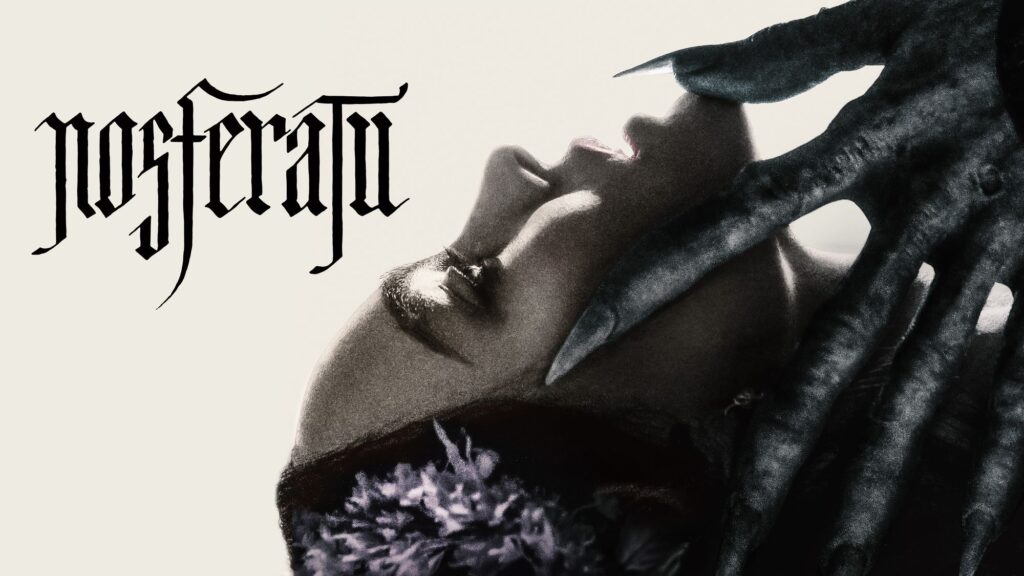
Nosferatu
Nosferatu was filmed mainly in the Czech Republic, with additional location work in Romania. Barrandov Studios in Prague served as the production’s main base.
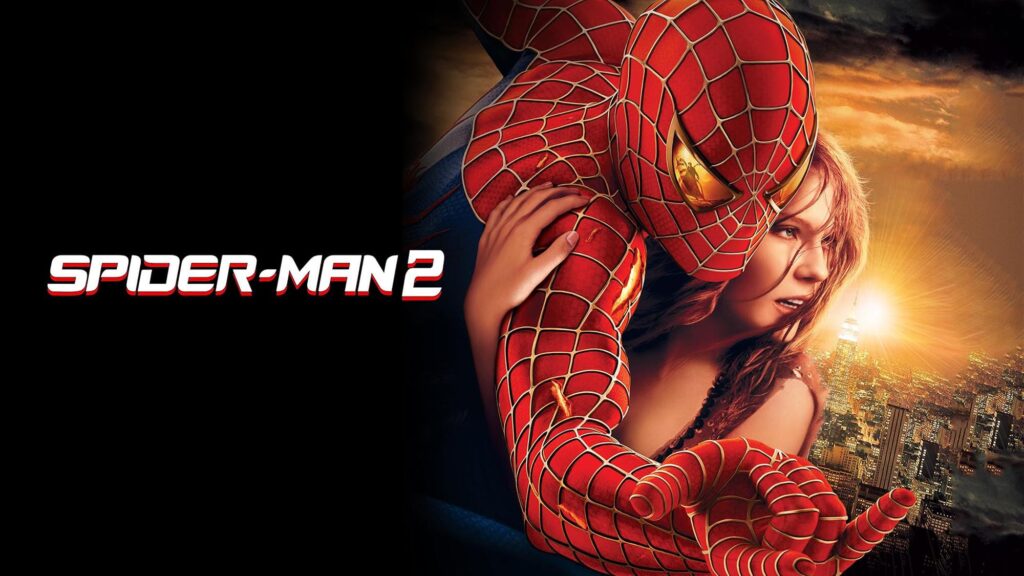
Spider-Man 2
Spider-Man 2 was shot mainly in New York, Los Angeles and Chicago, with studio work in Culver City. New York provides the film’s main identity.