
Sam Raimi is an American film director, screenwriter and producer born Samuel Marshall Raimi on 23 October 1959 in Royal Oak, Michigan, a suburb of Detroit. He grew up in nearby Birmingham in a Jewish family whose parents, Leonard Ronald Raimi and Celia Barbara Abrams, operated a business supplying furniture and household goods. His paternal and maternal families were descended from Jewish immigrants from Eastern Europe, including Russia and Hungary. Raimi was raised alongside several siblings, including his older brother Ivan, who became a physician and screenwriter, and his younger brother Ted, who established a career as an actor. His sister Andrea also pursued a professional career outside the entertainment industry. Another older brother, Sander, died in a drowning accident in Israel at the age of fifteen, an event that had a profound effect on the family. Raimi subsequently described the loss as something that influenced his understanding of fear, mortality and family relationships. Sander had also introduced him to Spider-Man comic books, beginning a childhood fascination with the character that would eventually lead to the most commercially successful productions of his directing career.
Raimi developed an interest in filmmaking when his father brought home an 8 mm movie camera. He began experimenting with short films during childhood, recruiting friends and relatives to perform in improvised stories involving slapstick comedy, monsters and elaborate action sequences. The films were frequently inspired by the physical humour of the Three Stooges, whose exaggerated violence, rapid movements and comic timing became important influences on his visual style. He attended Wylie E. Groves High School in Beverly Hills, a community within the Detroit metropolitan area, where he met Bruce Campbell, another student interested in filmmaking and performance. The two began collaborating on amateur productions during the middle of the 1970s, often writing, directing, photographing and editing their own material. Their early films were shot around suburban Michigan, using family homes, school buildings, local roads and wooded areas as improvised locations. Raimi experimented with attaching cameras to moving objects and developing unusual points of view, techniques that would later become recognisable elements of his professional filmmaking.
After graduating from high school, Raimi enrolled at Michigan State University in East Lansing, where he studied English and continued making films. His older brother Ivan was also associated with the university, and the brothers participated in a group of students interested in independent filmmaking. Raimi became acquainted with Robert Tapert, an economics student who shared his enthusiasm for producing films outside the established Hollywood system. Together with Campbell and other friends, they established a loose filmmaking collective and began screening their amateur productions to paying audiences. One of their projects was It’s Murder! (1978), a feature-length comedy filmed on Super 8 equipment and involving several performers who would subsequently work on Raimi’s professional films. Another was Clockwork (1978), a short horror film that demonstrated his interest in suspense and unusual camera movement. The group also experimented with filming violent or comic sequences from the point of view of an attacking creature, developing a technique that later became associated with The Evil Dead.
Raimi, Tapert and Campbell eventually decided that they wanted to make a professional feature film, but recognised that the financial risks would make investors reluctant to support an inexperienced group. They therefore produced Within the Woods (1978), a short horror film intended to demonstrate their ability to create suspense and special effects on a small budget. The film was shot over several days on a farm near Marshall, Michigan, with Campbell playing one of the principal characters alongside Ellen Sandweiss. Raimi used improvised camera equipment, basic makeup effects and a wooded setting to construct a story about supernatural violence. The production cost approximately $1,600 and was subsequently shown to potential investors in Michigan. Encouraged by the audience’s reaction, the group began raising money for a feature-length expansion of the concept. They approached relatives, local business owners and other private individuals rather than relying on conventional film studios, eventually securing sufficient financial commitments to begin production. Raimi left Michigan State University before completing his degree, concentrating instead on developing what became The Evil Dead.
Principal photography for The Evil Dead (1981) began in November 1979 near Morristown, Tennessee, where the filmmakers had located an isolated wooden cabin surrounded by forest. The story follows five young people who travel to a remote holiday property and inadvertently release supernatural forces after discovering a recording of ancient incantations. Campbell played Ash Williams, a relatively ordinary young man who becomes the principal survivor of the increasingly violent events. Raimi selected the Tennessee location partly because it provided the atmosphere of isolation required for the story and because production costs were relatively low. The cabin had no proper heating or modern facilities, and the cast and crew frequently worked in freezing conditions during the winter. Raimi later recalled that temperatures sometimes fell well below freezing, forcing the filmmakers to spend long hours in an uncomfortable environment while wearing insufficient clothing. Equipment was occasionally damaged, and the remote location made transporting supplies difficult. Members of the small production team also took turns staying overnight at the cabin to protect cameras, lighting equipment and other materials after a robbery.
The conditions encouraged considerable improvisation. Raimi and cinematographer Tim Philo developed a series of moving-camera techniques to represent the approach of unseen supernatural forces, sometimes attaching the camera to wooden boards or improvised supports carried through the forest. The filmmakers also constructed mechanical and prosthetic effects using limited materials, while makeup artist and effects designer Tom Sullivan developed many of the creatures and bodily transformations. Several cast members assisted with production tasks beyond acting, and Raimi continued rewriting scenes to accommodate changing circumstances. Although principal photography ended after several weeks, additional shooting, editing and sound work continued over an extended period in Michigan. The completed film was initially screened for invited audiences at the Redford Theatre in Detroit on 15 October 1981. Distributor Irvin Shapiro subsequently became involved and helped arrange screenings at the Cannes Film Festival in 1982, where the production attracted international interest. The Evil Dead was eventually released in several territories and developed a substantial following among horror audiences, with particular attention paid to its unusual camera movements, practical effects and mixture of violence and dark humour.
The success of The Evil Dead enabled Raimi to pursue another feature film, although his first experience working with a more established production company proved difficult. Crimewave (1985), a crime comedy written with Joel and Ethan Coen, follows a security employee who becomes involved in a series of murders committed by two eccentric criminals. Raimi had met the Coen brothers through the independent filmmaking community, and Joel Coen had assisted with editing The Evil Dead. Their collaboration developed into a professional friendship that continued for several decades. Crimewave was filmed extensively around Detroit, with locations including the former Tuller Hotel and the Kales Building near Park Avenue and West Adams Street. The production also used industrial buildings, residential streets and the Detroit River waterfront. Raimi attempted to recreate the physical comedy of the Three Stooges through elaborate stunts and exaggerated performances, but disagreements with the producers resulted in substantial interference during filming and editing. The production went over budget, and the studio ultimately restricted Raimi’s control over the finished film. Crimewave received a limited release and was not commercially successful, leaving him concerned that his directing career might end almost as soon as it had begun.
Raimi returned to horror with Evil Dead II (1987), which reunited him with Campbell and Tapert. Rather than continuing directly from the ending of the first film, the sequel reworked the opening events before developing a new story in which Ash becomes trapped inside the haunted cabin. Producer Dino De Laurentiis provided financial backing, allowing Raimi to employ more elaborate makeup, mechanical effects and professional production facilities. Filming took place primarily around Wadesboro, North Carolina, where a new cabin exterior was constructed in the surrounding forest. Additional sets and interiors were built at production facilities in the region, giving the filmmakers greater control over lighting and special effects than they had possessed during the original film. Raimi developed increasingly exaggerated sequences involving severed limbs, possessed furniture and impossible camera movements, combining horror with an elaborate form of slapstick comedy. Campbell’s performance became more physically demanding as Ash evolved into a character frequently subjected to painful accidents and supernatural attacks. Released in March 1987, Evil Dead II attracted favourable attention from horror audiences and established a more distinctive comic approach to the series.
The success of Evil Dead II brought Raimi greater opportunities in Hollywood, although he remained determined to develop material that reflected his interest in comic books and unconventional action. During the late 1980s, he collaborated with his brother Ivan and screenwriter Chuck Pfarrer on Darkman (1990), a superhero thriller about a scientist whose experiments in synthetic skin are interrupted when criminals destroy his laboratory. Liam Neeson played Dr Peyton Westlake, who survives the attack but suffers disfiguring burns and becomes obsessed with revenge. Frances McDormand portrayed his girlfriend, Julie Hastings, while Larry Drake played the criminal Robert Durant. Raimi had originally hoped to adapt established comic-book characters, particularly Batman or the Shadow, but difficulties obtaining the necessary rights led him to create an original figure. The story incorporated elements of classic Universal horror films, pulp detective fiction and superhero comics, allowing the director to combine his visual interests within a larger commercial production.
Darkman was filmed between April and August 1989 in Los Angeles and Toronto, with additional studio work at Santa Clarita Studios in California. The Westin Bonaventure Hotel in Downtown Los Angeles represented the exterior of the office building associated with the industrialist Louis Strack, while the city’s financial district supplied the background for several action sequences. Toronto’s Lower Bay subway station was used for underground scenes, and additional interiors were constructed on soundstages. Raimi worked with cinematographer Bill Pope, who was making his feature-film debut as director of photography, and developed elaborate camera movements for the helicopter pursuit and the scenes depicting Westlake’s increasingly unstable psychological condition. The production also involved extensive practical makeup effects that allowed Neeson to appear with different facial identities. Released in August 1990, Darkman became a commercial success and demonstrated that Raimi could direct a substantial studio production without abandoning the visual experimentation associated with his early horror films. It also began his professional relationship with composer Danny Elfman, whose music became an important element in several of his subsequent productions.
Raimi returned to Ash Williams with Army of Darkness (1992), the third film in the Evil Dead series. Developed with Ivan Raimi, the story transports Ash from the haunted cabin to a fictional medieval kingdom, where he becomes involved in a conflict between human soldiers and an army of supernatural creatures. The film represented a considerable expansion in scale from the earlier productions, with elaborate castle sets, large numbers of extras and extensive stop-motion effects. Principal photography took place primarily in Southern California, using locations around Acton, Vasquez Rocks Natural Area Park and Bronson Canyon in Los Angeles. The production constructed a large medieval castle exterior near Soledad Canyon Road in Acton, while the distinctive sandstone formations of Vasquez Rocks represented the barren landscape surrounding the fictional kingdom. Additional studio interiors and miniature sets were developed for sequences involving the attacking skeleton army. The production also featured a cameo by Raimi’s brother Ted, continuing the family’s involvement in his films. Army of Darkness was released in early 1993 in the United States and subsequently developed a substantial cult following, although disagreements over its editing and ending again created difficulties between Raimi and the studio.
During this period, Raimi continued collaborating with the Coen brothers. He contributed to the screenplay for The Hudsucker Proxy (1994), a stylised comedy directed by Joel Coen and starring Tim Robbins, Jennifer Jason Leigh and Paul Newman. The film concerns a naive young businessman who is unexpectedly appointed president of a manufacturing company in 1950s New York. Although the story takes place in Manhattan, production was based largely at Carolco Studios in Wilmington, North Carolina, where elaborate sets and miniature cityscapes recreated the architecture of mid-century New York. Raimi also worked as a second-unit director, participating in the development of sequences involving the film’s distinctive comic action. His continuing relationship with the Coens reflected the shared origins of their careers within the American independent film movement, although their professional interests had developed in different directions. Raimi’s work on the film also demonstrated his willingness to collaborate as a writer or technician on projects directed by other filmmakers.
His next major directing project was The Quick and the Dead (1995), a Western starring Sharon Stone as a mysterious gunslinger who enters a shooting competition organised by a ruthless town leader portrayed by Gene Hackman. The cast also included Russell Crowe and Leonardo DiCaprio, who were both establishing their American film careers. Stone became involved as an executive producer and supported Raimi’s selection as director, recognising his ability to create unusual action sequences and exaggerated visual compositions. The production was filmed around Tucson, Arizona, between November 1993 and February 1994. Old Tucson Studios and its associated Western town sets provided the principal setting, while additional scenes were filmed in Mescal, Sonoita and the surrounding Sonoran Desert. The filmmakers constructed streets and buildings representing the fictional town of Redemption, whose central square became the location of the repeated gunfights. Raimi used extreme close-ups, rapid editing and unusual camera positions to depict the confrontations, incorporating the visual language of comic books into a genre more commonly associated with traditional American landscape photography. Although The Quick and the Dead was not a major commercial success, its distinctive style attracted attention and developed a following among Western audiences.
The middle of the 1990s also brought a significant expansion of Raimi’s work as a television producer. Together with Robert Tapert, he developed the syndicated fantasy adventure Hercules: The Legendary Journeys (1995–1999), starring Kevin Sorbo as the mythological Greek hero. The series originated from a group of television films before becoming a regular programme and establishing a production base in Auckland, New Zealand. Its success led to the spin-off Xena: Warrior Princess (1995–2001), starring Lucy Lawless as a former warlord seeking redemption through her efforts to protect vulnerable communities. Both programmes were filmed extensively in New Zealand, using landscapes around Auckland, the Waitākere Ranges and other parts of the North Island to represent a fictionalised ancient world. The productions also employed extensive studio sets and practical effects, developing a local workforce experienced in international television production. Raimi participated principally as an executive producer rather than directing the individual episodes, while Tapert became increasingly involved in managing the productions in New Zealand. Their success helped establish the country as an important international television production centre and created professional relationships that continued through later horror projects.
Raimi subsequently made a substantial departure from fantasy and exaggerated action with A Simple Plan (1998), adapted from Scott B. Smith’s novel. The film stars Bill Paxton, Billy Bob Thornton and Bridget Fonda in a story about three men who discover a crashed aircraft containing a large quantity of stolen money. Their decision to keep the money leads to suspicion, betrayal and violence within a small Midwestern community. Unlike his earlier productions, the film required Raimi to employ a comparatively restrained visual style, allowing the performances and developing moral conflicts to determine the rhythm of the story. Principal photography began in January 1998 in northern Wisconsin, where the production was forced to relocate after unusually warm weather left its intended locations in Minnesota without sufficient snow. The towns of Ashland and Saxon supplied much of the winter landscape, while additional scenes were filmed around Delano, St Paul and Golden Valley in Minnesota. Energy Park Studios in St Paul accommodated interior production work. The severe cold and deep snow created demanding conditions for the cast and crew, but the natural landscape became essential to the film’s atmosphere. A Simple Plan received widespread critical recognition and earned two Academy Award nominations, including Best Supporting Actor for Thornton and Best Adapted Screenplay for Smith.
During the same period, Raimi’s personal life became increasingly centred on his family in Southern California. He had married actress Gillian Greene on 17 September 1993. Greene was the daughter of Canadian actor Lorne Greene, whose performances in Bonanza and Battlestar Galactica had made him a familiar television personality. Raimi and Greene had five children, including Emma, Lorne, Henry, Dashiell and Oliver. Several of their children subsequently appeared in small roles or background scenes in Raimi’s productions, continuing a tradition of involving family members and longstanding friends that had begun with his amateur films in Michigan. The family established a home in Los Angeles, where Raimi’s professional activities increasingly involved major studio productions and television development. Despite his substantial commercial success, he maintained close relationships with Campbell, Tapert and his brothers, whose contributions continued appearing throughout his work. His 1973 Oldsmobile Delta 88, originally owned by his family, became a recurring visual detail in many of his films, appearing in different forms as a small tribute to his earliest filmmaking experiences.
Raimi followed A Simple Plan with For Love of the Game (1999), a romantic sports drama starring Kevin Costner as Billy Chapel, an ageing professional baseball pitcher reflecting on his career and personal relationships during what may be his final game. Kelly Preston played Jane Aubrey, whose relationship with Billy becomes central to the film’s narrative. Principal photography took place around New York City and Southern California, with the baseball sequences filmed at the original Yankee Stadium in the Bronx. The production obtained permission to use the historic stadium and its surrounding facilities, allowing Raimi to stage scenes involving a large professional sporting event rather than relying entirely on studio recreation. Other locations included Santa Paula in California and Aspen in Colorado, whose landscapes were used for episodes from Billy’s earlier life. The film represented another attempt to work within a comparatively conventional dramatic framework, concentrating on personal relationships rather than the supernatural violence and elaborate camera movements associated with Raimi’s earlier work. Although For Love of the Game received mixed reviews, it demonstrated his willingness to direct material outside his established genres.
He returned to supernatural drama with The Gift (2000), written by Billy Bob Thornton and Tom Epperson. Cate Blanchett played Annie Wilson, a widowed mother living in a small Southern community who possesses psychic abilities and becomes involved in a murder investigation. The cast also included Giovanni Ribisi, Keanu Reeves, Katie Holmes, Greg Kinnear and Hilary Swank. The story was set in a fictional Georgia town, and Raimi filmed extensively in the Savannah metropolitan area during February and March 2000. Locations included Savannah, Springfield, Guyton and Thunderbolt, where actual streets, houses, businesses and waterways provided the setting for the investigation. The surrounding marshes and wooded landscapes also contributed to the film’s atmosphere, allowing Raimi to combine elements of Southern Gothic fiction with a contemporary crime thriller. The production brought him back to a region associated with The Evil Dead, although the comparatively elaborate professional facilities available in Georgia were very different from the conditions he had experienced in Tennessee two decades earlier. The Gift was released in December 2000 and received particular attention for Blanchett’s central performance.
The most important commercial development of Raimi’s career followed when Sony Pictures selected him to direct Spider-Man (2002), the first major live-action feature film based on Marvel Comics’ famous superhero. Raimi had been a devoted reader of Spider-Man comics since childhood, particularly because he regarded Peter Parker as a character whose ordinary problems were as important as his extraordinary abilities. Tobey Maguire was cast as Parker, a shy New York teenager who develops superhuman abilities after being bitten by a genetically altered spider. Kirsten Dunst played his childhood friend Mary Jane Watson, while Willem Dafoe portrayed Norman Osborn and the Green Goblin. Raimi approached the material as a story about adolescence, responsibility and personal relationships rather than simply as a series of action sequences. His earlier work on Darkman had already demonstrated his interest in comic-book storytelling, but Spider-Man provided an opportunity to adapt an established character with a substantial international following and a long history in American popular culture.
Principal photography for Spider-Man began in January 2001 at Sony Pictures Studios in Culver City, California, before moving to locations around New York City. The film’s story takes place mainly in Manhattan and Queens, but production combined actual New York streets with extensive studio work in Los Angeles. The Flatiron Building at the intersection of Broadway and Fifth Avenue represented the headquarters of the Daily Bugle newspaper, while Columbia University’s Low Memorial Library appeared during scenes associated with Peter’s education. Other locations included the Queensboro Bridge, Sunnyside in Queens and the New York Public Library. In Los Angeles, the Natural History Museum of Los Angeles County represented the scientific laboratory where Peter is bitten by the spider, while Greystone Mansion in Beverly Hills supplied interiors for Norman Osborn’s residence. Raimi worked with visual-effects teams to develop a system of digital animation and practical stunts that could portray Spider-Man moving rapidly between buildings, often employing camera movements intended to approximate the character’s experiences while swinging through the city.
The production was complicated by the terrorist attacks of 11 September 2001, which occurred after principal photography had concluded. Sony altered promotional material containing images of the World Trade Center and adjusted portions of the film to reflect the changed circumstances in New York. Spider-Man was released on 3 May 2002 and became an enormous commercial success, setting a new American opening-weekend box-office record and grossing more than $800 million internationally. Its success brought Raimi into the highest level of Hollywood studio filmmaking and helped demonstrate the commercial possibilities of large-scale comic-book adaptations. He also received considerable attention for balancing elaborate action with the central characters’ emotional difficulties, particularly Peter’s relationship with his aunt and uncle and his growing attachment to Mary Jane. The film introduced several visual techniques that became influential in subsequent superhero productions, including elaborate camera movements designed to follow computer-generated characters through realistic urban environments.
Raimi returned for Spider-Man 2 (2004), which continued Peter Parker’s struggle to reconcile his private life with the responsibilities of his superhero identity. Alfred Molina joined the cast as scientist Otto Octavius, whose experiment involving nuclear fusion transforms him into the villain Doctor Octopus. Raimi placed greater emphasis on the character’s personal tragedy than on conventional criminal ambition, developing the relationship between Peter and Octavius as an important part of the story. Filming began in April 2003, using locations in New York and Chicago before the production moved to California. One of the film’s most complicated sequences involved a confrontation between Spider-Man and Doctor Octopus aboard an elevated railway train. Raimi photographed railway footage in Chicago, where the elevated system provided environments unavailable on the New York subway, before combining those images with additional photography in New York and extensive studio work at Sony Pictures Studios. The sequence required elaborate practical sets, digital effects and multiple camera systems to create the impression of a continuous pursuit through the city. Spider-Man 2 was released in June 2004 and won the Academy Award for Best Visual Effects.
The third film, Spider-Man 3 (2007), introduced several additional characters and villains, including Flint Marko, portrayed by Thomas Haden Church, and Eddie Brock, played by Topher Grace. Raimi also developed Peter’s friendship with Harry Osborn, played by James Franco, whose relationship with his father’s criminal identity had been established in the earlier films. Principal photography began in January 2006 in Culver City, with location filming subsequently conducted in New York and Cleveland, Ohio. Streets around Euclid Avenue in Downtown Cleveland were used for an elaborate armoured-car chase, while other sequences were filmed in Manhattan and on studio sets in Los Angeles. The production employed extensive visual effects to depict the Sandman and Venom, whose appearances required more complicated digital animation than the villains in the earlier films. Spider-Man 3 became another major box-office success but received a more divided critical response, particularly because of the number of characters and storylines competing for attention. Raimi later acknowledged that the production had involved creative disagreements concerning the villains and the direction of the story. Although a fourth film was planned, development eventually ended in 2010, with Sony deciding to restart the franchise using a different director and cast.
During the Spider-Man years, Raimi also expanded his work as a producer. In 2002, he established Ghost House Pictures with Robert Tapert and producer Joe Drake, creating a company intended primarily to develop horror films and supernatural thrillers. One of its earliest major successes was The Grudge (2004), directed by Japanese filmmaker Takashi Shimizu and starring Sarah Michelle Gellar. The film was an American adaptation of Shimizu’s own Japanese horror franchise and was produced largely in Tokyo, where its use of actual residential buildings and urban locations distinguished it from many conventional Hollywood horror films. Ghost House subsequently produced The Grudge 2 (2006), The Messengers (2007), 30 Days of Night (2007) and The Possession (2012), among other productions. Raimi generally participated as a producer rather than director, allowing younger filmmakers to develop material while maintaining the company’s association with the horror genre. His earlier experiences raising money for The Evil Dead influenced his interest in giving comparatively inexperienced directors opportunities to work on professional productions.
Raimi returned to directing horror with Drag Me to Hell (2009), written with Ivan Raimi and starring Alison Lohman as Christine Brown, a bank employee who becomes the victim of a supernatural curse after refusing to extend an elderly customer’s mortgage. Justin Long played her boyfriend, while Lorna Raver portrayed the woman whose curse threatens Christine’s life. The film combined contemporary financial anxieties with elaborate supernatural sequences, allowing Raimi to return to the grotesque humour and physical effects associated with the Evil Dead series. Principal photography took place around Los Angeles and its surrounding communities during 2008. The bank where Christine works was represented by a former financial building at 18421 Ventura Boulevard in Tarzana, while her house was filmed on Everett Street near Echo Park. The historic Doheny Mansion on Chester Place provided the setting for the supernatural séance, with additional filming at Los Angeles Union Station, Norm’s Restaurant on La Cienega Boulevard and residential locations in Pasadena. The production also reunited Raimi with several longstanding collaborators, including cinematographer Peter Deming and editor Bob Murawski. Drag Me to Hell premiered at South by Southwest in March 2009 and screened outside competition at the Cannes Film Festival before its wider release in May.
Following Drag Me to Hell, Raimi returned to large-scale fantasy filmmaking with Oz the Great and Powerful (2013), a prequel inspired by L. Frank Baum’s stories about the fictional Land of Oz. James Franco played Oscar Diggs, a circus magician who is transported from Kansas to a fantastical kingdom where three witches, portrayed by Mila Kunis, Rachel Weisz and Michelle Williams, attempt to influence his future. The production reunited Raimi with several performers and technicians associated with his earlier films, while its elaborate visual effects required a substantially different approach from the practical horror techniques he had developed in Michigan. Principal photography began in July 2011 at Raleigh Michigan Studios in Pontiac, near Raimi’s birthplace in Royal Oak. The return to Michigan was particularly significant because it brought him back to the region where he had made his earliest amateur films, now working on a major Disney production with an international cast and a substantial budget. The filmmakers constructed elaborate physical sets for the circus, the Emerald City and other locations, combining practical environments with computer-generated backgrounds and characters. Additional work took place at Sony Pictures Studios in Culver City. Oz the Great and Powerful was released in March 2013 and became a major commercial success.
Although Raimi did not direct another feature film for several years, he remained active as a producer and television creator. In 2013, Ghost House Pictures produced Evil Dead, a new interpretation of the original film directed by Uruguayan filmmaker Fede Álvarez. The production was filmed in New Zealand, particularly around Auckland and Woodhill Forest, allowing the filmmakers to recreate the isolated woodland environment associated with the earlier films. Raimi and Tapert supported the project while allowing Álvarez to develop a more serious and physically brutal interpretation of the supernatural material. Raimi subsequently became involved in Ash vs Evil Dead (2015–2018), a television continuation of the original trilogy developed with Ivan Raimi and Tom Spezialy. Bruce Campbell returned as Ash Williams, now an older man whose attempts to avoid responsibility are interrupted by another outbreak of supernatural violence. The series also starred Lucy Lawless, Ray Santiago and Dana DeLorenzo. Production took place entirely around Auckland, New Zealand, where the filmmakers constructed elaborate interiors and used local forests, roads and industrial facilities to represent the fictional American setting. Raimi directed the pilot episode and served as an executive producer throughout the three-season series.
The success of Ash vs Evil Dead strengthened Raimi’s longstanding connection to New Zealand, a country that had become an important centre for his television productions through Hercules and Xena during the 1990s. He continued working with Tapert and Campbell on projects intended to expand the Evil Dead franchise, including Evil Dead Rise (2023), written and directed by Irish filmmaker Lee Cronin. Rather than returning to the traditional isolated cabin, the film follows two sisters and their family members during a supernatural attack inside an apartment building in Los Angeles. Although set in California, the production was filmed in Auckland, where extensive apartment interiors, corridors, lifts and underground spaces were constructed on soundstages. A real office building on Lorne Street in central Auckland provided the basis for portions of the fictional residential building’s exterior. Raimi participated as an executive producer, while Tapert handled much of the production work. The film was released in April 2023 and became another commercial success, demonstrating that the franchise could continue through different directors and characters without relying entirely on the original films’ mythology.
Raimi also produced several films outside the Evil Dead franchise during this period. Don’t Breathe (2016), directed by Fede Álvarez, became a successful thriller about young criminals who break into the home of a blind man in Detroit and discover that their intended victim is far more dangerous than they had anticipated. Although set in Michigan, the film was produced largely in Hungary, with Budapest locations and studio sets representing Detroit’s residential neighbourhoods. Other Ghost House productions included Crawl (2019), directed by Alexandre Aja and set during a hurricane in Florida, and Don’t Move (2024), a thriller starring Kelsey Asbille and Finn Wittrock. Raimi’s involvement in these projects reflected his interest in working with directors whose material depended on suspense, physical danger and relatively contained settings. He also maintained connections with filmmakers who had been influenced by The Evil Dead, participating in interviews, film festivals and retrospectives examining the production of the original films.
His return to major studio directing came with Doctor Strange in the Multiverse of Madness (2022), a Marvel Studios production starring Benedict Cumberbatch as Stephen Strange and Elizabeth Olsen as Wanda Maximoff. Raimi replaced original director Scott Derrickson after the latter departed during development, taking responsibility for a project involving complicated connections to the wider Marvel Cinematic Universe. The film follows Strange as he travels through alternative realities while attempting to protect America Chavez, a young woman capable of moving between different universes. Raimi was interested in incorporating elements of horror into the superhero material, particularly the visual possibilities created by supernatural threats, distorted bodies and alternative versions of familiar characters. The production also reunited him with composer Danny Elfman, whose music had been important to Darkman, Spider-Man and several other films. Bruce Campbell appeared in a cameo, continuing a professional collaboration that had begun during their teenage years in Michigan.
Principal photography for Doctor Strange in the Multiverse of Madness began in November 2020 in England, with filming centred on Longcross Studios in Surrey. The production constructed elaborate sets representing New York City and the Sanctum Sanctorum, while additional location work took place around London, including Richmond Park and Freemasons’ Hall near Covent Garden. Burrow Hill Cider Farm in Somerset was used for scenes associated with Wanda’s rural home, while visual-effects work recreated the fantastic landscapes and alternative universes encountered by the characters. The COVID-19 pandemic complicated production, with filming interrupted by restrictions and changes in British public-health regulations. Raimi worked with an unusually large visual-effects team to combine practical horror techniques with the elaborate digital environments required by Marvel Studios. Released in May 2022, Doctor Strange in the Multiverse of Madness became a major international box-office success and marked Raimi’s return to directing a superhero feature fifteen years after Spider-Man 3.
Raimi returned more directly to horror with Send Help (2026), a darkly comic survival thriller starring Rachel McAdams and Dylan O’Brien as two colleagues who survive an aircraft crash and become stranded on a remote island. The screenplay was written by Damian Shannon and Mark Swift, with Raimi also serving as a producer alongside Zainab Azizi. McAdams played Linda Liddle, an employee whose professional relationship with her arrogant supervisor, Bradley Preston, becomes increasingly complicated when they are forced to depend upon each other for survival. Raimi had previously directed McAdams in Doctor Strange in the Multiverse of Madness and was interested in developing a project that gave her a more substantial central role. The film combined a contained psychological conflict with elaborate practical effects, physical comedy and moments of supernatural or grotesque violence. Its development also brought Raimi into another collaboration with cinematographer Bill Pope and composer Danny Elfman, both of whom had worked on several of his earlier films.
Send Help was filmed during the first months of 2025, with production based primarily in Sydney, Australia, and additional location work in Thailand. Disney Studios Australia in Moore Park accommodated studio sequences, while Centennial Park and coastal locations around Little Bay and the Shoalhaven region supplied additional Australian settings. The production also travelled to southern Thailand, where the beaches, islands and tropical forests of Krabi, Phang Nga and Surat Thani provided much of the isolated island environment. Locations included Hong Island within Than Bok Khorani National Park, Railay Beach and Phra Nang Cave Beach, along with forest and waterfall locations in Khao Phanom Bencha National Park and Khao Sok National Park. The combination of actual tropical environments and studio interiors allowed Raimi to stage elaborate survival sequences while maintaining control over the film’s more dangerous physical effects. Send Help premiered at the TCL Chinese Theatre in Hollywood on 21 January 2026 and received its American theatrical release on 30 January. Its release marked Raimi’s first original feature-film directing project since Drag Me to Hell, following his work on major established franchises during the intervening years.
During the same period, Raimi continued expanding the Evil Dead franchise as a producer. Evil Dead Burn (2026), written and directed by French filmmaker Sébastien Vaniček, follows a family whose attempt to recover from a personal tragedy is disrupted by increasingly violent supernatural events. The production was filmed in New Zealand during 2025, with Vaniček developing a new story rather than continuing directly from the events of Evil Dead Rise. Raimi and Tapert served as producers through Ghost House Pictures, while Campbell participated as an executive producer. Evil Dead Burn was released in July 2026 and continued the series’ tradition of combining practical creature effects with elaborate supernatural violence. Another film, Evil Dead Wrath, was in development with Francis Galluppi attached as writer and director. Raimi’s continued involvement reflected his preference for allowing younger filmmakers to reinterpret the material rather than returning personally to direct every instalment.
His personal circumstances also changed during the middle of the 2020s. In May 2024, Gillian Greene filed for divorce in Los Angeles County after more than thirty years of marriage, citing irreconcilable differences. Raimi did not immediately respond publicly, but court documents submitted in 2026 stated that the couple had actually separated in April 2016, approximately eight years before the petition was filed. They continued sharing responsibilities associated with their five children, several of whom had already established independent professional lives. Their daughter Emma appeared in Send Help, maintaining the family tradition of small roles and appearances in Raimi’s productions. Despite the separation, Raimi continued maintaining his professional base in Los Angeles, where his production companies and longstanding collaborators remained concentrated. His work also involved frequent international travel, particularly to Australia, New Zealand and Britain, where several of his most recent films had been produced.
By October 2026, Raimi was sixty-six and remained active as both a director and producer. His professional life had taken him from suburban Michigan to the forests of Tennessee, the studio facilities of Los Angeles and Toronto, the landscapes of Arizona and Wisconsin, and major international production centres in New Zealand, Britain, Australia and Thailand. The relationships he established during his teenage years with Bruce Campbell and during university with Robert Tapert had continued for nearly five decades, becoming central to a body of work encompassing low-budget horror, independent crime drama, superhero films and television. His return to horror directing with Send Help and continued production work on Evil Dead Burn demonstrated his sustained interest in the genre that had established his career. At the same time, the commercial success of Spider-Man and Doctor Strange in the Multiverse of Madness had placed him among the directors whose work helped shape the development of modern superhero cinema, while his earliest films remained closely associated with the experimental and independent filmmaking community of Michigan during the late 1970s.
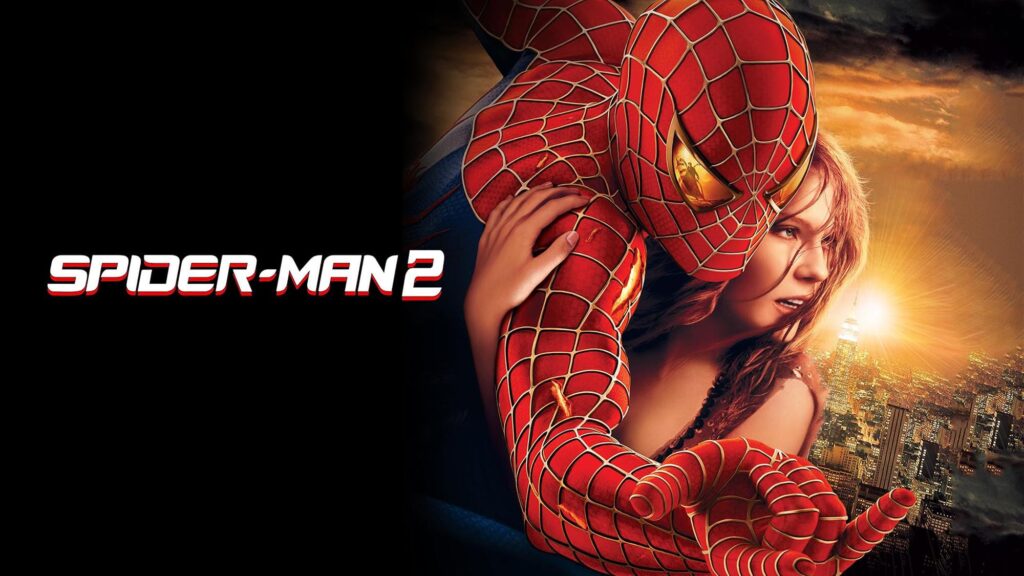
Spider-Man 2
Spider-Man 2 was shot mainly in New York, Los Angeles and Chicago, with studio work in Culver City. New York provides the film’s main identity.