
Roman Polanski is a Polish-French film director, screenwriter and actor born Raymond Thierry Liebling on 18 August 1933 in Paris, France. His father, Maurycy Liebling, later known as Ryszard Polański, was a Polish-born Jewish artist who worked as a painter and sculptor, while his mother, Bula Katz-Przedborska, had been born in Russia and raised in a Catholic family with Jewish ancestry. Polanski spent his earliest childhood in Paris before the family moved to Kraków, Poland, in 1937. He was six years old when Germany invaded Poland in September 1939, beginning a period that would fundamentally alter his life. The German occupation brought increasingly severe restrictions on Kraków’s Jewish population, and in 1941 the family was forced into the Kraków Ghetto, established in the Podgórze district south of the Vistula River. Polanski witnessed the gradual destruction of the community around him, including the deportation of friends and relatives. His mother was deported to Auschwitz, where she was murdered, while his father was sent to the Mauthausen concentration camp in Austria.
Polanski escaped from the Kraków Ghetto in 1943 and survived the remainder of the war by hiding with Polish families, spending periods in rural communities outside the city. His survival depended on concealing his Jewish identity, and he learned Catholic prayers and religious customs to avoid attracting suspicion. He moved between several households, at times living in considerable poverty and uncertainty. During these years, he also developed an interest in cinema, occasionally watching films despite the restrictions imposed by the German occupation. After the war ended in 1945, he returned to Kraków and was reunited with his father, who had survived imprisonment. The death of his mother and the separation from his family had left him with little conventional schooling, and he struggled to adjust to ordinary life. He subsequently attended an art school in Kraków and became involved in radio, theatre and amateur acting, discovering a more structured environment in which to develop his interest in performance.
His first professional acting opportunities came through Polish theatre and radio productions during the late 1940s and early 1950s. He appeared with touring theatre companies and became familiar with the repertory system before entering cinema. One of his early screen appearances was in Andrzej Wajda’s A Generation (1955), a drama concerning young resistance fighters during the German occupation of Warsaw. By then, Polanski had enrolled at the National Film School in Łódź, one of the principal institutions associated with the emergence of post-war Polish cinema. He began studying directing there in 1954, working alongside students who would become important figures in Polish filmmaking. His early short films included Murder (1957), Teeth Smile (1957) and Two Men and a Wardrobe (1958), the latter following two men carrying a large wardrobe through public spaces where they encounter hostility and rejection. Filmed on location in the Baltic coastal city of Sopot, it won awards at several international festivals and helped introduce Polanski to audiences outside Poland. He subsequently directed The Fat and the Lean (1961) and Mammals (1962), continuing to explore dark humour, violence and the relationships between people confined within unusual circumstances.
Polanski made his feature-film directing debut with Knife in the Water (1962), a psychological drama written with Jerzy Skolimowski and Jakub Goldberg. The story follows a married couple who invite a young hitchhiker aboard their sailing boat, leading to an increasingly hostile confrontation between the two men. The film was shot in the Masurian Lake District of north-eastern Poland, particularly around Giżycko and Mikołajki, using lakes including Kisajno and Śniardwy. Much of the production took place aboard an actual sailing boat, creating considerable technical difficulties for the small crew working in confined spaces. The film starred Leon Niemczyk, Jolanta Umecka and Zygmunt Malanowicz, with a jazz soundtrack by Polanski’s longtime collaborator Krzysztof Komeda. Knife in the Water attracted international attention and became the first Polish film nominated for the Academy Award for Best Foreign Language Film. Its success nevertheless created difficulties with the communist authorities, who criticised its portrayal of affluent characters and individualistic behaviour. Unable to secure support for another feature in Poland, Polanski moved abroad, initially settling in Paris before developing opportunities in the British film industry.
His first British feature was Repulsion (1965), a psychological horror film starring Catherine Deneuve as a young Belgian woman living with her sister in London. Written with French screenwriter Gérard Brach, the film follows the character’s gradual psychological deterioration while she remains alone in their apartment. Polanski filmed extensively around South Kensington, particularly the streets near Cromwell Road and the residential neighbourhoods surrounding the Natural History Museum. The apartment interiors were constructed at Twickenham Studios in south-west London, allowing the production to create effects that would have been difficult to achieve inside an occupied building. Repulsion won the Silver Bear Extraordinary Jury Prize at the Berlin International Film Festival and established Polanski as a significant director in European cinema. He followed it with Cul-de-Sac (1966), a dark comedy starring Donald Pleasence, Françoise Dorléac and Lionel Stander. Much of the film was shot at Lindisfarne Castle on Holy Island, Northumberland, a tidal island accessible from the English mainland only when the causeway is not submerged. The sixteenth-century fortress and surrounding coastline became central to the story of two criminals who terrorise an isolated married couple. The castle would later serve as a location for another Polanski film.
During the production of The Fearless Vampire Killers (1967), Polanski began a relationship with American actress Sharon Tate, who played Sarah Shagal in the horror comedy. Polanski also appeared in the film as Alfred, the assistant to an eccentric vampire hunter portrayed by Jack MacGowran. Filming took place at British studios and in the Italian Dolomites, including locations around Cortina d’Ampezzo and Val Gardena. Castel Gardena, near Santa Cristina Valgardena in South Tyrol, provided one of the principal castle exteriors, while the surrounding mountains supplied the snow-covered landscapes associated with the fictional Transylvanian setting. The production brought Polanski and Tate into close contact over several months, and their relationship continued after filming ended. They married on 20 January 1968 at Chelsea Register Office in London, followed by a reception at the Playboy Club. By then, Polanski had been offered the opportunity to direct Rosemary’s Baby (1968), an adaptation of Ira Levin’s bestselling horror novel, for Paramount Pictures.
Rosemary’s Baby marked Polanski’s entry into American filmmaking. Starring Mia Farrow, John Cassavetes and Ruth Gordon, the film concerns a young woman who becomes increasingly suspicious of her husband and neighbours during her pregnancy. Principal photography began in New York City in August 1967, with the exterior of the fictional Bramford apartment building represented by the Dakota at 1 West 72nd Street, overlooking Central Park. The building’s Gothic architectural details became one of the film’s most recognisable elements, although the apartment interiors were constructed at Paramount Studios in Hollywood. Polanski also filmed around Manhattan, including streets near Central Park and Fifth Avenue, where Farrow’s character moves through traffic in a memorable sequence. Rosemary’s Baby became a major commercial and critical success, earning Polanski an Academy Award nomination for Best Adapted Screenplay. Ruth Gordon won the Oscar for Best Supporting Actress, and the film established Polanski as a successful Hollywood director. Following its release, he and Tate divided their time between Los Angeles and Europe, eventually renting a house at 10050 Cielo Drive in Benedict Canyon, above Beverly Hills.
On 9 August 1969, while Polanski was in London preparing another film, Sharon Tate was murdered at their Los Angeles home by members of the Manson Family. Tate was eight months pregnant with their first child. Four other people were killed during the attack: hairstylist Jay Sebring, coffee heiress Abigail Folger, Polish screenwriter Wojciech Frykowski and eighteen-year-old Steven Parent, who had been visiting the property’s caretaker. The murders attracted enormous international attention, and Polanski returned immediately to Los Angeles. Investigators initially pursued several possible explanations before identifying followers of Charles Manson as the perpetrators. The killings and subsequent investigation became a defining event in Polanski’s personal life, interrupting his professional plans and bringing his private circumstances under intense public scrutiny. He subsequently left Los Angeles and returned to Europe, where he gradually resumed work.
His first feature after Tate’s death was Macbeth (1971), a particularly violent adaptation of William Shakespeare’s tragedy, financed partly by Playboy Enterprises. Polanski cast Jon Finch as Macbeth and Francesca Annis as Lady Macbeth, filming in England and Wales during the winter of 1970–1971. The production began in Snowdonia, including locations around Blaenau Ffestiniog and Black Rock Sands near Porthmadog, before moving to Northumberland. Bamburgh Castle represented King Duncan’s residence, while Lindisfarne Castle, previously used in Cul-de-Sac, stood in for Macbeth’s castle. Additional scenes were filmed around North Charlton, with interiors constructed at Shepperton Studios in Surrey. The production experienced difficult weather conditions and budget problems, but the completed film attracted attention for its uncompromising presentation of violence. Polanski later directed What? (1972), a surreal comedy filmed principally at a villa on the Amalfi Coast in southern Italy, before returning to Hollywood for another major production.
Chinatown (1974), written by Robert Towne and starring Jack Nicholson and Faye Dunaway, became one of Polanski’s most celebrated films. Set in Los Angeles during the 1930s, it follows private detective Jake Gittes as he investigates a conspiracy involving land ownership, water supplies and political corruption. Polanski filmed extensively throughout Los Angeles County, using surviving historic buildings and neighbourhoods to recreate the earlier period. Locations included Los Angeles City Hall, Echo Park Lake, the Prince restaurant on West Seventh Street and Point Fermin Park in San Pedro. Stone Canyon Reservoir in Bel Air became an important setting for scenes involving the city’s water system, while the climactic confrontation was filmed on North Spring Street in Chinatown, south of Ord Street. Other sequences were shot on Santa Catalina Island, including the historic Tuna Club in Avalon. Polanski also appeared briefly as a criminal who cuts Gittes’s nose with a knife. Chinatown received eleven Academy Award nominations, including Best Picture and Best Director, and won Best Original Screenplay for Towne.
Polanski returned to France for The Tenant (1976), an adaptation of Roland Topor’s novel Le Locataire chimérique, in which he played the central character, Trelkovsky, a Polish immigrant living in Paris. The film completed an informal trilogy of psychological horror stories set in apartment buildings, following Repulsion and Rosemary’s Baby. Principal photography took place around Paris, including the ninth and eighteenth arrondissements, with the exterior of Trelkovsky’s apartment building filmed at 39 Rue La Bruyère. Other locations included Hôpital Bretonneau on Rue Joseph de Maistre and the streets around Pigalle and Les Halles. The apartment building’s interior courtyard was reconstructed at the Éclair Studios in Épinay-sur-Seine, where elaborate camera movements and specially designed sets allowed Polanski to create the film’s increasingly disorientating perspective. The Tenant also featured Isabelle Adjani, Melvyn Douglas and Shelley Winters. Although initially less successful than Chinatown, it subsequently became an important part of Polanski’s filmography, particularly in discussions of his recurring interest in isolation, paranoia and urban environments.
In March 1977, Polanski was arrested in Los Angeles following the sexual assault of thirteen-year-old Samantha Geimer at a Bel Air property belonging to actor Jack Nicholson. He was initially charged with six offences, including rape by use of drugs and furnishing a controlled substance to a minor. Under a plea agreement, he pleaded guilty in August 1977 to unlawful sexual intercourse with a minor, and the remaining charges were dismissed. He spent forty-two days at the California Institution for Men in Chino for a court-ordered psychiatric evaluation. In February 1978, before final sentencing, Polanski fled the United States, concerned that the judge intended to impose a longer period of imprisonment. He travelled first to London and then to Paris, where his French citizenship allowed him to remain without being extradited to the United States. His departure made him a fugitive from American justice, a legal status that continued to affect his personal movements and professional activities for decades. He was unable to return to the United States without risking arrest and consequently concentrated his filmmaking career in Europe.
Polanski resumed directing with Tess (1979), an adaptation of Thomas Hardy’s novel Tess of the d’Urbervilles, starring Nastassja Kinski. Sharon Tate had previously suggested adapting the novel and had given Polanski a copy of the book, and he dedicated the completed film to her memory. Although the story is set in the English county of Dorset, Polanski filmed almost entirely in France, where he could work without the risk of extradition. Principal locations included the Cotentin Peninsula in Normandy, particularly Omonville-la-Rogue, Éculleville, Bricquebec and the surrounding countryside. The production also used Locronan in Brittany, whose preserved historic streets represented a nineteenth-century English community, while Château de Beaumanoir in Le Leslay supplied another major setting. Stonehenge, the location of the novel’s climactic sequence, was recreated near Morienval in the Oise department rather than filmed at the actual monument in Wiltshire. Tess received six Academy Award nominations, including Best Picture and Best Director, and won three Oscars for cinematography, art direction and costume design.
During the early 1980s, Polanski divided his activities between filmmaking and theatre. He directed and appeared as Wolfgang Amadeus Mozart in a stage production of Peter Shaffer’s Amadeus in Warsaw in 1981, subsequently bringing the production to Paris. His autobiography, Roman by Polanski, was published in 1984, providing a detailed account of his childhood during the Holocaust, early film career, marriage to Sharon Tate and departure from the United States. His next feature, Pirates (1986), was a large-scale adventure comedy starring Walter Matthau. Much of the production took place in Tunisia, where a full-sized replica of a seventeenth-century Spanish galleon was constructed for filming. The vessel, named Neptune, was built at Port El Kantaoui near Sousse, while additional filming took place in Malta and the Seychelles. The project experienced significant production difficulties and became a commercial failure, although the elaborate ship survived filming and was eventually displayed in Genoa, Italy.
Polanski returned to contemporary suspense with Frantic (1988), starring Harrison Ford as an American doctor whose wife disappears during a visit to Paris. The film was shot extensively in the French capital, using actual hotels, nightclubs, streets and waterfront locations rather than relying entirely on studio sets. The InterContinental Le Grand hotel on Rue Scribe represented the hotel where Ford’s character stays, while scenes were also filmed around the Seine, the Île aux Cygnes and the nightclub Les Bains-Douches on Rue du Bourg-l’Abbé. The film introduced a broader international audience to French actress Emmanuelle Seigner, who played a young woman drawn into the search for the missing wife. Polanski and Seigner had met in Paris in 1985 and developed a relationship during the following years. They married in the eighth arrondissement of Paris on 30 August 1989 and subsequently had two children, Morgane, born in 1993, and Elvis, born in 1998. The family established its principal home in Paris while also spending time in Switzerland and Poland.
During the 1990s, Polanski worked on several international productions that brought him to locations across Europe. Bitter Moon (1992), starring Hugh Grant, Kristin Scott Thomas, Peter Coyote and Seigner, was a psychological drama set principally aboard a cruise ship, although its story also involved Paris. He followed it with Death and the Maiden (1994), an adaptation of Ariel Dorfman’s stage play starring Sigourney Weaver, Ben Kingsley and Stuart Wilson. Set in an unnamed South American country emerging from dictatorship, the film was shot principally in Galicia, north-western Spain, where the coastal landscapes provided a substitute for Chile. The production used locations around Valdoviño and Sada in the province of A Coruña, including the cliffs overlooking Praia da Frouxeira. Polanski also directed The Ninth Gate (1999), a supernatural thriller starring Johnny Depp as a rare-book dealer investigating a mysterious volume associated with the occult. Filming took place in France, Portugal and Spain, with locations including Château de Puivert in the Aude department, the historic streets of Toledo and the town of Sintra near Lisbon. Biester Palace in Sintra represented the residence of one of the film’s book collectors, while Château de Ferrières near Paris supplied another substantial location. The production also used Parisian streets around the Île Saint-Louis, including the Hôtel de Lauzun on Quai d’Anjou.
Polanski returned to the history of the Holocaust with The Pianist (2002), an adaptation of the memoirs of Władysław Szpilman, a Polish-Jewish musician who survived the destruction of the Warsaw Ghetto. The project had a deeply personal dimension for Polanski, whose own childhood experiences in Kraków had involved many of the same forms of persecution and displacement. Adrien Brody played Szpilman, while Thomas Kretschmann portrayed German officer Wilm Hosenfeld. Principal photography began in February 2001 at Babelsberg Studios in Potsdam, Germany, where extensive sets were constructed to recreate wartime Warsaw. The production also used abandoned Soviet military buildings in Potsdam and the former Beelitz military hospital, whose deteriorating interiors provided settings for scenes involving the destruction of the city. Filming subsequently moved to Poland, where streets in Warsaw’s Praga district, particularly around Mała Street, supplied historic buildings that had survived the war. Additional scenes were filmed at the National Philharmonic in Warsaw and at the former military academy in Rembertów.
The Pianist premiered at the Cannes Film Festival in May 2002 and won the Palme d’Or. It subsequently received seven Academy Award nominations, winning Best Director for Polanski, Best Actor for Adrien Brody and Best Adapted Screenplay for Ronald Harwood. Polanski did not attend the Oscar ceremony in Los Angeles because of his outstanding American criminal case. The film also won the BAFTA Award for Best Film and received several César Awards in France. Its success brought renewed attention to Polanski’s early life in Poland, particularly the circumstances of his escape from the Kraków Ghetto and the murder of his mother at Auschwitz. His connection to the country had remained important despite his long residence abroad, and he continued visiting Kraków and participating in Polish cultural events whenever his legal circumstances permitted.
He followed The Pianist with Oliver Twist (2005), an adaptation of Charles Dickens’s novel starring Ben Kingsley as Fagin and Barney Clark as Oliver. Although the story takes place in nineteenth-century London, the film was shot principally in the Czech Republic. Extensive sets were constructed at Barrandov Studios in Prague, where entire streets and buildings recreated Victorian London. The production also used historic locations around Prague and the surrounding countryside. Polanski subsequently began collaborating with British novelist Robert Harris, initially developing an adaptation of Pompeii before turning to The Ghost Writer (2010), based on Harris’s novel The Ghost. The political thriller starred Ewan McGregor as a writer employed to complete the memoirs of a former British prime minister portrayed by Pierce Brosnan. Although the story takes place partly on Martha’s Vineyard in Massachusetts, Polanski filmed almost entirely in Germany and Denmark because of his inability to work in the United States.
The Ghost Writer was based at Babelsberg Studios in Potsdam, with the German islands of Sylt and Usedom representing the American Atlantic coast. A purpose-built house on Usedom supplied the exterior of the former prime minister’s residence, while its interiors were recreated in a studio. The island of Rømø in Denmark and the ferry MS SyltExpress provided additional settings, and Berlin locations stood in for London. Production was completed in May 2009, but Polanski was arrested that September after arriving at Zurich Airport to attend the Zurich Film Festival. Swiss authorities detained him following an American extradition request connected to the 1977 case. He spent several weeks in custody before being transferred to house arrest at his chalet in Gstaad, a Swiss Alpine resort where he had maintained a residence. During his confinement, he continued supervising the editing and completion of The Ghost Writer, communicating with collaborators working in France and Germany. The film premiered at the Berlin International Film Festival in February 2010, where Polanski won the Silver Bear for Best Director. In July 2010, the Swiss government rejected the American extradition request and lifted the restrictions on his movements.
Polanski continued directing in France with Carnage (2011), an adaptation of Yasmina Reza’s stage play God of Carnage, starring Jodie Foster, Kate Winslet, Christoph Waltz and John C. Reilly. The story takes place almost entirely inside a Brooklyn apartment, where two couples meet following a confrontation between their children. Although set in New York City, the film was shot principally at Studios de Bry in Bry-sur-Marne, east of Paris, with only a limited amount of exterior material filmed in Brooklyn. The production’s restricted setting allowed Polanski to concentrate on the performances and changing relationships between the characters. He subsequently directed Venus in Fur (2013), another stage adaptation, starring Seigner and Mathieu Amalric. Filmed almost entirely inside a Paris theatre, with the Théâtre Hébertot providing the exterior and the Théâtre Récamier used for interior filming, the production concerns a director auditioning an actress for a theatrical adaptation of Leopold von Sacher-Masoch’s novel. Venus in Fur competed for the Palme d’Or at Cannes and earned Polanski another César Award for Best Director.
Polanski also returned to theatrical directing during this period, staging a musical adaptation of The Fearless Vampire Killers under the title Dance of the Vampires. The production had originally premiered in Vienna in 1997, with music by Jim Steinman, and was subsequently staged in several European countries. Polanski directed a French-language production at the Théâtre Mogador in Paris in 2014, renewing his connection to a film he had made almost half a century earlier. His next feature, Based on a True Story (2017), was adapted from Delphine de Vigan’s novel and starred Seigner and Eva Green. The psychological thriller follows a novelist whose relationship with an admirer becomes increasingly threatening. Filming took place in Paris and the surrounding Île-de-France region, with additional locations in Eure-et-Loir, including rural communities around Chapelle-Royale. The film premiered out of competition at Cannes in May 2017.
Polanski’s career continued to be affected by the unresolved American criminal case and additional allegations of sexual assault made by several women. In 2018, the Academy of Motion Picture Arts and Sciences expelled him from its membership following renewed scrutiny of sexual misconduct within the entertainment industry. Polanski challenged the decision through the courts, but his attempt to regain membership was rejected in 2020. He nevertheless continued working in France, where his next film, An Officer and a Spy (2019), examined the Dreyfus affair, the wrongful conviction of French army officer Alfred Dreyfus for treason in 1894. Written with Robert Harris, the film starred Jean Dujardin as Georges Picquart, the intelligence officer who uncovered evidence of the conspiracy against Dreyfus, while Louis Garrel portrayed Dreyfus himself. Polanski filmed in the Paris region between November 2018 and April 2019, using historic buildings including the Palais de Justice, the École Militaire and the church of Saint-Germain-l’Auxerrois. Scenes depicting the French penal colony on Devil’s Island, off the coast of French Guiana, were filmed in Plougasnou in Brittany, while other locations included Moret-sur-Loing in Seine-et-Marne.
An Officer and a Spy premiered in competition at the Venice International Film Festival in August 2019 and won the Grand Jury Prize. It subsequently received twelve nominations at the César Awards in France, winning Best Director, Best Adapted Screenplay and Best Costume Design. The director’s recognition generated substantial controversy, particularly after additional sexual assault allegations became public. During the César ceremony in Paris in February 2020, actress Adèle Haenel and several other attendees walked out in protest following the announcement of Polanski’s Best Director award. Polanski did not attend the ceremony. The controversy also affected the film’s international distribution, with several markets initially declining to release it. The director continued to deny allegations made by women other than Samantha Geimer, and no subsequent criminal conviction resulted from those accusations. In May 2024, a French court acquitted him in a defamation case brought by British actress Charlotte Lewis, who had accused him of sexually assaulting her when she was sixteen. The ruling concerned his public response to her allegation rather than determining whether the alleged assault had occurred.
Polanski’s most recent feature, The Palace (2023), returned to dark comedy and was set at a luxury hotel in the Swiss Alps during the final hours of 1999. Written with Jerzy Skolimowski and Ewa Piaskowska, it featured an international cast including Oliver Masucci, Fanny Ardant, John Cleese, Mickey Rourke and Joaquim de Almeida. Principal photography began in February 2022 at the Gstaad Palace hotel in Gstaad, a location closely connected to Polanski’s later life. The hotel, opened in 1913, became both the real filming location and the setting of the story, with its elaborate interiors and Alpine surroundings providing much of the production’s environment. Polanski had spent New Year’s Eve 1999 at the establishment, an experience that helped inspire the screenplay. The Palace premiered out of competition at the Venice International Film Festival in September 2023 and subsequently received theatrical releases in several European countries, although distribution in the United States and United Kingdom remained limited.
In October 2024, a civil lawsuit filed in Los Angeles alleging that Polanski had sexually assaulted another minor in 1973 was dismissed following a settlement between the parties. The woman had alleged that Polanski assaulted her at his Benedict Canyon home after taking her to dinner and giving her alcohol. Polanski denied the allegation, and the case ended without a trial or judicial determination of the claim. The agreement did not resolve the outstanding American criminal case from 1977, which continued to restrict his ability to travel to the United States. As of October 2026, Polanski was living primarily in France, with longstanding family and residential connections to Paris, Gstaad and Kraków. His working life had involved repeated moves between countries, initially because of the Holocaust and political restrictions in communist Poland, and later because of his American legal circumstances. His films were produced across Europe and North America, frequently using actual cities, historic buildings and isolated landscapes as central elements of their narratives.
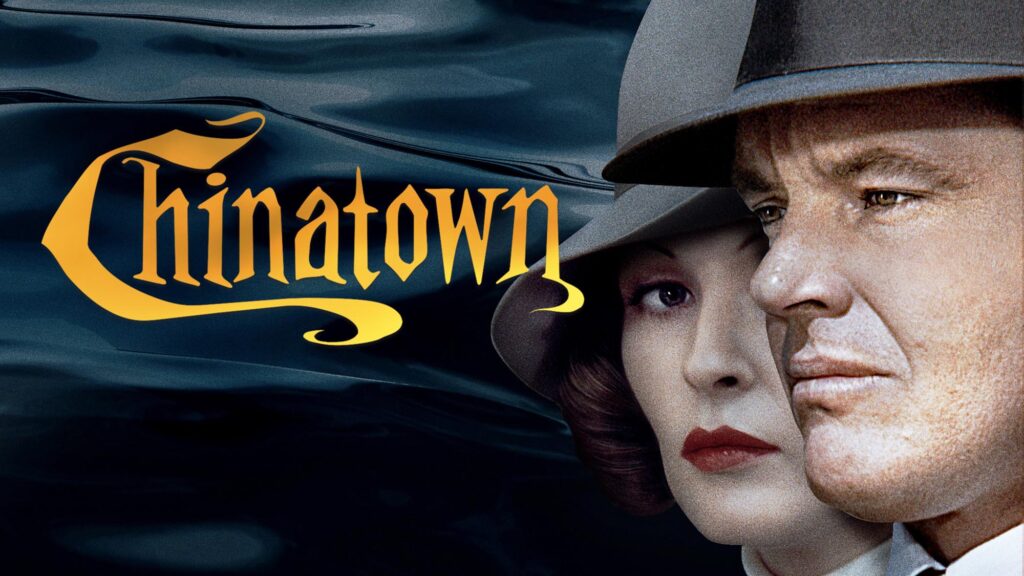
Chinatown
Chinatown was shot in and around Los Angeles, with additional material on Catalina Island, where it turns the city into a place of power and violence.

The Ninth Gate
The Ninth Gate was shot across France, Portugal and Spain, and those locations are a huge part of its distinctive look.

The Tenant
The Tenant (1976) was filmed on location in Paris, France, with notable scenes shot around the 9th, 10th, and 18th arrondissements.