
Robert Archibald Shaw (9 August 1927 – 28 August 1978) was an English actor, novelist and playwright whose career encompassed theatre, television and international cinema. He was born at 51 King Street in Westhoughton, Lancashire, the son of Thomas Archibald Shaw, a doctor of Scottish descent, and Doreen Nora Avery, a former nurse. The family initially lived at Oaklea on Bolton Road, and Robert attended White Horse Infants School before moving with his parents and four siblings to Stromness in the Orkney Islands during the 1930s. His father established a medical practice at Seafield House in the town, while Robert attended the local school and developed an interest in sport, particularly football and swimming. The move from industrial Lancashire to an isolated Scottish island was difficult for the young Shaw, who later recalled feeling like an outsider among his classmates. His father’s increasing dependence on alcohol also created considerable tensions within the family. By the end of the decade, his mother had taken the children south to England, and in 1940, when Robert was twelve, his father died by suicide. The experience profoundly affected him and subsequently influenced several of his literary works.
Shaw spent much of his adolescence in Cornwall, attending Truro School, where he distinguished himself academically and athletically. He became head boy and played rugby, while a teacher named Cyril Wilkes encouraged his interest in literature and introduced him to classical theatre. Wilkes arranged visits to London to see professional productions, including a performance of Hamlet starring John Gielgud at the Theatre Royal Haymarket in 1944. Shaw had originally considered following his father into medicine and had opportunities to continue his academic education, but decided instead to pursue acting. After briefly working as a teacher at Glenhow Preparatory School in Saltburn-by-the-Sea, Yorkshire, he moved to London and enrolled at the Royal Academy of Dramatic Art. He studied there between 1946 and 1948, financing his education partly through an inheritance from his grandmother. His training coincided with the difficult years immediately following the Second World War, when Britain’s theatrical institutions were rebuilding their audiences and professional opportunities. Shaw developed a particular interest in Shakespeare and classical drama, interests that would remain important throughout his career despite his later association with action films and thrillers.
After graduating from RADA, Shaw joined the Shakespeare Memorial Theatre company in Stratford-upon-Avon, where he performed in several productions during the late 1940s. He subsequently worked with the Old Vic company in London and toured Australia, gaining experience in classical repertory theatre. His early professional career involved frequent travel between London, Stratford and regional theatres, with occasional opportunities in film and television. He made an uncredited screen appearance in The Lavender Hill Mob (1951), the Ealing comedy starring Alec Guinness, but theatre remained his principal occupation. In 1952, he married actress Jennifer Bourke, with whom he had four daughters, Deborah, Penny, Rachel and Katherine. As family responsibilities increased, Shaw began accepting more regular screen work. One of his early film roles was Flight Sergeant John Pulford in The Dam Busters (1955), Michael Anderson’s account of the Royal Air Force raid on German dams during the Second World War. Although his part was relatively small, the production introduced him to a larger cinema audience. His first substantial television success followed with The Buccaneers (1956–1957), an adventure series in which he played Dan Tempest, a former pirate operating in the Caribbean during the eighteenth century. The programme ran for thirty-nine episodes and established Shaw as a recognisable leading actor on British television.
Alongside acting, Shaw developed a serious interest in writing. His early theatrical work included the play Off the Mainland, but his first major literary success came with The Hiding Place (1959), a novel drawing partly on his experiences of childhood and the difficult relationships within his family. The book received favourable reviews and was followed by The Sun Doctor (1961), which won the Hawthornden Prize in 1962. Shaw’s writing frequently explored questions of identity, personal responsibility, violence and the psychological effects of traumatic experiences. Some of these subjects had connections to his childhood in Orkney and Cornwall, particularly his father’s alcoholism and death. He regarded writing as more personally important than acting, although the financial demands of supporting a large family made his screen career increasingly necessary. His interest in contemporary theatre also brought him into contact with playwright Harold Pinter. In October 1961, Shaw made his Broadway debut at the Lyceum Theatre on West 45th Street in New York, playing Aston in Pinter’s The Caretaker opposite Alan Bates and Donald Pleasence. The production ran until February 1962 and was subsequently adapted into a film directed by Clive Donner, with the three principal actors reprising their roles. The film was released in 1963 and brought Shaw’s theatrical work to an international cinema audience.
His breakthrough as a major film actor came when Terence Young cast him as the professional assassin Donald “Red” Grant in From Russia with Love (1963), the second film in the James Bond series. Shaw played a ruthless agent of the criminal organisation SPECTRE who follows Sean Connery’s James Bond across Europe before confronting him aboard the Orient Express. The production was filmed at Pinewood Studios in Buckinghamshire and on location in Istanbul, Venice and other European cities. Istanbul’s Sirkeci railway station, Hagia Sophia and several historic streets were used for scenes involving Bond’s movements through the city, while the elaborate fight between Bond and Grant inside a railway compartment was filmed at Pinewood. The confrontation required intensive rehearsals and carefully coordinated physical performances by Shaw and Connery, with its confined setting making it one of the film’s most demanding action sequences. Shaw’s short blond hair, controlled manner and physical presence made Grant a memorable antagonist, and the film established him internationally as an actor capable of portraying threatening and authoritative characters. The success of From Russia with Love created opportunities in larger American and European productions, although Shaw continued to divide his professional life between acting and writing.
During this period, Shaw’s personal life also changed. His marriage to Jennifer Bourke ended in 1963, and he subsequently married Scottish actress Mary Ure, who had previously been married to playwright John Osborne. Shaw and Ure had developed a relationship while working in the theatre, appearing together in Thomas Middleton and William Rowley’s The Changeling at London’s Royal Court Theatre in 1961. They eventually raised four children together, including Colin, Elizabeth, Hannah and Ian, who later became an actor. The couple also appeared together in Irvin Kershner’s The Luck of Ginger Coffey (1964), adapted from Brian Moore’s novel about an Irish immigrant attempting to establish a new life in Canada. The production took them to Montreal and Ottawa during the spring of 1964. Location filming included Montreal’s Place Ville Marie, the former Montreal Star newspaper building and other commercial streets, while interiors were completed at Crawley Films’ studios in Ottawa. Shaw and Ure portrayed a married couple whose relationship deteriorates under financial pressure, and their performances became central to one of the most highly regarded Canadian films of the period. The project also allowed Shaw to play a more vulnerable and troubled character than the physically intimidating figures for which he had recently become known.
Shaw continued working internationally throughout the middle of the decade. He portrayed German tank commander Colonel Hessler in Battle of the Bulge (1965), a large-scale war film starring Henry Fonda, Robert Ryan and Charles Bronson. Although the story takes place in Belgium and Luxembourg during the winter of 1944, the production was filmed principally in Spain, with locations around Madrid and the surrounding countryside representing the Ardennes. A more prestigious role followed when Fred Zinnemann cast him as King Henry VIII in A Man for All Seasons (1966), adapted from Robert Bolt’s play about Sir Thomas More. Shaw appeared opposite Paul Scofield, who portrayed More, and joined a British ensemble including Wendy Hiller, Leo McKern, Susannah York and Orson Welles. Filming took place between May and August 1966 at Shepperton Studios in Surrey and historic locations in southern England. Hampton Court Palace was used for scenes associated with the Tudor court, while Studley Priory in Oxfordshire represented More’s residence and sections of the Beaulieu River in Hampshire stood in for the Thames. Shaw’s portrayal of Henry VIII, particularly his meetings with More, earned him an Academy Award nomination for Best Supporting Actor at the 1967 ceremony. The film won six Academy Awards, including Best Picture, and established Shaw as an actor of considerable dramatic range.
Following A Man for All Seasons, Shaw returned to Spain for Custer of the West (1967), directed by Robert Siodmak. He played General George Armstrong Custer opposite Mary Ure as his wife, Elizabeth, in a historical Western examining the military officer’s career and eventual defeat at the Battle of the Little Bighorn in 1876. Rather than filming in the American West, the production used locations around Madrid, Toledo, Colmenar Viejo and Almería, where Spanish landscapes represented the Great Plains and other American settings. The film reflected the European production arrangements common to many Westerns during the 1960s, when American and British companies frequently used Spanish studios and landscapes. Shaw subsequently appeared as Martin Luther in Luther (1968), directed by Stuart Burge, and starred in William Friedkin’s adaptation of Pinter’s The Birthday Party (1968). He also portrayed Squadron Leader Skipper in Guy Hamilton’s Battle of Britain (1969), a large-scale recreation of the 1940 air campaign. Filming took place at former and operational Royal Air Force facilities, including RAF Duxford in Cambridgeshire, RAF Hawkinge in Kent and North Weald in Essex, together with Pinewood Studios. These productions brought Shaw into repeated contact with British and international filmmakers working on historical subjects, although his theatrical and literary activities remained equally important to him.
One of his most substantial literary achievements came with The Man in the Glass Booth (1967), a novel dealing with the psychological aftermath of the Holocaust and questions of guilt, identity and moral responsibility. Shaw adapted the book into a stage play, which was presented in London before opening on Broadway at the Royale Theatre on West 45th Street on 26 September 1968. Directed by Harold Pinter and starring Donald Pleasence, the Broadway production ran for 264 performances and received several Tony Award nominations, including Best Play. Shaw did not appear in the production but was closely involved as its author. The work was subsequently adapted into a film directed by Arthur Hiller and released in 1975, with Maximilian Schell playing the central character. The novel and play formed part of a larger body of literary work that also included The Flag (1965), A Card from Morocco (1969) and the historical play Cato Street (1971). Despite his increasing financial success as a film actor, Shaw continued to regard writing as an essential part of his professional identity and frequently attempted to reserve time for literary projects between acting assignments.
Shaw’s growing international career also influenced where he lived. During the late 1960s, he and Ure spent time in Spain, including at a property near Madrid known as Finca Mi Gusto, while looking for a permanent home outside Britain. Financial considerations, particularly the high taxation affecting successful British entertainers, encouraged them to consider moving abroad. In 1971, they purchased Drimbawn House in Tourmakeady, County Mayo, on the western shore of Lough Mask in Ireland. The substantial nineteenth-century residence had originally been known as Lough Mask Cottage and was situated in a rural community considerably removed from London’s theatre industry and Hollywood’s film studios. Shaw took an active interest in the estate, employing local workers, experimenting with farming and establishing a nine-hole golf course on the grounds. He also became a familiar figure in Tourmakeady, regularly visiting local businesses and socialising with residents. Paddy’s Bar was among his favourite establishments, and he developed friendships with people involved in farming, fishing and other local activities. Although his work required frequent international travel, Drimbawn House remained his principal family home during the final seven years of his life.
His film career continued with Young Winston (1972), directed by Richard Attenborough, in which he portrayed Lord Randolph Churchill, the father of the future British prime minister. Based on Winston Churchill’s autobiography, the production used locations in England and Morocco to recreate episodes from his early life. Shaw’s performance earned a BAFTA nomination for Best Actor. He subsequently starred opposite Sarah Miles in The Hireling (1973), directed by Alan Bridges and adapted from L. P. Hartley’s novel. Shaw played Steven Ledbetter, a chauffeur who becomes emotionally involved with a wealthy widow during the years following the First World War. Filming began in November 1972 and took place in southern England, including Bath in Somerset, Cherhill in Wiltshire and Sutton Place in Surrey, with studio work at Bray in Berkshire. The period drama gave him a substantial leading role outside the historical epics and thrillers that had occupied much of his screen career. The Hireling shared the Palme d’Or with Scarecrow at the Cannes Film Festival in 1973, further strengthening Shaw’s international reputation.
Another major success followed when George Roy Hill cast him as Doyle Lonnegan in The Sting (1973), alongside Paul Newman and Robert Redford. Shaw portrayed an Irish-American crime boss who becomes the target of an elaborate confidence trick during the Great Depression. Although the story takes place principally in Chicago, filming was divided between actual Chicago locations and Southern California. Chicago’s Union Station, LaSalle Street Station and elevated railway infrastructure were used for selected sequences, while much of the fictional city’s 1930s environment was recreated on the Universal Studios backlot in Universal City. Shortly before filming began in January 1973, Shaw injured his leg while playing handball and developed a noticeable limp. Rather than replace him, Hill incorporated the injury into Lonnegan’s character, turning what might have been a production difficulty into one of the gangster’s distinguishing physical characteristics. The film became a major commercial success and won seven Academy Awards, including Best Picture. Shaw’s performance, particularly his confrontations with Newman’s character during the elaborate gambling deception, brought him renewed recognition among American cinema audiences.
Shaw returned to New York for Joseph Sargent’s The Taking of Pelham One Two Three (1974), in which he played Bernard Ryder, known as Mr Blue, the leader of a group of armed criminals who hijack a subway train and hold its passengers for ransom. Walter Matthau portrayed the New York City Transit Authority police lieutenant attempting to resolve the crisis. Unlike many films that reproduce the New York subway system on studio sets, the production received permission to work in parts of the actual transit network. Principal filming began in November 1973, with the abandoned Court Street station in Brooklyn serving as the main underground location. The station had been closed to passengers since 1946 and was subsequently converted into the New York Transit Museum. Other scenes were filmed around the subway entrance at East 28th Street and Park Avenue South in Manhattan, while a replica of the Transit Authority control centre was constructed at Filmways Studios in East Harlem. Shaw spent much of the production working in confined railway interiors, portraying a character whose apparently calm manner contrasts with the escalating violence of the hijacking. The film became one of the notable New York crime thrillers of the 1970s and another commercially successful American production for Shaw.
His most widely recognised screen role came when Steven Spielberg cast him as Quint, an experienced shark hunter and fishing boat owner, in Jaws (1975). Based on Peter Benchley’s novel, the film follows a police chief, marine biologist and fisherman attempting to kill a great white shark threatening a small coastal community. Shaw appeared alongside Roy Scheider and Richard Dreyfuss, forming the central trio during the film’s extended scenes at sea. Principal photography began in May 1974 on Martha’s Vineyard, Massachusetts, where the island’s towns and harbours represented the fictional community of Amity. Shaw worked extensively in Menemsha, a fishing village on the western side of the island, where a temporary building was constructed to represent Quint’s shack and the fishing vessel Orca was based. The production also filmed in Edgartown and the surrounding Atlantic waters, with offshore sequences involving Shaw, Scheider and Dreyfuss accounting for much of the difficult shooting schedule. Rather than relying entirely on studio tanks, Spielberg attempted to film the principal actors at sea, a decision that created serious logistical problems when weather conditions, passing boats and malfunctioning mechanical sharks repeatedly delayed production.
Shaw’s own experience of boats and coastal communities helped him develop Quint’s mannerisms, and he drew on several local fishermen he encountered during the Martha’s Vineyard shoot. His relationship with Dreyfuss was frequently difficult, partly because of differences in personality and acting methods, while Shaw’s drinking occasionally complicated the production. Spielberg later acknowledged that tensions between the two actors sometimes became serious, although their contrasting performances contributed to the relationship between Quint and the younger marine biologist Matt Hooper. One of Shaw’s most significant contributions came during the scene in which Quint recounts the sinking of the USS Indianapolis during the Second World War. The monologue had been developed through several drafts by screenwriters and collaborators, including John Milius, but Shaw, who was also an experienced writer, substantially revised the material before performing it. The scene required him to hold the attention of the audience for several minutes while recounting an event rather than participating in physical action. Filming eventually concluded in September 1974 after running far beyond its original schedule. When Jaws was released in June 1975, it became one of the greatest commercial successes in cinema history and established Quint as the character most closely associated with Shaw’s career.
The success of Jaws coincided with a period of considerable personal difficulty. On 3 April 1975, Mary Ure died in London after returning to the stage in Don Taylor’s play The Exorcism at the Comedy Theatre in the West End. She had performed in the production’s opening night the previous evening before returning to an apartment in Curzon Street, Mayfair, where Shaw subsequently discovered her body. An inquest established that her death had resulted from an accidental combination of alcohol and prescription medication. She was forty-two years old. Shaw was left with responsibility for a large family while maintaining an extensive international filming schedule. In 1976, he married Virginia Jansen, who had a son, Charles, from an earlier relationship. Shaw adopted Charles, and the couple subsequently had a son, Thomas, born in 1977. Altogether, Shaw had ten children, including two whom he adopted. His son Ian later followed him into acting, while the family maintained its home in County Mayo despite the demands of Shaw’s professional work.
Shaw continued accepting major film assignments during the second half of the 1970s. He reunited with Sean Connery in Richard Lester’s Robin and Marian (1976), playing the Sheriff of Nottingham opposite Connery’s ageing Robin Hood and Audrey Hepburn’s Maid Marian. Although set in medieval England, the production was filmed in Spain during the summer of 1975, using locations around Pamplona, Artajona and the Sierra de Urbasa in Navarre. The fortified town of Artajona represented Nottingham, while Spanish woodlands and castles stood in for Sherwood Forest and other English locations. Shaw and Connery performed an extended confrontation during the film’s final act, bringing together two actors who had previously faced each other in From Russia with Love. The following year, Shaw portrayed Israeli intelligence officer David Kabakov in John Frankenheimer’s political thriller Black Sunday (1977), adapted from Thomas Harris’s novel. Filming took place in Florida, California, Texas and Morocco, with the climactic sequence involving a terrorist attack at the Super Bowl. The production obtained permission to film during Super Bowl X at Miami’s Orange Bowl on 18 January 1976, using the actual stadium, spectators and football match for scenes incorporated into the fictional story. Additional sequences were filmed at the stadium later that month, after the championship had concluded.
During 1976, Shaw also worked in Bermuda on Peter Yates’s The Deep (1977), adapted from another novel by Peter Benchley. He played Romer Treece, an experienced treasure hunter who assists a young American couple, portrayed by Nick Nolte and Jacqueline Bisset, after they discover valuable objects and narcotics in a shipwreck. Production began in July 1976, with filming around Bermuda and additional underwater work in the British Virgin Islands. The filmmakers constructed an elaborate underwater set and made extensive use of diving crews and specialist equipment. Shaw’s character was partly inspired by the real Bermudian treasure hunter Teddy Tucker, whose experience in maritime salvage helped inform the production. The film returned Shaw to a seafaring role only two years after Jaws, although the emphasis on shipwrecks and underwater archaeology differed considerably from Spielberg’s thriller. The production also allowed members of Shaw’s family to participate, with his son Colin appearing as a younger version of his character in material prepared for the film’s extended television version.
Shaw’s final completed productions took him to several European countries. In Force 10 from Navarone (1978), directed by Guy Hamilton, he replaced Gregory Peck as Major Keith Mallory, a British officer involved in a military operation in Yugoslavia during the Second World War. The cast included Harrison Ford, Edward Fox, Barbara Bach, Carl Weathers and Franco Nero. Filming began in October 1977 in Yugoslavia, including locations around Titograd, now Podgorica in Montenegro, and Rijeka in present-day Croatia. The production subsequently moved to Shepperton Studios in Surrey, the naval dockyard in Plymouth and locations in Malta, completing principal photography in February 1978. Although the film was a sequel to The Guns of Navarone (1961), its production relied on a new cast and a substantially different geographical setting. Shaw continued working despite growing concerns about his health and the physical demands of travelling between locations.
His last film was Avalanche Express (1979), an international espionage thriller directed by Mark Robson and starring Lee Marvin, Linda Evans, Maximilian Schell and Horst Buchholz. Shaw portrayed General Vladimir Marenkov, a Soviet intelligence officer attempting to defect to the West. Production began in March 1978, with filming based at Bavaria Studios in Munich and additional location work in Italy. The filmmakers used Milan’s Teatro alla Scala and the adjoining Piazza della Scala for scenes involving the defector, while other sequences were shot in Venice and on railway lines and bridges around northern Italy. Much of the production involved filming aboard moving trains, creating difficulties with scheduling and technical equipment. The film’s director, Mark Robson, died in London in June 1978 before post-production was completed. Shaw had finished his acting work on the film but died before its release, and his dialogue was subsequently dubbed by voice actor Robert Rietty. Avalanche Express eventually opened in October 1979, more than a year after Shaw’s death.
During the summer of 1978, Shaw returned to Drimbawn House in County Mayo, spending time with his family and continuing to work on literary projects. He was developing another novel, provisionally titled The Ice Floe, and had discussed plans for further films. On 28 August 1978, he was travelling by car from Castlebar towards Tourmakeady with his wife Virginia and their young son Thomas when he began experiencing chest pains. He stopped the vehicle and stepped outside, apparently hoping the discomfort would pass, but collapsed beside the road. Medical assistance was summoned, and Shaw was taken to Castlebar General Hospital, where he was pronounced dead. He had suffered a heart attack at the age of fifty-one. His body was subsequently cremated in Belfast, and his ashes were scattered near his home at Tourmakeady. There is no conventional grave. He was survived by his wife and ten children, while the death of an actor still actively working on international productions attracted considerable attention in Britain, Ireland and the United States.
Shaw’s connection with Tourmakeady continued after his death. Residents remembered him as an approachable figure who participated in local life despite his international reputation, and in August 2008, on the thirtieth anniversary of his death, a stone memorial was unveiled near the village overlooking Lough Mask. The monument was made using a rock from the lakeshore and carries an inscription honouring the actor and writer who had made the community his home. Members of his family, including Virginia and several of his children, attended the ceremony. His association with his birthplace was also commemorated in Westhoughton, where a plaque was placed on the town hall in 1996 and a public house was subsequently named The Robert Shaw. These memorials acknowledge places that were central to his life but received comparatively little attention during his most commercially successful years in cinema.
His theatrical and literary work also continued attracting interest after his death. In 2021, his son Ian Shaw co-wrote and starred in The Shark Is Broken, a play inspired by the difficult production of Jaws and the relationships between Shaw, Roy Scheider and Richard Dreyfuss. Developed with playwright Joseph Nixon, the production explored the tensions and conversations that might have occurred aboard the Orca during interruptions to filming. Ian Shaw portrayed his father, drawing partly on family memories and accounts of the original production. After performances in Britain and Canada, the play opened on Broadway at the John Golden Theatre on West 45th Street in August 2023, running until November that year. The production brought Shaw’s life and career back to the New York theatre district where he had performed in The Caretaker more than sixty years earlier.
Further interest in his personal history followed with the publication of Robert Shaw: An Actor’s Life (2025), a biography written by his nephew Christopher Shaw Myers. The book examined the family’s experiences in Lancashire, Orkney and Cornwall, Shaw’s relationships and literary ambitions, and the circumstances surrounding his international film career. It also drew attention to the considerable part of his professional life devoted to writing, a pursuit that was often overshadowed by his appearances in major films. Although he became internationally recognised through roles such as Red Grant, Henry VIII, Doyle Lonnegan and Quint, Shaw spent much of his life working between theatre, literature and cinema, with important personal connections extending from northern England and the Scottish islands to New York, Madrid and western Ireland.
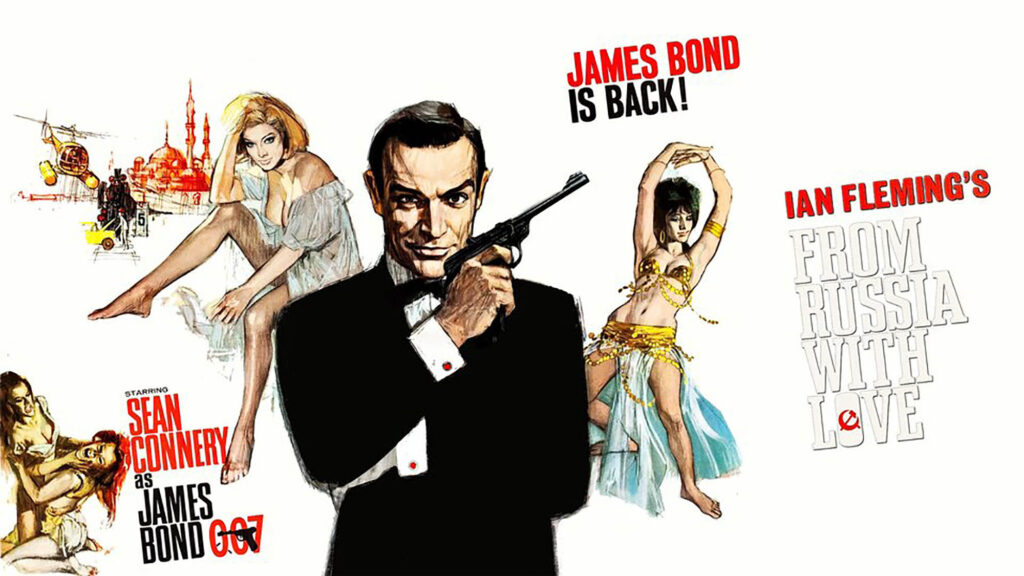
From Russia with Love
From Russia with Love (1963) was primarily filmed on location in Istanbul, Turkey, with significant scenes shot in Scotland, Venice, and at Pinewood Studios.
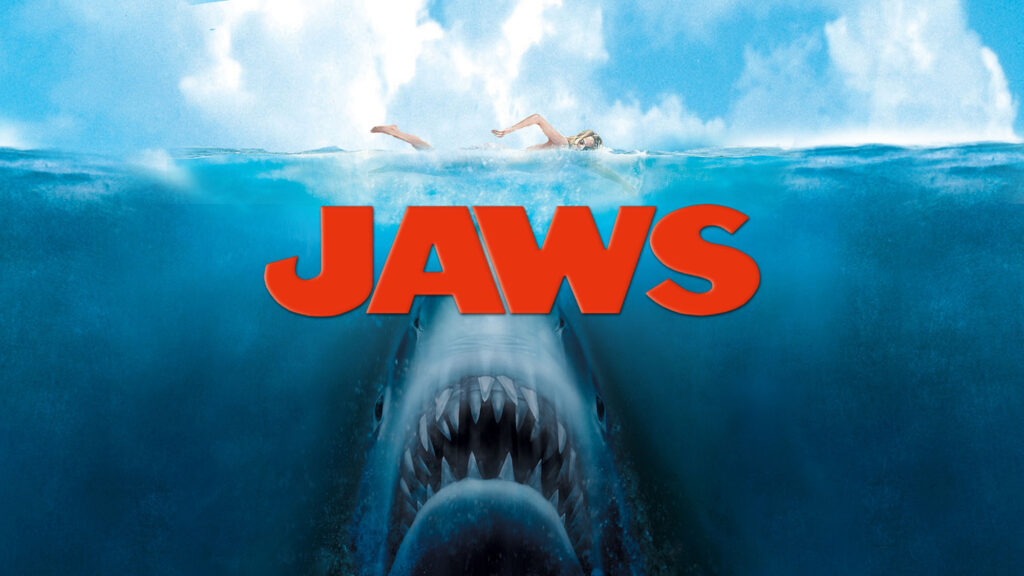
Jaws
Jaws was shot mainly on Martha’s Vineyard in Massachusetts, and the island is absolutely central to its identity.