
William John Neeson was born on 7 June 1952 in Ballymena, County Antrim, Northern Ireland, to Bernard Neeson, a primary school caretaker, and Katherine Brown, a cook originally from Waterford in the Republic of Ireland. Known as Liam from childhood, he grew up with three sisters, Elizabeth, Bernadette and Rosaleen, in a Catholic family in a predominantly Protestant town. His childhood coincided with a period of increasing political and religious tension in Northern Ireland, although he has generally described his own upbringing as relatively ordinary. He attended St Patrick’s College in Ballymena before continuing his education at Ballymena Technical College. His interest in acting began at school, where he participated in theatrical productions, but sport initially occupied much of his spare time. At the age of nine, he joined the All Saints Boxing Club in Ballymena, where he trained for several years and became a successful amateur boxer, winning regional titles. He also developed an interest in literature and cinema, particularly the performances of actors such as James Dean and Robert Mitchum.
In 1971, Neeson enrolled at Queen’s University Belfast to study physics and computer science, although he left after approximately a year without completing his degree. He briefly considered becoming a teacher and attended teacher training in Newcastle upon Tyne, England, before returning to Northern Ireland. During his early twenties, he supported himself through various jobs, including working as a forklift operator for Guinness, driving lorries and assisting an architect. Meanwhile, he became involved in amateur theatre, performing with the Slemish Players in Ballymena and the Clarence Players in Belfast. He regularly travelled between the two towns for rehearsals, sometimes hitchhiking during the height of the Troubles. His growing commitment to acting eventually led him to audition for the Lyric Players’ Theatre in Belfast in 1975. He was accepted into the company the following year, making his professional stage debut as Irish labour leader James Larkin in James Plunkett’s The Risen People (1976). The Lyric Theatre, situated on Ridgeway Street beside the River Lagan, became his principal workplace for the next two years. He appeared in productions including Brian Friel’s Philadelphia, Here I Come! and The Loves of Cass McGuire, developing his abilities through regular performances before live audiences.
Neeson moved to Dublin in 1978 after securing a role in Ron Hutchinson’s Says I, Says He at the Project Arts Centre, then situated on Essex Street in the Temple Bar area. He subsequently joined the Abbey Theatre, Ireland’s national theatre, where he appeared in a range of contemporary and classical productions. His performances included John Steinbeck’s Of Mice and Men, in which he played Lennie Small, and Brian Friel’s Translations (1980), the inaugural production of the Field Day Theatre Company, founded by Friel and actor Stephen Rea. Translations premiered at the Guildhall in Derry on 23 September 1980 before touring elsewhere in Ireland. During this period, Neeson also made his first screen appearances, including a role as Jesus Christ in the religious film Pilgrim’s Progress (1978). His performance in Of Mice and Men attracted the attention of director John Boorman, who cast him as Sir Gawain in the Arthurian fantasy Excalibur (1981). The production was filmed in Ireland, particularly in Counties Wicklow, Kerry and Tipperary, with locations including Powerscourt Waterfall, the Luggala estate near Lough Tay and the National Film Studios at Ardmore in Bray. Excalibur introduced Neeson to a larger international production and brought him into contact with actress Helen Mirren, with whom he began a relationship. The couple subsequently lived together in London for several years, and Mirren helped him establish professional contacts in the British and American film industries.
During the early 1980s, Neeson gradually moved away from the Irish theatre circuit as film opportunities became more frequent. He appeared in The Bounty (1984), directed by Roger Donaldson and starring Mel Gibson and Anthony Hopkins, and played a Jesuit missionary in Roland Joffé’s The Mission (1986), a historical drama filmed extensively in South America. His supporting roles during this period also included appearances in A Prayer for the Dying (1987), Suspect (1987), opposite Cher, and The Dead Pool (1988), the fifth and final film in the Dirty Harry series starring Clint Eastwood. By the late 1980s, Neeson was working regularly in the United States, although he had not yet established himself as a leading Hollywood actor. His first prominent American action role came in Sam Raimi’s Darkman (1990), in which he portrayed a scientist seeking revenge after being severely disfigured. The film introduced him to the physical demands of a special-effects-heavy Hollywood production, while his performances in films such as Under Suspicion (1991) and Woody Allen’s Husbands and Wives (1992) demonstrated a broader dramatic range.
A significant turning point came through a return to the stage. In January 1993, Neeson appeared on Broadway opposite Natasha Richardson in a revival of Eugene O’Neill’s Anna Christie at the Circle in the Square Theatre in Manhattan. He played Mat Burke, an Irish sailor who becomes romantically involved with Richardson’s title character. Both actors received Tony Award nominations, and the production marked the beginning of their personal relationship. Among those who attended was director Steven Spielberg, who was preparing Schindler’s List (1993), an adaptation of Thomas Keneally’s novel about German industrialist Oskar Schindler and his efforts to save Jewish workers during the Holocaust. Neeson had already auditioned for the role, but Spielberg’s experience of seeing him perform on Broadway proved decisive. Within days, he offered Neeson the leading part. The actor travelled to Poland for the production, which began filming in Kraków on 1 March 1993. Much of the work took place in and around the historic Jewish district of Kazimierz, with additional filming at Schindler’s former enamel factory on Lipowa Street and locations associated with the wartime Kraków Ghetto. The Płaszów concentration camp was reconstructed beside the disused Liban Quarry, while buildings and streets in the surrounding districts were transformed to represent the German occupation. Neeson worked closely with Ben Kingsley, who portrayed Itzhak Stern, and Ralph Fiennes as SS officer Amon Göth. Schindler’s List became one of the most acclaimed films of the decade, winning seven Academy Awards. Neeson received his first nomination for Best Actor, establishing him internationally after nearly two decades of professional acting.
The success of Schindler’s List coincided with major changes in Neeson’s personal life. He and Natasha Richardson married on 3 July 1994 at their country home near Millbrook in Dutchess County, New York, approximately 130 kilometres north of Manhattan. Richardson was the daughter of actress Vanessa Redgrave and director Tony Richardson, and her family had longstanding connections to British theatre and cinema. The couple subsequently had two sons, Micheál, born in 1995, and Daniel, born in 1996. They divided their time between New York City and the Hudson Valley, where their nineteenth-century farmhouse provided a home away from Manhattan. They also owned an apartment overlooking Central Park at 91 Central Park West, purchased in 1994. Their professional lives occasionally intersected, notably in Nell (1994), in which Neeson appeared alongside Richardson and Jodie Foster. Although his career involved extended periods working abroad, New York became his principal home, and his marriage established close family ties to both the American and British theatrical communities.
Throughout the mid-1990s, Neeson took on a succession of substantial historical roles. He played the Scottish Highlander Robert Roy MacGregor in Rob Roy (1995), directed by Michael Caton-Jones and co-starring Jessica Lange, Tim Roth and John Hurt. Filming took place entirely in Scotland, with extensive location work in Glen Coe, Glen Nevis, Rannoch Moor and other parts of the Highlands. Drummond Castle near Crieff was used for scenes involving the Marquess of Montrose, while Crichton Castle in Midlothian provided the setting for the climactic confrontation between Neeson’s character and the aristocratic swordsman played by Roth. The following year, he returned to Ireland for one of his most personally significant roles, portraying the revolutionary leader Michael Collins in Neil Jordan’s Michael Collins (1996). The production filmed extensively in Dublin, including at Kilmainham Gaol, Trinity College, the Four Courts and Grafton Street. A large recreation of O’Connell Street and the General Post Office was constructed at Broadstone to represent the city during the Easter Rising and the subsequent struggle for Irish independence. Other filming took place in Counties Wicklow and Cork. Neeson’s performance earned him the Volpi Cup for Best Actor at the Venice International Film Festival, where the film also received the Golden Lion. His portrayal of Collins brought him particular recognition in Ireland and Northern Ireland, where the historical figure and the events surrounding partition remained politically sensitive subjects.
Neeson continued alternating between historical drama, literary adaptations and major studio productions. He portrayed Jean Valjean in Bille August’s Les Misérables (1998), opposite Geoffrey Rush as Inspector Javert. Although the story takes place in nineteenth-century France, much of the filming was undertaken in the Czech Republic, including Prague, Kutná Hora and Žatec. Barrandov Studios provided interior facilities, while locations such as Hradčany Square, Troja Château and Dobříš Castle were used to recreate French settings. Neeson also returned to Broadway in 1998 to portray Oscar Wilde in David Hare’s The Judas Kiss, which transferred from London to the Broadhurst Theatre in New York. His next major film role was Qui-Gon Jinn, the Jedi Master in George Lucas’s Star Wars: Episode I – The Phantom Menace (1999). The production involved filming at Leavesden Studios in Hertfordshire, England, along with location work in Tunisia and Italy. The Royal Palace of Caserta, north of Naples, supplied interiors for the royal palace on the fictional planet Naboo. The film introduced Neeson to an entirely different generation of cinema audiences, while his performance became an enduring part of the Star Wars franchise.
In the early 2000s, Neeson continued working in both theatre and cinema. He returned to Broadway in 2002 as John Proctor in Arthur Miller’s The Crucible, appearing opposite Laura Linney in a production at the Virginia Theatre on West 52nd Street. His performance earned him another Tony Award nomination. Around the same period, he appeared as Priest Vallon in Martin Scorsese’s Gangs of New York (2002), which recreated nineteenth-century Manhattan on elaborate sets at Cinecittà Studios in Rome, and played Daniel, a recently widowed father, in the British romantic comedy Love Actually (2003). He subsequently portrayed the American sex researcher Alfred Kinsey in Kinsey (2004), directed by Bill Condon, receiving a Golden Globe nomination for his performance. Other major productions included Kingdom of Heaven (2005), directed by Ridley Scott, and Christopher Nolan’s Batman Begins (2005), in which he played Henri Ducard, later revealed as Ra’s al Ghul. He also became the voice of Aslan in the film adaptations of C. S. Lewis’s The Chronicles of Narnia, beginning with The Lion, the Witch and the Wardrobe (2005). These projects frequently took him to studios and locations across Europe, particularly the United Kingdom, Italy and Central Europe, while his family continued living primarily in New York.
His career changed direction again with Taken (2008), a French-produced action thriller directed by Pierre Morel. Neeson played Bryan Mills, a former CIA operative searching for his kidnapped daughter in Paris. Much of the film was shot in the French capital, with additional production work in the surrounding region, and its success established Neeson as an action-film leading man at an age when many actors were moving away from physically demanding roles. He subsequently reprised the character in Taken 2 (2012) and Taken 3 (2014), while appearing in a succession of thrillers that included Unknown (2011), Non-Stop (2014), A Walk Among the Tombstones (2014), Run All Night (2015) and The Commuter (2018). Although these productions varied considerably in setting, they shared an emphasis on Neeson’s physical presence and controlled dramatic delivery. One of the more demanding shoots was The Grey (2011), directed by Joe Carnahan and released in 2012, in which he played an oil-field worker stranded in the Alaskan wilderness after a plane crash. The film was shot in British Columbia, Canada, particularly around Smithers, with additional work in Vancouver and Whistler. Neeson and the cast worked outdoors in temperatures approaching minus 30 degrees Celsius, often in deep snow and strong winds on remote mountainsides. The conditions were considerably harsher than those encountered on many of his earlier studio productions.
The commercial success of Taken was followed by a devastating personal tragedy. On 16 March 2009, Natasha Richardson suffered a serious head injury while taking a skiing lesson at Mont Tremblant Resort in Quebec, Canada. She was initially treated locally before being transferred to a hospital in Montreal and subsequently to Lenox Hill Hospital in Manhattan. She died on 18 March, aged 45, from complications of an epidural haematoma. Neeson had been working on the film Chloe in Toronto when the accident occurred and immediately left the production to be with his wife. Richardson’s funeral took place on 22 March at St Peter’s Episcopal Church near Millbrook, New York, where the couple had maintained their country home. She was buried in the adjoining cemetery, near her maternal grandmother, actress Rachel Kempson. Neeson continued raising their two sons and maintained his home in the Hudson Valley. In August 2010, he sold the family’s former Central Park West apartment. He also became an American citizen in 2009, explaining that the kindness shown to him by people in the United States following his wife’s death had influenced his decision. Although he remained closely identified with Ireland, the country where he had spent much of his adult life had become his permanent home.
During the following decade, Neeson continued working extensively, combining action films with occasional returns to historical and dramatic subjects. He appeared in Martin Scorsese’s Silence (2016), portraying the Jesuit missionary Cristóvão Ferreira in a story set in seventeenth-century Japan. The film was shot largely in Taiwan, including locations around Taipei and the island’s northern coastal regions. He also worked with director Steve McQueen on Widows (2018), a crime drama filmed in Chicago, and returned to Northern Ireland for Ordinary Love (2019), in which he starred opposite Lesley Manville. Directed by Lisa Barros D’Sa and Glenn Leyburn, the film followed a married couple confronting a breast cancer diagnosis and was shot entirely in and around Belfast. Its relatively intimate production allowed Neeson to work again in the city where his professional acting career had begun more than four decades earlier. He subsequently appeared in the action thriller Cold Pursuit (2019), filmed principally in British Columbia and Alberta, and continued taking roles in productions made across North America and Europe.
Neeson’s family life also became connected to his later filmmaking. His eldest son, Micheál, adopted his mother’s surname, Richardson, as a professional actor and appeared alongside his father in Cold Pursuit before they took the leading roles in Made in Italy (2020). Written and directed by James D’Arcy, the film concerns an estranged father and son attempting to repair a family property in Tuscany following the death of the son’s mother. Filming took place in the Tuscan countryside around Montalcino, Pienza and Monticchiello, with Villa Fontanelle near Montalcino representing the family’s house. The story’s themes of bereavement and family reconciliation had obvious parallels with the experiences of Neeson and his son, although the screenplay was not based on their lives. The production provided an opportunity for them to work together in substantial roles rather than brief appearances. Micheál continued pursuing his acting career, while Neeson’s younger son Daniel developed business interests outside the film industry.
Alongside his acting career, Neeson has devoted considerable time to humanitarian work, particularly through UNICEF. He initially became involved with UNICEF Ireland during the 1990s and helped support its Change for Good fundraising partnership with Aer Lingus. In 2005, he travelled to Mozambique, visiting the city of Beira to learn about programmes supporting children affected by HIV and AIDS. He was appointed a UNICEF Goodwill Ambassador in 2011, having previously served as a national ambassador for the organisation in Ireland. His activities subsequently took him to Jordan, where he met Syrian refugee children in 2016 and 2017, and to the Brazilian border region with Venezuela in 2020. He also visited UNICEF’s international supply centre in Copenhagen in 2022, participating in activities connected with humanitarian shipments to Afghanistan. These engagements have formed a significant part of his public work away from film and theatre, particularly in campaigns concerning children affected by conflict, displacement and poverty.
Neeson continued appearing in international action productions during the early 2020s, including The Marksman (2021), The Ice Road (2021), Memory (2022), Marlowe (2022) and Retribution (2023). A notable return to Irish filmmaking came with In the Land of Saints and Sinners (2023), directed by Robert Lorenz and set in a rural community during the Troubles in the 1970s. Neeson played Finbar Murphy, a former assassin attempting to abandon his violent past. The film reunited him with fellow Northern Irish actor Ciarán Hinds and featured Kerry Condon, Jack Gleeson and Colm Meaney. Principal photography took place in County Donegal during 2022, using locations including Killybegs, Kilcar, Glencolmcille, Ardara and the coastal landscape around Malin Beg. The production gave Neeson another opportunity to work in Ireland on a story connected to the political violence that had formed the background to his early years in Ballymena and Belfast.
In 2025, Neeson made a conspicuous departure from his recent action roles by starring in The Naked Gun, directed by Akiva Schaffer. The film revived the comedy franchise associated with Leslie Nielsen, with Neeson playing Lieutenant Frank Drebin Jr. opposite Pamela Anderson. Principal photography took place in Atlanta, Georgia, during 2024. The role drew on Neeson’s established screen persona while returning him to comedy, a genre in which he had occasionally appeared throughout his career. He also reprised his role as Mike McCann in Ice Road: Vengeance (2025) and appeared in the science-fiction horror comedy Cold Storage (2026), alongside Joe Keery and Georgina Campbell. Despite indicating that he intended to reduce his involvement in physically demanding action films, he continued accepting a variety of projects, maintaining a screen career that had already lasted nearly fifty years.
Away from filming, Neeson has remained closely associated with New York, particularly the Hudson Valley countryside surrounding Millbrook and the wider Manhattan theatre community. The family farmhouse has continued to be an important place in his life, while his connections to Northern Ireland have remained visible through occasional visits, charity activities and public recognition. In May 2009, he received an honorary doctorate from Queen’s University Belfast, nearly four decades after leaving the institution without completing his undergraduate studies. The award was presented at the British Consulate in New York, only weeks after the death of Natasha Richardson, with his sons attending the ceremony. His relationship with Ballymena has also continued, including support for his former school and local charitable initiatives. By 2026, his professional career had taken him from the small theatrical companies of Belfast and Dublin to productions across Europe, North America, Africa and Asia, while the places most closely connected to his personal life remained his hometown in Northern Ireland and the family home he established with Richardson in New York.
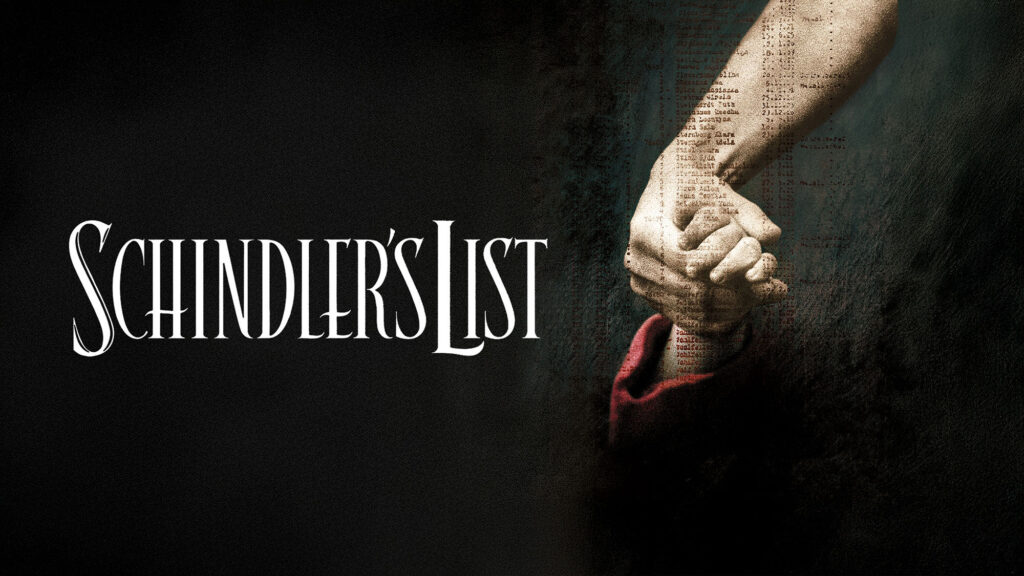
Schindler’s List
Schindler's List was shot mainly in and around Kraków, Poland, using a combination of real historical locations, nearby stand-ins and large reconstructed sets.