
Kirsten Dunst is an American actress and producer born Kirsten Caroline Dunst on 30 April 1982 in Point Pleasant, New Jersey. Her father, Klaus Hermann Dunst, was a German executive who worked for the engineering and technology company Siemens, while her mother, Inez Rupprecht, was an American flight attendant who later became involved in art and gallery management. Her paternal family came from Hamburg, Germany, while her mother’s ancestry included German and Swedish roots. Dunst grew up in Brick Township, near the Jersey Shore, alongside her younger brother, Christian, who was born in 1987. She attended Ranney School in Tinton Falls and spent much of her early childhood travelling between New Jersey and New York City, where her mother began taking her to modelling auditions. Her entry into the entertainment industry came unusually early. At the age of three, she signed with Ford Models and began appearing in television advertisements, including a commercial for Kix breakfast cereal. By the time she entered primary school, she had already worked on numerous advertising campaigns and become familiar with the routines of professional photography and television production.
Dunst’s first screen appearance came in Woody Allen’s segment Oedipus Wrecks, included in the anthology film New York Stories (1989). She subsequently had a small role in Brian De Palma’s The Bonfire of the Vanities (1990), starring Tom Hanks, Bruce Willis and Melanie Griffith. Although both parts were minor, they introduced her to large professional productions while she was still a child. In 1993, following her parents’ separation, Dunst moved to Los Angeles with her mother and younger brother. The relocation allowed her to pursue acting more regularly, although it also meant leaving behind the familiar surroundings of New Jersey. She later attended Laurel Hall School in North Hollywood and Notre Dame High School in Sherman Oaks, graduating in 2000. Her mother continued managing much of her early professional life, accompanying her to auditions and filming assignments. Dunst subsequently reflected on the unusual experience of growing up as a working actress, explaining that she sometimes resented the demands of her career during adolescence but eventually recognised the opportunities her mother had helped create.
Her breakthrough came when Irish director Neil Jordan cast her as Claudia in Interview with the Vampire (1994), an adaptation of Anne Rice’s bestselling novel. The film starred Tom Cruise as Lestat and Brad Pitt as Louis, two vampires whose complicated relationship changes when Louis persuades Lestat to transform a young girl into an immortal companion. Claudia remains physically a child while developing the emotional awareness and frustrations of an adult, making the character unusually demanding for an actress who was only eleven when filming began. Dunst was selected after an extensive audition process and worked closely with Cruise and Pitt throughout the production. Filming took place primarily in New Orleans and England, with additional sequences photographed in San Francisco and Paris. The Louisiana locations included Destrehan Plantation and Oak Alley Plantation near Vacherie, which together represented Louis’s eighteenth-century estate, while streets around the French Quarter provided the setting for the vampires’ life in New Orleans. Elaborate interiors were constructed at Pinewood Studios in Buckinghamshire, including the townhouse shared by Louis, Lestat and Claudia and the Théâtre des Vampires in Paris. The theatrical interior was built on Pinewood’s enormous 007 Stage, allowing Jordan to stage the scenes involving Claudia’s confrontation with the European vampires. Interview with the Vampire was released in November 1994 and earned Dunst a Golden Globe nomination for Best Supporting Actress, establishing her internationally before her thirteenth birthday.
The same year, Dunst played the younger Amy March in Gillian Armstrong’s adaptation of Louisa May Alcott’s Little Women (1994), starring Winona Ryder, Susan Sarandon, Trini Alvarado and Claire Danes. Samantha Mathis portrayed Amy as an adult, while Dunst appeared in the sections depicting the March sisters’ childhood and adolescence. Although the story takes place in Concord, Massachusetts, during the American Civil War, much of the production was filmed in British Columbia, Canada. Vancouver and nearby communities supplied the historic buildings and countryside required to recreate nineteenth-century New England, while locations around Victoria and Cobble Hill on Vancouver Island provided additional settings. Some establishing footage was filmed in Historic Deerfield, Massachusetts, whose preserved eighteenth- and nineteenth-century buildings closely resembled the architecture of Alcott’s period. Dunst subsequently appeared opposite Robin Williams and Bonnie Hunt in the fantasy adventure Jumanji (1995), playing Judy Shepherd, one of two children who discover a mysterious board game capable of bringing dangerous creatures into the real world. The film was shot principally around Keene, New Hampshire, which represented the fictional town of Brantford, with additional production work in Vancouver. Main Street in Keene was transformed into the centre of the fictional community, while the Olde Woolen Mill in North Berwick, Maine, represented the abandoned Parrish shoe factory. The interior of the Parrish family mansion and several elaborate action sequences were constructed on studio sets in British Columbia.
The success of Interview with the Vampire, Little Women and Jumanji made Dunst one of the most recognisable child actresses of the 1990s, but her career continued developing through a variety of supporting roles rather than relying exclusively on major commercial productions. She appeared in the fantasy drama The Devil’s Arithmetic (1999), the political satire Wag the Dog (1997) and the science-fiction adventure Small Soldiers (1998), while also joining the cast of the medical drama ER (1994–2009). In ER, she portrayed Charlie Chemingo, a troubled teenage girl who develops a complicated relationship with Dr Douglas Ross, played by George Clooney. The series was set in Chicago but produced primarily at Warner Bros. Studios in Burbank, California, with hospital interiors constructed on soundstages and Chicago footage incorporated into the programme. The recurring role gave Dunst an opportunity to portray a more vulnerable character than those she had played in many family-oriented films. She also voiced Kiki in the English-language version of Hayao Miyazaki’s animated fantasy Kiki’s Delivery Service, introducing her work to audiences familiar with Japanese animation.
One of the most important transitions in her career came through The Virgin Suicides (1999), the feature directing debut of Sofia Coppola. Adapted from Jeffrey Eugenides’s novel, the film follows five teenage sisters growing up in a restrictive household in suburban Michigan during the 1970s. Dunst played Lux Lisbon, the most openly rebellious of the sisters, alongside Kathleen Turner and James Woods as her parents and Josh Hartnett as Trip Fontaine, a teenage boy whose relationship with Lux becomes central to the story. Coppola selected Dunst after considering numerous actresses, recognising that she could portray the character’s sexual confidence while retaining the vulnerability associated with adolescence. Although the story takes place outside Detroit, the production was filmed in Toronto during the summer of 1998. The Lisbon family home was represented by a residential property at 28 Dunloe Road, while Monarch Park Collegiate Institute supplied the school interiors and exteriors. Other locations included Varsity Stadium at the University of Toronto, where Lux and Trip share an intimate encounter, and St John’s Norway Cemetery, which appears during scenes associated with the family’s tragedy. The film premiered at the Cannes Film Festival in May 1999 and marked the beginning of an important professional relationship between Dunst and Coppola.
During the following years, Dunst moved increasingly towards leading roles in films aimed at teenage and young adult audiences. She appeared in the beauty-pageant satire Drop Dead Gorgeous (1999), the historical comedy Dick (1999) and the romantic comedy Get Over It (2001), but her most commercially successful production of this period was Peyton Reed’s Bring It On (2000). Dunst played Torrance Shipman, the newly appointed captain of a competitive high-school cheerleading team whose previous victories are threatened when she discovers that their routines have been copied from another school. The film also starred Eliza Dushku, Jesse Bradford and Gabrielle Union. Production took place around San Diego, California, during the summer of 1999, using actual schools and sports facilities for many sequences. Eastlake High School in Chula Vista provided the football stadium, while other scenes were filmed at Torrey Pines High School, Mount Carmel High School, San Diego State University and the Academy of Our Lady of Peace. The national cheerleading competition was filmed around Oceanside, near the city’s pier and coastal recreation areas. Dunst underwent cheerleading training with the other principal performers, learning elaborate routines that required considerable coordination and physical stamina. Bring It On became a commercial success and subsequently developed a lasting reputation within American popular culture.
Her career expanded considerably when director Sam Raimi selected her to play Mary Jane Watson in Spider-Man (2002), opposite Tobey Maguire as Peter Parker. Dunst portrayed Peter’s childhood friend and romantic interest, a young woman whose ambitions to become an actress are complicated by family problems and the dangers associated with Spider-Man’s secret identity. Willem Dafoe played Norman Osborn, whose transformation into the Green Goblin threatens both Peter and Mary Jane. Principal photography began in January 2001 at Sony Pictures Studios in Culver City, California, with additional filming in New York City. Although the story takes place principally in Manhattan and Queens, many interiors and action sequences were created on Los Angeles soundstages. The Flatiron Building in Manhattan represented the exterior of the Daily Bugle newspaper headquarters, while Columbia University, Queens Boulevard and the Queensboro Bridge appeared in other scenes. Dunst’s most recognisable sequence, in which Mary Jane kisses Spider-Man while he hangs upside down in the rain, was filmed on a studio set under difficult conditions involving extensive artificial rainfall. The scene became one of the defining images of the film and contributed to the romantic storyline’s prominence within the superhero narrative.
Spider-Man was released in May 2002 and became an enormous international success, establishing Dunst as a major Hollywood leading actress. She reprised Mary Jane in Spider-Man 2 (2004), which introduced Alfred Molina as Doctor Octopus, and Spider-Man 3 (2007), which explored the increasingly strained relationship between Peter and Mary Jane. The sequels returned to New York and Los Angeles for filming, with Chicago’s elevated railway system also used for portions of the celebrated train sequence in Spider-Man 2. During production of the original film, Dunst and Maguire briefly developed a romantic relationship, but their separation did not prevent them from continuing to work together professionally. Despite the commercial scale of the franchise, Dunst remained interested in smaller films and unconventional characters. She appeared as Marion Davies in Peter Bogdanovich’s The Cat’s Meow (2001), a historical drama inspired by events surrounding a gathering aboard newspaper magnate William Randolph Hearst’s yacht. She also played Mary Svevo in Michel Gondry’s Eternal Sunshine of the Spotless Mind (2004), alongside Jim Carrey, Kate Winslet, Mark Ruffalo and Tom Wilkinson. The latter was filmed largely around New York City, with locations including Montauk on Long Island, Yonkers, Manhattan and former industrial facilities in New Jersey. Its unusual treatment of memory and romantic relationships offered Dunst an opportunity to work outside the conventions of mainstream Hollywood filmmaking.
She continued alternating between commercial productions and character-driven dramas during the middle of the decade. Wimbledon (2004), a romantic comedy starring Paul Bettany, cast her as Lizzie Bradbury, an American tennis player whose relationship with a British professional develops during the Wimbledon Championships. The production filmed extensively at the All England Lawn Tennis and Croquet Club in Wimbledon, south-west London, using the tournament’s actual grounds and facilities alongside studio recreations. Dunst underwent tennis training to prepare for the role, with professional players and visual effects contributing to the more demanding match sequences. She subsequently starred opposite Orlando Bloom in Cameron Crowe’s Elizabethtown (2005), playing Claire Colburn, a flight attendant who befriends a young man travelling to Kentucky following his father’s death. Although the story centres on Elizabethtown, much of the production was filmed elsewhere in Kentucky, particularly around Louisville and Versailles. The Brown Hotel in Louisville supplied an important setting, while Cave Hill Cemetery, Cherokee Park and historic streets in Versailles were used for scenes involving the central family’s gathering. Additional filming took place across several American states for the road-trip sequence. The project brought Dunst into another production concerned with family relationships, grief and the search for personal direction.
Her second major collaboration with Sofia Coppola came through Marie Antoinette (2006), in which she played the Austrian archduchess who became queen of France following her marriage to the future Louis XVI, portrayed by Jason Schwartzman. Based on Antonia Fraser’s biography, the film concentrates on the queen’s adolescence, marriage and experiences of isolation within the elaborate social conventions of the French royal court. Coppola deliberately approached the material from the perspective of a young woman rather than producing a conventional account of eighteenth-century political events. Dunst was twenty-two when principal photography began in January 2005, close to the age of Marie Antoinette during several of the events depicted in the story. Much of the film was shot inside the actual Palace of Versailles, with permission to use historic rooms and grounds rarely available to major film productions. Locations included the Hall of Mirrors, the Royal Chapel, the Queen’s Staircase, the royal apartments and the estate surrounding the Petit Trianon. The production also used the Queen’s Hamlet, the pastoral retreat constructed for Marie Antoinette within the palace grounds.
Filming at Versailles required the crew to work around the palace’s public opening hours and strict conservation requirements. Most work at the historic complex was conducted on Mondays, when the palace was closed to visitors, with the production using the building for nineteen filming days. Other French locations included the Palais Garnier opera house in Paris, Fontainebleau and Château de Chantilly, while additional scenes were filmed in Austria and England. Dunst underwent extensive costume preparation, wearing elaborate eighteenth-century dresses, wigs and accessories designed by Milena Canonero. The combination of historical settings and contemporary music became a defining feature of Coppola’s interpretation, while Dunst portrayed the queen as someone gradually overwhelmed by a public position she had not chosen. Marie Antoinette premiered in competition at Cannes in May 2006 and received a mixed reception before developing a substantial following in subsequent years. The film won the Academy Award for Best Costume Design and continued Dunst’s association with Coppola, whose interest in young women facing restrictive social expectations had already been central to The Virgin Suicides.
The period following Spider-Man 3 brought changes in both Dunst’s professional and personal life. She had previously dated actor Jake Gyllenhaal between 2002 and 2004, and her relationships became frequent subjects of entertainment journalism during the years when she was associated with major Hollywood productions. In February 2008, she entered the Cirque Lodge treatment centre in Utah after experiencing depression. Dunst subsequently explained publicly that she had sought treatment for her mental health, correcting reports that had attributed her admission to problems with alcohol or drugs. She later discussed the difficulties of maintaining a stable personal life after spending most of her childhood and adolescence working professionally. During this period, she became increasingly selective about the films she accepted, appearing in the comedy How to Lose Friends & Alienate People (2008), opposite Simon Pegg, and Andrew Jarecki’s psychological crime drama All Good Things (2010). The latter starred Ryan Gosling as a fictionalised version of New York real-estate heir Robert Durst, with Dunst portraying his wife, whose disappearance becomes the central mystery. Filming took place in New York City and Connecticut, including locations in Brookfield, Ridgefield and Manhattan.
Dunst also began exploring filmmaking from behind the camera. In 2010, she directed Bastard, a short psychological thriller co-written with Sasha Sagan and starring Brian Geraghty, Juno Temple and Lukas Haas. The film follows a young couple whose journey to an isolated motel leads to a disturbing encounter with several strangers. It premiered at the Tribeca Film Festival in New York before being presented at Critics’ Week during the Cannes Film Festival. Although Dunst had spent much of her life in front of the camera, the project allowed her to develop an interest in screenwriting and directing. Her most significant acting role of the period came with Lars von Trier’s Melancholia (2011), in which she played Justine, a deeply depressed woman whose wedding celebrations unfold as a mysterious planet approaches Earth. Charlotte Gainsbourg portrayed her sister Claire, while Kiefer Sutherland, Alexander Skarsgård, John Hurt and Charlotte Rampling appeared in supporting roles. The film combines a complicated family drama with the impending destruction of the planet, placing Justine’s psychological experiences at the centre of its interpretation of catastrophe.
Melancholia was filmed in Sweden between July and September 2010, with the grounds of Tjolöholm Castle near Fjärås in Halland providing the principal exterior setting. The historic Tudor-style mansion overlooks Kungsbacka Fjord and is surrounded by gardens, woodlands and open countryside, all of which became part of the film’s depiction of the isolated estate where Justine’s wedding takes place. Interior scenes were constructed at Film i Väst’s studios in Trollhättan, allowing von Trier to control the lighting and movement of the performers within the elaborate rooms. Dunst worked with a comparatively improvisational directing process, receiving instructions during filming rather than relying entirely on conventional rehearsals. Her own experiences of depression helped inform the performance, although the character’s behaviour was developed in collaboration with von Trier rather than presented as autobiographical. Melancholia premiered at the Cannes Film Festival in May 2011, where Dunst received the award for Best Actress. The recognition marked an important stage in her development as a dramatic performer and demonstrated the range of material she was willing to explore outside major Hollywood productions.
Her career continued through a combination of independent films and international productions. She appeared in Walter Salles’s adaptation of Jack Kerouac’s On the Road (2012), which was filmed across North America and South America, and starred opposite Viggo Mortensen and Oscar Isaac in Hossein Amini’s The Two Faces of January (2014). The latter follows an American couple whose holiday in Greece becomes complicated by criminal activity and deception. Filming took place extensively in Greece, particularly around Athens, Crete and the ancient archaeological sites associated with the story. Other roles included the comedy Bachelorette (2012), in which she played one of three women whose reunion for a friend’s wedding becomes increasingly chaotic. During this period, Dunst also obtained German citizenship through her father, giving her dual American and German nationality and strengthening the practical connections to Europe that had developed through her international film work. Her career had become less dependent on the major studios than during the Spider-Man years, with European directors and independent American filmmakers offering opportunities to portray more psychologically complicated characters.
A substantial return to television came when Dunst joined the second season of Fargo (2014–), the crime anthology series created by Noah Hawley and inspired by the films of Joel and Ethan Coen. She played Peggy Blumquist, a small-town hairdresser living in Minnesota during 1979 whose ambitions for personal independence become entangled with a violent criminal investigation. Jesse Plemons portrayed her husband, Ed, a butcher attempting to maintain an ordinary domestic life despite the increasingly dangerous consequences of Peggy’s actions. The season also featured Patrick Wilson, Jean Smart, Ted Danson and Bokeem Woodbine. Although the story takes place in Minnesota and the Dakotas, production was based around Calgary, Alberta, during the winter and spring of 2015. Calgary’s downtown and Kensington neighbourhood represented several Midwestern communities, while smaller Alberta towns including Didsbury, High River and Fort Macleod supplied residential streets and businesses. The production also constructed a roadside diner, the Waffle Hut, on the CL Ranch near Springbank. Dunst’s performance earned nominations for both a Golden Globe and a Primetime Emmy Award, along with a Critics’ Choice Television Award for Best Actress in a Movie or Limited Series.
Fargo also became important in Dunst’s personal life. She and Plemons developed a close friendship while playing Peggy and Ed, although they did not begin a romantic relationship until 2016, after filming had ended. Dunst had previously been in a relationship with actor Garrett Hedlund, whom she met while working on On the Road, but the couple separated during 2016. Her relationship with Plemons developed gradually, partly through their shared approach to acting and interest in independent cinema. They became engaged in January 2017 and subsequently established a home together in the San Fernando Valley area of Los Angeles. Their first son, Ennis Howard Plemons, was born in May 2018, followed by their second son, James Robert Plemons, in 2021. The family later began dividing its time between California and Texas, where Plemons had grown up. Dunst and Plemons eventually married in July 2022 in a private ceremony in Jamaica, several years after their engagement. They continued working together professionally while maintaining a comparatively private family life away from film premieres and promotional events.
Dunst’s film work during the later 2010s included Jeff Nichols’s science-fiction drama Midnight Special (2016), in which she played Sarah Tomlin, the mother of a young boy whose unusual abilities attract the attention of government authorities and a religious organisation. The film was produced primarily around Louisiana and other parts of the American South, with Michael Shannon, Joel Edgerton and Adam Driver in the principal cast. She also appeared in Theodore Melfi’s Hidden Figures (2016), portraying Vivian Mitchell, a supervisor at NASA’s Langley Research Center during the early years of the American space programme. The film starred Taraji P. Henson, Octavia Spencer and Janelle Monáe as three African-American women whose mathematical and engineering work contributed to important achievements in space exploration. Although the story takes place principally in Hampton, Virginia, production was based around Atlanta, Georgia. Morehouse College represented the exterior of NASA’s Langley campus, while other scenes were filmed around Canton, Monroe and Dobbins Air Reserve Base. The film received three Academy Award nominations, including Best Picture, and won the Screen Actors Guild Award for Outstanding Performance by a Cast in a Motion Picture.
Dunst reunited with Sofia Coppola for The Beguiled (2017), a Gothic drama set at a girls’ boarding school in Virginia during the American Civil War. She played Edwina Morrow, a teacher whose relationship with an injured Union soldier portrayed by Colin Farrell becomes central to the story. Nicole Kidman played the school’s headmistress, Martha Farnsworth, while Elle Fanning appeared as one of the pupils. Although set in Virginia, the production was filmed primarily in Louisiana, with the historic Madewood Plantation House near Napoleonville representing the boarding school. Other scenes were filmed in New Orleans, where additional interiors and surrounding landscapes recreated the film’s isolated Southern environment. The same year, Dunst starred in Woodshock (2017), a psychological drama directed by fashion designers Kate and Laura Mulleavy. She played Theresa, a woman whose experiences of grief become increasingly distorted after taking a hallucinogenic substance. Filming took place around Eureka in Humboldt County, northern California, where the area’s coastal redwood forests became an important part of the film’s atmosphere. For one sequence, Dunst was suspended high above the forest floor using a harness, allowing her character to appear to float among the enormous trees.
Dunst returned to a leading television role with On Becoming a God in Central Florida (2019), a dark comedy series created by Robert Funke and Matt Lutsky. She played Krystal Stubbs, a working-class woman employed at a water park who becomes involved in a pyramid-selling organisation after her husband’s death. The story takes place in a small Florida community during the early 1990s and explores the relationship between economic insecurity, personal ambition and exploitative business practices. Dunst also served as an executive producer, participating in the development of the series over several years before production began. Despite its Florida setting, the programme was filmed in Louisiana, principally around New Orleans and Jefferson Parish, where suburban locations and commercial buildings represented the fictional community. Dunst had requested that the series be produced in Louisiana, a state she knew from her earlier work on Interview with the Vampire and subsequent productions. Her performance earned another Golden Globe nomination for Best Actress in a Television Series – Musical or Comedy. Although the programme was initially renewed for a second season, it was subsequently cancelled because of the disruption caused by the COVID-19 pandemic.
One of the most important dramatic performances of Dunst’s later career came with Jane Campion’s The Power of the Dog (2021), adapted from Thomas Savage’s novel. She played Rose Gordon, a widowed innkeeper in Montana during the 1920s who marries a wealthy rancher portrayed by Jesse Plemons. Their relationship is threatened by the rancher’s domineering brother, Phil Burbank, played by Benedict Cumberbatch, whose hostility gradually undermines Rose’s confidence and stability. Kodi Smit-McPhee portrayed her son Peter, a sensitive young man whose relationship with Phil becomes central to the film’s final developments. Although the story takes place in the American West, Campion chose to film in New Zealand, where the landscapes of Central Otago resembled the sparsely populated valleys and mountain ranges of Montana. Principal photography began in January 2020, using locations around the Hawkdun Range and Ida Valley on the South Island. A large ranch complex was constructed within the landscape, including the family’s house, barns and outbuildings, while other interior scenes were completed at studios in Auckland.
The production of The Power of the Dog was interrupted by the COVID-19 pandemic, forcing the cast and crew to suspend filming before returning to complete the remaining scenes. Dunst had spent considerable time preparing for Rose, including studying the character’s social circumstances and practising the piano pieces she performs in the film. Working alongside Plemons allowed the couple to portray a marriage whose emotional difficulties develop within the wider tensions of the household. Dunst also worked closely with Cumberbatch, whose character’s intimidating behaviour becomes central to Rose’s psychological decline. The film premiered at the Venice International Film Festival in September 2021 and received twelve Academy Award nominations, including Best Picture, Best Director and acting nominations for Cumberbatch, Plemons, Smit-McPhee and Dunst. The nomination for Best Supporting Actress was Dunst’s first Academy Award nomination, almost three decades after her breakthrough as Claudia in Interview with the Vampire. Campion won Best Director, while the film also earned widespread recognition for its cinematography and performances.
After The Power of the Dog, Dunst became more selective about acting assignments while concentrating on her family and continuing involvement in film production. She had long been interested in developing projects from behind the camera and remained involved in discussions about directing a feature film, although most of her professional work continued to involve acting and executive production. Her next major screen role came in Alex Garland’s dystopian thriller Civil War (2024), in which she played Lee Smith, an experienced war photographer travelling across the United States during a fictional contemporary civil war. Wagner Moura portrayed journalist Joel, while Cailee Spaeny played Jessie, a younger photographer who joins them on their journey to Washington, D.C. The film’s treatment of journalism, violence and professional responsibility required Dunst to portray a character increasingly exhausted by years of documenting human suffering. She studied the experiences of professional conflict photographers while preparing for the role, concentrating on the physical demands of carrying equipment and the emotional consequences of repeatedly witnessing violence.
Civil War was filmed primarily in Georgia during 2022, with Atlanta and its surrounding region providing many locations for the characters’ journey. The production used actual urban streets, industrial sites and public buildings, with some scenes filmed in Philadelphia and additional studio work completed in London. Alonzo Herndon Stadium in Atlanta represented a refugee camp, while the area around Big Bethel African Methodist Episcopal Church became the setting for an armed confrontation. The film’s final assault on Washington was created through combinations of constructed environments, location photography and visual effects. Dunst worked extensively with Spaeny, whose younger character provides a contrast to Lee’s professional experience and increasing emotional detachment. The film premiered at South by Southwest in March 2024 and received its general release the following month. It became A24’s highest-grossing film at the time and brought Dunst back to a leading role in a widely discussed international production.
Her subsequent feature film was Derek Cianfrance’s Roofman (2025), a crime comedy-drama based on the true story of Jeffrey Manchester, a former American soldier who robbed McDonald’s restaurants by entering through their roofs before escaping from prison and secretly living inside a Toys “R” Us store. Channing Tatum played Manchester, while Dunst portrayed Leigh Wainscott, a divorced mother who becomes romantically involved with him without knowing his real identity or circumstances. The film also starred Peter Dinklage, LaKeith Stanfield and Juno Temple. Cianfrance was determined to film in the Charlotte area of North Carolina, where the events had taken place, rather than using another location to represent the city. Principal photography began in October 2024 and continued around Charlotte, Gastonia, Pineville and neighbouring communities. A disused Toys “R” Us store in Pineville was extensively restored and filled with period merchandise to recreate the retail environment in which Manchester had hidden. The production also filmed at Crossroads Presbyterian Church on Monroe Road in Charlotte, where Leigh attends services and Manchester begins developing a relationship with her. The film premiered at the Toronto International Film Festival in September 2025 and received its American theatrical release in October.
During 2025, Dunst also travelled to Budapest, Hungary, for Ruben Östlund’s The Entertainment System Is Down, a satirical drama about passengers aboard a long-distance commercial flight whose entertainment screens unexpectedly stop working. The ensemble included Keanu Reeves, Daniel Brühl, Samantha Morton, Tobias Menzies and Nicholas Braun. Rather than relying on a conventional aircraft cabin set, Östlund’s production acquired a retired Boeing 747 and reconstructed the interior for filming, providing a full-scale environment in which the actors and extras could remain seated throughout the lengthy shooting schedule. Principal photography began in January 2025 and continued until May, with most of the production based in Budapest. The unusual working conditions required the performers to spend long periods inside the aircraft while the director developed the interactions between passengers deprived of the electronic distractions normally associated with international travel. The film remained in post-production during 2026, with its release expected in 2027.
Dunst also joined two major commercial productions during 2026. In March, she was announced as Alex in A Minecraft Movie Squared, the sequel to A Minecraft Movie (2025), directed by Jared Hess. The character is one of the principal player avatars associated with the Minecraft video game, joining Jack Black’s Steve and returning performers including Jason Momoa, Danielle Brooks and Jennifer Coolidge. Principal photography began in New Zealand in May 2026, with the sequel scheduled for release in July 2027. Dunst had previously mentioned that her sons enjoyed the original film, and the project represented an opportunity to participate in a production that connected her professional work with their interests. She was also cast as Wendy Garrick in The Housemaid’s Secret (2027), directed by Paul Feig and adapted from Freida McFadden’s bestselling novel. The thriller stars Sydney Sweeney as Millie, a housekeeper whose new employment leads her into another dangerous household. Filming began in October 2026 around northern New Jersey, including Hoboken, where residential streets and businesses were used for exterior sequences. The film was scheduled for theatrical release in December 2027.
Dunst’s longstanding collaboration with Sofia Coppola also received renewed attention during 2026, the twentieth anniversary of Marie Antoinette. The Palace of Versailles opened an exhibition at the Petit Trianon in September examining the making of the film, including costumes, photographs and material associated with the original production. Eleanor Coppola’s documentary Making Marie Antoinette, assembled from behind-the-scenes footage recorded during the 2005 filming, was also prepared for release in October 2026. The documentary offers a record of Dunst and the production team working inside the historic palace and its surrounding estates, preserving details of an unusually ambitious film production in one of France’s most significant royal residences. Its appearance coincided with renewed interest in Coppola’s film and Dunst’s interpretation of the young queen.
By October 2026, Dunst was forty-four and continued dividing her professional life between major studio productions and independent films. She and Jesse Plemons maintained homes in California and Texas, including a family residence in the San Fernando Valley and a property in Austin, where Plemons had longstanding personal connections. Their two sons had become an important consideration in the couple’s professional decisions, and Dunst increasingly organised her working commitments around periods spent at home. Her career had taken her from childhood modelling assignments in New York to productions in Louisiana, British Columbia, France, Sweden, Alberta, New Zealand, Georgia and Hungary, while Los Angeles remained an important professional centre. Having begun acting professionally before entering primary school, she had subsequently developed from an internationally recognised child performer into an established dramatic actress, with her work encompassing independent cinema, major film franchises and several decades of collaborations with directors including Sofia Coppola, Sam Raimi, Lars von Trier, Jane Campion and Alex Garland.

Interview with the Vampire
Interview with the Vampire was filmed across Louisiana, California, England and France, with New Orleans giving the film its strongest historical identity.
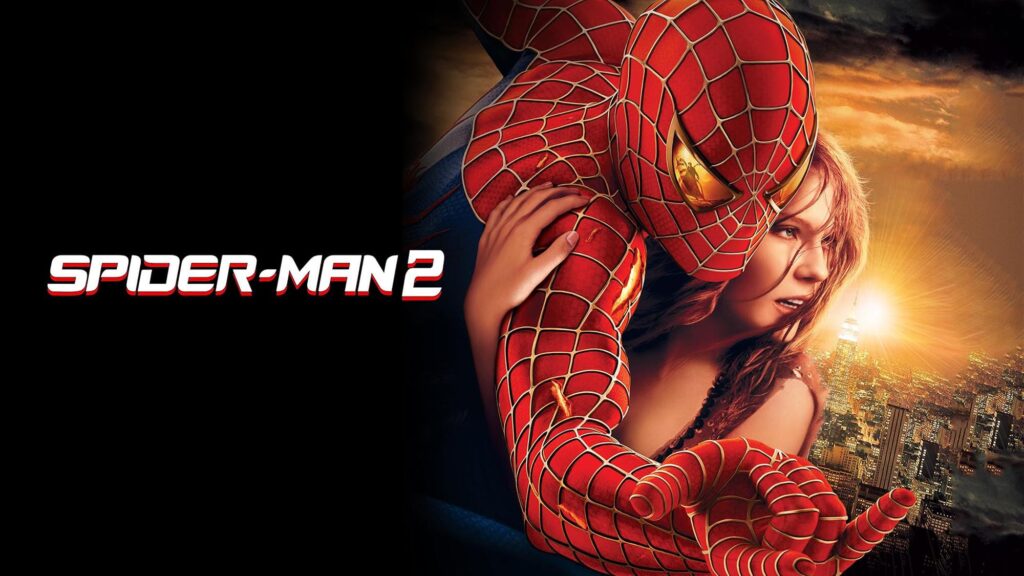
Spider-Man 2
Spider-Man 2 was shot mainly in New York, Los Angeles and Chicago, with studio work in Culver City. New York provides the film’s main identity.