
Francis Ford Coppola (born 7 April 1939) is an American film director, screenwriter, producer and businessman best known for The Godfather (1972), The Conversation (1974), The Godfather Part II (1974), Apocalypse Now (1979), The Outsiders (1983), Rumble Fish (1983), The Cotton Club (1984), Peggy Sue Got Married (1986), Bram Stoker’s Dracula (1992) and Megalopolis (2024). Born in Detroit, Michigan, and raised in New York, he studied theatre and filmmaking before establishing American Zoetrope in San Francisco. His career has taken him to filming locations across the United States, Europe, Asia and South America, while his business interests have included vineyards in California, restaurants in San Francisco and hotels in Italy, Belize, Guatemala, Argentina and Georgia. A five-time Academy Award winner, Coppola became one of the leading figures of the New Hollywood movement during the 1970s and has remained associated with independent filmmaking for more than six decades.
Francis Ford Coppola was born at Henry Ford Hospital in Detroit, the second of three children of Carmine Coppola and Italia Pennino. His father was a flautist, composer and orchestral musician who was working in Detroit at the time, while his mother came from a family with strong connections to Italian music and entertainment. His paternal grandparents had emigrated from Bernalda, a small town in the Basilicata region of southern Italy, and his maternal grandfather, Francesco Pennino, was a composer originally from Naples. The family’s musical background would remain important throughout Coppola’s life, with Carmine eventually composing music for several of his son’s films. When Francis was approximately two years old, his father joined the NBC Symphony Orchestra under conductor Arturo Toscanini, and the family moved to New York. They settled in Woodside, Queens, where Coppola spent much of his childhood alongside his older brother August and younger sister Talia, who later became an actress. The family’s circumstances changed frequently as Carmine pursued musical work, and Francis attended numerous schools before eventually completing his education on Long Island.
At the age of nine, Coppola contracted poliomyelitis, leaving him unable to walk for an extended period. Confined to bed and separated from many ordinary childhood activities, he developed an interest in puppetry, mechanical devices and storytelling. He constructed miniature theatrical performances and began experimenting with his father’s 8mm movie camera, using family members and household objects to create his earliest films. After recovering, he continued making amateur productions and became involved in school theatre. He attended New York Military Academy in Cornwall-on-Hudson for a period before graduating from Great Neck High School in 1956. The school, situated on the North Shore of Long Island, had an active theatre programme, and Coppola became increasingly interested in directing rather than performing. He subsequently enrolled at Hofstra College in Hempstead, where he studied theatre arts, wrote plays and established the Hofstra Cinema Workshop. Among the students he encountered was James Caan, who would later appear in several of his films. Coppola graduated in 1959 and moved to Los Angeles to study filmmaking at the University of California, Los Angeles. The relocation took him from New York’s theatre community to Southern California, where the American film industry was concentrated.
At UCLA, Coppola began making short films and working on screenplays while seeking employment in the industry. One of his early opportunities came through independent producer Roger Corman, who was known for making inexpensive films with small crews and short production schedules. Coppola worked on several Corman productions, including The Young Racers (1963), a motor-racing drama filmed in Europe. During the production’s time in Ireland, Corman gave him the opportunity to direct his first substantial feature, Dementia 13 (1963), using money and equipment remaining from the earlier film. The gothic horror story was filmed at Ardmore Studios in Bray, County Wicklow, and at Howth Castle, north of Dublin. The castle, overlooking the Howth peninsula, represented the fictional Halloran family estate. Principal photography began in September 1962, with Coppola directing a small crew under considerable financial constraints. The Irish production also changed his personal life. He met Eleanor Neil, a young American artist working as an assistant art director, and the couple married in 1963. They subsequently had three children, Gian-Carlo, Roman and Sofia. Eleanor became an important collaborator, documenting many of his productions and eventually establishing a filmmaking career of her own.
After returning to California, Coppola continued his studies while developing work for larger studios. He contributed to screenplays including This Property Is Condemned (1966) and Is Paris Burning? (1966), and his second major directorial feature, You’re a Big Boy Now (1966), was completed as part of his graduate work at UCLA. The film, a comedy about a young man attempting to establish his independence in Manhattan, was shot extensively in New York City. Locations included the New York Public Library and streets around Midtown and the East Side, with the city’s residential and cultural environments forming an important part of the story. The film was shown at the Cannes Film Festival in 1967 and helped Coppola establish a reputation beyond the low-budget productions associated with Corman. He subsequently directed Finian’s Rainbow (1968), a musical starring Fred Astaire and Petula Clark, which was produced largely at Warner Bros. Studios in Burbank, California. Although the story takes place in the fictional American community of Rainbow Valley, the elaborate exterior environments were constructed on studio property rather than photographed in an actual rural town.
Coppola approached his next film in a very different way. The Rain People (1969), starring Shirley Knight, James Caan and Robert Duvall, follows a pregnant woman who leaves her husband and begins an uncertain journey across the United States. Rather than remaining in California and constructing locations, Coppola organised a travelling production that moved through approximately eighteen states during 1968. The crew consisted of around ten principal members travelling in a small convoy of vehicles, with additional personnel hired locally. Filming began in New York and continued through communities in West Virginia, Tennessee, Nebraska and other parts of the country. Among the locations were Hofstra University, where Coppola had studied, the Skyline Drive-In near Clarksburg in West Virginia, and the former Front Street attraction in Ogallala, Nebraska. The unusual production gave Coppola considerable freedom to develop scenes in actual environments rather than following a rigid studio schedule. George Lucas, then an emerging filmmaker, worked on the production, beginning a friendship and professional association that would become important to both directors.
In 1969, Coppola established American Zoetrope in San Francisco, intending to create an independent production company outside the traditional Hollywood studio system. George Lucas became one of its earliest collaborators, and the company initially operated from modest facilities while experimenting with new filmmaking and editing technology. The choice of San Francisco reflected Coppola’s interest in building a creative community in Northern California, where filmmakers could develop their own projects without remaining dependent on Los Angeles studios. American Zoetrope would later support Lucas’s early feature THX 1138 (1971), while Coppola continued working as a screenwriter. His screenplay for Patton (1970), written with Edmund H. North, earned the Academy Award for Best Original Screenplay and considerably strengthened his professional standing. Despite that success, American Zoetrope experienced financial difficulties, and Coppola accepted an offer from Paramount Pictures to direct a film adaptation of Mario Puzo’s novel The Godfather.
Coppola was initially reluctant to direct The Godfather (1972), partly because of concerns about the novel’s commercial gangster material. He eventually became interested in presenting the story as a family drama rooted in the experiences of Italian immigrants in the United States. This approach influenced his decision to film extensively in New York rather than recreate the city on Hollywood backlots. Principal photography began in March 1971, using locations across Manhattan, Staten Island, Queens, Brooklyn and Long Island. The Corleone family house was represented by a property at 110 Longfellow Avenue in the Todt Hill neighbourhood of Staten Island, where the production also filmed the elaborate wedding sequence that opens the film. The surrounding houses and gardens were incorporated into the scene, with hundreds of local residents employed as extras. In Manhattan, the filmmakers used streets in Little Italy and the Lower East Side, including Mott Street, where a building at number 128 represented the Genco Olive Oil Company. The assassination attempt against Don Vito Corleone was filmed outside a building on Mott Street, while the interior of the fictional Louis Restaurant, where Michael Corleone kills two men, was represented by a restaurant at 3531 White Plains Road in the Bronx. The dramatic tollbooth murder of Sonny Corleone was staged on the former Mitchel Field airfield at Uniondale on Long Island, where the crew constructed temporary tollbooths and road infrastructure.
Coppola also travelled to Sicily to film Michael Corleone’s exile and marriage. The real town of Corleone had undergone considerable modern development, making it unsuitable for the period setting, so the production used Savoca and Forza d’Agrò, two hilltop villages in the province of Messina. Bar Vitelli, occupying part of Palazzo Trimarchi in Savoca, became the location where Michael meets the father of Apollonia, while their wedding was filmed at the Church of San Nicolò, also known as Santa Lucia, overlooking the surrounding countryside. The streets and churches of Forza d’Agrò represented other parts of the fictional Corleone village. Castello degli Schiavi, a historic estate near Fiumefreddo di Sicilia, provided the setting for Michael’s Sicilian residence and the car bombing that kills Apollonia. These locations were among the most personally meaningful for Coppola, whose family roots lay in southern Italy, although his own ancestors came from Basilicata rather than Sicily. The Godfather was released in March 1972 and won three Academy Awards, including Best Picture. Its success allowed Coppola greater independence and provided the financial resources to expand American Zoetrope.
That same year, Coppola purchased the Sentinel Building at 916 Kearny Street in San Francisco, establishing a permanent headquarters for his company. The wedge-shaped building stands at the intersection of Kearny Street and Columbus Avenue, on the boundary between North Beach, Chinatown and the Financial District. Construction had begun shortly before the 1906 San Francisco earthquake, and the steel-framed structure survived the disaster before being completed in 1907. It had previously housed offices, recording facilities and the original hungry i nightclub, an important venue in the city’s entertainment history. Coppola converted much of the building into offices and production facilities, and it became associated with the writing, editing and sound work on several of his subsequent films. He retained ownership of the property for decades, eventually opening Café Zoetrope on the ground floor in 1999. The Italian restaurant and wine bar, located at the triangular corner of the building, incorporated photographs and memorabilia from his films alongside wines from his California vineyards.
San Francisco itself provided the setting for The Conversation (1974), a psychological thriller starring Gene Hackman as surveillance specialist Harry Caul. Coppola wrote the screenplay before The Godfather but was only able to make the film after securing greater independence. The production used numerous actual San Francisco locations, most notably Union Square, where the opening surveillance sequence was filmed with hidden microphones and cameras recording two people walking among the crowds. The former City of Paris department store at 150 Stockton Street appeared in the sequence, while One Embarcadero Center represented the office building where Harry delivers his recordings. Other scenes were filmed around Sutter Street, Polk Street, Alta Plaza Park and St. Patrick’s Catholic Church on Mission Street. The film’s central hotel location was associated with the former Jack Tar Hotel at 1101 Van Ness Avenue, later demolished. Unlike the constructed environments of Finian’s Rainbow, The Conversation depended heavily on actual city streets and buildings. It won the Palme d’Or at the Cannes Film Festival in 1974, giving Coppola international recognition as a director of original material.
During the same period, he directed The Godfather Part II (1974), expanding the story across two generations and several countries. Principal photography began in October 1973 at Lake Tahoe, where the former Henry J. Kaiser estate at Fleur du Lac, near Homewood on the California side of the lake, represented Michael Corleone’s residence. The property included a substantial waterfront house, landscaped grounds and stone boathouses that were incorporated into the film. Other scenes returned to New York, while the sections depicting the young Vito Corleone’s life in Sicily used Forza d’Agrò and surrounding villages. The sequences set in Havana during the Cuban Revolution were filmed largely in Santo Domingo, Dominican Republic, because political conditions prevented the production from working in Cuba. Streets in the Dominican capital, including Calle Duarte, were adapted to represent Havana, while the El Embajador hotel supplied interiors and exterior locations. The film won six Academy Awards, including Best Picture and Best Director, making Coppola the first director to receive two Best Picture awards within three years.
The financial success of The Godfather films also allowed Coppola to pursue interests outside cinema. In 1975, he purchased the former residence of Finnish sea captain and wine producer Gustave Niebaum, together with approximately 100 acres of vineyards in Rutherford, Napa Valley. The property had originally formed part of the historic Inglenook estate, established in 1879, and included a Victorian mansion surrounded by vineyards. Coppola initially intended to maintain the property primarily as a family residence while developing a small wine business. He subsequently acquired additional land, including the original Inglenook château, and gradually reunited much of the historic vineyard. The estate became the family’s principal home in Northern California, providing a permanent base away from San Francisco and Los Angeles. His interest in winemaking reflected traditions inherited from his Italian family, whose members had produced wine for domestic consumption after emigrating to the United States.
Coppola’s next major film became one of the most difficult productions in his career. Apocalypse Now (1979), loosely inspired by Joseph Conrad’s Heart of Darkness, transferred the story to the Vietnam War. Rather than filming in Vietnam, where an American production would have been impractical, Coppola chose the Philippines, which offered tropical landscapes and access to military equipment. He arrived in Manila with his family in early 1976, and principal photography began that March. The production established several bases across Luzon, including Pagsanjan in Laguna province, Baler on the eastern coast of the island and Iba in Zambales. The Pagsanjan River and surrounding jungle were used for numerous sequences involving the journey towards Colonel Kurtz’s compound, while the beach and countryside around Baler provided the setting for the helicopter attack accompanied by Richard Wagner’s Ride of the Valkyries. The filmmakers obtained military helicopters and personnel through the Philippine government, although the aircraft sometimes had to be withdrawn for actual military operations.
Filming in the Philippines continued for considerably longer than originally planned. Typhoon Olga struck in May 1976, destroying numerous sets and forcing the production to suspend work while equipment and facilities were repaired. Harvey Keitel, initially cast as Captain Willard, was replaced by Martin Sheen, while Marlon Brando’s late arrival created further scheduling difficulties. In March 1977, Sheen suffered a heart attack during filming and required medical treatment, adding to the uncertainty surrounding the production. Coppola eventually completed principal photography in 1977, but editing and sound work continued for almost two years. His wife Eleanor recorded extensive footage and interviews during the production, later incorporated into Hearts of Darkness: A Filmmaker’s Apocalypse (1991), a documentary directed by Fax Bahr, George Hickenlooper and Eleanor Coppola. Apocalypse Now premiered at Cannes in May 1979, winning the Palme d’Or. Several later versions were released, including Apocalypse Now Redux (2001) and Apocalypse Now Final Cut (2019), both involving Coppola’s return to the original material.
After Apocalypse Now, Coppola attempted to establish a technologically advanced production centre in Hollywood. He acquired the former Hollywood General Studios complex in Los Angeles and renamed it Zoetrope Studios, intending to combine filmmaking, editing, music and electronic production facilities under one organisation. His first major project there was One from the Heart (1982), a romantic musical starring Frederic Forrest, Teri Garr and Raul Julia. Although the story takes place in Las Vegas, the film was shot entirely on the soundstages of Zoetrope Studios. Rather than travel to Nevada, Coppola and production designer Dean Tavoularis constructed elaborate replicas of the Las Vegas Strip, hotel interiors and part of McCarran International Airport. The sets incorporated neon signs, artificial streets and miniature buildings, allowing Coppola to control lighting and camera movement in ways that would have been difficult on actual city streets. The production became substantially more expensive than anticipated, and its commercial failure left Zoetrope Studios heavily indebted. Coppola eventually lost control of the Hollywood facilities, and the financial consequences affected much of his work during the following decade.
He returned to location filmmaking with two adaptations of novels by S. E. Hinton, both produced in Tulsa, Oklahoma, during 1982. The Outsiders (1983) originated partly from a letter sent by students at a school in Fresno, California, who encouraged Coppola to adapt Hinton’s novel. After travelling to Tulsa, where the author had grown up and set her books, he decided to film in the actual neighbourhoods associated with the stories. The modest wooden house at 731 North St. Louis Avenue represented the home of the Curtis brothers, played by Patrick Swayze, Rob Lowe and C. Thomas Howell. Other filming took place at the Admiral Twin Drive-In, Crutchfield Park, Circle Cinema and residential streets around northern Tulsa. The production used Lowell Elementary School as office space and incorporated numerous local buildings rather than reconstructing them in California. The house on North St. Louis Avenue later became The Outsiders House Museum, established through the efforts of musician Danny Boy O’Connor and local supporters. It remains one of the most recognisable surviving buildings associated with Coppola’s films.
Coppola remained in Tulsa to direct Rumble Fish (1983), another Hinton adaptation, working with several actors from The Outsiders, including Matt Dillon and Diane Lane. The film used Tulsa’s older commercial districts, industrial buildings and streets, particularly around downtown and the Arkansas River. Its stylised black-and-white cinematography contrasted with the more conventional visual approach of The Outsiders, although both productions drew on actual Oklahoma locations. The experience also reinforced Coppola’s relationship with Hinton, who collaborated with him on the screenplay. During this period, he directed The Cotton Club (1984), a large-scale musical crime drama set in Harlem during the 1920s and 1930s. The production was based at Kaufman Astoria Studios in Queens, where elaborate interiors representing the historic nightclub were constructed. The original Cotton Club had operated in Harlem before relocating to Midtown Manhattan, but the film’s principal performance sequences were recreated inside the Astoria studio complex, a former Paramount production facility dating from 1920.
By the mid-1980s, Coppola had become increasingly selective about large productions while continuing to accept studio assignments. Peggy Sue Got Married (1986), starring Kathleen Turner and Nicolas Cage, was filmed principally in Sonoma County, California, close to his Napa Valley home. The historic streets of Petaluma represented the fictional town where the story takes place, while Santa Rosa High School at 1235 Mendocino Avenue was used for the school reunion and other sequences. A house at 226 Liberty Street in Petaluma represented the family residence of Peggy Sue’s friend Carol, and several commercial buildings along Petaluma Boulevard appeared in the film. Additional interiors were built on a soundstage in Santa Rosa. The production involved Coppola’s family as well as his professional collaborators, with Nicolas Cage, his nephew, playing Charlie Bodell and Sofia Coppola appearing in a small role.
During the production of Gardens of Stone (1987), Coppola experienced a devastating personal tragedy. His eldest son, Gian-Carlo Coppola, died on 26 May 1986, aged 22, following a motorboat accident near Annapolis, Maryland. Gian-Carlo had worked on several of his father’s productions and was involved in the film industry himself. At the time of the accident, Coppola was directing Gardens of Stone in the Washington, D.C., area. The film, starring James Caan, James Earl Jones and Anjelica Huston, follows members of the United States Army’s ceremonial regiment during the Vietnam War. Filming took place at Fort Myer, Fort Belvoir and Arlington National Cemetery in Virginia, with substantial assistance from the American military. Hundreds of soldiers participated in scenes involving ceremonial duties and military funerals. Coppola later returned to the same chapel at Fort Myer where a memorial service for his son had been held to film one of the movie’s funeral sequences. The loss affected both him and Eleanor deeply, while their surviving children Roman and Sofia continued developing careers within the family business.
Coppola’s next project, Tucker: The Man and His Dream (1988), was particularly personal because of his longstanding interest in automobiles and engineering. The film tells the story of Preston Tucker, an American entrepreneur who attempted to establish an independent car manufacturer after the Second World War. George Lucas served as executive producer, and Jeff Bridges played Tucker. Although much of the story takes place in Detroit and Chicago, principal photography was concentrated in Northern California. The former Ford Motor Company Assembly Plant in Richmond, across San Francisco Bay from Marin County, represented the Chicago factory where Tucker developed his automobile. The historic plant, built during the 1930s, had produced Ford vehicles before becoming associated with wartime manufacturing. Other filming took place in Sonoma, Oakland, Petaluma, Novato and San Francisco. The Paramount Theatre at 2025 Broadway in Oakland was used for a public presentation of the Tucker automobile, while the Fox Oakland Theatre also appeared. Coppola incorporated actual surviving Tucker cars into the production, drawing on vehicles owned by collectors across the United States.
He returned to the Corleone family with The Godfather Part III (1990), completing the trilogy almost two decades after the original film. The production brought Coppola back to New York, Sicily and Rome, with several important scenes filmed in historic Italian buildings. The final opera sequence was photographed at the Teatro Massimo in Palermo, one of Europe’s largest opera houses, situated on Piazza Verdi. The building, completed in 1897, had been closed for restoration work during the period of filming, but the production obtained access to its auditorium, staircases and exterior. The climactic shooting on the theatre steps became one of the film’s most recognisable scenes. Other Palermo locations included Villa Malfitano Whitaker on Via Dante, while the towns of Forza d’Agrò and Savoca again represented parts of the fictional Corleone family history. In Rome, Palazzo Farnese at Caprarola, north of the capital, was used to represent interiors associated with the Vatican, while additional scenes were filmed around Castel Sant’Angelo and the surrounding streets. Sofia Coppola played Mary Corleone, Michael’s daughter, after Winona Ryder withdrew from the production. In 2020, Coppola released a revised version of the film under the title Mario Puzo’s The Godfather, Coda: The Death of Michael Corleone.
One of his most commercially successful later films was Bram Stoker’s Dracula (1992), starring Gary Oldman, Winona Ryder, Anthony Hopkins and Keanu Reeves. Although the story moves between Transylvania and Victorian London, the production was filmed largely in Southern California rather than Romania or England. The principal interiors were constructed at Sony Pictures Studios in Culver City, with additional filming at Universal Studios in Universal City. The studio backlot was used to recreate London streets, while Saint Sophia Greek Orthodox Cathedral at 1324 South Normandie Avenue in Los Angeles supplied an important interior location. Coppola deliberately favoured elaborate physical sets, theatrical lighting and traditional photographic effects over the digital techniques then becoming increasingly common in Hollywood. The film won three Academy Awards, including Best Costume Design and Best Makeup, and became a substantial box-office success. His subsequent films included Jack (1996), starring Robin Williams, which used locations in Ross, Mill Valley and San Francisco, and The Rainmaker (1997), adapted from John Grisham’s novel. The latter was filmed largely in Memphis, Tennessee, where actual courthouses, residential streets and commercial buildings supplied the settings for the legal drama.
Although his filmmaking activity slowed after The Rainmaker, Coppola continued developing American Zoetrope and his other businesses. His wine interests had expanded considerably since the original purchase in Rutherford, and in 1995 he completed the acquisition of the remaining historic Inglenook property. The estate’s château, constructed in 1887, became the centre of his winemaking operations, while the surrounding vineyards produced wines under the Niebaum-Coppola and later Rubicon Estate labels. He eventually restored the historic Inglenook name in 2011, after acquiring the rights to the brand. The winery and mansion remained closely connected with the Coppola family, whose members participated in the business alongside their film work. He also expanded into Sonoma County, purchasing the former Château Souverain winery near Geyserville in 2006 and developing it as the Francis Ford Coppola Winery. The property included restaurants, tasting facilities, swimming pools and exhibits of memorabilia from his films. Among the objects displayed were costumes and props from The Godfather and Dracula, as well as the desk used by Marlon Brando’s character in the original Godfather film.
Coppola’s interest in hospitality had begun much earlier, during the years following Apocalypse Now. In 1981, he visited Belize and discovered an abandoned lodge in the Mountain Pine Ridge Forest Reserve, in the Cayo District. He acquired the property and converted it into a private family retreat surrounded by pine forest, rivers and waterfalls. The lodge, named Blancaneaux, remained a private residence for several years before opening to paying guests in 1993. Its development involved the construction of guest accommodation, gardens and a small hydroelectric power system. The interiors incorporated furniture and decorative objects collected by Coppola and Eleanor during their travels, while the restaurant served food influenced by the family’s Italian background. He subsequently purchased Turtle Inn near Placencia on Belize’s Caribbean coast in 2001, rebuilding the property after it was damaged by Hurricane Iris. The resort opened in 2003 and became another family retreat, with several members of the Coppola family maintaining private accommodation nearby.
These properties eventually developed into The Family Coppola Hideaways, a collection of small hotels and retreats in several countries. In Guatemala, Coppola established La Lancha near Lake Petén Itzá, in the northern department of Petén, providing accommodation within reach of the ancient Maya city of Tikal. In Argentina, he acquired a residence in the Palermo neighbourhood of Buenos Aires that later became the Jardín Escondido boutique hotel. He also leased Coral Caye, a small private island off the coast of Placencia, and used it for family holidays before eventually offering the leasehold interest for sale. The businesses extended his personal connections beyond the United States and Italy, particularly to Central America, where he spent substantial periods working on hotel design and development.
His ancestral connection to Italy became more prominent in 2004, when he purchased Palazzo Margherita in Bernalda, a town in the province of Matera in Basilicata. Bernalda was the birthplace of his grandfather Agostino Coppola, who had emigrated to the United States in 1904. The town lies inland from the Ionian coast, southwest of Matera, and retains a historic centre with traditional houses, narrow streets and a sixteenth-century castle. Palazzo Margherita was built in 1892 by the Margherita family and occupies a large property near the centre of town. Coppola commissioned French designer Jacques Grange to help restore the building, converting it into a boutique hotel with rooms, gardens and a swimming pool. He also preserved parts of the original architecture and incorporated furniture reflecting the region’s traditions. In August 2011, his daughter Sofia married French musician Thomas Mars at the palazzo, with the civil ceremony conducted by the mayor of Bernalda. The hotel opened to the public in 2012, becoming both a commercial property and a permanent connection between the Coppola family and its southern Italian origins.
Coppola returned to feature directing after a ten-year absence with Youth Without Youth (2007), adapted from a novella by Romanian writer Mircea Eliade. The film was shot mainly in Romania, with locations including Bucharest, Brașov, Sinaia, Piatra Neamț and Constanța. The Bucharest North railway station was used for the sequence in which the principal character is struck by lightning, while the historic Stephen’s Tower in Piatra Neamț appeared in scenes depicting his return to the town. Other locations, including the former Constanța Casino on the Black Sea coast, were adapted to represent settings elsewhere in Europe. Coppola deliberately worked with a smaller crew than those associated with his major Hollywood productions, returning to an approach closer to his early films. Youth Without Youth was followed by Tetro (2009), a family drama starring Vincent Gallo, Alden Ehrenreich and Maribel Verdú. Filming took place primarily in Buenos Aires, with additional work in Patagonia and Spain. Buenos Aires locations included the historic neighbourhoods of San Telmo and La Boca, the Obelisk area and Bar Británico, a traditional café on the edge of Parque Lezama. Coppola spent considerable time in Argentina during production and subsequently developed his hotel interests there.
His next film, Twixt (2011), was an independently financed gothic horror story starring Val Kilmer, Bruce Dern and Elle Fanning. Coppola chose to film close to his home in Northern California, using locations around Napa and Lake counties. The production included scenes photographed at his own estate in Rutherford, together with locations in Clearlake, Kelseyville and Nice, communities surrounding Clear Lake. The film was partly inspired by a dream Coppola had experienced and incorporated imagery associated with Edgar Allan Poe and nineteenth-century American horror fiction. It represented another attempt to work outside the conventional Hollywood system, with Coppola experimenting with alternative presentation formats and audience interaction during early screenings.
Coppola also continued developing his interest in live cinema, a concept involving performances recorded and edited in real time for transmission to audiences. He experimented with the technology through workshops and productions at educational institutions, including Oklahoma City Community College and UCLA. The project, known as Distant Vision, explored the possibilities of combining theatrical performance with live television production, reflecting his longstanding interest in new filmmaking methods. Although it did not result in a conventional widely released feature, the experiments occupied a substantial part of his creative work during the 2010s.
His most ambitious late-career project was Megalopolis (2024), a science-fiction drama that he had been developing in various forms since the early 1980s. The film imagines a futuristic American city called New Rome and follows an architect attempting to transform its urban environment. Coppola financed the production himself, committing approximately $120 million and selling some of his business interests to support the project. Rather than filming in New York, which had inspired much of the fictional city’s architecture, he chose Georgia, where established studios and financial incentives offered greater flexibility. Principal photography began in November 2022 at Trilith Studios in Fayetteville, south of Atlanta, with additional location work in the Atlanta metropolitan area. The production used large sets, digital backgrounds and selected modern buildings to construct the fictional city, combining architectural references from ancient Rome with contemporary American skyscrapers.
During preparations for Megalopolis, Coppola purchased a former Days Inn motel in Peachtree City, approximately 50 kilometres southwest of downtown Atlanta. He acquired the property in 2022 for about $4.35 million and converted it into accommodation and production facilities for the cast and crew. The building contained editing suites, sound recording rooms, communal working areas and a small screening theatre, allowing post-production work to take place close to the principal filming facilities. Coppola spent extended periods living and working at the property while completing the film. Following production, he developed the building into the All-Movie Hotel, which opened to guests in July 2024. The hotel retained facilities intended for filmmakers, including the Dorothy Theatre and rooms designed for editing and sound work. Unlike his resort properties in Belize and Italy, the Peachtree City hotel was established specifically around the practical requirements of film production.
Megalopolis premiered in competition at the Cannes Film Festival in May 2024, more than half a century after Coppola first attended the festival with You’re a Big Boy Now. The film starred Adam Driver, Giancarlo Esposito, Nathalie Emmanuel, Aubrey Plaza and Jon Voight and received a mixed critical response. It was released in American cinemas in September 2024 but failed to recover its substantial production costs. Coppola nevertheless defended the project as an independently financed work that he had wanted to make for several decades. Its completion represented another example of his willingness to invest personal resources in filmmaking rather than rely entirely on studio financing.
The production was completed during a difficult period in Coppola’s personal life. His wife Eleanor died on 12 April 2024 at their home in Rutherford, California, aged 87. They had been married for more than sixty years, and their personal and professional lives had been closely connected since meeting during the production of Dementia 13 in Ireland. Eleanor had documented several of his most significant films, including Apocalypse Now, and later directed her own features, Paris Can Wait (2016) and Love Is Love Is Love (2020). She also participated in the development of their homes and hospitality properties, particularly the interiors of the Belizean resorts. Coppola remained based at the Inglenook estate following her death.
In April 2025, Coppola received the American Film Institute Life Achievement Award at a ceremony held at the Dolby Theatre in Hollywood. The honour recognised his work as a director, writer and producer, as well as his influence on generations of filmmakers. The event brought him back to Los Angeles, where he had studied at UCLA more than sixty years earlier and established his early professional career. He continued to maintain connections with American Zoetrope in San Francisco and his properties in Napa Valley, Italy and Central America, while remaining involved in the development of new film projects.
Although Coppola’s principal residence has long been the historic Inglenook estate in Rutherford, his working life has remained divided between several locations. The Sentinel Building in San Francisco continues to represent his independent production company, while Café Zoetrope and the company’s film archives preserve connections with the New Hollywood era. In Bernalda, Palazzo Margherita maintains the family’s connection to the Italian town from which his grandfather emigrated, and the All-Movie Hotel in Peachtree City provides a more recent example of his approach to combining accommodation with filmmaking facilities. These properties remain active parts of his business interests rather than simply former residences or places associated with individual productions.
Coppola’s career has been unusually closely connected with the actual places where his films were made. The Staten Island house used for The Godfather, Union Square in San Francisco, the former Kaiser estate at Lake Tahoe, the jungles of the Philippines, the streets of Tulsa and the historic buildings of Palermo are among the most recognisable surviving locations associated with his work. His later productions added the villages of Sonoma County, the industrial buildings of the San Francisco Bay Area, Romanian railway stations, Buenos Aires cafés and the studios of Georgia. Together with the places where he has lived and established businesses, they provide a geographical record extending from his childhood in Queens to a filmmaking career that has continued into his eighties.
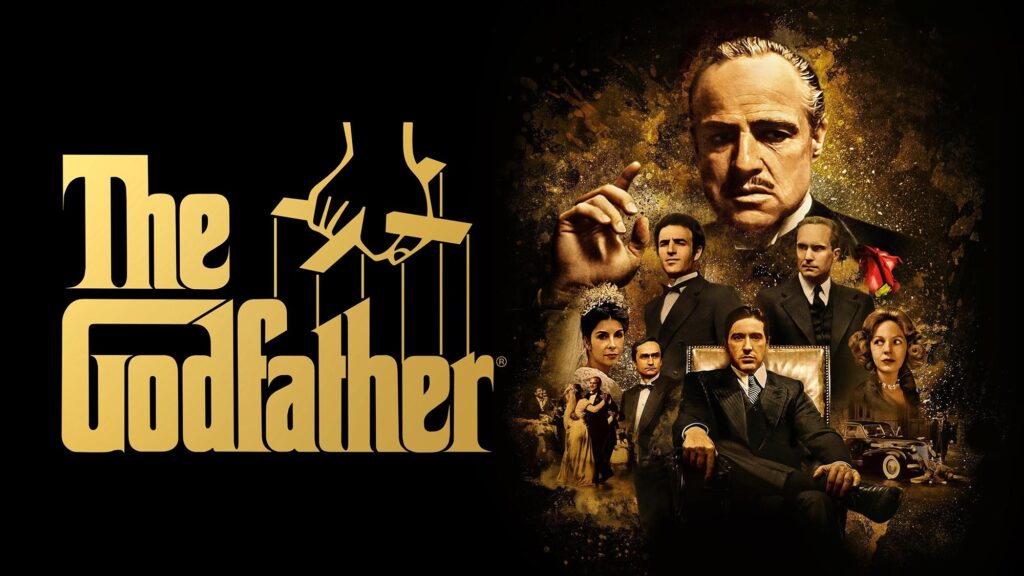
The Godfather
The Godfather was shot mainly in New York and Sicily, with additional work in California, and that combination is central to its atmosphere.