
Dudley Moore was an English actor, comedian, pianist and composer born Dudley Stuart John Moore on 19 April 1935 at Charing Cross Hospital in London, England. He grew up on a council estate in Dagenham, Essex, where his father, John Moore, worked as a railway electrician and his mother, Ada Francis Moore, was employed as a typist. He had an older sister, Barbara, and the family lived in modest circumstances. Moore was born with club feet, a condition that required repeated operations and lengthy periods in hospital during his childhood. Although treatment improved his mobility, his left leg remained shorter and weaker than his right, and he continued to experience difficulties with walking throughout his life. His height, which eventually reached approximately 157 centimetres, also made him a target for bullying at school. Moore later spoke about his embarrassment over his physical appearance and the emotional difficulties of growing up in an environment where he frequently felt different from other children. Music became an important refuge, providing opportunities for personal achievement that were otherwise difficult to find.
Moore began singing in a church choir at the age of six and demonstrated an exceptional aptitude for music. He took piano lessons and subsequently learned the organ, harpsichord and violin, developing an interest in both classical composition and jazz. At eleven, he received a scholarship to the Guildhall School of Music in London, where he attended lessons on Saturdays while continuing his ordinary education at Dagenham County High School. His music teacher, Peter Cork, recognised his abilities and encouraged him to pursue professional training. Cork became an important mentor, helping Moore develop the technical skills required for advanced musical study and maintaining a correspondence with him for decades. By fourteen, Moore was already playing the organ at church weddings, using specially adapted footwear to compensate for the difficulties caused by his left leg. Although he initially considered studying mathematics, music offered him the clearest route towards higher education. In 1954, he was awarded an organ scholarship to Magdalen College, Oxford, where he studied music under composer and conductor Bernard Rose. The scholarship allowed him to leave the working-class environment of Dagenham and enter one of Britain’s oldest universities.
During his four years at Oxford, Moore became involved in theatrical productions and student revues, discovering that his musical abilities could be combined with comedy. He participated in university performances alongside students including Alan Bennett, who would later become an important figure in British theatre and literature. Moore’s contributions frequently involved musical parody, particularly elaborate interpretations of familiar melodies in the styles of different classical composers. He also developed an enthusiasm for jazz, playing piano in small groups and experimenting with arrangements influenced by musicians such as Erroll Garner and Oscar Peterson. After graduating in 1958, he began working professionally as a musician, touring with the Vic Lewis Orchestra and subsequently joining the band led by John Dankworth. He also performed with singer Cleo Laine and established his own jazz trio, which became an important part of his professional identity. Alongside these engagements, Moore composed music for theatre productions, including John Arden’s Serjeant Musgrave’s Dance and N. F. Simpson’s One Way Pendulum at the Royal Court Theatre in London. His work during this period placed him at the intersection of British theatre, jazz and the developing alternative comedy scene.
Moore’s breakthrough came in 1960 when he was invited to join Peter Cook, Jonathan Miller and Alan Bennett in Beyond the Fringe, a satirical revue presented at the Edinburgh International Festival. The production opened at the Royal Lyceum Theatre on 22 August 1960 and challenged conventional British comedy through sketches concerning politics, religion, class and the institutions of contemporary society. Moore had initially been selected primarily for his musical abilities, but his comic performances became increasingly important as the revue developed. His contributions included elaborate musical parodies, in which he demonstrated both his technical knowledge of classical composition and his ability to use music for humour. Beyond the Fringe transferred to the Fortune Theatre in London’s West End in May 1961, where it attracted considerable critical attention and became associated with the emerging British satire movement. Its success subsequently brought the company to New York, where the production opened on Broadway at the John Golden Theatre in October 1962. Moore spent extended periods performing in Manhattan, gaining an American audience several years before beginning his Hollywood film career. The Broadway production received a Special Tony Award in 1963, recognising the contribution of the four performers.
After Beyond the Fringe, Moore continued working with Peter Cook, whose deadpan delivery and intellectual humour contrasted with Moore’s more expressive style of performance. The partnership developed into the BBC television series Not Only… But Also (1965–1970), originally conceived as a programme centred on Moore’s musical and comedic abilities. Cook appeared as a guest during its development, but their performances together proved sufficiently successful for him to become a regular collaborator. The series mixed comedy sketches, interviews, musical performances and surreal humour, with many sequences filmed around London as well as in BBC studios. Their best-known recurring characters were Pete and Dud, two working-class men who engaged in increasingly absurd conversations while sitting on benches or discussing ordinary events. The sketches drew partly on the speech patterns and attitudes familiar to Moore from his upbringing in Dagenham, combining everyday language with Cook’s elaborate verbal inventions. The performers developed much of their material through improvisation, recording conversations that could subsequently be edited into finished sketches. Moore and Cook received the BAFTA Television Award for Best Entertainment Performance in 1966. Many original episodes were later lost when the BBC erased or reused videotapes, although surviving recordings preserved some of their most familiar performances.
Their success on television brought opportunities in cinema, beginning with appearances in Bryan Forbes’s comedy The Wrong Box (1966), which featured an ensemble cast including Michael Caine, John Mills and Ralph Richardson. The following year, Moore and Cook collaborated on Bedazzled (1967), directed by Stanley Donen and loosely inspired by the legend of Faust. Moore played Stanley Moon, a shy London restaurant employee who agrees to exchange his soul for seven wishes after encountering the Devil, portrayed by Cook. The film also starred Eleanor Bron and Raquel Welch, with Moore composing and performing much of its music. Production took place around London and at studios in the surrounding region, using recognisable locations including Golborne Road in North Kensington, London Zoo in Regent’s Park and the Post Office Tower in Fitzrovia. Other scenes were filmed around Norfolk Crescent in Bayswater, the former Battersea Fun Fair in Battersea Park and the Great Conservatory at Syon Park in Brentford. The restaurant where Stanley works was represented by a property on Borehamwood High Street in Hertfordshire, close to the town’s film studios. Bedazzled became one of the defining films of Moore and Cook’s partnership, allowing them to adapt their verbal comedy to a visual format while incorporating Moore’s musical compositions.
Moore continued developing projects outside the partnership, including the romantic comedy 30 Is a Dangerous Age, Cynthia (1968), directed by Joseph McGrath. He played Rupert Street, a London jazz pianist and composer anxious about reaching his thirtieth birthday without achieving professional or personal fulfilment. Moore contributed to the screenplay and composed the music, performing alongside members of his own jazz trio. The film was set principally in London, with locations including Kensington Gardens, while its story also involved a visit to Dublin. His leading lady was British actress Suzy Kendall, whom Moore married in June 1968. The relationship developed during a period when his television and music careers required regular travel between Britain and the United States. He continued appearing in British productions, including The Bed Sitting Room (1969), directed by Richard Lester, and the international motor-racing comedy Monte Carlo or Bust! (1969). Meanwhile, his jazz trio remained active, recording albums including The Other Side of Dudley Moore (1965) and Genuine Dud (1966). His work with the trio gave him an independent musical career that continued alongside the increasing demands of acting and television.
Moore and Cook returned to the stage together during the early 1970s, developing a new revue from material associated with their earlier television work. Originally presented as Behind the Fridge, the production toured Australia before reaching New York under the title Good Evening. It opened at the Plymouth Theatre on West 45th Street in Manhattan on 14 November 1973 and subsequently transferred to the Lunt-Fontanne Theatre, continuing until November 1974. The production combined familiar sketches with new material and musical performances, earning Moore and Cook another Special Tony Award in 1974. Their professional relationship was becoming increasingly strained, however, particularly as Moore developed separate interests in film acting and Cook struggled with personal difficulties. During the middle of the decade, they created Derek and Clive, two deliberately offensive characters whose improvised conversations were released on recordings including Derek and Clive (Live) (1976), Derek and Clive Come Again (1977) and Derek and Clive Ad Nauseam (1978). The recordings represented a much more abrasive form of comedy than their earlier television work and contributed to growing tensions between them. Their final substantial film collaboration was The Hound of the Baskervilles (1978), directed by Paul Morrissey, in which Cook played Sherlock Holmes and Moore portrayed Dr Watson. The production was filmed at Bray Studios in Berkshire, with Oakley Court, a Victorian Gothic mansion overlooking the River Thames, representing the Baskerville residence.
By the middle of the 1970s, Moore had begun establishing a more permanent life in the United States. His marriage to Suzy Kendall ended in divorce in 1972, although they remained friends. In 1975, he married American actress Tuesday Weld and settled in Los Angeles, where she was already established in the film industry. Their son, Patrick, was born during the marriage, which ended in divorce in 1980. Moore continued performing and recording music while seeking film roles that would allow him to establish a career independent of his partnership with Cook. An important opportunity came with Foul Play (1978), a comedy thriller written and directed by Colin Higgins and starring Goldie Hawn and Chevy Chase. Moore played Stanley Tibbets, a peculiar and sexually adventurous bachelor whose encounters with Hawn’s character form part of the film’s increasingly complicated investigation. The production was filmed extensively around San Francisco, using locations in Telegraph Hill, North Beach, the Presidio and neighbouring communities. The city’s steep streets and residential neighbourhoods became important parts of the film, while additional scenes were photographed in Los Angeles. Moore received a Golden Globe nomination for Best Supporting Actor, and his performance attracted the attention of director Blake Edwards, who was preparing a new romantic comedy.
Edwards cast Moore in 10 (1979), a film that transformed his American career. He played George Webber, a successful middle-aged composer whose dissatisfaction with his personal life leads him to become obsessed with a young woman, portrayed by Bo Derek, whom he briefly encounters during her wedding. Julie Andrews played Samantha Taylor, George’s longstanding girlfriend, while Brian Dennehy and Robert Webber appeared in supporting roles. The production was filmed in Los Angeles and Mexico between November 1978 and March 1979, with Moore working extensively in the affluent residential neighbourhoods of Beverly Hills, Bel Air and Brentwood. George’s house was represented by a property on Ledo Way in Bel Air, while the wedding sequence was filmed at All Saints’ Episcopal Church on North Camden Drive in Beverly Hills. Other Los Angeles locations included the Pasadena Civic Auditorium, where the filmmakers staged a concert sequence. The Mexican portion of the film was shot at the Las Hadas resort near Manzanillo in Colima, whose distinctive white buildings, terraces and coastal setting became the location of George’s pursuit of the newly married woman. Scenes were also filmed at Playa La Audiencia, a nearby beach overlooking Manzanillo Bay.
Released in October 1979, 10 became a major commercial success and established Moore as a Hollywood leading man at the age of forty-four. Although Bo Derek attracted considerable publicity, the film was structured around Moore’s character and his attempts to reconcile romantic fantasies with the realities of an established relationship. His background as a musician was also incorporated into the role, with George portrayed as a composer whose professional success has failed to resolve his personal dissatisfaction. The film made prominent use of Maurice Ravel’s Boléro, which became closely associated with its most widely discussed sequence. Moore received a Golden Globe nomination for Best Actor in a Motion Picture – Musical or Comedy and began receiving offers for other American romantic comedies. His success was particularly notable because he had spent much of his earlier career feeling self-conscious about his appearance and had never expected to become a conventional romantic leading man. The production also established a professional relationship with Blake Edwards that continued through several subsequent films.
Moore’s greatest success in Hollywood came with Arthur (1981), written and directed by Steve Gordon. He played Arthur Bach, an extraordinarily wealthy New York bachelor whose dependence on alcohol and reluctance to accept adult responsibilities place him at odds with his family. John Gielgud portrayed Arthur’s butler and closest companion, Hobson, while Liza Minnelli played Linda Marolla, a working-class woman with whom Arthur falls in love. The film was shot extensively around New York City during 1980, making use of Manhattan’s luxury hotels, expensive residences, shops and public spaces. One of the most recognisable locations was the Oak Room at the Plaza Hotel on Fifth Avenue, where Arthur causes a disturbance during a dinner with a woman he has hired as an escort. Other scenes were filmed at Bergdorf Goodman, where Linda becomes involved in a shoplifting incident, and the historic Carnegie Mansion at 2 East 91st Street, which represented the residence of Arthur’s wealthy grandmother. The exterior of Arthur’s own residence was filmed on Fifth Avenue overlooking Central Park, while St Bartholomew’s Church on Park Avenue provided the location for the wedding ceremony from which he eventually withdraws.
The production also filmed on Long Island, where large estates represented the extraordinary wealth surrounding the Bach family, while the former Faber’s Sportland amusement arcade in Coney Island was used for scenes involving Arthur and Linda. Additional studio work took place at Kaufman Astoria Studios in Queens. Moore worked closely with Gielgud, whose performance as the dryly observant butler provided a contrast to Arthur’s impulsive behaviour and gave the central relationship much of its emotional weight. Arthur was released in July 1981 and became one of the year’s most commercially successful films. It received four Academy Award nominations, including Best Actor for Moore, Best Supporting Actor for Gielgud and Best Original Screenplay for Gordon. Gielgud won the supporting actor award, while the film also received an Oscar for the song “Arthur’s Theme (Best That You Can Do)”, performed by Christopher Cross. Moore won the Golden Globe Award for Best Actor in a Musical or Comedy, and the film established Arthur Bach as the character most closely associated with his American acting career.
The success of Arthur brought Moore considerable financial security and allowed him to pursue musical projects alongside his acting work. He continued performing as a pianist and appeared with established jazz musicians, including bassist Ray Brown. In 1982, he starred opposite Mary Tyler Moore and Katherine Healy in Six Weeks, a romantic drama about a politician who develops a friendship with a young girl suffering from a terminal illness. Moore also composed the film’s score, receiving a Golden Globe nomination for Best Original Score. His subsequent productions included Lovesick (1983), in which he played a psychiatrist who becomes romantically involved with a patient portrayed by Elizabeth McGovern, and Romantic Comedy (1983), opposite Mary Steenburgen. Neither achieved the commercial success of Arthur, but Moore continued receiving major studio offers. He also maintained an active interest in music outside cinema, participating in concert performances and television programmes that allowed him to demonstrate his skills as a classical and jazz pianist.
Moore returned to working with Blake Edwards in Micki & Maude (1984), a romantic comedy starring Amy Irving and Ann Reinking. He played Rob Salinger, a television reporter whose marriage becomes complicated when he begins a relationship with another woman and subsequently discovers that both women are pregnant. The production was filmed principally around Los Angeles, with location work beginning in April 1984. Scenes were shot at Holmby Park, the Beverly Hilton Hotel and coastal locations around Malibu, while additional interiors were constructed at Laird Studios and other production facilities in Culver City. The film became one of Moore’s better-received performances of the decade and earned him his second Golden Globe Award for Best Actor in a Musical or Comedy. During the same year, he appeared as a jealous orchestra conductor in Unfaithfully Yours (1984), a remake of Preston Sturges’s 1948 comedy, and starred opposite Eddie Murphy in the military comedy Best Defense (1984). These films demonstrated the range of projects available to Moore following Arthur, although his subsequent productions increasingly struggled to achieve the same commercial response.
He returned to Britain for Santa Claus: The Movie (1985), an expensive fantasy production directed by Jeannot Szwarc and starring David Huddleston as Father Christmas and John Lithgow as an unscrupulous businessman. Moore played Patch, an ambitious elf who becomes dissatisfied with his responsibilities in Santa’s workshop and travels to New York. Much of the production was filmed at Pinewood Studios in Buckinghamshire, where the enormous North Pole workshop was constructed on the Albert R. Broccoli 007 Stage. The elaborate interior sets accommodated hundreds of costumed performers, mechanical effects and specially designed equipment representing the manufacture of Christmas presents. Additional filming took place in Norway, while aerial footage of New York supplied backgrounds for sequences involving Santa’s journey through the city. Moore performed alongside several younger actors and participated in scenes requiring complicated practical effects rather than the comparatively straightforward domestic interiors associated with his earlier comedies. Santa Claus: The Movie received considerable publicity before its release in November 1985 but failed to achieve the commercial success expected by its producers.
During the later 1980s, Moore continued working in American comedy while gradually returning to more substantial musical activities. He starred opposite Kirk Cameron in Like Father Like Son (1987), a fantasy comedy about a successful surgeon and his teenage son who unexpectedly exchange bodies. The film was shot around Los Angeles and San Diego, with John Marshall High School in Los Feliz representing the son’s school and the Naval Medical Center in San Diego providing hospital interiors associated with Moore’s character. Other production work took place around the San Fernando Valley and the Mojave Desert. Moore subsequently reprised Arthur Bach in Arthur 2: On the Rocks (1988), directed by Bud Yorkin and again co-starring Liza Minnelli. The sequel continued the story of Arthur and Linda after their marriage, returning to the affluent Manhattan surroundings of the original film. Although it did not match the popularity of its predecessor, Moore remained closely identified with the character. In March 1988, he also appeared as Ko-Ko in Jonathan Miller’s production of Gilbert and Sullivan’s The Mikado in Los Angeles, bringing his interest in comic opera and theatrical music back into his professional work.
Moore’s personal relationships continued to attract public attention during the 1980s. Following his divorce from Tuesday Weld, he began a relationship with actress and singer Susan Anton, whose height contrasted noticeably with his own and became a recurring subject in entertainment journalism. They remained together for several years before separating. In 1988, Moore married actress Brogan Lane, but their marriage ended in divorce in 1991. He subsequently married Nicole Rothschild in 1994, and their son, Nicholas, was born during the relationship. The couple divorced in 1998. His four marriages and other relationships formed a prominent part of his public image, although he continued to speak about the difficulty of establishing lasting personal relationships while balancing fame, work and his own insecurities. His professional and personal life remained centred principally on Los Angeles, where he had settled during the 1970s, but he maintained strong connections with Britain through music, friends and theatre.
His final period as a regular leading actor included Crazy People (1990), directed by Tony Bill, in which Moore played Emory Leeson, an advertising executive whose unusually candid slogans become successful after he enters a psychiatric hospital. The film co-starred Daryl Hannah and Paul Reiser and allowed Moore to work within a satirical comedy that differed from the romantic stories dominating much of his 1980s career. He subsequently starred in Blame It on the Bellboy (1992), a British-American comedy directed by Mark Herman and co-starring Bryan Brown, Richard Griffiths, Bronson Pinchot and Patsy Kensit. Set in Venice, Italy, the film follows three hotel guests whose similar names lead to a series of misunderstandings. Principal photography took place in Venice during 1991, with the Hotel Gabrielli on Riva degli Schiavoni providing the exterior of the central hotel. The production also used the island of Murano and other parts of the Venetian lagoon, while interior sets were recreated at Lee International Studios in Shepperton, Surrey. Filming in Venice required the crew to work around the city’s canals, narrow streets and restricted transport facilities, with prolonged rainfall disrupting part of the schedule.
Moore also returned to American television with Dudley (1993), a CBS sitcom in which he played a divorced New York nightclub pianist attempting to rebuild his personal and professional life. The series incorporated aspects of Moore’s actual musical background, but it was cancelled after a short run. He subsequently starred in Daddy’s Girls (1994), another short-lived American sitcom, and made occasional film appearances. His later screen work included The Disappearance of Kevin Johnson (1996), in which he appeared as himself, and voice performances in animated productions such as The Mighty Kong (1998). By the middle of the 1990s, however, he had begun experiencing health problems that affected his ability to perform. During preparations for Barbra Streisand’s The Mirror Has Two Faces (1996), he struggled to remember dialogue and was replaced in the production. At the time, the causes of his difficulties were not fully understood, and his increasingly erratic movements and speech prompted damaging speculation about alcohol use. His condition was subsequently identified as a progressive neurological illness rather than the consequences of drinking.
Although his film career was declining, Moore remained deeply involved in music. During the early 1990s, he worked with conductor Sir Georg Solti on Orchestra! (1991), a television series designed to introduce audiences to the instruments, organisation and repertoire of the symphony orchestra. He later collaborated with American conductor Michael Tilson Thomas on Concerto! (1993), another educational production examining the relationship between solo performers and orchestras. Moore presented the programmes as an experienced musician rather than simply as a television personality, frequently demonstrating musical passages at the piano. He also released the instrumental album Songs Without Words (1991) and continued making concert appearances in Britain and the United States. These activities reflected an aspect of his professional life that had sometimes been overshadowed by his success in Hollywood comedy. Moore was also involved with Music For All Seasons, an organisation established to bring live musical performances to people in hospitals, nursing homes, prisons and other institutions. His association with the organisation developed through his friendship with pianist Rena Fruchter and her husband, musician Brian Dallow.
By the late 1990s, Moore’s physical difficulties had become increasingly serious. He underwent heart bypass surgery in London in 1997 and experienced further medical problems involving his balance, speech and coordination. He was eventually diagnosed with progressive supranuclear palsy, a rare neurological disorder affecting movement, eye control, swallowing and other functions. Moore publicly acknowledged the diagnosis in 1999, explaining that the condition had been responsible for symptoms previously interpreted by some observers as drunkenness. The illness progressively affected his ability to walk, speak and play the piano, depriving him of activities that had been central to his identity since childhood. He became increasingly dependent on assistance and spent extended periods receiving medical treatment. Despite these difficulties, he continued supporting research into the condition, helping establish the Dudley Moore Research Fund for Progressive Supranuclear Palsy in association with Music For All Seasons. His willingness to discuss the illness publicly brought greater attention to a disorder that was unfamiliar to most people outside specialist medical communities.
In April 2001, a benefit concert was held at Carnegie Hall in New York City to support research into progressive supranuclear palsy and celebrate Moore’s career. The event brought together musicians and entertainers associated with different periods of his professional life, reflecting his achievements in classical music, jazz, comedy and cinema. By then, Moore was living primarily in New Jersey with the assistance of Rena Fruchter and Brian Dallow, whose home provided a more stable environment as his condition progressed. He had become increasingly unable to participate in ordinary public activities but continued listening to music and maintaining contact with friends and former colleagues. That year, he was appointed a Commander of the Order of the British Empire for his contributions to entertainment. On 16 November 2001, he travelled to Buckingham Palace in London, where Charles, Prince of Wales, presented him with the honour. Moore attended the ceremony in a wheelchair, arriving in a 1954 Rolls-Royce Silver Wraith similar to the vehicle used in Arthur. His illness had severely affected his mobility and speech, but the visit allowed him to return to Britain for one of the final public appearances of his life.
Dudley Moore died on 27 March 2002 at a residence in Plainfield, New Jersey, aged sixty-six. The immediate cause of death was pneumonia associated with complications from progressive supranuclear palsy. He was surrounded by friends and caregivers, including Rena Fruchter, who had helped care for him during his final years. Moore was survived by his two sons, Patrick and Nicholas, and his older sister, Barbara. His death attracted tributes from colleagues across the entertainment industry, particularly those who remembered his musical abilities alongside his work as a comedian and actor. Peter Cook had died in London in January 1995, bringing an end to a partnership that had begun at the Edinburgh Festival more than three decades earlier. Moore was buried on 2 April 2002 at Hillside Cemetery in Scotch Plains, New Jersey, during a private ceremony attended by approximately thirty family members and close friends. A small ensemble of musicians performed at the graveside, and mourners placed flowers beside the grave, including an arrangement designed to resemble a piano keyboard.
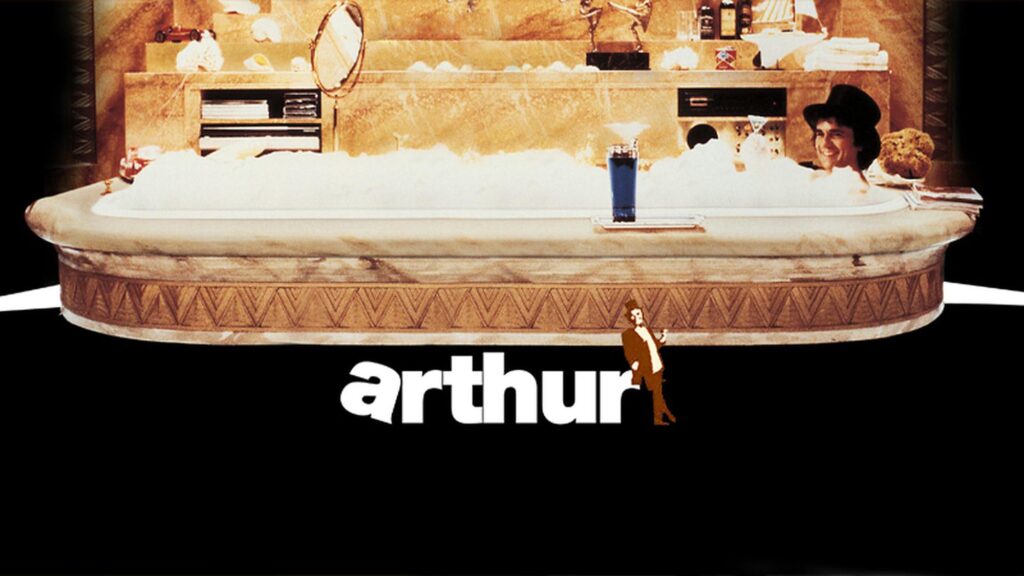
Arthur
Arthur is strongly tied to New York City, especially the world of upper-class Manhattan. The Plaza Hotel and its Oak Room are central to Arthur’s life.