
Crispin Glover (born 20 April 1964) is an American actor, filmmaker, author, musician and publisher known for Back to the Future (1985), River’s Edge (1986), Rubin and Ed (1991), What’s Eating Gilbert Grape (1993), Dead Man (1995), Charlie’s Angels (2000), Willard (2003), Alice in Wonderland (2010) and the television series American Gods (2017–2021). Born in New York City and raised in Los Angeles, he became widely recognised for portraying eccentric and unconventional characters while developing a separate career in experimental filmmaking. His work has taken him to locations across North America and Europe, particularly California, Utah, British Columbia, Belgium and the Czech Republic. Outside Hollywood, he operates the independent production company Volcanic Eruptions and owns a historic château in Konárovice, east of Prague, which he has restored and converted partly into a film production complex.
Crispin Hellion Glover was born in New York City, the only child of actors Bruce Glover and Marion Elizabeth Lillian Krachey, professionally known as Betty Glover. His father had established a career in American film and television, later becoming particularly recognisable for playing the assassin Mr Wint in the James Bond film Diamonds Are Forever (1971) and the private detective’s associate Duffy in Chinatown (1974). His mother had worked as an actress and dancer before largely retiring from performing following her son’s birth. The family moved to Los Angeles when Crispin was still a young child, settling in the city where his father continued pursuing acting work. Glover’s ancestry includes English, Swedish, German and Czech roots, the latter becoming particularly relevant to his later decision to establish a residence and film studio in Central Europe. His unusual first name was inspired by the Saint Crispin’s Day speech in William Shakespeare’s Henry V, while Hellion is his actual middle name rather than a professional invention.
Growing up in Los Angeles gave Glover access to an entertainment industry in which both his parents had professional experience, although his education initially followed a relatively conventional path. He attended the Mirman School, a private institution for academically gifted children situated in the hills above the city near Mulholland Drive. He remained there from first through ninth grade before transferring to Venice High School, where he completed the tenth and eleventh grades. For his final year, he moved to Beverly Hills High School, graduating in 1982. The different schools exposed him to contrasting parts of Los Angeles, from the residential neighbourhoods around Venice to the wealthier environment of Beverly Hills. He has spoken positively about his education at Mirman, particularly the opportunity to study alongside other children with unusual interests and abilities. By his teenage years, he had also developed an enthusiasm for acting, music and the visual arts.
Glover’s first professional acting appearance came in 1978, when he played Friedrich von Trapp in a stage production of The Sound of Music at the Dorothy Chandler Pavilion in downtown Los Angeles. Florence Henderson, already well known for her role in The Brady Bunch, played Maria. The theatre, which opened in 1964 as part of the Los Angeles Music Center, provided an unusually prestigious setting for his stage debut. He subsequently began appearing in television commercials and programmes including Happy Days, Hill Street Blues, The Facts of Life and Family Ties. His early screen work also included the television pilot Best of Times (1981), in which he appeared alongside Nicolas Cage, and the feature film My Tutor (1983). These productions were concentrated within the Los Angeles television and film industry, allowing him to work professionally while still completing his education. He continued accepting small parts in films such as Racing with the Moon (1984) and Teachers (1984), gradually developing a reputation for performances that differed from the conventional teenage roles offered to many young actors.
His first substantial appearance in a widely released horror film came with Friday the 13th: The Final Chapter (1984), in which he played Jimmy Mortimer, one of a group of teenagers spending a weekend near the fictional Crystal Lake. Despite the story’s East Coast setting, the production was filmed entirely in California. The principal Jarvis family residence was represented by a house at 1801 North Topanga Canyon Boulevard in Topanga, while the neighbouring holiday house occupied by Jimmy and his friends was constructed nearby for the production. Additional filming took place at Franklin Canyon Reservoir in the Santa Monica Mountains and Zaca Lake near Santa Maria, approximately 250 kilometres northwest of Los Angeles. Glover’s character is particularly remembered for an improvised dance sequence, in which his unusual movements became a distinctive moment in the film. Although the role was relatively small, the production brought him into a successful horror franchise and gave him experience working with a larger professional crew.
Glover achieved international recognition when Robert Zemeckis cast him as George McFly in Back to the Future (1985), opposite Michael J. Fox, Christopher Lloyd and Lea Thompson. The film follows teenager Marty McFly, who travels from 1985 to 1955 and encounters his parents before they have fallen in love. Glover played George at different stages of his life, requiring substantial makeup and changes in physical mannerisms. Principal photography took place in Southern California, with Universal Studios in Universal City providing the fictional town square of Hill Valley. The production also used numerous actual residential neighbourhoods, schools and historic properties around Los Angeles County. George and Lorraine’s teenage lives were associated with Whittier High School at 12417 Philadelphia Street in Whittier, which represented Hill Valley High School, while George’s family home was filmed at 1711 Bushnell Avenue in South Pasadena. The neighbouring house at 1727 Bushnell Avenue represented Lorraine’s childhood residence.
One of Glover’s most important scenes in Back to the Future was filmed in the gymnasium of Hollywood United Methodist Church at 6817 Franklin Avenue in Hollywood. The building was transformed into the venue for the Enchantment Under the Sea dance, where George finally confronts Biff Tannen and wins Lorraine’s affection. The sequence required Glover to perform both the character’s awkward physical behaviour and the decisive action that changes his future. Other parts of the film used the Universal Studios backlot, while the McFly family’s 1985 residence was represented by a house on Roslyndale Avenue in Arleta. Back to the Future became the highest-grossing film of 1985 and established Glover as a recognisable Hollywood performer at the age of twenty-one. However, he did not return for Back to the Future Part II (1989) or Back to the Future Part III (1990). A disagreement over his proposed involvement in the sequels led to the role being played by another actor, Jeffrey Weissman, who wore prosthetic makeup designed to resemble Glover. When the second film was released, Glover objected to the use of his likeness without permission and filed a lawsuit against the producers in Los Angeles in 1990. The dispute was eventually settled out of court and became an important precedent in discussions about performers’ rights over the reproduction of their physical appearance.
Rather than pursuing another conventional Hollywood comedy immediately after Back to the Future, Glover accepted the role of Layne in River’s Edge (1986), a disturbing independent drama directed by Tim Hunter. The film concerns a group of teenagers who discover that one of their friends has murdered his girlfriend. Glover’s character reacts to the crime with an increasingly desperate attempt to protect the murderer, creating one of the film’s most unsettling performances. The production was originally planned for locations around Sacramento and the American River in Northern California, but flooding forced the filmmakers to relocate much of the work to the Los Angeles area. Principal photography took place between January and March 1986, particularly in Sunland and Tujunga, residential communities in the foothills of the San Gabriel Mountains. Their older houses, commercial streets and proximity to undeveloped mountain terrain provided an appropriate setting for the fictional Northern California town.
Among the locations used for River’s Edge were Verdugo Hills High School at 10625 Plainview Avenue in Tujunga and a residential property at 9933 Redmont Avenue, which represented the home of two of the teenage characters. A house at 10224 Tujunga Canyon Road was used for the residence of Feck, the troubled older man played by Dennis Hopper, although the building has since been demolished. The production also photographed river scenes around Carmichael, near Sacramento, including the William B. Pond Recreation Area beside the American River. Glover’s performance was considerably more extreme than his work in Back to the Future, and director Hunter later recalled that his unusual audition had initially concerned the producers. River’s Edge received strong reviews following its release and became an important American independent film of the decade, helping establish Glover’s reputation as an actor willing to take on uncomfortable and unpredictable characters.
The same period saw Glover develop creative interests outside conventional film acting. In 1987, he made a widely discussed appearance on Late Night with David Letterman in New York, arriving with long hair, platform shoes and unusual clothing before behaving in a manner that appeared deliberately theatrical. During the interview, he challenged Letterman to an arm-wrestling contest and performed a high kick close to the host’s face, prompting an early commercial break. Glover has subsequently discussed the appearance in connection with performance and character development rather than treating it simply as an ordinary publicity interview. His appearance and behaviour closely resembled the character Rubin Farr, whom he would later play in Rubin and Ed. Around the same time, he released the album The Big Problem ≠ The Solution. The Solution = Let It Be (1989), produced by the experimental musical duo Barnes & Barnes. The recording combined songs, spoken passages and material adapted from books that Glover had begun creating through his publishing company, Volcanic Eruptions. His publications included Rat Catching (1988) and Oak Mot (1989), constructed partly from altered older books, illustrations and fragments of text. These projects established an independent creative activity that he continued financing through his acting work.
Rubin and Ed (1991), written and directed by Trent Harris, became one of the films most closely associated with Glover’s experimental approach to performance. He played Rubin Farr, an eccentric young man who persuades a businessman portrayed by Howard Hesseman to accompany him into the Utah desert to bury a dead cat. The production was filmed entirely in Utah during the autumn of 1990, using locations around Salt Lake City and the desert regions of Wayne and Emery counties. The journey through the desert was photographed around Hanksville, Factory Butte and Goblin Valley State Park. Factory Butte, an isolated geological formation west of Hanksville, rises above eroded grey badlands and has been used by numerous filmmakers because of its unusual appearance. Goblin Valley, farther north, contains thousands of rounded sandstone formations that provided a distinctive environment for the characters’ journey. The film had its local premiere at the Tower Theatre in Salt Lake City in June 1991, marking an important occasion for Harris, who had worked extensively in Utah before beginning his feature career.
During the early 1990s, Glover continued alternating between relatively small independent productions and appearances in larger films. He portrayed Andy Warhol in Oliver Stone’s The Doors (1991), which recreated events associated with the American rock group during the 1960s. The production was filmed extensively in Los Angeles, including locations around Hollywood and the Sunset Strip, where the real Doors had performed during their early career. Glover also appeared in David Lynch’s Wild at Heart (1990), Gus Van Sant’s Even Cowgirls Get the Blues (1993) and Lasse Hallström’s What’s Eating Gilbert Grape (1993). The latter starred Johnny Depp and Leonardo DiCaprio and was filmed largely in the small Texas town of Manor, east of Austin, with additional locations in the surrounding countryside. Glover played Bobby McBurney, a local undertaker and friend of Depp’s character, in a supporting role that combined his familiar eccentricity with a more restrained performance.
His involvement in independent American cinema continued with Jim Jarmusch’s Dead Man (1995), a black-and-white Western starring Johnny Depp as an accountant travelling into the American frontier. Glover made a brief appearance as a passenger aboard the train carrying Depp’s character westwards. The film was photographed across several American states, including Arizona, Oregon, Washington and California, using locations around Cave Creek, Grants Pass and the Columbia River Gorge. Its outdoor photography incorporated actual desert, mountain and forest environments rather than relying primarily on established Western film ranches. Although Glover’s role was small, the project associated him with a director whose unconventional approach to storytelling was closely aligned with the independent films he admired. He continued accepting supporting parts in productions such as The People vs. Larry Flynt (1996), Nurse Betty (2000) and other films that allowed him to maintain his Hollywood career while developing his own projects.
Glover returned to a major commercial production with Charlie’s Angels (2000), directed by McG and starring Cameron Diaz, Drew Barrymore and Lucy Liu. He played the Thin Man, a mysterious and almost entirely silent assassin whose elaborate fighting movements became one of the film’s most distinctive elements. The production was filmed primarily in Los Angeles County, making use of numerous recognisable properties and industrial locations. Among them were the Los Angeles Theatre at 615 South Broadway, the Huntington Library and Botanical Gardens in San Marino, and the former Marineland of the Pacific property on the Palos Verdes Peninsula. The film also used the Chemosphere House in the Hollywood Hills, designed by architect John Lautner, as the architectural reference for a fictional villain’s residence. The house itself stands at 7776 Torreyson Drive, while a replica was constructed for parts of the production. Glover returned as the Thin Man in Charlie’s Angels: Full Throttle (2003), giving him one of his few recurring major studio roles.
In between the two Charlie’s Angels films, he appeared in Bartleby (2001), a modern adaptation of Herman Melville’s short story, playing the title character opposite David Paymer. The film relocated the story to a contemporary office environment, using a stylised setting that contrasted with the nineteenth-century New York of the original work. He then accepted the leading role in Willard (2003), directed by Glen Morgan and based on the novel Ratman’s Notebooks, which had previously inspired the 1971 horror film of the same name. Glover played Willard Stiles, a socially isolated man who develops an unusual relationship with rats living inside his family home. Although the story takes place in an unnamed American community, the production was based primarily in Vancouver, British Columbia. Much of the interior filming took place at North Shore Studios, formerly Lions Gate Studios, at 555 Brooksbank Avenue in North Vancouver, where elaborate sets represented the deteriorating Stiles residence and the offices of his employer.
Willard required the training and coordination of hundreds of live rats, including specially selected animals used to portray the principal rats, Socrates and Ben. Their movements were combined with practical effects, animatronics and digital techniques, allowing Glover to perform scenes involving unusually large numbers of animals. The film also gave him an opportunity to return to music, recording a version of Ben, the song originally performed by Michael Jackson for the 1972 sequel to the first Willard film. Glover directed a music video accompanying his recording, incorporating his character and one of the trained rats. Although Willard was not a major commercial success, the leading role became one of his most recognisable performances of the 2000s and further established his association with unconventional horror films.
By this time, Glover had already begun developing his own feature films through Volcanic Eruptions. His first completed directorial feature, What Is It? (2005), originated as a short project before expanding into an experimental film developed over approximately nine years. The production was financed largely through money earned from his acting work and featured a cast consisting predominantly of performers with Down syndrome. Glover deliberately avoided the conventions of commercial narrative cinema, incorporating disturbing imagery, surreal situations and material intended to provoke questions about how audiences respond to fictional representations of taboo subjects. The film premiered at the Sundance Film Festival in Utah in 2005, but Glover decided against conventional theatrical distribution. Instead, he began accompanying screenings personally, presenting a live performance known as Crispin Hellion Glover’s Big Slide Show before the film and participating in extended discussions with audiences afterwards.
The Big Slide Show involves Glover delivering dramatic readings from his books while their illustrated pages are projected onto a screen. His programmes have been presented at independent cinemas and film festivals across the United States and internationally, sometimes extending to several hours when the screening, performance, discussion and book signing are combined. The format allows him to retain direct control over the presentation and interpretation of his work, while selling copies of his books through Volcanic Eruptions. He has deliberately limited the availability of his films through conventional home-video and streaming platforms, preferring screenings that include his personal participation. This approach has required extensive travel between cinemas, festivals and cultural institutions, making the exhibition of his films almost as significant a part of his working life as their production.
His second directorial feature, It Is Fine! Everything Is Fine. (2007), was developed with artist and filmmaker David Brothers and written by Steven C. Stewart, an American performer and writer with severe cerebral palsy. Stewart had developed the screenplay over many years and played the central character himself. The cast also included German actress Margit Carstensen, whose career had been closely associated with filmmaker Rainer Werner Fassbinder. Glover again financed the production independently, using a combination of practical sets and carefully controlled filming environments. It Is Fine! Everything Is Fine. premiered at the Sundance Film Festival in Park City, Utah, in January 2007 and subsequently became part of his touring programme. Both films formed part of a proposed trilogy examining different aspects of identity, perception and social conventions, although Glover continued developing other projects before completing the planned third instalment.
His independent filmmaking ambitions led to one of the most unusual property acquisitions by a Hollywood actor. During the early 2000s, Glover began looking for a location where he could build permanent film sets without the considerable expense of renting studio facilities in California. He initially considered purchasing a farm in upstate New York, but eventually became interested in historic properties in the Czech Republic. Around 2003, he acquired Zámek Konárovice, a seventeenth-century château in the village of Konárovice, approximately 60 kilometres east of Prague, near the historic town of Kolín. The property had previously belonged to European aristocratic families, including Count Jan Harrach, a nineteenth-century patron of the arts associated with the development of Czech opera. Its interiors contained historic decorative paintings, some dating from the eighteenth century, which had been concealed beneath later paintwork.
The château had undergone considerable changes during the twentieth century, including use by a medical organisation during the Communist period. By the time Glover purchased it, much of its original furniture had disappeared, and significant restoration was required. He began repairing the building and gradually acquired neighbouring properties, including former horse stables that he converted into production facilities. By 2017, the estate extended over approximately twenty acres and contained seventeen bedrooms, with around 18,000 square feet of dedicated studio and set-building space in two converted outbuildings. Glover worked closely with local craftsmen to restore historic wall paintings, install bathrooms and furnish the rooms with antiques purchased both in the Czech Republic and abroad. He also restored the formal gardens and introduced peacocks, which became a distinctive feature of the property. The estate was featured extensively in Architectural Digest in June 2017, when Glover explained that the acquisition was intended primarily to support his filmmaking rather than function as a conventional holiday residence.
Zámek Konárovice has become an important part of Glover’s professional and personal life. He has used the property to accommodate cast and crew members during production, while its former stable buildings provide permanent space for elaborate sets that can remain standing for extended periods. The arrangements allow him to develop films at a pace that would be financially difficult within conventional American studios. His connection with the Czech Republic is also personal because of his family’s Czech ancestry. Although Glover has maintained a principal residence in the Silver Lake neighbourhood of Los Angeles, where he has lived for many years, he spends extended periods in Konárovice working on productions and maintaining the historic estate. His ownership provides a direct geographical link between his family background, residential life and independent filmmaking.
While developing the Czech property, Glover continued appearing in major studio films. In Beowulf (2007), directed by Robert Zemeckis, he portrayed the monstrous Grendel in a computer-animated adaptation of the Old English epic. The production used performance-capture technology, with actors recording movements and facial expressions inside controlled studio environments rather than filming in the Scandinavian landscapes represented in the story. Glover subsequently reunited with director Tim Burton for Alice in Wonderland (2010), playing Stayne, the Knave of Hearts, opposite Johnny Depp, Helena Bonham Carter and Mia Wasikowska. Although the film used historic English locations for its opening and closing sequences, much of the fantasy material involving Glover was created through visual effects work in California. He performed wearing green clothing and stilts, with the photographed image of his head subsequently combined with a computer-generated body. The project brought him back into a large international production while allowing him to work with filmmakers he had known for many years.
Another important production during this period took him to Canada. In Hot Tub Time Machine (2010), directed by Steve Pink, Glover played Phil, a hotel employee whose recurring accidents become an increasingly elaborate joke throughout the film. The comedy was shot primarily in British Columbia, where Fernie Alpine Resort in the Rocky Mountains represented the fictional Kodiak Valley Ski Resort. The ski area, situated at 5339 Fernie Ski Hill Road near the town of Fernie, provided the principal mountain setting, while interiors were filmed at Vancouver Film Studios. Additional outdoor photography took place around Big Bear Lake in Southern California. The film used the Canadian mountain resort to recreate an American skiing holiday in the 1980s, connecting Glover’s character to the actual hotel and resort environment where much of the story takes place.
His subsequent work included smaller productions such as Simon Says (2006), The Bag Man (2014) and the thriller Lucky Day (2019), directed by Roger Avary. In the latter, Glover played Luc, a French contract killer pursuing a recently released criminal portrayed by Luke Bracey. The production reunited him with a filmmaker who had been involved in American independent cinema since the early 1990s. Although Glover continued accepting conventional acting assignments, the development of his own films and his touring programme occupied a substantial part of his professional schedule. He also maintained an interest in European cinema, regularly travelling between the United States and the Czech Republic while working with technicians and craftspeople at his studio.
One of his most prominent television roles came with American Gods (2017–2021), the fantasy series adapted from Neil Gaiman’s novel. Glover played Mr World, a mysterious figure associated with the modern gods of technology, media and globalisation. Although the story follows characters travelling across the United States, the series was filmed primarily in Ontario, Canada. Toronto supplied the principal studio facilities, while surrounding communities including Guelph, Cambridge and Port Perry represented various American towns. Glover’s character frequently appeared within controlled studio environments, allowing the production to incorporate extensive visual effects. In one sequence at Easter’s house, represented by Eaton Hall in King Township north of Toronto, Glover’s appearance was photographed separately on a soundstage because he was unavailable during the original location filming. The footage was subsequently incorporated into the scene through visual effects. His role continued across the programme’s three seasons, making it one of his longest-running television commitments.
He returned to horror television with Guillermo del Toro’s Cabinet of Curiosities (2022), appearing as the artist Richard Upton Pickman in an adaptation of H. P. Lovecraft’s short story Pickman’s Model. The episode, directed by Keith Thomas and co-starring Ben Barnes, was filmed in Ontario, principally in Toronto and Hamilton. Its fictional nineteenth-century New England setting was created through a combination of historic Canadian buildings, studio interiors and carefully designed artwork. Glover’s character produces increasingly disturbing paintings that appear to reveal supernatural events, a role that connected with his own longstanding interest in illustration and the visual arts. Del Toro and Thomas selected him specifically for the part, drawing on the qualities he had established in films such as River’s Edge and Willard.
A major later leading role took Glover to Belgium for Mr. K (2024), a surreal mystery film written and directed by Norwegian-Dutch filmmaker Tallulah Hazekamp Schwab. He played a travelling magician who checks into an enormous hotel and discovers that he cannot find a way out. The production was an international collaboration involving companies from the Netherlands, Belgium and Norway, with much of the filming taking place in specially constructed environments rather than inside an operating hotel. The principal sets were built at Villywood, a studio facility in Vilvoorde, north of Brussels. The production occupied two separate studio spaces, allowing the art department to construct one version of the hotel while another was being photographed. This arrangement was particularly important because the fictional building changes physically throughout the story, with walls, corridors and rooms appearing to shift around its inhabitants.
Although most of Mr. K was filmed on constructed sets, the production incorporated several actual Belgian buildings. The hotel kitchen was represented by rooms in the Loodswezen building in Antwerp, a nineteenth-century property associated with the city’s maritime administration near the River Scheldt. The reception area was filmed at the Aegidium, a historic entertainment and assembly hall in the Saint-Gilles district of Brussels. These buildings provided architectural environments that could be integrated into the fictional hotel without requiring the filmmakers to construct every interior. Mr. K premiered at the Toronto International Film Festival in September 2024 and subsequently screened at festivals including Sitges, Tallinn Black Nights and the Imagine Fantastic Film Festival in the Netherlands. It also appeared at the Kosmorama International Film Festival in Trondheim, Norway, in March 2025. The production became one of Glover’s most substantial leading roles in many years and provided another opportunity to work within the European film industry.
His most significant recent independent project was No! YOU’RE WRONG. or: Spooky Action at a Distance (2025), which he wrote, directed, produced and edited. The film also starred his father, Bruce Glover, with the two actors portraying members of the fictional Muldoon family across different generations. Glover began developing the screenplay in 2007, eventually beginning production in 2013. Much of the filming took place at the Konárovice château and its converted studio buildings, where the production constructed elaborate period interiors. The film was shot primarily on 35mm, with certain sequences photographed using a hand-cranked camera formerly associated with Czech filmmaker Karel Zeman. Additional filming continued intermittently for several years, with principal photography eventually concluding in 2018.
The Konárovice production represented the practical realisation of Glover’s ambition to operate an independent film studio on his own property. Rather than hiring different soundstages for each period or setting, he could construct substantial environments within the former stables and retain them between filming sessions. The arrangement was particularly useful for a production developed over many years, as sets and equipment could remain in place while he worked on other acting assignments. No! YOU’RE WRONG. or: Spooky Action at a Distance received its New York premiere in October 2025, followed by screenings at the IFC Center on Sixth Avenue in Manhattan. As with his earlier directorial features, Glover accompanied the presentation with his Big Slide Show, audience discussions and book signings. The film also marked the first occasion on which he and his father shared substantial scenes together, despite both having worked professionally in American cinema for decades.
Glover has continued dividing his time between Los Angeles, Konárovice and appearances at cinemas and festivals internationally. His independent films remain closely associated with his live presentations, while his acting career has continued to provide opportunities in both mainstream and smaller productions. The Czech château has become particularly important because it functions simultaneously as a residence, historic restoration project and working production facility. Its eighteenth-century wall paintings, former agricultural buildings and extensive grounds exist alongside permanent film sets and modern production equipment, making it an unusual example of a historic European estate adapted for contemporary independent filmmaking.
More than four decades after his professional stage debut at the Dorothy Chandler Pavilion, Crispin Glover remains closely associated with both Hollywood and experimental cinema. His career has involved the familiar studios and suburban streets of Los Angeles, the river communities of Northern California, the deserts of Utah, Canadian production centres and numerous European locations. The former Mirman School, Hollywood United Methodist Church, the desert landscapes of Goblin Valley, the studios of Vilvoorde and the château at Konárovice are among the places most directly connected with his development as an actor and filmmaker. Unlike many performers whose involvement in a production ends when filming is completed, Glover has established permanent places where his own films can be developed and produced, while continuing to bring the finished works directly to audiences through his international screening tours.
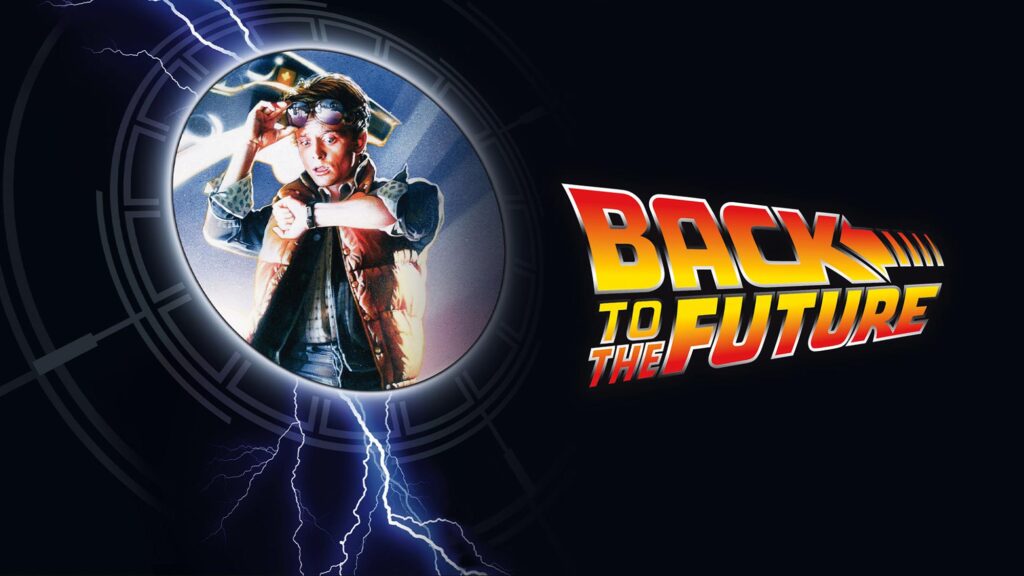
Back to the Future
Back to the Future was shot mainly in California, using a mix Los Angeles-area locations and Universal Studios backlot sets to create the fictional Hill Valley.