
Burt Reynolds (11 February 1936 – 6 September 2018) was an American actor, director and producer who became one of Hollywood’s most commercially successful stars during the 1970s and early 1980s. Born Burton Leon Reynolds Jr. in Lansing, Michigan, he was the son of Burton Milo Reynolds and Harriet Fernette Miller. His father served in the United States Army during the Second World War, and the family lived in several places before settling in Riviera Beach, Florida, in 1946. The elder Reynolds subsequently became the city’s chief of police, while his son grew up in a community where football, fishing and outdoor activities occupied much of his time. Reynolds attended Palm Beach High School in West Palm Beach, developing into an accomplished American football player with ambitions of reaching the professional league. He later described his father as a strict and intimidating figure whose approval he struggled to obtain, a relationship that remained complicated well into adulthood. His athletic achievements offered a possible route to a career away from the family home, and in 1954 he accepted a football scholarship to Florida State University in Tallahassee.
At Florida State, Reynolds played as a halfback and roomed with fellow football player Lee Corso, who later became a prominent college football coach and television commentator. His sporting ambitions ended after a knee injury and a serious car accident during the mid-1950s prevented him from returning to competitive football at his previous level. He subsequently moved back to Palm Beach County and enrolled at Palm Beach Junior College in Lake Worth, now part of Palm Beach State College. There, English professor Watson B. Duncan III encouraged him to audition for a production of Sutton Vane’s play Outward Bound. Reynolds had little theatrical experience but accepted the challenge and was cast as Tom Prior, a troubled alcoholic. His performance won the 1956 Florida State Drama Award, which included a scholarship to the Hyde Park Playhouse, a summer theatre in New York State. Duncan became one of the most important figures in Reynolds’s early life, introducing him to a profession he had never seriously considered. Reynolds later maintained that the teacher had changed the direction of his life at a time when he had lost confidence in his future.
The scholarship took Reynolds north to New York, where he began gaining experience in summer stock theatre and touring productions. He appeared in Tea and Sympathy and made his professional stage debut in a 1956 production of Mister Roberts, starring Charlton Heston. During this period, he met actress Joanne Woodward, who encouraged him and helped him find an agent. Reynolds eventually moved to Manhattan, supporting himself through a succession of temporary jobs while attending auditions and seeking further theatrical work. His early experiences included employment as a dock worker and nightclub bouncer, alongside occasional television appearances. He subsequently moved to California as opportunities in television production increased, signing a contract with Universal Studios before being released without having established himself as a leading performer. His first feature-film appearance came in Angel Baby (1961), a drama about religious revivalism in the American South, filmed in Coral Gables, Florida. He also appeared in the television adventure series Riverboat (1959–1961), playing Ben Frazer opposite Darren McGavin. Although Reynolds was still working primarily in supporting roles, these productions provided regular professional employment after several uncertain years.
A more substantial television opportunity followed when Reynolds joined the cast of the Western series Gunsmoke (1955–1975) in 1962. He played Quint Asper, a blacksmith of mixed Native American and white ancestry who becomes a resident of Dodge City, Kansas. Reynolds remained with the programme until 1965, appearing alongside James Arness and other established members of the cast. Gunsmoke was filmed principally in Southern California, with studio facilities and Western town sets standing in for nineteenth-century Kansas. The role made Reynolds familiar to American television audiences and led to further opportunities, including the Western Navajo Joe (1966), directed by Sergio Corbucci. Produced in Europe, the film was shot in Spain and Italy, with locations including the Tabernas Desert in Almería and the Guadix region of Granada. Reynolds subsequently returned to American television as a Native American police detective in Hawk (1966), set in New York City, and later portrayed a California police lieutenant in Dan August (1970–1971). During these years, he was married to British actress Judy Carne, whom he wed in 1963 and divorced in 1965. He also began developing the humorous public personality that would become central to his popularity, regularly appearing on television talk shows and demonstrating a willingness to joke about himself and his profession.
His breakthrough as a major film actor came with John Boorman’s Deliverance (1972), adapted from James Dickey’s novel about four Atlanta businessmen whose canoeing journey through the Appalachian wilderness becomes a struggle for survival. Reynolds played Lewis Medlock, an experienced outdoorsman whose confidence is challenged by the dangers confronting the group. Filming took place during the summer of 1971 along the Chattooga River, which forms part of the boundary between Georgia and South Carolina, and in the surrounding mountains of north-eastern Georgia. The production established its principal base around Clayton in Rabun County, while additional scenes were filmed at Tallulah Gorge and locations in North Carolina. Reynolds worked closely with Jon Voight, Ned Beatty and Ronny Cox during the demanding river sequences, many of which were performed without extensive stunt doubling. During a particularly dangerous scene, Reynolds insisted on being carried over rapids rather than relying entirely on a stuntman, suffering an injury when he struck rocks in the water. The experience reinforced his reputation for taking physical risks during filming. Deliverance became a major commercial and critical success, establishing Reynolds as a leading man in American cinema and creating a lasting connection between his career and film production in Georgia.
Shortly before Deliverance was released, Reynolds became the subject of one of the most widely discussed magazine photographs of the decade. Helen Gurley Brown, editor of Cosmopolitan, invited him to pose for a nude centrefold, photographed by Francesco Scavullo. The resulting image, showing Reynolds reclining on a bearskin rug, appeared in the magazine’s April 1972 issue. The photograph attracted considerable publicity and made him an international sex symbol, but Reynolds later expressed regret about the decision, believing that the attention had overshadowed his performance in Deliverance and affected the way critics regarded him. During the early 1970s, he also developed a relationship with television presenter and singer Dinah Shore, who was significantly older than him. Their relationship attracted attention because of the age difference, although they remained close for several years. Reynolds’s growing celebrity coincided with a period in which he increasingly selected film projects that combined action, comedy and characters associated with the American South.
His next major production, White Lightning (1973), introduced Bobby “Gator” McKlusky, a former criminal who becomes involved in an investigation into corruption and moonshine trafficking. The film was directed by Joseph Sargent and shot principally in Arkansas, including Little Rock and surrounding communities. Reynolds performed several demanding driving sequences, beginning a professional relationship with stunt coordinator Hal Needham, who became one of his closest friends and most important collaborators. He returned to the character in Gator (1976), which marked his feature-film directing debut. Although the sequel continued the story of a character associated with the rural American South, it was filmed in Georgia rather than Arkansas. The project also allowed Reynolds to exercise greater control over a production, supervising both the performances and the action sequences. He subsequently directed several other films, including the dark comedy The End (1978) and the crime thriller Sharky’s Machine (1981), while continuing to work principally as an actor.
Georgia also provided the principal location for The Longest Yard (1974), directed by Robert Aldrich. Reynolds played Paul Crewe, a disgraced former professional football player sent to prison after a confrontation with the police. His character organises a team of inmates to play against the prison guards, allowing Reynolds to draw on his own sporting experience at Florida State University. Filming took place at Georgia State Prison in Reidsville during the autumn of 1973, with the cooperation of prison authorities and the state government. The football sequences were staged on the prison grounds, using actors, former professional athletes and inmates. Reynolds participated in the physically demanding scenes, and contemporary news footage recorded him discussing the authenticity of the football action during filming. Additional sequences were shot in Savannah and Brunswick, including a car chase on the Sidney Lanier Bridge. The Longest Yard became another major commercial success, and Reynolds received a Golden Globe nomination for Best Actor in a Motion Picture Musical or Comedy. The film was particularly meaningful to him because it allowed him to portray a fictional version of the professional athlete he had once hoped to become.
Reynolds reached the height of his commercial popularity with Smokey and the Bandit (1977), a comedy-action film directed by Needham and starring Sally Field, Jerry Reed and Jackie Gleason. Reynolds played Bo Darville, known as the Bandit, a driver hired to transport a truckload of beer from Texarkana to Atlanta while distracting pursuing police officers. Although the story follows a journey through several Southern states, principal photography took place largely in Georgia during the autumn of 1976. Jonesboro, McDonough, Fayetteville and other communities south of Atlanta supplied many of the roads and town centres used for the driving sequences. The opening and concluding scenes were filmed at the former Lakewood Fairgrounds in Atlanta, while other important locations included Highway 54 and roads around Clayton and Henry counties. Reynolds performed alongside Field in numerous scenes inside the Pontiac Trans Am associated with the Bandit, although Needham and his stunt team handled many of the most dangerous driving sequences. Smokey and the Bandit became one of the highest-grossing films of 1977, establishing Reynolds as one of the most bankable stars in Hollywood.
The production also brought Reynolds into a relationship with Sally Field, who had established herself through television and was beginning to pursue more substantial dramatic film work. Their relationship continued intermittently for several years, and they appeared together again in The End (1978), Hooper (1978) and Smokey and the Bandit II (1980). Reynolds later described Field as one of the most important women in his life and expressed regret that their relationship had ended. Their professional collaboration also reinforced his association with Needham, whose background as a stunt performer influenced the action films they made together. In Hooper, Reynolds played an ageing stuntman struggling with the physical consequences of his profession, a subject both men understood from their own experiences. Reynolds’s willingness to work in commercially accessible entertainment sometimes obscured his dramatic range, but during the same period he starred opposite Jill Clayburgh and Candice Bergen in Alan J. Pakula’s romantic comedy Starting Over (1979). Filmed in Boston and New York City, it gave him a more restrained role as a recently divorced man attempting to rebuild his personal life and earned another Golden Globe nomination.
By this time, Reynolds had begun establishing a permanent professional base in Palm Beach County, returning to the Florida region where he had grown up. During the 1970s, he acquired a large ranch in the Jupiter area, eventually expanding the property into a substantial private estate with residences, stables and facilities for horses and other animals. The Burt Reynolds Ranch became a gathering place for friends and professional collaborators, and its grounds were also used for film production. Several sequences in Smokey and the Bandit II (1980) were filmed around Jupiter, including a vehicle stunt involving a bridge jump, while the ranch provided additional facilities for the production. Reynolds’s growing financial success allowed him to divide his time between Hollywood and Florida, rather than relying exclusively on residences in Los Angeles. His attachment to the area extended beyond his own home, and he became increasingly involved in establishing local theatrical and educational institutions.
One of his most substantial projects outside film acting was the Burt Reynolds Dinner Theatre in Jupiter, which began construction in May 1978 and opened in January 1979. The theatre was developed at a cost of approximately $2 million and provided a professional performance venue in a community that had relatively few comparable cultural institutions. Its first production was Jack Heifner’s Vanities, starring Sally Field, Tyne Daly and Gail Strickland. Reynolds used his Hollywood connections to attract established performers, including Carol Burnett, Julie Harris, Martin Sheen, Eartha Kitt, Charles Nelson Reilly and Dom DeLuise. The 440-seat theatre also housed the Burt Reynolds Institute for Theatre Training, which offered acting classes and practical experience to young performers. Reynolds appeared in productions himself, directed several plays and encouraged film and television professionals to teach at the institute. He operated the theatre until 1989, after which it continued under different management before closing in 1996. The building was eventually renovated and reopened in February 2004 as the Maltz Jupiter Theatre, preserving an important part of the cultural infrastructure Reynolds had established in the town.
Reynolds continued working on major commercial films during the early 1980s. He starred in Needham’s The Cannonball Run (1981), an ensemble comedy inspired by an illegal cross-country road race, alongside Roger Moore, Farrah Fawcett, Dom DeLuise, Dean Martin and Sammy Davis Jr. Much of the production was filmed in Georgia, including at the former Old English Inn in Decatur, which represented the starting point of the fictional race. The same year, Reynolds directed and starred in Sharky’s Machine, portraying an Atlanta police officer investigating a murder and prostitution network. Filmed extensively in downtown Atlanta, the production used several prominent buildings, including the Westin Peachtree Plaza Hotel, the Hyatt Regency Atlanta and the former Atlanta-Fulton County Stadium. A particularly elaborate stunt involved Dar Robinson performing a fall from the Hyatt Regency, doubling for a sequence associated with the Peachtree Plaza. Reynolds also appeared opposite Dolly Parton in the musical comedy The Best Little Whorehouse in Texas (1982). That production returned him to the American South, with filming at actual Texas locations including Austin, Pflugerville, Hallettsville and Texas A&M University’s Kyle Field in College Station. Its commercial success continued the run of films that had made Reynolds one of the dominant figures at the American box office.
His professional activities increasingly extended into business and sport. In 1983, Reynolds became involved in the ownership of the Tampa Bay Bandits, a professional American football team competing in the newly established United States Football League. The team was closely associated with Needham, and its name drew on the popularity of the Bandit character from Smokey and the Bandit. The venture allowed Reynolds to maintain a connection with the sport that had originally brought him to Florida State University. He also invested in restaurants, including the Po Folks chain, and opened Burt and Jack’s in Fort Lauderdale in 1984 with business partner Leon “Jack” Jackson. Located in a distinctive Spanish-style building near Port Everglades, the restaurant became another venture through which Reynolds attempted to build a business outside the entertainment industry. Some of these investments proved financially unsuccessful, and the restaurant business later contributed significantly to his financial difficulties.
A serious injury during production of City Heat (1984), in which Reynolds starred opposite Clint Eastwood, had consequences extending well beyond the film. While performing a fight scene, he was struck in the face with a chair, damaging his jaw and developing temporomandibular joint problems that caused severe pain. He struggled to eat normally and lost a substantial amount of weight, subsequently becoming dependent on prescription medication. Rumours circulated that he was suffering from AIDS, which was then widely associated with unexplained weight loss, and Reynolds later recalled that these rumours affected his ability to obtain work. His box-office standing also declined as several films, including Stroker Ace (1983), Stick (1985) and Rent-a-Cop (1987), failed to match his earlier commercial successes. Stick, which Reynolds directed and starred in, was based on Elmore Leonard’s novel and filmed partly in Miami, Fort Lauderdale and the Florida Everglades. The production allowed him to work again in South Florida, but disagreements with the studio over editing contributed to another difficult professional experience.
Reynolds’s personal life underwent further changes during the same period. In 1988, he married actress Loni Anderson, widely known for her role in the television comedy WKRP in Cincinnati. Their wedding took place on 29 April in a chapel on Reynolds’s ranch in Jupiter, attended by approximately sixty guests, including Dom DeLuise, Jerry Reed, Ann-Margret and Jim Nabors. The couple adopted a son, Quinton, and initially divided their time between Florida and California. Their relationship subsequently deteriorated, and Reynolds filed for divorce in June 1993 in Martin County, Florida. The separation became highly publicised, with both parties making accusations about their relationship and financial circumstances. The divorce was finalised in 1994, followed by disputes concerning property, support payments and arrangements for their son. Reynolds later acknowledged mistakes in his handling of the marriage, while Anderson described the difficulties she had experienced during their years together. The couple eventually established a more cordial relationship, particularly concerning Quinton, who became Reynolds’s only child.
Despite his declining film career, Reynolds achieved renewed success on television. In B.L. Stryker (1989–1990), he played a former New Orleans police officer working as a private investigator in Florida. The series was filmed extensively in Palm Beach County, including Jupiter and West Palm Beach, allowing Reynolds to work close to his home. He subsequently starred as Woodrow “Wood” Newton, a former professional football player who becomes a high-school coach, in the CBS comedy Evening Shade (1990–1994). The series was created by Linda Bloodworth-Thomason and set in a real Arkansas town, with Marilu Henner playing Newton’s wife and an ensemble cast including Charles Durning, Michael Jeter and Ossie Davis. Although much of the production was undertaken in Los Angeles, the programme used establishing footage filmed in Evening Shade, Arkansas, and other locations around the state. The Wilson-Mehaffy House on Louisiana Street in Little Rock represented the family’s home in exterior shots. Reynolds won the Primetime Emmy Award for Outstanding Lead Actor in a Comedy Series in 1991 and the Golden Globe Award for Best Actor in a Television Series Musical or Comedy in 1992. Evening Shade provided him with a stable professional commitment at a time when his film opportunities were less consistent.
The end of Evening Shade in 1994 coincided with growing financial problems. Reynolds had invested heavily in businesses, property and theatrical ventures, while the breakdown of his marriage brought additional legal expenses. His involvement in the Po Folks restaurant chain proved particularly costly, and the theatre in Jupiter had also required substantial financial support over the years. In December 1996, he filed for Chapter 11 bankruptcy protection in Florida, declaring debts exceeding $10 million. The proceedings attracted considerable publicity because Reynolds had previously been among the highest-paid stars in the film industry. He retained a willingness to work, however, and continued accepting film and television roles, including a supporting part as Congressman David Dilbeck in Striptease (1996), starring Demi Moore. Adapted from Carl Hiaasen’s novel, the film was set in Miami and filmed around South Florida, including Hollywood, Fort Lauderdale, Key Biscayne and the agricultural communities of western Palm Beach County. Reynolds’s portrayal of an eccentric and corrupt politician attracted positive attention despite the film’s poor critical reception.
A more substantial professional revival came when Paul Thomas Anderson cast Reynolds as Jack Horner in Boogie Nights (1997), a drama examining the adult-film industry in California’s San Fernando Valley during the 1970s and 1980s. Horner is an established producer and director who becomes a mentor to a young performer portrayed by Mark Wahlberg. Filming took place during the summer and autumn of 1996 across Southern California, with a house on East Cameron Avenue in Covina representing Horner’s residence. The property’s swimming pool, garden and interior rooms were used for numerous scenes involving Reynolds, Wahlberg, Julianne Moore and other members of the ensemble. Additional production locations included Van Nuys, Reseda and Encino, reflecting the film’s connection with the San Fernando Valley. Reynolds initially had reservations about the screenplay and subsequently clashed with Anderson during filming, but his performance became one of the most acclaimed of his career. He won the Golden Globe Award for Best Supporting Actor and received his only Academy Award nomination, in the same category, at the 1998 ceremony. The recognition brought renewed interest in his acting abilities, although he remained reluctant to repeat the experience and declined to appear in Anderson’s subsequent film Magnolia (1999).
Following Boogie Nights, Reynolds continued working steadily, although generally in smaller roles. He appeared in films including Mystery, Alaska (1999), The Crew (2000) and Driven (2001), while also taking occasional television parts and voice roles. In 2005, he returned to the story of The Longest Yard in Peter Segal’s remake, playing Nate Scarborough, an older prison inmate and former football player who helps the central character, portrayed by Adam Sandler, organise a team. The production was filmed principally in New Mexico rather than at the Georgia prison used for the original film. That same year, Reynolds portrayed corrupt county commissioner Jefferson Davis “Boss” Hogg in The Dukes of Hazzard (2005), another adaptation of a television property closely associated with Southern car chases. Although these projects drew on his earlier screen image, he also appeared in independent productions and continued supporting film education in Florida. He established the Burt Reynolds Institute for Film and Theatre, which provided workshops and training for aspiring actors and filmmakers in the Jupiter and Tequesta area. His collection of film memorabilia, including costumes, photographs, awards and vehicles, formed the basis of the Burt Reynolds and Friends Museum in Jupiter, which operated at various locations over the years.
His health became an increasingly important consideration during his later life. Reynolds underwent back surgery in 2009 and quintuple coronary artery bypass surgery in 2010. He nevertheless continued appearing at film festivals, conventions and public events, often discussing his career and the decisions he regretted. In 2015, he published But Enough About Me, a memoir written with Jon Winokur, reflecting on his childhood, sporting ambitions, personal relationships and experiences in Hollywood. The book provided a more personal account of his professional successes and financial difficulties, while acknowledging that his tendency to make impulsive decisions had contributed to some of the problems he encountered. His relationship with Florida remained strong, and he continued living in the Hobe Sound area, north of Jupiter, after selling or losing several of the properties he had owned during the height of his career.
One of his most significant final performances came in The Last Movie Star (2018), written and directed by Adam Rifkin. Reynolds played Vic Edwards, an ageing Hollywood actor who travels to a small film festival expecting a prestigious honour but discovers that the event is far more modest than he anticipated. The character was conceived with Reynolds in mind, and the story incorporated references to his own career, including archive material from Deliverance and Smokey and the Bandit. Principal photography took place in Knoxville, Tennessee, during 2016, with Reynolds working alongside Ariel Winter and Chevy Chase. Filming locations included Market Square, the Oliver Royale restaurant, the Tennessee Theatre, Neyland Stadium at the University of Tennessee and the former Long Branch Saloon on Cumberland Avenue. Reynolds was filmed walking through several of these locations, while the production used the city’s buildings to represent both the fictional festival setting and places from the character’s past. The film premiered at the Tribeca Film Festival in April 2017 under the title Dog Years and received a wider release in March 2018. Its portrayal of an ageing performer confronting the consequences of his personal and professional choices closely paralleled aspects of Reynolds’s own life.
In his final years, Reynolds continued accepting small film roles and discussing possible new projects. He was cast as George Spahn, the elderly owner of the Spahn Ranch in Los Angeles, in Quentin Tarantino’s Once Upon a Time in Hollywood (2019), but died before filming his scenes. The role was subsequently played by Bruce Dern. His final screen appearances included the Canadian comedy Defining Moments (2021), released posthumously, in which he played Chester, an ageing man reflecting on his life. Reynolds also remained involved in the film community through public appearances and acting workshops, although his physical condition increasingly limited his activities. His decades-long friendship with Hal Needham had ended with Needham’s death in 2013, and Reynolds frequently spoke about the importance of their professional partnership, which had produced several of his greatest commercial successes.
Burt Reynolds died on 6 September 2018 at Jupiter Medical Center in Jupiter, Florida, aged eighty-two. He had been taken to hospital from his home in nearby Hobe Sound after experiencing a medical emergency. His death was widely reported as resulting from cardiac arrest, although the family did not publicly provide a detailed medical explanation. A private memorial service was held at Quattlebaum Funeral Home in North Palm Beach on 20 September, attended by family members, friends and former colleagues. Loni Anderson and their son Quinton were among those who spoke, while former Florida State football coach Bobby Bowden and Reynolds’s former teammate Lee Corso attended. Reynolds was cremated, and his ashes remained privately held for more than two years before being interred at Hollywood Forever Cemetery in Los Angeles on 11 February 2021, the date that would have been his eighty-fifth birthday. His grave was established beside the cemetery’s lake, providing a permanent memorial in the city where he had spent much of his professional career.
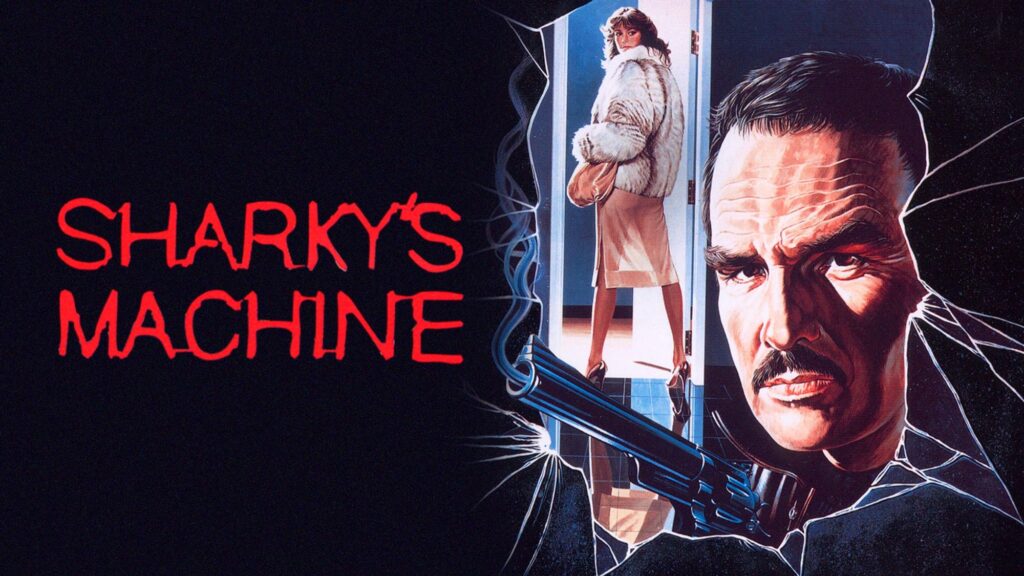
Sharky’s Machine
Sharky’s Machine is closely tied to Atlanta, and the city is not just a background but a major part of the film’s identity where several real locations is used.
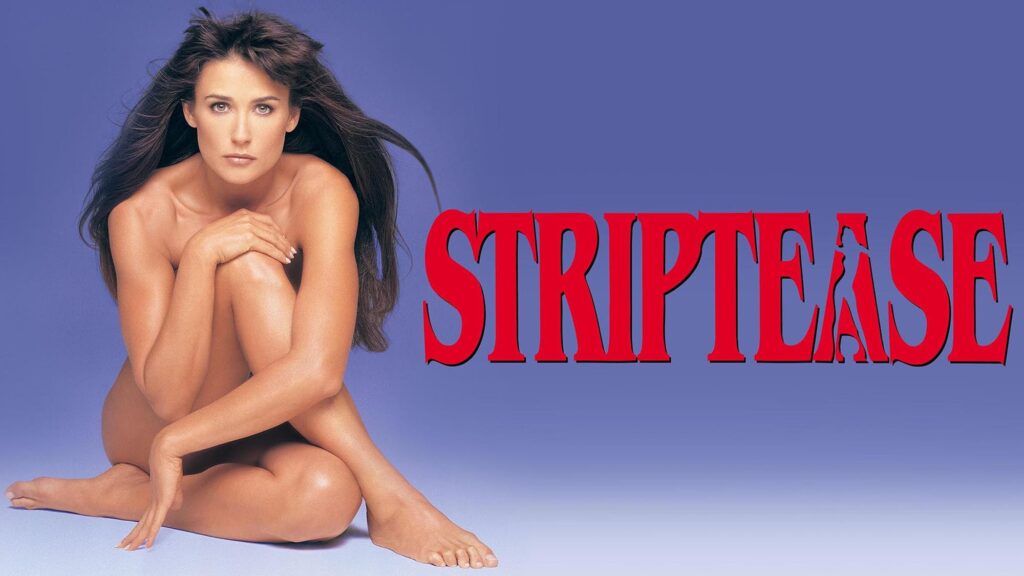
Striptease
Striptease was based largely in the Miami area, with locations including Miami itself, Key Biscayne and Hollywood, Florida.