
Sir Ben Kingsley (born Krishna Pandit Bhanji on 31 December 1943) is a British actor whose career spans more than six decades in theatre, film and television. He was born in Snainton, a village near Scarborough in North Yorkshire, but spent most of his childhood in Pendlebury, near Salford in Greater Manchester. His father, Rahimtulla Harji Bhanji, was a doctor of Gujarati Indian descent whose family had lived in East Africa, while his mother, Anna Lyna Mary Goodman, was an English actress and model. His paternal grandfather had worked as a spice trader in Zanzibar, having come from India, and the family’s background gave Kingsley connections to several cultures long before he began his international acting career. Growing up in Lancashire, he attended Manchester Grammar School, where one of his contemporaries was the future actor Robert Powell. He initially considered following his father into medicine, but became increasingly interested in music and theatre. He subsequently attended De La Salle College in Salford and took part in amateur dramatic productions in the Manchester area. Kingsley later described his upbringing as emotionally difficult, recalling that his parents offered little encouragement or acknowledgement of his performances.
Music was initially as important to Kingsley as acting. During the 1960s, he performed as a singer and guitarist and attracted the attention of music publisher Dick James, who had worked closely with the Beatles. James offered him the opportunity to pursue a recording career, but Kingsley chose theatre instead. His early acting experience included work with the Salford Amateur Dramatic Society, whose members encouraged him to audition professionally. He made his London stage debut at the Arts Theatre in 1966 and joined the Royal Shakespeare Company the following year. Around this time, he adopted the professional name Ben Kingsley, believing that his birth name might restrict the roles he was offered. Ben derived from a name associated with his father, while Kingsley was inspired by the nickname of his paternal grandfather. He later recalled receiving a markedly different response at auditions after making the change.
Joining the Royal Shakespeare Company brought Kingsley to Stratford-upon-Avon, where the Royal Shakespeare Theatre became one of his principal professional bases. He also performed at the Aldwych Theatre in London, then the company’s regular London home. His early Shakespearean work included Richard III, The Tempest and Measure for Measure, while in 1970 he played Demetrius in Peter Brook’s production of A Midsummer Night’s Dream. The production opened at the Royal Shakespeare Theatre on 27 August 1970 and subsequently travelled internationally, including performances in the United States. Kingsley returned to Stratford for further leading roles, notably Hamlet in 1975, and later portrayed Brutus in Julius Caesar and Iachimo in Cymbeline. He also worked with the National Theatre in London, appearing as Mosca in Peter Hall’s 1977 production of Ben Jonson’s Volpone. Although he made his film debut in the thriller Fear Is the Key (1972) and appeared occasionally on British television, including Coronation Street, theatre remained the centre of his career throughout the 1970s. His stage work eventually extended overseas, including a production of Arthur Miller’s Death of a Salesman in Sydney, Australia, in 1982.
Kingsley’s international breakthrough came when Richard Attenborough cast him as Mohandas K. Gandhi in Gandhi (1982), a large-scale historical drama that Attenborough had spent many years attempting to produce. The role required Kingsley to portray the Indian independence leader from his younger years as a lawyer in South Africa through to his assassination in New Delhi in 1948. His Indian ancestry and physical resemblance to Gandhi were important considerations in the casting, but the part also demanded extensive preparation. Kingsley lost weight, adopted a vegetarian diet during his preparations, studied Gandhi’s writings and mannerisms, and learnt to use a traditional spinning wheel. Filming began in November 1980 and continued until May 1981, with extensive location work throughout India. The production used Gandhi’s former residence at Birla House in New Delhi, now known as Gandhi Smriti, including the garden where he was assassinated. Other filming locations included the Aga Khan Palace in Pune, where Gandhi had been imprisoned during the Second World War, and locations in Gujarat and Bihar. Some interiors and scenes representing colonial India were also filmed in England, including at Shepperton Studios in Surrey and the Old Town Hall in Staines. The production’s recreation of Gandhi’s funeral procession in New Delhi involved hundreds of thousands of extras. Gandhi won eight Academy Awards, including Best Picture, Best Director and Best Actor for Kingsley, who received his Oscar at the ceremony in Los Angeles in April 1983.
The success of Gandhi transformed Kingsley’s career, establishing him as an internationally recognised screen actor after more than fifteen years of professional theatre work. His subsequent projects demonstrated a determination not to remain associated exclusively with historical figures. He appeared opposite Jeremy Irons and Patricia Hodge in Betrayal (1983), adapted from Harold Pinter’s play, and starred with Glenda Jackson in Turtle Diary (1985), a London-set drama involving two lonely people who become concerned about the sea turtles at London Zoo. The latter included location filming around the capital, with Kingsley appearing in a sequence at Kensington Olympia railway station. He also continued performing Shakespeare, returning to the Royal Shakespeare Company to play Othello in 1985. His later work during the decade took him to the eastern Mediterranean for Pascali’s Island (1988), in which he portrayed an informant living on a fictional Ottoman-controlled island. The production was filmed on the Greek islands of Symi and Rhodes, using their historic settlements and harbours. In the same year, Kingsley played Dr Watson opposite Michael Caine’s Sherlock Holmes in the comedy Without a Clue (1988). Filming took place across England, including London, Bristol, Gloucester, the Lake District and Blenheim Palace in Oxfordshire, with additional studio work at Pinewood and Shepperton.
The late 1980s also marked the beginning of a succession of roles connected with twentieth-century Jewish history and the Holocaust. Kingsley portrayed Holocaust survivor and Nazi hunter Simon Wiesenthal in the television film Murderers Among Us: The Simon Wiesenthal Story (1989), followed by gangster Meyer Lansky in Barry Levinson’s Bugsy (1991). The latter, starring Warren Beatty as Benjamin Siegel, earned Kingsley an Academy Award nomination for Best Supporting Actor. He returned to a Holocaust-related subject with Steven Spielberg’s Schindler’s List (1993), playing Itzhak Stern, the accountant who helped German industrialist Oskar Schindler protect Jewish workers from deportation and murder. Filming began in Kraków, Poland, in March 1993, and the production used numerous places associated with the historical events, including the exterior of Schindler’s enamel factory in the Zabłocie district. The Płaszów concentration camp was reconstructed in a nearby quarry rather than using the surviving site for the principal camp scenes. Kingsley worked closely with Liam Neeson, who portrayed Schindler, and later recalled the demanding conditions during the production. The film’s concluding sequence was filmed at Schindler’s grave in Jerusalem, where Kingsley and other cast members joined survivors and their descendants in placing stones on the grave. His performance earned a BAFTA nomination for Best Supporting Actor.
Kingsley remained active in American and British productions throughout the 1990s, frequently moving between films set in different historical periods and countries. In Searching for Bobby Fischer (1993), he played chess instructor Bruce Pandolfini, with production work taking place in Toronto and New York City. Washington Square Park in Manhattan, where the real young chess player Josh Waitzkin had developed his skills, was used for the film’s outdoor chess sequences. Kingsley also appeared in Death and the Maiden (1994), directed by Roman Polanski, and reunited with Shakespeare through Trevor Nunn’s film adaptation of Twelfth Night (1996). Nunn relocated the play’s fictional Illyria to a nineteenth-century coastal setting, with filming taking place at several historic properties in Cornwall, including Lanhydrock House, Cotehele and Prideaux Place, as well as St Michael’s Mount near Marazion. Kingsley played Feste, the household fool, drawing on the musical and theatrical abilities that had formed part of his earliest career. Other roles during the decade included appearances in Species (1995), The Assignment (1997) and the crime comedy The Last Legion’s predecessor in his filmography, rather than maintaining a single type of character or genre.
A major change of direction came with Jonathan Glazer’s crime drama Sexy Beast (2000), in which Kingsley played Don Logan, a violent and intimidating London gangster sent to persuade a retired criminal, played by Ray Winstone, to participate in a robbery. Much of the film takes place in southern Spain, and production used locations around Agua Amarga in the province of Almería, including the villa where Logan confronts his former associate. The contrast between the quiet Spanish setting and Logan’s aggression became central to the film, with Kingsley’s performance earning another Academy Award nomination for Best Supporting Actor. He followed it with several other demanding roles, including Otto Frank in the television miniseries Anne Frank: The Whole Story (2001). The production was filmed in and around Prague, with Barrandov Studios used for interior work, rather than shooting in the Amsterdam buildings where the Frank family had actually lived in hiding. Kingsley subsequently starred in House of Sand and Fog (2003), portraying Massoud Amir Behrani, a former Iranian military officer attempting to rebuild his family’s life in California. The drama was set in the San Francisco Bay Area and filmed at locations in San Mateo County, Pacifica and the Los Angeles area, with a Malibu property serving as the central house. His performance brought a fourth Academy Award nomination.
Kingsley’s work during the early 2000s also included his portrayal of the miserly Fagin in Roman Polanski’s Oliver Twist (2005). Although the story takes place in Victorian London, the production was filmed predominantly at Barrandov Studios in Prague, where extensive nineteenth-century London street sets were constructed. This marked another project in the Czech capital following Anne Frank: The Whole Story. He also appeared in Lucky Number Slevin (2006) and the historical drama Fifty Dead Men Walking (2008). Outside his professional life, Kingsley had four marriages. His first wife was actress Angela Morant, with whom he had two children, Thomas and Jasmin. He subsequently married theatrical director Alison Sutcliffe, and they had two sons, Edmund and Ferdinand, both of whom pursued acting. His third marriage, to Alexandra Christmann, lasted from 2003 until 2005. In September 2007, Kingsley married Brazilian actress Daniela Lavender at Eynsham Hall in Oxfordshire. The couple established their home in the Cotswolds, where Kingsley has maintained a relatively private domestic life away from film sets. Their marriage also developed into a professional partnership, with Lavender involved in acting and film production.
During the following decade, Kingsley continued working with established international directors. He played psychiatrist Dr John Cawley in Martin Scorsese’s psychological thriller Shutter Island (2010), which was filmed largely in Massachusetts. The production used the former Medfield State Hospital, an abandoned psychiatric institution south-west of Boston, as part of its fictional Ashecliffe Hospital, together with coastal and island locations around Massachusetts. His involvement with Scorsese continued in Hugo (2011), where he portrayed Georges Méliès, the French illusionist and pioneering filmmaker. Set in 1930s Paris, the film was made principally in England, with Shepperton Studios in Surrey used for an elaborate reconstruction of a Paris railway station, its interior shops and Méliès’ toy shop. Additional photography took place at Longcross Studios and in Paris itself. The production also brought Kingsley together with his son Edmund, who appeared in a supporting role. Hugo’s recreation of early cinema provided Kingsley with an opportunity to portray a historical figure closely connected to the development of the medium in which he had become internationally famous.
Other productions during this period took Kingsley to North Africa and continental Europe. He appeared in Prince of Persia: The Sands of Time (2010), which was filmed in Morocco and at Pinewood Studios in Buckinghamshire, and played the Persian physician and philosopher Ibn Sina, known in the West as Avicenna, in The Physician (2013). The latter depicted an English medical student travelling to the Persian city of Isfahan during the eleventh century, but the historical city was recreated through filming in Morocco and Germany. The production used MMC Studios in Cologne for sets representing the Persian court and hospital, with further location work in eastern Germany. Kingsley also joined the Marvel Cinematic Universe as Trevor Slattery, a British actor impersonating the terrorist known as the Mandarin, in Iron Man 3 (2013). He later reprised the character in the short film All Hail the King (2014) and Shang-Chi and the Legend of the Ten Rings (2021). His other work included the science-fiction adaptation Ender’s Game (2013), the comedy-drama Learning to Drive (2014), in which he played a Sikh driving instructor in New York, and voice performances in the animated films The Boxtrolls (2014) and The Jungle Book (2016).
In 2017, Kingsley travelled to Argentina to film Operation Finale (2018), portraying Adolf Eichmann, the former Nazi official who escaped to South America after the Second World War and was captured by Israeli intelligence agents in 1960. The production was filmed principally in Buenos Aires and its surrounding region, including locations in the Recoleta and Belgrano districts, while the town of Olivera was used for scenes associated with Eichmann’s residence. The filmmakers also used locations around Bariloche in Patagonia to represent other settings. Kingsley’s participation in the Argentine production continued his association with films examining the history of Nazi Germany, following his earlier portrayals of Simon Wiesenthal, Itzhak Stern and Otto Frank. He subsequently played the ageing Spanish surrealist painter Salvador Dalí in Mary Harron’s Dalíland (2022), which premiered at the Toronto International Film Festival before receiving a wider release in 2023. Although the story moves between New York City and Spain during the 1970s, the production was made largely in Liverpool during the COVID-19 pandemic. The city’s historic Adelphi Hotel stood in for the St. Regis Hotel in Manhattan, where Dalí and his wife Gala regularly stayed. Additional scenes were filmed on Anglesey in Wales and in southern France.
Kingsley continued taking leading roles into his eighties, including the science-fiction comedy-drama Jules (2023), in which he played Milton Robinson, an elderly widower whose life changes after an extraterrestrial spacecraft lands in his garden. The film was shot in New Jersey, using locations including Boonton, Chatham and Pompton Plains. In The Thursday Murder Club (2025), directed by Chris Columbus and adapted from Richard Osman’s novel, he portrayed retired psychiatrist Ibrahim Arif alongside Helen Mirren, Pierce Brosnan and Celia Imrie. Filming took place in England during 2024, with Englefield House in Berkshire representing the fictional Coopers Chase retirement community. Additional work was carried out at Shepperton Studios and locations in Buckinghamshire and Hertfordshire. The following year, Kingsley returned to his Marvel character Trevor Slattery in the television series Wonder Man (2026), playing an ageing actor involved with an aspiring Hollywood performer. The series made extensive use of Los Angeles locations, including well-known theatres and restaurants. He also appeared as Robert Dinwiddie, the colonial governor of Virginia, in the historical drama Young Washington (2026), released during the year marking the 250th anniversary of American independence.
Alongside his film career, Kingsley has received numerous honours in Britain and abroad. He was awarded India’s Padma Shri in 1984 in recognition of his contribution through Gandhi, and was appointed a Knight Bachelor in the 2002 New Year Honours, formally receiving his knighthood at Buckingham Palace on 19 March 2002. In May 2010, he received a star on the Hollywood Walk of Fame, situated at 6931 Hollywood Boulevard in Los Angeles. His relationship with the British theatre has continued to form an important part of his professional identity, while his later career has involved increasingly international productions and collaborations. In recent years, he and Daniela Lavender have also developed projects through their production company, Lavender Pictures, expanding their work together beyond acting. Despite his longstanding connections with Hollywood, Kingsley has retained his principal home in the English countryside, continuing to divide his time between Oxfordshire and filming assignments in Britain and overseas.
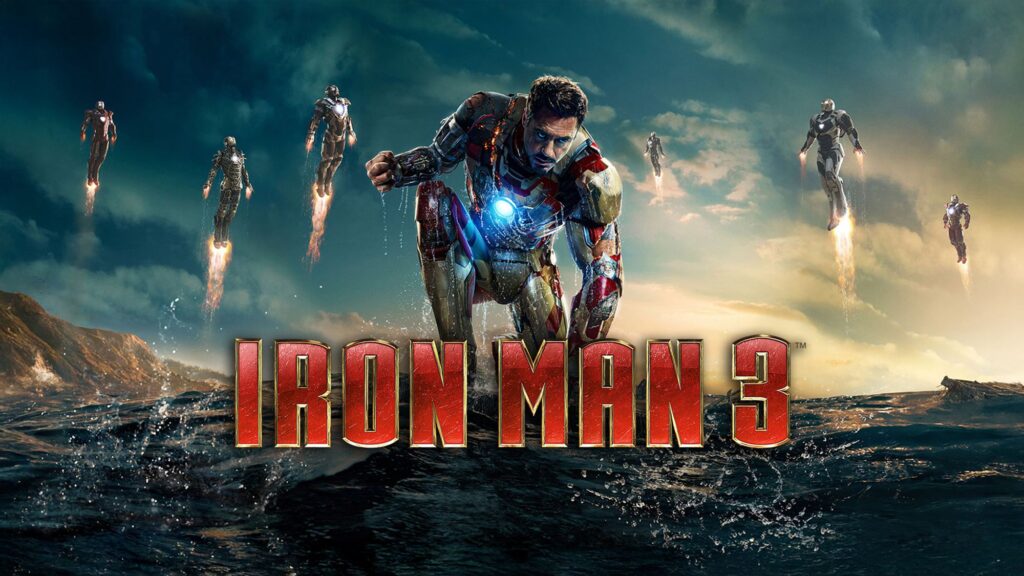
Iron Man 3
Iron Man 3 was filmed mainly in North Carolina, with additional work in California, Florida and China. Wilmington served as the production’s main base.

Schindler’s List
Schindler's List was shot mainly in and around Kraków, Poland, using a combination of real historical locations, nearby stand-ins and large reconstructed sets.
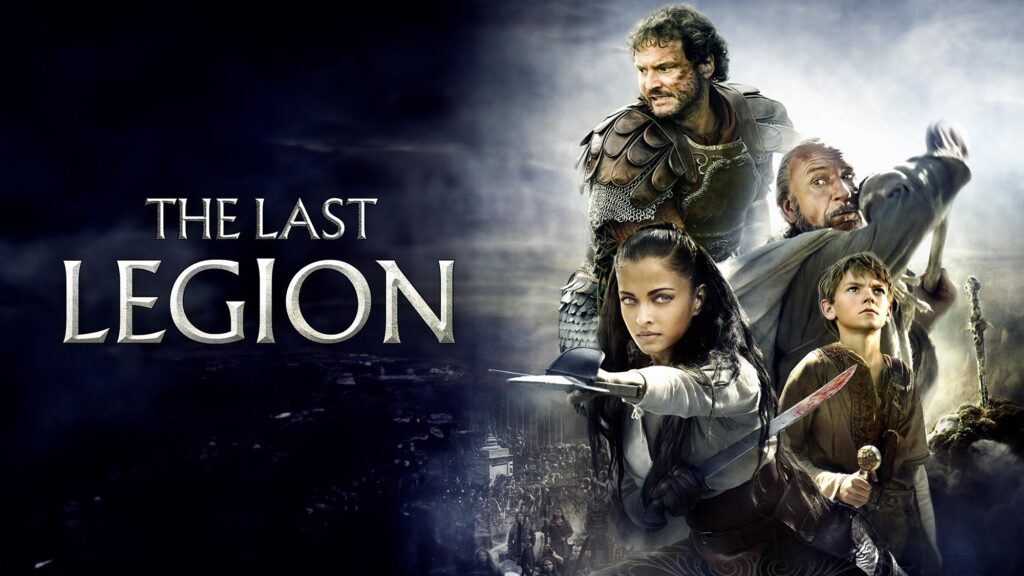
The Last Legion
The Last Legion from 2007 was shot mainly in Tunisia and Slovakia, with additional production connected to the United Kingdom.