
Alec Baldwin (born 3 April 1958) is an American actor, producer and comedian known for Beetlejuice (1988), Working Girl (1988), The Hunt for Red October (1990), Glengarry Glen Ross (1992), The Shadow (1994), The Departed (2006), and the television series 30 Rock (2006–2013). Born in Amityville, New York, and raised in nearby Massapequa on Long Island, he began his acting career in New York City before becoming an established Hollywood performer. His work has taken him to filming locations across the United States and Canada, while his personal life has remained closely associated with Manhattan, the Hamptons and, more recently, Vermont.
Alexander Rae Baldwin III was born in Amityville, a village on the southern shore of Long Island, approximately 50 kilometres east of Manhattan. His father, Alexander Rae Baldwin Jr., was a history and social studies teacher and football coach at Massapequa High School, while his mother, Carol Newcomb Martineau, raised their six children. The family lived in the Nassau Shores neighbourhood of Massapequa, a waterfront residential area bordering South Oyster Bay. Baldwin grew up alongside two sisters, Elizabeth and Jane, and three younger brothers, Daniel, William and Stephen, all of whom would eventually pursue acting careers.
The Baldwins were raised in a Roman Catholic household in a predominantly suburban environment. Their neighbourhood lay between the commercial districts surrounding Merrick Road and the waterways of South Oyster Bay, an area that had undergone considerable residential development following the Second World War. Baldwin later recalled the social differences between the waterfront communities and the more working-class neighbourhoods farther north, where many families were employed in construction, public service and other local industries.
He attended Alfred G. Berner High School in Massapequa, where he played football and developed an interest in public speaking and performance. The school, which opened in 1962, served the local community during a period of substantial population growth on Long Island. Baldwin’s father worked within the same school district, giving the family a particularly strong connection to public education in Massapequa.
After graduating from high school in 1976, Baldwin moved to Washington, D.C., to attend George Washington University. He initially studied political science and considered a career in law or politics. The university, located in the Foggy Bottom neighbourhood near the White House and the Department of State, introduced him to life in the American capital. He became involved in student politics and unsuccessfully ran for student body president in 1979.
His interest in acting eventually became more important than his original academic plans. Baldwin transferred to New York University’s Tisch School of the Arts in Manhattan, where he studied drama. He also trained at the Lee Strasberg Theatre Institute, working with acting teachers including Geoffrey Horne and Mira Rostova. The move returned him to the New York metropolitan area, although the cultural environment of Greenwich Village and Manhattan’s theatre district differed considerably from his suburban upbringing on Long Island.
While studying acting, Baldwin supported himself through various jobs, including work as a busboy at Studio 54, the nightclub on West 54th Street that had become internationally famous during the disco era. The venue occupied a former theatre and television studio and attracted musicians, actors and other celebrities. Baldwin’s employment there placed him within the city’s entertainment industry before he had established a professional acting career of his own.
His first major television role came in the daytime soap opera The Doctors, in which he played Billy Aldrich from 1980 to 1982. The programme was produced in New York City and gave Baldwin regular experience working in front of television cameras. He subsequently moved to Los Angeles to join the cast of Knots Landing, the CBS drama set in a fictional coastal community in Southern California.
Baldwin played Joshua Rush in Knots Landing from 1984 to 1985. Although the programme was set in a fictional suburb, its production made extensive use of the Los Angeles area, including studio facilities and residential neighbourhoods in the San Fernando Valley. The fictional cul-de-sac around which much of the series was organised was represented by a real residential street in Granada Hills. The role helped establish Baldwin among American television audiences and brought him into closer contact with Hollywood film producers.
He also continued working in theatre. In 1986, Baldwin appeared in a Broadway revival of Joe Orton’s Loot, performed at the Music Box Theatre on West 45th Street in Manhattan. His performance earned him a Theatre World Award. He subsequently appeared in Caryl Churchill’s Serious Money (1988), further strengthening his association with the New York theatre community.
Baldwin made his feature film debut in Forever, Lulu (1987), directed by Amos Kollek, before appearing in several productions that considerably expanded his professional reputation. Among the most important was Beetlejuice (1988), directed by Tim Burton and starring Michael Keaton, Geena Davis, Winona Ryder and Catherine O’Hara.
Baldwin played Adam Maitland, a recently deceased homeowner who, together with his wife Barbara, attempts to frighten away the new occupants of their house. Although the film is set in the fictional Connecticut town of Winter River, its exterior scenes were filmed in East Corinth, a small village in Orange County, Vermont. The production transformed the village’s main road and several buildings into the fictional community.
East Corinth’s general store represented Maitland Hardware, the business operated by Adam and Barbara before their deaths. The village’s Masonic Hall was adapted to represent Miss Shannon’s School for Girls, while the intersection of Village Road and Chicken Farm Road provided the location for the accident in which the couple die. The production also constructed the Maitland family’s hilltop house on land overlooking the village.
The house was a temporary structure created specifically for the film and was dismantled after production. Its distinctive architecture and elevated position became among the film’s most recognisable visual features. Interior scenes, including the house’s elaborate supernatural transformations, were filmed at The Culver Studios in Culver City, California. The production therefore combined a genuine rural Vermont community with specially constructed interiors and effects sequences in Southern California.
The same year, Baldwin appeared in Working Girl (1988), directed by Mike Nichols and starring Melanie Griffith, Harrison Ford and Sigourney Weaver. He played Mick Dugan, the boyfriend of Griffith’s character, Tess McGill, a secretary from Staten Island attempting to establish a career in Manhattan’s corporate world.
Working Girl was filmed extensively in New York City, particularly Manhattan and Staten Island. The Staten Island Ferry became one of the production’s defining locations, representing Tess’s daily commute across New York Harbor. Filming also took place in the New Brighton neighbourhood of Staten Island, where residential streets and houses supplied the setting for Tess’s personal life.
The film’s Manhattan locations included office buildings in the Financial District, the former 7 World Trade Center, One State Street Plaza and One Chase Manhattan Plaza. The production used several different buildings to represent the fictional investment company where Tess worked. The contrast between her residential neighbourhood on Staten Island and the skyscrapers of Lower Manhattan formed an important geographical element of the film.
Baldwin returned to New York for additional work during this period, although his growing film career increasingly required travel to other parts of the United States. He appeared in Great Balls of Fire! (1989), the biographical drama about musician Jerry Lee Lewis, playing televangelist Jimmy Swaggart. The film recreated locations associated with Lewis’s career in the American South, including Memphis, Tennessee, and the surrounding region.
His breakthrough as a leading Hollywood actor came with The Hunt for Red October (1990), directed by John McTiernan and adapted from Tom Clancy’s novel. Baldwin played CIA analyst Jack Ryan, who attempts to determine the intentions of a Soviet submarine commander portrayed by Sean Connery. The production combined elaborate studio sets with actual American naval facilities and coastal landscapes.
Much of the film was produced at Paramount Studios in Hollywood, where several large soundstages were converted into submarine interiors. The sets were mounted on hydraulic platforms that could tilt and move, simulating the motion of vessels travelling underwater. This approach allowed the actors to perform scenes within convincing military environments without requiring filming inside operational submarines.
Additional production took place around Port Angeles, Washington, on the Olympic Peninsula, where the waters of the Strait of Juan de Fuca provided maritime scenery. Naval facilities at Point Loma in San Diego were used for scenes representing an American submarine base, while other filming took place around the Los Angeles waterfront and in San Pedro.
Lake James in Burke County, North Carolina, provided the setting for the concluding scene in which Ryan and Captain Ramius travel aboard a small vessel after escaping the submarine. Other production locations included Port Valdez in Alaska and Liverpool in England, although these were used for particular scenes and do not establish that Baldwin personally worked at every location. The production’s geographical range reflected the international military setting of the story.
Also released in 1990 was Miami Blues, directed by George Armitage and adapted from the novel by Charles Willeford. Baldwin played Frederick J. Frenger Jr., a violent criminal who arrives in South Florida and begins impersonating a police officer. The film was shot on location in Miami, Miami Beach and the surrounding communities, making extensive use of the region’s distinctive urban environment.
Among its locations were Miami International Airport, Dadeland Mall in Kendall and hotels around Biscayne Bay and Coral Gables. The Venetian Pool in Coral Gables, a historic public swimming facility created from a former coral rock quarry, appeared in a restaurant sequence involving Baldwin’s character and Susie Waggoner, played by Jennifer Jason Leigh.
Other scenes used streets in downtown Miami and residential neighbourhoods away from the beaches commonly associated with the city. The production incorporated ordinary commercial buildings, shopping centres and apartment complexes, creating a contemporary crime film grounded in the actual South Florida landscape.
Baldwin next starred opposite Kim Basinger in The Marrying Man (1991), a romantic comedy directed by Jerry Rees. He played Charley Pearl, a wealthy bachelor whose life becomes complicated after he encounters a nightclub singer portrayed by Basinger. The production was filmed in Southern California, using Los Angeles locations to represent the wealthy social environments of its characters.
The Stahl House, a modernist residence in the Hollywood Hills designed by architect Pierre Koenig and completed in 1960, represented Charley Pearl’s home. Situated above the Sunset Strip, the house is particularly famous for its glass walls and views across Los Angeles. Other filming locations included Greystone Mansion in Beverly Hills and the desert community of Lancaster, north of the city.
Baldwin and Basinger began a romantic relationship during this period. They married on 19 August 1993 in a ceremony on the beach at East Hampton, Long Island. Approximately 100 guests attended the wedding, which took place in front of the waterfront estate of fashion designer Josephine Chaus. The ceremony was held inside a circle of torches arranged on the sand, with the Atlantic Ocean forming the background.
East Hampton and the surrounding communities of the Hamptons subsequently became closely associated with Baldwin’s personal life. Situated at the eastern end of Long Island, the area had developed into a summer destination for affluent New Yorkers while retaining older villages, agricultural land and stretches of protected coastline. Baldwin maintained a connection to the region throughout the following decades.
The couple’s daughter, Ireland Baldwin, was born in Los Angeles on 23 October 1995. Baldwin and Basinger separated in 2000 and divorced in 2002, following several years of marital difficulties and legal proceedings.
During the early 1990s, Baldwin continued alternating between film and theatre. In 1992, he played Stanley Kowalski opposite Jessica Lange in a Broadway revival of Tennessee Williams’s A Streetcar Named Desire. The production was performed at the Ethel Barrymore Theatre on West 47th Street in Manhattan and earned Baldwin a Tony Award nomination.
Although the play is set in New Orleans, the Broadway revival was a theatrical production performed entirely in New York. Baldwin later reprised the role in a television adaptation released in 1995. His involvement in the play represented an important continuation of the stage career he had established before becoming a Hollywood leading actor.
He also appeared in Glengarry Glen Ross (1992), directed by James Foley and adapted from David Mamet’s Pulitzer Prize-winning play. The ensemble cast included Al Pacino, Jack Lemmon, Ed Harris, Alan Arkin and Kevin Spacey. Baldwin played Blake, an aggressive representative of a real estate company who delivers a threatening motivational speech to a group of unsuccessful salesmen.
The film was shot primarily in New York City, with principal production taking place at Kaufman Astoria Studios in Queens. Exterior locations were concentrated around Sheepshead Bay in southern Brooklyn, where commercial buildings and restaurants provided the setting for the fictional real estate business.
The Premiere Properties office was represented by a building at 1515 Sheepshead Bay Road, while a restaurant across the street at 1520 Sheepshead Bay Road became the fictional China Bowl. Much of the drama takes place inside offices and restaurants, with the production using limited exterior locations to establish the surrounding neighbourhood.
Baldwin’s character appears in a single extended office sequence, written specifically for the film rather than taken from Mamet’s original stage play. His performance became one of the film’s best-known elements. The geographically concentrated production provided a strong contrast to the international locations of The Hunt for Red October.
He returned to the northeastern United States for Malice (1993), a psychological thriller directed by Harold Becker and starring Nicole Kidman and Bill Pullman. Baldwin played Dr. Jed Hill, a surgeon whose involvement with a married couple develops into a series of increasingly complicated events.
Malice was filmed extensively in Massachusetts, particularly Northampton, Amherst, Holyoke and Boston. Smith College in Northampton represented the fictional university where Pullman’s character worked. The campus’s historic academic buildings and landscaped grounds provided an important setting for the film.
Additional filming took place at the Lord Jeffrey Inn in Amherst, commercial and residential streets in Northampton and several Boston properties, including buildings around Beacon Street. The production also used Cambridge locations before moving to The Culver Studios in California for interior sets, including the principal residence and hospital environments.
The Massachusetts filming locations allowed the production to create the appearance of a traditional New England university community, with older institutional buildings and Victorian residential architecture forming the background.
In 1994, Baldwin starred in The Shadow, directed by Russell Mulcahy and based on the pulp magazine and radio character created by Walter B. Gibson. He played Lamont Cranston, a mysterious crimefighter operating in a stylised version of 1930s New York City.
Despite its Manhattan setting, the film was shot primarily at Universal Studios in Universal City, California. Five soundstages were used to recreate streets, interiors and architectural environments inspired by New York during the 1930s. Large sections of the Universal backlot were transformed into an imaginary version of the city, combining period vehicles, illuminated signs and elaborate building façades.
The production also made use of existing Los Angeles architecture. The Hollywood Pantages Theatre on Hollywood Boulevard supplied interiors associated with the fictional Hotel Monolith, while the former Ambassador Hotel on Wilshire Boulevard provided additional filming space. Other locations included Pasadena and the Alabama Hills near Lone Pine, California.
The Shadow demonstrated how a film set almost entirely in New York could be constructed in Southern California through a combination of backlot streets, historic buildings and specially built interiors.
Baldwin subsequently starred in The Getaway (1994), a remake of Sam Peckinpah’s 1972 crime thriller, opposite Kim Basinger. The production used locations in Arizona and the southwestern United States to recreate the story’s journey through the American borderlands. The film became another professional collaboration between the couple during their marriage.
One of Baldwin’s most geographically demanding productions was The Edge (1997), directed by Lee Tamahori and starring Anthony Hopkins and Elle Macpherson. Baldwin played Robert Green, a photographer who becomes stranded in the wilderness with a wealthy businessman after their aircraft crashes.
Although the story is set in Alaska, the film was shot primarily in western Canada. Principal locations included Banff National Park, Canmore and the Fortress Mountain area in Alberta, as well as Yoho National Park and Golden in neighbouring British Columbia.
The mountainous landscapes of the Canadian Rockies provided the isolated wilderness environments required by the story. The production filmed around lakes, forests and alpine valleys, with the region’s steep peaks and glaciers serving as substitutes for the Alaskan wilderness.
Additional work took place at Allarcom Studios in Edmonton, Alberta, returning Baldwin professionally to a Canadian city that had developed substantial film production facilities. Filming continued from August to November 1996, exposing the cast and crew to increasingly cold conditions as autumn gave way to winter.
The Edge also featured Bart the Bear, a trained Kodiak bear that appeared in numerous Hollywood productions. Scenes involving the animal required extensive safety precautions and careful coordination between actors, trainers and camera crews. The film’s combination of actual mountain landscapes and dangerous wildlife made it considerably different from Baldwin’s earlier studio-based work.
During the early 2000s, Baldwin increasingly accepted supporting roles rather than exclusively pursuing leading parts. One of his most acclaimed performances came in The Cooler (2003), directed by Wayne Kramer and starring William H. Macy and Maria Bello. Baldwin played Shelly Kaplow, the intimidating manager of a struggling Las Vegas casino.
Although the film is set in Las Vegas, much of the production took place in Reno, Nevada. The Golden Phoenix Hotel Casino, located in downtown Reno, represented the fictional Shangri-La casino. The building’s gaming rooms, corridors and surrounding streets supplied the principal setting.
The production used casino employees and local residents as extras, incorporating actual gambling facilities into the fictional story. The Golden Phoenix subsequently closed and was converted into a residential development known as The Montage. The film therefore preserves images of a casino interior and exterior that no longer exist in their original form.
The Cooler earned Baldwin an Academy Award nomination for Best Supporting Actor. It also marked one of his more significant professional connections with Nevada, a state whose casinos and desert landscapes have appeared frequently in American cinema.
Baldwin continued appearing on Broadway during this period. In 2004, he starred alongside Anne Heche in Twentieth Century, performed at the American Airlines Theatre on West 42nd Street, now known as the Todd Haimes Theatre. His continuing stage work maintained his connection to Manhattan, even as his film career required frequent travel.
He also appeared in The Aviator (2004), directed by Martin Scorsese and starring Leonardo DiCaprio as aviation pioneer Howard Hughes. Baldwin played Juan Trippe, the founder of Pan American World Airways. The production recreated aviation facilities and historic locations associated with Hughes’s career, using studios and locations in California and Canada.
Another significant Scorsese production was The Departed (2006), in which Baldwin played Captain George Ellerby of the Massachusetts State Police. The crime thriller starred Leonardo DiCaprio, Matt Damon, Jack Nicholson, Mark Wahlberg and Martin Sheen and was set primarily in Boston.
The Departed was filmed in both Massachusetts and New York. Boston locations included Chinatown, Beacon Hill, Charlestown and the waterfront districts, while additional scenes used the neighbouring communities of Quincy and Lynn. The production incorporated actual streets, restaurants and industrial locations connected with Boston’s urban geography.
The Fore River Shipyard in Quincy provided an industrial setting for one of the film’s major action sequences. The historic complex had been associated with American shipbuilding since the nineteenth century, including the construction of naval vessels during the two world wars.
Other filming took place in Brooklyn, Queens and the Bronx, where New York locations were adapted to represent Boston. Studio interiors and additional sets were constructed in the New York area. The production’s geographical division reflected the practical difficulties of filming a large ensemble drama in a major American city.
In 2006, Baldwin began playing Jack Donaghy in 30 Rock, the NBC comedy series created by Tina Fey. The character was a senior television executive working in the fictional corporate structure of NBC at 30 Rockefeller Plaza in Midtown Manhattan.
The series was closely associated with Rockefeller Center, the historic commercial and entertainment complex between Fifth and Sixth Avenues. The 30 Rockefeller Plaza skyscraper, completed in 1933, has housed NBC studios and broadcasting facilities for decades. Its exterior, entrances and surrounding plaza appeared regularly throughout the programme.
Despite its title and setting, much of 30 Rock was filmed at Silvercup Studios in Long Island City, Queens. The complex, housed in a former bakery building near the Queensboro Bridge, had become an important production centre for New York television, also accommodating programmes such as The Sopranos and Sex and the City.
The interiors of the fictional NBC offices and television studios were constructed at Silvercup, allowing the production to recreate the working environment of Rockefeller Center without occupying actual broadcasting facilities. Exterior scenes were filmed around Rockefeller Plaza and other Manhattan locations.
The arrangement made it possible for Baldwin to work primarily in New York rather than Los Angeles. His role in 30 Rock earned him several Emmy Awards and Golden Globe Awards and became one of the defining performances of his television career.
During this period, Baldwin established a residence in Manhattan and became increasingly involved in the city’s cultural institutions. He has supported organisations including the New York Philharmonic, the Roundabout Theatre Company and the Hamptons International Film Festival. His involvement with these institutions reflected a longstanding personal connection with both the Manhattan arts community and eastern Long Island.
Baldwin returned to romantic comedy in It’s Complicated (2009), directed by Nancy Meyers and starring Meryl Streep and Steve Martin. He played Jake Adler, a lawyer who begins an affair with his former wife, played by Streep.
The film is set in Santa Barbara, California, but its production was divided between California and New York. Many interiors were filmed at Broadway Stages in Brooklyn, including sets representing the principal character’s house. The production also used the Picnic House in Prospect Park, where a temporary bakery interior was constructed.
Other New York locations included Chelsea Market, buildings in Manhattan’s Chelsea neighbourhood and St. John’s University in Queens. The production eventually travelled to California for exterior scenes representing Santa Barbara and its surrounding residential districts.
A ranch-style house in the Hidden Valley area near Thousand Oaks represented the exterior of Streep’s character’s residence. The crew also filmed around the Santa Barbara County Courthouse, De La Guerra Plaza and Montecito. Additional scenes used the Bel-Air Bay Club in Pacific Palisades.
The combination of Brooklyn studio interiors and Southern California exteriors allowed the filmmakers to create a consistent Santa Barbara environment without completing the entire production there.
In 2011, Baldwin began a relationship with Hilaria Thomas, a yoga instructor whom he met in New York City. The couple married on 30 June 2012 at the Basilica of St. Patrick’s Old Cathedral on Mulberry Street in Manhattan’s Nolita neighbourhood.
The historic church, completed in 1815, served as the original cathedral of the Roman Catholic Archdiocese of New York before the opening of the present St. Patrick’s Cathedral on Fifth Avenue. It is one of the city’s oldest surviving Catholic churches and occupies a substantial complex between Mulberry and Mott Streets.
Following the ceremony, the wedding reception took place at New York University’s Kimmel Center near Washington Square. The choice of venues established a geographical connection between Baldwin’s marriage and the same Manhattan university district where he had studied acting several decades earlier.
Baldwin and Hilaria subsequently established their family home in Greenwich Village. In 2011, Baldwin purchased a large apartment in Devonshire House at 28 East 10th Street, a residential building designed by architect Emery Roth and completed in 1928. The property lies between Fifth Avenue and University Place, within walking distance of Washington Square Park.
The couple acquired additional units within the building, expanding their residential space to accommodate their growing family. Their seven children are Carmen, Rafael, Leonardo, Romeo, Eduardo, María Lucía and Ilaria. The Greenwich Village residence became one of the principal locations of Baldwin’s family life.
He also maintained a property in Amagansett, east of East Hampton on Long Island. Baldwin purchased the farmhouse-style residence in 1995, and it subsequently underwent substantial renovations and extensions. The estate occupies approximately five acres surrounded by gardens, agricultural land and coastal countryside.
Amagansett lies between East Hampton and Montauk, close to beaches, historic farmland and the protected landscapes of the South Fork. Baldwin had developed an attachment to the area during his younger years, and the property became an important family retreat away from Manhattan.
The estate was placed on the market in 2022 and was listed for sale on several subsequent occasions. In August 2026, it returned to the market with an asking price of approximately $19 million. The continued association with Amagansett reflected Baldwin’s longstanding connection to eastern Long Island.
Baldwin also appeared in Blue Jasmine (2013), directed by Woody Allen and starring Cate Blanchett. He played Hal Francis, a wealthy New York businessman whose financial crimes contribute to the collapse of his marriage. The film follows Jasmine, played by Blanchett, after she leaves New York and relocates to San Francisco.
The production was filmed in New York City and the San Francisco Bay Area, using actual residential streets, apartments and commercial buildings to distinguish Jasmine’s former life from her new circumstances. Baldwin’s character is primarily associated with the New York portion of the story, which is presented through flashbacks.
San Francisco locations included the Marina District, South of Market and neighbourhoods around the city’s eastern waterfront. The city’s steep streets and varied residential architecture provided a contrasting setting to the affluent Manhattan environment associated with Jasmine’s marriage to Hal.
Baldwin next appeared in Still Alice (2014), directed by Richard Glatzer and Wash Westmoreland. The drama starred Julianne Moore as Alice Howland, a Columbia University linguistics professor diagnosed with early-onset Alzheimer’s disease. Baldwin played her husband, Dr. John Howland.
The film was shot in New York City and its surrounding communities, including the Columbia University campus in Morningside Heights. Founded in 1754 and established at its present Manhattan location in the late nineteenth century, Columbia provided the academic environment in which Alice works.
Additional filming took place in the Bronx and the suburban communities of Dobbs Ferry and Lido Beach, New York. These locations helped establish the family’s professional and domestic life, connecting Baldwin’s character to recognisable areas of the New York metropolitan region.
He also appeared in Mission: Impossible – Rogue Nation (2015), directed by Christopher McQuarrie and starring Tom Cruise. Baldwin played Alan Hunley, the director of the CIA, who becomes involved in efforts to shut down the Impossible Missions Force.
The film was an international production using locations in Austria, Morocco and the United Kingdom. Vienna’s State Opera House provided the setting for a major sequence involving an assassination attempt, while London supplied numerous locations associated with the intelligence services.
Moroccan filming included Rabat, Casablanca and the area around Marrakech, where roads and historic urban environments were incorporated into action sequences. Other production work took place at studios in Britain. The locations were used for the film as a whole, although Baldwin’s participation was concentrated in scenes involving the intelligence agencies rather than every international action sequence.
Baldwin reprised the character in Mission: Impossible – Fallout (2018), which was also filmed across several countries. The production used locations in Paris, London, New Zealand, the United Arab Emirates and Norway.
One of the film’s most prominent Norwegian locations was Preikestolen, the mountain plateau rising above Lysefjorden in Rogaland. The location represented a mountainous region of Kashmir in the film’s concluding action sequences. Baldwin’s character did not appear in the sequence filmed at Preikestolen, but the location remains an important part of the production’s international geography.
In addition to live-action films, Baldwin became recognised for voice acting. He provided the voice of the title character in The Boss Baby (2017), an animated comedy produced by DreamWorks Animation. He returned for The Boss Baby: Family Business (2021). These performances were recorded in studios rather than involving the outdoor locations depicted in the animated stories.
Baldwin’s professional career has also included extensive work on Saturday Night Live, the long-running NBC sketch comedy series recorded at Studio 8H inside 30 Rockefeller Plaza. He has hosted the programme numerous times and appeared as a recurring guest performer, including his portrayal of Donald Trump during the late 2010s and early 2020s.
His involvement with Saturday Night Live added another connection to Rockefeller Center, where 30 Rock had been set. Studio 8H, originally developed for NBC’s radio and television operations, has housed the sketch comedy programme since its premiere in 1975.
In 2021, Baldwin travelled to New Mexico for the production of Rust, a Western directed by Joel Souza. Baldwin played Harland Rust, an ageing outlaw attempting to help his young grandson escape a death sentence. The film was intended to recreate the American West during the nineteenth century, using the desert landscapes and established Western film facilities surrounding Santa Fe.
The principal location was Bonanza Creek Ranch, a film production property south of Santa Fe near La Cienega. The ranch has been used for numerous Western films and television productions and contains purpose-built frontier buildings, including a church, saloon and other structures resembling a nineteenth-century settlement.
On 21 October 2021, a fatal shooting occurred during a rehearsal inside the ranch’s church set. Baldwin was handling a revolver that contained a live round. The gun discharged, killing cinematographer Halyna Hutchins and injuring director Joel Souza. The incident led to the immediate suspension of filming and a lengthy investigation into the production’s safety procedures.
The shooting brought international attention to Bonanza Creek Ranch and the wider Santa Fe film industry. New Mexico had become a significant centre of American production through tax incentives, varied landscapes and proximity to established studios in Albuquerque and Santa Fe.
Criminal proceedings concerning the incident took place in Santa Fe. Baldwin was charged with involuntary manslaughter, but the case was dismissed with prejudice in July 2024 after a judge determined that prosecutors had improperly withheld evidence from the defence. The dismissal prevented the same criminal charge from being brought again. Separate civil proceedings connected with the production continued after the criminal case ended.
Rust eventually resumed production in April 2023, but filming was relocated from New Mexico to Montana. The new principal location was Yellowstone Film Ranch near Livingston, a Western film facility situated in the Yellowstone River valley north of Yellowstone National Park.
The Montana location provided constructed frontier streets and access to the surrounding mountain and grassland scenery. Baldwin returned to complete his scenes, while Bianca Cline took over cinematography responsibilities. The completed film incorporated footage photographed by Hutchins before her death.
Rust premiered at the Camerimage International Film Festival in Toruń, Poland, in November 2024. The festival specialises in cinematography and provided an opportunity for the filmmakers to honour Hutchins’s work. The film subsequently received a limited theatrical and digital release in the United States in May 2025.
During this period, Baldwin also established a stronger residential connection with Vermont. In 2022, he purchased a historic farmhouse in Arlington, a small town in Bennington County in the southwestern part of the state. The property, built during the late eighteenth century, occupies a rural setting near the Green Mountains.
Arlington lies in the Batten Kill valley between Bennington and Manchester, an area known for its historic villages, wooded hills and agricultural properties. The farmhouse includes traditional timber construction and several outbuildings. Baldwin’s purchase created another personal connection with Vermont, decades after the state had provided the exterior locations for Beetlejuice.
Although Baldwin has spent much of his adult life in New York, his residential connections have extended across several parts of the northeastern United States. The Greenwich Village apartment, Amagansett estate and Arlington farmhouse represent three contrasting environments: a historic Manhattan residential district, the agricultural and coastal landscape of Long Island, and a rural New England village.
Baldwin has also maintained a connection to the theatre community in Sag Harbor, a former whaling port on eastern Long Island. He has supported Bay Street Theater, a professional theatre organisation established in 1991 near the village waterfront. The theatre has become an important cultural institution in the Hamptons, hosting plays, concerts and educational activities.
Through the Hilaria and Alec Baldwin Foundation, the couple have supported organisations involved in the arts, education and community development. Baldwin has also maintained connections with New York’s cultural institutions, including the New York Philharmonic and the Hamptons International Film Festival.
He returned regularly to Massapequa and the surrounding communities during his adult life, maintaining connections with relatives and the area where he grew up. His mother, Carol Baldwin, became involved in breast cancer fundraising after surviving the disease and established the Carol M. Baldwin Breast Cancer Research Fund. The organisation developed connections with medical institutions in New York, particularly on Long Island and in the Syracuse region, where Carol had been born.
Baldwin’s father died in 1983, before his son’s major film success, while his mother died in Syracuse, New York, in May 2022, aged 92. The family’s history remains closely associated with Long Island, particularly Massapequa, where Alec and his siblings spent their childhood.
Across his career, Baldwin has maintained an unusually strong relationship with New York despite spending substantial periods working in Hollywood. His earliest acting studies took place in Manhattan, his first major television work was produced in the city, and many of his important films and television projects returned him to the New York metropolitan area. The Sheepshead Bay streets used in Glengarry Glen Ross, the Staten Island Ferry in Working Girl and the Silvercup Studios in Queens all represent distinct periods of his professional life.
Outside New York, his filming locations have ranged from East Corinth in Vermont and the casinos of Reno to the mountain wilderness of Alberta and British Columbia. The Massachusetts university towns used in Malice, the historic architecture of Los Angeles recreated for The Shadow and the Montana Western sets used to complete Rust demonstrate the geographical range of his work.
Alec Baldwin’s personal geography remains centred on the northeastern United States. The Nassau Shores neighbourhood of Massapequa, New York University’s Greenwich Village campus, the theatres of Broadway, his Manhattan residence and the coastal communities of the Hamptons provide a continuous connection between his childhood, education, acting career and family life. Together with his film locations across North America and beyond, they form a geographical record of a career extending from New York daytime television in 1980 to more than four decades of work in film, theatre and television.
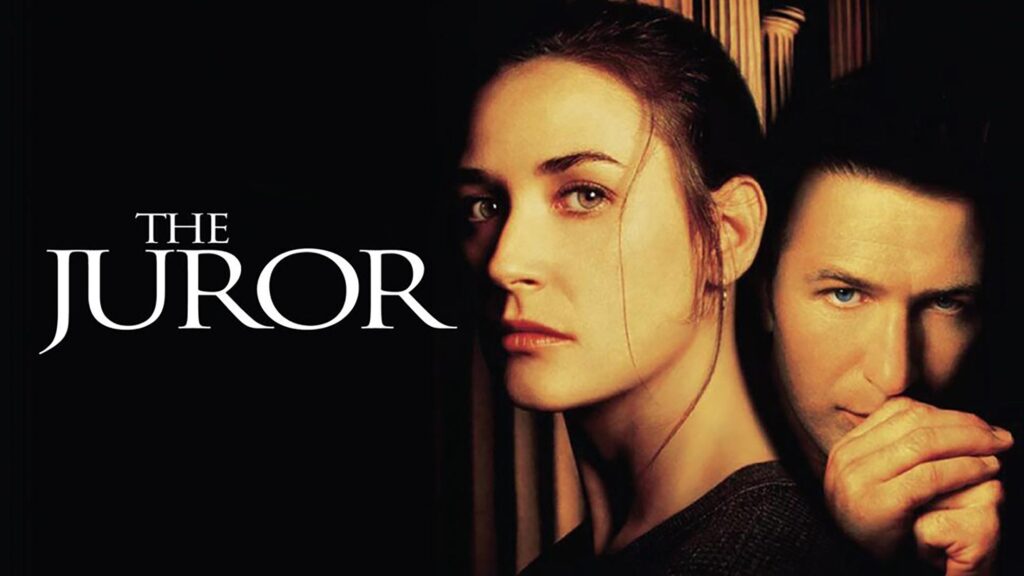
The Juror
The Juror (1996) was filmed primarily in New York City and Westchester County, with additional filming in Rockland County, New Jersey and Mexico.