
Saints Peter and Paul Church is a Roman Catholic church at 666 Filbert Street in the North Beach neighbourhood of San Francisco, California, overlooking Washington Square. Founded in 1884 to serve the city’s growing Italian immigrant community, the parish originally occupied a smaller church at the corner of Filbert Street and Grant Avenue, which was destroyed in the earthquake and subsequent fire of April 1906. Construction of the present building began in 1913, and the church was completed in 1924 under architect Charles Fantoni, whose design combined Italian Romanesque and Gothic Revival elements. The imposing white façade is dominated by two 191-foot towers, while three arched entrance portals are separated by columns and ornamental sculptures representing the four Evangelists. Above the entrances, a mosaic inscription reproduces the opening lines of Dante Alighieri’s Paradiso, reflecting the church’s longstanding connection to San Francisco’s Italian-American community. The interior contains an elaborate high altar made from Carrara marble, completed in 1926, together with stained-glass windows, decorative side chapels and religious paintings. The building measures approximately 160 feet in length and 100 feet in width, making it considerably larger than the original parish church. During the late 1920s, Saints Peter and Paul became the target of a series of bombing attempts by anti-Catholic anarchists. The most serious incident occurred on 6 March 1927, when police confronted two men attempting to place explosives outside the building, killing one and seriously wounding the other. The church has also been closely associated with the life of baseball player Joe DiMaggio, who grew up in North Beach and married his first wife, actress Dorothy Arnold, here in November 1939. Following their civil marriage at San Francisco City Hall in January 1954, DiMaggio and Marilyn Monroe posed for photographs on the church’s front steps, although they were not married inside the building. DiMaggio’s funeral was subsequently held here on 11 March 1999. Administered by the Salesians of Don Bosco, the church remains an active parish serving both the Italian-American and Chinese-American Catholic communities. Its broad entrance steps, twin towers and prominent position facing Washington Square have also made it a recurring filming location, with productions using both the church itself and the surrounding streets.
Saints Peter and Paul Church has appeared in The Ten Commandments (1923), Dirty Harry (1971), What’s Up, Doc? (1972), The Dead Pool (1988), Sister Act 2: Back in the Habit (1993), Getting Even with Dad (1994), Big Eyes (2014) and San Andreas (2015). Cecil B. DeMille used the building during its construction for scenes involving a collapsing cathedral in the modern section of The Ten Commandments, while Dirty Harry features the church during two sequences involving the Scorpio Killer and police surveillance around Washington Square. What’s Up, Doc? uses its front steps and the adjoining street for the theft of a wedding car during an elaborate chase through San Francisco. The church returned to the Dirty Harry series in The Dead Pool and subsequently appeared in the Catholic surroundings of Sister Act 2. Getting Even with Dad makes particularly extensive use of the interior, where two criminals search for stolen coins they mistakenly believe have been hidden in the building. More recently, Big Eyes used the church for a scene involving Margaret Keane’s growing guilt over her husband’s deception, while San Andreas incorporated the building and Washington Square into its computer-generated destruction of the city.
In The Ten Commandments (1923), the silent biblical epic directed by Cecil B. DeMille, Saints Peter and Paul Church appears during the film’s modern-day story, which follows an extended opening section depicting Moses and the Israelites in ancient Egypt. The contemporary storyline concerns two brothers, John McTavish, played by Richard Dix, and Dan McTavish, played by Rod La Rocque, who respond very differently to their mother’s strict religious upbringing. While John remains a modest carpenter who respects the Ten Commandments, Dan rejects religion and becomes a wealthy building contractor through increasingly dishonest business practices. Dan eventually secures a lucrative contract to build a large cathedral but secretly reduces the amount of cement used in the concrete, allowing him to retain more of the construction money for himself. The unfinished Saints Peter and Paul Church was used to represent the cathedral during these sequences. Construction had begun a decade earlier, but the building was still incomplete when DeMille arrived in San Francisco with his cast and crew in July 1923. The exposed framework, unfinished walls and extensive scaffolding were incorporated into the film rather than concealed, allowing the production to represent a major building project without constructing an entirely new set. John is employed to supervise the construction work, unaware of the full extent of his brother’s corruption. When their mother Martha, played by Edythe Chapman, visits the building site, the weakened structure becomes unstable and a wall collapses, fatally injuring her. The accident exposes the disastrous consequences of Dan’s dishonesty, providing one of the central dramatic moments of the film’s modern story. Contemporary production reports confirm that DeMille spent four days filming in San Francisco during the final week of July 1923, with two days devoted to work on scaffolding between the church’s towers. The production involved six principal cast members and took advantage of the real construction site before the church was completed the following year. The building’s appearance in The Ten Commandments is consequently a rare filmed record of Saints Peter and Paul during its construction, more than four decades before its better-known appearances in San Francisco crime films.
In Dirty Harry (1971), the crime thriller directed by Don Siegel, Saints Peter and Paul Church appears during two sequences involving the serial killer known as Scorpio, played by Andrew Robinson. After murdering a young woman at a rooftop swimming pool, Scorpio demands $100,000 from the City of San Francisco and threatens to kill further victims unless his instructions are followed. His initial demands specifically mention a Catholic priest or a Black person as possible targets. The church first appears during a daytime sequence overlooking Washington Square, when Scorpio establishes a sniper position on the roof of the Dante Building at 1606 Stockton Street. The camera begins with a view of the church’s twin towers before moving across Washington Square towards the surrounding apartment buildings. Scorpio is seen on the rooftop examining a newspaper containing the city’s response to his demands. Dissatisfied with the authorities’ attempt to delay payment, he tears up the newspaper and begins searching for another victim. Using a telescopic sight, he surveys people walking through the park before selecting a man wearing a purple poncho. He begins assembling his rifle and prepares to shoot, but a police helicopter suddenly appears overhead. An officer orders him to surrender through a loudspeaker, forcing Scorpio to abandon his position and flee across the rooftop. Saints Peter and Paul Church is clearly visible in the background of several shots, with its towers providing a recognisable landmark overlooking the park. The rooftop itself belongs to the Dante Building rather than the church, and the sniper sequence was filmed from that building and the surrounding streets.
The church becomes more directly involved in the investigation later in Dirty Harry, when Inspector Harry Callahan, played by Clint Eastwood, and his partner Chico Gonzalez, played by Reni Santoni, establish a surveillance operation in North Beach. Following another murder, the police believe that Scorpio may attempt to fulfil his earlier threat against a Catholic priest. A priest associated with Saints Peter and Paul agrees to help by acting as a potential target, while officers arrange for the killer to gain access to a neighbouring rooftop under police observation. Harry and Chico take up positions overlooking the church and the nearby buildings, watching the surrounding windows and rooftops through binoculars. Scorpio eventually arrives and moves into the prepared position, unaware that the police are waiting for him. Harry watches until the killer exposes himself, then signals Chico to activate powerful floodlights intended to illuminate the rooftop. Harry fires at Scorpio but misses, and the killer responds with a burst of automatic gunfire that destroys the lights. The police rush towards the building, but Scorpio manages to escape after killing an officer involved in the operation. The church and surrounding streets provide the geographical setting for the attempted capture, with the action moving between the rooftops overlooking Washington Square. The sequences were filmed during the production’s San Francisco location work in 1971 and preserve several views of North Beach before later changes to the neighbouring buildings and streets.
In What’s Up, Doc? (1972), the screwball comedy directed by Peter Bogdanovich, Saints Peter and Paul Church appears during the film’s elaborate chase through San Francisco. The sequence follows Judy Maxwell, played by Barbra Streisand, and musicologist Howard Bannister, played by Ryan O’Neal, who become involved in a series of increasingly chaotic incidents surrounding four identical travelling bags. After escaping from a confrontation involving jewel thieves, government agents and several other characters, Judy and Howard flee through the city with their pursuers close behind. Initially travelling on a delivery bicycle, they eventually reach Filbert Street outside Saints Peter and Paul Church, where a wedding has recently taken place. A blue Volkswagen Beetle decorated with flowers and a large Just Married sign is parked in front of the building, waiting for the newlyweds. Judy immediately recognises the opportunity and persuades Howard to take the car. The pair abandon their previous means of transport and climb into the Volkswagen, leaving the wedding party to discover that their decorated vehicle has been stolen. The church’s broad stone steps, arched entrances and twin towers are visible during the sequence, while the adjoining section of Filbert Street provides the setting for their departure. The stolen Volkswagen subsequently becomes the principal vehicle in the film’s celebrated chase, with Judy initially taking the wheel before Howard discovers that she does not know how to drive and assumes control himself. The church scene was filmed at the actual location, using the frontage along Washington Square rather than a recreated street set. The chase continues through several other parts of San Francisco, including Chinatown, Lombard Street and Alta Plaza Park, but the wedding car is obtained directly outside Saints Peter and Paul.
In The Dead Pool (1988), the fifth and final Dirty Harry film, directed by Buddy Van Horn, Saints Peter and Paul Church returns to the San Francisco locations associated with Inspector Harry Callahan, once again played by Clint Eastwood. The story concerns a series of murders connected to a macabre betting game in which participants predict which celebrities and public figures will die next. Harry becomes involved after several people on one of the lists are murdered, eventually discovering that an obsessive killer has been using the game to select his victims. The church appears in the film’s San Francisco location footage, bringing the familiar North Beach landmark back to the series seventeen years after Dirty Harry. Its distinctive twin towers and prominent position overlooking Washington Square make it readily identifiable in views of the neighbourhood. The production filmed extensively around San Francisco during February and March 1988, including locations in North Beach and other parts of the city.
In Sister Act 2: Back in the Habit (1993), the musical comedy directed by Bill Duke, Saints Peter and Paul Church was among the San Francisco religious locations used during production. Whoopi Goldberg returns as Deloris Van Cartier, a Las Vegas entertainer who previously spent time disguised as a nun under the name Sister Mary Clarence. In the sequel, she is persuaded to return to the convent community and help teach music at St Francis Academy, a struggling Catholic school whose students have little interest in the traditional curriculum. The production made use of actual San Francisco churches, schools and neighbourhood streets to establish the setting for the fictional academy and its associated religious community. Saints Peter and Paul was included among these locations, with its church architecture contributing to the film’s San Francisco Catholic surroundings. Other important religious scenes were filmed at separate churches and school buildings, and the principal musical performances were not all photographed at Saints Peter and Paul.
In Getting Even with Dad (1994), the family crime comedy directed by Howard Deutch, Saints Peter and Paul Church is used for an extended sequence involving two incompetent criminals searching for stolen coins. The film stars Macaulay Culkin as Timmy Gleason, a young boy who has recently been placed in the care of his estranged father Ray, played by Ted Danson. Ray is a former convict who has returned to criminal activity and, together with his associates Bobby Drace, played by Saul Rubinek, and Carl, played by Gailard Sartain, has stolen a valuable collection of rare coins. Timmy discovers the stolen property and hides it, using the coins to force his father to spend time with him instead of concentrating on further criminal schemes. When Bobby and Carl become increasingly impatient to recover their share, they find what appears to be a treasure map drawn by Timmy. They follow its directions through San Francisco, eventually deciding that the markings indicate the location of a hidden treasure inside Saints Peter and Paul Church.
The sequence begins with Bobby and Carl entering the church, where the large interior, rows of wooden pews and richly decorated altar provide the surroundings for their increasingly misguided search. Finding the building apparently empty, the two men begin looking for a hiding place that might contain the stolen coins. Carl is briefly distracted by the religious surroundings and objects when Bobby attempts to smoke inside, reminding him that they are in a church. Bobby is less concerned with respecting the building and continues searching impatiently. Their investigation takes them towards the altar and other areas of the interior, where they discover a chest that they assume must contain the missing valuables. Convinced that they have finally solved the puzzle, they attempt to remove it, only to be confronted by a nun who demands that they return the property. Bobby refuses, and the two men flee with the chest as the nun calls for help. They hurry down the broad steps outside the church, carrying their supposed treasure, but police officers arrive before they can escape. Bobby and Carl are arrested and discover that the chest contains communion wine rather than the valuable coins they expected. The entire incident has been caused by their misinterpretation of Timmy’s deliberately misleading map. The production used both the actual church interior and its exterior, including the front steps facing Filbert Street. The scene includes some of the clearest interior views of Saints Peter and Paul in a feature film, with its nave, altar and decorative religious architecture visible as the criminals search for the nonexistent treasure.
In Big Eyes (2014), the biographical drama directed by Tim Burton, Saints Peter and Paul Church appears in a scene involving painter Margaret Keane, played by Amy Adams. Set during the 1950s and 1960s, the film follows Margaret’s relationship with Walter Keane, played by Christoph Waltz, who takes public credit for the paintings of large-eyed children that she has actually created. As Walter becomes increasingly successful, Margaret is forced to conceal her identity as the artist responsible for the work, even from her daughter Jane. The church provides the setting for a moment when Margaret’s guilt over the deception becomes increasingly difficult to bear. She visits the church to confess, speaking to a priest about the lies she has told and the consequences of allowing Walter to present her paintings as his own. Margaret is particularly troubled by the effect the deception has had on her relationship with Jane, who does not know the full truth about her mother’s work. The church scene forms part of the film’s examination of Margaret’s struggle between maintaining the comfortable life created by Walter’s commercial success and acknowledging the dishonesty on which that success depends. Saints Peter and Paul was used as the San Francisco church location during the production, which also filmed extensively in Vancouver and other locations representing the city in the late 1950s.
In San Andreas (2015), the disaster film directed by Brad Peyton, Saints Peter and Paul Church appears during the catastrophic destruction of San Francisco following a series of massive earthquakes along the San Andreas Fault. Dwayne Johnson plays Ray Gaines, a Los Angeles Fire Department helicopter rescue pilot who travels north to save his estranged wife Emma, played by Carla Gugino, and their daughter Blake, played by Alexandra Daddario. As the earthquakes devastate the city, a giant tsunami approaches the coastline, threatening to overwhelm the surviving buildings and residents. Saints Peter and Paul Church and Washington Square appear in the computer-generated destruction sequence as the enormous wave moves into the North Beach neighbourhood. The water floods across the streets surrounding the square and rises against the buildings, with the church’s distinctive towers and white façade visible among the landmarks threatened by the disaster. The sequence shows the scale of the flooding as the tsunami moves inland, reaching areas far beyond the immediate waterfront. The church is incorporated into the digitally created representation of San Francisco rather than serving as the location for an extended scene involving the principal actors. Its recognisable position beside Washington Square helps establish the geographical extent of the disaster as the wave engulfs the surrounding neighbourhood.

Dirty Harry
Dirty Harry was shot largely on location in San Francisco, and the city is essential to its cold, tense atmosphere.

555 California Street
555 California Street has appeared in Dirty Harry , The Towering Inferno , An Eye for an Eye, Sister Act 2: Back in the Habit, Godzilla and San Andreas.

San Francisco City Hall
San Francisco City Hall has appeared in Dirty Harry, The Towering Inferno, Invasion of the Body Snatchers, Raiders of the Lost Ark, A View to a Kill and more.

Lefty O’Doul Drawbridge
Lefty O’Doul Drawbridge has appeared in two Clint Eastwood films, Magnum Force and The Enforcer, and later in the James Bond film A View to a Kill.

Fort Point National Historic Site
Fort Point National Historic Site has appeared in Dark Passage, The Man Who Cheated Himself, Vertigo, Point Blank, Petulia, High Anxiety and many more.

Golden Gate Bridge
Golden Gate Bridge has appeared in It Came from Beneath the Sea, Vertigo, Superman, Star Trek IV: The Voyage Home, A View to a Kill and many more.

Point Reyes Lighthouse
Point Reyes Lighthouse appears prominently in The Fog (1980). John Carpenter used the lighthouse and surrounding headland as Spivey Point.
Leo Carrillo State Park
Leo Carrillo State Park is a coastal state park on the Pacific Coast Highway west of Malibu, California. Established in 1953, the…

Porter Ridge Park
Porter Ridge Park appeared in E.T. the Extra-Terrestrial. The park is used during the climactic escape sequence when Elliott and Michael bring E.T. there.
Farralone Estate
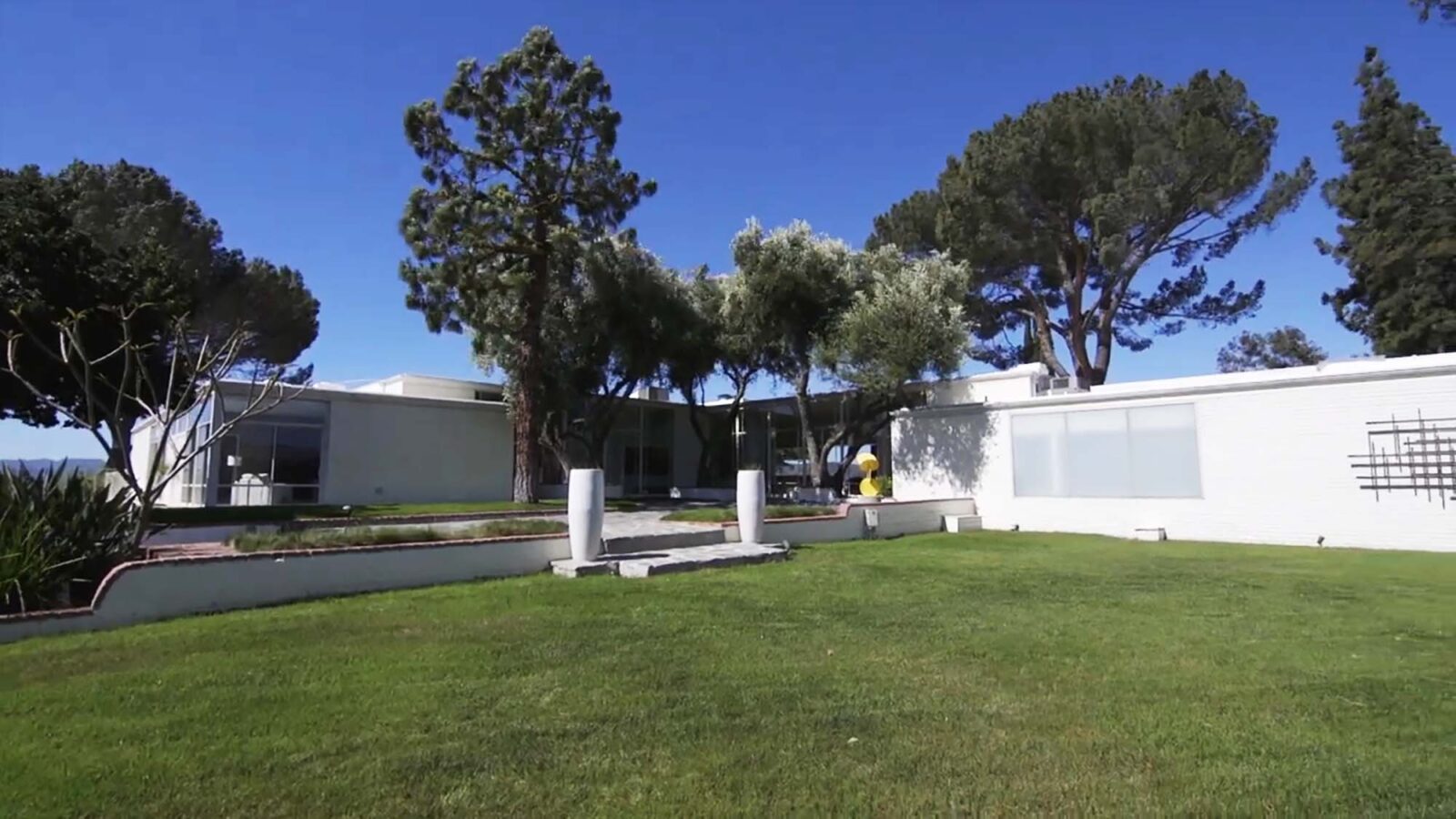
Farralone Estate has appeared in numerous films and television series, including Tomcats, Six Feet Under, Swordfish, The Salton Sea, Lords of Dogtown and more.