
Neuschwanstein Castle is a nineteenth-century Romanesque Revival palace situated on a rocky ridge above the village of Hohenschwangau in Schwangau, Bavaria, Germany, overlooking the Pöllat Gorge and the surrounding Alpine landscape. It was commissioned by King Ludwig II of Bavaria as a private retreat inspired by medieval German architecture, romantic literature and the operas of Richard Wagner, particularly Lohengrin and Tannhäuser. Initial designs were developed by theatrical set designer Christian Jank and adapted into architectural plans by Eduard Riedel, with Georg von Dollmann and Julius Hofmann subsequently overseeing different stages of construction. Work began in 1868, and the foundation stone was laid on 5 September 1869 on the remains of two earlier medieval fortifications. The gatehouse was completed in 1873, allowing Ludwig to occupy its upper rooms while construction continued on the main residential building, known as the Palas. Its elaborate interiors combined medieval-inspired decoration with contemporary technology, including central heating, running water, telephone connections and an innovative structural steel framework supporting the enormous Throne Hall. Other notable spaces include the richly decorated Singers’ Hall, Ludwig’s private bedroom and an artificial grotto inspired by Wagner’s Tannhäuser. Despite its medieval appearance, the palace was built primarily from brick faced with pale limestone rather than traditional castle masonry. Ludwig moved into the main building in 1884 but spent relatively little time there before his deposition and mysterious death at Lake Starnberg on 13 June 1886. The construction remained incomplete, with several planned towers and additional rooms never realised. Originally intended as an entirely private residence, the palace was opened to the public on 1 August 1886 and subsequently received the name Neuschwanstein. During the Second World War, the Nazis used parts of the building to store art and cultural objects looted from occupied European countries. Today, the castle is administered by the Bavarian Palace Department and remains one of Germany’s most recognisable architectural landmarks. In 2025, it was inscribed on the UNESCO World Heritage List alongside three other residences commissioned by Ludwig II.
Neuschwanstein Castle has appeared in Ludwig II (1955), Snow White and the Seven Dwarfs (1955), Snow White and Rose Red (1955), The Great Escape (1963), Chitty Chitty Bang Bang (1968), Ludwig (1973), Spaceballs (1987), BloodRayne (2005), The Hunt for the Nibelung Treasure (2008), Ludwig II (2012), The Monuments Men (2014) and The King’s Man (2021). Its cinematic appearances range from historical productions about the Bavarian monarch who commissioned it to fairy tales, fantasy adventures, war films and science-fiction comedies. In The Great Escape (1963), the castle is visible during an aerial escape towards Switzerland, while Chitty Chitty Bang Bang (1968) transforms it into the royal palace of Vulgaria and Spaceballs (1987) uses it as the residence of Princess Vespa. BloodRayne (2005) incorporates a less frequently photographed view of the building into its fictional Transylvanian landscape, while The Monuments Men (2014) recreates Neuschwanstein digitally for scenes concerning the recovery of art stolen during the Second World War.
In Ludwig II (1955), originally titled Ludwig II: Glanz und Ende eines Königs, Neuschwanstein Castle appears as itself in Helmut Käutner’s historical drama about the life and reign of King Ludwig II of Bavaria, played by O. W. Fischer. The film follows Ludwig from his accession to the throne in 1864 through his relationship with composer Richard Wagner, his growing isolation from political affairs and his increasingly expensive architectural ambitions. Neuschwanstein represents the culmination of the king’s attempt to withdraw from public life into an idealised medieval world of his own creation. Its historic exterior is incorporated into the later stages of the story, alongside Ludwig’s other royal residences at Hohenschwangau and Herrenchiemsee. The production was permitted to film at the real castle between August and October 1954, using its nineteenth-century architecture to reconstruct the final years of the monarch’s life. Additional interiors and supplementary material were filmed at Bavaria Studios in Munich.
In Snow White and the Seven Dwarfs (1955), originally titled Schneewittchen, Neuschwanstein Castle portrays the royal residence in Erich Kobler’s West German adaptation of the Brothers Grimm fairy tale. The film follows Snow White, played by Elke Arendt, whose jealous stepmother, played by Addi Adametz, orders a huntsman to kill her after learning that the young princess has surpassed her in beauty. The castle is introduced during the opening sequences, with its distinctive gatehouse and towers establishing the royal setting. One particularly identifiable shot was photographed from the square tower overlooking the gatehouse, showing trumpeters performing fanfares from one of its two circular staircase towers. The production incorporates Neuschwanstein’s actual architecture into the fictional kingdom, while the story subsequently moves into the surrounding countryside and forest as Snow White escapes and finds refuge with seven dwarfs. The film was produced by Schongerfilm, which used the castle again that year for another adaptation of a Brothers Grimm story.
In Snow White and Rose Red (1955), originally titled Schneeweißchen und Rosenrot, Neuschwanstein Castle once again represents a fairy-tale royal residence in a production directed by Erich Kobler. The story follows two sisters, played by Rosemarie Seehofer and Ursula Herion, who live with their widowed mother near a forest inhabited by a malicious dwarf. The castle serves as the home of two royal brothers, Prince Goldhaar, played by Niels Clausnitzer, and Prince Rittersporn, played by Dieter Wieland. After a dwarf attempts to steal the royal treasure, Goldhaar and Rittersporn pursue him, only for Goldhaar to be transformed into a bear. His eventual encounter with the two sisters becomes central to the story as they repeatedly assist the ungrateful dwarf without realising his connection to the missing prince. Neuschwanstein appears in several exterior sequences, including views of the castle approach, its inner courtyard and its distinctive silhouette above the surrounding landscape. The production also uses the real forested slopes around Schwangau, allowing the royal residence and the nearby fairy-tale woodland to form a geographically convincing setting. Following the dwarf’s defeat and the restoration of Goldhaar’s human form, the story concludes with the two princes marrying Snow White and Rose Red.
In The Great Escape (1963), directed by John Sturges, Neuschwanstein Castle appears during the escape attempt of American RAF pilot Robert Hendley, played by James Garner, and British flight lieutenant Colin Blythe, played by Donald Pleasence. Following the mass breakout from the German prisoner-of-war camp Stalag Luft III, the two men manage to steal a small German training aircraft, hoping to fly across the border into neutral Switzerland. Hendley takes control of the aircraft while Blythe, whose eyesight has deteriorated considerably during his imprisonment, assists him from the passenger seat. Their journey is shown through a series of spectacular aerial shots across southern Bavaria, including a clearly recognisable view of Neuschwanstein Castle and the neighbouring Hohenschwangau Castle beneath them. The aircraft passes the famous nineteenth-century palace as Hendley attempts to navigate through the mountainous landscape towards Switzerland. Their apparent success is short-lived when the aircraft begins experiencing engine trouble, eventually forcing Hendley to make an emergency landing. The aircraft crashes, leaving Blythe seriously injured, and the two men are subsequently discovered by German soldiers. Although Neuschwanstein is visible only briefly, the aerial footage provides a distinctive geographical reference during one of the film’s major escape sequences. Much of The Great Escape was filmed in Bavaria, with other locations around Füssen also used for the railway scenes and Steve McQueen’s motorcycle chase.
In Chitty Chitty Bang Bang (1968), directed by Ken Hughes and based on Ian Fleming’s children’s novel, Neuschwanstein Castle represents the imposing royal palace of the fictional kingdom of Vulgaria. The story follows eccentric inventor Caractacus Potts, played by Dick Van Dyke, who restores an old racing car and discovers that it possesses extraordinary abilities, including the power to float and fly. When Caractacus, Truly Scrumptious, played by Sally Ann Howes, and the Potts children become involved in a confrontation with agents of the tyrannical Baron Bomburst, played by Gert Fröbe, the adventure moves to Vulgaria, a kingdom where children have been outlawed. Neuschwanstein provides the exterior of Baron Bomburst’s palace, initially appearing when Grandpa Potts, played by Lionel Jeffries, is mistakenly kidnapped by the Baron’s agents and transported to the royal residence. Caractacus and his companions subsequently follow in their flying car, which passes above the castle in one of the film’s recognisable aerial sequences. The extraordinary silhouette of Neuschwanstein, with its pointed towers, enormous central building and isolated Alpine setting, establishes the kingdom’s royal stronghold. The subsequent palace sequences, including Grandpa’s imprisonment and his attempts to construct a flying automobile for the Baron, were largely filmed on elaborate studio sets inspired by the castle’s architecture. The film also used Rothenburg ob der Tauber for the surrounding Vulgarian town, combining two real Bavarian locations into a single fictional kingdom.
In Ludwig (1973), directed by Luchino Visconti, Neuschwanstein Castle appears as itself during the final stages of the historical drama about King Ludwig II of Bavaria, played by Helmut Berger. The film examines the monarch’s fascination with Richard Wagner, his complicated relationship with his cousin Empress Elisabeth of Austria, played by Romy Schneider, and his gradual retreat from politics and ordinary social life. Neuschwanstein forms an important part of Ludwig’s increasingly extravagant architectural ambitions, representing his desire to create a private medieval world removed from the restrictions of his constitutional position. The production made extensive use of authentic Bavarian royal residences, including Linderhof, Herrenchiemsee, Hohenschwangau and Neuschwanstein. The latter is particularly notable during the sequence in which Elisabeth and her lady-in-waiting, Countess Ida Ferenczy, travel between Ludwig’s increasingly elaborate residences in an unsuccessful attempt to find him. Their search takes them through Herrenchiemsee, Linderhof and Neuschwanstein, emphasising the king’s growing withdrawal from the people closest to him. Unlike productions that employ the building as an anonymous fairy-tale fortress, Visconti uses Neuschwanstein in its actual historical context, incorporating the architecture commissioned by Ludwig into a film about the man himself. Principal photography took place between January and June 1972, with additional interiors constructed at Cinecittà Studios in Rome.
In Spaceballs (1987), directed by Mel Brooks, Neuschwanstein Castle represents the royal palace of King Roland, played by Dick Van Patten, on the peaceful planet Druidia. Roland’s daughter, Princess Vespa, played by Daphne Zuniga, is preparing to marry the exceptionally dull Prince Valium, but has no desire to proceed with the arranged marriage. Accompanied by her robotic companion Dot Matrix, voiced by Joan Rivers, Vespa abandons the wedding and escapes in her Mercedes spacecraft, setting the film’s elaborate Star Wars parody in motion. Neuschwanstein establishes the home of the Druidian royal family, its romantic nineteenth-century architecture creating a deliberate contrast with the spacecraft, futuristic technology and absurd science-fiction politics surrounding the characters. The palace also becomes important when the villainous Dark Helmet, played by Rick Moranis, attempts to capture Vespa and force Roland to surrender the secret combination protecting Druidia’s planetary air supply. Although Neuschwanstein provides the recognisable royal exterior, the wedding ceremony and most of the character scenes were filmed separately in California. The castle’s appearance places a real Bavarian landmark within one of Mel Brooks’ most elaborate fictional universes.
In BloodRayne (2005), directed by Uwe Boll and based on the video game series, Neuschwanstein Castle appears approximately fourteen minutes into the film as part of its fictional eighteenth-century European landscape. The castle is introduced through a short exterior establishing shot photographed from an unusual angle, showing the pale southern façade with its triangular gable, stacked arcaded galleries and tall cylindrical tower rising beside a steep, wooded mountainside. The camera position obscures much of the larger palace behind the surrounding forest, making the building considerably less immediately recognisable than in its conventional postcard views. The shot appears immediately before a scene involving Viscount Elrich, played by Udo Kier, who summons a servant and begins dictating a letter to his estranged daughter Katarin, played by Michelle Rodriguez. Elrich discusses the declining strength of the vampire-hunting Brimstone Society and urges Katarin to cooperate with him in preventing the powerful vampire lord Kagan from acquiring the ancient talismans of Beliar. The conversation establishes Elrich’s interest in the supernatural artefacts and his increasingly questionable intentions towards both Brimstone and Kagan. Neuschwanstein’s appearance is distinct from Corvin Castle in Romania, which the production uses extensively as Kagan’s fortress, including during the film’s final confrontation. The brief Neuschwanstein establishing shot provides another piece of historic European architecture to the film’s fictional world, demonstrating how a relatively unfamiliar camera angle can make one of Germany’s most photographed buildings appear to be an entirely different castle.
In The Hunt for the Nibelung Treasure (2008), originally titled Die Jagd nach dem Schatz der Nibelungen, Neuschwanstein Castle becomes an important destination during a German television adventure film directed by Ralf Huettner. Archaeologist Eik Meiers, played by Benjamin Sadler, has spent years searching for the legendary treasure of the Nibelungs, a quest that previously resulted in the death of his wife. Together with museum curator Katharina Berthold, played by Bettina Zimmermann, and his friend Justus, played by Fabian Busch, he follows a series of historical clues connected to Charlemagne and the medieval Nibelung legend. After recovering part of Charlemagne’s skull from a reliquary in Aachen Cathedral, Eik discovers that the bone fragment contains a concealed clue leading to Neuschwanstein Castle. The investigation brings the group to Bavaria, where the unusual openings in the skull fragment direct their attention towards a nearby waterfall. Behind the falling water they discover a hidden cave, where additional clues and recovered relics can be assembled to reveal the location of the legendary treasure. The Neuschwanstein sequence links the nineteenth-century palace with the much older Germanic legends that fascinated Ludwig II and influenced its architectural design. The film was shot at several genuine German landmarks during August–October 2007, while the underwater cave sequences associated with the waterfall were constructed inside a swimming pool in Wiehl, equipped with a hydraulically adjustable floor.
In Ludwig II (2012), directed by Peter Sehr and Marie Noëlle, Neuschwanstein Castle once again portrays itself in a historical drama examining the life of the Bavarian monarch, played by Sabin Tambrea as a young man and Sebastian Schipper in his later years. The film follows Ludwig from his accession to the throne in 1864 through his growing fascination with Richard Wagner, played by Edgar Selge, his opposition to political developments within Germany and his increasingly isolated personal existence. Neuschwanstein becomes an important visual expression of Ludwig’s ambitions as he attempts to create a private architectural world inspired by medieval legends and Wagner’s music. The film incorporates the real castle during sequences dealing with its construction and the king’s later residence, including views of the courtyard and historic ceremonial interiors. Its Throne Hall and Singers’ Hall were also employed to represent royal spaces, although their appearances and functions were adapted to suit the film’s dramatic interpretation of events. The production combined photography at the authentic Bavarian royal residences with specially constructed interiors at Bavaria Studios in Geiselgasteig. Digital effects were used to recreate unfinished parts of Neuschwanstein, allowing the filmmakers to represent different stages of construction rather than simply photographing the building in its present condition. Principal photography took place between July and November 2011.
In The Monuments Men (2014), directed by George Clooney, Neuschwanstein Castle appears as one of the principal repositories of artwork stolen by the Nazis during the Second World War. The story follows a special Allied military unit composed of museum directors, art historians and other specialists tasked with locating and recovering cultural treasures before they can be destroyed or removed from occupied Europe. After French museum employee Claire Simone, played by Cate Blanchett, provides James Granger, played by Matt Damon, with detailed records of the German art thefts, she identifies Neuschwanstein as an important storage location in the Bavarian Alps. Members of the Monuments Men subsequently reach the castle and discover enormous quantities of stolen paintings, sculptures, furniture and other valuable objects. Among the recovered material are extensive inventories documenting the systematic seizure of private European art collections, many belonging to Jewish families persecuted by the Nazi regime. Sculptor Walter Garfield, played by John Goodman, recognises the importance of these documents and the urgency of recovering the collections before the advancing Soviet forces or retreating German troops can interfere. The sequence is based on Neuschwanstein’s actual wartime use as a storage facility for looted cultural property. Although the real castle was unavailable for principal photography, production designer Jim Bissell reconstructed its historic interiors at Studio Babelsberg, while visual-effects company MPC photographed the exterior and created a detailed digital model to extend the studio-built scenery. The resulting location combines a recreation of the authentic palace with digitally generated exterior architecture, allowing Neuschwanstein to portray an important episode from its own twentieth-century history.
In The King’s Man (2021), directed by Matthew Vaughn, Neuschwanstein Castle is used as the fictional residence of German Emperor Wilhelm II, played by Tom Hollander, during the film’s alternative interpretation of the political events leading to the First World War. The story centres on Orlando Oxford, Duke of Oxford, played by Ralph Fiennes, who discovers that a mysterious organisation is manipulating Europe’s rulers and deliberately encouraging international conflict. Among the monarchs involved are the closely related King George V of Britain, Tsar Nicholas II of Russia and Kaiser Wilhelm II of Germany, all portrayed by Hollander. Neuschwanstein appears in exterior views establishing the Kaiser’s residence, its distinctive towers and Alpine location providing a recognisable royal setting for the German storyline. The choice is historically inaccurate, as Neuschwanstein was a Bavarian royal property rather than an imperial German residence, but its imposing architecture fits the film’s deliberately theatrical presentation of European monarchy during the early twentieth century.

Königsplatz
Königsplatz is in Raumpatrouille, Wenn die tollen Tanten kommen, Derrick, Suspiria, Die zweite Heimat, Ein Vater zu Weihnachten, Fack ju Göhte 2 and Munich.
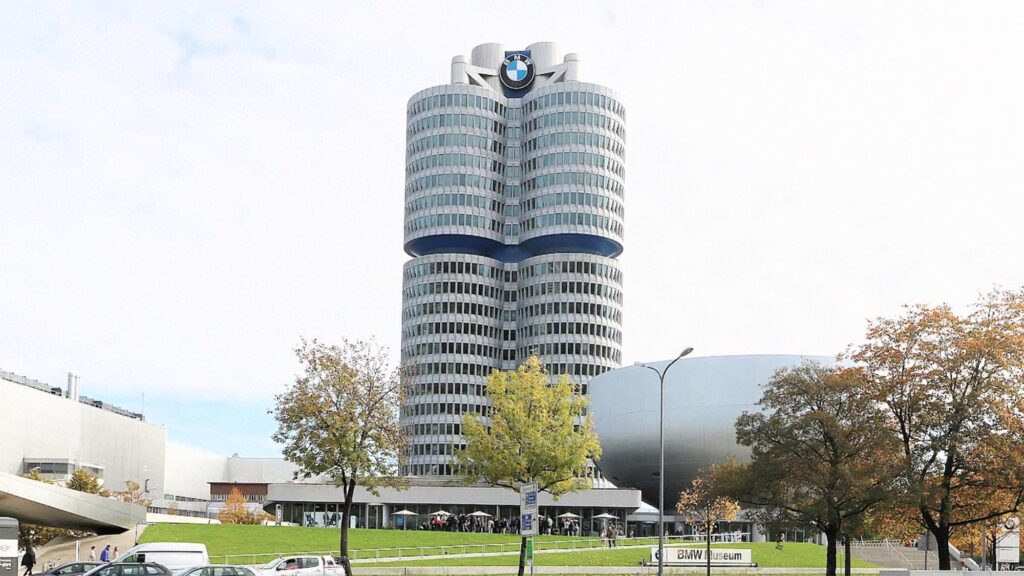
BMW Headquarters
BMW Headquarters, also known as the BMW Tower or BMW-Vierzylinder, is best known from Rollerball (1975) and Suspiria (1977).
The Dolder Grand
The Dolder Grand is a five-star luxury hotel at Kurhausstrasse 65 on the slopes of the Adlisberg above Zürich, Switzerland. The hotel…
Dolderbahn
Dolderbahn is a rack railway in Zürich, Switzerland, running from Römerhof in the Hottingen district to the Dolder area on the slopes…
Zürich Hauptbahnhof
Zürich Hauptbahnhof appeared in Kohlhiesels Töchter (1962), Assignment to Kill (1968), The Bourne Identity (1988) and The Girl with the Dragon Tattoo (2011).
Hohenwerfen Castle
Hohenwerfen Castle is in The Sound of Music, Where Eagles Dare, Kinderarzt Dr. Fröhlich, Scarecrow and Mrs. King, Frankenstein’s Aunt, The 10th Kingdom +++.
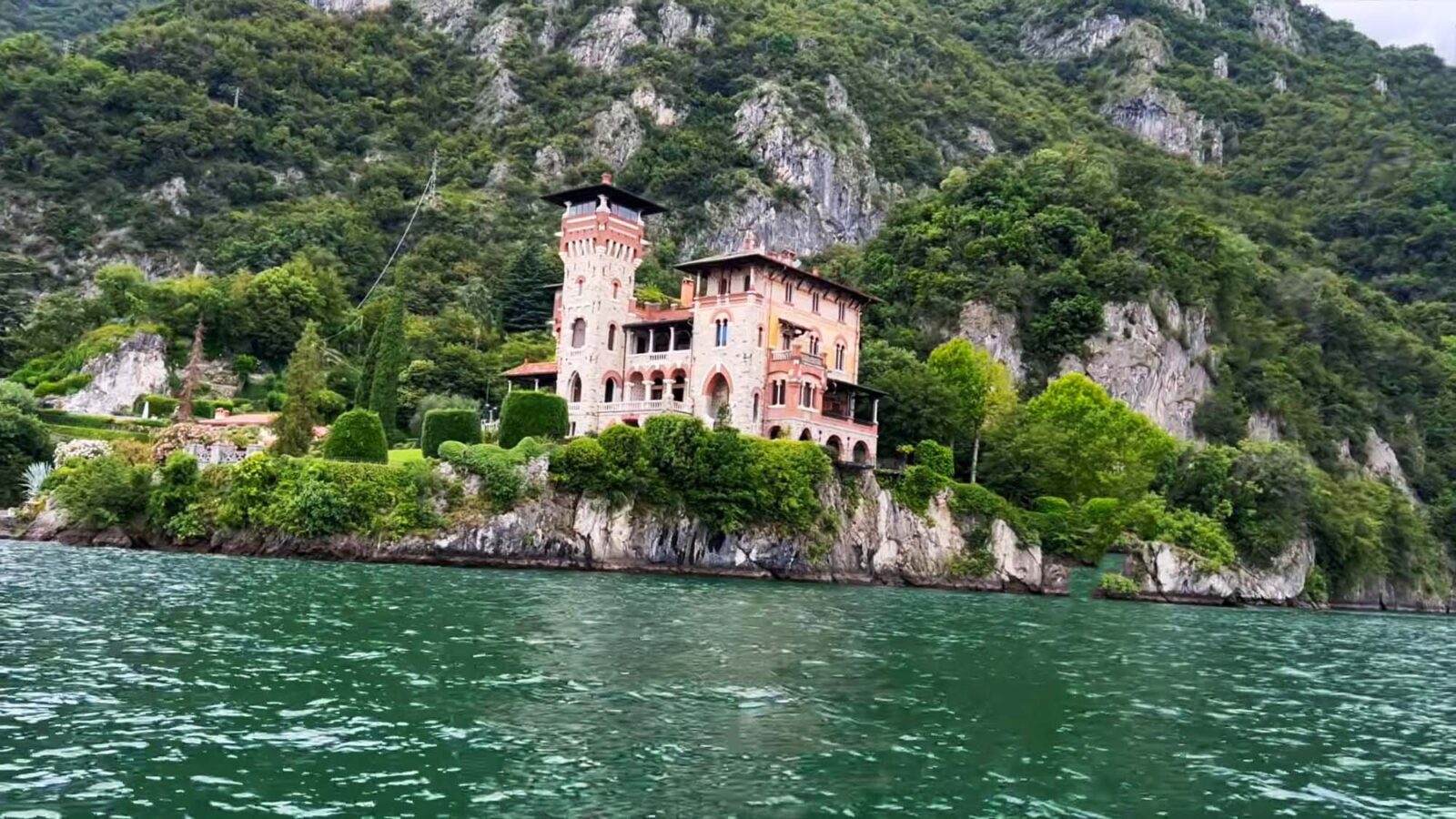
Villa La Gaeta
Villa La Gaeta, an early twentieth-century villa on the western shore of Lake Como, has appeared in The Final Contract (1993) and Casino Royale (2006).
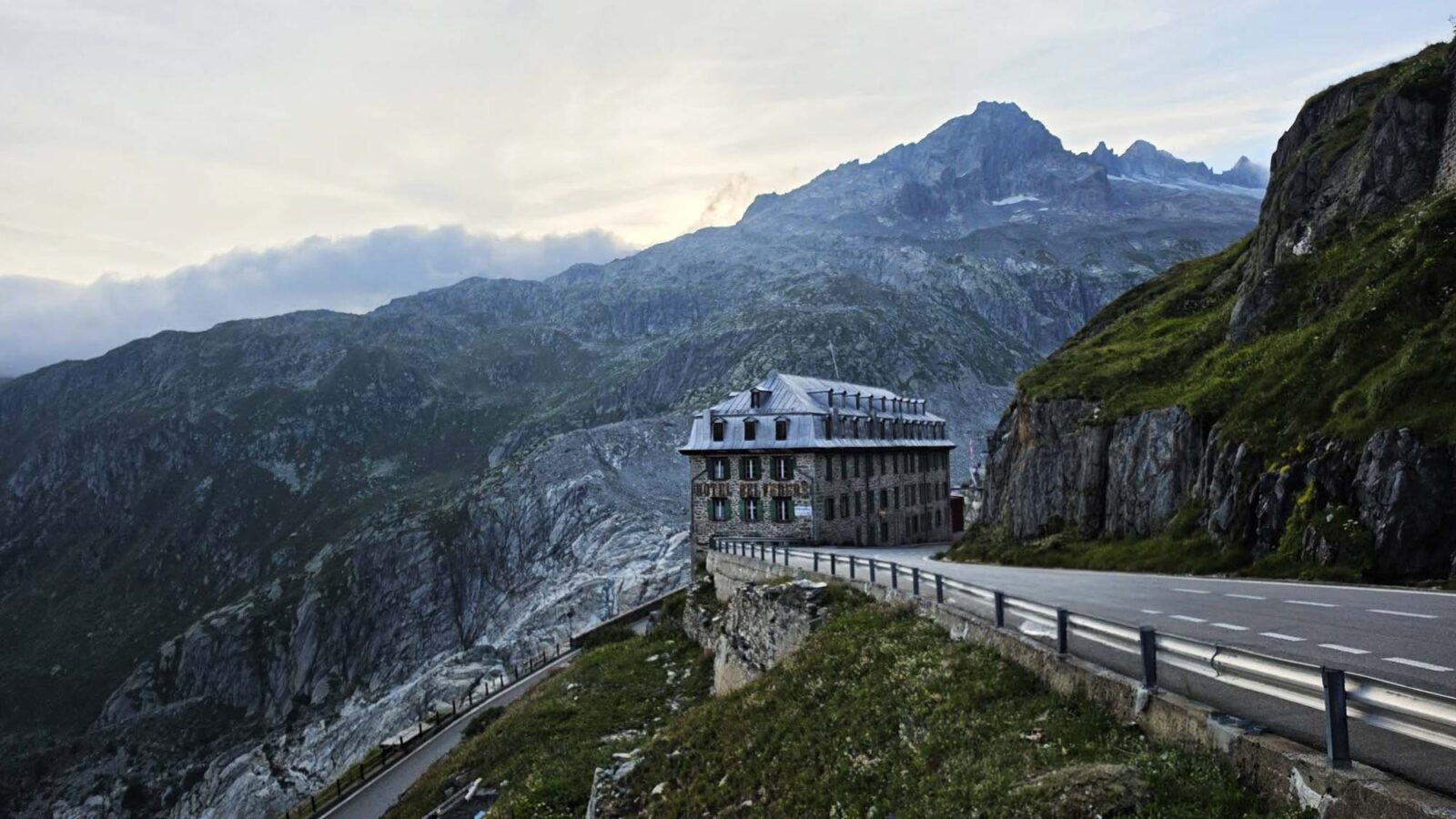
Furka Pass
Furka Pass is a high mountain pass in the Swiss Alps, and has appeared in Goldfinger (1964) and the short film Under the Ice (2024).

Villa del Balbianello
Villa del Balbianello has appeared in several films, most famously A Month by the Lake, Star Wars: Episode II – Attack of the Clones and Casino Royale.