
Beverly Hills City Hall is a historic municipal building at 455 North Rexford Drive in Beverly Hills, California, occupying a prominent position between Santa Monica Boulevard and Burton Way. Completed in 1932, it was designed by architects William J. Gage and Harry G. Koerner, with John C. Austin and Frederick M. Ashley serving as consulting architects. The building replaced an earlier city hall on Burton Way, which had become inadequate as Beverly Hills developed into one of Southern California’s wealthiest residential communities. In February 1930, nearly 2,000 residents signed a petition calling for the construction of a new civic centre, and voters subsequently approved a $1.1 million bond issue to finance the project. Construction began in 1931 on land previously owned by the Pacific Electric Railway, and the completed building opened on 25 April 1932. Its elaborate architecture combines Spanish Colonial Revival with California Churrigueresque decoration, particularly around the arched entrances, windows and ornamental tower. The eight-storey central tower is crowned by a dome covered in blue, turquoise and gold glazed tiles, while the white stucco exterior features intricate terracotta reliefs, wrought-iron window grilles and monumental bronze doors. The original interior included a grand entrance hall with terrazzo floors, marble detailing and a richly decorated coffered ceiling, together with a council chamber, municipal courtroom and government offices. Unusually, the building also accommodated the Beverly Hills Police Department, city jail, public library and an emergency hospital. At the time of its completion, the Los Angeles Times described it as the largest and most expensive city hall built by an American municipality of comparable size. During the 1980s, the city commissioned architect Charles Moore to develop an expanded Civic Center complex, which incorporated the historic building alongside new police, library and fire department facilities. The redevelopment, completed in 1992, introduced landscaped courtyards, colonnades and additional entrances while preserving the principal façades and tower. Further restoration followed, and the main public entrance was eventually moved to the Rexford Drive side. Beverly Hills City Hall was designated a local historic landmark in 2013 and remains the centre of the city’s municipal administration. Its distinctive exterior has appeared in numerous American films and television series, particularly as the headquarters of the Beverly Hills Police Department.
Beverly Hills City Hall has appeared in Destination Murder (1950), In a Lonely Place (1950), Beverly Hills Cop (1984), Beverly Hills Cop II (1987), Troop Beverly Hills (1989), The Beverly Hillbillies (1993), Beverly Hills Cop III (1994), Color of Night (1994), Arrested Development (2003–2019), The Bucket List (2007), Californication (2007–2014) and Beverly Hills Cop: Axel F (2024). Its best-known screen role is undoubtedly the headquarters of the Beverly Hills Police Department in the Beverly Hills Cop films, beginning with Axel Foley’s arrival in the city in 1984. The building had already appeared as a police station in the film noir productions Destination Murder and In a Lonely Place more than thirty years earlier. Troop Beverly Hills used the actual City Hall interior during a period when filming inside the building was rarely permitted, while The Beverly Hillbillies returned to the municipal setting for a comic misunderstanding involving the newly wealthy Clampett family. In Arrested Development, the surrounding grounds represent a courthouse during a confrontation between members of the Bluth family. The building returned to the Beverly Hills Cop series in 2024, with the historic exterior and neighbouring Civic Center once again representing the local police department.
In Destination Murder (1950), the film noir directed by Edward L. Cahn, Beverly Hills City Hall represents the police headquarters involved in the investigation of a wealthy businessman’s murder. The story begins when Arthur Mansfield is shot at his home by Jackie Wales, played by Stanley Clements, a hired killer disguised as a telegram deliveryman. Mansfield’s daughter Laura, played by Joyce MacKenzie, witnesses part of the attack and subsequently assists the police in attempting to identify the murderer. The municipal building appears as the police station where the investigation is conducted, including the sequence surrounding a line-up of suspects. Laura recognises Jackie as someone who may have been involved in her father’s death, but police lieutenant Brewster, played by James Flavin, is unable to establish sufficient evidence against him. Jackie is released, and Laura subsequently approaches him outside the police station without revealing her true identity. Their encounter becomes the beginning of her attempt to investigate the murder independently. The City Hall exterior provides the setting for the police headquarters, predating its much more famous use in the Beverly Hills Cop films.
In In a Lonely Place (1950), the film noir directed by Nicholas Ray, Beverly Hills City Hall appears in scenes involving Hollywood screenwriter Dixon Steele, played by Humphrey Bogart. Dixon becomes a suspect in the murder of Mildred Atkinson, a young woman who had visited his apartment shortly before she was killed. After being questioned by the police, he leaves the station through a side entrance of Beverly Hills City Hall. The camera shows him outside the building, with its original façade, windows and surrounding landscaping visible. The location is also seen during a separate scene involving the Beverly Hills Post Office, which stood directly across the street. Dixon leaves the post office, and the City Hall building is prominently visible behind him across the roadway. These exterior shots preserve the appearance of the municipal complex before the extensive alterations introduced during the late twentieth century. The original landscaped grounds and the relationship between the City Hall and Post Office can be seen in the film, although the surrounding area has since changed considerably. The former post office was later converted into part of the Wallis Annenberg Center for the Performing Arts.
In Beverly Hills Cop (1984), the action comedy directed by Martin Brest, Beverly Hills City Hall represents the headquarters of the Beverly Hills Police Department. Eddie Murphy stars as Axel Foley, an unconventional Detroit detective who travels to California to investigate the murder of his childhood friend Mikey Tandino, played by James Russo. Axel’s investigation quickly brings him into conflict with wealthy art dealer Victor Maitland, played by Steven Berkoff, whom he suspects of involvement in the killing. After confronting Maitland at his offices and refusing to leave, Axel is forcibly removed by security personnel and arrested by the Beverly Hills police. He is subsequently brought to the police station represented by City Hall, where his unorthodox behaviour immediately clashes with the department’s strict procedures. The exterior of the historic building, with its white stucco walls, ornate entrance and distinctive tower, establishes the headquarters where Axel encounters Lieutenant Andrew Bogomil, played by Ronny Cox, and detectives John Taggart and Billy Rosewood, played by John Ashton and Judge Reinhold. Bogomil initially regards Axel as a disruptive outsider and orders Taggart and Rosewood to keep him under surveillance. Axel repeatedly returns to the police department during his investigation, gradually developing a friendship with the two detectives despite their initial hostility towards him. The original City Hall exterior was used to represent the station, while the elaborate police interiors seen in the film were created separately. At the time of production, Beverly Hills City Hall still had a direct connection to the actual police department, which had historically occupied parts of the municipal building. The film’s success subsequently made the location one of the most recognisable fictional police headquarters in American cinema.
In Beverly Hills Cop II (1987), directed by Tony Scott, Beverly Hills City Hall returns as part of the police headquarters setting when Axel Foley, played again by Eddie Murphy, travels back to California. Axel learns that his friend Captain Andrew Bogomil, played by Ronny Cox, has been critically wounded by criminals connected to a series of elaborate robberies known as the Alphabet Crimes. Determined to identify those responsible, he reunites with detectives Billy Rosewood and John Taggart, played by Judge Reinhold and John Ashton, who are conducting their own investigation despite interference from their superiors. The police headquarters appears repeatedly as the detectives discuss the robberies, examine evidence and deal with the increasingly hostile Chief Harold Lutz, played by Allen Garfield. Beverly Hills City Hall was again used for exterior footage of the department, retaining the visual connection established in the original film. However, the production also used Pasadena City Hall at 100 North Garfield Avenue to represent the same police headquarters. Several exterior sequences feature Pasadena’s much larger civic building, while others return to the actual Beverly Hills location. The different buildings are combined through editing to create a single fictional police department. The principal office and interrogation scenes were filmed separately, rather than relying entirely on the interiors of either city hall.
In Troop Beverly Hills (1989), the comedy directed by Jeff Kanew, Beverly Hills City Hall was among the actual municipal buildings used during production. Shelley Long plays Phyllis Nefler, a wealthy Beverly Hills housewife who becomes the leader of a Wilderness Girls troop attended by her daughter Hannah, played by Jenny Lewis. Phyllis has little experience with traditional scouting activities and initially attempts to organise the girls according to the luxurious lifestyle to which she is accustomed. The City Hall location was used during the filming of scenes involving the Beverly Hills troop, including its early activities under Phyllis’s leadership. The production is particularly notable because the filmmakers obtained permission to shoot inside City Hall, ending a restriction on interior filming that had reportedly been in place for approximately thirty years. The American Film Institute’s production history specifically identifies this exception as one of the unusual arrangements made during filming in Beverly Hills. Other locations used around the city included the Beverly Hills Hotel, restaurants, shops along Rodeo Drive and several private estates.
In The Beverly Hillbillies (1993), the comedy directed by Penelope Spheeris and based on the popular television series, Beverly Hills City Hall represents the local police department during a misunderstanding involving the Clampett family. Jed Clampett, played by Jim Varney, has become extraordinarily wealthy after discovering oil on his property and moves to Beverly Hills with his relatives. Their unfamiliarity with Californian customs immediately causes problems when they arrive at their new mansion. Jane Hathaway, played by Lily Tomlin, initially mistakes the poorly dressed newcomers for intruders and telephones the Beverly Hills Police Department, demanding an immediate response. Police officers surround the house, believing that armed criminals have entered the property, only to discover that the supposed intruders are its legitimate owners. The incident subsequently brings the family into contact with the authorities at the Beverly Hills Civic Center, represented by City Hall. Bank president Milburn Drysdale, played by Dabney Coleman, arrives to resolve the misunderstanding and reassure Jed that the incident was a mistake. The sequence was filmed at the actual Civic Center, with the historic City Hall serving as the police headquarters. Contemporary reporting in the Los Angeles Times specifically identified this scene as one of the film’s Beverly Hills locations, noting that the movie made considerably more extensive use of the city than the original television series.
In Color of Night (1994), the psychological thriller directed by Richard Rush, Beverly Hills City Hall represents a Los Angeles police station during the investigation of a psychiatrist’s murder. Bruce Willis plays Dr Bill Capa, a New York psychologist who travels to Los Angeles after suffering a psychological breakdown following the suicide of one of his patients. He visits his friend Dr Bob Moore, played by Scott Bakula, who operates a group therapy practice, but becomes involved in a murder investigation when Moore is brutally stabbed to death. Approximately twenty-eight minutes into the film, Capa is taken to a police station for questioning. The exterior of Beverly Hills City Hall appears as a police vehicle arrives outside the building at night. Officer Anderson escorts Capa from the car and leads him into the station, where he is questioned by Lieutenant Hector Martinez, played by Rubén Blades. Martinez is particularly interested in the members of Moore’s therapy group, having discovered that the murdered psychiatrist believed one of his patients could be dangerous. Capa initially struggles to provide useful information, having only recently become involved with the group. The City Hall exterior establishes the police station, while the subsequent interrogation takes place in a modern interior with glass partitions and functional office furnishings. The scene was filmed during the production’s Los Angeles location work in 1993.
In Beverly Hills Cop III (1994), directed by John Landis, Beverly Hills City Hall again represents the police headquarters when Axel Foley returns to California for a third investigation. The story begins after Axel’s superior, Inspector Douglas Todd, played by Gilbert R. Hill, is murdered during a police operation in Detroit. Evidence leads Axel to a California amusement park called Wonder World, where he suspects that members of the security department are involved in criminal activities. After arriving in Beverly Hills, Axel visits the police department and reunites with his friend Billy Rosewood, played by Judge Reinhold. Rosewood has been promoted to a senior position and now works with detective Jon Flint, played by Héctor Elizondo, who has replaced the retired John Taggart. The police headquarters scenes establish Axel’s renewed involvement with the Beverly Hills department as he seeks assistance with the investigation. Beverly Hills City Hall supplies the exterior of the fictional police station, while Rosewood’s office and other interior scenes were filmed on studio sets. The historic building is therefore one of the few locations linking the original Beverly Hills Cop trilogy, despite the substantial changes in cast, directors and principal filming locations between the films.
In Arrested Development (2003–2019), the comedy series created by Mitchell Hurwitz, Beverly Hills City Hall appears in «Righteous Brothers» (2005), the eighteenth and final episode of the second season. The building represents a courthouse where Michael Bluth, played by Jason Bateman, is facing legal trouble following another of his family’s elaborate attempts to conceal the activities of his father, George Bluth Sr., played by Jeffrey Tambor. Michael’s brother Gob, played by Will Arnett, has attempted to shift responsibility for their father’s disappearance onto Michael, resulting in his arrest. When Gob subsequently discovers that George Sr. has escaped from his hiding place, he races to the courthouse to warn his brother. Michael is furious when he realises that Gob’s deception could leave him facing imprisonment, and the two begin fighting on the grass outside the building. Their confrontation attracts other members of the family, including Tobias Fünke, played by David Cross, who arrives with news of his plans to move to Las Vegas with Kitty Sanchez, played by Judy Greer. Lindsay Bluth, played by Portia de Rossi, attempts to intervene but is knocked down during a separate confrontation with Kitty. As the fighting escalates, George Sr. unexpectedly appears and lectures his sons about the importance of family loyalty. He announces that he intends to surrender to the authorities, apparently bringing the dispute to an end. However, he has secretly arranged for his identical twin brother Oscar to be mistaken for him, allowing George Sr. to escape once again. The confrontation was filmed on the lawn outside Beverly Hills City Hall, with the building representing the courthouse. Its grounds and monumental architecture are visible as the Bluth family’s attempts to resolve their legal problems descend into another chaotic argument.
In The Bucket List (2007), the comedy-drama directed by Rob Reiner, Beverly Hills City Hall represents the County of Riverside Board of Supervisors. The film stars Jack Nicholson as Edward Cole, a wealthy hospital owner who discovers that he has terminal cancer, and Morgan Freeman as Carter Chambers, a mechanic undergoing treatment for the same illness. The two men initially meet when they are placed in the same hospital room, a consequence of Edward’s own insistence that patients should share accommodation regardless of their financial circumstances. The municipal building was used to represent the county government offices, with its formal exterior providing a suitably authoritative setting for the public administrative institution. The appearance is comparatively brief, and the building is not one of the film’s principal dramatic locations.
In Californication (2007–2014), the comedy-drama created by Tom Kapinos, Beverly Hills City Hall appears in «The Great Ashby» (2008), the second episode of the second season. David Duchovny plays Hank Moody, a troubled novelist whose personal and professional life is repeatedly complicated by his drinking, relationships and impulsive behaviour. Following an altercation with a police officer, Hank is arrested and taken into custody. Beverly Hills City Hall is used as the exterior police station location connected to his detention. While in jail, Hank encounters Lew Ashby, played by Callum Keith Rennie, a wealthy and eccentric record producer whose past exploits have made him a notorious figure in the Los Angeles music industry. Ashby is fascinated by Hank’s reputation as a writer and proposes that he write his biography. Hank initially refuses the offer, but Ashby eventually arranges for both men to be released on bail, beginning a professional relationship that becomes a major storyline throughout the season. The appearance of City Hall establishes the municipal setting for Hank’s arrest, while the principal jail conversations take place inside the detention facility.
In Beverly Hills Cop: Axel F (2024), the fourth film in the series, directed by Mark Molloy, Beverly Hills City Hall returns as the headquarters of the Beverly Hills Police Department forty years after the original film. Eddie Murphy reprises his role as Axel Foley, who travels back to California after learning that his estranged daughter Jane Saunders, played by Taylour Paige, is in danger. Axel’s investigation leads him into conflict with members of the local police department, where his longtime friend John Taggart, played by John Ashton, has become police chief. After being arrested following a pursuit through Rodeo Drive, Axel is brought to the department and meets detective Bobby Abbott, played by Joseph Gordon-Levitt, as well as Captain Cade Grant, played by Kevin Bacon. The historic City Hall exterior once again represents the police headquarters, while the surrounding Beverly Hills Civic Center provides additional locations for the production.
The area becomes particularly important during the sequence in which Axel and Abbott escape police custody and steal a helicopter. Abbott reluctantly takes control of the aircraft despite his limited flying experience, and the two fly dangerously low through the streets of Los Angeles. Their chaotic flight eventually brings them back towards the Beverly Hills Police Department, where Taggart watches the situation unfold. Captain Grant also arrives and attempts to stop them, further exposing his involvement in the criminal conspiracy Axel has been investigating. The sequence makes use of the surrounding Civic Center and nearby streets, including an exterior area beside the police facilities. The helicopter eventually crashes on a golf course after passing through the city. Production designer Jahmin Assa confirmed that the filmmakers returned to the actual Beverly Hills City Hall and surrounding streets for exterior filming, while constructing the police station interiors on a soundstage. The production therefore preserves the visual connection between the original 1984 film and its much later sequel, with the same historic municipal building continuing to represent Axel Foley’s familiar Beverly Hills police headquarters.

Beverly Hills Cop
Beverly Hills Cop was shot partly in Michigan but mostly in and around Los Angeles, with that geographical split reflecting the story itself.

O’Neill House
The O’Neill House is best known as a filming location in two feature films: Breathless (1983) and 8 Million Ways to Die (1986).

The Viper Room
The Viper Room appears in Valley Girl (1983), The Doors (1991), Be Cool (2005), Daisy Jones & the Six (2023), and Walking the Edge (1985).

Johnie’s Coffee Shop
Johnie’s Coffee Shop is in Midnight Madness, Miracle Mile, Reservoir Dogs, Volcano, City of Angels, The Big Lebowski, American History X and Gone in 60 Seconds.
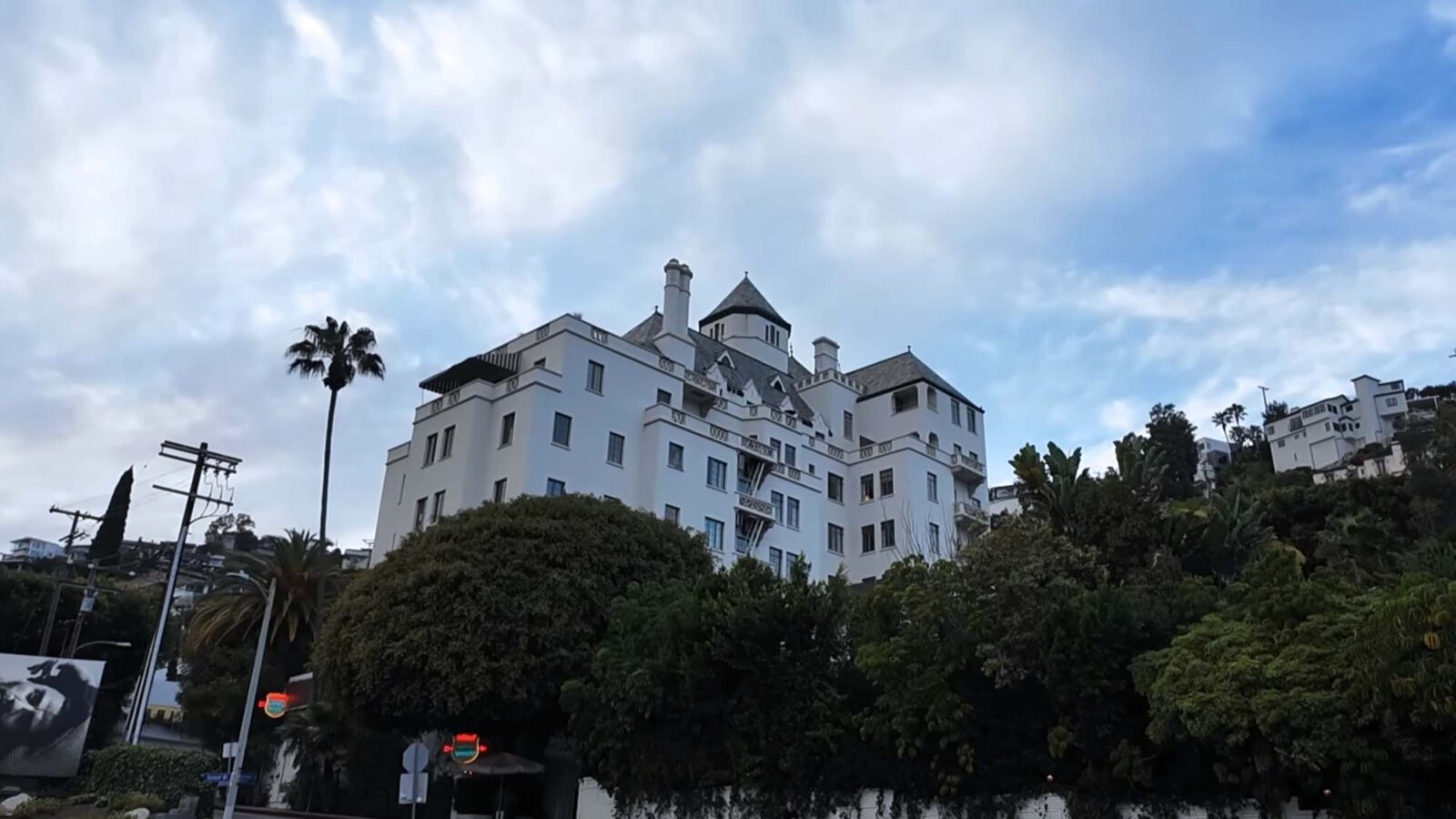
Chateau Marmont
Chateau Marmont is in The Strip, The Night Walker, Myra Breckinridge, Blume in Love, Barfly, The Doors, Dangerous Game, Four Rooms, Modern Vampires and more.

Griffin Club Los Angeles
Griffin Club Los Angeles appears in the dark comedy thriller series Based on a True Story, where it is used as the private club attended by the characters.
West Los Angeles VA Medical Center
The West Los Angeles VA Medical Center and its surrounding campus have appeared in Block-Heads, Brainstorm, Little Big Man, Police Woman and many more.
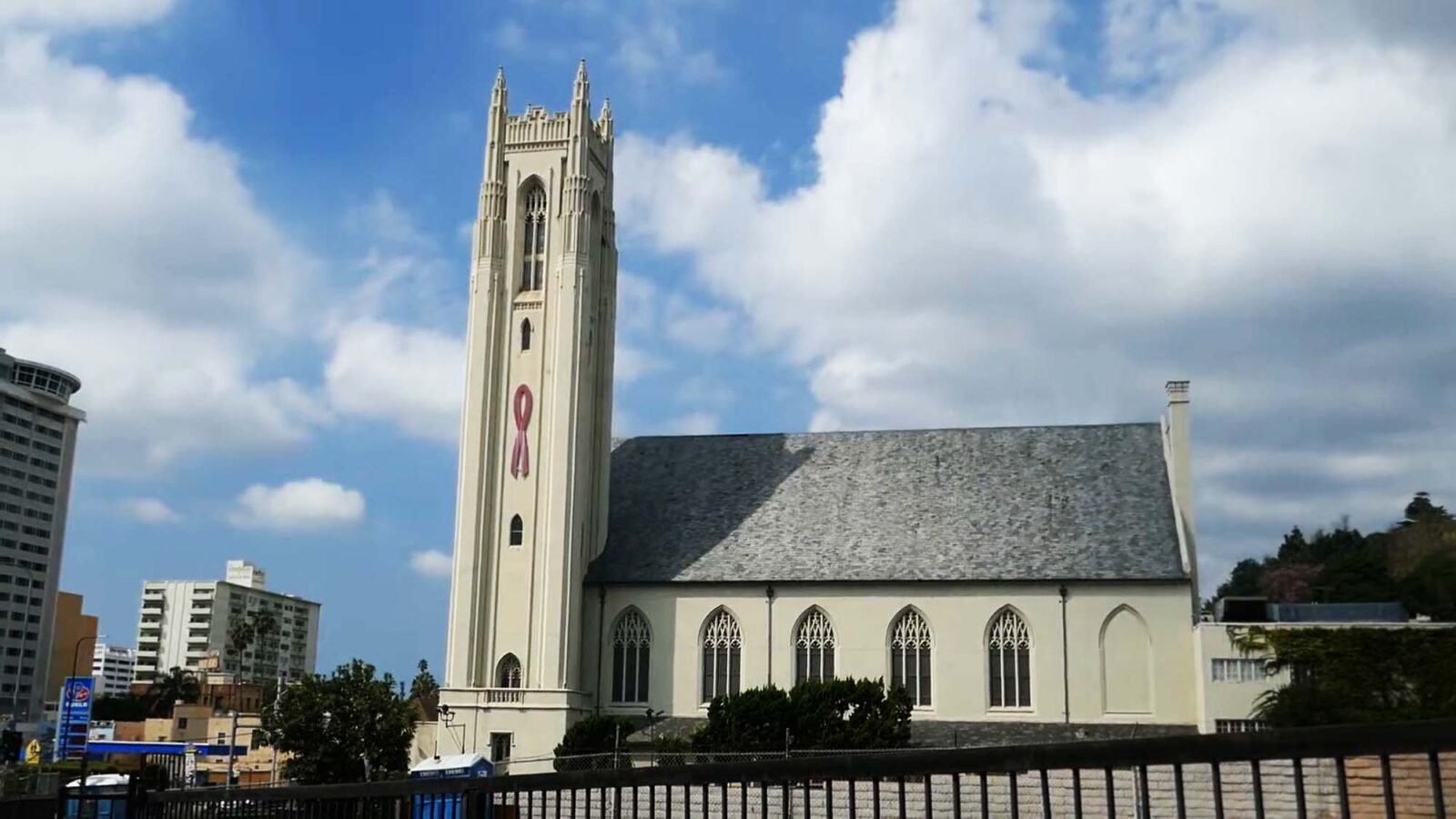
Hollywood United Methodist Church
Hollywood United Methodist Church is in What Price Hollywood?, Imitation of Life, Back to the Future, Back to the Future Part II, Sister Act and many more.

Garcia House
Garcia House has appeared in such movies as Out of Sight (1966) and Lethal Weapon 2 (1989).

Musso & Frank Grill
Musso & Frank Grill is in Ed Wood, Swingers, Sex and the City, Ocean's Eleven, The Man Who Wasn't There, Hollywood Homicide, Charlie's Angels: Full Throttle +++