
Washington Square Park is a 9.75-acre public park at the heart of Greenwich Village, Manhattan, centred on its famous fountain and the Washington Square Arch at the southern end of Fifth Avenue. Long before becoming a park, the site had a much darker history. From the late 18th century it served as a potter’s field for the poor, unidentified dead and victims of New York’s yellow fever epidemics, and more than 20,000 people are estimated to remain buried beneath the grounds. The cemetery was closed and converted into the Washington Military Parade Ground in 1826, with the surrounding land officially established as a public square the following year. Washington Square gradually developed into a landscaped park during the 19th century and was substantially redesigned in 1870 with curving paths and a central fountain. Its defining monument came later. Stanford White designed a temporary arch in 1889 to mark the centenary of George Washington’s inauguration as president, and its popularity led to the permanent marble Washington Square Arch, formally dedicated in 1895. During the 20th century the park became closely associated with Greenwich Village’s writers, artists, political activists and musicians, while residents including Jane Jacobs successfully fought plans by Robert Moses to run a roadway through it. The park became fully car-free in 1958, helping turn the fountain plaza, chess tables, paths and arch into the lively public gathering place seen today.
Washington Square Park has appeared in Barefoot in the Park (1967), When Harry Met Sally… (1989), Ghostbusters II (1989), Searching for Bobby Fischer (1993), Fresh (1994), Kids (1995), A Perfect Murder (1998), The Astronaut’s Wife (1999), I Am Legend (2007), August Rush (2007), Inside Llewyn Davis (2013) and The Marvelous Mrs. Maisel (2017–2023). These represent only a selection from a very long screen history, but they show how differently filmmakers have used the park: as a romantic meeting place, a centre of New York street chess and skate culture, an abandoned post-apocalyptic landscape, the setting for supernatural chaos and even as an important part of characters’ personal histories. The superhero fight scene set in Washington Square Park for Avengers: Infinity War was actually not filmed in New York City, but was instead created using CGI and shot in Atlanta, Georgia.
In Barefoot in the Park (1967), Washington Square Park provides the location behind both the film’s title and one of its final reversals. Free-spirited newlywed Corie Bratter complains that her husband Paul is so cautious and conventional that he would not even walk barefoot with her through Washington Square Park on a freezing night. Their differences lead to an argument and Corie demanding a divorce. The following day, however, Paul gets drunk and decides to prove that he can be every bit as reckless as she wants. Corie eventually finds him in Washington Square Park, coatless, intoxicated and running around barefoot despite the bitter cold. The usually impulsive Corie suddenly becomes the sensible one, trying to persuade him to stop before he makes himself seriously ill. The park scene neatly turns their personalities around and gives literal meaning to a phrase that has been hanging over their argument for much of the story.
In When Harry Met Sally… (1989), Washington Square Park marks both Harry Burns and Sally Albright’s arrival in New York and, eleven years later, a turning point in their relationship. After sharing the long drive from Chicago, Sally drops Harry beside the Washington Square Arch. They awkwardly say goodbye beneath the monument after concluding that men and women cannot really be friends, expecting that they will probably never see each other again. In the shot approaching the arch, the World Trade Center towers can be seen framed through it in the distance. The location returns near the end of the film on New Year’s Eve. Harry walks through Washington Square, remembers that first goodbye with Sally and looks up at the arch before suddenly breaking into a run. His route eventually takes him to the party where Sally is spending New Year’s Eve, leading to his declaration that he wants to spend the rest of his life with her. The same place that once appeared to mark the end of their acquaintance therefore becomes part of Harry’s realisation that he cannot let her go.
In Ghostbusters II (1989), Washington Square Park is caught up in the supernatural chaos spreading across New York on New Year’s Eve. As the river of negatively charged slime beneath Manhattan causes paranormal activity throughout the city, terrified pedestrians flee from the Washington Square Arch as an enormous ghost strides beneath it. The brief sequence was actually a late addition to the film following test screenings, when the filmmakers decided that the final act needed a stronger sense that the entire city was being overwhelmed by paranormal events. Background footage was shot at Washington Square Park in March 1989, with a call originally going out for only a few hundred extras. Word that Ghostbusters II was filming there spread quickly, however, and by later takes thousands of people had gathered. They were directed to run screaming from the arch while the giant creature itself was added separately through stop-motion effects.
In Searching for Bobby Fischer (1993), Washington Square Park’s real chess culture becomes an important part of young Josh Waitzkin’s discovery that he has an extraordinary talent for the game. Josh is fascinated by the speed-chess players gathered around the permanent tables in the southwest corner of the park and repeatedly convinces his mother Bonnie to take him there. He eventually plays against one of the park hustlers for money, and although he loses the game, Bonnie is astonished to discover how much he understands despite never having received formal instruction. It is also here that they meet Vinnie Livermore, played by Laurence Fishburne, whose aggressive, instinctive approach to chess becomes an alternative to the disciplined methods later taught by Josh’s formal instructor Bruce Pandolfini. Many of Vinnie’s scenes were filmed at the real Washington Square tables, making the park central to the film’s contrast between street chess and organised competition.
In Fresh (1994), the same Washington Square Park chess tables take on a much darker role. Twelve-year-old Michael, known as Fresh, secretly meets his estranged father Sam in the park, where the older man earns money playing chess and teaches his son how to think several moves ahead. Fresh also plays other hustlers there, gradually becoming better at reading both the board and his opponents. Sam repeatedly pushes him to stop worrying about individual pieces and concentrate on the larger objective of taking the king. Those lessons eventually become the blueprint for the boy’s real life. Trapped between rival drug dealers and desperate to protect both himself and his addicted sister, Fresh begins manipulating the criminals around him in much the same way he has learned to move pieces across a chessboard. The recurring park scenes therefore provide much more than character background: they quietly explain the strategy behind everything Fresh later does.
In Kids (1995), Washington Square Park is used as the natural meeting place for Telly, Casper and their circle of teenage skateboarders. They gather around the fountain and arch, skating, drinking, smoking and socialising in a sequence that initially feels almost documentary-like. The mood turns violent after Casper accidentally crashes into a passing man while skateboarding. An argument begins, Harold strikes the man with a skateboard and the rest of the group joins in, brutally beating him as he lies on the pavement. Casper eventually delivers another blow with his board before the teenagers casually move on. The park was particularly significant to the production because director Larry Clark had encountered much of the real downtown skateboard culture there, and several people associated with the film came directly from that world. The result is one of Kids’ most disturbing scenes, but also one of the sequences that most strongly captures the particular Manhattan street culture the film was trying to portray.
In A Perfect Murder (1998), Washington Square Park becomes the meeting place for Steven Taylor and David Shaw after David turns the tables on the man who hired him to murder Emily. David has secretly recorded an earlier conversation in which Steven offered him $500,000 to kill his wife, and after the murder attempt fails he uses the recording to blackmail him. The two specifically agree to meet at Washington Square Park, making the location part of the dialogue before it appears on screen. Steven arrives carrying the money and walks through the park before David approaches him from behind, jokingly asking whether he can spare $400,000. Steven hands over the cash and David gives him a copy of the incriminating recording, believing that he has finally secured both his money and his escape. He then heads for Penn Station to catch a train to Montreal, unaware that Steven has already worked out how to deal with him. Their seemingly straightforward exchange in the relaxed surroundings of Washington Square Park therefore leads directly into one of the film’s most important twists.
In The Astronaut’s Wife (1999), Washington Square Park appears late in the story as Jillian Armacost becomes increasingly terrified of what has happened to her husband Spencer following his unexplained loss of contact during a space mission. After escaping from the hospital, Jillian makes her way back towards their Manhattan apartment. She crosses Washington Square Park early in the morning, alone in the nearly empty winter landscape, while sensing that she is being watched. She eventually sees Spencer at the opposite side of the park. He begins approaching her, and Jillian immediately runs towards her apartment building with Spencer following. The open space of the park makes the sequence particularly effective: rather than being able to disappear into crowded Manhattan streets, Jillian can see the man she fears coming towards her from a considerable distance with nowhere obvious to hide.
In I Am Legend (2007), Washington Square Park becomes part of Robert Neville’s tiny surviving world in an otherwise abandoned Manhattan. Neville lives with his German Shepherd Sam in a heavily fortified townhouse at 11 Washington Square North, directly opposite the park and only a short distance from the Washington Square Arch. The house exterior appears repeatedly as Neville returns from his daylight trips around the city and seals himself inside before darkness brings the infected onto the streets. Washington Square itself is shown eerily empty and increasingly reclaimed by nature, turning one of Manhattan’s normally busiest public spaces into a symbol of just how completely New York has been depopulated. The production filmed extensively around the real park and Washington Square North, with the familiar arch appearing in several views around Neville’s home. Interior scenes inside the fortified house were created elsewhere, but the real Greenwich Village location establishes where Neville lives and gives his isolation a particularly unsettling contrast with the park’s normally crowded character.
In August Rush (2007), Washington Square Park is woven through several generations of the story. Years before Evan Taylor arrives in New York, his parents Lyla Novacek and Louis Connelly fall in love after meeting in the city, and Louis later waits for Lyla near the Washington Square Arch after they promise to meet again. She never arrives, unaware that her father is deliberately keeping them apart. Eleven years later their son Evan, who has grown up believing that music will somehow lead him back to his parents, reaches New York and encounters young street musician Arthur playing guitar in Washington Square Park. This meeting eventually brings Evan into the group controlled by Wizard, who recognises his extraordinary musical ability, gives him the name August Rush and sends him out to perform. The park returns near the end when August encounters Louis without either knowing that they are father and son. The two sit down with guitars and spontaneously play together, forming an instinctive musical connection before separating again. Few films have used Washington Square Park so repeatedly or tied it so closely to the central idea of the story.
In Inside Llewyn Davis (2013), Washington Square Park provides the setting for one of Llewyn Davis’s more uncomfortable conversations with Jean Berkey. Jean has discovered that she is pregnant and believes that Llewyn may be the father rather than her boyfriend Jim. Sitting with him in the park, she angrily explains the situation and makes it clear that she wants Llewyn to pay for an abortion. Llewyn, already broke and moving from one friend’s couch to another, now has another problem he has neither the money nor emotional maturity to deal with. Using Washington Square is particularly appropriate for the film’s early-1960s Greenwich Village setting. The real park was a major gathering place for folk musicians during precisely the period in which the fictional Llewyn is struggling to build a career, allowing the conversation to unfold in a location that genuinely belonged to the world the Coen brothers were recreating.
In The Marvelous Mrs. Maisel (2017–2023), Washington Square Park appears in the season-one episode “The Disappointment of the Dionne Quintuplets” (2017), where the series incorporates a real chapter from Greenwich Village history. Midge Maisel happens upon a protest against plans to allow a major roadway through Washington Square Park, a fictionalised version of the campaign in which neighbourhood activist Jane Jacobs helped fight Robert Moses’s proposals for the area. Midge initially knows little about the cause, but she is pulled into the gathering and eventually invited to speak. Once behind the microphone, she quickly turns the moment into an improvised speech that draws on her own experiences and growing confidence as a performer. The scene was filmed in the real park with the Washington Square Arch behind the rally, giving the series a direct visual connection to the neighbourhood activism that helped preserve the park in its present form.

I Am Legend
I Am Legend (2007) is an American post-apocalyptic science-fiction horror film directed by Francis Lawrence, based on Richard Matheson’s 1954 novel. Will…
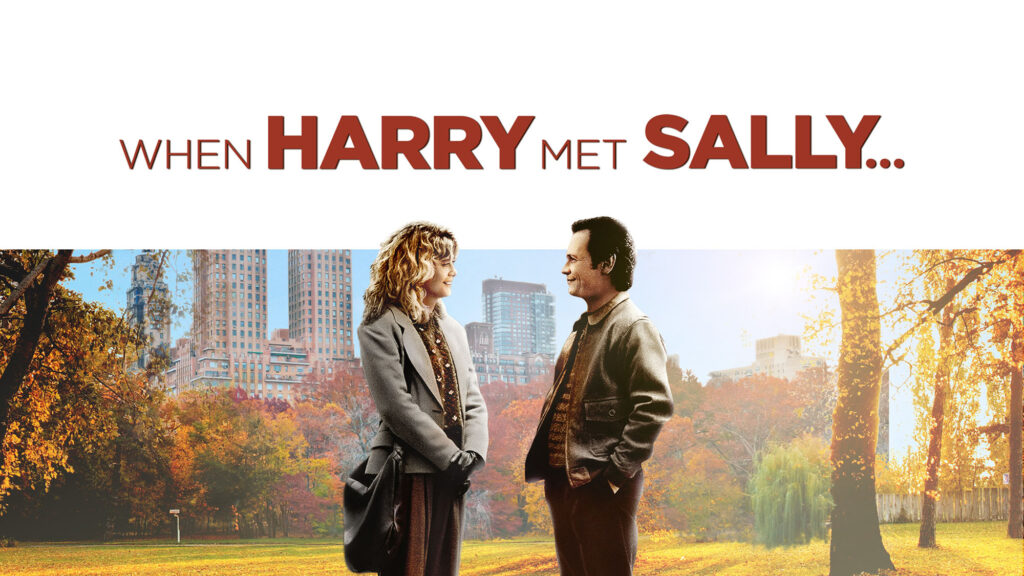
When Harry Met Sally…
When Harry Met Sally… is strongly associated with New York City, and it uses the city as more than a postcard backdrop.

Thomas Suffern House
Thomas Suffern House has appeared in I Am Legend (2007), where its exterior represents the fortified Greenwich Village home of Dr Robert Neville.
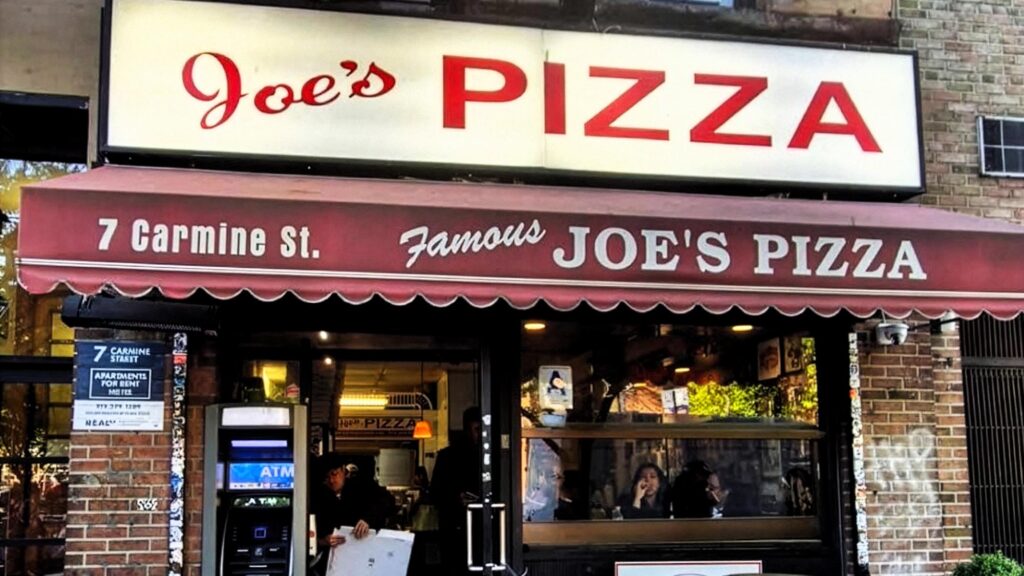
Joe’s Pizza
Joe’s Pizza appears in Spider-Man 2 (2004), Seinfeld (1989–1998), Along Came Polly (2004), and Sex and the City. It is most famous on screen from Spider-Man 2.

Raoul’s
Raoul’s has appeared in Addicted to Love, A Perfect Murder, The Departed, The Nanny Diaries, Sex and the City, Devoured and Homeland.
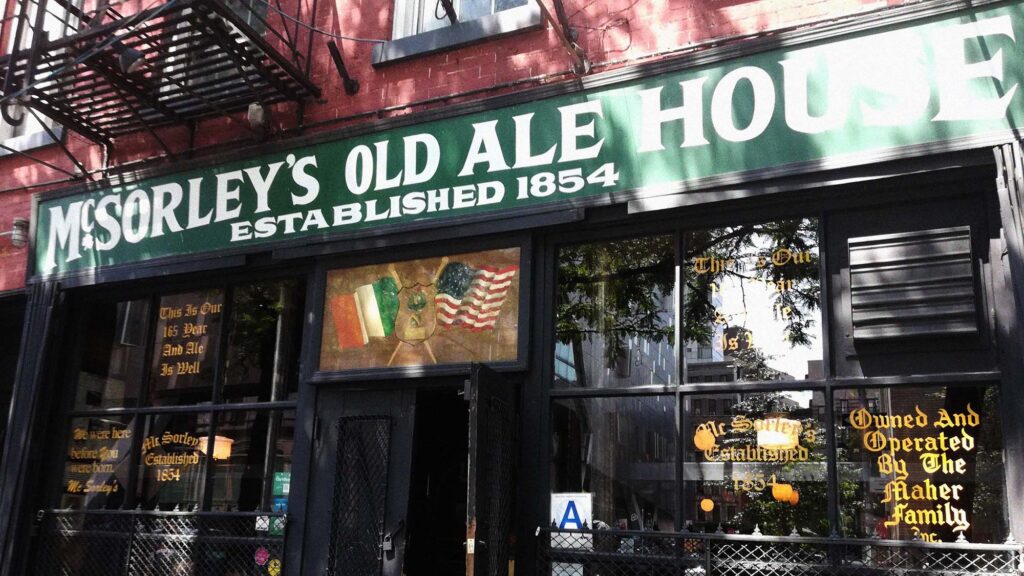
McSorley’s Old Ale House
McSorley’s Old Ale House has appeared in Once Upon a Time in America (1984), The Hard Way (1991), Rounders (1998), The Marvelous Mrs. Maisel and Dash & Lily.
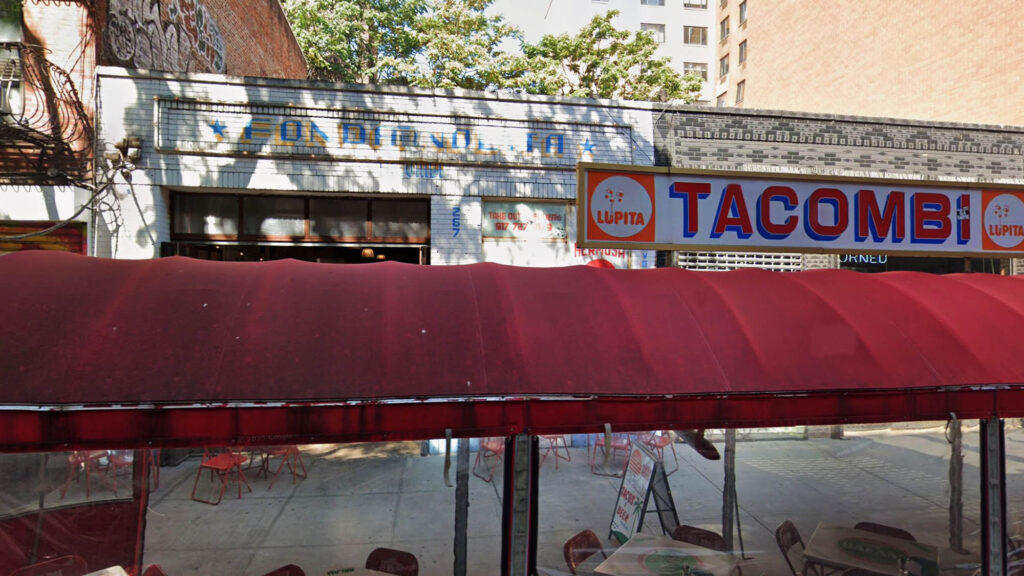
Tacombi Nolita
Tacombi Nolita appears in The Jim Gaffigan Show (2015–2016). It is in Season 2, Episode 3, “Ugly,” and places the scene at 267 Elizabeth Street.
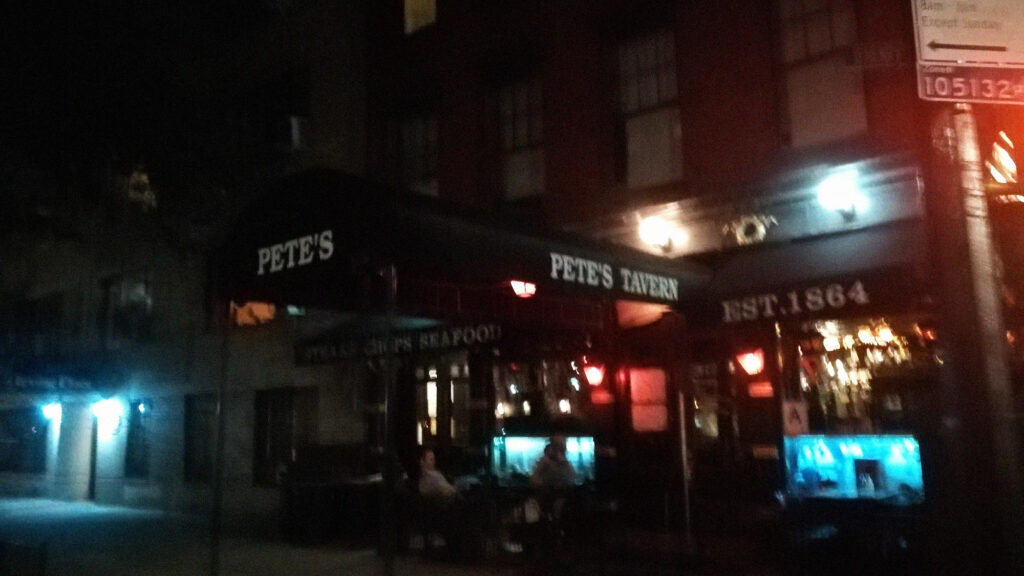
Pete’s Tavern
Pete’s Tavern appears in Two for the Seesaw (1962), Seinfeld (1989–1998), Rounders (1998), Sex and the City (1998–2004), and several other productions.
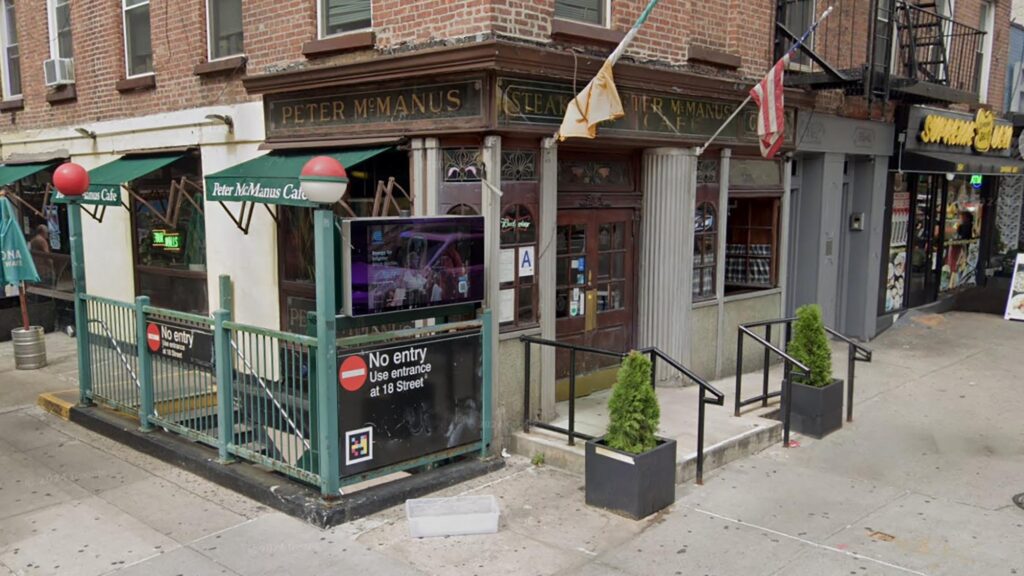
Peter McManus Cafe
Peter McManus Cafe appears in Highlander, Radio Days, Keeping the Faith, The Other Guys, Seinfeld, Law & Order, Saturday Night Live, and Broad City.
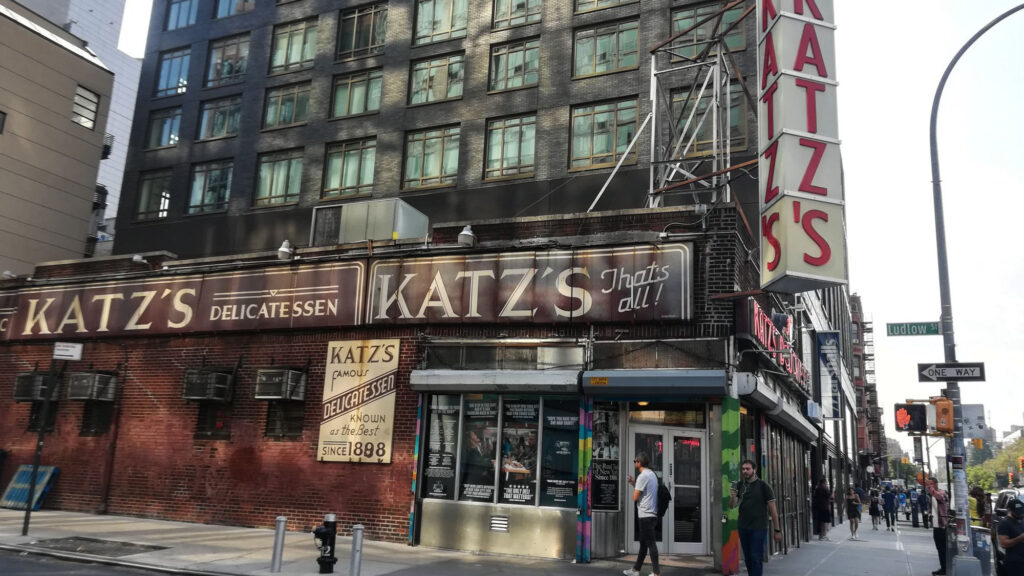
Katz’s Delicatessen
Katz’s Delicatessen appears in When Harry Met Sally… , Donnie Brasco, Across the Universe, We Own the Night, and The Jim Gaffigan Show (2015–2016).
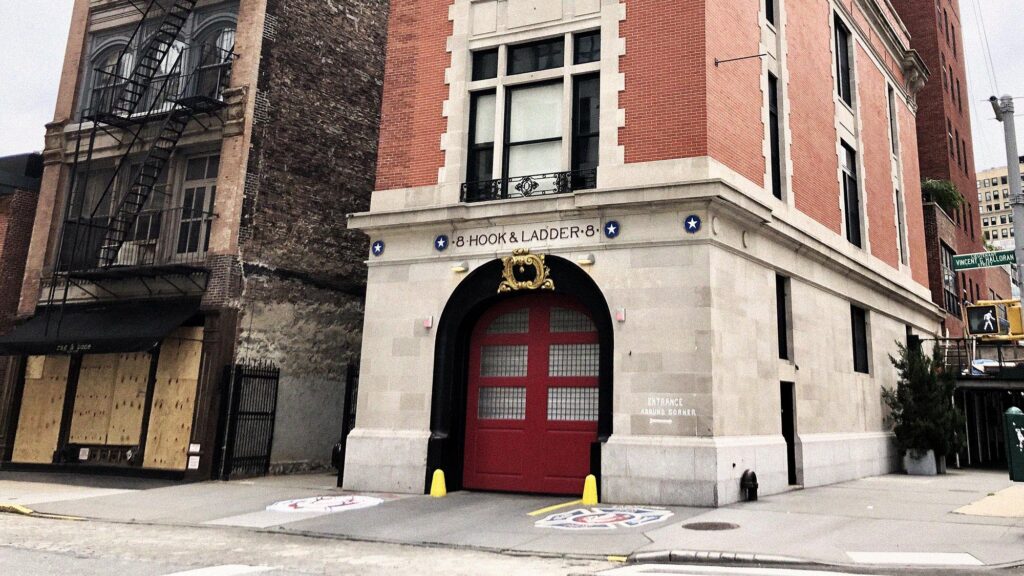
Hook & Ladder 8
Hook & Ladder Company 8 appears in the Ghostbusters franchise, Hitch (2005), Seinfeld, and How I Met Your Mother.