
John Badham is a British-born American film and television director and producer born on 25 August 1939 in Luton, Bedfordshire, England. His mother, Mary Hewitt, was an actress, while his stepfather, Henry Lee Badham Jr., was an American military officer who served as a brigadier general in the United States Air Force. The family moved to the United States during the 1940s and settled in Birmingham, Alabama, where Badham spent most of his childhood. He became an American citizen in 1950 and grew up in a household where theatre, literature and music were familiar parts of everyday life. His mother performed in local theatrical productions, introducing him to acting and stage rehearsals at an early age. His younger sister, Mary Badham, also entered the entertainment industry and achieved international recognition for playing Scout Finch in Robert Mulligan’s To Kill a Mockingbird (1962), a performance that earned her an Academy Award nomination for Best Supporting Actress at the age of ten. John initially approached the performing arts through theatre rather than filmmaking, developing an interest in acting and directing while attending school in Alabama.
Badham was educated at Indian Springs School in Shelby County, south of Birmingham, an independent institution that placed considerable emphasis on academic and artistic development. He subsequently moved to New Haven, Connecticut, to study philosophy at Yale University, graduating with a bachelor’s degree in 1961. His growing involvement in theatre led him to continue at the Yale School of Drama, where he studied directing and developed practical experience working with actors, designers and stage technicians. The training provided a foundation for his later approach to film production, particularly his emphasis on rehearsal and the relationship between performers and camera placement. He also served in the American military and the California National Guard during the 1960s. After completing his education, Badham moved to Southern California, where the rapidly expanding television industry offered opportunities for young directors who lacked established connections to the major film studios.
His earliest employment in Hollywood included work in the mailroom at Universal Studios in Universal City, followed by positions as a studio tour guide and in the casting department. These jobs allowed him to become familiar with the organisation of a working film studio while bringing him into contact with producers, directors and actors. He subsequently became an assistant to producer William Sackheim and worked on television productions including Rod Serling’s Night Gallery (1969). During that programme, he was involved in production work on a segment directed by Steven Spielberg, who was also beginning his professional directing career. Badham received his first substantial television directing assignment on The Bold Ones: The Senator in 1971, a political drama starring Hal Holbrook. He went on to direct episodes of programmes including Night Gallery, Kung Fu, Cannon, The Streets of San Francisco and Police Story, establishing himself within the television industry before making the transition to theatrical films.
Badham also directed several television films during the early 1970s, among them Isn’t It Shocking? (1973), The Law (1974) and The Gun (1974). The Law, starring Judd Hirsch and Barry Newman, examined the activities of lawyers working within the American criminal justice system and earned Badham an Emmy Award nomination. His television work was primarily based around Universal Studios and other production facilities in Los Angeles, although individual assignments occasionally required location filming elsewhere. These productions gave him experience working across different genres and developing stories within comparatively short shooting schedules. His ability to combine character-driven drama with technically demanding sequences eventually attracted the attention of producers seeking directors for larger theatrical projects.
Badham made his feature-film directing debut with The Bingo Long Traveling All-Stars & Motor Kings (1976), a historical sports comedy starring Billy Dee Williams, James Earl Jones and Richard Pryor. Set in the American Midwest during the 1930s, the film follows a group of African-American baseball players who leave their established Negro League teams and organise an independent travelling club. The project had originally been associated with Steven Spielberg, who withdrew because of his commitments to Jaws (1975), allowing Badham to take over as director. Principal photography took place in Georgia during the summer of 1975, with locations including Macon, Savannah, Talbotton, Columbus and Monticello. Luther Williams Field in Macon provided the principal baseball stadium, while other scenes were filmed at Grayson Stadium in Savannah and smaller sporting grounds around central Georgia. The filmmakers chose these locations partly because their historic architecture could represent Midwestern communities during the 1930s without extensive reconstruction. Released in July 1976, the film brought Badham his first substantial experience directing a theatrical production with an internationally established cast.
His breakthrough followed with Saturday Night Fever (1977), a drama about a young working-class man whose talent for dancing offers an escape from his restricted life in Brooklyn. Based on an article by British journalist Nik Cohn, the screenplay was written by Norman Wexler and starred John Travolta as Tony Manero, a nineteen-year-old paint-store employee who spends his weekends dancing at a local nightclub. John G. Avildsen had originally been hired to direct the film but left following disagreements over its development. Badham took over only a few weeks before principal photography began in March 1977, requiring him to complete the casting and location preparations within a limited period. Although Travolta had become familiar to American television audiences through Welcome Back, Kotter, the film became his first major dramatic leading role in a feature production.
Saturday Night Fever was filmed extensively on location in Brooklyn, New York, particularly around Bay Ridge and Bensonhurst. Tony’s home was represented by a house at 221 79th Street, while the paint shop where he works was Pearson Paint & Hardware on Fifth Avenue. The film’s celebrated opening sequence follows Travolta walking along 86th Street, passing businesses including Lenny’s Pizza, which became closely associated with the production. Dance rehearsals were filmed at Phillips Dance Studio on West Seventh Street in Bensonhurst, while the central nightclub scenes were shot at the real 2001 Odyssey disco at 802 64th Street. Badham had the club temporarily altered for filming, including the installation of an illuminated dance floor that became one of the film’s defining visual elements. Other sequences used the Bay Ridge Promenade and the Verrazzano-Narrows Bridge, which connects Brooklyn with Staten Island. Shooting on actual streets was sometimes complicated by crowds attracted to Travolta, requiring the production to work early in the morning or conceal filming schedules.
Released in December 1977, Saturday Night Fever became an enormous commercial success and established Travolta as an international film star. Its soundtrack, featuring several songs by the Bee Gees, became one of the bestselling albums of its era and helped make disco music a dominant part of late-1970s popular culture. Although the dancing and soundtrack attracted much of the attention, the film also addressed unemployment, family tensions, sexual violence and the limited prospects facing working-class young people in Brooklyn. Travolta received an Academy Award nomination for Best Actor, while Badham became a sought-after director for major Hollywood productions. The film also established his interest in combining popular entertainment with characters confronting social and personal difficulties, an approach that would recur in several of his later projects.
Badham followed Saturday Night Fever with Dracula (1979), a new adaptation of Bram Stoker’s novel starring Frank Langella, Laurence Olivier, Donald Pleasence and Kate Nelligan. Langella had previously portrayed the vampire in a successful Broadway production, and Badham retained the stage interpretation’s emphasis on Dracula as a charismatic and seductive aristocrat rather than a purely monstrous figure. The production brought him back to England, where filming took place in Cornwall and at Shepperton and Twickenham Studios outside London. St Michael’s Mount, the historic tidal island near Marazion, represented the exterior of Dracula’s castle, while locations around Tintagel were used for Dr Seward’s psychiatric institution. The fishing village of Mevagissey supplied several coastal sequences, with its harbour and surrounding streets representing the fictional setting associated with the vampire’s arrival in England. Badham worked with cinematographer Gilbert Taylor and composer John Williams, creating a film visually influenced by Gothic theatre and classical Hollywood horror. He originally favoured a more restrained colour palette and later supervised a desaturated version for home-video distribution. Dracula won the Saturn Award for Best Horror Film and became an important early example of Badham’s ability to work outside contemporary American drama.
His next film, Whose Life Is It Anyway? (1981), was adapted from Brian Clark’s stage play and starred Richard Dreyfuss as Ken Harrison, a sculptor who becomes paralysed following a car accident and challenges the medical authorities over his right to refuse treatment. Before beginning production, Badham directed a theatrical version of the play at the Williamstown Theatre Festival in Massachusetts in 1980, with Dreyfuss, Blythe Danner and Celeste Holm appearing in the cast. The production allowed him to explore the relationship between the central character and the medical staff before adapting the material for cinema. Principal photography began in Boston, where locations included Faulkner Hospital in Jamaica Plain and areas around Columbus Park. The company subsequently moved to MGM Studios in Culver City, California, where an extensive hospital environment was constructed on Stage 27. The set included operating rooms, corridors, intensive-care facilities and patient rooms, allowing Badham to move the camera through interconnected spaces without disturbing the activities of a functioning hospital. The film received a more limited commercial response than Saturday Night Fever, but returned Badham to the serious dramatic material that had characterised his early television work.
The early 1980s brought a significant change in direction as Badham became increasingly associated with action thrillers involving contemporary technology. Blue Thunder (1983), starring Roy Scheider, Malcolm McDowell and Warren Oates, follows a Los Angeles police helicopter pilot who discovers that an experimental aircraft has been developed for domestic surveillance and military operations. The film was shot extensively around Los Angeles between October 1981 and January 1982, requiring elaborate aerial photography above the city’s streets, industrial districts and office buildings. The newly constructed police heliport at the Piper Technical Center near Union Station represented the base of the fictional air-support division, while the former Pickwick Drive-In Theatre in Burbank provided the setting for a sequence involving surveillance evidence. Other filming took place around Elysian Park, Little Tokyo, Bunker Hill and the industrial area near Seventh Street, where the production staged complicated helicopter action. Badham coordinated real aircraft, miniature effects and practical stunt work to create sequences that could not have been achieved through conventional studio filming alone. Blue Thunder became a commercial success and attracted attention for its combination of action cinema and contemporary concerns about surveillance technology.
Later in 1983, Badham directed WarGames, another thriller built around the possibilities and dangers of emerging computer technology. The film starred Matthew Broderick as David Lightman, a Seattle teenager who accidentally gains access to an American military computer and nearly initiates a nuclear confrontation between the United States and the Soviet Union. Ally Sheedy played his friend Jennifer Mack, while Dabney Coleman and John Wood appeared as scientists involved in the defence system. Martin Brest had originally directed the production but was replaced after filming began, and Badham assumed responsibility for completing the film. He placed greater emphasis on the friendship between the teenage characters while retaining the seriousness of the central nuclear threat. The story was set partly in Seattle and at the North American Aerospace Defense Command headquarters beneath Cheyenne Mountain in Colorado, but filming took place across Washington State and California. The University of Washington in Seattle supplied several academic locations, while Boeing Field was used for airport sequences and Anderson Island represented the remote island where the characters search for the computer’s creator.
Several locations supposedly situated in Washington were actually filmed in Southern California. El Segundo High School represented David’s school in the fictional Seattle-area community, while his family home was filmed in the Windsor Square neighbourhood of Los Angeles. The entrance to the military installation was represented partly by a tunnel in Griffith Park, while the enormous command centre was constructed on a soundstage at MGM Studios in Culver City. The central WOPR computer was a purpose-built prop incorporating components designed to resemble earlier military and industrial computing equipment. Badham consulted computer specialists during production to make the technology credible while ensuring that audiences unfamiliar with programming could understand the developing threat. Released in June 1983, WarGames became a major commercial success and received three Academy Award nominations, including Best Original Screenplay. The film’s depiction of computer intrusion and automated military decisions also attracted attention outside the entertainment industry, becoming part of public discussions about computer security during the early years of widespread personal computing.
Badham returned to sports drama with American Flyers (1985), starring Kevin Costner and David Marshall Grant as two brothers who participate in a demanding bicycle race through the American West. The production was filmed around Missouri, Kansas and Colorado, with important locations including St Louis, Boulder, Golden and Grand Junction. The film’s extended cycling sequences used actual roads in the foothills of the Rocky Mountains, including the area around McCaslin Boulevard and Colorado Highway 93. The second stage of the fictional race was filmed in Colorado National Monument near Grand Junction, where the route passes through dramatic red-rock canyons and high desert terrain. Other racing sequences took place around Mount Evans and Echo Lake. The production required extensive coordination between actors, cyclists, camera vehicles and aerial filming crews. Although American Flyers did not match the commercial success of WarGames, it continued Badham’s interest in physically demanding stories involving competition, personal conflict and complicated technical arrangements.
He returned to science fiction with Short Circuit (1986), a comedy starring Ally Sheedy and Steve Guttenberg about an experimental military robot that develops independent intelligence after being struck by lightning. The robot, originally designated Number 5 and later known as Johnny 5, was created using sophisticated mechanical effects operated by a team of technicians and puppeteers. Much of the film was shot in Oregon, particularly around Astoria and the Columbia River Gorge. The exterior of the house occupied by Sheedy’s character, Stephanie Speck, was filmed on Hume Avenue in Astoria, while the Bonneville Dam complex supplied the industrial setting of Nova Laboratories. Other scenes used Crown Point, Beaverton and roads around the Columbia River. Rather than relying on traditional animation, Badham worked with a physical robot capable of interacting with actors and moving through actual locations. The film became a popular family-oriented success and helped establish Johnny 5 as one of the recognisable fictional robots of 1980s cinema.
Badham followed these productions with Stakeout (1987), an action comedy starring Richard Dreyfuss and Emilio Estevez as two Seattle detectives assigned to observe the home of a woman connected to an escaped criminal. Madeleine Stowe played the woman, Maria McGuire, whose developing relationship with Dreyfuss’s character complicates the police operation. Although the story takes place in Seattle, the film was shot primarily in Vancouver, British Columbia, during the spring of 1987. The waterfront property at 810 Millbank represented the detectives’ observation point, while the former Vancouver Normal School building on West Twelfth Avenue provided the police-station exterior. The climactic pursuit used industrial locations around Vancouver and the Agassiz-Rosedale Bridge over the Fraser River, where a vehicle was driven into the water. Stakeout became a commercial success, demonstrating Badham’s ability to combine character comedy with elaborate action sequences. The film also established a professional connection with screenwriter Jim Kouf and producer Cathleen Summers that would continue with the sequel.
By the end of the 1980s, Badham had become a regular director of large American studio productions and began working more extensively as a producer. His film Bird on a Wire (1990), starring Mel Gibson and Goldie Hawn, follows a man living under a false identity who is forced to flee after being recognised by a former girlfriend. The production was filmed principally in British Columbia, particularly around Vancouver, Victoria, Maple Ridge and Langley, with additional work in Detroit, Michigan. Victoria’s historic Chinatown district supplied the narrow streets used for a motorcycle chase, including Fan Tan Alley, while Playland amusement park at the Pacific National Exhibition grounds in Vancouver became an important setting for scenes involving the characters’ earlier relationship. Studio work was based at Bridge Studios in Burnaby. The production involved numerous changes of location and complicated action sequences, continuing Badham’s interest in staging physical comedy within real urban environments. Bird on a Wire became another international box-office success and strengthened his association with action comedies starring established Hollywood performers.
His next film, The Hard Way (1991), brought him back to New York City for the first time since Saturday Night Fever. Starring Michael J. Fox and James Woods, the comedy follows a Hollywood actor who accompanies a New York police detective in preparation for a film role. Production took place around Manhattan, Brooklyn and New Jersey during the summer of 1990, with locations including McSorley’s Old Ale House on East Seventh Street, the Beacon Theatre on Broadway and Newark Liberty International Airport. The film’s climactic confrontation was staged inside the Beacon Theatre, one of Manhattan’s historic entertainment venues. Badham worked with the contrast between Fox’s inexperienced actor and Woods’s hardened detective, allowing the story to draw on the relationship between Hollywood and the real working environments being recreated for cinema. Although The Hard Way was less commercially successful than his previous two action comedies, it maintained his relationship with Universal Pictures and provided further opportunities to work with elaborate location-based stunt sequences.
Badham returned to darker material with Point of No Return (1993), an American adaptation of Luc Besson’s French thriller Nikita (1990). Bridget Fonda played Maggie Hayward, a convicted criminal secretly trained by a government organisation to become an assassin, with Gabriel Byrne and Dermot Mulroney in supporting roles. Filming took place in Los Angeles, Washington, D.C., and New Orleans, Louisiana. Maggie’s apartment exterior was filmed on Ocean Front Walk in Venice, California, while other sequences used the InterContinental Hotel in Century City and locations around the French Quarter in New Orleans. The production also filmed in Washington, where actual government buildings and public spaces were used for scenes involving the organisation that controls Maggie’s life. The same year, Badham reunited with Dreyfuss and Estevez for Another Stakeout (1993), adding Rosie O’Donnell to the principal cast. Although the sequel depicts locations around Seattle and Bainbridge Island, much of it was shot in British Columbia, particularly around Vancouver and Bowen Island. Fairweather Point on Bowen Island became the principal waterfront location, while additional scenes used Bridge Studios in Burnaby and the False Creek Marina area.
His next major theatrical production was Drop Zone (1994), an action thriller starring Wesley Snipes as a federal marshal investigating a criminal organisation that uses professional skydiving to carry out elaborate robberies. The production was filmed primarily in Florida, including Miami, Key Largo and Sugarloaf Key, where the local airfield provided a setting for skydiving training sequences. Additional filming took place in Washington, D.C., and Southern California, where the Warner Center complex in Woodland Hills was used for parts of the film’s climactic action. The production required extensive coordination with professional parachutists and aerial camera operators, with practical skydiving footage combined with studio effects. Badham subsequently directed Nick of Time (1995), a thriller starring Johnny Depp and Christopher Walken that unfolds over approximately ninety minutes of story time. Most of the action takes place inside the Westin Bonaventure Hotel in Downtown Los Angeles, which was used extensively during filming. The production also used Union Station and surrounding streets, creating a story in which the limited time available to the protagonist became central to the structure of the film. Badham worked with handheld cameras and extended moving shots to maintain the impression of events unfolding continuously, including an elaborate sequence filmed inside one of the hotel’s glass-walled lifts.
Badham’s final theatrical feature as director during the 1990s was Incognito (1997), a crime thriller starring Jason Patric as an art forger who becomes involved in a dangerous conspiracy surrounding a supposed Rembrandt painting. The film returned him to Europe, with filming in London, Amsterdam and Paris. Historic buildings in the British capital, including Mentmore Towers in Buckinghamshire, supplied settings associated with the art trade and wealthy collectors, while other sequences used locations around the Dutch and French capitals. The production also filmed at galleries in London’s Cork Street, a centre of the city’s commercial art market. Although Incognito received a limited release and did not achieve substantial commercial success, it represented another change of genre in a career that had already encompassed musical drama, horror, science fiction, crime thrillers and comedy.
During the late 1990s, Badham increasingly returned to television, where he had begun his directing career more than twenty-five years earlier. He directed the HBO Western The Jack Bull (1999), starring John Cusack, and television films including The Last Debate (2000), Brother’s Keeper (2002), Obsessed (2002) and Evel Knievel (2004). The latter was a biographical film about the American motorcycle stunt performer, starring George Eads, and allowed Badham to return to a subject involving dangerous practical action. He also directed episodes of established television series including The Shield, Las Vegas, Criminal Minds, Heroes, Psych, In Plain Sight and Nikita. His work on Blind Justice (2005), a police drama starring Ron Eldard as a detective who returns to duty after losing his sight, included an executive producer credit. Rather than remaining exclusively associated with theatrical films, Badham became a regular contributor to American episodic television during a period when production methods and audience expectations were changing considerably.
His television work continued into the 2010s with episodes of Supernatural, Arrow, Constantine, 12 Monkeys, Stitchers and Rush Hour. Supernatural, which was filmed primarily around Vancouver, brought him back to British Columbia, where he had previously directed Stakeout and Bird on a Wire. The series combined contemporary horror with supernatural mythology, and Badham directed several episodes between 2014 and 2017. He also worked on Siren (2018–2020), another series produced in British Columbia, about mermaids and their encounters with a coastal community. The shift towards episodic television allowed him to work within established fictional worlds and collaborate with younger casts and production teams, while continuing to apply the experience he had developed during decades of feature filmmaking. His television credits eventually extended across several generations of American programming, from the anthology dramas of the early 1970s to the fantasy and science-fiction series of the streaming era.
Alongside directing, Badham became increasingly involved in film education and professional training. He joined the faculty of Chapman University’s Dodge College of Film and Media Arts in Orange, California, where he became a tenured professor and taught film directing, acting for the camera and practical production techniques. His teaching included workshops and student acting showcases intended to introduce young performers to professional casting directors. He also published I’ll Be in My Trailer: The Creative Wars Between Directors and Actors (2006), a book examining the relationship between filmmakers and performers through examples drawn from his own productions and interviews with other industry professionals. His second book, John Badham on Directing: Notes from the Set of Saturday Night Fever, War Games, and More (2013), explored practical methods of visual storytelling, rehearsal, camera placement and directing action. A revised second edition appeared in 2021, expanding the material to reflect developments in film and television production.
Badham also maintained a longstanding association with the Directors Guild of America, serving on its Western Directors Council from 1983 to 2012 and participating in its national leadership and foundation. He has regularly appeared at retrospective screenings and industry events, discussing the production of Saturday Night Fever, WarGames and other films. His contributions to cinema have also been recognised by organisations associated with science-fiction and fantasy filmmaking, including the Academy of Science Fiction, Fantasy and Horror Films, which presented him with directing honours for WarGames. Although he continued working in television during the late 2010s, teaching and writing became increasingly important parts of his professional activities. His personal life has included several marriages, and he has been married to Julia Badham since 1992. His daughter Kelly MacDonald has also worked in the entertainment industry.
By October 2026, Badham was eighty-seven and was listed as Professor Emeritus of Film and Media Arts at Chapman University. His later career had involved passing on practical filmmaking experience through teaching, books and professional discussions rather than concentrating on new theatrical productions. His life had taken him from Luton in England to Birmingham, Alabama, and Yale University in Connecticut before establishing his professional career in Los Angeles. His productions subsequently brought him to locations across the United States, Canada and Europe, with Brooklyn, Cornwall, Vancouver and Los Angeles particularly prominent in his films. His work in television, beginning in the early 1970s and continuing into the twenty-first century, remained an important parallel career to the popular feature films for which he became internationally known.
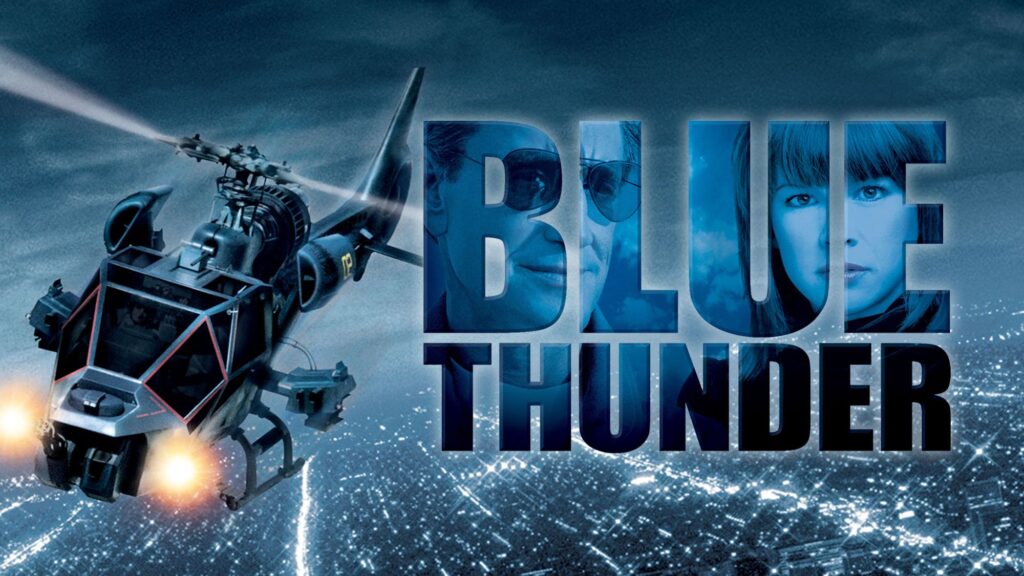
Blue Thunder
Blue Thunder was filmed around Los Angeles, using the city’s rooftops, streets, freeways, river channels and skyline as part of the action.

Dracula
Dracula, directed by John Badham and starring Frank Langella, was filmed primarily in Cornwall, England, with additional studio work at Twickenham Studios.