
Richard Donner (24 April 1930 – 5 July 2021) was an American film director and producer best known for directing The Omen (1976), Superman (1978), The Goonies (1985) and all four films in the original Lethal Weapon series (1987–1998). Born Richard Donald Schwartzberg in the Bronx, New York City, he grew up in Mount Vernon, a city immediately north of the Bronx in Westchester County. His father, Fred Schwartzberg, was a Russian Jewish immigrant who operated a furniture manufacturing business, while his mother, Hattie Horowitz, was the daughter of Russian Jewish immigrants. He had one sister, Joan, and spent much of his childhood in the New York metropolitan area.
One of Donner’s earliest connections to cinema came through his grandfather, who owned a movie theatre in Brooklyn. Visiting the establishment introduced him to films long before he considered working in the entertainment industry himself. After graduating from high school, Donner enlisted in the United States Navy, serving as an aerial photographer aboard an aircraft carrier. The experience gave him practical knowledge of photography and camera equipment. He subsequently attended New York University, where he studied business, but abandoned his education to pursue acting. By the 1950s, he had moved to Los Angeles and adopted the professional surname Donner.
His early career involved a variety of jobs in film and television production, including working as a truck driver, set painter and assistant editor. While attempting to establish himself as an actor, he worked with director Martin Ritt, who encouraged him to concentrate on directing instead. Donner subsequently joined a small production company operated by George Blake, gaining experience directing industrial films, documentaries and commercials. He eventually secured work with Desilu Productions, the Hollywood company established by Lucille Ball and Desi Arnaz, which helped introduce him to professional television production.
Donner made his television directing debut during the late 1950s, working on the Western series Wanted: Dead or Alive, starring Steve McQueen. He subsequently directed episodes of numerous American programmes, including Have Gun – Will Travel, The Rifleman, Perry Mason, The Fugitive, The Man from U.N.C.L.E. and The Twilight Zone. These productions were based largely in Southern California, where established studios and Western backlots could be used to represent towns and landscapes throughout the United States.
Among his best-known television assignments was “Nightmare at 20,000 Feet”, an episode of The Twilight Zone first broadcast on 11 October 1963. Starring William Shatner, the story follows an airline passenger who believes he has seen a creature attempting to sabotage the aircraft during a flight. The episode was filmed at Metro-Goldwyn-Mayer Studios in Culver City, California, using an elaborate aircraft set rather than an actual aeroplane in flight. The production became one of the most widely remembered episodes of the original series and established Donner’s ability to create suspense within a confined environment.
His feature-film directorial debut was X-15 (1961), an aviation drama centred on the development of the experimental North American X-15 rocket-powered aircraft. The production had a particularly strong geographical connection to the American aerospace industry. Filming took place at Edwards Air Force Base in California’s Mojave Desert, where the actual X-15 research programme was conducted, with additional work completed at Desilu Gower Studios in Hollywood. The filmmakers received assistance from the United States Air Force and incorporated actual aircraft and equipment into the production. Donner’s first feature therefore involved genuine military and scientific facilities rather than relying entirely on constructed studio environments.
He subsequently directed Salt and Pepper (1968), a comedy starring Sammy Davis Jr. and Peter Lawford as nightclub owners who become involved in an international conspiracy. The film was shot in Britain and made extensive use of London, particularly Soho and the surrounding West End. A vehicle chase was filmed around Dean Street, Old Compton Street, Greek Street, Romilly Street and Piccadilly Circus. The production also used locations elsewhere in southern England. Salt and Pepper was one of Donner’s earliest feature films made outside the United States, establishing a connection with Britain that would become considerably more important during the following decade.
His major breakthrough came with The Omen (1976), a supernatural horror film starring Gregory Peck and Lee Remick as an American couple who discover that their adopted son may be the Antichrist. Although the story begins in Rome, most of the film takes place in England, where Donner made extensive use of actual churches, historic estates and public buildings. The Thorn family’s country residence was filmed at Pyrford Court in Surrey, an imposing country house associated with the Guinness family.
One of the film’s most recognisable locations is Guildford Cathedral in Surrey, where Damien reacts violently as his parents attempt to take him into the building. The cathedral, completed in 1961, provided a distinctive modern religious setting rather than the medieval architecture more commonly associated with British horror films. Another important location was All Saints Church in Fulham, London, where Father Brennan, played by Patrick Troughton, is killed by a falling lightning rod. The church stands beside Bishops Park near the River Thames, which was also used for a scene in which Brennan attempts to warn Robert Thorn about Damien.
Other locations included Grosvenor Square in Mayfair, representing the American Embassy, and Windsor Safari Park in Berkshire, where the famous sequence involving baboons was filmed. The safari park later closed, and its former site became part of Legoland Windsor. The final confrontation between Robert Thorn and Damien took place at St. Peter’s Church in Staines-upon-Thames, while the concluding funeral scene was filmed at Brookwood American Cemetery in Surrey. Additional photography took place in Rome, Jerusalem and at Shepperton Studios. The Omen became an international success, establishing Donner as a major Hollywood director and creating lasting associations between the film and numerous British landmarks.
Following The Omen, Donner was selected to direct Superman (1978), starring Christopher Reeve as the comic-book superhero. The production was among the most ambitious and expensive films of its period, combining filming locations in North America and Europe with elaborate studio sets and visual effects. Although much of the story takes place in the fictional American city of Metropolis and the rural community of Smallville, the filmmakers used several geographically distant regions to create these environments.
Smallville, where the young Clark Kent grows up, was recreated in southern Alberta, Canada. The Kent family farm was constructed near Blackie, southeast of Calgary, while the village of Barons provided the setting for scenes involving Clark’s high school years and his extraordinary running abilities. The cemetery where Clark visits his father’s grave was filmed in the small community of Beynon, in the badlands northeast of Calgary. Alberta’s farmland, open countryside and small agricultural settlements were used to represent rural Kansas.
The fictional city of Metropolis was created largely through a combination of New York City locations and studio construction in England. The historic Daily News Building at 220 East 42nd Street in Manhattan represented the headquarters of the Daily Planet newspaper. Designed by architects Raymond Hood and John Mead Howells, the Art Deco skyscraper opened in 1930 and was particularly suitable because its lobby contained a large globe resembling the Daily Planet’s familiar symbol. Other New York filming locations included Grand Central Terminal, streets around Midtown Manhattan and the waterfront in Brooklyn Heights.
Many of Superman’s most elaborate sequences were filmed at Pinewood Studios in Buckinghamshire, England. The production used the enormous 007 Stage for the Arctic setting surrounding the Fortress of Solitude, while the interiors of the fortress and the planet Krypton were constructed on additional sound stages. The helicopter rescue involving Lois Lane was filmed using studio-built sections of the Daily Planet building, combined with effects photography and footage associated with the New York setting. Additional exterior filming took place at Hoover Dam on the Arizona-Nevada border and in the American Southwest.
Donner had originally been hired to direct Superman and Superman II as a connected production, with substantial footage for the sequel filmed during 1977 and 1978. However, disagreements with the producers led to his replacement by Richard Lester before the second film was completed. Superman II (1980) consequently incorporated material shot by both directors. Decades later, previously unused footage was recovered and assembled into Superman II: The Richard Donner Cut (2006), a substantially different version that restored scenes featuring Marlon Brando as Jor-El. The project was an unusual example of a director’s original material being reconstructed nearly thirty years after the filming had taken place.
After Superman, Donner directed Inside Moves (1980), a drama about a group of friends who gather at a neighbourhood bar in Oakland, California. Although the story is closely associated with Oakland and the San Francisco Bay Area, many of the principal scenes were filmed around Echo Park in Los Angeles. The fictional Max’s Bar was constructed inside a garage on Echo Park Avenue, with additional façades and a neighbouring petrol station set created around it. The interior and exterior were designed partly with reference to McSorley’s Old Ale House, the historic Manhattan establishment. Basketball sequences were filmed at Oakland-Alameda County Coliseum Arena, combining an actual Bay Area sporting venue with a Los Angeles neighbourhood used to portray Oakland.
His next comedy, The Toy (1982), starred Richard Pryor and Jackie Gleason in a story involving a wealthy Louisiana businessman who effectively hires an unemployed man to entertain his son. Filming took place extensively around Baton Rouge and Hammond in Louisiana. A large residence on Perkins Road represented the wealthy family’s estate, while the One American Place office building in downtown Baton Rouge was used for business scenes. Additional interiors were constructed in a warehouse on Airline Highway. The film used actual Louisiana houses and commercial buildings to establish a Southern setting, with relatively little need to recreate the region elsewhere.
Donner returned to European filmmaking with the fantasy adventure Ladyhawke (1985), starring Rutger Hauer, Michelle Pfeiffer and Matthew Broderick. Although the film depicts a fictional medieval European landscape, nearly all principal photography took place in Italy. Donner selected surviving medieval castles, fortified villages, mountain passes and rural landscapes rather than constructing the entire setting on studio backlots.
One of the most recognisable Ladyhawke locations is Rocca Calascio, a ruined mountaintop fortress in the Abruzzo region of central Italy. The castle served as the refuge of the monk Imperius, played by Leo McKern. Temporary architectural additions were installed on the fortress during filming, while the surrounding Gran Sasso mountains provided much of the dramatic landscape. The medieval village of Castell’Arquato in Emilia-Romagna was used for scenes in the fictional city of Aguillon, including a procession through the town square and streets surrounding its historic buildings.
Other Italian locations included Torrechiara Castle near Langhirano, which provided the courtyard and entrance associated with the bishop’s residence, and the fortified Rocca Sforzesca at Soncino in Lombardy. The aqueduct ruins at Canale Monterano, north of Rome, were used during an action sequence in which Etienne Navarre rescues Philippe Gaston. The production also filmed around Passo Giau and Lake Antorno in the Dolomites, with the mountain scenery providing a dramatic contrast to the fortified towns of central Italy. Ladyhawke became one of Donner’s most geographically distinctive productions, bringing together architecture and landscapes from several Italian regions to create a continuous fictional medieval world.
That same year, Donner directed The Goonies (1985), produced by Steven Spielberg and based on a story by Spielberg. The adventure follows a group of children searching for a lost pirate treasure while attempting to save their homes from redevelopment. Unlike Ladyhawke, which combined locations across much of Italy, The Goonies was closely associated with a relatively small geographical area on the northern Oregon coast. Donner selected Astoria, a historic port city at the mouth of the Columbia River, as the film’s principal setting.
The Walsh family home, occupied by Mikey and his older brother Brandon, was filmed at a real house on 38th Street in Astoria. Its prominent position overlooking the surrounding neighbourhood became one of the most recognisable images of the film. Other local locations included the former Clatsop County Jail, used for the opening prison escape, and the Captain George Flavel House Museum, which represented the museum where Mikey’s father works. Lower Columbia Bowl provided the bowling alley seen during the opening pursuit, while additional filming took place around Astoria’s residential streets and waterfront.
The former Clatsop County Jail subsequently became the Oregon Film Museum, which opened in 2010 and documents the history of filmmaking in the state. Its conversion created a lasting physical connection between The Goonies and the city where much of it was made.
The coastal sequences in The Goonies were filmed around Cannon Beach, approximately forty kilometres south of Astoria. The enormous Haystack Rock appears as an important geographical landmark, while Ecola State Park provided the setting for the abandoned restaurant where the children discover an entrance to the underground tunnels. The restaurant was a temporary construction created for the production. Although the characters appear to travel only a short distance from their homes in Astoria, the filmmakers combined locations separated by considerable distances along the Oregon coast.
The elaborate underground tunnels, traps and pirate ship were constructed at Warner Bros. Studios in Burbank, California. The cavern containing One-Eyed Willy’s ship was built on Stage 16, one of the studio’s largest sound stages. The film’s concluding beach sequence was shot at Goat Rock State Beach near Jenner in Sonoma County, California, more than 800 kilometres south of Astoria. The production therefore combined genuine Oregon landmarks with Californian coastal scenery and elaborate studio sets to create a single fictional adventure.
Donner returned to action filmmaking with Lethal Weapon (1987), starring Mel Gibson as Martin Riggs and Danny Glover as Roger Murtaugh, two Los Angeles police officers whose contrasting personalities become central to the story. The film was shot extensively around Los Angeles County, making use of residential streets, commercial districts, industrial buildings and beaches. The apartment tower from which a young woman falls during the opening sequence was the International Tower on East Ocean Boulevard in Long Beach.
Riggs’s beachfront trailer was positioned at Dockweiler State Beach in Playa del Rey, near Los Angeles International Airport. The beachfront location became an important part of the character’s isolated domestic life, contrasting with Murtaugh’s family home in the suburbs. The scene in which Riggs attempts to rescue a suicidal man from a rooftop was filmed at a commercial building on Santa Monica Boulevard in West Hollywood. Other locations included streets around downtown Los Angeles, the Palos Verdes Peninsula and El Mirage Dry Lake in the Mojave Desert. The success of the film established a franchise that Donner would continue directing throughout the following decade.
Between the first two Lethal Weapon films, Donner directed Scrooged (1988), a modern adaptation of Charles Dickens’s A Christmas Carol starring Bill Murray. The story follows Frank Cross, a cynical television executive working in New York City. Although the film takes place in Manhattan, production involved several cities. New York locations included streets in Queens and areas around Midtown Manhattan, while additional exteriors were filmed in Toronto, Canada. Much of the television network’s interior environment was constructed at Paramount Studios in Hollywood, including Frank’s office, bedroom and the fictional television production of A Christmas Carol.
Donner returned to Los Angeles for Lethal Weapon 2 (1989), which expanded the partnership between Riggs and Murtaugh while introducing a group of South African diplomats involved in organised crime. The production again made extensive use of Los Angeles County, including roads around Mulholland Drive and the coastal areas of Malibu. A modern house supported by stilts above Mulholland Drive represented the residence of South African diplomat Arjen Rudd. The structure became the setting for one of the film’s most recognisable action sequences, in which Riggs uses his pickup truck to pull the house from its supports.
Other Lethal Weapon 2 locations included the Second Street Tunnel in downtown Los Angeles and the Warner Bros. Ranch in Burbank, where Murtaugh’s family home was filmed. Fox Plaza in Century City also appears during a hotel sequence. The film continued Donner’s practice of using actual buildings as integral parts of elaborate action scenes rather than depending entirely on studio reconstructions.
In Radio Flyer (1992), Donner directed a family drama about two young brothers coping with abuse and difficult circumstances in a suburban American community. Much of the film was shot in Novato, California, particularly around the former Hamilton Air Force Base, where residential properties provided the setting for the boys’ neighbourhood. The historic town of Columbia in Tuolumne County was used for additional scenes, while interiors and parts of the fictional residential environment were reconstructed at Sony Pictures Studios in Culver City.
One of Radio Flyer’s central locations was the airfield associated with the boys’ imaginary attempt to escape their circumstances using a flying wagon. The production used locations around Sonora, California, and returned to the area for the film’s final scene. Although the story is framed through childhood memories, the production relied on genuine California towns and former military facilities to establish the geographical environment.
Donner returned to the Lethal Weapon franchise with Lethal Weapon 3 (1992), which incorporated one of the most unusual uses of an actual building demolition in Hollywood filmmaking. The opening sequence follows Riggs and Murtaugh responding to a bomb threat at the fictional International Control Systems building in Los Angeles. The building destroyed on screen was actually the former Orlando City Hall at 400 South Orange Avenue in Orlando, Florida.
Constructed in 1958, the old city hall had become redundant after the completion of a replacement municipal building immediately behind it. Rather than demolishing the structure without recording the event for commercial use, Orlando officials arranged for the film production to incorporate the planned demolition into an action sequence. Warner Bros. paid the city $50,000 for filming rights, helping offset the estimated $80,000 cost of the demolition. The implosion took place on 24 October 1991, using hundreds of carefully coordinated explosive charges. Thousands of spectators gathered around downtown Orlando to watch the building collapse in less than six seconds.
The sequence also included a cameo by Orlando mayor Bill Frederick, who appeared as a police officer reacting to Riggs and Murtaugh’s disastrous attempt to defuse the bomb. The destruction of the building became one of the film’s opening set pieces, preserving the final moments of a real civic landmark that no longer exists.
Lethal Weapon 3 also used an unfinished housing development in Lancaster, California, for the climactic confrontation. The abandoned buildings were scheduled for demolition, allowing the filmmakers to stage an elaborate sequence involving explosions and fire. During the closing credits, the film included the implosion of another real structure: the historic Soreno Hotel in St. Petersburg, Florida. The hotel had opened in the early twentieth century and had previously been one of the city’s major landmarks. Its demolition provided an additional spectacle for the film, making Lethal Weapon 3 especially notable for incorporating the destruction of real buildings into its action sequences.
Donner continued working in the American West with Maverick (1994), a comedy adventure starring Mel Gibson, Jodie Foster and James Garner. Based on the television Western series, the film follows a gambler travelling towards a high-stakes poker tournament aboard a riverboat. The production was shot across several western states, including Oregon, Washington, Utah, Arizona and California. Locations around Lake Powell and Glen Canyon provided the desert landscapes, while Yosemite National Park supplied mountain scenery.
One of the most distinctive filming locations was the Columbia River Gorge, where the production used the historic sternwheel tugboat Portland to represent the fictional gambling vessel Lauren Belle. The Portland had been constructed in 1947 and was operated by the Oregon Maritime Museum. Its original working appearance was temporarily altered with decorative chimneys and other features to resemble a nineteenth-century Mississippi-style riverboat. Filming took place along the Columbia River in 1993, after which the additions were removed and the vessel returned to the museum. The surviving boat remains a direct physical connection to the production.
His next major action film, Assassins (1995), starred Sylvester Stallone and Antonio Banderas as rival professional killers. Although the story moves through several American locations, filming took place in Seattle, Washington, and Portland, Oregon, before the production travelled to Puerto Rico. In San Juan, the historic Antiguo Casino de Puerto Rico on Avenida Juan Ponce de León was used to represent a bank, while a building on Calle O’Donnell provided the setting for scenes involving an abandoned hotel. The film combined urban environments on the American Pacific coast with the colonial architecture of Puerto Rico to create its international crime story.
Donner reunited with Mel Gibson for Conspiracy Theory (1997), a thriller co-starring Julia Roberts. The story follows a New York City taxi driver who becomes convinced that he is being pursued by a secret government organisation. The film incorporated actual Manhattan locations, including Times Square, the Queensboro Bridge and streets around Greenwich Village. However, several New York environments were recreated in Los Angeles. The historic Orpheum Theatre on South Broadway in downtown Los Angeles was used for a scene in which Gibson’s character hides inside a cinema, while Los Angeles National Cemetery represented a New York burial ground. The geographical combination allowed Donner to film familiar New York settings while using Southern California’s architectural and studio resources.
The original Lethal Weapon series concluded with Lethal Weapon 4 (1998), which brought Gibson and Glover back to Los Angeles alongside Joe Pesci, Rene Russo, Chris Rock and Jet Li. The production incorporated several locations around Chinatown, including the streets surrounding Gin Ling Way and Mei Ling Way. The historic Bradbury Building on South Broadway appeared in the film, while other sequences were filmed around Long Beach Harbor, the Vincent Thomas Bridge in San Pedro and the coastal area at Paradise Cove in Malibu.
Lethal Weapon 4 also used roads and highways around Las Vegas, Nevada, for large-scale vehicle sequences. The film returned to the familiar Los Angeles setting of the franchise while expanding its use of industrial waterfronts, bridges and freeway infrastructure.
Donner’s later work included Timeline (2003), a science fiction adventure based on Michael Crichton’s novel. The story follows archaeologists who travel back to fourteenth-century France during the Hundred Years’ War. Although the medieval sections take place in the Dordogne region of southwestern France, principal photography took place largely in Quebec, Canada, particularly around Montreal and Mascouche.
Production designers studied surviving European castles before constructing an elaborate recreation of the fictional La Roque fortress in a field outside Montreal. The large set included defensive walls, towers and buildings modelled on medieval French architecture. Additional work took place in Prague in the Czech Republic. Timeline was another example of Donner using an entirely different geographical region to recreate a historic European landscape, combining location photography with purpose-built structures.
His final theatrical feature as director was 16 Blocks (2006), starring Bruce Willis as an ageing New York police officer assigned to escort a witness to a nearby courthouse. Although the story takes place almost entirely within a relatively small area of Manhattan, much of the film was shot in Toronto, Ontario, Canada.
Only approximately two weeks of filming took place in New York City itself, with the remainder of the urban sequences staged on Toronto streets and at local studio facilities. One unusual location was Lower Bay Station, a disused platform beneath Bay station on the Toronto subway system, which was used to represent part of New York’s underground railway network. The filmmakers also purchased several former New York City transit buses and transported them to Toronto for a complex action sequence involving a bus surrounded by police vehicles. Additional footage was shot around Manhattan’s Lower East Side and near the Brooklyn Bridge. The film brought Donner’s directorial career to a close with another production in which a Canadian city was used to recreate New York.
Outside directing, Donner worked extensively as a film and television producer. He married producer Lauren Shuler Donner in November 1985, and the couple established Shuler-Donner Productions, later known as The Donners’ Company. Their production activities included the Free Willy film series, the X-Men franchise and the HBO horror anthology Tales from the Crypt (1989–1996). Donner also directed episodes of Tales from the Crypt, including “Dig That Cat… He’s Real Gone” and “The Ventriloquist’s Dummy”. The series was produced principally in Southern California, drawing on the region’s historic houses, studio facilities and established horror-film production infrastructure.
Donner and his wife developed an extensive professional association with Warner Bros. in Burbank, California, and maintained homes in several parts of the United States. Among their most distinctive properties was a retreat in the San Juan Islands, an archipelago in Washington State between the mainland and Vancouver Island. The property was designed with architect Thomas A. Kligerman of the firm Ike Kligerman Barkley. The project established a working relationship that subsequently led to the construction of another holiday residence in Hawaii.
The Donners’ Maui residence was designed around the landscape and climate of the Hawaiian Islands. Rather than creating an elaborate Hollywood-style mansion, the couple wanted a relatively simple house that would allow them to spend time close to the ocean. Kligerman designed a residence incorporating broad verandas, open living spaces, extensive natural ventilation and traditional Hawaiian architectural influences. The roof structure was fabricated in Montana before being transported to Hawaii for assembly, while woven bamboo and reclaimed timber were used throughout the building.
The main house contained a single bedroom, with additional accommodation provided in a separate guesthouse. Its living areas opened towards the gardens and surrounding coastal landscape, while the principal bedroom offered views towards neighbouring islands. The residence was featured in Architectural Digest in November 2008, providing an unusually detailed architectural record of a private home associated with the director and his wife.
The couple also received a shared public honour in Hollywood. On 16 October 2008, Richard Donner and Lauren Shuler Donner were awarded separate stars during a joint ceremony on the Hollywood Walk of Fame. Their stars are situated at 6712 Hollywood Boulevard, near the historic Egyptian Theatre. The ceremony recognised their long careers as director and producers, giving them a permanent public landmark in the city where much of their work had been based.
Richard Donner died at his home in West Hollywood, California, on 5 July 2021, aged 91. He and Lauren Shuler Donner had remained married for more than thirty-five years, working together on numerous productions and maintaining strong connections to the Hollywood film industry. His career had taken him from childhood visits to a Brooklyn cinema and early photography work in the United States Navy to productions in Britain, Italy, Canada and several regions of the United States.
Donner’s geographical legacy is particularly visible through the places used in his films. The abandoned churches and country houses of The Omen, the Canadian farmland of Superman, the Italian castles of Ladyhawke, the coastal streets of Astoria in The Goonies and the demolished civic buildings of Lethal Weapon 3 all remain closely connected to his work. His films frequently combined authentic architecture, constructed studio environments and locations separated by thousands of kilometres, turning ordinary towns, historic buildings and landscapes into some of the most recognisable settings in popular cinema.
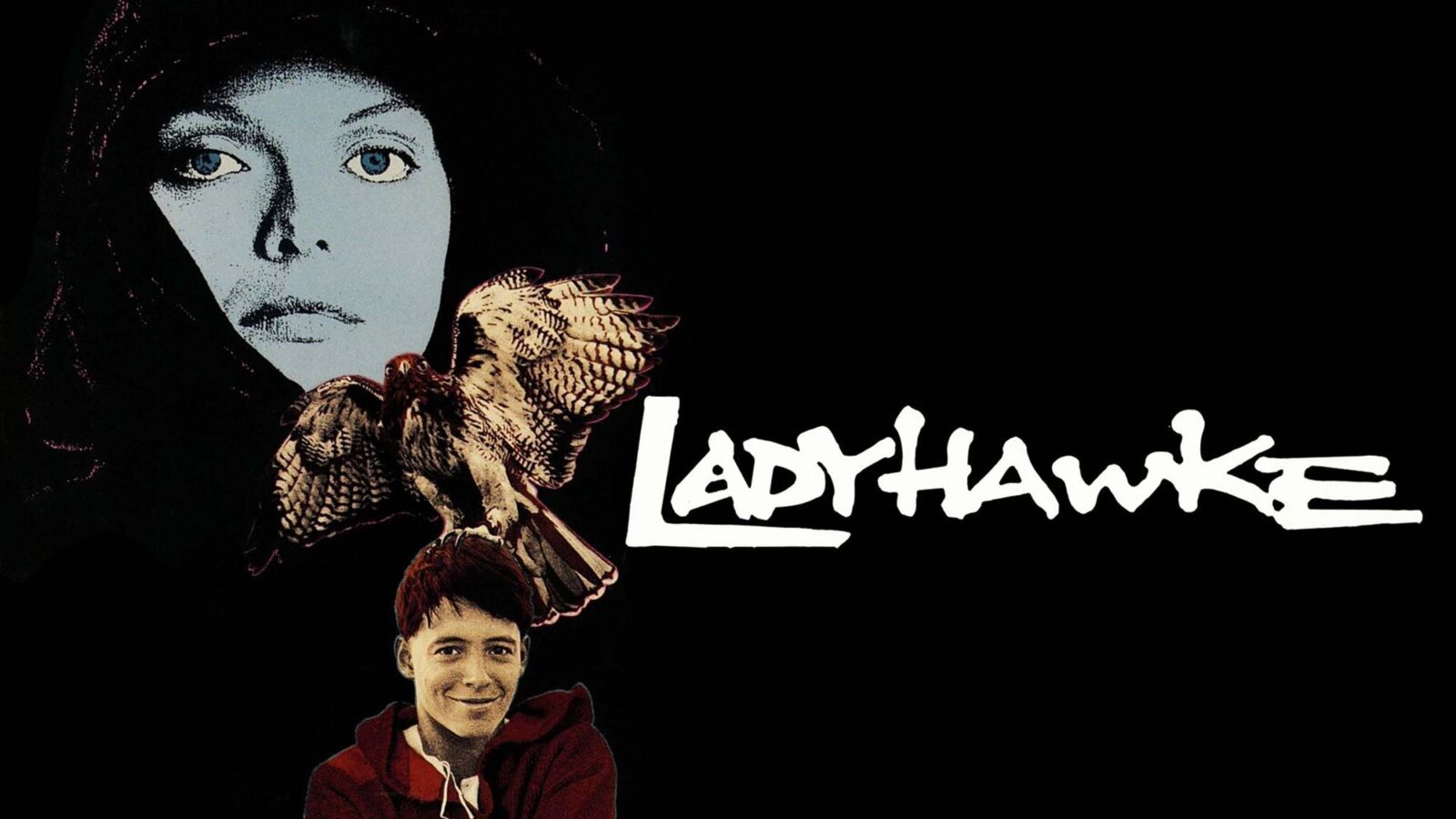
Ladyhawke
Ladyhawke was filmed almost entirely in Italy, using castles, mountain landscapes, medieval villages and studio-built interiors to create the world of Aquila.
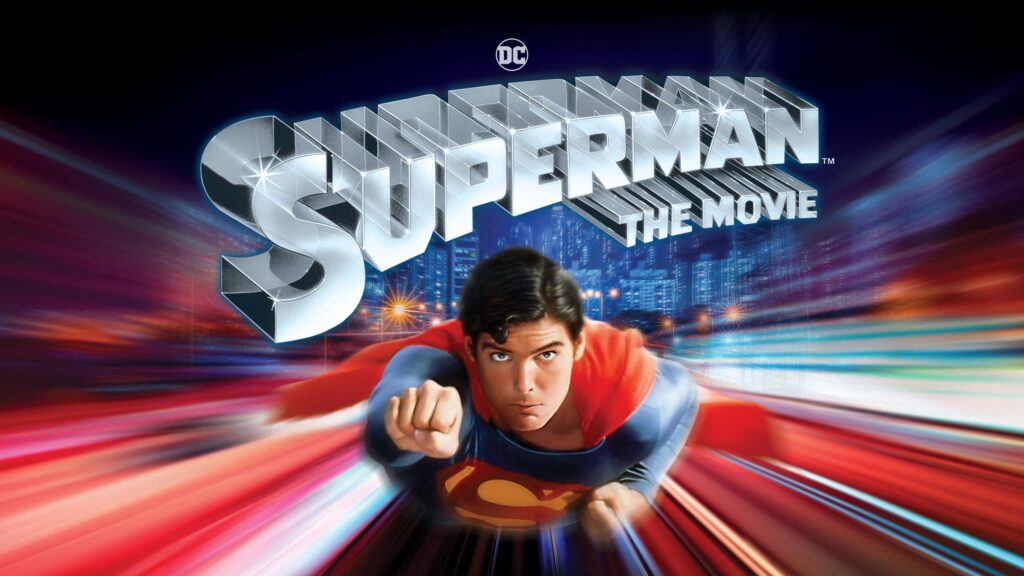
Superman
Superman (1978) is a British-American superhero film directed by Richard Donner, starring Christopher Reeve as Clark Kent and Superman. The film tells…

The Goonies
The Goonies is a 1985 adventure comedy directed by Richard Donner and produced by Steven Spielberg. Set in Astoria, Oregon, the film…
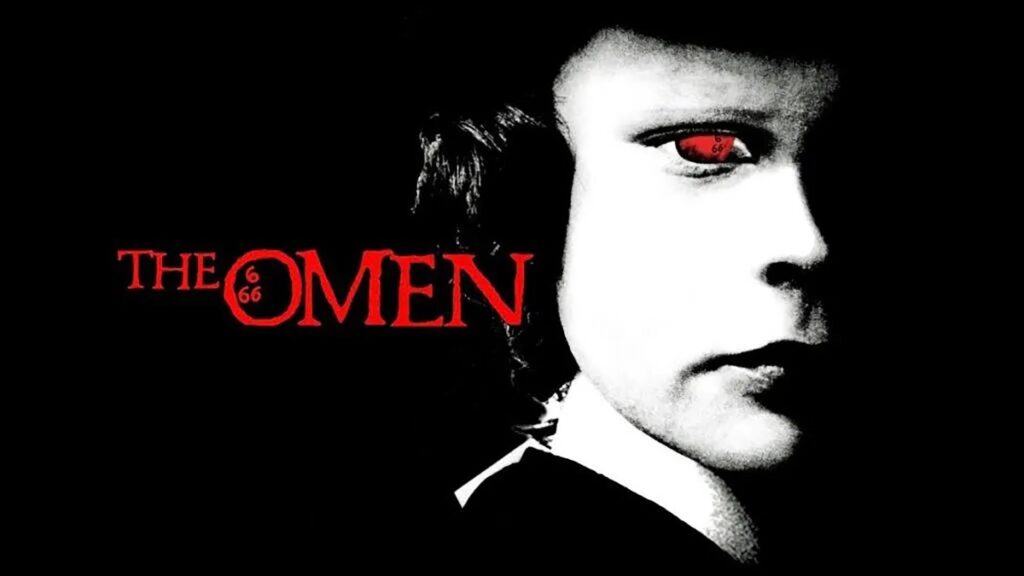
The Omen
The Omen was primarily filmed in England, with key locations including London, Surrey, and Berkshire. Additional scenes were shot in Rome and Jerusalem.