
Todd Phillips (born 20 December 1970) is an American film director, screenwriter and producer best known for directing Road Trip (2000), Old School (2003), The Hangover (2009), Joker (2019) and Joker: Folie à Deux (2024). Born Todd Bunzl in Brooklyn, New York City, he grew up in Dix Hills, a suburban community in the town of Huntington on Long Island. His parents divorced when he was young, and he was raised primarily by his mother alongside two older sisters. She worked several jobs to support the family, including employment at a dental office and as a bartender. During his teenage years, Phillips and his sisters adopted their mother’s surname, Phillips, replacing the family name Bunzl.
Phillips attended high school on Long Island during the 1980s, developing an interest in photography, independent cinema and punk rock. He frequently travelled by train into Manhattan, particularly to the Lower East Side, where he became familiar with the city’s alternative music scene. His favourite bands included Black Flag, Minor Threat, the Cramps and Murphy’s Law, whose performances introduced him to the confrontational atmosphere of New York’s underground clubs. One of the establishments he visited was the Lismar Lounge, a basement bar on First Avenue associated with the East Village punk scene. It was there that he first encountered the notorious punk singer GG Allin, who later became the subject of his first film.
During his final year of high school, Phillips moved with his mother to a small studio apartment on East 76th Street in Manhattan. He had received a scholarship to New York University after submitting a series of black-and-white photographs entitled Suburbs, depicting teenagers engaging in destructive and rebellious behaviour. He enrolled in the university’s film programme at the Tisch School of the Arts, where he became particularly interested in documentary filmmaking. He also worked at Kim’s Video & Music, an independent video and record store whose branches in the East Village became gathering places for filmmakers, musicians and collectors interested in obscure cinema. Through the store, Phillips met GG Allin’s brother Merle, who encouraged him to contact the singer.
While still a university student, Phillips directed Hated: GG Allin and the Murder Junkies (1993), a documentary about the controversial punk performer whose concerts frequently involved violence and confrontation with audiences. The project was filmed largely around New York, including performances, interviews and footage connected to the city’s underground music scene. Phillips financed much of the production himself, eventually leaving university before completing his degree. The documentary premiered at New York University in early 1993, shortly before Allin’s death later that year. Its connection to the Lower East Side music scene reflected the neighbourhood where Phillips had spent much of his adolescence.
In 1994, Phillips and fellow filmmaker Andrew Gurland established the New York Underground Film Festival, an annual event devoted to independent and experimental cinema. The festival was held at Anthology Film Archives on Second Avenue in Manhattan’s East Village, a cinema and film preservation organisation founded in 1970 with the involvement of filmmaker Jonas Mekas. The first edition attracted attention for presenting unconventional films outside the established festival circuit. Phillips subsequently worked with Gurland on Frat House (1998), a documentary examining initiation rituals and fraternity culture at American colleges. Filming took place at institutions including SUNY Oneonta in Oneonta, New York, and Muhlenberg College in Allentown, Pennsylvania. The film won the Grand Jury Prize for Documentary at the Sundance Film Festival, although HBO declined to broadcast it following allegations that some sequences had been staged.
Another early documentary, Bittersweet Motel (2000), followed the American rock band Phish during concert tours in the late 1990s. Phillips filmed performances and backstage activity in several countries, including the United States, Denmark and Spain. Among the venues featured were Madison Square Garden in New York, the former Christiania Grey Hall in Copenhagen and Zeleste in Barcelona. The film also incorporated footage from the Great Went festival, held in August 1997 at the former Loring Air Force Base in Limestone, Maine. The project took Phillips from the underground music clubs of New York to major concert venues and European cities before his transition into mainstream feature filmmaking.
His feature-film breakthrough came with Road Trip (2000), a comedy starring Breckin Meyer, Seann William Scott, Amy Smart and Tom Green. The film follows a group of college students travelling from New York towards Texas, although much of the production was shot in Georgia. The fictional University of Ithaca was represented by several different institutions, including the University of Georgia in Athens, Emory University and Georgia Institute of Technology in Atlanta, and Woodward Academy in College Park. Sanford Stadium at the University of Georgia was used for campus scenes, while Gwinnett Diner in Lawrenceville provided the setting for a roadside restaurant sequence.
Road Trip also incorporated footage from Harvard University in Cambridge, Massachusetts, despite the fictional college being located in New York State. Additional filming took place in Tennessee and Texas, including Austin, while some scenes were completed in California. Rather than following the characters’ fictional journey geographically, Phillips used a collection of university campuses, diners and highways to create the appearance of a continuous journey across the eastern and southern United States.
Phillips followed the success of Road Trip with Old School (2003), starring Luke Wilson, Will Ferrell and Vince Vaughn. The comedy revolves around three adults who establish a fraternity near the fictional Harrison University. Although the university is presented as an institution in the northeastern United States, filming took place primarily around Los Angeles County. The University of California, Los Angeles, provided much of the campus setting, including its historic Janss Steps, while aerial footage of Harvard University was reused from Road Trip.
The central fraternity house in Old School was an actual residence at 1803 Bushnell Avenue in South Pasadena, California. Built in the early twentieth century, the property was used for the elaborate house parties organised by the characters, including the fictional Mitch-a-Palooza celebration. The location became particularly associated with Will Ferrell’s character Frank, whose drunken behaviour culminates in a memorable streaking scene. The neighbouring residents later recalled watching the production from their homes, while the owners of the property used income from the filming to undertake improvements to the house.
Several other Southern California landmarks appeared in Old School. The wedding reception featuring the Dan Band was filmed at the Ebell of Los Angeles, a historic women’s club and performance venue on South Lucerne Boulevard. The former Quality Café on West Seventh Street in downtown Los Angeles was used for a restaurant scene, while a house on Mar Vista Avenue in Altadena represented Frank’s home. His famous run through the streets was filmed around Honolulu Avenue in the Montrose district of Glendale. Additional filming took place at the Rose Bowl Aquatics Center in Pasadena and the Los Angeles Memorial Coliseum. The production combined historic homes, educational institutions and public buildings to create a fictional university community.
Phillips subsequently directed Starsky & Hutch (2004), a film adaptation of the 1970s television crime series starring Ben Stiller and Owen Wilson. The story takes place in the fictional Southern California city of Bay City, but the production made extensive use of actual Los Angeles neighbourhoods and surrounding coastal communities. Rae’s Restaurant at 2901 Pico Boulevard in Santa Monica represented Pop’s, the diner where the two detectives eat breakfast. The restaurant, which opened in 1958, retained much of its original mid-century appearance, making it suitable for a film set during the 1970s.
Other Starsky & Hutch locations included the Metropolitan Courthouse on South Hill Street in Los Angeles, which represented the Bay City Police Department, and Manhattan Beach Pier, where the characters discuss photographs connected to their investigation. Residential properties in Marina del Rey and Los Angeles supplied the detectives’ homes, while streets around San Pedro and the Los Angeles River were used for vehicle pursuits. One of the principal criminal residences was represented by a house on Arden Road in Pasadena. The film made extensive use of surviving Southern California architecture to recreate the period associated with the original television series.
Phillips returned to New York for School for Scoundrels (2006), starring Billy Bob Thornton and Jon Heder. The comedy follows a shy parking enforcement officer who enrols in a confidence-building course run by an aggressive instructor. Although the story takes place in Manhattan, filming was divided between New York City and California, including locations around Long Beach and Los Angeles. The production continued Phillips’s practice of combining real city streets with studio facilities and locations elsewhere in the United States.
His greatest commercial success came with The Hangover (2009), starring Bradley Cooper, Ed Helms, Zach Galifianakis and Justin Bartha. The film follows a group of friends who travel to Las Vegas for a bachelor party and subsequently attempt to reconstruct the previous night’s events. Unlike many productions that recreate Las Vegas in studios elsewhere, Phillips filmed extensively in the city itself. Caesars Palace on Las Vegas Boulevard became the central hotel location, with filming in its lobby, entrance drive, corridors, lifts, pool complex and rooftop areas.
Although Caesars Palace appears throughout The Hangover, the extravagant suite destroyed by the characters was not an actual hotel room. The production constructed its interior on a sound stage at Warner Bros. Studios in Burbank, drawing inspiration from several real Caesars suites, particularly the Emperor’s Suite. Other scenes were filmed at the Garden of the Gods Pool Oasis, while the hotel’s exterior provided the setting for numerous arrivals and departures. The film’s success resulted in increased public interest in Caesars Palace, particularly among guests hoping to find the fictional suite.
The Hangover also used several less glamorous Las Vegas establishments. The former Wild Wild West Gambling Hall & Hotel on West Tropicana Avenue represented the accommodation occupied by Jade, played by Heather Graham. The fictional Best Little Chapel, where Stu discovers he has married Jade, was created by attaching a temporary façade to a hostel building at 1236 South Las Vegas Boulevard. Its interior was constructed separately for filming. The production also used the former Riviera Hotel and Casino, Atomic Liquors on Fremont Street and the El Cortez Hotel and Casino.
Outside Las Vegas, Phillips filmed at Jean Dry Lake, a desert basin south of the city, for the confrontation between the friends and the gangster Mr. Chow. A petrol station in the nearby community of Jean also appeared. Some scenes supposedly taking place in Nevada were actually shot in Southern California, including the hospital exterior at Valley Presbyterian Hospital in Van Nuys and residential locations in Pasadena and Chatsworth. The distinction between the real Las Vegas locations and studio-built interiors became an important part of the production’s geographical design.
Following The Hangover, Phillips directed Due Date (2010), starring Robert Downey Jr. and Zach Galifianakis. The comedy follows two men attempting to travel from Atlanta to Los Angeles after being prevented from boarding a flight. The film’s cross-country journey was assembled from locations across several American states. Filming took place around Atlanta, Georgia; Tuscaloosa, Alabama; Las Cruces, New Mexico; and El Paso, Texas. Additional scenes were shot in Southern California, including Rancho Cucamonga and Rialto.
One of the film’s most distinctive sequences was shot at the Grand Canyon in Arizona. Rather than recreating the famous natural landmark digitally, Phillips and cinematographer Lawrence Sher travelled to the actual canyon to investigate filming possibilities. The location was subsequently used for the scene in which Zach Galifianakis’s character scatters his father’s ashes. The production’s use of the Grand Canyon reflected Phillips’s preference for filming major landscapes on location when practical.
The enormous success of The Hangover led to The Hangover Part II (2011), which moved the central characters from Las Vegas to Thailand. Filming took place extensively in Bangkok, where the city’s congested streets, canals, markets and nightlife districts became important parts of the film. One of its most recognisable locations was lebua at State Tower on Silom Road, where the rooftop restaurant Sirocco and the adjacent Sky Bar were used for a meeting with the mysterious businessman Kingsley, played by Paul Giamatti. The building’s elevated terraces overlook the Chao Phraya River and much of central Bangkok.
Other Bangkok locations used in The Hangover Part II included the Soi Cowboy nightlife district, where the Tilac bar provided a setting for scenes involving the characters’ investigation into their missing companion. The production also filmed along the Chao Phraya River, including a speedboat journey through the city. The monastery visited by the characters was represented by buildings at Ancient City, an outdoor museum in Samut Prakan containing replicas of historic Thai architecture.
The film’s wedding scenes were shot at Phulay Bay, a Ritz-Carlton Reserve, in Krabi on Thailand’s Andaman coast. The resort’s architecture, tropical gardens and views of limestone islands provided a contrast to Bangkok’s urban environment. Additional production work took place in California, including Ontario International Airport, which was used for airport sequences.
Phillips completed the trilogy with The Hangover Part III (2013), returning the story to Las Vegas while introducing locations in Mexico and the southwestern United States. Principal photography began in Los Angeles before moving to Nogales, Arizona, where streets near the Mexican border were used to recreate Tijuana. The production also filmed along California State Route 73 in Orange County, closing sections of the toll road for vehicle sequences.
The concluding scenes brought the characters back to Caesars Palace in Las Vegas, including its rooftop and hotel suites. Unlike the original film, which relied on a reconstructed luxury suite, the third instalment used an actual Caesars residence known as the Constantine Villa in the Octavius Tower. The production also returned to streets around the Las Vegas Strip and the surrounding desert, bringing the trilogy back to the city where it began.
Phillips moved towards more dramatic material with War Dogs (2016), starring Jonah Hill and Miles Teller as two young arms dealers who obtain contracts supplying weapons to the United States military. Based on real events, the film moves between Miami, Las Vegas, the Middle East and Albania. Production took place in several countries, including the United States, Romania and Morocco. Miami Beach provided many of the American locations, including residential streets and apartment buildings, while other filming took place in Atlanta, Georgia, and California.
The international sections of War Dogs used substantial geographical substitution. Casablanca in Morocco represented parts of Jordan and Iraq, allowing the filmmakers to recreate the journey undertaken by the characters through the Middle East. Bucharest in Romania was used for scenes set in Albania, including the enormous Palace of the Parliament, which stood in for a government building in Tirana. Additional scenes were filmed around Bucharest’s historic centre and at locations in the surrounding region. The production was one of Phillips’s most geographically ambitious films, combining actual American cities with European and North African locations to recreate events spanning several countries.
During the 2010s, Phillips also expanded his work as a producer. In 2014, he established the production company Joint Effort with actor and filmmaker Bradley Cooper, with whom he had developed a working relationship during The Hangover trilogy. The company operated in association with Warner Bros. in Burbank, California, and became involved in productions including A Star Is Born (2018) and Joker (2019). The partnership connected Phillips to both mainstream Hollywood filmmaking and more ambitious dramatic productions.
A major change in Phillips’s directing career came with Joker (2019), a psychological crime drama starring Joaquin Phoenix as Arthur Fleck, a struggling comedian who becomes the Joker in the fictional Gotham City. Although Gotham is traditionally associated with New York, Phillips created his version of the city by combining locations in New York City and northern New Jersey. The production was set in 1981 and made extensive use of older commercial buildings, elevated railway infrastructure, apartment blocks and streets whose architecture had changed relatively little since the late twentieth century.
One of the most recognisable Joker locations is the public staircase connecting Shakespeare Avenue and Anderson Avenue at West 167th Street in the Highbridge neighbourhood of the Bronx. The steps appear repeatedly as Arthur travels between his apartment and the surrounding streets. Towards the end of the film, Joaquin Phoenix performs his famous dance on the staircase while wearing the Joker’s colourful suit and makeup. The location subsequently became widely known as the Joker Stairs, attracting considerable attention after the film’s release.
Phillips also used the streets around Anderson Avenue and West 167th Street for the residential neighbourhood where Arthur lives with his mother. The nearby elevated railway and steep streets of the Bronx provided much of the film’s urban character. Additional filming took place around Jerome Avenue and Macombs Road, where Arthur is pursued by police officers before escaping onto a subway train. Several different stations were used for the chase, including the disused lower platform at Ninth Avenue station in Brooklyn and operating stations in the Bronx. The filmmakers altered signs and station details to create Gotham’s fictional public transport system.
The opening sequence of Joker was filmed around Market Street in Newark, New Jersey. The fictional Kenny’s Music Store was created inside a vacant commercial property near the former Newark Paramount Theatre, an Art Deco cinema that opened in the early twentieth century. Its historic façade and marquee provided an appropriate background for the film’s depiction of a declining American city. The surrounding streets were used for Arthur’s pursuit of a group of teenagers who steal his advertising sign.
Other Newark locations included the intersection of Broad Street and Market Street, which represented Gotham Square. The film’s climactic riot sequence was staged around Market Street and Washington Street, where Arthur escapes from a police car after it is struck by another vehicle. Phillips selected parts of Newark because their commercial architecture and surviving historic buildings could resemble New York during the early 1980s without requiring extensive reconstruction.
Jersey City supplied additional sections of Gotham. The William J. Brennan Courthouse on Newark Avenue was used for exterior scenes representing Wayne Hall, where demonstrators gather during an important sequence. The interiors of the fictional venue were filmed at Kings Theatre on Flatbush Avenue in Brooklyn, a restored cinema originally opened in 1929. Another historic cinema, Loew’s Jersey Theatre at Journal Square in Jersey City, appeared in the sequence involving Thomas Wayne and his family during the citywide unrest.
The production also filmed in Harlem and around lower Manhattan. Arthur’s workplace, Ha-Ha’s Talent Agency, was represented by a commercial property operated by Cleantex, a carpet business in Harlem. His unsuccessful stand-up performance was filmed at Dangerfield’s, the former comedy club on First Avenue associated with comedian Rodney Dangerfield. The Murray Franklin television studio interiors were constructed at Steiner Studios in the Brooklyn Navy Yard, while additional studio facilities were used for apartments, institutional interiors and other controlled environments.
Joker premiered at the Venice International Film Festival in September 2019, winning the Golden Lion. The film subsequently became a major commercial success and earned Phillips Academy Award nominations for Best Picture, Best Director and Best Adapted Screenplay, the latter shared with Scott Silver. Joaquin Phoenix won the Academy Award for Best Actor for his performance, while Icelandic composer Hildur Guðnadóttir received the award for Best Original Score. The film established a lasting connection between Phillips’s work and several ordinary streets and historic buildings in New York and New Jersey.
Phillips returned to Gotham with Joker: Folie à Deux (2024), starring Joaquin Phoenix and Lady Gaga. The sequel follows Arthur Fleck during his incarceration at Arkham State Hospital and subsequent criminal trial. Although the film retains the New York-inspired setting of its predecessor, much of the production took place on studio stages at Warner Bros. Studios in Burbank, California. Elaborate prison and courtroom interiors were constructed to accommodate the film’s musical sequences and theatrical presentation.
The principal exterior of Arkham Asylum was filmed at the former Essex County Isolation Hospital in Belleville, New Jersey. The historic hospital complex, established in the early twentieth century for the treatment of infectious diseases, had been abandoned for years before the filmmakers selected it as a location. Its large institutional buildings, overgrown grounds and deteriorating appearance provided the setting for Arthur’s imprisonment. The production also used the courthouse at 60 Centre Street in Manhattan for exterior scenes involving his trial.
Additional filming for Joker: Folie à Deux took place at the West 167th Street staircase in the Bronx, returning to one of the original film’s most recognisable locations. During the production’s approximately 75-day shooting schedule, only a small proportion of the filming days were spent on location in New York and New Jersey. Most of the remaining work took place on eight sound stages at Warner Bros. Studios, where Phillips and cinematographer Lawrence Sher could control lighting, camera movement and elaborate musical performances. The sequel therefore combined a relatively small number of authentic Gotham locations with a much larger collection of purpose-built sets.
Outside filmmaking, Phillips has maintained connections with both New York and Southern California. After growing up on Long Island and spending his early career in Manhattan, he established his professional base in Los Angeles. In a 2016 interview, he described maintaining a residence in New York while living primarily in the West Hollywood area. His continued connection to the city of his youth was reflected in his decision to shoot Joker extensively in New York and northern New Jersey rather than constructing the entire setting in California.
One of his most notable property investments was a Spanish Colonial Revival estate in Beverly Hills, designed by architect Wallace Neff and built in 1929. Phillips purchased the property in 2012 for approximately $17.25 million. Situated on nearly an acre of land, the estate included a seven-bedroom main residence, guest accommodation, landscaped gardens, a swimming pool and a private home cinema. The residence retained several original architectural features, including arched doorways, decorated ceilings, wooden beams and extensive tilework. Phillips placed the property on the market in July 2021 with an asking price of $34.5 million. Its historical architecture provided a separate connection to the development of residential Beverly Hills during Hollywood’s early decades.
Phillips has also maintained a private family life outside the film industry. He became a father during the 2010s, and has generally kept his personal relationships out of public attention. His career has nevertheless remained closely associated with several distinct geographical regions, from the Long Island suburbs and underground cinemas of Manhattan to the historic houses of Los Angeles, the casinos of Las Vegas, the streets of Bangkok and the industrial architecture of northern New Jersey. His development as a filmmaker can also be traced through these locations, beginning with documentary work in New York’s alternative music scene and continuing through location-based comedies before returning to the city to construct the fictional world of Gotham in Joker.
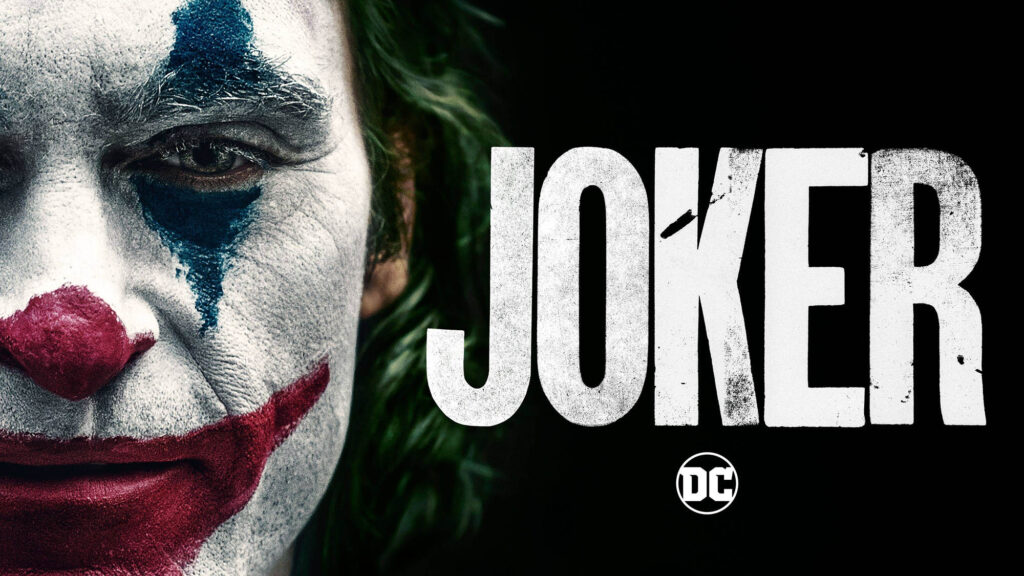
Joker
The story in Joker is set in the fictional Gotham City. Filming was mainly in New York City, with additional work in New Jersey and studio filming in Brooklyn.