
Sylvester Stallone is an American actor, screenwriter, director and producer born Michael Sylvester Gardenzio Stallone on 6 July 1946 in the Hell’s Kitchen neighbourhood of Manhattan, New York City. His father, Frank Stallone Sr., was a hairdresser of Italian descent whose family originated in Gioia del Colle in southern Italy, while his mother, Jacqueline Labofish, worked as a dancer, fitness instructor and later an astrologer. Complications during his birth resulted in nerve damage that caused partial paralysis of the lower left side of his face, affecting his lip, chin and tongue. The injury contributed to the distinctive facial expression and slightly slurred speech that would later become familiar features of his screen performances. Stallone grew up in a troubled household, frequently witnessing arguments between his parents, and spent periods of his early childhood away from the family in boarding and foster care. His younger brother, Frank Stallone Jr., subsequently became a musician and actor. During the early 1950s, the family moved to the Washington, D.C., metropolitan area, where his father established a beauty business and his mother opened a gym. Following his parents’ divorce in 1957, Stallone initially remained with his father in Maryland before eventually moving to Philadelphia to live with his mother and her second husband.
Stallone’s school years were difficult, and he was frequently disciplined for disruptive behaviour and poor academic performance. He attended several institutions, including Charlotte Hall Military Academy in southern Maryland and Abraham Lincoln High School in Philadelphia, before continuing his education abroad. His interest in physical fitness developed during adolescence, partly through his involvement in American football and other sports. He also became attracted to acting and dramatic writing, although he had few professional connections within the entertainment industry. Between 1965 and 1967, he attended the American College of Switzerland, where he became involved in theatrical productions and worked with other students interested in performance. He subsequently returned to the United States and enrolled at the University of Miami in Coral Gables, Florida, studying dramatic arts from 1967 to 1969. Stallone left university before graduating, deciding that he needed to pursue professional opportunities rather than continue his formal education. In 1998, nearly three decades later, the university awarded him a Bachelor of Fine Arts degree after recognising his professional accomplishments and allowing him to complete the outstanding academic requirements.
In 1969, Stallone moved to New York City and began auditioning for acting roles while supporting himself through a succession of poorly paid jobs. He worked as a cinema usher and cleaned animal enclosures at Central Park Zoo, sometimes struggling to afford accommodation or regular meals. His early acting opportunities were limited, and he appeared in the low-budget adult film The Party at Kitty and Stud’s (1970), which he later explained he had accepted because of serious financial difficulties. Small appearances followed in Woody Allen’s Bananas (1971) and the crime thriller Klute (1971), but neither provided a substantial professional breakthrough. He also appeared in theatrical productions and began writing screenplays, believing that creating his own material might offer opportunities unavailable through conventional auditions. His first significant feature-film role came in The Lords of Flatbush (1974), a comedy-drama about a group of young men growing up in Brooklyn during the 1950s. Stallone played Stanley Rosiello alongside Perry King, Henry Winkler and Paul Mace. The film was shot largely around New York City and introduced him to a group of actors and filmmakers working outside the major Hollywood studios. During this period, he developed a relationship with photographer and actress Sasha Czack, whom he married in December 1974. The couple subsequently moved to Los Angeles, where Stallone continued struggling to secure substantial roles.
His breakthrough originated with a screenplay inspired partly by the heavyweight boxing match between Muhammad Ali and Chuck Wepner in March 1975. Wepner, a relatively unknown contender, had survived until the fifteenth round against the reigning champion, an achievement that interested Stallone more than the eventual result. He began developing the fictional story of Rocky Balboa, an unsuccessful Philadelphia boxer given an unexpected opportunity to challenge the world heavyweight champion. Stallone completed an initial draft in approximately three and a half days before undertaking substantial revisions. Producers Irwin Winkler and Robert Chartoff became interested in the screenplay, but negotiations were complicated by Stallone’s insistence that he play the central character himself. The producers considered employing a more established actor, while United Artists initially resisted financing a production starring an unknown performer. Stallone ultimately accepted a relatively modest payment for his screenplay in exchange for retaining the leading role. John G. Avildsen was hired to direct, with Talia Shire, Burt Young, Burgess Meredith and Carl Weathers completing the principal cast.
Rocky (1976) was filmed primarily in Philadelphia, a city Stallone knew from his teenage years and whose working-class neighbourhoods became integral to the character’s identity. Principal photography began in January 1976, with location work around Kensington, South Philadelphia and the city centre. Rocky’s apartment was represented by a terraced house at 1818 East Tusculum Street, while the pet shop where Adrian works was filmed at 2146 North Front Street. The production also used the Italian Market along South Ninth Street, Philadelphia City Hall, Fairmount Park and the waterfront beside the Delaware River. Its most recognisable sequence follows Rocky running up the eastern steps of the Philadelphia Museum of Art, overlooking Benjamin Franklin Parkway. Camera operator Garrett Brown used his newly developed Steadicam equipment for portions of the running sequence, allowing the camera to follow Stallone through the streets without the restrictions imposed by conventional tracking equipment. Although the film is strongly associated with Philadelphia, several interiors were shot in Los Angeles, including boxing gym scenes and the climactic fight, which was filmed at the Los Angeles Memorial Sports Arena rather than at Philadelphia’s Spectrum.
Rocky was released in November 1976 and became the highest-grossing film at the American box office that year. At the Academy Awards in March 1977, it received ten nominations, including Best Actor and Best Original Screenplay for Stallone, and won Best Picture, Best Director and Best Film Editing. The success transformed Stallone from a struggling actor into an internationally recognised star and gave him considerable influence over his subsequent projects. It also established a lasting personal connection with Philadelphia. The steps of the city’s art museum became widely associated with the fictional boxer, and Stallone returned there repeatedly for later films and public appearances. His next leading role was in Norman Jewison’s F.I.S.T. (1978), a labour drama about a truck driver who becomes involved in the American trade union movement. That same year, Stallone made his feature directing debut with Paradise Alley (1978), which he also wrote and starred in. Set in the Hell’s Kitchen neighbourhood of Manhattan during the 1940s, the film follows three Italian-American brothers who become involved in professional wrestling. Its setting drew on the New York neighbourhood where Stallone had been born, while its emphasis on family conflict and working-class ambition continued subjects introduced in Rocky.
Stallone returned to directing with Rocky II (1979), taking over from Avildsen while reprising the leading role. The sequel continued Rocky’s relationship with Adrian and his professional rivalry with Apollo Creed, again filming extensively around Philadelphia. The production included familiar locations from the original film and an elaborate training sequence in which Rocky is joined by hundreds of children running through the city. Stallone subsequently appeared in the urban crime thriller Nighthawks (1981), playing a New York police detective pursuing an international terrorist portrayed by Rutger Hauer. The film was shot around Manhattan and other parts of New York, including locations near Roosevelt Island and the city’s underground railway system. He also starred in John Huston’s Escape to Victory (1981), a wartime drama about Allied prisoners of war who participate in a football match against a German team. Although the story takes place in occupied France, the production was filmed primarily in Hungary. The climactic match was staged at the MTK Stadium in Budapest, while the prison camp was constructed near Fót, north-east of the city. The international cast included Michael Caine, Max von Sydow and professional footballers Pelé, Bobby Moore and Osvaldo Ardiles, with Stallone playing an American prisoner serving as the team’s goalkeeper.
The third Rocky film, Rocky III (1982), was another Stallone-directed production and introduced Mr. T as the formidable boxer Clubber Lang. Stallone also brought former professional wrestler Hulk Hogan into the film, expanding its connection to the world of sports entertainment. For a sequence depicting Rocky’s public recognition, the production commissioned a bronze statue of the boxer from sculptor A. Thomas Schomberg. The sculpture was temporarily installed at the Philadelphia Museum of Art before being moved to the Spectrum sports arena, later returning to the museum’s grounds. Rocky III also introduced Survivor’s song “Eye of the Tiger”, which became closely associated with the film and its training sequences. During this period, Stallone was developing a second character who would become almost as important to his career as Rocky Balboa: John Rambo, a Vietnam War veteran struggling to adjust to civilian life.
First Blood (1982), directed by Ted Kotcheff and adapted from David Morrell’s novel, introduced Stallone as Rambo, a former soldier whose confrontation with a small-town sheriff develops into a violent pursuit through the mountains. Stallone contributed to the screenplay and substantially altered the character from Morrell’s original conception, placing greater emphasis on the veteran’s emotional trauma and experiences during the Vietnam War. Although the story takes place in the fictional town of Hope in Washington State, the film was shot principally in British Columbia, Canada. The actual town of Hope, east of Vancouver, provided much of the urban setting, including the streets where Rambo is arrested and later pursued by police. Other filming took place around Coquihalla Canyon Provincial Park, Golden Ears Provincial Park, Pitt Lake and Capilano Canyon. The production required Stallone to work in difficult mountain conditions, including cold weather, rivers and dense forest. Several action sequences involved climbing, falling and moving through rough terrain, resulting in injuries during filming. First Blood became a commercial success, establishing Rambo as a second recurring character whose popularity would shape much of Stallone’s career during the following decades.
Stallone returned as Rocky in Rocky IV (1985), which he wrote and directed. The film introduced Soviet boxer Ivan Drago, portrayed by Swedish actor Dolph Lundgren, and placed the American character within the political tensions of the Cold War. Although its climactic fight takes place in Moscow, the boxing sequences were filmed at the PNE Agrodome in Vancouver, British Columbia, while snowy landscapes in Wyoming represented the Soviet countryside. Stallone filmed outdoor training sequences around Jackson Hole and Grand Teton National Park, using the area’s mountains, forests and rural buildings to recreate Rocky’s isolated training camp. During the production, a particularly forceful punch delivered by Lundgren injured Stallone, who required hospital treatment. The same year, he starred in Rambo: First Blood Part II (1985), written with James Cameron and directed by George P. Cosmatos. The sequel sent Rambo back to Vietnam on a mission to locate American prisoners of war, but much of the production was filmed in Mexico, particularly around Acapulco and the mountainous countryside of Guerrero. The film’s greater emphasis on military action and elaborate stunt sequences changed the public image of the character, while both Rocky IV and Rambo: First Blood Part II became major international box-office successes.
During the middle of the 1980s, Stallone became one of Hollywood’s most recognisable action stars. He played a police officer in Cobra (1986), another collaboration with George P. Cosmatos, and a truck driver competing in professional arm-wrestling in Over the Top (1987). His personal life was also changing. His marriage to Sasha Czack ended in divorce in 1985, after the birth of their sons Sage, in 1976, and Seargeoh, in 1979. Stallone married Danish actress Brigitte Nielsen in December 1985, having worked with her on Rocky IV and subsequently on Cobra. Their marriage attracted substantial attention from the entertainment press but ended in divorce in 1987. Stallone continued travelling internationally for film work, particularly while producing Rambo III (1988), in which the character becomes involved in the Soviet-Afghan War. The production was filmed in Israel, Thailand and the American Southwest rather than Afghanistan. Locations included the Dead Sea region, Jerusalem and the Negev Desert in Israel, while the opening monastery scenes were shot at Wat Phra Phutthabat Tak Pha in Lamphun Province, northern Thailand. Additional battle sequences were filmed in the desert around Yuma, Arizona, and neighbouring California.
Stallone’s films at the end of the decade included Lock Up (1989), a prison drama directed by John Flynn, and Tango & Cash (1989), in which he starred opposite Kurt Russell as one of two Los Angeles police detectives framed for murder. The latter production was filmed around Los Angeles, including Downtown and the surrounding industrial districts, while its elaborate action sequences required extensive stunt and effects work. His commercial success also allowed him to establish business interests outside filmmaking. In 1991, Stallone became one of the original celebrity investors and promoters associated with Planet Hollywood, the restaurant chain founded by Robert Earl and Keith Barish. Alongside Arnold Schwarzenegger and Bruce Willis, he helped publicise the first restaurant, which opened at 130 West 57th Street in Manhattan in October 1991. The establishment displayed props and memorabilia from major Hollywood productions, including boxing gloves associated with Rocky. The chain subsequently expanded internationally, opening restaurants in London, Chicago, Los Angeles and numerous other cities. Although its initial expansion was followed by financial difficulties, Stallone remained publicly connected with the company and its entertainment-related ventures.
The early 1990s brought an uneven period in Stallone’s film career. He returned to Rocky Balboa in Rocky V (1990), directed by John G. Avildsen, which depicted the boxer struggling with financial problems and the consequences of his sporting career. The film reunited Stallone with the Philadelphia locations of the original production and introduced his eldest son, Sage, as Rocky’s teenage son Robert. Stallone subsequently attempted to move towards comedy with Oscar (1991), directed by John Landis, and Stop! Or My Mom Will Shoot (1992), opposite Estelle Getty. Neither achieved the commercial success of his earlier action films, and he returned to the genre with Cliffhanger (1993), directed by Renny Harlin. Stallone played Gabe Walker, a mountain rescue specialist who becomes involved in a confrontation with criminals in the Colorado Rockies. Although the story takes place in the United States, most of the film was shot in the Italian Dolomites, particularly around Cortina d’Ampezzo. The production used mountain locations including Monte Cristallo, the Tofane peaks, Monte Faloria and Monte Lagazuoi. An elaborate suspension bridge sequence was filmed along the Via Ferrata Ivano Dibona on Monte Cristallo, while additional mountain photography took place around the Marmolada massif. Other scenes were filmed near Durango, Colorado, and at Cinecittà Studios in Rome. The production’s demanding climbing sequences and extensive aerial photography helped restore Stallone’s commercial standing after his unsuccessful comedies.
Stallone continued working in science fiction and action cinema with Demolition Man (1993), starring Wesley Snipes and Sandra Bullock. He played John Spartan, a police officer who is cryogenically frozen and revived in a technologically advanced future society. Although the fictional city of San Angeles combines Los Angeles and San Diego, filming took place across Southern California, with locations including the San Diego Convention Center, America Plaza in Downtown San Diego, the Pacific Design Center in West Hollywood and studio facilities in Burbank. He subsequently appeared opposite Sharon Stone in The Specialist (1994), filmed around Miami, Florida, and starred in Judge Dredd (1995), an adaptation of the British comic-book character. The latter was produced primarily at Shepperton Studios in Surrey, England, where large futuristic city sets were constructed. His next major action film, Daylight (1996), directed by Rob Cohen, followed a group of people trapped inside a collapsed underwater road tunnel connecting Manhattan and New Jersey. Although set in New York, much of the production was completed on elaborate sets at Cinecittà Studios in Rome, with additional location filming in New York City.
A significant departure came with James Mangold’s Cop Land (1997), in which Stallone played Freddy Heflin, a partially deaf sheriff in a New Jersey community populated by New York City police officers. The film also starred Robert De Niro, Harvey Keitel and Ray Liotta, placing Stallone among an ensemble of actors more commonly associated with serious crime dramas than large-scale action films. He deliberately gained weight for the part and adopted a comparatively restrained style of performance. Filming took place around Edgewater, Cliffside Park, Fort Lee and Teaneck in New Jersey, including locations near the George Washington Bridge and Fairleigh Dickinson University. The setting drew on Mangold’s experiences of growing up in the Hudson Valley among families connected to the New York Police Department. Cop Land received favourable reviews and demonstrated Stallone’s ability to work effectively in a character-driven ensemble drama. Although he subsequently returned to action films, the role remained one of his most critically recognised performances outside Rocky.
His personal circumstances became more stable during the same period. Stallone married former model and businesswoman Jennifer Flavin on 17 May 1997 at the Dorchester Hotel in London, followed by a religious ceremony at Blenheim Palace in Oxfordshire. The couple had met in 1988 at a restaurant in Beverly Hills and maintained a relationship through several periods of separation. They went on to have three daughters: Sophia, born in 1996, Sistine, born in 1998, and Scarlet, born in 2002. The family established its principal residence in the Los Angeles area, eventually occupying a large estate in Beverly Park, a private residential community in the mountains above Beverly Hills. Stallone developed a substantial interest in painting and sculpture, maintaining a studio at the property and creating large expressionistic paintings, portraits and abstract works. His artwork was subsequently exhibited at galleries and museums, including the State Russian Museum in St Petersburg in 2013 and exhibitions in Europe. These activities provided another creative outlet alongside screenwriting and directing, interests he had maintained since his youth.
Stallone’s acting career slowed during the late 1990s and early 2000s, although he continued appearing in films including Get Carter (2000), Driven (2001) and Shade (2003). He also played the villainous Toymaker in Robert Rodriguez’s Spy Kids 3-D: Game Over (2003), filmed largely at studios in Austin, Texas. By this stage, Stallone had become increasingly interested in returning to the characters that had established his career. He wrote and directed Rocky Balboa (2006), portraying the boxer as an ageing widower operating a restaurant named after his late wife, Adrian. The film returned to Philadelphia, using locations from the original Rocky alongside newer parts of the city. The Victor Café at 1303 Dickinson Street in South Philadelphia was transformed into Adrian’s restaurant, with Stallone and the production team filming extensively inside and around the establishment. Other locations included the Philadelphia Museum of Art, Kensington and the former house representing Rocky’s original home on East Tusculum Street. The climactic boxing match was filmed in Las Vegas, Nevada. Rocky Balboa received a more favourable response than Rocky V and allowed Stallone to bring the character’s story to what initially appeared to be a conclusion.
He next returned to John Rambo in Rambo (2008), which he wrote, directed and starred in. The film follows the former soldier living near the Thai-Burmese border before becoming involved in a rescue mission during the ongoing conflict in Myanmar. Although the story involves Myanmar, most principal photography was conducted in Thailand, particularly around Chiang Mai and the surrounding northern provinces. The production also used river locations associated with the Salween River, whose course forms part of the international boundary between Thailand and Myanmar. Stallone deliberately incorporated the political violence in Myanmar into the screenplay, consulting organisations and individuals familiar with the conflict while developing the story. The film’s graphic violence marked a substantial departure from the relatively restrained approach of First Blood. Its commercial success encouraged Stallone to develop another action project that would bring together performers associated with different generations of Hollywood adventure and action cinema.
The Expendables (2010), written, directed and produced by Stallone, featured an ensemble including Jason Statham, Jet Li, Dolph Lundgren, Mickey Rourke, Terry Crews and Randy Couture, with appearances by Arnold Schwarzenegger and Bruce Willis. Stallone played Barney Ross, the leader of a group of mercenaries hired for dangerous international missions. Principal photography took place in Brazil and Louisiana, with locations around Rio de Janeiro, Mangaratiba, Magé and Niterói representing a fictional South American island. Additional filming took place in New Orleans, where Fort Macomb and other locations were used for action sequences. Stallone suffered serious injuries while performing stunts, including damage to his neck that required surgery. Nevertheless, the film became a commercial success and led to The Expendables 2 (2012), directed by Simon West, which was filmed primarily in Bulgaria. The sequel used Nu Boyana Film Studios in Sofia alongside locations including Devetashka Cave in Lovech Province, where a large action sequence required the construction of a temporary bridge. The franchise continued with The Expendables 3 (2014), also filmed substantially in Bulgaria, and Expend4bles (2023), directed by Scott Waugh.
During the production and promotion of The Expendables films, Stallone experienced a major personal loss. His eldest son, Sage, died on 13 July 2012 at his home in Studio City, Los Angeles, aged thirty-six. Sage had appeared alongside his father in Rocky V and Daylight and had subsequently developed an interest in independent cinema, co-founding Grindhouse Releasing with film editor Bob Murawski. The company specialised in restoring and distributing cult and exploitation films. Following his death, the Los Angeles County coroner determined that Sage had died from natural causes associated with coronary artery disease. Stallone withdrew from several promotional appearances while grieving and later spoke about the difficulty of losing a child. His family life and his responsibilities as a father became increasingly prominent in interviews, particularly as his three daughters grew older and began developing their own careers in modelling, acting and other fields.
Stallone’s most significant return to the Rocky franchise came through Creed (2015), written and directed by Ryan Coogler. The film follows Adonis Johnson, the son of Rocky’s former rival Apollo Creed, played by Michael B. Jordan. Stallone reprised Rocky as an older man who becomes Adonis’s trainer while confronting his own declining health. The production returned to Philadelphia, where the characters’ relationship was developed through scenes filmed around the city’s boxing gyms, residential neighbourhoods and waterfront. The Victor Café again represented Adrian’s restaurant, while Front Street Gym in Kensington became an important location for Adonis’s training. Additional scenes were filmed at the Philadelphia Museum of Art, with the final boxing match staged at Goodison Park football stadium in Liverpool, England. The role brought Stallone his first Academy Award nomination in nearly forty years, this time for Best Supporting Actor, and he won the Golden Globe in the same category. He returned for Creed II (2018), directed by Steven Caple Jr., which brought Dolph Lundgren back to the franchise as Ivan Drago. The film was shot primarily around Philadelphia and marked Stallone’s final appearance as Rocky Balboa. He did not participate in Creed III (2023), which instead concentrated on Adonis Creed’s independent career.
Outside the Rocky franchise, Stallone continued working in action cinema and animation. He appeared opposite Arnold Schwarzenegger in Escape Plan (2013), a prison thriller filmed largely in New Orleans, Louisiana, and provided the voice of the character Raccoon in the animated film Animal Crackers (2017). He joined the Marvel Cinematic Universe with Guardians of the Galaxy Vol. 2 (2017), playing Stakar Ogord, a veteran space pirate who commands a group of Ravagers. The production was filmed principally at Pinewood Atlanta Studios in Fayette County, Georgia, where its spacecraft interiors and other science-fiction environments were constructed. Stallone subsequently reprised the role in Guardians of the Galaxy Vol. 3 (2023), directed by James Gunn. Another return to an established character came with Rambo: Last Blood (2019), directed by Adrian Grünberg, in which Rambo lives on a ranch near the American-Mexican border and becomes involved in a violent confrontation with criminals operating in Mexico. The film was produced principally in Bulgaria and Spain, with locations around Tenerife representing parts of the Mexican landscape. Its release concluded what became a five-film series spanning thirty-seven years.
Stallone’s longstanding connection to Italy took on renewed importance during the following decade. Although his career had developed primarily in the United States, he had maintained an interest in the southern Italian town of Gioia del Colle in Puglia, where his paternal family had lived before emigrating to America. In September 2023, he visited the town with his wife, daughters and brother Frank, meeting relatives and receiving honorary citizenship from the local authorities. The ceremony took place in Piazza Plebiscito and attracted considerable attention from residents. Stallone and his brother also visited buildings and streets associated with their family history, allowing them to explore the Italian origins of the Stallone name. The visit formed part of the second season of The Family Stallone (2023–2024), a reality television series following Stallone, Jennifer Flavin and their three daughters. Although the programme focused primarily on their personal lives, it also documented significant changes in the family’s residential circumstances.
In 2020, Stallone and Flavin purchased a waterfront estate in Palm Beach, Florida, for approximately $35 million. The property became increasingly important as the couple reconsidered their longstanding residence in California. Stallone subsequently sold his large Beverly Park mansion to British singer Adele in 2022 for approximately $58 million, ending a period in which the property had served as one of his principal family homes and contained much of his art collection. The family’s eventual move to Florida was documented in The Family Stallone, with the second season following their departure from Los Angeles and the establishment of their new home in Palm Beach. Stallone and Flavin briefly separated in 2022, when she filed for divorce, but reconciled later that year. Their daughters continued pursuing independent careers, with Sophia and Sistine spending considerable time in New York and Scarlet developing an acting career. The family’s move represented a substantial geographical change after Stallone had spent most of his professional life based in Los Angeles.
His first major leading television role came with Tulsa King (2022–), created by Taylor Sheridan and developed for Paramount+. Stallone played Dwight Manfredi, a New York Mafia figure released from prison after twenty-five years and sent to Tulsa, Oklahoma, where he begins establishing a criminal operation. The series combined organised-crime drama with comedy, allowing Stallone to play a character whose age, experiences and unfamiliarity with contemporary society became central to the story. Principal photography for the first season took place in Oklahoma, particularly around Tulsa, Oklahoma City and Bethany. The production used locations including the Mayo Hotel, Tulsa International Airport and the Center of the Universe, while interiors were filmed at Prairie Surf Studios in Oklahoma City. Later seasons relocated much of the production to Georgia, with filming based at Eagle Rock Studios in Norcross, north-east of Atlanta, and additional locations around Gainesville and the surrounding metropolitan area. Although the series continued to depict Tulsa, the use of Georgia allowed the filmmakers to recreate Oklahoma settings within a different production environment.
Tulsa King also brought Stallone into a regular television production schedule for the first time, requiring extended periods away from his family while filming successive seasons. His daughter Scarlet joined the cast as Spencer, a young woman who becomes involved with Dwight’s organisation, providing an opportunity for the two to work together professionally. The programme became one of Paramount+’s most successful original series and was renewed repeatedly. Its third season premiered in September 2025, while the fourth began streaming on 16 October 2026. The series was also renewed for a fifth season, with production moving from Atlanta to New York in October 2026 to follow Dwight’s return to his former criminal environment. Filming for the fifth season began in New York on 5 October, bringing Stallone back to the city where he had been born and where his professional career had begun. In addition to starring, he served as an executive producer, working with writers and producers including Sheridan and Terence Winter.
During the early 2020s, Stallone continued appearing in films while increasingly reflecting on his career and personal experiences. He starred as an ageing former superhero in Samaritan (2022), directed by Julius Avery and filmed largely around Atlanta, Georgia. He also appeared in the action thrillers Armor (2024) and Alarum (2025), maintaining a presence in independent action productions alongside his larger franchise commitments. His life became the subject of Sly (2023), a documentary directed by Thom Zimny that premiered at the Toronto International Film Festival before its release on Netflix. The film included interviews with Stallone, Arnold Schwarzenegger, Quentin Tarantino, Henry Winkler and members of his family, examining the relationship between his difficult childhood, artistic ambitions and professional success. It also featured his paintings and reflected on the physical consequences of decades spent performing demanding action sequences. Stallone had undergone several operations to repair injuries sustained during his film career, including damage to his back and neck, and became increasingly open about the long-term effects of performing dangerous stunts.
On 29 September 2026, Stallone published The Steps: A Memoir through William Morrow, an imprint of HarperCollins. The book concentrates particularly on his early years, from his difficult upbringing and arrival in New York in 1969 to the success of Rocky at the Academy Awards in 1977. Stallone revisited the years when he struggled to find employment, lived in inexpensive accommodation and repeatedly faced rejection from producers and casting directors. The title refers to the steps of the Philadelphia Museum of Art, which had become permanently associated with his best-known character. Published during the fiftieth anniversary year of Rocky, the memoir also examined the personal consequences of professional ambition, including the pressures placed on his family and the physical injuries accumulated during his acting career. Its release coincided with renewed public attention to the original film, including exhibitions and celebrations in Philadelphia marking its contribution to the city’s popular culture.
By October 2026, Stallone had turned eighty and remained professionally active, continuing to portray Dwight Manfredi in Tulsa King while maintaining his home in Palm Beach with Jennifer Flavin. The same month, filming for the series’ fifth season brought him back to New York, linking his current work directly to the city where he had struggled to establish himself more than half a century earlier. His life had been divided among several American cities, particularly New York, Philadelphia, Miami, Los Angeles and Palm Beach, while his film productions had taken him to Canada, Mexico, Brazil, Italy, Thailand, Israel and numerous European countries. Philadelphia retained a particularly important place in his career through the continuing association between Rocky Balboa and the city’s streets, boxing gyms and art museum. Stallone’s work as an actor, writer, director and producer had extended across six decades, with Rocky, Rambo and The Expendables remaining central to his film career alongside later dramatic roles such as Cop Land, Creed and Tulsa King.

Cobra
Cobra was filmed in California, with Los Angeles and the surrounding area forming the core of the film’s urban setting to create the film’s grim version of LA.

Rocky
Rocky is inseparable from Philadelphia, and it uses the city as a real working-class environment rather than a polished backdrop.
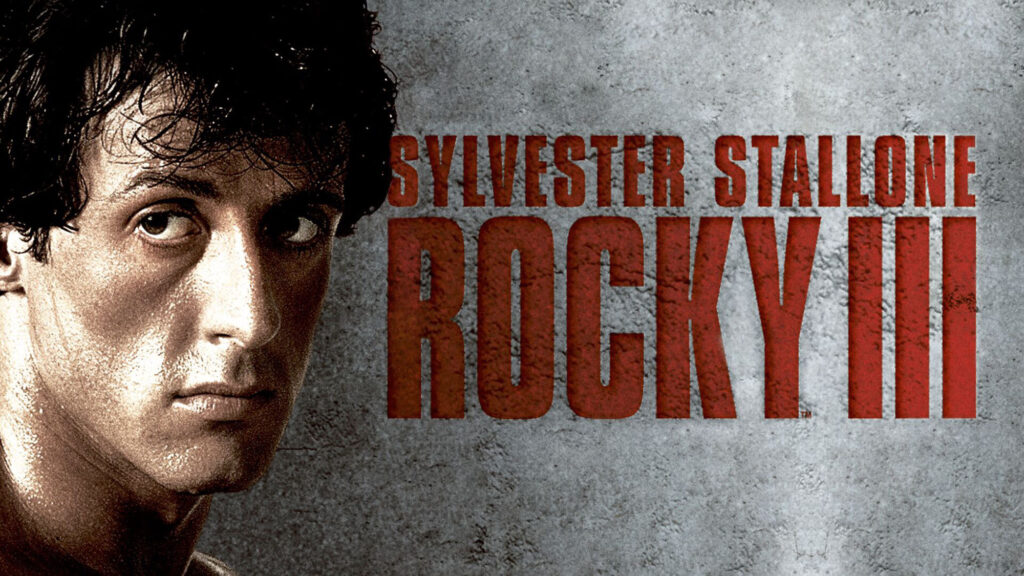
Rocky III
Rocky III was shot across several American cities, but Philadelphia remains its centre, where the Philadelphia Museum of Art is the most famous location.

The Specialist
The Specialist was filmed in Miami and Miami Beach, using the city’s waterfront, hotels, bridges, streets and nightlife as a major part of the film’s identity.