
Simon Pegg (born 14 February 1970) is an English actor, comedian, screenwriter and producer best known for the television series Spaced (1999–2001), Shaun of the Dead (2004), Hot Fuzz (2007), Paul (2011), The World’s End (2013) and his roles in the Mission: Impossible and Star Trek film franchises. Born in Brockworth, Gloucestershire, he studied in Stratford-upon-Avon and Bristol before moving to London, where he established a career in stand-up comedy and television. His collaboration with director Edgar Wright and actor Nick Frost helped bring a distinctly British style of comedy to international audiences, while his subsequent Hollywood career has taken him to filming locations across Europe, North America, Africa, Asia and Oceania. Despite his extensive work in American productions, Pegg has continued living in England, maintaining particularly strong connections with Gloucestershire, London and Hertfordshire.
Simon John Pegg was born Simon John Beckingham in Brockworth, a village southeast of Gloucester, to Gillian Rosemary Smith and John Henry Beckingham. His mother worked as a civil servant, while his father was a jazz musician and keyboard salesman. His parents separated when he was seven, and he subsequently adopted the surname of his stepfather following his mother’s remarriage. Pegg spent much of his childhood in Gloucestershire, attending Castle Hill Primary School and Brockworth Comprehensive School, as well as The King’s School in Gloucester. The historic cathedral city was a familiar part of his early life, although he grew up primarily in the residential communities surrounding it. His father’s involvement in music exposed him to performing from an early age, while his own interests increasingly centred on cinema, television and comedy. He developed a particular enthusiasm for science fiction, horror films and the popular culture of the 1970s and 1980s, interests that would later become central to his writing.
When Pegg was sixteen, the family moved to Stratford-upon-Avon in Warwickshire. The town, internationally associated with William Shakespeare and the Royal Shakespeare Company, provided a different cultural environment from the Gloucestershire suburbs where he had grown up. He attended Stratford-upon-Avon College, studying English literature and theatre, and became increasingly interested in pursuing acting professionally. The presence of major theatrical institutions in the town encouraged his ambitions, although he was also drawn to comedy and contemporary film. In 1988, he moved to Bristol to study theatre, film and television at the University of Bristol. His course combined practical performance with film history and critical theory, and his undergraduate dissertation examined the politics and cultural ideology of popular American cinema during the 1970s. While at university, he became involved in student comedy and theatre, performing with a group known as David Icke and the Orphans of Jesus. Among those associated with the group were David Walliams and television presenter Dominik Diamond. Pegg graduated in 1991 and began developing material for a career in stand-up comedy.
After university, Pegg moved to London, where the alternative comedy circuit offered opportunities for young performers outside conventional theatre and television. He began appearing at comedy clubs and small venues across the capital, gradually developing a style that combined personal observations, film references and absurd humour. His early years in London also brought him into contact with several people who would become important collaborators. Among them was Jessica Stevenson, later professionally known as Jessica Hynes, with whom he developed a strong working relationship. He also became friends with Nick Frost, who was working as a waiter at a Chiquito Mexican restaurant in north London. Frost had not trained as an actor, but the two shared an enthusiasm for films, television and computer games. They eventually lived together, and aspects of their everyday life would later influence Pegg’s television writing.
His first regular television opportunities came during the mid-1990s, including appearances in Six Pairs of Pants (1995), Asylum (1996) and We Know Where You Live (1997). Asylum was particularly important because it introduced him to Edgar Wright, a young director from Somerset who shared his enthusiasm for horror, science fiction and American filmmaking. Pegg subsequently appeared in the BBC sketch comedy series Big Train (1998–2002), working alongside performers including Mark Heap, Kevin Eldon and Julia Davis. The programme was filmed largely in London and helped establish him within British television comedy. He also appeared in Michael Winterbottom’s 24 Hour Party People (2002), a film about Manchester’s music scene and Factory Records, although his role was relatively small.
Pegg’s breakthrough as a writer and leading performer came with Spaced, which he created with Jessica Stevenson. The Channel 4 sitcom followed Tim Bisley and Daisy Steiner, two Londoners who pretend to be a couple in order to rent an inexpensive flat in Tufnell Park. Edgar Wright directed all fourteen episodes, while Nick Frost made his acting debut as Tim’s friend Mike Watt. The series drew heavily on the experiences of young adults living in London during the late 1990s, incorporating references to science fiction, horror, video games and contemporary music. Its principal exterior location was a Victorian house at 23 Carleton Road in Tufnell Park, which represented the fictional address of 23 Meteor Street. Built in 1870, the Grade II-listed property had been purchased by costume designer Chris Winter in 1993 and restored from a severely neglected condition. Wright selected the building partly because of its unusual appearance, which gave the fictional flat a distinctive identity. The first series was produced using studio facilities at Twickenham, while the second used Ealing Studios in west London. Additional scenes were filmed around north London, including residential streets and commercial districts familiar to the programme’s characters.
Spaced premiered in September 1999 and developed a devoted audience over its two series. Its success established the creative partnership between Pegg, Wright and Frost, who began discussing the possibility of making a feature film together. Their first major project was Shaun of the Dead (2004), a horror comedy written by Pegg and Wright and starring Pegg as Shaun, a London electronics salesman whose ordinary life is disrupted by a zombie outbreak. The film was shot over approximately nine weeks between May and July 2003, primarily in north London and at Ealing Studios. Rather than constructing a fictional city, Wright used actual neighbourhoods and businesses, with much of the action taking place around Crouch End, Highgate, Finsbury Park and East Finchley.
Several of the film’s locations were within the part of London where Pegg had been living and working. Shaun’s house was represented by a property at 83 Weston Park in Crouch End, while the nearby shop at 96 Weston Park appeared in the scenes where Shaun repeatedly buys his morning newspaper and groceries. The electrical retailer where he works was Garland Electronics at 763–765 High Road in North Finchley, transformed into the fictional Foree Electric. His mother and stepfather’s house stood at 37 Abbots Gardens in East Finchley, while his girlfriend Liz’s flat was located in Cunningham House on the Hillcrest Estate in Highgate. The film’s most famous location, the Winchester Tavern, was represented externally by the Duke of Albany at 39 Monson Road in New Cross, south London. The pub’s interior was recreated at Ealing Studios, allowing the filmmakers to stage the increasingly destructive final sequences. The Duke of Albany subsequently closed and was converted into residential accommodation, while several of the film’s north London properties have remained recognisable. Shaun of the Dead was a major critical and commercial success, establishing Pegg and Frost internationally and attracting the attention of American filmmakers.
The film also coincided with important developments in Pegg’s personal life. On 23 July 2005, he married music industry publicist Maureen McCann at St Simon’s Catholic Church in Glasgow’s West End. McCann, who came from East Kilbride near Glasgow, had been his partner for several years. Nick Frost served as best man, while guests included Chris Martin and other members of Coldplay, Gwyneth Paltrow, David Walliams and several colleagues from British television. The church, situated on Partick Bridge Street near the River Kelvin, was established during the nineteenth century to serve Glasgow’s growing Catholic community. Pegg and McCann subsequently established their family home in north London, where he continued working on film and television projects. Their daughter, Matilda, was born in Los Angeles in 2009 while Pegg was working in the United States.
His next collaboration with Wright and Frost returned him to the West Country. Hot Fuzz (2007), written by Pegg and Wright, starred Pegg as Nicholas Angel, a highly efficient London police officer transferred to the apparently peaceful village of Sandford. The filmmakers chose Wells in Somerset as their principal location, partly because Wright had grown up there and knew its streets and buildings. Filming began in March 2006, with much of the production concentrated around the city’s Market Place, High Street and surrounding historic centre. The Crown at Wells, facing the Market Place, represented the exterior of the local pub where Angel first meets Danny Butterman, played by Frost. Its interior scenes were filmed at the Royal Standard of England in Forty Green, Buckinghamshire, while The Swan Hotel on Sadler Street appeared as the hotel where Angel stays after arriving in Sandford. The Market Place, fountain and surrounding shops featured extensively in the film’s action sequences, with the production temporarily transforming the city centre into a fictional rural community.
Other Wells locations included St Cuthbert’s Church, whose churchyard was used for the village fête, and the Bishop’s Palace, where the grounds and historic buildings provided settings for the neighbourhood watch conspiracy. The filmmakers deliberately avoided showing Wells Cathedral prominently, despite its position close to several important locations, because the enormous building would have made Sandford appear too much like a city. Some scenes were filmed elsewhere, including the former Hendon Police Training College in north London and studio interiors in Hertfordshire. Hot Fuzz brought Pegg back to a region geographically close to his Gloucestershire upbringing, while allowing Wright to incorporate places from his own childhood. In February 2007, the pair returned to Wells with Frost for a special local premiere, visiting The Crown after the screening.
By the time Hot Fuzz was released, Pegg had already begun working in Hollywood. His first appearance in the Mission: Impossible franchise came in Mission: Impossible III (2006), directed by J. J. Abrams. He played Benji Dunn, a technician working for the fictional Impossible Missions Force, in a supporting role that would eventually become one of the most enduring parts of his career. The film was produced internationally, with locations in California, Italy, Germany and China, although Pegg’s relatively limited involvement did not require him to participate in every location shoot. Abrams had become interested in his work after seeing Shaun of the Dead and would subsequently cast him in another major American science-fiction franchise.
Pegg continued making British films alongside his growing international commitments. In Run Fatboy Run (2007), directed by David Schwimmer, he played Dennis Doyle, a London man who attempts to complete a marathon to prove himself to his former fiancée. The film was shot almost entirely in London during late 2006, with filming around Bethnal Green, Hackney, Covent Garden and the City. The opening wedding sequence was photographed near St John of Jerusalem Church at Well Street Common in South Hackney, with Pegg’s character running along Meynell Crescent after abandoning the ceremony. Columbia Road in Bethnal Green supplied locations for his neighbourhood, while Canary Wharf and West India Quay represented the wealthy environment of his romantic rival. The film’s fictional marathon concluded near St Paul’s Cathedral, using the streets around St Paul’s Churchyard for the final sequence. Pegg also co-wrote the screenplay, continuing his practice of developing projects that offered him leading roles rather than relying exclusively on scripts offered by studios.
His next starring film, How to Lose Friends & Alienate People (2008), took him to New York City. Based loosely on the experiences of British journalist Toby Young, the comedy starred Pegg as Sidney Young, an ambitious writer attempting to establish himself in Manhattan’s celebrity journalism industry. Filming took place in both New York and London during 2007, with actual Manhattan buildings used for several principal locations. The fictional Sharps magazine occupied offices at 750 Third Avenue, while the character’s apartment was represented by a building on Ludlow Street on the Lower East Side. The Soho Grand Hotel at 310 West Broadway and Soho House New York in the Meatpacking District supplied locations for celebrity parties and social events. Some supposedly American interiors were filmed in London, including scenes at the former Café de Paris on Coventry Street in the West End. Pegg later published a series of video diaries recorded during the production, documenting his work with Kirsten Dunst and other members of the cast in London and New York.
He reunited with Abrams for Star Trek (2009), playing Montgomery Scott, the Scottish engineer originally portrayed by James Doohan in the television series. The production was based largely in Southern California, with studio filming at Paramount Pictures in Hollywood and locations elsewhere around Los Angeles. The filmmakers used industrial buildings and existing institutional architecture to represent futuristic facilities, while exterior sequences were photographed in California and Utah. Star Trek became a major international success and established Pegg as part of a new ensemble cast that included Chris Pine, Zachary Quinto, Zoe Saldaña and Karl Urban. He returned for Star Trek Into Darkness (2013) and eventually became more directly involved in the franchise’s creative development. His work in these films required extended periods in Los Angeles, although he continued returning to Britain between productions.
Pegg and Frost worked together again in Burke and Hare (2010), directed by John Landis and based on the nineteenth-century Edinburgh murders committed by William Burke and William Hare. Pegg played Burke opposite Andy Serkis as Hare, with the production using actual Scottish locations alongside English country houses and studio sets. Filming took place around Edinburgh’s Old Town, including Milne’s Court, Fishmarket Close, Merchant Street, George IV Bridge and Heriot Place. Additional scenes were photographed at Edinburgh Castle and the University of Edinburgh’s School of Anatomy, while Stirling Castle represented parts of the historic city. Ealing Studios supplied interiors, and Knole in Sevenoaks, Kent, was used for prison scenes. The production was particularly closely connected to Edinburgh’s history, as the real Burke and Hare murders took place in the city during 1827 and 1828, when demand for cadavers from the medical schools contributed to a trade in stolen and illegally obtained bodies.
The following year, Pegg and Frost co-wrote and starred in Paul (2011), a science-fiction road comedy about two British enthusiasts who encounter an extraterrestrial while travelling through the American Southwest. The idea had developed during their work on Shaun of the Dead, and the pair undertook a research journey through the United States before completing the screenplay. Principal photography took place in 2009, primarily in New Mexico, where the production used the region’s highways, desert communities and roadside businesses to represent a journey from San Diego towards Nevada. Locations included Las Vegas, New Mexico, the community of Zia Pueblo and the town of Moriarty on historic Route 66. The Big Chief Gas Station was represented by a property near Zia Pueblo, while Fireworks World on the eastern outskirts of Moriarty supplied another roadside location. The production also used the Little A’Le’Inn near Rachel, Nevada, an establishment closely associated with the mythology surrounding Area 51. The film’s version of San Diego Comic-Con was largely recreated at the Albuquerque Convention Center. Pegg and Frost spent approximately fifty days working in the New Mexico desert, with extensive visual effects used to add the computer-generated alien voiced by Seth Rogen.
By this stage, Pegg had become a regular member of the Mission: Impossible cast. His role as Benji Dunn was considerably expanded in Mission: Impossible – Ghost Protocol (2011), directed by Brad Bird. Pegg spent approximately seven months working on the production and personally travelled to Prague, Dubai and Vancouver. In Prague, the filmmakers used locations around Prague Castle to represent parts of the Kremlin, while an abandoned prison outside the city was used for the opening escape sequence. The production subsequently moved to Dubai, where Tom Cruise performed the celebrated sequence involving the Burj Khalifa, the skyscraper that had opened the previous year. Other scenes were filmed around the city’s modern commercial districts before the company travelled to Vancouver, where substantial interiors were constructed at Canadian Motion Picture Park Studios. Although the film also features Mumbai, much of the Indian material was shot by a separate unit or recreated in Canada. Pegg’s recollections of the production distinguish the locations where he worked from those used elsewhere in the film, a difference particularly relevant to large international action productions.
The final instalment of Pegg, Frost and Wright’s Three Flavours Cornetto trilogy was The World’s End (2013), in which Pegg played Gary King, a middle-aged man determined to recreate a twelve-pub drinking tour he had attempted with school friends during his youth. The fictional town of Newton Haven was created primarily from Letchworth Garden City and Welwyn Garden City in Hertfordshire, with filming beginning in September 2012. The production made extensive use of actual pubs and commercial buildings, many of which were temporarily renamed for the film. The Peartree on Hollybush Lane in Welwyn Garden City represented The First Post, the opening stop on the pub crawl, while The Cork on Howardsgate became The Famous Cock. The Parkway Bar represented The Cross Hands, and several other Welwyn establishments were incorporated into the earlier stages of the journey.
The characters subsequently move into Letchworth Garden City, where Leys Avenue and Arena Parade provided much of the fictional town centre. The Broadway Cinema, an Art Deco building that opened in 1936, was transformed into The Mermaid pub, while the Gardener’s Arms represented the final destination, The World’s End. Letchworth railway station became The Hole in the Wall, and the town’s Sollershott Circus roundabout appeared during the characters’ arrival and departure. Studio interiors and additional work were completed at Elstree Studios in Borehamwood. The production took place over several months, including lengthy night shoots around the town’s actual streets and pubs. Pegg, Frost and Wright subsequently attended local events connected with the film, and the Broadway Cinema hosted a special screening with a recorded introduction from the filmmakers. The use of two historic garden cities was particularly distinctive because both had been developed during the early twentieth century as planned communities, providing a consistent architectural environment for the fictional Newton Haven.
During these years, Pegg was also establishing a more permanent family life outside central London. He and Maureen initially lived in Crouch End, a neighbourhood that had become closely associated with Shaun of the Dead and his early television work. As his recognition increased, living among the same streets where the film had been made meant that he was frequently approached by members of the public. Around 2012, the family relocated to a country property in Hertfordshire, north of London, where they could enjoy greater privacy and outdoor space. Pegg has continued describing the house as his principal home, despite spending long periods abroad for film productions. He and Maureen have maintained a relatively private family life, and their daughter Matilda, usually known as Tilly, has occasionally accompanied him to professional events. He has also spoken about his interest in gardening and growing vegetables at the Hertfordshire property. Although he frequently rents accommodation in Los Angeles while working there, he has consistently declined to relocate his family permanently to Hollywood.
His next international assignment was Hector and the Search for Happiness (2014), directed by Peter Chelsom. Pegg played a London psychiatrist who travels abroad in an attempt to understand what makes people happy. The production took him to several countries, including Canada, South Africa and China. Principal filming began in Vancouver, where numerous interiors and urban locations represented London. The crew subsequently worked in Johannesburg and Shanghai, with additional filming in Quebec and Los Angeles. The University of British Columbia supplied a lecture theatre location, while the former Riverview Hospital complex in Coquitlam represented a scientific research facility. The production also used Casa Mia, a historic mansion in Vancouver, for interiors associated with the principal characters. Pegg later confirmed that he personally travelled to London, Johannesburg and Shanghai during filming, making the production one of his more geographically extensive starring roles.
He also worked in Western Australia on Kill Me Three Times (2014), a crime thriller directed by Kriv Stenders in which he played a professional assassin. The production was shot around Perth, Lancelin and the Margaret River region, using the state’s coastline and smaller communities for its fictional setting. Locations included Sunset Hospital in Dalkeith, a former hospital overlooking the Swan River, and properties around Cape Naturaliste and the southwest coast. The film provided Pegg with an opportunity to take on a more openly villainous role while working in a region far removed from the British urban settings of his early career.
His other films during this period included Man Up (2015), a romantic comedy starring Pegg and Lake Bell. The production was filmed in London during early 2014, using Waterloo station, the South Bank, Bloomsbury and several central London streets. One of its important locations was Bloomsbury Lanes, a basement bowling alley beneath the Tavistock Hotel, while additional interiors were completed at Elstree Studios in Hertfordshire. The film also used a former nightclub on Kilburn High Road to represent a Mexican restaurant, and the Down Hall hotel in Hertfordshire supplied the setting for an engagement party. Unlike the international productions occupying much of Pegg’s schedule, Man Up allowed him to work in a city he had known since the beginning of his career.
Pegg’s longstanding enthusiasm for Star Wars led to a particularly unusual acting assignment in Star Wars: The Force Awakens (2015), directed by J. J. Abrams. He played Unkar Plutt, a junk dealer on the desert planet Jakku, appearing beneath heavy prosthetic makeup that made him largely unrecognisable. The role required filming in Abu Dhabi, United Arab Emirates, where the production constructed an extensive desert settlement to represent Jakku. Pegg worked in temperatures approaching 50 degrees Celsius while wearing a substantial costume and silicone mask, making the outdoor sequences physically demanding. He also filmed at Pinewood Studios in Buckinghamshire, where additional Jakku environments and interiors had been constructed. Pegg had previously been involved with Star Wars-related media and was a lifelong admirer of the franchise, but The Force Awakens marked his first actual screen appearance in the film series.
He returned to the role of Scotty in Star Trek Beyond (2016), also contributing to the screenplay alongside Doug Jung. The production was filmed primarily in Vancouver, British Columbia, with additional work in Dubai and other locations. Vancouver’s established studio infrastructure provided extensive interiors representing the USS Enterprise and other spacecraft, while outdoor locations around British Columbia supplied alien landscapes. Dubai’s modern architecture was used to represent parts of the vast futuristic space station Yorktown, with buildings around the Downtown Dubai district and Dubai International Financial Centre incorporated into the fictional environment. Pegg participated in the Vancouver production and returned to Dubai, where he had previously worked on Mission: Impossible – Ghost Protocol. His responsibilities as co-writer meant that he remained involved in revising scenes during filming rather than completing all script work beforehand.
The Mission: Impossible series meanwhile became a continuing international commitment. For Mission: Impossible – Rogue Nation (2015), Pegg returned as Benji Dunn in a larger role alongside Tom Cruise and Rebecca Ferguson. Production began in Vienna, where Pegg and Cruise filmed around the Vienna State Opera and the surrounding streets. The historic opera house, completed in 1869 on the Ringstrasse, provided the setting for an elaborate assassination sequence that also incorporated nearby streets and underground railway facilities. Filming subsequently continued in Morocco, including Marrakech, Rabat, Casablanca and the road network between the cities, before moving to London and British studios. Pegg’s character was increasingly involved in action sequences rather than remaining in a technical support role, requiring him to participate more extensively in location filming.
Mission: Impossible – Fallout (2018) reunited him with Cruise and director Christopher McQuarrie for another international production. The film used locations in Paris, London, Abu Dhabi and New Zealand, with additional filming at Preikestolen in Norway. In Paris, sequences were photographed around the Palais-Royal, Trocadéro and the River Seine, while the production also used the city’s Ministry of Finance building at Bercy. London locations included St Paul’s Cathedral and streets around the City. The New Zealand portion was concentrated around Queenstown and the mountainous landscapes of the South Island, which represented parts of Kashmir. The climactic helicopter sequences incorporated locations around Milford Sound and Queenstown, while Preikestolen in Rogaland supplied additional cliff-top material. Pegg participated in the film’s international production, although the Norwegian cliff sequence was principally associated with Cruise and Henry Cavill rather than his own character.
Away from the action franchises, Pegg continued accepting roles that allowed him to work in different genres. He appeared in Ready Player One (2018), directed by Steven Spielberg, playing Ogden Morrow, one of the creators of the film’s virtual reality world. The production was based at Warner Bros. Studios Leavesden in Hertfordshire, with additional location filming in Birmingham and London. Much of the environment was created digitally, while the physical production used constructed interiors and selected urban locations. Pegg also appeared in the comedy horror film Slaughterhouse Rulez (2018), which reunited him with Nick Frost and marked one of the early feature productions from their company Stolen Picture. The film was shot in Britain, with filming at the historic Chavenage House near Tetbury in Gloucestershire, not far from Pegg’s childhood home, and other country-house locations.
He took on a more dramatic role in Lost Transmissions (2019), portraying a music producer dealing with schizophrenia. The independent film was shot in Los Angeles and drew on the city’s recording studios and music industry. In the same period, he became part of the television series The Boys (2019–), playing Hugh Campbell Sr., the father of one of the principal characters. Although the superhero satire is set largely in the United States, it is filmed primarily in and around Toronto, Ontario. Pegg appeared during the first season and returned for further episodes in 2024. The series’ Canadian production base was another example of an American story being created outside the United States, using Toronto streets and studio facilities to represent fictional American cities.
Pegg has also maintained a substantial voice-acting career, including the role of Buck in the Ice Age franchise, beginning with Ice Age: Dawn of the Dinosaurs (2009), and the Thompson twins in Steven Spielberg’s The Adventures of Tintin (2011), opposite Nick Frost. These projects generally required studio recording and performance-capture work rather than the outdoor location filming associated with his live-action films. He also voiced the Chamberlain in The Dark Crystal: Age of Resistance (2019), a television prequel to Jim Henson’s The Dark Crystal, produced using elaborate puppetry at British studio facilities. The work allowed him to continue participating in fantasy and science-fiction productions while spending more time near his Hertfordshire home.
His autobiography, Nerd Do Well, was published in 2010 and examined his childhood, education and early professional experiences, particularly the films and television programmes that shaped his interests. Pegg has also spoken publicly about his earlier problems with depression and alcohol dependence, including difficulties that intensified during the period of his growing international fame. He stopped drinking in 2010 and subsequently became more open about the importance of seeking treatment and maintaining his mental health. His decision to remain based in Hertfordshire has been closely associated with his preference for family life and a degree of normality away from the entertainment industry.
The seventh Mission: Impossible film, Dead Reckoning Part One (2023), involved one of the most complicated production schedules of Pegg’s career. Filming began in 2020 but was repeatedly interrupted by the COVID-19 pandemic. Pegg travelled to Norway during the early stages of production and spent approximately three weeks there without completing any scenes because weather conditions prevented the planned filming. The company subsequently worked in Rome and Venice, where the absence of normal tourist crowds during the pandemic created unusual conditions for filming major action sequences. In Rome, the production used streets around the historic centre for an extended vehicle pursuit, while Venice locations included St Mark’s Square, the Doge’s Palace and several canals and bridges. Additional production took place in Britain, including a major railway sequence on the North Yorkshire Moors Railway. The fictional Alpine railway disaster was filmed using actual railway infrastructure, with a locomotive and specially constructed carriages incorporated into the action.
Pegg returned for Mission: Impossible – The Final Reckoning (2025), which continued the story and required further filming in South Africa, Malta, Norway and Britain. The production included work in the South African countryside, where locations around the Drakensberg and other mountain regions represented remote military facilities. Pegg recalled filming a sequence involving a truck travelling towards a heavily protected underground installation, with Cruise flying a helicopter to transport members of the cast back to the starting point between takes. He also travelled with the production to the Arctic, where filming took place in temperatures approaching minus 35 degrees Celsius. The crew worked in areas requiring precautions against polar bears, making the Arctic sequences particularly demanding. Pegg’s involvement in the franchise had developed considerably since his brief appearance in Mission: Impossible III almost two decades earlier, and the films had taken him to more countries than any other continuing role in his career.
During the same period, Pegg returned to British television in The Undeclared War (2022–2026), a cyber-espionage drama created by Peter Kosminsky. He played Danny Patrick, the Director of Operations at GCHQ, the British intelligence and communications organisation headquartered in Cheltenham, Gloucestershire. The real GCHQ headquarters is the distinctive circular building known as the Doughnut, situated in the Benhall area of Cheltenham. Because the secure complex was unavailable to the filmmakers, its interiors were recreated through a combination of specially constructed sets and existing buildings elsewhere in Britain.
The first series was filmed extensively in Bristol and South Wales during 2021, returning Pegg professionally to the city where he had studied at university. Bristol locations included Redcliffe Wharf, which represented a protest encampment, and East Street in Bedminster, where scenes involving public disorder were filmed. The Cash Hall at Bristol City Hall was adapted to represent a Russian internet agency, while residential scenes used Mayfield Park North in Fishponds and Gratitude Road in Greenbank. The GCHQ interiors were constructed partly at Newport Studios in South Wales, with additional buildings in Bristol and near Cardiff used to represent different sections of the organisation. The second series premiered on Channel 4 in July 2026, with Pegg returning alongside Hannah Khalique-Brown, Alex Jennings and Siân Brooke. Unlike many of his better-known roles, the programme gave him a substantial part in a contemporary political thriller rather than a comedy or action adventure.
In 2025, Pegg also spoke about his continuing ambitions as a filmmaker, including his interest in directing a feature film. Although he had developed much of his early success through writing his own material, his increasingly busy acting career had left relatively little time for personal projects. His professional work has remained divided between British productions and international films, often requiring extended periods away from home. He has nevertheless continued describing Hertfordshire as the place where he prefers to spend his time, close to his family and the countryside rather than the film industry of Los Angeles.
Pegg’s connection with Gloucestershire has also remained significant. His early education in Brockworth and Gloucester preceded his theatrical studies in Stratford-upon-Avon and Bristol, while his first professional years in London introduced him to the collaborators who shaped his career. The north London houses and shops used in Spaced and Shaun of the Dead remain closely associated with his breakthrough, just as the Market Place in Wells, the pubs of Letchworth Garden City and the desert roads of New Mexico are connected with his later writing and performances. His international work has taken him from the studios of Vancouver to the deserts of Abu Dhabi, the streets of Vienna and the mountains of South Africa, but he has continued returning to Britain between productions. In 2026, more than thirty years after beginning his stand-up career, he remained active in film and television while living with his family in rural Hertfordshire.

Hot Fuzz
Hot Fuzz was shot primarily in Wells, Somerset, Edgar Wright’s home city, and the place is used so thoroughly that it becomes one of the film’s main characters.
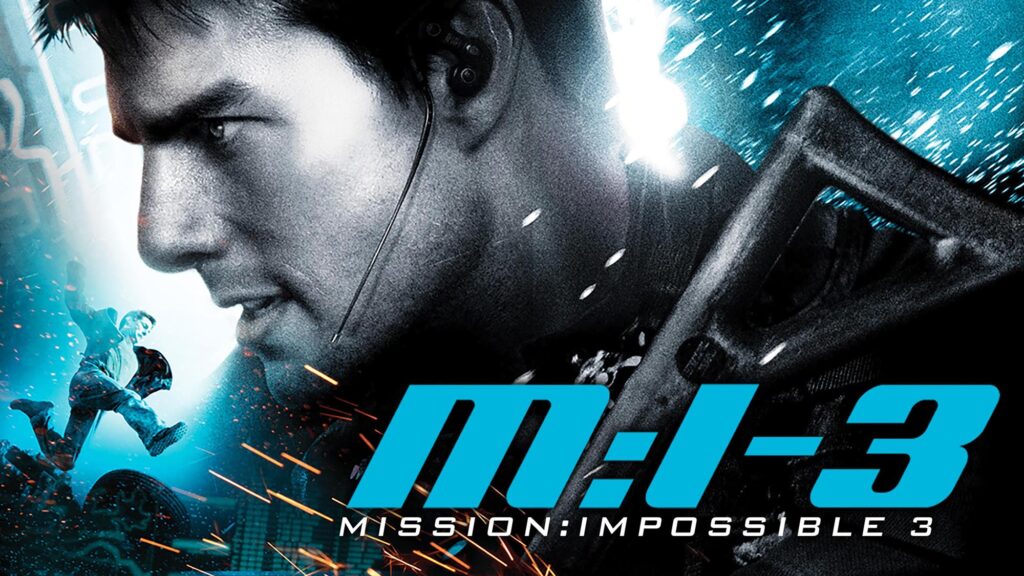
Mission: Impossible III
Mission: Impossible III was shot across Italy, Germany, China and the United States, with studio work also playing an important role.

Paul
The Paul story begins with Comic-Con and moves through famous UFO-country landmarks, the production was based largely in New Mexico, in the desert and surrounding roads.