
Marlon Brando (3 April 1924 – 1 July 2004) was an American actor and film director, best known for his performances in A Streetcar Named Desire (1951), On the Waterfront (1954), The Godfather (1972), Last Tango in Paris (1972) and Apocalypse Now (1979). Born Marlon Brando Jr. in Omaha, Nebraska, he was the youngest of three children of Marlon Brando Sr., a salesman, and Dorothy Julia Pennebaker, an amateur actress and theatre enthusiast. His two older sisters were Jocelyn and Frances. Although Brando later became closely associated with Italian-American characters, particularly Don Vito Corleone in The Godfather, his own family background was predominantly northern European, with German, Dutch, English and Irish ancestry.
Brando’s mother, known as Dodie, was deeply involved in the theatrical community of Omaha. She was among the founding members of Omaha Community Playhouse, established in 1924, and starred in its first full theatrical production, The Enchanted Cottage, in April 1925. Her connections with another local family also played a part in the development of American film history. Dorothy Brando encouraged Henry Fonda, then a young man studying journalism, to audition for a production at Omaha Community Playhouse. Fonda made his stage debut there in 1925 and eventually moved to New York to pursue an acting career, long before Dorothy’s own son became a major Hollywood star.
During Brando’s childhood, the family moved from Omaha to Evanston, Illinois, a suburb north of Chicago. Following a temporary separation between his parents, he also spent part of his youth in Santa Ana, California, before the family reunited and settled on a farm near Libertyville, Illinois. He attended Libertyville High School, where he displayed an interest in drama and performing but struggled with the school’s disciplinary rules. His father eventually sent him to Shattuck Military Academy in Faribault, Minnesota, where he participated in theatrical productions but was expelled before graduation. These years took him through several different parts of the American Midwest and California before he decided to pursue acting professionally.
In 1943, Brando moved to New York City, where his sisters had also pursued artistic interests. He enrolled at the Dramatic Workshop of the New School for Social Research in Manhattan, studying under actress and acting teacher Stella Adler. The school had been established by German theatre director Erwin Piscator and attracted students interested in modern approaches to performance. Adler became one of Brando’s most important influences, introducing him to the acting theories of Konstantin Stanislavski and encouraging him to develop characters through observation, imagination and emotional understanding. His training formed the foundation of an acting style that would later influence generations of American performers.
Brando made his Broadway debut in I Remember Mama (1944), appearing at the Music Box Theatre on West 45th Street in Manhattan. After several additional stage productions, he achieved his theatrical breakthrough as Stanley Kowalski in Tennessee Williams’s A Streetcar Named Desire, which opened at the Ethel Barrymore Theatre on Broadway on 3 December 1947. Directed by Elia Kazan and starring Jessica Tandy as Blanche DuBois, the production was set in the working-class neighbourhoods of New Orleans. Brando’s performance became closely associated with the play and established his reputation as one of the most promising young actors in American theatre.
His first feature film was Fred Zinnemann’s The Men (1950), in which he portrayed Ken Wilocek, a Second World War veteran left paralysed after suffering a spinal injury. Rather than relying entirely on Hollywood studio facilities, the filmmakers used the Birmingham Veterans Administration Hospital in Van Nuys, California, as a principal location. Brando spent several weeks living among patients at the hospital to prepare for the role, observing their daily routines, rehabilitation exercises and relationships with medical staff. Actual veterans, nurses and hospital employees subsequently appeared in the film. The former hospital site later became Birmingham High School, leaving a geographical connection between Brando’s first screen performance and an institution that no longer survives in its original form.
Brando returned to the role of Stanley Kowalski in the film adaptation of A Streetcar Named Desire (1951), again directed by Elia Kazan. Although the story takes place in New Orleans, much of the film was shot at Warner Bros. Studios in Burbank, California, where the Kowalski apartment and surrounding buildings were recreated on sound stages. Additional exterior photography took place in New Orleans, including at the former Louisville and Nashville Passenger Station on Canal Street. The production combined Louisiana locations with studio-built environments to recreate the confined streets and apartments of the French Quarter. Brando received his first Academy Award nomination for Best Actor for the performance.
He subsequently appeared in Viva Zapata! (1952), portraying Mexican revolutionary leader Emiliano Zapata, and Julius Caesar (1953), in which he played Mark Antony. His appearance in The Wild One (1953), however, established one of his most recognisable screen images. Playing motorcycle gang leader Johnny Strabler, Brando became associated with the leather jacket and motorcycle culture that developed around American youth during the 1950s. The film was inspired partly by a motorcycle gathering in Hollister, California, in 1947, and filming took place in California, including Hollister, Calabasas and the Conejo Valley near Thousand Oaks. Additional work was completed at studio facilities in Burbank. Although the story depicts a fictional town disrupted by rival motorcycle gangs, its visual identity was closely connected to real Californian roads and communities.
His most important film of the decade was On the Waterfront (1954), directed by Elia Kazan. Brando portrayed Terry Malloy, a former boxer working among dockworkers controlled by organised crime. The film was shot almost entirely in Hoboken, New Jersey, across the Hudson River from Manhattan. Unlike many Hollywood productions of the period, it made extensive use of actual streets, tenement buildings, rooftops, churches and industrial waterfront locations. The city’s working docks provided an authentic setting for the confrontations between Malloy, the waterfront union and the criminal organisation controlling employment.
Several Hoboken landmarks can be identified in On the Waterfront. The rooftop pigeon coop associated with Terry Malloy was filmed at 105 Hudson Street, while scenes at the waterfront used the piers near Fifth Street and the former Holland-America Line facilities. The exterior of the church where Father Barry addresses the dockworkers was filmed at Our Lady of Grace Church on Willow Avenue, with interior scenes shot at Saints Peter and Paul Church on Hudson Street. Hoboken Terminal also appeared, while a scene inside a ship’s hold was filmed across the river in Red Hook, Brooklyn. The film won eight Academy Awards, including Best Picture and Best Actor for Brando, and remains one of the clearest examples of his work being closely associated with a specific American city.
Brando subsequently appeared in the musical Guys and Dolls (1955), playing gambler Sky Masterson opposite Frank Sinatra, before travelling to Japan for Sayonara (1957). Directed by Joshua Logan, the film follows an American Air Force officer who develops a relationship with a Japanese performer while stationed in the country during the Korean War. Production took place in Japan, including Kyoto, Kobe, Osaka and Tokyo, with additional scenes filmed at Warner Bros. Studios in Burbank. The Yamashiro restaurant in the Hollywood Hills was also used as an American officers’ club, its Japanese-inspired architecture providing a convenient substitute for an actual building in Japan. The film contrasted genuine Japanese cityscapes with carefully selected Californian locations.
Brando made his only credited feature-film directorial effort with One-Eyed Jacks (1961), a Western in which he also starred alongside Karl Malden and Katy Jurado. Originally developed with Stanley Kubrick attached to direct, the project eventually became Brando’s responsibility. Rather than using the desert landscapes commonly associated with Westerns, he chose locations along California’s central coast. Filming took place at Pebble Beach, particularly along the coastline north of Cypress Point, and at Pfeiffer Beach in Big Sur. The Pacific Ocean, rocky coves and coastal cliffs gave the film a distinctive appearance quite different from the usual deserts and mountain ranges of the genre. Additional scenes were filmed around the Monterey Peninsula and at locations in Mexico. The difficult production lasted considerably longer than originally planned, and Brando never directed another feature film.
His next major production changed the course of his personal life. In Mutiny on the Bounty (1962), Brando portrayed Fletcher Christian, the British naval officer who led the famous mutiny against Captain William Bligh aboard HMS Bounty in 1789. The production was filmed extensively in French Polynesia, including Tahiti, Moorea and Bora Bora. Matavai Bay on Tahiti was used for the arrival of the Bounty, while Cook’s Bay on Moorea provided additional coastal scenery. A full-sized working replica of the historic sailing ship was constructed in Nova Scotia, Canada, and transported to the South Pacific for filming.
During the production, Brando developed a strong attachment to French Polynesia and began a relationship with Tahitian actress Tarita Teriipaia, who played Maimiti in the film. They subsequently had two children together. Brando also discovered Tetiaroa, a coral atoll approximately 53 kilometres north of Tahiti, consisting of a group of small islands surrounding a lagoon. The atoll had once been a retreat associated with Tahitian royalty and was largely undeveloped when Brando visited. During the mid-1960s, he secured long-term rights to the property, establishing a connection to the region that would continue for the rest of his life.
Brando initially used Tetiaroa as a private retreat, but he also developed plans for environmentally responsible tourism and research. On the small island of Onetahi, he established a modest hotel consisting of approximately twelve traditional-style bungalows constructed using local materials. An airstrip provided access from Tahiti, while the isolated location allowed him to spend extended periods away from Hollywood. Brando became interested in renewable energy, conservation and the possibility of creating a relatively self-sufficient island community. Although his larger plans were not realised during his lifetime, the atoll remained one of his most significant personal properties and eventually became the site of a luxury resort named after him.
Brando continued working on internationally filmed productions during the 1960s. In Gillo Pontecorvo’s Burn! (1969), also known as Queimada, he portrayed a British agent who becomes involved in a slave rebellion on a fictional Caribbean island during the nineteenth century. Much of the film was shot in Cartagena, Colombia, where the historic walled city and its colonial architecture provided an authentic backdrop. Filming locations included Plaza de los Coches, Plaza de la Proclamación, Plaza de Santo Domingo and streets in the Getsemaní neighbourhood. Production difficulties eventually forced the filmmakers to continue work in Morocco, with additional filming in France and at Cinecittà Studios in Rome. The result combined locations from several continents into a fictional Caribbean colony.
He returned to Britain for The Nightcomers (1971), directed by Michael Winner and based on events imagined before Henry James’s novella The Turn of the Screw. Brando portrayed Peter Quint, a groundskeeper employed at an English country estate. The principal location was Sawston Hall, a sixteenth-century Tudor mansion near Cambridge in Cambridgeshire, which represented the fictional Bly House. Both interiors and exteriors were filmed at the historic property. Other scenes used the village of Duxford, St. George’s Church in Thriplow and the chalk pits at Cherry Hinton near Cambridge. The film provided an unusual connection between Brando and the historic villages and country houses of eastern England.
Brando experienced one of the most significant comebacks of his career with Francis Ford Coppola’s The Godfather (1972), portraying Don Vito Corleone, the ageing patriarch of a powerful Italian-American crime family. Although the film’s story moves between New York, California, Nevada and Sicily, the production made extensive use of actual New York locations. One of the most recognisable was the Corleone family compound, represented by a private residence at 110 Longfellow Avenue in the Emerson Hill neighbourhood of Staten Island. The property and neighbouring gardens were used for the elaborate wedding celebration that opens the film.
The filmmakers temporarily constructed a wall and entrance gate across the end of Longfellow Avenue to create the impression of a secluded family estate. The wedding scenes were filmed with hundreds of extras, many of them local residents. Other New York locations included streets around Little Italy in Manhattan and the former Filmways Studios in East Harlem, where several interior sets were constructed. Although the film’s Sicilian scenes were shot in villages including Savoca and Forza d’Agrò, Brando’s character does not appear in those sequences. His principal filming work remained associated with New York and the Corleone family’s American surroundings. Brando won his second Academy Award for Best Actor but declined the award in protest against the treatment of Native Americans by the American film industry.
That same year, Brando worked with Italian director Bernardo Bertolucci on Last Tango in Paris (1972), playing Paul, an American living in Paris who enters into a destructive relationship with a young French woman portrayed by Maria Schneider. Unlike several of his previous films, which recreated their settings in different countries, Last Tango in Paris was filmed extensively in the actual city where its story takes place. One of its most recognisable locations is the Pont de Bir-Hakeim, the double-deck bridge crossing the Seine between the 15th and 16th arrondissements. Brando and Schneider appear beneath the elevated railway during the film’s opening sequence.
Another central Last Tango in Paris location was the apartment building at 1 Rue de l’Alboni in the Passy neighbourhood. In the film, the address is presented as Rue Jules Verne, although the real Rue Jules Verne is situated elsewhere in Paris. The building’s distinctive façade and proximity to the elevated Métro line made it an important part of the film’s visual identity. Other Paris locations included the Champ de Mars, the Canal Saint-Martin, Rue Vavin and Salle Wagram, where the tango competition was filmed. The use of the actual apartment building later led to legal action by one of its residents, who objected to the inclusion of the exterior in the film.
Brando subsequently starred opposite Jack Nicholson in Arthur Penn’s Western The Missouri Breaks (1976), portraying an eccentric bounty hunter hired to pursue a group of horse thieves. The film was shot extensively in Montana, making use of the state’s historic towns and open landscapes. Locations included Virginia City and the nearby historic settlement of Nevada City, where surviving nineteenth-century buildings provided the setting for several scenes. Additional filming took place around Red Lodge, Billings and Harrison. The production used real Western architecture and landscapes to establish the story’s nineteenth-century setting, with the wide plains and mountains of Montana replacing the more familiar Californian filming locations associated with many Hollywood Westerns.
In Superman (1978), directed by Richard Donner, Brando portrayed Jor-El, the father of Superman, played by Christopher Reeve. Although the film moves between the fictional planet Krypton, rural Kansas and the American metropolis of Metropolis, Brando’s scenes were filmed primarily in Britain. The elaborate Kryptonian environments were constructed at Pinewood Studios in Buckinghamshire and Shepperton Studios in Surrey. The Council Chamber and Jor-El’s laboratory were created as large studio sets, using reflective materials, lighting effects and unusual geometric architecture to suggest an advanced extraterrestrial civilisation. Other parts of the film used New York City as Metropolis and locations in Alberta, Canada, to represent the Kansas countryside, but Brando’s contribution was principally associated with the British studio production.
Another demanding international production followed with Francis Ford Coppola’s Apocalypse Now (1979), in which Brando portrayed Colonel Walter E. Kurtz, an American officer who has established himself as the leader of a remote community during the Vietnam War. Although the story takes place in Vietnam and Cambodia, the film was shot predominantly in the Philippines. The production used the tropical landscapes around Pagsanjan in Laguna province for the river journey and the isolated compound where Kurtz is discovered. The compound was an elaborate construction surrounded by dense vegetation and river scenery, creating the impression of a remote settlement beyond the reach of conventional military authority.
Other Apocalypse Now locations included Baler in Aurora province, where a helicopter attack on a coastal village was staged, and Iba in Zambales, which was used for military and medical evacuation scenes. The production was repeatedly disrupted by difficult weather, particularly when a typhoon damaged major sets and delayed filming. Brando’s scenes were among the most challenging to complete, but his appearance as Kurtz became one of the film’s defining elements. The use of the Philippines to represent Vietnam and Cambodia remains one of the most notable examples of geographical substitution in his filmography.
After several years away from major film roles, Brando appeared in Euzhan Palcy’s A Dry White Season (1989), portraying human rights lawyer Ian McKenzie in a drama about apartheid in South Africa. Although the story takes place primarily in Johannesburg and Soweto during the 1970s, the production could not be filmed freely in South Africa under the political conditions of the period. Instead, the filmmakers worked in Zimbabwe, using locations around Harare to represent South African streets, townships and government buildings. The Mafekose area of Harare was used to recreate Soweto, while the Air Zimbabwe offices represented the exterior of Johannesburg’s John Vorster Square police headquarters. Additional interior filming took place at Pinewood Studios in England. Brando received an Academy Award nomination for Best Supporting Actor for the performance.
He returned to comedy in The Freshman (1990), playing Carmine Sabatini, a New York businessman whose appearance and mannerisms deliberately resemble his earlier portrayal of Vito Corleone. The film stars Matthew Broderick as Clark Kellogg, a film student who becomes involved in an unusual criminal enterprise. Production began with several weeks of location filming in New York City, including Grand Central Terminal, Washington Square Park, New York University and streets around Little Italy and Greenwich Village. The apartment building associated with Brando’s character was represented by a property on Thompson Street in Manhattan. However, much of the remaining production took place in Toronto, Ontario, where Canadian streets and buildings were used to recreate additional New York locations.
Brando’s later career included the science fiction horror film The Island of Dr. Moreau (1996), in which he portrayed a scientist conducting disturbing genetic experiments on an isolated tropical island. Based on H. G. Wells’s novel, the film was shot in Far North Queensland, Australia, with production based around Cairns. The tropical environments of Bramston Beach, Mossman Gorge and the surrounding rainforest provided the landscape for the fictional island. The production was affected by numerous difficulties, including changes in directors, weather conditions and conflicts among cast and crew. Its remote Australian locations nevertheless gave the film a distinctive tropical appearance that differed considerably from the studio-built environments of many earlier adaptations.
His final feature film appearance was in Frank Oz’s crime thriller The Score (2001), alongside Robert De Niro and Edward Norton. Brando played Max, a criminal associate of De Niro’s character, who becomes involved in a plan to steal a valuable object from a customs building. The film is set and was largely shot in Montreal, Quebec, where the historic streets of Old Montreal provided the setting for the central robbery. The former customs facilities around Place d’Youville and the Old Port played an important role in the production, while additional locations included Montreal’s residential streets and properties in Westmount. The film was particularly notable because it brought Brando and De Niro together on screen for the only time, although both actors had previously portrayed Vito Corleone at different ages in The Godfather films.
Outside his film career, Brando maintained a longtime residence in the hills above Beverly Hills, California. He had occupied the property near Mulholland Drive since 1960, living in a house built during the 1950s on a secluded hillside site. His neighbour for more than three decades was actor Jack Nicholson, with whom he had starred in The Missouri Breaks. Following Brando’s death, Nicholson purchased the house in May 2005 for approximately $5 million. The property therefore remained connected to another prominent Hollywood actor after Brando’s estate was settled.
His connection to French Polynesia continued throughout his later life. The original small hotel on Tetiaroa operated for many years, while Brando’s long-term plans increasingly focused on protecting the island’s natural environment and developing sustainable tourism. After his death, his family trust worked with hotel developer Richard Bailey and Pacific Beachcomber to create a new resort on the island of Onetahi. The Brando opened on 1 July 2014, exactly ten years after Brando’s death. The development included 35 villas, restaurants, a spa and facilities designed around renewable energy and environmental conservation. The associated Tetiaroa Society subsequently established scientific and conservation programmes on the atoll, continuing the environmental interests that Brando had developed during his lifetime.
Brando’s personal life included relationships with actress Anna Kashfi, Mexican-American actress Movita Castaneda and Tahitian actress Tarita Teriipaia, among others. He had several children, including Christian Brando, Miko Brando, Simon Teihotu Brando and Tarita Cheyenne Brando. His family connections consequently extended from California and the American Midwest to Mexico and French Polynesia. Despite his international fame, Brando increasingly withdrew from public life during his later years, spending much of his time at his Los Angeles residence while continuing to maintain his personal interest in Tetiaroa.
Brando died in Los Angeles on 1 July 2004, aged 80. His remains were cremated following a private ceremony attended by members of his family. According to statements made by his son Miko Brando later that year, his ashes were divided between Tahiti and Death Valley in California. He therefore has no conventional public grave associated with his name. His geographical legacy extends from the Omaha theatre community where his mother helped launch Henry Fonda’s career and the streets of Hoboken where he filmed On the Waterfront, to the colonial architecture of Cartagena, the forests of the Philippines and the coral islands of French Polynesia. The most enduring physical landmark associated with his personal life remains Tetiaroa, where the resort bearing his name continues to occupy the island that became his retreat from Hollywood.
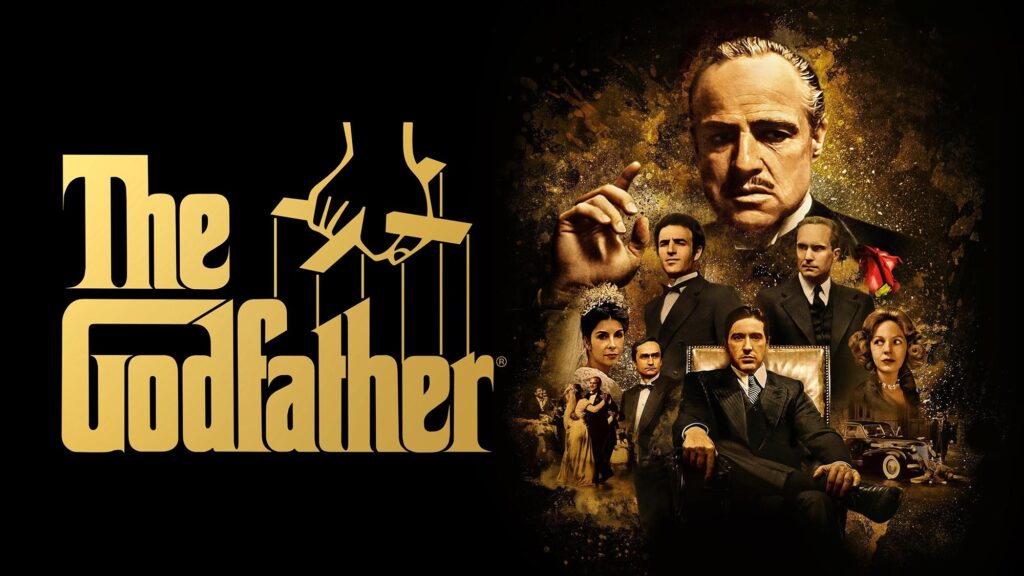
The Godfather
The Godfather was shot mainly in New York and Sicily, with additional work in California, and that combination is central to its atmosphere.