
Lee Ann Remick (14 December 1935 – 2 July 1991) was an American actress whose career encompassed film, theatre and television over nearly four decades. She was born in Massachusetts and spent her early childhood in Quincy, south of Boston, where her father, Francis Edwin Remick, managed the family’s clothing and department store business. Her mother, Gertrude Margaret Waldo, was a stage actress, and Lee grew up with an older brother, Bruce. When she was seven, her parents separated, and she moved with her mother and brother to New York City. She attended Miss Hewitt’s Classes, now known as the Hewitt School, on Manhattan’s Upper East Side, where she received an education supplemented by extensive artistic training. From the age of eight, she studied ballet seriously, taking lessons at the Swoboda School of Dance and later studying modern dance with choreographer Charles Weidman. Her training also included music, speech and theatre, and for several years she expected to become a professional dancer rather than an actress. The family maintained connections with Cape Cod, Massachusetts, where they spent summers, and it was there that Remick found her first professional work.
In 1952, aged sixteen, Remick auditioned for a summer theatre company performing at the Music Circus in Hyannis on Cape Cod. She concealed her age to secure the job and subsequently appeared in ten productions over ten weeks, gaining practical experience in musical theatre. Later that year, she met playwright Reginald Denham at Sardi’s restaurant in Manhattan and was invited to audition for his Broadway comedy Be Your Age. Remick was cast as Lois Holly, making her Broadway debut at the Broadhurst Theatre on West 44th Street on 14 January 1953. The production closed after only five performances, but the experience attracted professional attention and nearly resulted in her expulsion from school because she had broken its rules concerning outside employment. After graduating, she enrolled at Barnard College, part of Columbia University, but left after one semester to concentrate on acting. She also studied at the Actors Studio, joining the generation of New York performers who developed their careers through theatre and live television during the 1950s. Her early television appearances included Armstrong Circle Theatre, Robert Montgomery Presents, Studio One and Playhouse 90, providing opportunities to work with established actors while moving between broadcasting studios and theatres in Manhattan.
A performance in the television drama All Expenses Paid, broadcast as part of Robert Montgomery Presents in May 1956, brought Remick to the attention of director Elia Kazan. He cast her as Betty Lou Fleckum, a teenage baton twirler who marries an ambitious television personality played by Andy Griffith, in A Face in the Crowd (1957). The production took her from New York to the American South, where Kazan filmed extensively in Piggott, Arkansas, and neighbouring communities. Remick arrived ahead of the principal filming to practise baton twirling with local high school students and familiarise herself with the regional accent. She spent several weeks in Piggott, where the production used locations including the Clay County Courthouse, the town’s former jail and the swimming pool at the Pfeiffer family residence. A large fairground sequence involving a baton-twirling contest was filmed in Poplar Bluff, Missouri, with thousands of local extras. Additional filming took place in Memphis, Tennessee, and at Biograph Studios in the Bronx, New York. Released in May 1957, the film established Remick as a promising young actress, and her performance led to a contract with 20th Century-Fox.
Remick married television director and producer William Arthur Colleran on 3 August 1957. The couple subsequently had two children, Katherine, known as Kate, born in 1959, and Matthew, born in 1961. Her early success brought her to Los Angeles, although she continued travelling extensively for films shot outside California. In Martin Ritt’s The Long, Hot Summer (1958), adapted from works by William Faulkner, she played Eula Varner, the daughter-in-law of a wealthy Southern landowner portrayed by Orson Welles. The production also starred Paul Newman, Joanne Woodward and Anthony Franciosa and was filmed partly in Louisiana, where Clinton in East Feliciana Parish represented the fictional town of Frenchman’s Bend. The East Feliciana Parish Courthouse appeared in several scenes, while Ramsey Plantation near New Roads served as the Varner family residence. Remick subsequently appeared in the Western These Thousand Hills (1959), but her most substantial early dramatic role came in Otto Preminger’s courtroom drama Anatomy of a Murder (1959), opposite James Stewart, Ben Gazzara and George C. Scott.
In Anatomy of a Murder, Remick portrayed Laura Manion, whose husband is accused of murdering a man she says assaulted her. The part had originally been intended for Lana Turner, but Remick was cast after Turner withdrew following a disagreement with Preminger. Rather than filming primarily in Hollywood, Preminger took the production to Michigan’s Upper Peninsula, where the real events that inspired the original novel had occurred. Filming took place in Marquette, Big Bay, Ishpeming and Michigamme during the spring of 1959. The Marquette County Courthouse was used for the trial sequences, allowing Remick and the other actors to perform in an actual courtroom, while the Thunder Bay Inn in Big Bay and the nearby Lumberjack Tavern featured prominently in the story. The latter establishment was associated with the real 1952 murder case on which the novel was partly based. Remick’s performance, particularly her exchanges with Stewart’s defence attorney, became one of the film’s most discussed elements. The role was considerably more psychologically complex than her earlier appearances and helped establish her reputation beyond the youthful characters she had portrayed in her first productions.
Remick reunited with Kazan for Wild River (1960), playing Carol Garth, a young widow living in rural Tennessee who becomes involved with a Tennessee Valley Authority official portrayed by Montgomery Clift. Set during the construction of federal hydroelectric projects in the 1930s, the film examines the displacement of families whose land was acquired for flood-control schemes. Production began in the autumn of 1959 and was carried out entirely on location in Tennessee, principally around Charleston and Cleveland in Bradley County, the Hiwassee River and Lake Chickamauga. The cast and crew stayed in Cleveland while working on locations in the surrounding countryside. A large farmhouse was constructed for the production and destroyed during filming, while scenes involving the family’s river crossing were shot near Charleston. Remick worked alongside Jo Van Fleet and numerous local residents who had been cast in supporting roles. The film was particularly significant because Kazan had insisted on casting Remick rather than the more commercially established Marilyn Monroe, who had been suggested for the part by studio executives. Wild River also required Remick to portray a mother of two children, a role reflecting her growing maturity as an actress.
Her next major success came with Blake Edwards’s Experiment in Terror (1962), in which she played Kelly Sherwood, a San Francisco bank employee threatened by a criminal who demands her assistance in a robbery. Filmed extensively in San Francisco, the thriller used locations including the Cow Hollow neighbourhood, the former Candlestick Park baseball stadium and other streets around the city. Remick subsequently reunited with Edwards for Days of Wine and Roses (1962), starring opposite Jack Lemmon. She portrayed Kirsten Arnesen Clay, a young woman whose marriage is progressively destroyed by alcoholism. The film was adapted from J. P. Miller’s television drama, previously broadcast in 1958 with Cliff Robertson and Piper Laurie in the principal roles. Remick prepared by attending Alcoholics Anonymous meetings and visiting rehabilitation facilities, researching the circumstances of people affected by alcohol dependency. Filming began in San Francisco in February 1962, with the production using the Blue Fox restaurant and other city establishments, while a building at 1800 Pacific Avenue represented the couple’s apartment. Additional scenes were filmed at Warner Bros. Studios in Burbank and at locations around Newport Beach. The film earned Remick her only Academy Award nomination, for Best Actress, at the 1963 ceremony. She also won the Golden Globe Award for Best Actress in a Motion Picture Drama.
Despite her success in cinema, Remick remained strongly attached to theatre and returned to Broadway during the 1960s. In 1964, she starred alongside Angela Lansbury and Harry Guardino in Anyone Can Whistle, an experimental musical written by Arthur Laurents with music and lyrics by Stephen Sondheim. Remick played Fay Apple, a nurse working in an institution whose inhabitants become involved in a political deception. The production opened at the Majestic Theatre in New York on 4 April 1964 but closed after nine performances. Although commercially unsuccessful, it allowed Remick to combine the acting, singing and dancing she had studied since childhood. A more substantial theatrical success followed in Frederick Knott’s suspense drama Wait Until Dark (1966), directed by Arthur Penn. She originated the role of Susy Hendrix, a blind woman who must defend herself against criminals searching her Greenwich Village apartment. Remick prepared by visiting the Lighthouse, an organisation serving blind and visually impaired people in New York, and learning to perform everyday activities without relying on sight. The production opened at the Ethel Barrymore Theatre on West 47th Street on 2 February 1966, with Robert Duvall playing one of the criminals. It subsequently transferred between several Broadway theatres during its run, which continued until the end of December. Remick received a Tony Award nomination for Best Actress in a Play.
Her film career during the remainder of the decade included Baby the Rain Must Fall (1965), opposite Steve McQueen, and the crime dramas No Way to Treat a Lady (1968) and The Detective (1968). The latter reunited her with New York, where Gordon Douglas directed Frank Sinatra as police detective Joe Leland and Remick as his estranged wife, Karen. The production spent several weeks filming around the city during the autumn of 1967, before moving to 20th Century-Fox Studios in Los Angeles for interior work. Remick continued portraying women facing difficult personal circumstances rather than concentrating exclusively on conventional romantic roles. Her marriage to Colleran ended in divorce in November 1968, and she subsequently began a relationship with British assistant director and producer William Rory Gowans, known as Kip. They married in December 1970, beginning a partnership that continued until her death. Gowans had two daughters, Justine and Nicola, from an earlier marriage, and Remick became their stepmother.
Following her second marriage, Remick moved to London, establishing a home with Gowans at 8 Hamilton Terrace in St John’s Wood. The move represented a substantial change in her personal and professional life, bringing her closer to British theatre and television while allowing her to continue accepting American film assignments. Among her productions during this period was Sometimes a Great Notion (1971), directed by and starring Paul Newman, in which she played Viv Stamper, the wife of an independent logger involved in a labour dispute. Adapted from Ken Kesey’s novel, the film was shot along the Oregon coast during 1970, particularly around Lincoln City, Newport, Kernville and Toledo. Remick also worked with Tony Richardson on the film adaptation of Edward Albee’s A Delicate Balance (1973), playing Julia, the troubled daughter of a wealthy New England couple portrayed by Katharine Hepburn and Paul Scofield. Although set in the United States, the production was filmed at Shepperton Studios in Surrey during November and December 1972. These contrasting projects reflected the increasingly international nature of her career after settling in Britain.
Television became particularly important during the 1970s, providing Remick with substantial roles that were not always available in feature films. She appeared opposite William Holden in The Blue Knight (1973), a crime drama about an ageing Los Angeles police officer, and played a supporting role in the courtroom miniseries QB VII (1974). Her most significant television achievement came with the British production Jennie: Lady Randolph Churchill (1974), in which she portrayed the American-born mother of Winston Churchill. Produced by Thames Television, the seven-part historical drama followed Jennie Jerome from her youth in the United States through her marriage into the British aristocracy and her later life. Remick performed the character across several decades, with filming at historical locations including Blenheim Palace in Woodstock, Oxfordshire, the Churchill family’s ancestral estate and Winston Churchill’s birthplace. The production also used other residences associated with the family, giving Remick an opportunity to work in buildings connected with the historical events being portrayed. Broadcast in Britain between October and December 1974, the series subsequently aired on American television in 1975. Her performance won the BAFTA Television Award for Best Actress in 1975 and a Golden Globe in 1976, and brought another Emmy nomination. She remained involved in British theatre, appearing opposite Keir Dullea in a revival of William Inge’s Bus Stop at the Phoenix Theatre on Charing Cross Road in London in May 1976.
One of Remick’s most widely recognised later film roles came with Richard Donner’s supernatural horror film The Omen (1976), in which she portrayed Katherine Thorn, the wife of an American diplomat played by Gregory Peck. The story follows a couple who unknowingly adopt a child believed to be the Antichrist, with much of the action taking place in London and the surrounding English countryside. Filming began in October 1975, with locations across Greater London, Surrey and Berkshire. Several scenes featuring Remick were shot at Northwick Park Hospital in Harrow, which represented the hospital where Katherine is treated following a serious accident. The production also used Windsor Safari Park in Berkshire for a sequence in which Katherine takes her adopted son Damien to see animals, only for a group of baboons to attack their car. Remick performed inside the vehicle during the scene, which became unexpectedly frightening when the animals reacted aggressively and the car stalled. Other filming locations included the grounds of Pyrford Court near Ripley in Surrey, representing the Thorn family residence, and Guildford Cathedral, while scenes involving Peck’s character were filmed around Grosvenor Square and Fulham in London. The Omen became a major commercial success and introduced Remick to another generation of cinema audiences.
Remick continued working in international thrillers, including Don Siegel’s Telefon (1977), opposite Charles Bronson. She played Barbara, an American intelligence operative involved in tracking Soviet sleeper agents across the United States. Although the story moves between American cities and the Soviet Union, the production used Helsinki, Finland, to represent Moscow and Leningrad, with filming around Senate Square and Katajanokka. Additional work took place in California, Montana and Colorado. One lengthy sequence featuring Remick and Bronson was filmed at the Dorothy Chandler Pavilion in downtown Los Angeles, where Siegel used three cameras to record an approximately eleven-minute continuous scene involving the two characters walking across the plaza and making telephone calls. The sequence required extensive preparation because of its length and the number of movements involved. In 1978, Remick appeared in the television adaptation of Arthur Hailey’s Wheels, portraying Erica Trenton, the wife of an automobile executive, before taking the leading role in James Ivory’s The Europeans (1979), adapted from Henry James’s novel.
The Europeans brought Remick back to New England, where she had spent her earliest childhood years. She played Baroness Eugenia Münster, an American-born aristocrat who returns from Europe with her brother to visit wealthy relatives in nineteenth-century Massachusetts. Filming took place during the autumn of 1978 at several preserved historic properties, including the Barrett House and Bullard-Barr House in New Ipswich, New Hampshire, the Lyman Estate in Waltham, Massachusetts, and the Gardner-Pingree House in Salem. These buildings provided authentic eighteenth- and nineteenth-century interiors and exteriors for the period drama. Remick worked alongside Robin Ellis, Lisa Eichhorn and Tim Woodward, with the production marking another collaboration with a director known for historical literary adaptations. She subsequently appeared in The Competition (1980), playing a strict piano instructor opposite Amy Irving and Richard Dreyfuss, and reunited with Jack Lemmon for Tribute (1980). The latter was filmed principally in Toronto, Canada, with additional photography in New York City, and featured Remick as the former wife of a Broadway press agent struggling with a terminal illness.
By the beginning of the 1980s, Remick had established herself as one of the most frequently employed actresses in American television dramas and miniseries. She starred in The Women’s Room (1980), adapted from Marilyn French’s feminist novel, and portrayed actress Margaret Sullavan in Haywire (1980), based on the memoir of Sullavan’s daughter Brooke Hayward. Other productions included The Letter (1982), an adaptation of W. Somerset Maugham’s drama, and I Do! I Do! (1983), a television version of the stage musical. Her husband Kip Gowans became involved in producing several of her television projects, including The Women’s Room, The Letter, Rearview Mirror (1984) and Of Pure Blood (1986). Around 1981–82, the couple relocated from London to Los Angeles, eventually settling in Brentwood, where Remick could work more easily within the American television industry. She continued travelling for productions in Britain, continental Europe and elsewhere, including the international miniseries Mistral’s Daughter (1984), adapted from Judith Krantz’s novel, and the Australian drama Emma’s War (1986).
Her later television roles increasingly included portrayals of real historical figures. In Ike: The War Years (1979), she played Kay Summersby, the British driver and assistant who developed a close relationship with General Dwight D. Eisenhower during the Second World War. She subsequently portrayed Eleanor Roosevelt in Eleanor: In Her Own Words (1986), a one-woman dramatic presentation constructed from Roosevelt’s letters, speeches, press conferences and other writings. The production originated as a theatrical presentation at the Mark Taper Forum in Los Angeles before being adapted for television by KCET and Taper Media Enterprises. Remick researched Roosevelt’s life and deliberately avoided concentrating solely on physical resemblance, instead using the historical material to portray her personality and political commitments. The programme was broadcast in Southern California in February 1986 and subsequently reached a wider audience through PBS. Remick won a Primetime Emmy Award in 1987 for Outstanding Individual Achievement in Informational Programming – Performing. That same year, she received another Emmy nomination for Nutcracker: Money, Madness and Murder (1987), portraying Frances Bradshaw Schreuder, a wealthy American woman convicted of arranging the murder of her father through her teenage son.
Remick continued accepting challenging television work towards the end of the 1980s. She appeared opposite Dirk Bogarde in the British thriller The Vision (1987) and portrayed Sarah Bernhardt in the international television adaptation of Around the World in 80 Days (1989), starring Pierce Brosnan as Phileas Fogg. In Bridge to Silence (1989), she played the controlling mother of a deaf woman portrayed by Marlee Matlin, whose life is disrupted by the death of her husband. Her final screen performance came in Dark Holiday (1989), a television drama based on the experiences of American tourist Gene LePere, who was imprisoned in Turkey after being accused of attempting to smuggle antiquities out of the country. Remick portrayed LePere opposite Norma Aleandro and Tony Goldwyn. The film, directed by Lou Antonio, was broadcast by NBC in May 1989 and marked the end of a screen career that had begun more than thirty years earlier with Elia Kazan’s A Face in the Crowd.
During 1989, while working on a production in France, Remick became ill with a persistent fever. Subsequent medical examinations in the United States revealed cancer affecting a kidney and her lungs. She underwent treatment, including experimental therapies, and initially experienced an improvement in her condition. In an interview published in Ladies’ Home Journal in 1990, she discussed how the illness had changed her attitude towards work and the pressure she had previously placed on herself to remain constantly busy. Despite her declining health, she continued participating in professional and charitable activities and appeared in a stage production of A. R. Gurney’s Love Letters in Beverly Hills during 1990. She also received the Women in Film Crystal Award that year, recognising her contribution to the entertainment industry.
On 29 April 1991, Remick was honoured with a star on the Hollywood Walk of Fame at 6104 Hollywood Boulevard in Los Angeles. By then visibly weakened by her illness, she attended the ceremony with colleagues and friends, including Jack Lemmon, who had remained close to her since their work together on Days of Wine and Roses. The following month, she received an award from the International Churchill Society during a ceremony aboard the RMS Queen Mary, permanently moored in Long Beach, California. The honour recognised her portrayal of Jennie Churchill in the British television production seventeen years earlier. These were among her final public appearances. Lee Remick died at her home in Brentwood, Los Angeles, on 2 July 1991, aged fifty-five, with members of her family at her bedside. She was survived by her husband, Kip Gowans, her two children, Katherine and Matthew Colleran, and her stepdaughters. Her remains were cremated.
Remick’s career had taken her from the theatres and television studios of Manhattan to productions across the United States, Britain and continental Europe. Her early films were particularly closely associated with location filming in the American South and Midwest, while her move to London in 1970 brought a sustained involvement in British drama and historical television. Unlike many actresses who concentrated predominantly on feature films, she continued moving between cinema, theatre and television throughout her professional life, accepting roles ranging from contemporary American women to figures from British and international history. Her performances in A Face in the Crowd, Anatomy of a Murder, Wild River, Days of Wine and Roses, The Omen and Jennie: Lady Randolph Churchill remain among the principal works associated with her career.
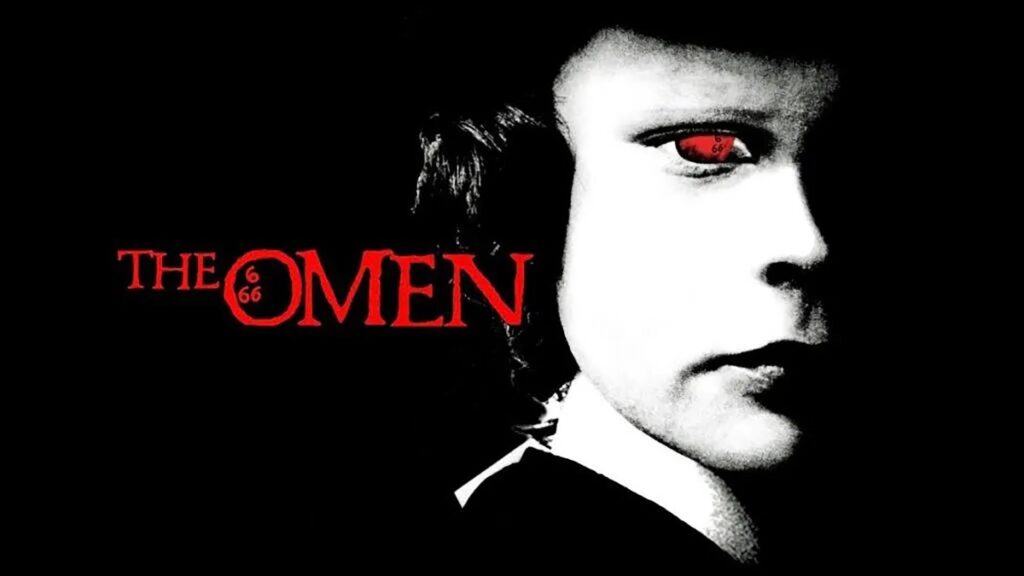
The Omen
The Omen was primarily filmed in England, with key locations including London, Surrey, and Berkshire. Additional scenes were shot in Rome and Jerusalem.