
Diane Keaton (5 January 1946 – 11 October 2025) was an American actress, director, producer and author, best known for her roles in The Godfather (1972), Annie Hall (1977), Reds (1981), Father of the Bride (1991) and Something’s Gotta Give (2003). Born Diane Hall in Los Angeles, California, she was the eldest of four children of John Newton “Jack” Hall, a civil engineer and real estate broker, and Dorothy Deanne Keaton, a homemaker and amateur photographer. The family settled in Santa Ana, in Orange County, where Keaton spent most of her childhood. Her mother had won a local beauty contest for homemakers, an experience that Keaton later identified as one of her earliest inspirations for becoming a performer.
Keaton attended Santa Ana High School, where she participated in theatre and singing activities and appeared as Blanche DuBois in a school production of A Streetcar Named Desire. After graduating in 1963, she studied drama at Santa Ana College and later attended Orange Coast College in Costa Mesa. During a 1964 production of Carousel at Santa Ana College, she worked alongside another young performer, Steve Martin, who would become her co-star nearly three decades later in Father of the Bride. Keaton eventually left college and moved to New York City to pursue acting professionally. She adopted her mother’s maiden name because another actress named Diane Hall was already registered with Actors’ Equity.
In Manhattan, she studied acting at the Neighborhood Playhouse, where the teaching methods of Sanford Meisner formed an important part of her training. Her first major theatrical opportunity came in 1968 when she joined the original Broadway production of Hair at the Biltmore Theatre, initially as an understudy before taking over the role of Sheila. The following year, she appeared opposite Woody Allen in his Broadway comedy Play It Again, Sam at the Broadhurst Theatre on West 44th Street. Her performance earned a Tony Award nomination for Best Featured Actress in a Play and established a professional relationship with Allen that would continue through some of her most successful films.
Keaton made her feature film debut in Lovers and Other Strangers (1970) before joining the cast of Francis Ford Coppola’s The Godfather (1972), portraying Kay Adams, the girlfriend and eventual wife of Michael Corleone, played by Al Pacino. The production made extensive use of New York City and its surrounding communities, including the Corleone family residence on Longfellow Avenue in the Todt Hill neighbourhood of Staten Island. The property provided the setting for the opening wedding celebration, which involved hundreds of extras and extensive outdoor filming. Other important locations included the former Best & Co. department store on Fifth Avenue, where Michael and Kay appear during a Christmas shopping sequence, and Radio City Music Hall, where they attend the cinema together. Although the film also used locations in Sicily, Keaton’s character was primarily associated with the American sections of the story.
Keaton reprised the role in The Godfather Part II (1974), which brought the Corleone family to a secluded estate beside Lake Tahoe. The fictional family compound was filmed at Fleur du Lac, a waterfront property on the California side of the lake near Homewood. Originally developed by industrialist Henry J. Kaiser, the estate included buildings, gardens and a boathouse that became central to the film’s depiction of Michael Corleone’s increasingly isolated family life. Several important scenes involving Michael and Kay take place at the lakeside residence. Parts of the property survive, although the estate was subsequently redeveloped into private residences.
Her association with Woody Allen also produced several films with distinctive geographical settings. The film adaptation of Play It Again, Sam (1972), directed by Herbert Ross, relocated the stage comedy to San Francisco. Filming took place around the city and surrounding Bay Area, including Golden Gate Park, North Beach, Aquatic Park and Stinson Beach in Marin County. In Sleeper (1973), Keaton portrayed Luna Schlosser in a science fiction comedy set two centuries in the future. The production used modernist architecture in Colorado to create its futuristic environment. Among the most recognisable locations were the Sculptured House, designed by architect Charles Deaton on Genesee Mountain west of Denver, and the Mesa Laboratory of the National Center for Atmospheric Research in Boulder. The Denver Botanic Gardens and other buildings around the metropolitan area also appeared.
Her breakthrough as a leading actress came with Annie Hall (1977), directed by Woody Allen. The romantic comedy follows the relationship between comedian Alvy Singer and aspiring singer Annie Hall, portrayed by Keaton, and is closely associated with the streets, cinemas, restaurants and apartments of New York City. One of the film’s most recognisable locations is the former Beekman Cinema on Second Avenue, where Alvy waits outside for Annie before they attend a screening of Ingmar Bergman’s Face to Face. Annie’s apartment was represented by a townhouse on East 68th Street in Manhattan, including its street exterior and rooftop terrace. Other filming locations included the South Street Seaport area, Central Park and several cinemas on the Upper West Side. Scenes set in California were filmed in Los Angeles, including a restaurant on Sunset Boulevard. Keaton won the Academy Award for Best Actress for her performance, and the film also won Best Picture.
That same year, Keaton starred in the psychological drama Looking for Mr. Goodbar (1977), directed by Richard Brooks. The film follows a young schoolteacher whose increasingly dangerous nightlife takes place against an urban American backdrop. Production took place in Chicago and Los Angeles, using streets, bars and residential locations to establish the contrast between the character’s professional and private lives. Keaton returned to New York for Allen’s Manhattan (1979), which made extensive use of the city’s landmarks. Among the film’s best-known images is the early-morning scene beneath the Queensboro Bridge, filmed near Sutton Place overlooking the East River. Other locations included the Hayden Planetarium, Central Park and streets around Manhattan’s Upper East Side.
One of Keaton’s most internationally ambitious productions was Warren Beatty’s historical drama Reds (1981), in which she portrayed American journalist and political activist Louise Bryant opposite Beatty’s John Reed. The film follows the couple from the United States to revolutionary Russia during the early twentieth century, but filming took place across several countries rather than in the Soviet Union. Helsinki, Finland, was used extensively to recreate Russian cities, including locations around Senate Square and the Suomenlinna fortress. In England, Lancaster House in London provided interiors representing the Winter Palace in Saint Petersburg, while Frensham Ponds in Surrey stood in for the coastal landscape of Provincetown, Massachusetts. Other scenes were filmed in Spain and the United States, with elaborate period sets constructed at British studios. Keaton received her second Academy Award nomination for Best Actress.
During the 1980s, Keaton also appeared in Shoot the Moon (1982), Mrs. Soffel (1984) and Crimes of the Heart (1986), before returning to comedy in Baby Boom (1987). Playing successful New York businesswoman J. C. Wiatt, she portrayed a character who exchanges her Manhattan career for a rural life in Vermont after unexpectedly becoming responsible for a young child. The production began with locations around New York City, including Park Avenue and the Seagram Building area in Midtown Manhattan, before moving to Vermont. Filming took place around Manchester, Peru and Weston, where farmhouses, village streets and surrounding countryside represented the fictional community of Hadleyville. The contrast between Manhattan’s corporate architecture and the agricultural landscape of Vermont became one of the central geographical elements of the film.
Keaton subsequently made an important transition into directing. Her feature-film directorial debut, Unstrung Heroes (1995), was a period family drama starring Andie MacDowell, John Turturro, Michael Richards and Maury Chaykin. The film was shot in Los Angeles and Pasadena, California, with locations including the historic King Edward Hotel in downtown Los Angeles and Johnie’s Broiler in Downey. The latter was a well-known example of Southern California roadside architecture, originally opened in 1958. The production reflected Keaton’s long-standing interest in older buildings and the visual character of American cities.
In Father of the Bride (1991), Keaton reunited with Steve Martin, playing Nina Banks, the wife of a businessman struggling to accept his daughter’s approaching wedding. The film was shot around Los Angeles County, particularly Pasadena, where the Banks family residence was represented by a Colonial Revival house on South El Molino Avenue. A separate property in Alhambra was used for parts of the backyard. The wedding ceremony combined the exterior of a church in San Gabriel with interiors filmed at Trinity Church in Santa Monica. Other locations included businesses and streets in Pasadena, Monrovia and Bel-Air. Keaton returned to the same fictional family in Father of the Bride Part II (1995), continuing the association between the Banks characters and the residential architecture of Southern California.
She returned to New York for Manhattan Murder Mystery (1993), reuniting with Woody Allen in a comedy about a married couple who become convinced that a neighbour has committed murder. The production used several well-known Manhattan establishments, including the former Elaine’s restaurant on Second Avenue, the 21 Club in Midtown and the historic National Arts Club on Gramercy Park South. The Chelsea Hotel on West 23rd Street supplied interiors for the fictional Hotel Waldron, while the exterior was represented by Hotel 17 on East 17th Street. Bryant Park and various streets around Manhattan also featured, with the film making extensive use of actual New York buildings rather than relying entirely on studio environments.
Another major New York production was The First Wives Club (1996), in which Keaton starred alongside Goldie Hawn and Bette Midler. The film follows three women who reunite after the death of a former college friend and seek to rebuild their lives after difficult marriages. Principal photography was based at Kaufman Astoria Studios in Queens, but the production used dozens of locations across Manhattan and Brooklyn. These included the Pierre Hotel, the Waldorf Astoria, Café des Artistes, the St. Regis Hotel and the former Barneys department store. The historic Robbins & Appleton Building on Bond Street in NoHo was used for the women’s charitable organisation established towards the end of the film. The production also used Riverside Drive, Central Park and streets around Midtown Manhattan, creating a recognisable portrait of New York’s wealthy social circles.
Keaton received another Academy Award nomination for Marvin’s Room (1996), playing Bessie, a woman who has spent years caring for her bedridden father in Florida. She appeared opposite Meryl Streep, Leonardo DiCaprio and Robert De Niro. The film’s setting contrasts the lives of two sisters separated between Florida and Ohio, with the story placing considerable emphasis on their different domestic environments. Keaton subsequently directed Hanging Up (2000), starring alongside Meg Ryan and Lisa Kudrow as three sisters dealing with their father’s declining health.
One of her most successful later films was Nancy Meyers’ romantic comedy Something’s Gotta Give (2003), in which she portrayed playwright Erica Barry opposite Jack Nicholson. The film is strongly associated with the coastal homes of the Hamptons on Long Island, New York. Erica’s beachfront residence was represented by a property in Sagaponack, but the elaborate interiors, including the kitchen, living room and bedrooms, were constructed on sound stages at Warner Bros. Studios in Burbank, California. The kitchen became particularly influential in American interior design, with its white cabinetry, large island and open connection to the surrounding rooms. Additional filming took place in New York City and Paris, France, where the restaurant Le Grand Colbert on Rue Vivienne was used for the film’s concluding dinner sequence. Another restaurant scene, involving Erica and Julian Mercer, played by Keanu Reeves, was filmed at One Pico inside the Shutters on the Beach hotel in Santa Monica, California. Keaton received her fourth Academy Award nomination for the performance.
Keaton returned to a New England setting in The Family Stone (2005), portraying Sybil Stone, the matriarch of a family gathering for Christmas. Although the story takes place in a fictional Connecticut town, the production used locations in both Connecticut and New Jersey. The exterior of the Stone family home was filmed in Connecticut, while Madison, New Jersey, supplied several town scenes. The nearby campuses of Drew University and Fairleigh Dickinson University also featured. Interior scenes were completed on studio sets in California, combining buildings from different states to create the fictional family home and its surrounding community.
Her later comedy Because I Said So (2007), co-starring Mandy Moore, was filmed around Los Angeles, including Venice, downtown Los Angeles and Long Beach. In Morning Glory (2010), she portrayed television presenter Colleen Peck opposite Harrison Ford and Rachel McAdams. The film returned her to New York City, with locations around Rockefeller Center, Sixth Avenue and Bryant Park, as well as several areas of Long Island. The NBC building at Rockefeller Center provided an important connection to the city’s broadcasting industry, while other commercial buildings were used to represent the fictional television network.
Keaton also starred opposite Morgan Freeman in 5 Flights Up (2014), portraying a married couple considering selling their longtime apartment in Brooklyn. Filming took place around Williamsburg, particularly near Bedford Avenue and South Third Street, where the exterior of the couple’s apartment building was located. Other scenes used Grand Ferry Park beside the East River and various streets in Manhattan. The film’s emphasis on an ageing couple confronting changes to their neighbourhood reflected the real transformation of Williamsburg during the early twenty-first century.
In 2015, Keaton appeared in Love the Coopers, a Christmas comedy set and filmed primarily around Pittsburgh, Pennsylvania. Locations included the Pittsburgh International Airport, the PPG Place complex, Boyce Park and Butler Memorial Hospital. The historic town centre of Ligonier, east of Pittsburgh, was used for several seasonal scenes, while the fictional Cooper family home’s interiors were constructed on a sound stage. The production incorporated actual Pennsylvania businesses and residential communities, including locations in Mount Lebanon, Sewickley and Millvale.
Keaton subsequently travelled to Italy for Paolo Sorrentino’s television drama The Young Pope (2016), starring Jude Law as a newly elected pope. Playing Sister Mary, she worked on a production based primarily at Cinecittà Studios in Rome, where elaborate reproductions of Vatican interiors were constructed. The sets included a recreation of the Sistine Chapel, while additional filming took place at historic villas and palaces around Rome. The production also used locations in Venice, including St. Mark’s Square, combining real Italian architecture with studio-built versions of buildings that could not be used for filming inside Vatican City.
In Book Club (2018), Keaton starred alongside Jane Fonda, Candice Bergen and Mary Steenburgen as four longtime friends whose lives change after reading a romantic novel. Although parts of the story take place in Arizona, the film was shot mainly in Southern California. Hummingbird Nest Ranch in Simi Valley represented a property in Sedona, while Westfield Valencia Town Center in Santa Clarita stood in for a shopping centre in Scottsdale. Other locations included Exposition Park in Los Angeles and the historic Derby restaurant in Arcadia. Keaton returned to the role in Book Club: The Next Chapter (2023), which took the four actresses to Italy for a production filmed primarily around Rome and Venice. The film used recognisable landmarks including the Trevi Fountain, Piazza di Spagna, the Pantheon and St. Mark’s Square. Castello della Castelluccia, a historic castle north of Rome, represented a Tuscan estate, while additional scenes were filmed at Cinecittà Studios. Keaton and members of the production team stayed at Hotel Eden in Rome during filming.
Among her final films was Summer Camp (2024), in which she starred alongside Kathy Bates and Alfre Woodard as three childhood friends reuniting at a summer camp. Although the story takes place at a fictional camp, filming was based around Hendersonville, North Carolina, particularly at Camp Pinnacle. The camp’s cabins, wooded landscape and outdoor activity facilities were used extensively, with additional filming at Blue Ridge Community College, Wingate University and the Nantahala Outdoor Center. The production employed numerous local residents as extras and used existing camp buildings rather than constructing an entirely new facility.
Outside acting, Keaton developed a substantial reputation for her interest in architecture, historic preservation and residential restoration. One of her earliest major property projects was the Samuel-Novarro House in the Los Feliz neighbourhood of Los Angeles. Designed in 1928 by architect Lloyd Wright, the son of Frank Lloyd Wright, the four-level residence was commissioned by silent-film star Ramón Novarro for his personal secretary, Louis Samuel. After discovering that Samuel had used his money improperly to finance the property, Novarro assumed ownership and lived there during the 1930s. The house was notable for its Mayan-inspired architectural details, oxidised copper elements, terraced gardens and unusual hillside construction. Keaton acquired the property in the late 1980s and undertook an extensive restoration, maintaining many of Wright’s original design features before eventually selling it.
Keaton later purchased a Spanish Colonial Revival residence designed by architect Wallace Neff in Beverly Hills. Built in 1926, the house reflected the California architectural style of the interwar years, with traditional arches, tiled roofs and rooms arranged around outdoor spaces. Working with interior designer Stephen Shadley, Keaton restored the property while preserving its original architectural character. She subsequently acquired another Spanish Colonial Revival house in Bel-Air, built in 1927, which she renovated with the same designer. Her work on these houses reflected a particular interest in preserving examples of Southern California architecture rather than replacing them with modern developments.
In 2007, Keaton acquired the Alfred Newman House in Rustic Canyon, Pacific Palisades. The residence had been designed by Lloyd Wright for composer Alfred Newman, who won nine Academy Awards for his film scores. The property included extensive gardens, brick and concrete architectural details and large windows overlooking the surrounding canyon. Keaton renovated the house over the following two years, restoring original woodwork and built-in furniture, updating the kitchen and altering the upper floor. She sold the property in 2010. The house provided another connection between her interest in architecture and the history of Hollywood, linking her to a residence originally built for one of the American film industry’s most celebrated composers.
Her largest personal architectural project was a custom-built residence in the Sullivan Canyon area near Brentwood, Los Angeles. After purchasing the property in 2011, she developed an approximately 8,000-square-foot house inspired by American farmhouses, industrial buildings and historic architectural details. The design incorporated brick walls, large steel-framed windows, exposed structural elements and a predominantly black-and-white interior. Keaton documented the project in her 2017 book The House That Pinterest Built, describing how she used photographs and architectural references collected online to develop the design. The residence became her principal home in her later years and was sold for approximately $18 million in August 2026, following her death.
Keaton also owned and renovated a beachfront property in Laguna Beach, California, which she purchased in 2021. The house, originally built in 1976, occupied a coastal site overlooking the Pacific Ocean. She carried out a renovation involving the roof, electrical systems, lighting and interiors, incorporating the restrained architectural style associated with several of her earlier projects. She sold the property in 2022, and it returned to the market in September 2026. Her work on the house formed part of a long history of buying, restoring and occasionally selling properties across Southern California.
Keaton’s involvement in historic preservation extended beyond her personal homes. She served for nearly two decades on the board of the Los Angeles Conservancy, an organisation dedicated to protecting significant buildings and historic neighbourhoods throughout Los Angeles County. She also published books about architecture, photography and design, including California Romantica (2007), which explored California’s Spanish Colonial and Mediterranean architectural traditions. Her personal interest in buildings frequently overlapped with the architectural environments of her films, particularly those set in Los Angeles, New York and the American suburbs.
Keaton never married but adopted two children, Dexter in 1996 and Duke in 2001. She maintained close connections with Los Angeles throughout her life, despite spending substantial periods in New York and travelling internationally for film productions. She died of pneumonia in Los Angeles on 11 October 2025, aged 79. Her career connected her to numerous significant filming locations, from the streets of Manhattan and the houses of Pasadena to the Canadian prairies, historic buildings in Finland and the studios of Rome. Beyond the films themselves, her restoration of houses designed by Lloyd Wright, Wallace Neff and other architects left a separate connection to the architectural history of Southern California.
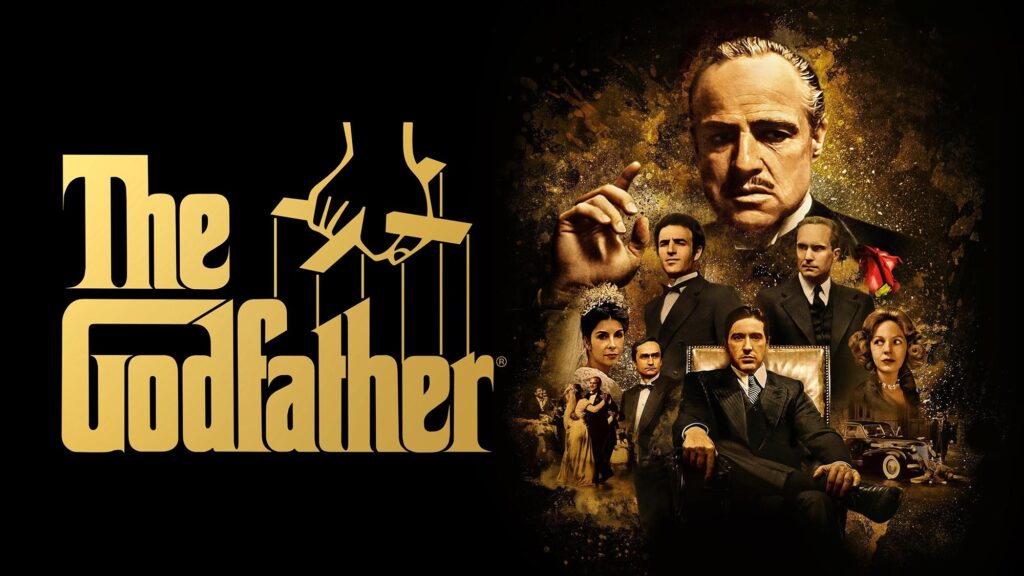
The Godfather
The Godfather was shot mainly in New York and Sicily, with additional work in California, and that combination is central to its atmosphere.