
Chris Columbus (born 10 September 1958) is an American film director, screenwriter and producer whose career has included some of the most commercially successful family films of the late twentieth and early twenty-first centuries. Born in Spangler, Pennsylvania, a small coal-mining community in Cambria County, he was the only child of Alex and Irene Columbus. His father worked as a coal miner before moving the family to Ohio when Chris was three years old, seeking more secure employment in the aluminium industry. They settled in Champion, near Warren and Youngstown in north-eastern Ohio, where both parents worked in factories. Columbus grew up in a working-class household with limited financial resources, but developed an early interest in comic books, literature and cinema. He attended John F. Kennedy High School in Warren, graduating in 1976, and began experimenting with filmmaking using an 8mm camera. At fifteen, he saw Francis Ford Coppola’s The Godfather (1972), an experience he later identified as the decisive influence on his ambition to become a director. Although his parents had little money, they encouraged him to pursue filmmaking rather than follow his father into factory work.
In 1976, Columbus moved to New York City to study film at New York University, where he received a scholarship and enrolled in what became the Tisch School of the Arts. His education exposed him to European cinema, independent American filmmaking and the practical process of screenwriting. During his first year, however, he failed to complete the paperwork necessary to renew his scholarship and was forced to spend the summer working night shifts at the aluminium factory in Ohio. Determined not to remain there permanently, he began writing a screenplay during breaks, concealing his work among the factory’s machinery. A teacher at NYU subsequently passed some of his writing to a professional agent, helping him establish contacts within the entertainment industry. While still a student, Columbus sold his first screenplay, Jocks, although it was never produced. He graduated in 1980 and continued writing scripts while attempting to establish himself professionally. His first produced screenplay was Reckless (1984), a romantic drama directed by James Foley and starring Aidan Quinn and Daryl Hannah. Although Columbus was disappointed with changes made to his original story, the film gave him his first feature-film writing credit.
A more significant opportunity emerged when Steven Spielberg became interested in Gremlins, a horror-comedy screenplay Columbus had written about small creatures that become dangerous when certain rules are broken. Spielberg purchased the script for his production company, Amblin Entertainment, and invited Columbus to Los Angeles to work on revisions. Columbus spent approximately a year working from offices at Universal Studios, developing a professional relationship with Spielberg that became central to his early career. Gremlins (1984), directed by Joe Dante, was filmed principally at Warner Bros. Studios in Burbank, where the fictional town of Kingston Falls was constructed on the studio’s backlot. The film became a major commercial success and established Columbus as a screenwriter capable of combining comedy, horror and stories involving children. He subsequently wrote The Goonies (1985), directed by Richard Donner from a story by Spielberg, and Young Sherlock Holmes (1985), directed by Barry Levinson. The Goonies was filmed extensively in Astoria and Cannon Beach, Oregon, while Young Sherlock Holmes used British locations and studios to recreate Victorian London. Columbus worked closely with Spielberg during the development of both projects, later describing his time at Amblin as an informal postgraduate education in filmmaking.
Columbus moved into directing with Adventures in Babysitting (1987), a comedy starring Elisabeth Shue as a teenager whose evening babysitting becomes a chaotic journey through Chicago. Although the film is set in Illinois, production began in Toronto in January 1987, with Canadian streets and buildings representing much of Chicago. Additional location work took place in the American city, including around Lower Wacker Drive, the Chicago elevated railway and the Dan Ryan Expressway. Columbus used Fitzgerald’s nightclub in Berwyn, Illinois, for the blues-club sequence featuring musician Albert Collins. His first directing assignment required him to work with young performers, elaborate physical comedy and action scenes, establishing a practical approach that he would subsequently develop in larger productions. He followed the film with Heartbreak Hotel (1988), a comedy in which a teenager kidnaps Elvis Presley, played by David Keith, in an attempt to improve his mother’s life. The production was filmed in Ohio and other American locations, returning Columbus to the region where he had grown up. Although Heartbreak Hotel was unsuccessful commercially, his work attracted the attention of screenwriter and producer John Hughes.
Columbus was initially hired to direct National Lampoon’s Christmas Vacation (1989), written by Hughes, but withdrew following disagreements with its star, Chevy Chase. Hughes subsequently offered him Home Alone (1990), a Christmas comedy about an eight-year-old boy accidentally left behind when his family travels to France. Starring Macaulay Culkin, Joe Pesci and Daniel Stern, the film was produced largely in the Chicago area. Principal photography began in February 1990, with the McCallister family residence represented by a privately owned house at 671 Lincoln Avenue in Winnetka, Illinois. While some interior scenes were filmed inside the house, the production used the gymnasium and other facilities at the vacant New Trier High School building in Northfield to construct sets and accommodate the crew. Additional filming took place in Winnetka, Wilmette and Oak Park, including Grace Episcopal Church on Lake Street, which provided the interior for the scene in which Kevin speaks to his elderly neighbour during a Christmas service. Chicago O’Hare International Airport was used for scenes representing both Chicago and Paris airports. Columbus worked closely with Hughes throughout production, with the screenplay’s combination of childhood independence, family relationships and elaborate physical comedy allowing him to expand on techniques he had developed in Adventures in Babysitting.
Home Alone became the highest-grossing film released in the United States in 1990 and established Columbus as one of Hollywood’s most commercially successful directors. By then, he had developed personal connections with the Chicago suburbs as well as the film industry. He married choreographer Monica Devereux in August 1983, and the couple eventually had four children: Eleanor, Brendan, Violet and Isabella. Devereux came from River Forest, a suburb immediately west of Chicago, and Columbus spent several years maintaining a family home there while working on productions elsewhere. His wife’s family had longstanding connections with local schools and churches, and the couple supported several community organisations in the Oak Park and River Forest area. The setting of Home Alone was therefore particularly familiar to Columbus, who was able to combine his professional work with locations associated with his family’s everyday life.
His next film, Only the Lonely (1991), was a romantic comedy-drama starring John Candy as a Chicago police officer struggling with his relationship with his possessive mother, played by Maureen O’Hara. Columbus wrote the screenplay and persuaded O’Hara to return to cinema after an absence of approximately twenty years. Filming took place in Chicago between October and December 1990, using locations including St John Cantius Church, North Avenue Beach, the Pump Room restaurant, Greektown and the former Comiskey Park baseball stadium. The film represented a more personal project for Columbus, with its portrayal of a middle-aged son attempting to establish independence from his mother drawing partly on his own observations of family relationships. Although it did not achieve the commercial success of Home Alone, it allowed him to work with adult characters and a less exaggerated style of comedy.
Columbus returned to the McCallister family with Home Alone 2: Lost in New York (1992), which reunited the principal cast and moved the story from suburban Chicago to Manhattan. Having lived in New York during his student years, he welcomed the opportunity to film at several places he knew from that period. Production involved location work around Central Park, Rockefeller Center, the Plaza Hotel and other recognisable Manhattan landmarks, alongside interiors and additional sequences filmed in Chicago and at studio facilities. The Plaza Hotel, at Fifth Avenue and Central Park South, became one of the film’s principal locations, while the fictional Duncan’s Toy Chest was represented externally by the Rookery Building in Chicago, with its interior recreated separately. Columbus directed the sequel while his professional reputation was at its height, and the film became another major commercial success. The two Home Alone productions also established his ability to manage demanding schedules involving child actors, practical stunts and large numbers of extras.
A different challenge followed with Mrs. Doubtfire (1993), starring Robin Williams as a recently divorced father who disguises himself as an elderly British housekeeper to spend time with his children. Columbus was drawn to the story’s treatment of divorce and family separation, subjects that had personal relevance as he raised his own children. The film was produced principally in the San Francisco Bay Area, with the Hillard family residence represented by a house at 2640 Steiner Street in Pacific Heights. Columbus worked with Williams, Sally Field and the younger cast members at the property during the spring of 1993, while other scenes were filmed around San Francisco, Oakland, Berkeley and Danville. Bridges Restaurant on Church Street in Danville was used for the climactic dinner sequence involving Williams’ character, his former wife and her new partner. Columbus allowed Williams considerable freedom to improvise, frequently filming multiple variations of scenes and selecting the material during editing. The production became a major international success and established a close professional friendship between the director and Williams.
Filming Mrs. Doubtfire also changed Columbus’s personal relationship with San Francisco. Williams, who lived in the Bay Area, introduced him to different neighbourhoods and encouraged him to consider raising his family there. Columbus subsequently directed Nine Months (1995), another comedy starring Hugh Grant, Julianne Moore and Williams, with filming in San Francisco and surrounding locations. By the time the film was released, Columbus had purchased a house in Pacific Heights and begun moving his family from the Chicago area to Northern California. The property, acquired for approximately $5 million, also accommodated his parents, who moved from Ohio. Columbus explained that he wanted his children to grow up outside Hollywood while remaining in a city with substantial cultural institutions, restaurants, parks and artistic communities. The family settled in San Francisco during the mid-1990s, establishing a home that remained central to his personal life despite extended periods working elsewhere.
Columbus continued directing films involving family relationships and personal loss during the remainder of the decade. In Stepmom (1998), starring Julia Roberts, Susan Sarandon and Ed Harris, he explored the relationship between a divorced mother, her former husband and the woman preparing to become stepmother to their children. The production was filmed primarily in New York State, with locations in Bedford, Bronxville, Larchmont and Tappan representing the affluent suburban communities in which the characters live. The film had particular significance for Columbus because his mother, Irene, had died of cancer during the preceding years, and he later acknowledged that his experience of bereavement had influenced his emotional response to the screenplay. He subsequently directed Bicentennial Man (1999), a science-fiction drama starring Robin Williams as a household robot who gradually develops human characteristics. Based on a story by Isaac Asimov, the film was produced largely in California, using locations around San Francisco and studio-built interiors. Its commercial performance was disappointing, and Columbus later suggested that his concentration on sentimental family dramas had limited the range of projects he was being offered.
His career entered another major phase when Warner Bros. began developing a film adaptation of J. K. Rowling’s Harry Potter and the Philosopher’s Stone (2001). Columbus actively pursued the directing assignment, believing that his experience with young actors and fantasy material made him suitable for the project. He had to convince both the studio and Rowling that he would preserve the novels’ British setting and casting. Once selected, he relocated his family temporarily to England and began developing the film with producer David Heyman and production designer Stuart Craig. The production established its principal base at Leavesden Studios in Hertfordshire, a former aircraft factory that had been converted into a filmmaking complex. Principal photography began there on 29 September 2000, with the Great Hall of Hogwarts among the first major sets constructed. Columbus supervised the creation of the school’s interiors and other important environments, while exterior filming took place at historic buildings across England. Alnwick Castle in Northumberland provided the grounds used for early flying lessons, Gloucester Cathedral was used for Hogwarts corridors, and Durham Cathedral supplied additional interiors and courtyard scenes. Other locations included the Bodleian Library and Christ Church in Oxford, while Goathland railway station in North Yorkshire represented Hogsmeade station.
Columbus also played an important role in casting the three young actors who became the central figures of the series: Daniel Radcliffe, Rupert Grint and Emma Watson. Their relative lack of experience required extensive preparation, and the production involved a complicated schedule of filming, rehearsals and education. He later recalled spending approximately 160 days a year working on the Harry Potter films, often followed by long periods of editing and special-effects supervision. Harry Potter and the Philosopher’s Stone was released in November 2001 and became an international commercial success. Columbus immediately returned to Leavesden to direct Harry Potter and the Chamber of Secrets (2002), with production beginning only days after the first film’s premiere. The second film expanded the Hogwarts sets and introduced additional characters and locations, while retaining much of the original cast and production crew. Although he had originally considered directing further instalments, Columbus decided to step down after completing the second film, explaining that the demanding schedules had left him physically and emotionally exhausted and prevented him from spending enough time with his children. He remained involved as a producer on Harry Potter and the Prisoner of Azkaban (2004), directed by Alfonso Cuarón, before returning with his family to San Francisco.
The success of Harry Potter allowed Columbus to concentrate increasingly on production and film development. His company 1492 Pictures, established with collaborators including Michael Barnathan and Mark Radcliffe, became involved in projects ranging from family comedies to historical dramas. One of the company’s most successful productions was Night at the Museum (2006), directed by Shawn Levy and starring Ben Stiller. Although its story centres on the American Museum of Natural History in Manhattan, substantial production work took place in Vancouver, British Columbia, where elaborate museum sets were constructed. Columbus and his colleagues subsequently produced Night at the Museum: Battle of the Smithsonian (2009) and Night at the Museum: Secret of the Tomb (2014), extending their involvement in another successful film franchise. He also produced the holiday comedy Christmas with the Kranks (2004), directed by Joe Roth, and continued developing projects intended for audiences of different ages.
Columbus returned to directing with Rent (2005), an adaptation of Jonathan Larson’s stage musical about artists, musicians and their friends living in New York’s East Village during the AIDS epidemic. He had first seen the original Broadway production at the Nederlander Theatre in 1996 and spent several years attempting to bring it to the screen. The material differed considerably from the family comedies and fantasy films with which he had become associated, but Columbus was determined to preserve the musical’s themes of friendship, poverty, illness and artistic ambition. He retained much of the original Broadway cast, including Anthony Rapp, Adam Pascal, Idina Menzel and Taye Diggs. Production began in March 2005, with exterior filming in New York City and substantial studio work in San Francisco. The former naval facilities on Treasure Island, in San Francisco Bay, were converted into sound stages, where an elaborate recreation of a Manhattan loft and adjoining streets was constructed. Columbus spent several months supervising the musical sequences and working with performers whose backgrounds were largely in theatre rather than cinema. Although Rent received mixed reviews and was not a major commercial success, it remained a personally important project for him.
His subsequent directing assignments included I Love You, Beth Cooper (2009), a teenage comedy based on Larry Doyle’s novel, followed by Percy Jackson & the Olympians: The Lightning Thief (2010), adapted from Rick Riordan’s fantasy novel. The latter brought Columbus back to a story involving a young protagonist discovering an unfamiliar supernatural world, although the production differed substantially from Harry Potter. Filming began in March 2009, with much of the work based at Mammoth Studios in Burnaby, British Columbia, and additional locations around Vancouver. The production also used the full-scale replica of the Parthenon in Centennial Park, Nashville, Tennessee, for a sequence involving a statue of Athena, while Las Vegas locations and Canadian hotels represented parts of the characters’ journey. Columbus subsequently concentrated on production work, including The Help (2011), directed by Tate Taylor and adapted from Kathryn Stockett’s novel. The film was shot extensively in Greenwood, Mississippi, where historic homes, streets and businesses represented Jackson during the early 1960s. Columbus received an Academy Award nomination as one of the film’s producers when The Help was nominated for Best Picture at the 2012 ceremony.
Alongside his work in cinema, Columbus began developing children’s literature. He collaborated with novelist Ned Vizzini on House of Secrets (2013), the first volume of a fantasy trilogy about three siblings whose family moves into an unusual old house in San Francisco. The story reflected his longstanding interest in fantasy literature and children’s adventures, as well as his familiarity with the city’s residential neighbourhoods. The book was followed by Battle of the Beasts (2014) and Clash of Worlds (2016), the latter completed with Chris Rylander following Vizzini’s death in 2013. Writing novels allowed Columbus to develop imaginative material outside the demands of large film productions, although he remained active as a screenwriter and producer. He returned to directing with Pixels (2015), a science-fiction comedy starring Adam Sandler, Kevin James, Michelle Monaghan and Peter Dinklage. Although the film portrays attacks on American cities by characters from classic arcade games, principal photography took place in Ontario, Canada, particularly Toronto and its surrounding communities. Pinewood Toronto Studios provided production facilities, while actual city streets were adapted to represent American locations. The film reunited Columbus with the mixture of comedy, fantasy and elaborate visual effects that had characterised much of his earlier career.
During the 2010s, Columbus also became increasingly involved in supporting independent filmmakers through Maiden Voyage Pictures, established with his eldest daughter, Eleanor Columbus, in 2014. The company’s purpose was to help emerging directors develop and finance films that might otherwise struggle to secure backing from larger studios. Its early projects included Little Accidents (2014), directed by Sara Colangelo, and The Witch (2015), Robert Eggers’ debut feature, set in seventeenth-century New England. Columbus and his daughter subsequently supported films including Mediterranea (2015), Tallulah (2016) and Patti Cake$ (2017), working with directors whose interests and methods differed considerably from his own mainstream Hollywood productions. The company also maintained a professional relationship with Eggers, whose later films included The Lighthouse (2019) and Nosferatu (2024). Columbus served as an executive producer on The Lighthouse and became more directly involved in producing Nosferatu, a new adaptation of the vampire story originally brought to cinema by F. W. Murnau in 1922.
The production of Nosferatu represented a particularly significant departure from the family-oriented films most closely associated with Columbus’s name. Directed by Eggers and starring Lily-Rose Depp, Bill Skarsgård, Nicholas Hoult and Willem Dafoe, the film was shot in the Czech Republic during 2023, with production based at Barrandov Studios in Prague. The filmmakers also used historic buildings and other locations around the country to represent nineteenth-century Germany and Transylvania. Columbus worked with Eggers during production, contributing his experience of large-scale filmmaking while allowing the director to maintain his distinctive approach to historical detail and horror. The film was released in December 2024 and became a major international success. Columbus and Eleanor also served as executive producers on Dìdi (2024), Sean Wang’s coming-of-age drama set in Fremont, California, during the summer of 2008. The production’s connection to the San Francisco Bay Area reflected the family’s longstanding involvement in the region, while its small scale contrasted with Columbus’s earlier studio films.
His work as a producer continued alongside occasional directing assignments. He produced The Christmas Chronicles (2018), a Netflix holiday adventure starring Kurt Russell as Santa Claus, and returned to direct its sequel, The Christmas Chronicles 2 (2020), with Russell and Goldie Hawn. Much of the sequel was produced in British Columbia, where extensive sets represented Santa’s village and the North Pole. Columbus also became involved in educational and charitable organisations in San Francisco, including support for Saint Ignatius College Preparatory, where facilities have been named in recognition of his contributions. His professional interests increasingly involved mentoring younger filmmakers, particularly through Maiden Voyage, while his home in Pacific Heights remained a base for family life and film development.
In 2025, Columbus returned to directing with The Thursday Murder Club, adapted from Richard Osman’s bestselling novel about four residents of a retirement community who investigate unsolved crimes. Produced by Amblin Entertainment for Netflix, the film reunited Columbus with Spielberg as a producing collaborator and featured Helen Mirren, Pierce Brosnan, Ben Kingsley and Celia Imrie in the principal roles. Filming began in England during the summer of 2024, with Englefield House in Berkshire representing Coopers Chase, the fictional retirement community where the characters live. The Elizabethan country house and its gardens provided numerous exterior and interior locations, while a purpose-built room adjoining the property served as the group’s meeting place. Other interiors were constructed at studio facilities in England. The Thursday Murder Club premiered on Netflix on 28 August 2025, marking Columbus’s first released directorial feature since The Christmas Chronicles 2. He subsequently expressed interest in adapting further novels from Osman’s series, although a sequel had not been formally confirmed.
The same year, Columbus received a career tribute at the 68th San Francisco International Film Festival, where he discussed his work with Robin Williams, his experiences directing young performers and his continuing involvement in independent cinema. The event took place in April 2025, with screenings of Mrs. Doubtfire, Rent and Nine Months forming part of the programme. Columbus reflected on the personal importance of San Francisco, explaining that he had initially moved there to raise his children outside Hollywood and had developed a lasting attachment to the city’s cultural life. Although he spent substantial periods working elsewhere, he continued to regard the Bay Area as his home and remained involved with local cultural organisations. He also discussed his professional relationship with Williams, whose death in 2014 had ended plans for a possible Mrs. Doubtfire sequel. Columbus stated that he had no intention of making another film without Williams, regarding the actor’s performance as essential to the original production.
One of Columbus’s most significant forthcoming projects represents a return to the screenplay that helped establish his career more than forty years earlier. In November 2025, Warner Bros. confirmed that he would direct and produce Gremlins 3, with Spielberg returning as executive producer. The new film was developed from material written by Columbus alongside Zach Lipovsky and Adam Stein, with Hannah Marks subsequently working on the screenplay. The project was initially scheduled for release in November 2027, but Warner Bros. announced in September 2026 that the date had been moved to 6 October 2028. The sequel remained in development, with casting and principal photography yet to be publicly confirmed. Its production would bring Columbus back to a story he originally created as a young screenwriter working with Spielberg in Los Angeles during the early 1980s.
Columbus has continued dividing his professional activities between directing, producing and writing, with his work taking him from the factories of north-eastern Ohio to New York, Chicago, San Francisco, London and numerous international production centres. His involvement in the development of the Harry Potter films and his collaborations with Spielberg, Hughes and Williams established him as a major figure in Hollywood family entertainment, while his later work with Eleanor Columbus and emerging independent directors expanded his activities into more experimental and adult-oriented cinema. By October 2026, he remained based in San Francisco and continued working on projects through his production companies, including the forthcoming Gremlins sequel.
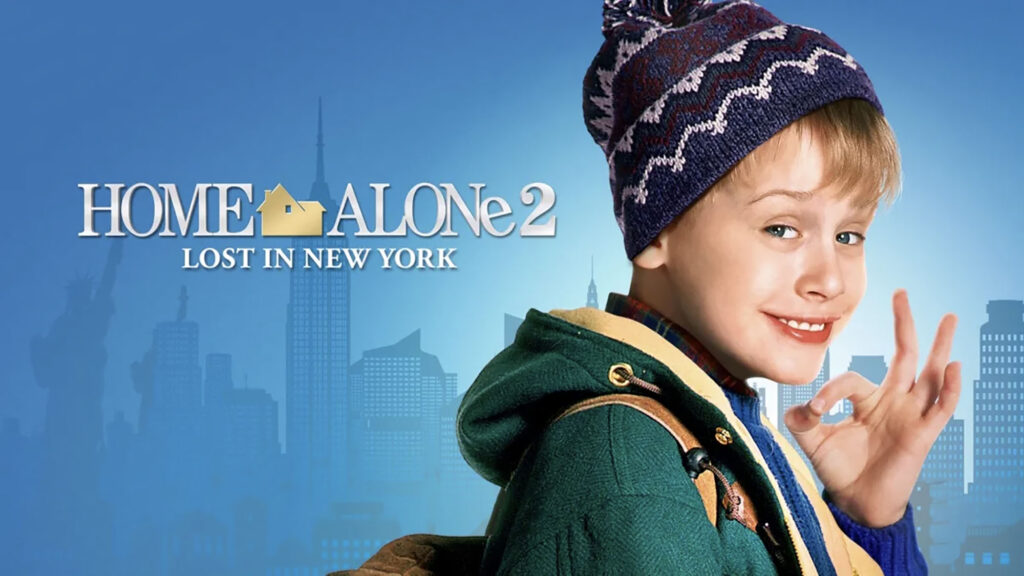
Home Alone 2: Lost in New York
Home Alone 2: Lost in New York is strongly identified with New York City, it was actually shot across New York, Chicago and Los Angeles.