
Brian Russell De Palma (born 11 September 1940) is an American film director, screenwriter and producer whose career has encompassed psychological thrillers, horror films, crime dramas and major Hollywood productions. Born in Newark, New Jersey, he grew up principally in Philadelphia, Pennsylvania, where his family moved when he was six years old. His father, Anthony F. DePalma, was an orthopaedic surgeon, while his mother, Vivienne Muti, came from an Italian-American family. Brian was the youngest of three sons, and his upbringing was marked by a difficult relationship with his father, whose professional commitments kept him away from home for long periods. Although De Palma would later become known for violent and psychologically disturbing films, his childhood interests lay primarily in science, mathematics and electronics. He attended Quaker schools, eventually graduating from Friends’ Central School in Wynnewood, a suburb west of Philadelphia. As a teenager, he built electronic equipment and entered science fairs, winning a regional competition with an analogue computer designed to solve differential equations. He also occasionally accompanied his father to hospital operating rooms, where he observed surgical procedures. De Palma later acknowledged that his early familiarity with medical operations had influenced his attitude towards the depiction of physical violence on screen.
The tensions within his family also had a more direct influence on his filmmaking. When De Palma was approximately sixteen, his mother asked him to follow his father and gather evidence of an extramarital affair. Using a camera and recording equipment, he secretly observed his father’s movements before eventually confronting him. The experience later informed several of his films, particularly their recurring themes of surveillance, voyeurism and the unreliable nature of recorded evidence. The teenage investigator played by Keith Gordon in Dressed to Kill (1980) was partly inspired by De Palma’s own experiences, while his autobiographical comedy Home Movies (1979) drew more broadly on his family relationships. Despite these difficulties, he initially expected to pursue a scientific career. In 1958, he enrolled at Columbia University in New York City to study physics, but his interests gradually shifted towards theatre and film. He became involved in student productions and began attending screenings organised by Cinema 16, the influential New York film society established by Amos Vogel. Films by Alfred Hitchcock, Orson Welles, Jean-Luc Godard and other directors introduced him to possibilities beyond conventional Hollywood storytelling. Hitchcock’s Vertigo (1958) and Welles’s Citizen Kane (1941) were especially important, and De Palma eventually sold much of his scientific equipment to purchase filmmaking equipment.
After graduating from Columbia in 1962, De Palma continued his studies at Sarah Lawrence College in Bronxville, New York, where he pursued postgraduate work in theatre. He received a master’s degree in 1964 and became closely involved with a group of young actors, writers and filmmakers working in New York’s experimental theatre scene. His earliest films included Icarus (1960) and Woton’s Wake (1962), an experimental short that received a Rosenthal Foundation award. He also directed The Responsive Eye (1966), a documentary about the influential exhibition of optical art presented at the Museum of Modern Art in Manhattan in 1965. During this period, he worked with theatre director Wilford Leach and Sarah Lawrence student Cynthia Munroe on The Wedding Party (1969), an independently financed comedy featuring Robert De Niro, Jill Clayburgh and William Finley. Filmed during the mid-1960s but not released until 1969, it became one of the earliest screen appearances by De Niro, with whom De Palma would continue collaborating. The director’s first commercially released feature was Murder à la Mod (1968), a low-budget mystery that combined crime fiction with experiments in editing and different points of view.
De Palma’s early career was closely connected to the independent filmmaking community of New York City. He directed Greetings (1968), a satirical comedy about three young men attempting to avoid military service during the Vietnam War, with De Niro playing one of the principal characters. The film addressed contemporary political issues, including the Kennedy assassination, pornography and the draft, and won a Silver Bear at the Berlin International Film Festival in 1969. De Palma followed it with Hi, Mom! (1970), another New York production starring De Niro as a Vietnam veteran who becomes involved in voyeuristic filmmaking and political theatre. Set against the changing social environment of Manhattan, the film drew on the experimental performance movement that had developed in Greenwich Village and other parts of the city. De Palma also collaborated with members of the Performance Group on Dionysus in ’69 (1970), a documentary recording Richard Schechner’s theatrical adaptation of Euripides’ The Bacchae. These projects were produced with limited resources and frequently involved performers and technicians De Palma knew personally. He subsequently accepted an assignment to direct the Warner Bros. comedy Get to Know Your Rabbit (1972), starring Tom Smothers and Orson Welles, but disagreements with the studio resulted in his dismissal before the film was completed. The experience contributed to his longstanding concern about maintaining creative control over his work.
A decisive development followed with Sisters (1972), a psychological horror film starring Margot Kidder and Jennifer Salt. Filmed largely on Staten Island in New York City, it featured locations including the Staten Island Ferry and an apartment building on Hamilton Avenue, where much of the central mystery takes place. De Palma used elaborate camera movements, split-screen photography and a score by Bernard Herrmann, the composer closely associated with Alfred Hitchcock. The film marked the beginning of his reputation as a director of suspense thrillers and was followed by the musical horror comedy Phantom of the Paradise (1974). Combining elements of The Phantom of the Opera, Faust and the contemporary rock music industry, the production took De Palma to Dallas, Texas, where the Majestic Theatre on Elm Street became its principal location. The theatre had recently closed, allowing the filmmakers to use its auditorium and stage for several elaborate musical sequences. Additional filming took place in Denton, Los Angeles and New York, with Greystone Mansion in Beverly Hills representing the home of the sinister record producer Swan, played by Paul Williams. Although Phantom of the Paradise initially attracted limited attention in the United States, it developed an enthusiastic international following and remained particularly popular in Winnipeg, Canada.
De Palma’s next major thriller, Obsession (1976), was developed with screenwriter Paul Schrader and drew heavily on Hitchcock’s Vertigo. Starring Cliff Robertson and Geneviève Bujold, the film was produced on location in New Orleans, Louisiana, and Florence, Italy. Filming began in Florence in February 1975 before moving to New Orleans, where the production used a residence in the Garden District, the Huey P. Long Bridge and other city locations. The Italian sequences included historic churches and streets in central Florence, particularly the Basilica of San Miniato al Monte, which plays an important part in the story. The project strengthened De Palma’s international reputation and was followed by Carrie (1976), adapted from Stephen King’s debut novel. Starring Sissy Spacek as a bullied teenager with telekinetic powers, Carrie was filmed principally in Southern California, with location work in Los Angeles, Santa Paula and Hermosa Beach. The fictional Bates High School was represented by several real educational buildings, while the climactic school prom was filmed on a specially constructed set at Culver Studios. De Palma supervised the elaborate sequence over several weeks, using multiple camera positions and split-screen editing to depict Carrie’s destruction of the school. The film became a commercial success and earned Academy Award nominations for Spacek and Piper Laurie, giving De Palma his first major Hollywood breakthrough.
Following Carrie, De Palma directed The Fury (1978), another supernatural thriller, starring Kirk Douglas, John Cassavetes and Amy Irving. Much of the production was filmed around Chicago, Illinois, including locations in the city’s northern suburbs, before he returned to a more personal project with Home Movies (1979). The latter was developed as a filmmaking exercise with students at Sarah Lawrence College, bringing him back to the institution where he had studied during the 1960s. It featured Kirk Douglas, Nancy Allen and Keith Gordon, who played a young man recording his family’s domestic conflicts. During this period, De Palma developed a relationship with Allen, an actress who had appeared in Carrie and later became one of his principal collaborators. They married in January 1979, and she subsequently starred in Dressed to Kill (1980) and Blow Out (1981). Their marriage ended in divorce in 1983, although Allen continued to be closely associated with the period in which De Palma established his distinctive style of psychological thriller.
Dressed to Kill, starring Michael Caine and Angie Dickinson alongside Allen, returned De Palma to the subject of voyeurism and the influence of Hitchcock’s Psycho (1960). The story takes place in New York City, but one of its most memorable sequences was filmed in Philadelphia, where Angie Dickinson’s character follows a stranger through the galleries of an art museum. De Palma initially intended to shoot the scene at the Metropolitan Museum of Art in Manhattan, but the museum refused permission after reviewing the screenplay. He instead used the Philadelphia Museum of Art, which stood in for the New York institution. The production allowed him to work again in his childhood city while developing a lengthy sequence that communicated much of its story without dialogue. His next film, Blow Out (1981), returned even more extensively to Philadelphia. Written and directed by De Palma, it starred John Travolta as a sound engineer who accidentally records evidence of a political assassination. The director selected more than fifty locations around the city, including City Hall, 30th Street Station, Penn’s Landing, Reading Terminal Market and the Bellevue-Stratford Hotel. The accident that begins the central mystery was filmed beside Wissahickon Creek, under the Henry Avenue Bridge, while the climactic pursuit used Philadelphia’s streets and public buildings during a fictional Liberty Day celebration. Production was complicated when several reels of exposed film were stolen from a transport vehicle, forcing De Palma to return to the city and reshoot an expensive chase sequence. Blow Out initially struggled commercially but subsequently became one of his most highly regarded films.
Despite the disappointing box-office performance of Blow Out, De Palma was offered Scarface (1983), a modern reworking of Howard Hawks’s 1932 gangster film. Written by Oliver Stone and starring Al Pacino as Cuban immigrant Tony Montana, the production became one of the most difficult of his career. The story was set in Miami during the growth of the cocaine trade following the Mariel boatlift of 1980, but its portrayal of Cuban immigrants provoked objections from local political and community organisations. Although the filmmakers had originally intended to shoot extensively in Florida, much of the production was relocated to Los Angeles. Studio facilities and locations around Southern California represented Miami, while exteriors were filmed in Miami Beach and Key Biscayne. The chainsaw murder sequence was filmed at a building on Ocean Drive in Miami Beach, and the residence representing Montana’s mansion was El Fureidis, a historic property in the Santa Barbara area. The production also involved extensive disagreements over its violent content, with De Palma required to negotiate with the Motion Picture Association of America’s ratings board before the film received an R rating. Scarface received mixed reviews on its original release but became an enduring part of American popular culture, particularly through its influence on hip-hop music, fashion and subsequent gangster films.
De Palma returned to Los Angeles for Body Double (1984), another thriller involving surveillance, mistaken identity and filmmaking. Starring Craig Wasson and Melanie Griffith, the film made unusually prominent use of the city’s modern architecture and entertainment industry locations. The most recognisable was the Chemosphere, an octagonal house designed by architect John Lautner and constructed on a hillside above the San Fernando Valley in 1960. Located on Torreyson Drive in the Hollywood Hills, the building was used as the residence from which the principal character observes a neighbouring house through a telescope. Other locations included Rodeo Drive in Beverly Hills, Barney’s Beanery in West Hollywood and the Farmers Market on West Third Street. De Palma subsequently directed the crime comedy Wise Guys (1986), starring Danny DeVito and Joe Piscopo, before returning to Chicago for one of his greatest commercial successes, The Untouchables (1987). Written by David Mamet, the film portrayed federal agent Eliot Ness’s campaign against gangster Al Capone during Prohibition. Filming began in Chicago in August 1986, using numerous surviving historical buildings, including Union Station, the Rookery Building, the Chicago Theatre and Roosevelt University’s Auditorium Building. De Palma staged the film’s celebrated staircase shootout inside Union Station, drawing inspiration from the Odessa Steps sequence in Sergei Eisenstein’s Battleship Potemkin (1925). A major border raid sequence was filmed at the Hardy Bridge near Cascade, Montana. The Untouchables received four Academy Award nominations, with Sean Connery winning Best Supporting Actor.
The success of The Untouchables gave De Palma renewed standing within the major Hollywood studios, but his next projects returned to politically and socially contentious material. He had been interested in adapting journalist Daniel Lang’s account of a Vietnam War atrocity since the early 1970s and eventually realised the project as Casualties of War (1989), starring Michael J. Fox and Sean Penn. Although the story takes place in Vietnam, filming was carried out principally in Thailand, where De Palma established his production base on Phuket. Locations included the surrounding jungle, Phang Nga and Kanchanaburi, with abandoned tin mines converted into elaborate military sets. Additional scenes were filmed in San Francisco. The film’s subject, the rape and murder of a Vietnamese civilian by American soldiers, brought De Palma back to the anti-war concerns that had informed Greetings and Hi, Mom! during his early career. He followed it with The Bonfire of the Vanities (1990), adapted from Tom Wolfe’s satirical novel about race, class and financial privilege in New York City. The production starred Tom Hanks, Bruce Willis and Melanie Griffith and involved extensive filming in Manhattan and the Bronx, followed by work at Warner Bros. Studios in Burbank. One particularly elaborate sequence was filmed beneath the World Trade Center, where De Palma staged a nearly five-minute uninterrupted camera movement following a drunken journalist through corridors, lifts and backstage areas. The film was a major critical and commercial disappointment, and its troubled production was documented by journalist Julie Salamon in The Devil’s Candy: The Bonfire of the Vanities Goes to Hollywood (1991).
During the early 1990s, De Palma’s personal life and professional career underwent further changes. After his marriage to Nancy Allen, he married film producer Gale Anne Hurd in 1991. The couple had a daughter, Lolita, before divorcing in 1993. Hurd was already an established Hollywood producer, having worked on films including The Terminator (1984) and Aliens (1986). De Palma later married Darnell Gregorio in 1995, and they had a daughter, Piper, before their marriage ended in 1997. He maintained his professional connections with New York and Los Angeles throughout these years, often returning to Manhattan for film development and location scouting. Following the psychological thriller Raising Cain (1992), starring John Lithgow, he reunited with Al Pacino for Carlito’s Way (1993). Adapted from novels by Edwin Torres, the film follows a former Puerto Rican gangster attempting to leave his criminal past behind in 1970s New York. De Palma filmed extensively on location in Manhattan, Brooklyn and Queens, including East Harlem, Greenwich Village and the New York County Supreme Court. The elaborate concluding chase was staged through the New York subway system and Grand Central Terminal, where Pacino’s character attempts to escape his pursuers. The nightclub central to the story was recreated at Kaufman Astoria Studios in Queens, while other interiors and exteriors were filmed in actual city buildings. Although Carlito’s Way received a relatively modest response on its original release, it developed a substantial following and became another defining collaboration between De Palma and Pacino.
De Palma entered a new phase of his career when Tom Cruise selected him to direct Mission: Impossible (1996), the first feature-film adaptation of the American television series. The project was his largest international production to that point and introduced him to the logistical demands of a major action franchise. Filming took place in Prague during 1995, where De Palma used Charles Bridge, the National Museum, Kampa Island and several historic buildings around the Old Town. The production also employed Barrandov Studios for interior work, while other sequences were filmed in London and at Pinewood Studios in Buckinghamshire. The elaborate break-in at CIA headquarters in Langley, Virginia, was constructed for filming rather than shot inside the real intelligence agency. De Palma worked closely with Cruise and producers Paula Wagner and Paul Hitchcock, while also employing several familiar collaborators behind the camera. Mission: Impossible became one of the highest-grossing films of 1996 and established a franchise that continued for decades, although De Palma did not return to direct its sequels.
His next film, Snake Eyes (1998), starring Nicolas Cage, returned to the subject of political assassination and the manipulation of recorded images. Set during a boxing match in Atlantic City, New Jersey, the production combined actual Atlantic City locations with extensive filming in Montreal, Quebec. The former Montreal Forum, which had served as the home arena of the Montreal Canadiens ice hockey team, was used for the fictional Atlantic City sports arena, while the Trump Taj Mahal casino provided additional locations. De Palma opened the film with an elaborate extended tracking shot that follows Cage’s character through the arena and its surrounding corridors. He subsequently directed the science-fiction adventure Mission to Mars (2000), starring Gary Sinise, Tim Robbins and Don Cheadle. The production involved substantial special-effects work and filming in the Vancouver area of British Columbia, where sets were used to represent the interiors of spacecraft and scientific facilities. Although the film was a major studio production, it received mixed reviews and did not lead to further large-scale science-fiction projects.
By the beginning of the 2000s, De Palma had become increasingly dissatisfied with the Hollywood studio system. He began spending substantial periods in France and established a residence in Paris, near Avenue Kléber, around 2000. His interest in French cinema dated back to his university years, when filmmakers such as Godard, François Truffaut and Jean-Pierre Melville had influenced his early work. Living in Paris allowed him to renew those connections while developing projects independently of the American studios. His first major production during this period was Femme Fatale (2002), starring Rebecca Romijn and Antonio Banderas. Filmed entirely in France, it opens during the Cannes Film Festival, where a jewel thief steals valuable diamonds during a film premiere. De Palma incorporated actual festival activity into the production, filming on and around the steps of the Palais des Festivals during the 2001 event. Much of the remaining film was shot in Paris, particularly in the 20th arrondissement around Ménilmontant, where the streets, apartment buildings and church of Notre-Dame-de-la-Croix provided locations for several important sequences. Further filming took place at the Passerelle Debilly pedestrian bridge near the Eiffel Tower and Charles de Gaulle Airport in Roissy-en-France. De Palma personally explored the city while scouting locations, using a scooter to investigate streets and neighbourhoods less familiar to international film audiences. The production reflected his growing attachment to Paris, where he continued living for several years.
His subsequent projects increasingly relied on European financing and international production arrangements. He returned to the crime thriller genre with The Black Dahlia (2006), adapted from James Ellroy’s novel about the 1947 murder of Elizabeth Short in Los Angeles. Although the film portrays Southern California during the late 1940s, most of its production took place in Sofia, Bulgaria, where elaborate historical sets were constructed to recreate the city’s streets and buildings. Production designer Dante Ferretti supervised replicas of locations including the Brown Derby restaurant, the Grand Olympic Auditorium and sections of historic downtown Los Angeles. Additional filming took place in California, but the Bulgarian production base allowed De Palma to recreate locations that had been demolished or substantially altered. The following year, he directed Redacted (2007), a drama inspired by the rape and murder of an Iraqi girl by American soldiers during the Iraq War. The film used fictional video diaries, news reports and internet footage to examine how wartime events are recorded and interpreted. Rather than filming in Iraq, De Palma worked in Jordan, principally around Amman, where buildings and desert locations represented the Iraqi setting. Redacted premiered at the Venice International Film Festival in September 2007, where De Palma received the Silver Lion for Best Director.
De Palma continued working with European actors and production companies during the following decade. He directed Passion (2012), a psychological thriller starring Rachel McAdams and Noomi Rapace, adapted from Alain Corneau’s French film Love Crime (2010). Although the screenplay was initially intended to be filmed partly in London, De Palma decided to relocate the entire production to Berlin after examining the city’s architecture during pre-production. Filming took place in March and April 2012, using locations including the Bode Museum, the Sony Center at Potsdamer Platz and the Old St Matthew’s Cemetery in Schöneberg. The film’s corporate interiors and other settings were selected from actual Berlin buildings rather than relying extensively on studio sets. The production reflected his continuing interest in architecture as an integral part of constructing suspense. He had frequently emphasised the importance of identifying locations before designing individual camera movements, using buildings, staircases, windows and corridors to establish relationships between characters and the spaces around them.
In 2015, De Palma became the subject of a feature-length documentary directed by Noah Baumbach and Jake Paltrow. Titled De Palma, the film consisted principally of an extended interview in which he discussed his childhood, education, professional relationships and the production of his films. It premiered at the Venice International Film Festival, where De Palma received the Jaeger-LeCoultre Glory to the Filmmaker Award. The documentary also addressed the difficulties he had experienced with the Hollywood studio system, his relationships with actors and collaborators, and the controversial reception of several of his films. Despite having made some of the largest American films of the 1980s and 1990s, De Palma increasingly concentrated on projects outside the traditional studio structure, with the European film industry providing opportunities that were no longer readily available to him in Hollywood.
His next feature, Domino (2019), starring Nikolaj Coster-Waldau, Carice van Houten and Guy Pearce, was an international crime thriller involving European police officers and a terrorist investigation. Filming began in Spain in 2017, with locations in Málaga and Almería, including the city’s bullring, harbour and airport. The production subsequently moved to Denmark, Belgium, Italy and the Netherlands, using locations in Copenhagen, Antwerp, Sardinia and Amsterdam. De Palma later described Domino as one of the most difficult productions of his career, citing serious financing problems and interruptions that repeatedly halted filming. He recalled spending far more time waiting in European hotels for production to resume than actually directing scenes. The film received a limited release in May 2019, but he expressed dissatisfaction with the final result and the circumstances under which it had been completed. Domino remains his most recently released feature film.
Alongside directing, De Palma developed an interest in writing crime fiction. In 2020, he published Are Snakes Necessary?, a thriller co-written with journalist Susan Lehman. The novel follows a young woman caught in a political scandal involving a United States senator, with the story moving between Washington, DC, and Paris. Its use of surveillance, deception and political corruption drew on subjects De Palma had explored throughout his filmmaking career. In May 2025, he also published Ambrose Chapel, an unproduced screenplay originally written during the 1990s, through Sticking Place Books. Set in Mexico City, the story combined kidnapping, political conspiracy, mistaken identity and psychological manipulation. Its publication gave readers access to a project that had never reached production, extending De Palma’s work into print after many years of writing and directing films.
By 2026, De Palma had spent more than six decades involved in filmmaking, although he had not released a new feature since Domino. In January that year, reports emerged that he was preparing to return to directing with Sweet Vengeance, a crime thriller inspired by two real murder cases. The project, first discussed publicly in 2018, was being developed with Brazilian producer Rodrigo Teixeira of RT Features, with plans to film in Portugal during 2026. Cinematographer Pedro Sotero and costume designer Cláudia Kopke were attached to the production, although the project had not received a confirmed release date. De Palma had previously indicated that he hoped to direct another feature rather than formally retire from filmmaking. His later professional activities continued to reflect the connections he had developed with European producers and film industries during his years in France.
Throughout his career, De Palma has maintained close professional relationships with several prominent filmmakers of the New Hollywood generation, including Martin Scorsese, Steven Spielberg, Francis Ford Coppola and George Lucas. Although their careers developed in different directions, they emerged from the same period in which young American directors gained greater control over their films and challenged established studio conventions. De Palma’s own work was distinguished by elaborate visual constructions, split-screen photography, long tracking shots and a recurring interest in the relationship between observation and deception. His personal history also remained closely connected to the places where he had lived and worked, particularly Philadelphia, New York, Los Angeles and Paris. Philadelphia provided his childhood background and later became the setting for two of his most distinctive thrillers, while New York was central to his education and experimental beginnings. His Hollywood period brought international recognition through films such as Carrie, Scarface and The Untouchables, before his move to Paris opened a later chapter of European productions. These geographical connections form an important part of a career in which real buildings and urban environments were frequently used as essential elements of cinematic storytelling.
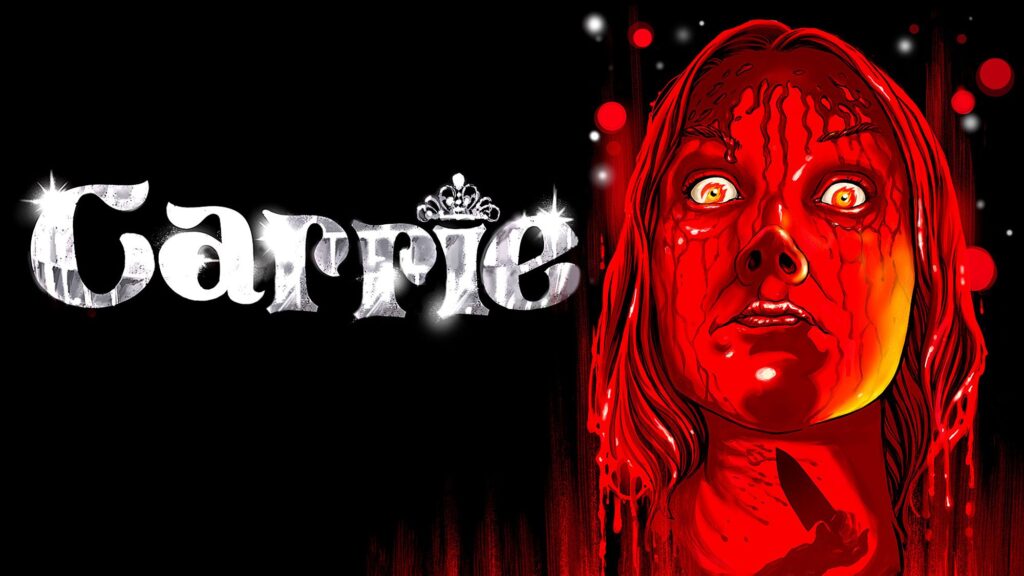
Carrie
Carrie is a 1976 supernatural horror film directed by Brian De Palma and based on Stephen King’s first published novel. Sissy Spacek…
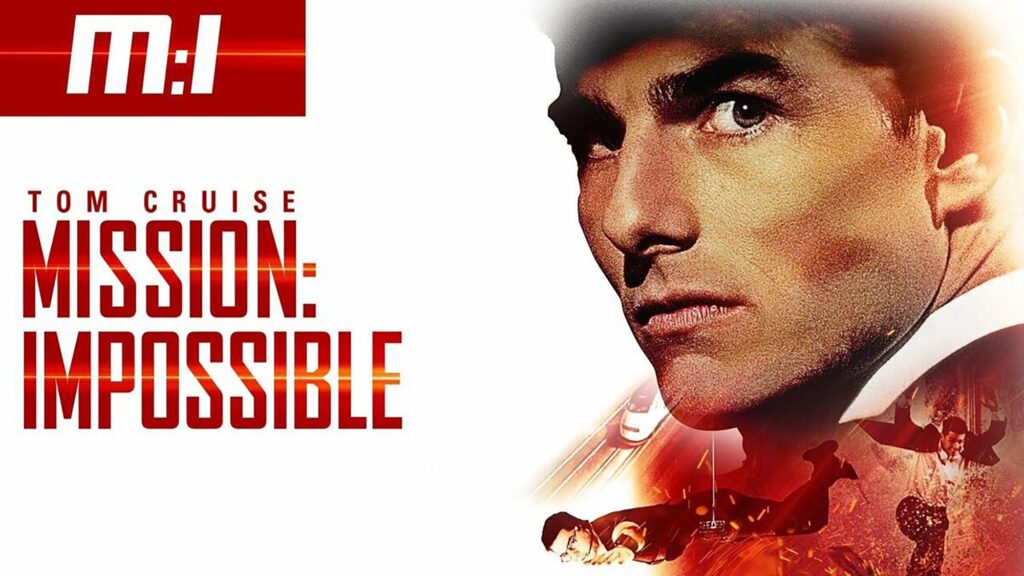
Mission: Impossible
Mission: Impossible from 1996 was shot mainly in Prague and England, with additional work in London, Scotland and the United States.
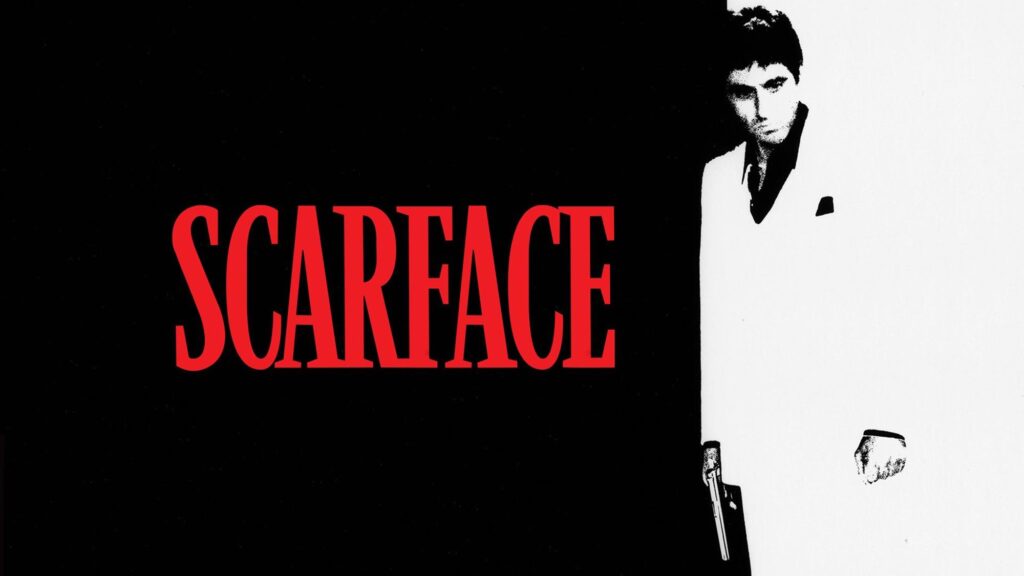
Scarface
Scarface is a 1983 American crime drama directed by Brian De Palma and written by Oliver Stone, with Al Pacino starring as Tony Montana.