
Arnold Alois Schwarzenegger (born 30 July 1947) is an Austrian-American actor, former professional bodybuilder, businessman and politician who served as the 38th Governor of California from 2003 to 2011. He was born in Graz, Austria, and grew up in the nearby village of Thal, west of the Styrian capital. His father, Gustav Schwarzenegger, was the local police chief, while his mother, Aurelia Jadrny, managed the household and raised Arnold and his older brother, Meinhard. The family occupied accommodation provided by the local gendarmerie in a former forester’s lodge, a relatively modest property without many of the conveniences found in wealthier Austrian homes during the post-war years. Schwarzenegger later described his father as authoritarian and demanding, with strict expectations concerning discipline, physical fitness and achievement. Gustav had served in the German military during the Second World War and had belonged to the Nazi Party, a history Schwarzenegger subsequently addressed publicly when discussing the consequences of Nazism and Austria’s wartime past. His relationship with his mother was considerably warmer, although the family environment was often difficult. Growing up in the countryside surrounding Thal, he spent much of his childhood playing football, swimming in local lakes and participating in outdoor activities.
Schwarzenegger attended school in the Graz area and initially considered pursuing football more seriously. His interest gradually shifted towards bodybuilding after his football coach introduced the team to weight training. At fifteen, he began training regularly at a gym in Graz, becoming fascinated by the possibility of transforming his physique through exercise and diet. He studied bodybuilding magazines and followed the careers of American and British competitors, particularly Reg Park, the British bodybuilder who had become an international star through the Italian Hercules films. Park’s achievements suggested that bodybuilding could provide a route into acting, a profession Schwarzenegger had begun to associate with the United States. He later recalled developing the ambition to move to America while still living in Thal, despite having little money and speaking limited English. His family did not initially take these ambitions seriously, and his father encouraged him to pursue a conventional profession. Schwarzenegger nevertheless continued training with growing intensity, travelling between Thal and Graz to work with more experienced bodybuilders and develop the physique that would eventually make him internationally recognised.
In 1965, Schwarzenegger began his compulsory military service in the Austrian Army, serving with a tank unit. He continued training whenever possible and participated in bodybuilding competitions during his military service, sometimes finding himself in conflict with his superiors over the demands of the sport. His early competitive successes encouraged him to pursue bodybuilding professionally, and in August 1966 he left the family home in Thal to establish himself independently. He moved to Munich, West Germany, where he worked at a gym and began developing contacts within the European bodybuilding community. That year, he travelled to London to compete in the NABBA Mr Universe competition, finishing second to American bodybuilder Chet Yorton. The experience introduced him to the British bodybuilding scene and helped establish important friendships with athletes and promoters who supported his development. He subsequently returned to London, where he trained with Wag Bennett and received assistance from Bennett’s family. In 1967, Schwarzenegger won the amateur Mr Universe title in London at the age of twenty, becoming the youngest winner in the competition’s history. The victory transformed his professional prospects and brought him closer to the ambition of establishing a career in the United States.
Schwarzenegger moved to Los Angeles in September 1968, with support from bodybuilding promoter Joe Weider, whose magazines and competitions were central to the sport’s commercial development. He settled in the Santa Monica and Venice area, where the local bodybuilding community was expanding rapidly. Gold’s Gym on Pacific Avenue in Venice became the centre of his daily life, bringing him into contact with Franco Columbu, Dave Draper and other prominent athletes. The gym was relatively small compared with later commercial fitness centres, but its combination of serious training and an informal social atmosphere made it internationally influential. Schwarzenegger initially struggled with English and began taking language classes at Santa Monica College, where he also studied mathematics and business. He later emphasised the importance of these classes in helping him understand American society and develop the communication skills required for his ambitions beyond bodybuilding.
His competitive achievements continued throughout the early 1970s. In 1970, he won the Mr World competition in Columbus, Ohio, organised by promoter Jim Lorimer, beginning a professional friendship that would eventually lead to the Arnold Sports Festival. The same year, Schwarzenegger won his first Mr Olympia title, defeating Sergio Oliva after having finished second to him in 1969. He retained the title in Paris in 1971, Essen in 1972, New York in 1973 and 1974, and Pretoria, South Africa, in 1975. He subsequently retired from professional bodybuilding, although he returned to win a seventh Mr Olympia title in Sydney, Australia, in 1980. His training methods and public appearances helped transform bodybuilding from a relatively specialised activity into an increasingly popular international sport. He also developed several businesses, including a bricklaying enterprise with Columbu and investments in Southern California property. By purchasing real estate and carefully managing his income, he established financial independence before achieving major success as an actor. His commercial interests would remain an important part of his professional life, allowing him to pursue film projects without relying entirely on acting salaries.
Schwarzenegger’s first feature-film appearance came in Hercules in New York (1970), directed by Arthur Allan Seidelman. He was credited as Arnold Strong because the producers considered his surname difficult for American audiences, and his heavily accented dialogue was dubbed by another performer in the original release. The low-budget comedy follows Hercules after he leaves Mount Olympus and becomes involved in a series of adventures in modern Manhattan. Filming took place in New York City during 1969, using locations around Manhattan and the surrounding metropolitan area. Schwarzenegger subsequently appeared in The Long Goodbye (1973), directed by Robert Altman, in a small uncredited role as a gangster’s bodyguard. His physical appearance attracted attention, but he found it difficult to persuade filmmakers that he could play characters whose personalities were not defined entirely by their muscles. His breakthrough came with Bob Rafelson’s Stay Hungry (1976), starring Jeff Bridges and Sally Field. Schwarzenegger played Joe Santo, an Austrian bodybuilder preparing for a competition while becoming involved in the lives of people connected with a struggling gym. The production was filmed in Birmingham, Alabama, during the spring of 1975, with actual streets, businesses and bodybuilding facilities providing the setting. His performance won the Golden Globe Award for New Star of the Year – Actor in 1977, offering the first substantial recognition of his work outside professional bodybuilding.
His public profile expanded further through Pumping Iron (1977), the documentary directed by George Butler and Robert Fiore. The film followed Schwarzenegger and other competitors preparing for the 1975 Mr Olympia competition, combining training sequences filmed at Gold’s Gym in Venice with material from the competition in Pretoria. Schwarzenegger was portrayed as an ambitious and highly competitive athlete who understood the psychological aspects of the sport as well as its physical demands. The documentary introduced bodybuilding to audiences who had previously regarded it as an obscure activity and helped establish his public personality through humour, confidence and carefully developed rivalries. His appearance became central to the film’s success, and the increased publicity encouraged further acting opportunities. He subsequently appeared in the comedy The Villain (1979), opposite Kirk Douglas and Ann-Margret, before taking the leading role in John Milius’s Conan the Barbarian (1982), adapted from the fantasy character created by Robert E. Howard.
Conan the Barbarian marked a decisive turning point in Schwarzenegger’s film career. He portrayed Conan, a warrior whose family is murdered by followers of the cult leader Thulsa Doom, played by James Earl Jones, and who subsequently seeks revenge. The production made extensive use of Schwarzenegger’s physical abilities, although he also underwent specialised training in sword fighting and other forms of combat. Principal photography began in Spain in January 1981, with filming across several regions, including Madrid, Segovia, Ávila, Cuenca and Almería. The desert landscapes around Tabernas and Cabo de Gata in Andalusia provided environments for the fictional Hyborian Age, while elaborate sets were constructed specifically for the film. The Peñón de Bernal near Vícar was associated with the temple of Thulsa Doom, and other sequences used the Alcazaba of Almería, the surrounding hills and the province’s dry riverbeds. Schwarzenegger worked alongside Sandahl Bergman, Gerry Lopez, Max von Sydow and Jones during a demanding production involving horses, combat sequences and prolonged periods outdoors. Conan the Barbarian was released in May 1982 and became an international commercial success, establishing Schwarzenegger as a leading action-film actor. He returned to the character in Richard Fleischer’s Conan the Destroyer (1984), which was filmed principally in Mexico, including locations in Chihuahua and Hidalgo, alongside studio production.
His most influential screen role followed when James Cameron cast him as the title character in The Terminator (1984). The science-fiction thriller concerns a cyborg assassin sent from the future to murder Sarah Connor, played by Linda Hamilton, whose unborn son will eventually lead human resistance against an artificial intelligence system. Schwarzenegger had initially discussed playing the soldier Kyle Reese, but Cameron became convinced that his physical presence and unusual manner would make him particularly effective as the almost indestructible antagonist. The role required relatively little dialogue, allowing him to develop the character through movement, facial expression and an unnervingly controlled manner. Principal photography took place in Los Angeles during the spring of 1984, with extensive night filming on actual city streets. Griffith Observatory provided the setting for the Terminator’s arrival, while locations in downtown Los Angeles included the former Tech Noir nightclub at 720 South Hill Street and industrial buildings used for the film’s final confrontation. Other scenes were filmed in South Pasadena, Vernon and the San Fernando Valley. The production was comparatively inexpensive by Hollywood standards, but its combination of practical effects, suspense and Schwarzenegger’s performance made it a major success when released in October 1984.
The Terminator transformed Schwarzenegger’s professional reputation, demonstrating that his distinctive physical appearance could become central to an internationally successful science-fiction character. Its popularity also established a lengthy creative relationship with Cameron, who would direct him in two further major productions. During the middle of the 1980s, Schwarzenegger consolidated his position through several action films, including Commando (1985), directed by Mark L. Lester, in which he played retired special-forces officer John Matrix. The film was produced around Southern California, including Los Angeles, Santa Barbara and surrounding communities, and became particularly associated with the exaggerated action and humorous dialogue of the period. He subsequently appeared in Raw Deal (1986), followed by John McTiernan’s Predator (1987), in which he portrayed Major Alan “Dutch” Schaefer, the leader of an elite military unit confronting an extraterrestrial hunter in a Central American jungle.
Predator was filmed principally in Mexico during 1986, with jungle locations near Puerto Vallarta in Jalisco providing the setting for much of the action. The production used an area around the El Eden restaurant and surrounding tropical woodland, with additional locations elsewhere in Mexico. Schwarzenegger trained intensively with the other actors, including Carl Weathers, Bill Duke, Jesse Ventura and Sonny Landham, before travelling to the location. The cast subsequently worked through difficult conditions involving high temperatures, humidity, insects and physically demanding action sequences. To make the landscape appear denser, the filmmakers introduced artificial vegetation and other set elements, while the creature itself underwent substantial changes during production. Schwarzenegger later recalled the difficulties of performing while covered in mud and working through scenes involving explosions and challenging terrain. Predator became another major success and eventually developed into a long-running science-fiction franchise.
The following films continued to build his reputation as a leading action star. In The Running Man (1987), directed by Paul Michael Glaser and loosely adapted from Stephen King’s novel, Schwarzenegger played a former police officer forced to compete in a deadly televised game show. The production was filmed in Southern California, with the former Kaiser Steel mill in Fontana and locations in downtown Los Angeles providing the industrial environments. Walter Hill’s Red Heat (1988) paired him with James Belushi in a crime comedy about a Soviet police officer pursuing a criminal in Chicago. The film was photographed in Chicago, Los Angeles and Budapest, Hungary, which represented parts of Moscow. The production also received permission for filming at Red Square in Moscow, although Budapest provided much of the Soviet urban setting. Schwarzenegger’s character was an unusually serious figure whose disciplined behaviour contrasted with Belushi’s informal American detective, allowing the film to explore cultural differences through both action and comedy.
An important departure from these roles came with Ivan Reitman’s Twins (1988), in which Schwarzenegger starred opposite Danny DeVito as Julius and Vincent Benedict, genetically engineered brothers separated shortly after birth. The film used the striking physical contrast between the two actors as a source of comedy, but also depended on developing a convincing relationship between the characters. Production took place in California and New Mexico, including locations in Santa Monica, Hollywood, Pasadena, Taos and Santa Fe. The Rio Grande Gorge Bridge near Taos and buildings in Los Alamos were among the locations associated with the brothers’ journey to discover their origins. Twins became a major commercial success and demonstrated that Schwarzenegger could attract audiences without the elaborate violence and action sequences of his previous films. His collaboration with DeVito developed into a lasting friendship, and he subsequently reunited with Reitman for Kindergarten Cop (1990) and Junior (1994).
Schwarzenegger’s personal life was also developing during this period. He had met television journalist Maria Shriver in 1977 through connections with the Kennedy family, and they married on 26 April 1986 at St Francis Xavier Church in Hyannis, Massachusetts. Shriver was the daughter of Sargent Shriver, a former American ambassador and political figure, and Eunice Kennedy Shriver, the founder of Special Olympics and sister of President John F. Kennedy. Their marriage brought Schwarzenegger into one of the most prominent Democratic political families in the United States, although he remained a committed Republican. The couple established their principal home in the Los Angeles area and had four children: Katherine, born in 1989; Christina, born in 1991; Patrick, born in 1993; and Christopher, born in 1997. Schwarzenegger increasingly balanced his film commitments with family responsibilities, while Shriver continued her broadcasting career and became involved in charitable and educational organisations. He also developed a longstanding interest in Special Olympics through his relationship with the Shriver family, supporting athletic programmes for children and adults with intellectual disabilities.
His commercial success continued with Paul Verhoeven’s Total Recall (1990), adapted from Philip K. Dick’s short story We Can Remember It for You Wholesale. Schwarzenegger played Douglas Quaid, a construction worker who discovers that his memories and identity may have been manipulated as part of a conspiracy involving the planet Mars. The film’s complicated narrative combined action with questions about perception, memory and personal identity. Although the story alternates between Earth and Mars, principal photography took place largely in Mexico City during 1989. Estudios Churubusco provided the principal production facilities, where elaborate sets were constructed to represent the Martian colony and its industrial environments. Actual Mexican locations were also used, including the Chabacano Metro station, which appeared in action sequences involving Quaid, and the Heroico Colegio Militar, which represented part of his residential environment. Schwarzenegger worked opposite Sharon Stone, Rachel Ticotin and Michael Ironside, with extensive practical effects developed by Rob Bottin. Total Recall became one of the highest-grossing films of 1990 and won a Special Achievement Academy Award for its visual effects.
During the same year, Kindergarten Cop offered another contrast with Schwarzenegger’s familiar action roles. He portrayed John Kimble, a police detective who goes undercover as a kindergarten teacher while investigating a criminal case. Reitman used the contrast between the character’s intimidating appearance and his difficulties managing young children as the basis for the comedy. Much of the film was shot on location in Astoria, Oregon, during the summer of 1990. John Jacob Astor Elementary School at 3550 Franklin Avenue provided the exterior of the fictional school, while numerous local pupils and teachers participated as background performers. Other Astoria locations included residential streets and businesses near the Columbia River, while the school picnic was filmed at Ecola State Park near Cannon Beach. The classroom interiors, however, were constructed at Universal Studios in California, where additional scenes were filmed. Schwarzenegger later recalled enjoying the interaction with the child actors and the opportunity to work in a relatively small coastal community. Kindergarten Cop became another substantial commercial success, reinforcing his ability to move between action and comedy.
His reunion with Cameron for Terminator 2: Judgment Day (1991) became one of the most important productions of his career. Rather than returning as the central antagonist, Schwarzenegger portrayed a reprogrammed Terminator sent to protect the young John Connor, played by Edward Furlong, from a more advanced machine played by Robert Patrick. Linda Hamilton returned as Sarah Connor, now a hardened and traumatised woman preparing for a future war. Principal photography took place between October 1990 and March 1991, with extensive location work throughout Southern California. The film’s opening sequences used buildings in Lake View Terrace and shopping centres in the San Fernando Valley, while the elaborate truck-and-motorcycle pursuit was filmed in the Tujunga Wash flood-control channel and surrounding streets. The former Kaiser Steel mill in Fontana provided the setting for the climactic confrontation, with additional work around Los Angeles, Long Beach and the Mojave Desert. Schwarzenegger underwent extensive physical preparation and performed demanding action scenes, although stunt specialists handled the most dangerous sequences. Terminator 2 became a major commercial and critical success, winning four Academy Awards for its technical achievements and establishing the Terminator as one of cinema’s most recognisable fictional characters.
The scale of Terminator 2 contributed to Schwarzenegger’s position among Hollywood’s highest-paid performers. He subsequently appeared in John McTiernan’s Last Action Hero (1993), a fantasy comedy in which a young boy enters the fictional world of a police action film and meets Schwarzenegger’s character Jack Slater. The production was filmed largely in Los Angeles and New York, with sequences requiring elaborate transitions between the fictional action-film environment and the ordinary world. Although the film received mixed reviews and performed below expectations, it demonstrated Schwarzenegger’s willingness to parody his own screen personality. He returned to commercial success with Cameron’s True Lies (1994), starring Jamie Lee Curtis as the wife of a secret agent whose family is unaware of his dangerous professional activities. The production involved extensive filming in California, Florida and Rhode Island, with locations including the Westin Bonaventure Hotel in downtown Los Angeles, Rosecliff mansion in Newport and the Florida Keys. One of the film’s most elaborate action sequences involved a helicopter and a series of vehicles on the Seven Mile Bridge, requiring substantial stunt work and special effects. True Lies became another international success and marked Schwarzenegger’s final collaboration with Cameron as director.
His later films during the 1990s included Junior (1994), again opposite DeVito, in which he played a scientist who becomes pregnant through an experimental medical procedure. The comedy was filmed principally in Southern California and allowed him to explore a deliberately absurd premise while maintaining a relatively restrained central performance. He subsequently appeared in Chuck Russell’s Eraser (1996), an action thriller concerning a federal agent responsible for protecting witnesses, and Brian Levant’s Jingle All the Way (1996), in which he played a Minneapolis businessman attempting to obtain a popular toy for his son before Christmas. Unlike many Hollywood productions using locations far removed from their fictional settings, Jingle All the Way was filmed extensively in Minnesota, particularly Minneapolis and St Paul. The production used actual streets, shops and public spaces, including Nicollet Island, Mickey’s Diner and commercial areas around downtown St Paul. Additional filming took place at Universal Studios in California. Schwarzenegger worked alongside Sinbad, Rita Wilson and Phil Hartman, creating a family comedy that became a familiar part of Christmas television programming.
By the late 1990s, Schwarzenegger’s career had become more uneven. He played the villainous Mr Freeze in Joel Schumacher’s Batman & Robin (1997), starring George Clooney, Chris O’Donnell and Uma Thurman. The production was based largely at Warner Bros. Studios in Burbank, with elaborate sets representing a highly stylised Gotham City. Despite substantial publicity, the film received widespread criticism. Schwarzenegger subsequently returned to more conventional action material in End of Days (1999), The 6th Day (2000) and Collateral Damage (2002), although none achieved the commercial impact of his most successful earlier films. During this period, he also underwent heart surgery in 1997 to address a congenital heart-valve condition, an issue that would require further treatment in later years. He continued exercising and maintaining a demanding public schedule, while gradually becoming more interested in political and charitable activities outside the film industry.
Schwarzenegger’s involvement in fitness promotion had begun long before his film career reached its height. Together with Jim Lorimer, he established the Arnold Classic bodybuilding competition in Columbus, Ohio, in 1989, building on their relationship dating back to the Mr World contest of 1970. The event gradually expanded into the Arnold Sports Festival, incorporating numerous athletic disciplines and attracting competitors from around the world. He also served as chairman of the President’s Council on Physical Fitness and Sports under President George H. W. Bush from 1990 to 1993, travelling throughout the United States to encourage exercise and healthy lifestyles. In 1992, he helped establish an organisation that became After-School All-Stars, providing educational and recreational programmes for children in underserved communities. These activities contributed to his growing public role beyond entertainment and eventually influenced his decision to enter politics.
He became increasingly involved in Republican politics during the 1990s and early 2000s, supporting candidates and participating in public campaigns while continuing his film work. His political ambitions became more explicit during the California recall election of 2003, when voters were asked whether Democratic Governor Gray Davis should be removed from office. Schwarzenegger announced his candidacy in August 2003 during an appearance on The Tonight Show with Jay Leno, presenting himself as a political outsider capable of addressing California’s financial and administrative difficulties. The campaign attracted enormous media attention because of his international celebrity and lack of previous elected office. It also brought renewed examination of his personal history, including allegations of inappropriate behaviour towards women, which he addressed during the campaign while acknowledging that he had sometimes behaved improperly. Schwarzenegger won the election on 7 October 2003 and was inaugurated as California’s 38th governor on 17 November, becoming the first foreign-born person to hold the office since John G. Downey in the nineteenth century.
Schwarzenegger’s governorship marked an extraordinary change in his professional life. Having spent decades travelling between film studios, locations and promotional events, he now worked principally in Sacramento, where the California State Capitol became the centre of his daily activities. His first term involved difficult negotiations over the state budget, workers’ compensation reform and the relationship between the governor’s office and the California Legislature. He frequently positioned himself as a moderate Republican, supporting business interests while also pursuing policies associated with environmental protection and political reform. One of his most significant achievements was the California Global Warming Solutions Act of 2006, commonly known as Assembly Bill 32, which established legally binding targets for reducing the state’s greenhouse-gas emissions. Signed in September 2006, the legislation became an important part of California’s climate policy and received international attention. He also supported renewable energy, improvements in vehicle efficiency and expanded conservation initiatives.
Schwarzenegger won re-election in November 2006, allowing him to serve a full second term. His administration continued pursuing environmental policies, including cooperation with other American states and international governments on climate change. He also supported changes to California’s electoral system, including the creation of an independent redistricting commission and the introduction of a top-two primary system. However, his time in office was also marked by substantial difficulties. The international financial crisis of 2008 and subsequent recession severely affected California’s public finances, leading to budget deficits, spending reductions and prolonged negotiations with the Legislature. Schwarzenegger’s attempts to reduce spending attracted criticism from public-sector employees, education organisations and other groups, while some of his proposed reforms failed to receive public support. His administration also faced controversy over decisions concerning prison policy, economic management and the use of executive authority. He completed his second term on 3 January 2011, leaving office with a mixed political record but having established a lasting role in the development of California’s climate legislation.
His political career also affected his relationship with Hollywood. Schwarzenegger largely suspended his acting work while serving as governor, although he made brief appearances in productions including The Rundown (2003) and The Expendables (2010). He returned to a substantial screen role in The Expendables 2 (2012), joining Sylvester Stallone, Bruce Willis, Jason Statham and other established action stars. The production was filmed principally in Bulgaria, where studio facilities and locations around Sofia represented several fictional international settings. His participation reflected a renewed interest in acting after eight years in public office, although he initially concentrated on films that drew on his established action persona. He subsequently starred opposite Stallone in Escape Plan (2013), a prison thriller in which the two performers work together to escape a highly secure detention facility. The film was produced in Louisiana, including around New Orleans, with elaborate prison interiors constructed for the production.
Schwarzenegger also appeared in The Last Stand (2013), directed by Kim Jee-woon, portraying a sheriff in a small American border town. The production was filmed in New Mexico, with Albuquerque and surrounding desert communities representing the fictional Arizona setting. He subsequently appeared in Sabotage (2014), directed by David Ayer, and returned to the Terminator franchise in Terminator Genisys (2015), which combined new performers with elements of the earlier films. The latter production involved extensive filming in Louisiana and California, with New Orleans serving as one of the principal production centres. Schwarzenegger also accepted a more restrained dramatic role in Maggie (2015), directed by Henry Hobson, in which he played a father attempting to protect his teenage daughter, portrayed by Abigail Breslin, after she becomes infected during a zombie epidemic. Filmed in Louisiana, the independent drama required comparatively little conventional action and concentrated instead on the emotional relationship between parent and child. Schwarzenegger later described the project as an opportunity to demonstrate abilities that had rarely been central to his major studio films.
His personal life underwent a significant change following his departure from office. In May 2011, Schwarzenegger and Shriver announced their separation after twenty-five years of marriage. He subsequently acknowledged that he had fathered a son, Joseph Baena, in 1997 with Mildred Baena, a longtime member of the family’s household staff. The revelation became a major public scandal and placed considerable strain on his relationships with his wife and children. Shriver filed for divorce in June 2011, although the legal process was not completed until December 2021. Schwarzenegger later accepted responsibility for the damage caused by his actions and discussed the consequences for his family in interviews and his autobiography. He maintained relationships with his five children and continued participating in family events, while Joseph developed his own interests in bodybuilding, fitness and acting. Schwarzenegger’s family life remained centred largely in Southern California, where he continued living in the Brentwood area of Los Angeles.
Following his return to private life, Schwarzenegger expanded his involvement in environmental organisations and public-policy initiatives. In August 2012, he helped establish the USC Schwarzenegger Institute for State and Global Policy at the University of Southern California in Los Angeles. The institute was intended to encourage research and discussion concerning energy, the environment, education, public health, economic policy and political reform. He subsequently supported international projects concerned with climate change, including the R20 Regions of Climate Action and the Schwarzenegger Climate Initiative. Together with Austrian environmental campaigner Monika Langthaler, he established the Austrian World Summit in Vienna in 2017, bringing together politicians, scientists, business representatives and other participants to discuss environmental policy. The annual conference strengthened his connection with Austria, where he continued returning for public appearances and family visits. His childhood home in Thal had also been converted into the Arnold Schwarzenegger Museum, which opened in 2011 and displays material documenting his early life, bodybuilding career, films and political activities.
His later entertainment work included Terminator: Dark Fate (2019), directed by Tim Miller and produced by Cameron, in which he reunited with Linda Hamilton. Schwarzenegger portrayed an ageing Terminator who has developed an independent existence after completing an earlier mission. The production was filmed in Spain and Hungary, with locations around Madrid, Cartagena and Almería representing Mexico and Central America, while Origo Film Studios in Budapest provided substantial interior facilities. The film returned him to a character he had first played more than thirty-five years earlier, but its commercial performance was disappointing. His work during the same period increasingly involved documentary production and public appearances rather than maintaining the extensive action-film schedule of his earlier career. He also published books addressing bodybuilding, fitness and personal development, including Be Useful: Seven Tools for Life (2023), which drew on his experiences in Austria, Hollywood and politics.
In 2023, Schwarzenegger became the central subject of Arnold, a three-part Netflix documentary series examining his life through the distinct periods of bodybuilding, acting and public service. The production included extensive interviews with Schwarzenegger, family members, collaborators and political associates, as well as archival footage from his childhood and professional career. It also addressed the difficulties of his family life and the controversy surrounding the end of his marriage. During the same year, he made his first leading appearance in a scripted television series with FUBAR (2023–2025), an action comedy created by Nick Santora. Schwarzenegger played Luke Brunner, a veteran CIA operative whose retirement plans are disrupted when he discovers that his daughter, portrayed by Monica Barbaro, also works for the agency. The series was produced largely in Canada, particularly around Toronto and other locations in Ontario, with additional production in Europe. The second season, featuring Carrie-Anne Moss, premiered on Netflix in June 2025. Despite the success of its initial season, the programme was cancelled in August 2025 after two seasons.
Schwarzenegger continued maintaining a public presence through fitness programmes, charitable activities and environmental campaigns. He became increasingly involved in communicating exercise and nutrition advice through Arnold’s Pump Club, a newsletter and podcast drawing on scientific research and his experiences in professional sport. His own health had required continued medical attention because of a congenital heart condition. Following operations in 1997, 2018 and 2020, he underwent a procedure to receive a pacemaker in March 2024. He subsequently discussed his medical history publicly, encouraging people to seek appropriate treatment and maintain physical activity according to their circumstances. Despite these difficulties, he continued regular training and participating in public events. His lifelong involvement with bodybuilding remained particularly visible at the Arnold Sports Festival in Columbus, where he appeared regularly alongside competitors, organisers and other athletes.
One of his newest film projects is The Man with the Bag (2026), a Christmas action comedy directed by Adam Shankman and co-starring Alan Ritchson. Schwarzenegger plays Santa Claus, whose magical bag of presents is stolen, forcing him to recruit a former criminal to recover it before Christmas. The film also features Awkwafina, Jane Krakowski and Ken Jeong. Production took place in New York and the surrounding region during the winter of 2024–2025, with Schwarzenegger returning to the city where he had made his feature-film debut more than fifty years earlier. The project also brought him back to Christmas-themed family entertainment three decades after Jingle All the Way. Amazon MGM Studios scheduled The Man with the Bag for release on Prime Video on 2 December 2026, and the first promotional material was released in September.
Schwarzenegger also returned to discussions about several of his best-known action franchises during 2026. At the Arnold Sports Festival in Columbus in March, he confirmed that a new Conan film, King Conan, was in development at 20th Century Studios, with Christopher McQuarrie attached to write and direct. The proposed story would follow an older Conan after decades as a ruler, allowing Schwarzenegger to portray the character at a stage of life corresponding more closely to his own age. He also discussed possible involvement in future Predator and Commando productions, although those projects had not entered confirmed principal photography by October 2026. The announcements demonstrated the continuing commercial interest in characters he had first portrayed during the 1980s, while the development of King Conan represented an opportunity to return to a role associated with the Spanish locations of his early international film career.
During the same year, Schwarzenegger received further recognition for his work in California. On 19 March 2026, he was inducted into the California Hall of Fame at the California Museum in Sacramento, an institution whose annual honours he and Shriver had helped establish during his governorship. The ceremony brought him back to the state capital where he had served for eight years, recognising his achievements in sport, entertainment, business and public service. In June, he also participated in the tenth anniversary edition of the Austrian World Summit in Vienna, continuing his work with the Schwarzenegger Climate Initiative and international environmental organisations.
By October 2026, Schwarzenegger was seventy-nine and remained active in film development, fitness promotion, philanthropy and environmental policy. His personal and professional life continued to connect several places that had shaped his career: the village of Thal and the city of Graz, where he spent his childhood; Munich and London, where he developed as a bodybuilder; Venice and Santa Monica, where he established himself in the United States; the Spanish and Mexican locations of his early action films; and Los Angeles and Sacramento, where he built his careers in entertainment and politics. Although he remained internationally associated with the Terminator and other action characters, his activities extended well beyond filmmaking, particularly through the sporting organisations, educational initiatives and environmental projects he continued supporting in the United States and Europe.
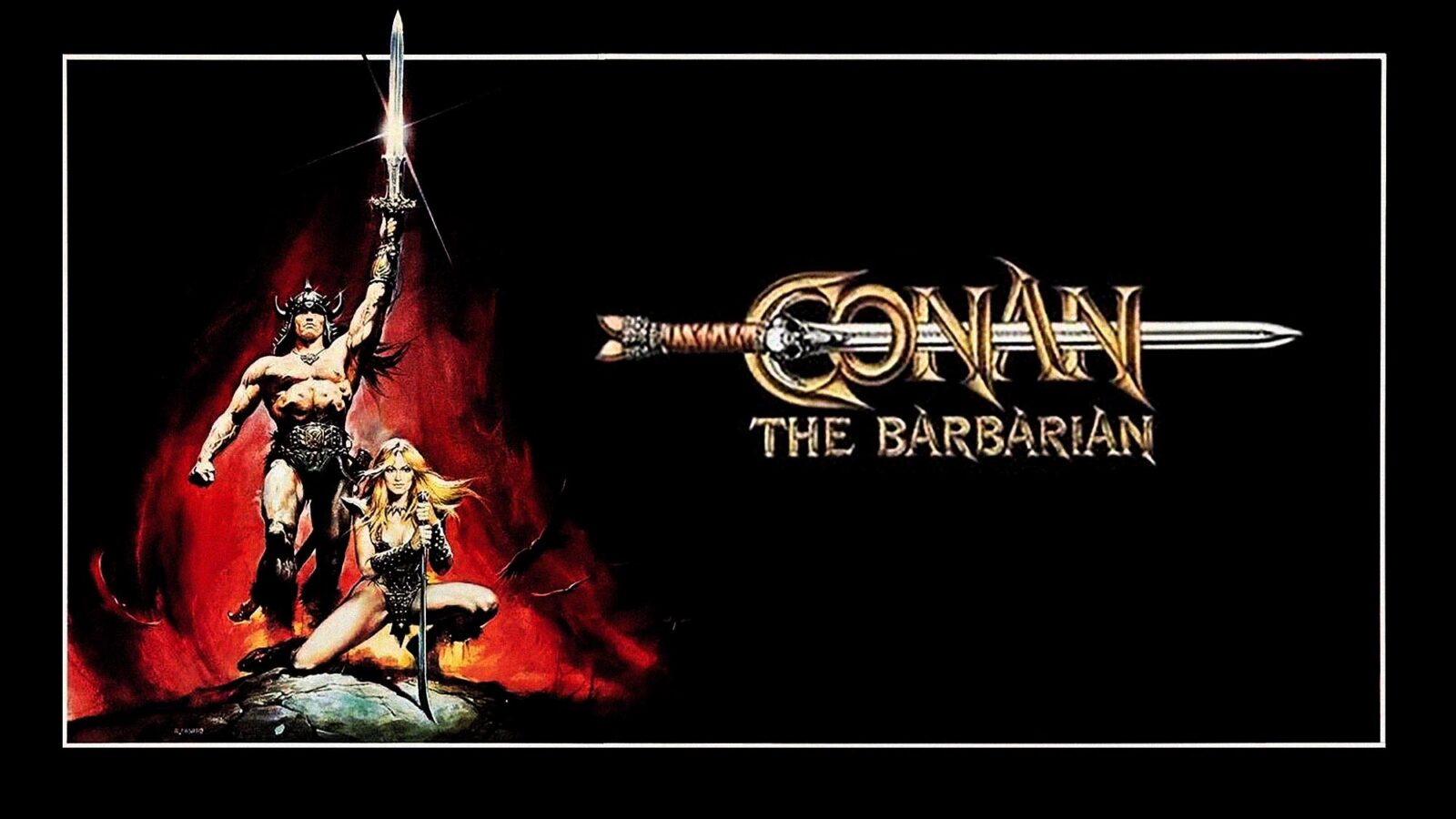
Conan the Barbarian
Conan the Barbarian was filmed primarily across Spain, where deserts, mountains and forests were combined to create the different regions of Conan's world.

The Terminator
The Terminator was shot largely on location in Los Angeles, and the city is absolutely essential to its identity rather than just serving as a generic backdrop.