
James Francis Cameron was born on 16 August 1954 in Kapuskasing, Ontario, Canada, to Philip Cameron, an electrical engineer, and Shirley Lowe, an artist and nurse. The eldest of five children, he grew up in Chippawa, a community near Niagara Falls in southern Ontario, where his family moved when he was young. He attended Stamford Collegiate in Niagara Falls and developed an early interest in science, engineering, drawing and science fiction. His father encouraged his technical abilities, while his mother’s artistic background influenced his interest in visual storytelling. Cameron spent summers on his grandfather’s farm in southern Ontario, where he experimented with building mechanical devices and became interested in the natural world. He was particularly fascinated by underwater exploration, following the expeditions of Jacques Cousteau and reading extensively about oceanography. As a teenager, he visited the Royal Ontario Museum in Toronto, where an exhibition about underwater habitats inspired him to contact Canadian diving pioneer Joe MacInnis. Cameron began scuba diving in 1969, several years before he became involved in filmmaking, establishing an interest that would eventually take him to some of the deepest parts of the world’s oceans.
In 1971, when Cameron was seventeen, his family relocated to Brea, California, after his father obtained employment in the United States. The move brought him into the wider Los Angeles area, where the American film industry was concentrated. He enrolled at Fullerton College in Orange County, initially studying physics before switching his attention to English and eventually leaving without a degree. During the following years, he supported himself through a succession of jobs, including work as a machinist, a school bus driver and a lorry driver, while continuing to draw, write science-fiction stories and experiment with photography. Stanley Kubrick’s 2001: A Space Odyssey (1968) had already made a strong impression on him, but the release of Star Wars (1977) persuaded him that filmmaking offered a practical way to combine his artistic and technical interests. He began studying special-effects techniques and, with a small group of collaborators, produced the short science-fiction film Xenogenesis (1978), which he co-directed with Randall Frakes. The project was financed partly through money raised from local dentists and featured miniature models and effects constructed by Cameron himself. It provided the demonstration reel that helped him secure work in the film industry.
Cameron entered professional filmmaking through Roger Corman’s New World Pictures, a Los Angeles production company known for making low-budget genre films. Beginning as a model builder on Battle Beyond the Stars (1980), he rapidly took on additional responsibilities involving production design, matte painting, visual effects and second-unit direction. The demanding conditions gave him direct experience in constructing sets, organising crews and solving technical problems with limited resources. He also worked on productions including Galaxy of Terror (1981), before receiving his first feature-film directing assignment on Piranha II: The Spawning (1982). The Italian-financed horror sequel was filmed partly in Jamaica, particularly around Ocho Rios, with additional work in the Cayman Islands and Italy. Cameron travelled to Jamaica to supervise the production but encountered serious disagreements with producer Ovidio G. Assonitis, who dismissed him after approximately two weeks and assumed control of the direction. Cameron subsequently travelled to Rome, where the film was being edited, and attempted to revise the material he had shot. The experience left him determined to retain greater creative control over his future projects.
Following his departure from Piranha II, Cameron developed The Terminator (1984), a science-fiction thriller about a cyborg assassin sent from the future. He wrote the screenplay with the involvement of producer Gale Anne Hurd, whom he had met while working for Roger Corman, and insisted on directing the film himself. After obtaining financing from Hemdale Film Corporation, production began in Los Angeles in March 1984, with Arnold Schwarzenegger, Linda Hamilton and Michael Biehn in the principal roles. Much of the filming took place at night throughout Los Angeles, using locations including Griffith Observatory, the Bradbury Building in downtown Los Angeles and the city’s industrial streets and railway districts. These existing urban locations allowed Cameron to achieve a distinctive visual style without the expense of constructing elaborate futuristic environments. The Terminator was released in October 1984 and became an international commercial success, establishing both Cameron’s reputation as a director and Schwarzenegger’s association with one of his most recognisable characters. Cameron married Hurd in 1985, and the couple continued working together on his next major productions.
His success with The Terminator enabled Cameron to direct Aliens (1986), the sequel to Ridley Scott’s Alien (1979), with Sigourney Weaver returning as Ellen Ripley. The production took Cameron to England, where principal photography began at Pinewood Studios in Buckinghamshire in September 1985. The former Acton Lane Power Station in west London, a disused industrial complex, was transformed into the film’s atmosphere-processing facility, while extensive interiors were constructed on Pinewood’s sound stages. The location provided the scale required for the film’s military vehicles and large action sequences, and Cameron worked closely with British technicians on the complex production. Aliens became another critical and commercial success, earning Weaver an Academy Award nomination and confirming Cameron’s ability to direct large-scale Hollywood films. During this period, he was already developing The Abyss (1989), an underwater science-fiction film inspired partly by ideas he had explored as a teenager. The production took him to Gaffney, South Carolina, where an unfinished nuclear power station was converted into an enormous underwater filming facility. Two water tanks, one holding approximately 7.5 million gallons, were used to accommodate the film’s elaborate submerged sets. The actors underwent diving training in the Cayman Islands, while Cameron worked extensively underwater to supervise technically demanding sequences. The Abyss proved difficult and expensive to produce but received particular recognition for its visual effects.
Cameron’s marriage to Gale Anne Hurd ended in 1989, the same year he married director Kathryn Bigelow. Their relationship also involved professional collaboration, with Cameron contributing to Point Break (1991), directed by Bigelow, and later writing and producing Strange Days (1995). They divorced in 1991. Meanwhile, Cameron reunited with Schwarzenegger and Hamilton for Terminator 2: Judgment Day (1991), which employed computer-generated imagery on a scale that was unusual for a major action film at the time. The production made extensive use of Los Angeles and the San Fernando Valley, including flood-control channels, industrial facilities and urban streets. Cameron’s increasing involvement in visual-effects technology led him to establish Digital Domain in 1993 with special-effects artist Stan Winston and visual-effects executive Scott Ross. The company opened its original facility in Venice, California, and became an important centre for computer-generated imagery. He subsequently directed True Lies (1994), again starring Schwarzenegger, with Jamie Lee Curtis as his character’s wife. The production moved between California, Rhode Island and Florida, with particularly elaborate action sequences filmed around the Seven Mile Bridge in the Florida Keys. The former bridge, which runs alongside its modern replacement, was used for major stunt sequences, while miniature effects were employed to simulate the destruction of part of the structure. These projects considerably expanded Cameron’s responsibilities as a director, writer and producer and made him one of Hollywood’s most commercially successful filmmakers.
During the mid-1990s, Cameron undertook the project that would define the next stage of his career. Titanic (1997), starring Leonardo DiCaprio and Kate Winslet, grew from his fascination with the 1912 sinking of the RMS Titanic and his longstanding interest in deep-sea exploration. In 1995, Cameron participated in an expedition to the wreck in the North Atlantic, approximately 600 kilometres southeast of Newfoundland, making twelve dives in Russian Mir submersibles to examine and film the remains of the ship. These expeditions supplied footage used in the completed film and helped him plan its historical reconstruction. Principal photography began in Nova Scotia in July 1996 before the production moved to Rosarito, Baja California, Mexico, where 20th Century Fox had constructed a purpose-built studio complex beside the Pacific Ocean. Fox Baja Studios contained enormous water tanks and a near-full-scale recreation of the Titanic’s exterior, along with detailed reproductions of the ship’s interiors. Cameron spent months supervising the complicated filming, including the sinking sequences, which required extensive practical effects, underwater work and computer-generated imagery. The film’s escalating budget and prolonged production attracted considerable criticism before its release in December 1997, but Titanic became an extraordinary international success. At the 70th Academy Awards in March 1998, it won eleven Oscars, including Best Picture, Best Director and Best Film Editing, with Cameron personally receiving awards in all three categories.
The production of Titanic also brought significant changes to Cameron’s personal life. He had begun a relationship with Linda Hamilton following their work together on Terminator 2, and their daughter Josephine was born in 1993. Cameron and Hamilton married in 1997 but separated in 1999. During the filming of Titanic, Cameron met actress Suzy Amis, who played Lizzy Calvert, the granddaughter of the elderly Rose. They married in 2000 and subsequently had three children together. The family established homes in southern California, including a substantial coastal property at Hollister Ranch on the Gaviota Coast, west of Santa Barbara, which Cameron and Amis acquired in 1999. The approximately 102-acre estate contained a main residence, agricultural buildings and extensive grounds overlooking the Pacific Ocean. Cameron used the property as a family home and working retreat, writing and developing several projects there. The couple also became increasingly involved in environmental causes, particularly sustainable agriculture and plant-based food production. In 2006, Amis and her sister Rebecca founded MUSE School in California, an educational institution that subsequently introduced a plant-based food programme and placed environmental sustainability at the centre of its curriculum.
After Titanic, Cameron increasingly divided his time between filmmaking and ocean exploration. He directed the documentary Ghosts of the Abyss (2003), returning to the Titanic wreck with a team that included actor Bill Paxton, who had appeared in the original film. Using specially developed remotely operated cameras, the expedition explored areas of the wreck that were inaccessible to larger submersibles. Cameron subsequently directed Aliens of the Deep (2005), examining hydrothermal vents and marine life in some of the world’s most extreme underwater environments. His expeditions took him to the Atlantic and Pacific Oceans, while his involvement with marine scientists and engineers led to the development of specialised underwater filming equipment. These projects were not merely research trips for fictional films but independent investigations in which Cameron participated directly as an explorer and technical collaborator. He also worked with NASA on projects involving imaging technology and served on the agency’s advisory council.
Cameron’s return to dramatic filmmaking came with Avatar (2009), a science-fiction epic set on the fictional moon Pandora. He had developed the original concept during the 1990s but postponed production until motion-capture and computer-generated imagery technology had advanced sufficiently to realise his plans. The film was produced through his company Lightstorm Entertainment, with significant production work taking place in California and New Zealand. Performance-capture filming was carried out at the former Hughes Aircraft facilities in Playa Vista, Los Angeles, while live-action photography and extensive visual-effects work took place in Wellington, where Weta Digital contributed to the development of the film’s environments and characters. Cameron also took cast members to Hawaii for preparatory training in a tropical environment, although the fictional landscapes of Pandora were created predominantly through digital techniques rather than conventional location photography. Avatar was released in December 2009 and surpassed Titanic to become the highest-grossing film in cinema history at the time. Its success established Cameron’s working relationship with New Zealand’s film industry, particularly the studios and visual-effects specialists based around Wellington. That same year, he received a star on the Hollywood Walk of Fame at 6712 Hollywood Boulevard, recognising a career that had begun with low-budget productions in southern California three decades earlier.
In March 2012, Cameron achieved one of his most significant ambitions outside filmmaking when he completed the first solo descent to Challenger Deep, the deepest known part of the world’s oceans. Located in the Mariana Trench in the western Pacific, southwest of Guam, the site lies nearly eleven kilometres beneath the surface. Cameron piloted the Deepsea Challenger, a specially constructed one-person submersible developed with an international engineering team and built in Sydney, Australia. The expedition followed years of technical development and testing in Australian and Pacific waters. On 26 March, local time, he descended to a depth of approximately 10,900 metres, becoming the third person to reach Challenger Deep and the first to do so alone. The dive allowed him to collect scientific samples and record high-definition footage from the ocean floor. The expedition was subsequently documented in Deepsea Challenge 3D (2014), while Cameron transferred the submersible to the Woods Hole Oceanographic Institution in Massachusetts to support further research and technological development. His involvement in oceanography continued alongside his filmmaking work, bringing him into contact with research institutions and marine scientists throughout the world.
The success of Avatar led Cameron to develop several sequels, a commitment that occupied much of his professional life during the following decade. The production gradually became centred in New Zealand, where Cameron and his family had purchased extensive farmland in South Wairarapa, east of Wellington, in 2011. The property provided a permanent base outside the United States and allowed the family to pursue agricultural and environmental projects alongside his filmmaking activities. Cameron and Amis converted parts of their land to organic production, growing vegetables and experimenting with more sustainable farming practices. After initially dividing their time between California and New Zealand, the family relocated permanently to the Wairarapa property during the COVID-19 pandemic in 2020. Their growing commitment to the country coincided with the increasing importance of New Zealand to the Avatar productions, which employed thousands of local technicians, artists and performers.
Avatar: The Way of Water (2022) was filmed largely in New Zealand, with Wellington serving as the principal production base and additional facilities used in Auckland. Cameron developed specialised underwater performance-capture techniques for the film, allowing actors to perform submerged while their movements and facial expressions were recorded for digital characters. Much of the live-action production was undertaken at Stone Street Studios in Miramar, Wellington, while extensive visual-effects work was completed by Weta FX. Cameron directed many of the performance-capture sequences himself, with filming for the second and third films overlapping over an extended period. Avatar: The Way of Water was released thirteen years after its predecessor and became another major international success. The third film, Avatar: Fire and Ash (2025), continued the story with much of the same cast and production infrastructure, including Sam Worthington, Zoe Saldaña, Sigourney Weaver and Kate Winslet. Its production involved more than 1,500 New Zealand crew members and strengthened the relationship between Cameron’s Lightstorm Entertainment and the country’s film industry. By this stage, the Avatar franchise had become his principal filmmaking commitment, with additional instalments under development.
Cameron’s environmental interests have also influenced his business activities outside the entertainment industry. Together with Amis, he has invested in plant-based food production and agricultural technology, including businesses involved in processing plant proteins. Their New Zealand farmland has supported experimental agricultural projects as well as commercial organic vegetable production. In California, the couple maintained their coastal Hollister Ranch estate for more than two decades before selling it in 2024, reflecting their decision to make New Zealand their principal home. Cameron formally became a New Zealand citizen in August 2025 at a ceremony in Wellington, having lived in the country intermittently since 2011 and permanently since 2020. Although he retains his Canadian background and longstanding professional connections with Hollywood, his personal and professional life has increasingly centred on the Wairarapa region and the film facilities around Wellington.
Beyond the Avatar sequels, Cameron has continued developing projects concerned with science, technology and history. His producing credits include Alita: Battle Angel (2019), directed by Robert Rodriguez, while he has also expressed interest in returning to the Terminator franchise. Another longstanding project concerns the atomic bombings of Hiroshima and Nagasaki, based on the experiences of survivors documented by author Charles Pellegrino. Cameron acquired the screen rights to Pellegrino’s Ghosts of Hiroshima and developed a screenplay, although the film had not entered production by 2026. His activities have continued to bring together the two fields that first interested him during his childhood in Ontario: the technical possibilities of filmmaking and the exploration of places beyond ordinary human experience. By 2026, his life had taken him from Kapuskasing and Niagara Falls to the studios of Los Angeles, the depths of the North Atlantic and the Mariana Trench, and finally to a permanent home in New Zealand, where he has continued working on the Avatar films and his environmental projects.
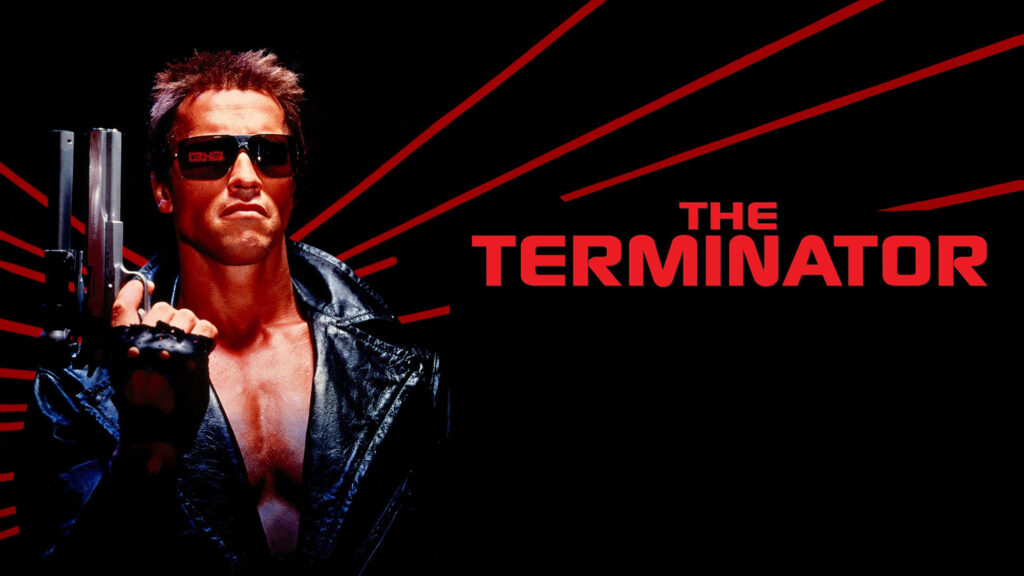
The Terminator
The Terminator was shot largely on location in Los Angeles, and the city is absolutely essential to its identity rather than just serving as a generic backdrop.