
Henki Kolstad was a Norwegian actor and theatre director born Johan Henrik Ludvig Kolstad on 3 February 1915 in Kristiania, now Oslo, Norway. His father, Andreas Kolstad, was a senior auditor, while his mother, Johanne Bernharda Lereim, helped create a family environment in which music, literature and theatre were important parts of everyday life. Henki was one of seven children, and his younger brother Lars, better known as Lasse Kolstad, also became a prominent actor and singer. The family lived in central Kristiania during Henki’s early childhood, with his father recorded at Frydenlundgata 10 in 1918, before becoming associated with the Briskeby neighbourhood in western Oslo. Growing up in the Norwegian capital during the years following the First World War, Kolstad was introduced to a theatrical culture that included established institutions, small independent companies and children’s productions. His interest in performing developed unusually early, and he eventually became involved with Inga Bjørnson’s Children’s Theatre, which provided acting opportunities for young performers. Among his earliest assignments was playing part of an animal in a stage production, a modest beginning to a career that would eventually encompass almost every major form of Norwegian entertainment.
Kolstad was thirteen when he made his first appearance at the National Theatre in Oslo in 1928, playing the boarding-school pupil Cope in the production Atten år. The theatre, situated beside Karl Johans gate in central Oslo, had been one of Norway’s principal dramatic institutions since its opening in 1899. His performance attracted the attention of theatre critic Paul Gjesdahl, who recognised the young actor’s potential. The following year, Kolstad was selected for a role in Eskimo (1930), a Norwegian-Danish adventure drama directed by George Schnéevoigt and adapted from a novel by polar explorer Ejnar Mikkelsen. The film was among the earliest sound productions in Scandinavian cinema, giving Kolstad experience with a relatively new form of filmmaking while he was still attending school. Despite these opportunities, his family insisted that he complete his education before pursuing acting professionally. He passed his secondary-school examinations in 1933 and served as president of his graduating class. During the same period, he helped organise a student revue at Chat Noir, the well-established cabaret theatre in central Oslo, whose productions had helped develop several generations of Norwegian comedians, singers and actors.
In 1933, Kolstad also travelled to Berlin for a period of study at the Max Reinhardt School, an important institution associated with the Austrian theatrical director and producer Max Reinhardt. The visit brought him into contact with a continental European theatre tradition that differed from the performance methods he had encountered in Oslo. Germany was undergoing profound political change following Adolf Hitler’s appointment as chancellor earlier that year, and Berlin’s cultural institutions were increasingly affected by the Nazi government’s restrictions on artistic activity. Kolstad returned to Norway and continued appearing on stage, including a 1934 production of Henrik Ibsen’s An Enemy of the People at the National Theatre, in which he played the youngest son of Dr Thomas Stockmann. His first permanent professional engagement followed in 1935 at Centralteatret, located on Akersgata in Oslo. He remained there until 1937, gaining experience in comedies, contemporary dramas and ensemble productions. During his first year at the theatre, he also helped establish the Association of Young Actors and became its inaugural chairman, demonstrating an early interest in the professional circumstances and working conditions of performers.
Kolstad’s first substantial adult theatrical role came in André-Paul Antoine’s Tre menn forteller at Centralteatret in 1936. The following year, he joined the newly established Trøndelag Teater in Trondheim, which opened in October 1937 under the leadership of Henry Gleditsch. The institution was created to provide central Norway with a permanent professional theatre, and Kolstad became a member of its original ensemble. He regarded his four years in Trondheim as particularly important to his development, since the company offered opportunities to perform a wide variety of characters and participate in demanding productions. His work included Henrik Ibsen’s Brand and Love’s Comedy, Shakespeare’s Hamlet and several comedies and musical productions. He also began directing, including a production of Til eventyrland in December 1940. During this period, his personal life became more settled. On 8 July 1938, he married Else Nanna Lindaas, whom he had known for several years. She was also involved in theatrical work and appeared alongside him in productions at Trøndelag Teater. Their marriage would last seventy years, and they went on to have three children, including their son Morten, who later became a film and television director.
The German occupation of Norway in April 1940 introduced severe political pressures into the country’s theatrical community. Trøndelag Teater remained active, but its director, Henry Gleditsch, was openly critical of the occupation authorities and attempted to maintain the institution’s independence. Kolstad was serving as a representative of the actors when a national dispute developed in 1941 over whether performers could be compelled to participate in Nazi-controlled radio broadcasts. After actors in Oslo were arrested, colleagues around the country organised a solidarity strike. The dispute brought further arrests, and on 25 May 1941 Kolstad was taken into custody in Trondheim. He was imprisoned at Vollan, the city’s detention facility, where he remained until 8 July. His arrest was connected with his position as an actors’ representative rather than any role in an armed resistance organisation. Following his release, he left Trondheim and returned to Oslo, joining Det Nye Teater in the autumn of 1941. His first production there was Arne Skouen’s Barn av solen, which opened in October. The theatre continued operating during the occupation, and Kolstad appeared in several productions, including George Bernard Shaw’s Pygmalion and Ibsen’s The Wild Duck. The experience of imprisonment remained an important episode in a career otherwise strongly associated with comedy and popular entertainment.
After the war, Kolstad continued building his reputation as one of Norway’s most versatile stage performers. He worked at the revue theatre Edderkoppen during the 1944–1945 season, returned to Centralteatret between 1945 and 1949, and subsequently spent another season at Edderkoppen before joining Det Nye Teater again in 1950. These engagements placed him within Oslo’s rapidly developing post-war entertainment industry, where theatre companies, cabaret stages and film producers were responding to renewed public demand for cultural activities. His performances ranged from broad farce and musical comedy to serious dramatic roles, and he became particularly admired for his ability to portray ordinary people without exaggerating their personal circumstances. At Centralteatret, he appeared in the operetta The Merry Widow in 1948, working alongside Carl Struve and other established performers. The production became part of a wider revival of popular musical theatre, giving Kolstad opportunities to combine acting with singing and physical comedy.
His first substantial post-war film role came in The Battle for Heavy Water (Kampen om tungtvannet, 1948), a Norwegian-French production directed by Titus Vibe-Müller and Jean Dréville. The film reconstructs the Allied operations that disrupted Nazi Germany’s heavy-water production at the Vemork industrial complex near Rjukan in Telemark during the Second World War. Kolstad played Einar Skinnarland, a Norwegian resistance operative whose knowledge of the region and involvement in the underground network were important to the sabotage operations. Several of the actual participants in the wartime missions appeared as themselves, including Jens-Anton Poulsson, Knut Haukelid, Arne Kjelstrup and Claus Helberg. The production incorporated location filming in Norway, allowing the filmmakers to place the reconstruction within landscapes directly associated with the historical events. The mountainous terrain around Rjukan, the industrial facilities at Vemork and the surrounding region of Telemark provided a geographical connection between the film and the resistance activities it depicted. The Battle for Heavy Water received considerable attention in Norway and France and became one of the earliest substantial cinematic treatments of the Norwegian resistance.
Kolstad became especially prominent in Norwegian cinema during the 1950s, when he appeared regularly in popular domestic comedies and dramas. One of his most successful films was Nils R. Müller’s We Are Getting Married (Vi gifter oss, 1951), in which he played Petter Gran, a struggling musician who meets and falls in love with Kari Hermansen, portrayed by Inger Marie Andersen. Their relationship begins during a summer holiday before developing into marriage and a series of difficulties involving housing, employment and the expectations of family life. Set principally in Oslo, the film reflected the housing shortages and financial pressures experienced by many young couples in post-war Norway. Petter and Kari struggle to find suitable accommodation and begin building their own house, only to encounter the administrative complications associated with obtaining a building permit. The story also includes Petter’s attempt to win a songwriting competition, culminating in the song Hva var vel livet uten deg, which Kolstad performed in the film. The melody subsequently became popular outside cinema and was released commercially by other singers.
We Are Getting Married was a major box-office success and established Kolstad and Andersen as one of the most familiar screen pairings in Norwegian cinema. Kolstad received the Norwegian Film Critics’ Award for his performance, while the film helped launch a cycle of domestic comedies concerned with marriage, housing and changing social expectations. He worked with Andersen again in It Could Have Been You (Det kunne vært deg, 1952), a comedy-drama adapted from Karl-Ludvig Bugge’s stage play. Kolstad played the architect Harald, known as Pompen, whose relationship with his wife Maisen becomes entangled with an elaborate series of romantic misunderstandings. Andersen portrayed Maisen, while Wenche Foss and Ebbe Rode appeared in other principal roles. The production also gave Kolstad an opportunity to work behind the camera, sharing the directing credit with Kåre Bergstrøm. Although acting remained his principal profession, the experience reflected his growing involvement in different aspects of film production. During the same period, he appeared in Arne Skouen’s Emergency Landing (Nødlanding, 1952), a wartime drama about an Allied aircraft forced down in occupied Norway, further extending his work beyond romantic and domestic comedy.
His theatre career developed alongside these film commitments. In 1950, Kolstad returned to Det Nye Teater, which became Oslo Nye Teater following its merger with Folketeatret in 1959. The two institutions had different histories and architectural settings, with Det Nye Teater occupying its established building on Rosenkrantz’ gate and Folketeatret situated in the larger complex on Youngstorget. Kolstad became a central member of the company during a period when musical theatre attracted substantial audiences. He achieved particular success as Leopold in Ralph Benatzky’s operetta The White Horse Inn, known in Norway as Sommer i Tyrol, a role he performed more than five hundred times. He also played Alfred P. Doolittle in My Fair Lady, giving more than 250 performances, and became closely associated with the character’s mixture of humour, opportunism and musical exuberance. These repeated engagements made him familiar to audiences who might not otherwise have attended traditional dramatic theatre. At the same time, his work demonstrated the professional discipline required to maintain a character across hundreds of performances without reducing the role to mechanical repetition.
Kolstad continued appearing in films of different genres, including Troll i ord (1954), Roser til Monica (1956) and Stevnemøte med glemte år (1957). His most important departure from comedy during the decade came with The Lake of the Dead (De dødes tjern, 1958), directed by Kåre Bergstrøm and adapted from André Bjerke’s 1942 mystery novel. Kolstad played Bernhard Borge, a crime novelist who travels with his wife and several acquaintances to an isolated woodland cabin in Østerdalen after a young man disappears under mysterious circumstances. The other principal performers included Bjørg Engh, Henny Moan, Erling Lindahl and Georg Richter, while Bjerke himself appeared as the occult enthusiast Gabriel Mørk. The characters investigate whether the disappearance can be explained through murder, psychological disturbances or a supernatural presence associated with a nearby lake. Kolstad’s performance required a more restrained approach than his popular comedy roles, with the character participating in discussions concerning the increasingly disturbing events rather than simply responding to them through physical humour.
Although The Lake of the Dead is set in the forests of Østerdalen, the production was filmed largely around Oslo and Bærum. The mysterious lake was created through footage of several separate bodies of water, including Skomakertjern and Tryvann in Nordmarka, Drengsrudvannet in Asker, and Steinstjernet and Tjernsrudtjernet in Bærum. Additional water sequences were completed in an artificial tank at the Norsk Film studios on Jar, west of Oslo. The filmmakers combined these locations to create the impression of a single isolated lake surrounded by forest, while the story’s woodland cabin and nearby paths contributed to the setting’s atmosphere. Cinematographer Ragnar Sørensen used the wide-screen Agascope process, one of the earliest Norwegian applications of the CinemaScope format. The Lake of the Dead premiered at Klingenberg cinema in Oslo on 17 December 1958 and received favourable reviews, becoming one of the country’s best-known early horror and psychological mystery films. Kolstad’s performance as Bernhard Borge remained among his most recognisable screen roles, contrasting sharply with the domestic comedies that had established him as a popular leading man.
The early 1960s brought further opportunities in film and theatre. Kolstad appeared in the contemporary drama Line (1961), adapted from Axel Jensen’s novel, and in Fresh Tracks (Freske fraspark, 1963), a comedy set in a rural Norwegian community. He also took the leading role of Hjalmar Ekdal in The Wild Duck (Vildanden, 1963), directed by Tancred Ibsen, the grandson of playwright Henrik Ibsen. The film adapted the 1884 drama about a photographer whose seemingly stable family life is threatened when long-concealed secrets are brought into the open. Wenche Foss played Hjalmar’s wife Gina, while Lars Nordrum portrayed Gregers Werle and Kjersti Dalbye appeared as their daughter Hedvig. The adaptation remained closely connected to the original play, concentrating on the relationships and moral conflicts within the Ekdal household. For Kolstad, the role brought him back to material associated with his early stage career, allowing him to portray a man whose professional ambitions and understanding of his own importance are increasingly exposed as illusions.
In 1963, Kolstad joined the permanent ensemble at the National Theatre, returning to the institution where he had made his first stage appearance thirty-five years earlier. His work during the following decades encompassed a wide range of classical and modern drama, including George in Edward Albee’s Who’s Afraid of Virginia Woolf? in 1964 and Victor Franz in Arthur Miller’s The Price in 1968. He also portrayed characters in plays by Molière, Harold Pinter and Anton Chekhov, demonstrating a range that extended well beyond the popular comedies with which many film audiences associated him. In Pinter’s The Homecoming, staged in 1970, he played Max, the elderly and domineering father whose relationships with his sons are characterised by hostility, manipulation and uneasy dependence. Another important performance came in Shakespeare’s King Lear in 1971, when he played the Fool. The role earned him the Norwegian Theatre Critics’ Award, recognising his ability to combine humour and tragedy within a character whose apparently playful remarks expose the central weaknesses of the king.
His film work continued during the 1960s, including Arne Skouen’s Pappa tar gull (1964), Knut Andersen’s Skjær i sjøen (1965) and Henning Carlsen’s Hunger (Sult, 1966), an adaptation of Knut Hamsun’s novel starring Per Oscarsson. The latter was set in Kristiania during the late nineteenth century and followed an impoverished writer struggling to survive while attempting to sell his literary work. Kolstad appeared as a newspaper editor, returning to the urban setting associated with his own childhood. Although Hunger was a Danish-Norwegian-Swedish production, its narrative remained strongly connected with the streets and institutions of Oslo, the city where Hamsun’s semi-autobiographical novel takes place. The production was filmed in Oslo and Copenhagen, combining locations in the Norwegian capital with Danish settings capable of representing the period. Kolstad’s supporting role formed part of an international ensemble that included Norwegian, Danish and Swedish performers.
During the early 1970s, Kolstad became involved in another form of popular Norwegian filmmaking through the Olsen Gang series. In The Olsen Gang Meets the King and the Jack (Olsenbanden møter Kongen og Knekten, 1974), directed by Knut Bohwim, he played Victor Emanuel Jensen, a criminal known as Kongen, or the King. The film follows the familiar trio of Egon Olsen, Benny Fransen and Kjell Jensen, played by Arve Opsahl, Sverre Holm and Carsten Byhring, as they become involved in an increasingly complicated criminal scheme. Kolstad’s character was one of the principal antagonists, working alongside Emil Boldoni, known as Knekten, played by Frank Robert. The Olsen Gang films were closely associated with Oslo, particularly the city’s streets, railway facilities, banks and other recognisable urban locations. Although their stories involved increasingly elaborate robberies, the productions used the capital’s actual geography as an important part of their appeal. Kolstad later returned to the series in The Olsen Gang and Data-Harry Blow Up the World Bank (Olsenbanden og Data-Harry sprenger verdensbanken, 1978), playing Mester Hansen, and eventually reprised Kongen in the final original cast production, Olsenbandens siste stikk (1999).
His theatre work during the same period included major roles in productions of Molière’s The Imaginary Invalid and The Miser, in which he played Argan and Harpagon respectively. Both characters allowed him to explore the relationship between comic exaggeration and recognisable human weaknesses, combining the skills he had developed in musical farce with the greater psychological complexity of classical drama. In 1978, during celebrations marking Henrik Ibsen’s work, he portrayed the landowner Lundestad in The League of Youth at the National Theatre, giving the political comedy a more serious and ironic interpretation. He also appeared in The Threepenny Opera, playing J. J. Peachum, and in an adaptation of Dostoevsky’s The Devils. These productions occupied much of his professional life during a period when his film appearances were becoming less frequent. He nevertheless remained familiar to television audiences, appearing in Norwegian broadcasts and dramatic productions, including the comedy series Fleksnes Fataliteter, which featured Rolv Wesenlund as the eccentric and frequently unfortunate Marve Fleksnes.
Kolstad’s popularity reached a new generation through Norwegian television during the late 1970s. In the family sitcom Hjemme hos oss (1979–1980), he played Oddbjørn Heggelund, the father of an ordinary Norwegian household whose domestic life is complicated by disagreements, misunderstandings and everyday problems. Ingerid Vardund portrayed his wife Liv, while Linn Stokke and Kim Haugen played their children. The series was produced by NRK and broadcast in two short seasons, beginning in September 1979. Its studio-based format drew on the domestic comedy tradition familiar from Kolstad’s earlier films, particularly stories concerning family relationships and the small conflicts of everyday life. His performance combined elements of the middle-aged men he had portrayed in Norwegian cinema during the 1950s with the more experienced character acting he had developed through his long association with the National Theatre.
An even more important television role followed in December 1979, when NRK introduced the twenty-four-part Christmas series Jul i Skomakergata. Written by Bjørn Rønningen and directed by Grete Høien, the programme centred on Jens Petrus Andersen, an elderly shoemaker whose small workshop serves as a meeting place for the residents of a fictional Norwegian town. Kolstad portrayed the shoemaker with a combination of gentle humour, musical ability and concern for the people around him, creating a character who became familiar to several generations of Norwegian children. The series featured a large ensemble of established performers, including Per Asplin as Police Chief Jeronimus Klinke, Willie Hoel as baker Snipp, Nora Brockstedt as market trader Enebær and Knut Risan as florist Rosengren. One of its most distinctive characters was Tøfflus, a talking slipper who lived behind a small curtain in the shoemaker’s counter. The puppet was performed by Åsmund Huser, whose conversations with Kolstad became central to the programme’s humour and emotional appeal.
Jul i Skomakergata was produced in the studios of NRK at Marienlyst in Oslo, where the fictional street, shoemaker’s workshop and surrounding businesses were created as television sets. The programme did not depict an actual street in the city, although its visual design drew on the atmosphere of traditional Norwegian town centres and older commercial neighbourhoods. The studio setting allowed Kolstad to interact with actors, musicians, children and puppets within a continuous fictional community, with much of the action taking place around the shoemaker’s workbench and shop counter. Music was an important element of the production, and Kolstad’s earlier experience in operetta and musical theatre proved particularly suitable for the role. Each episode also included a short puppet-film sequence featuring Jon Blund, which introduced a different children’s right in connection with the United Nations International Year of the Child in 1979. The series became one of NRK’s most popular Christmas programmes and was repeated in 1981, 1984, 1988, 1993, 1998 and 2003. Its continued popularity introduced Kolstad to children who had been born decades after his earliest film and theatre successes.
The extraordinary recognition associated with Jens Petrus Andersen did not lead Kolstad to abandon serious theatre. In 1981, he portrayed the American defence lawyer Clarence Darrow in David W. Rintels’s one-man play, translated into Norwegian and performed at the National Theatre. The production required him to remain alone on stage for approximately two and a half hours, delivering a sustained dramatic performance without the support of an ensemble. Its subject, the life and professional beliefs of one of America’s most prominent trial lawyers, differed considerably from the domestic and musical entertainment for which Kolstad had become widely known. He subsequently played Willy Loman in Arthur Miller’s Death of a Salesman, a demanding role portraying an ageing travelling salesman whose confidence in his professional and personal achievements gradually collapses. The production became his final regular engagement as a permanent member of the National Theatre ensemble, bringing his employment there to an end in 1986. Kolstad nevertheless continued accepting guest performances and occasional film and television roles after retiring from full-time theatrical work.
One of his most successful later stage appearances came with the farce Den spanske flue, in which he played Ludvig Klinke, a mustard manufacturer whose efforts to conceal an old romantic indiscretion create increasingly complicated misunderstandings. The production became particularly popular at Oslo’s ABC-teatret during 1989 and 1990, with Kolstad giving nearly two hundred performances of the character. A television recording subsequently introduced the production to audiences outside Oslo and became a familiar part of Norwegian Christmas programming through repeated broadcasts. His ability to portray Klinke demonstrated that his physical comedy and timing remained effective well into his seventies. He also appeared in productions including The Sunshine Boys, returning to material concerned with performers whose professional lives extend into old age. In 1993, he made a final guest appearance at the National Theatre in Det lykkelige valg, playing Doctor Onsø, almost sixty-five years after his first appearance on the same stage.
Kolstad also remained active in Norwegian family cinema during the late 1980s and early 1990s. In Bente Erichsen’s People and Robbers of Cardamom Town (Folk og røvere i Kardemomme by, 1988), he played Tobias, the elderly resident of a tower whose observations of the weather form part of life in Thorbjørn Egner’s fictional community. The cast included Sverre Anker Ousdal, Øivind Blunck and Jon Eikemo as the three robbers, with Kjersti Døvigen portraying Aunt Sophie and Brasse Brännström playing Police Chief Bastian. The production was filmed at the Norsk Film studios on Jar in Bærum during the autumn of 1987, where a substantial recreation of Cardamom Town was constructed for the live-action musical. Unlike the later animated adaptation produced at Kristiansand Zoo, the 1988 film used elaborate physical scenery inside the studio complex west of Oslo. Kolstad’s performance as Tobias drew on the same warmth and musical skills that had helped establish Jens Petrus Andersen as a familiar television character.
In 1994, Kolstad worked under the direction of his son Morten in The Wild Horse (Villhesten), a family adventure about a young girl who becomes determined to help a mysterious horse living in the mountains. The production was filmed around Volda and Ørsta in Sunnmøre, where the steep mountains, valleys and rural communities provided the central geographical setting. Linda Digernes and Susanne Nielsen played the young protagonists, while Kolstad appeared as Bernhard, a local bus driver. The film was produced in cooperation with NRK and later adapted into a four-part television presentation. Working in western Norway allowed Kolstad to return to location filming in a mountainous landscape, contrasting with the studio-based productions that had occupied much of his later television career. The project also provided a direct professional collaboration between father and son, bringing together two generations of the Kolstad family within the Norwegian film industry.
His final substantial cinema appearance came when he returned as Kongen in Olsenbandens siste stikk (1999), directed by Knut Bohwim and released as the fourteenth film in the original Norwegian Olsen Gang series. The production reunited several performers associated with earlier instalments, including Arve Opsahl, Sverre Holm and Aud Schønemann, and brought the long-running criminal comedy franchise to a conclusion. Kolstad was eighty-four when the film was released, more than seventy years after his first appearance at the National Theatre. His participation maintained a connection with popular Norwegian cinema that had begun before the introduction of sound film and continued through the expansion of television and modern commercial filmmaking.
Alongside his screen appearances, Kolstad provided Norwegian-language voices for several animated films. He voiced the Sheriff of Nottingham in Disney’s Robin Hood (1973), contributed to the Norwegian version of The Fox and the Hound (1981) and appeared as Maurice, Belle’s father, in Beauty and the Beast (1991). He also portrayed the Sultan in Aladdin (1992) and its subsequent animated sequels. His voice was additionally heard as a commentator in Ivo Caprino’s The Pinchcliffe Grand Prix (Flåklypa Grand Prix, 1975), one of the most commercially successful Norwegian films of all time. These recordings extended his work beyond the physical stage and screen performances for which he was best known, allowing him to reach audiences through animated characters whose original voices had been provided by foreign actors. His distinctive speech and expressive delivery were especially suited to characters combining humour, warmth and occasional eccentricity.
Kolstad received numerous honours throughout his career. He was awarded the Norwegian Film Critics’ Award in 1951 and the Aamot Statuette in 1959, recognising his contribution to national cinema. His work in Shakespeare’s King Lear earned him the Theatre Critics’ Award, while Oslo Municipality presented him with its Arts Award in 1982. In 1988, he was appointed Commander of the Royal Norwegian Order of St Olav for his contribution to Norwegian culture. Two years later, he received the honorary Amanda Award, recognising his achievements across several decades of filmmaking. He also remained involved with professional organisations for actors and became an honorary member of the Association of Young Actors, which he had helped establish during the 1930s. In 1989, he published Teater i blodet, an autobiographical book reflecting on his childhood, theatrical development and experiences within the Norwegian entertainment industry. The title expressed the importance that performing had held throughout his life, from his early work with Inga Bjørnson’s Children’s Theatre to his later years as one of the country’s most familiar actors.
Although his professional career involved extensive travelling, Kolstad remained closely connected to Oslo throughout his life. The city’s theatres had provided the foundation of his education and career, while its film studios, radio facilities and television production centres became important during his later professional development. He and Else also maintained a holiday home in Holmsbu, a small coastal community on Hurumlandet beside the Drammensfjord, where the family gathered during holidays and special occasions. Their marriage became an important part of his personal life, continuing through the difficulties of the German occupation, decades of theatrical work and the development of their children’s independent careers. On 8 July 2008, they celebrated their seventieth wedding anniversary at Holmsbu, surrounded by members of the family. Their son Morten later recalled that both parents had been able to participate in the celebration and that the gathering had been a particularly happy occasion.
Henki Kolstad died on 14 July 2008 at Diakonhjemmet Hospital in Oslo, aged ninety-three. He had been admitted to hospital two days earlier, and his family reported that he died peacefully during the morning. He was survived by Else, their son Morten and two daughters. His death attracted tributes from colleagues and cultural institutions that had worked with him across several generations of Norwegian theatre, film and television. He was buried at Vestre Gravlund in Oslo, where his gravestone identifies him as an actor. His long career had included the development of Norwegian sound cinema, the theatrical changes associated with the post-war period, the expansion of popular television and the emergence of internationally recognised Norwegian filmmaking. Although later generations knew him principally as the kindly shoemaker Jens Petrus Andersen, his professional life encompassed classical drama, musical theatre, farce, psychological thrillers, wartime films, family entertainment and television comedy. From his childhood in central Oslo and early performances at the National Theatre to his work in Trondheim, Berlin, Telemark, Sunnmøre and Norwegian film studios, Kolstad remained an important figure in the development of the country’s modern performing arts.
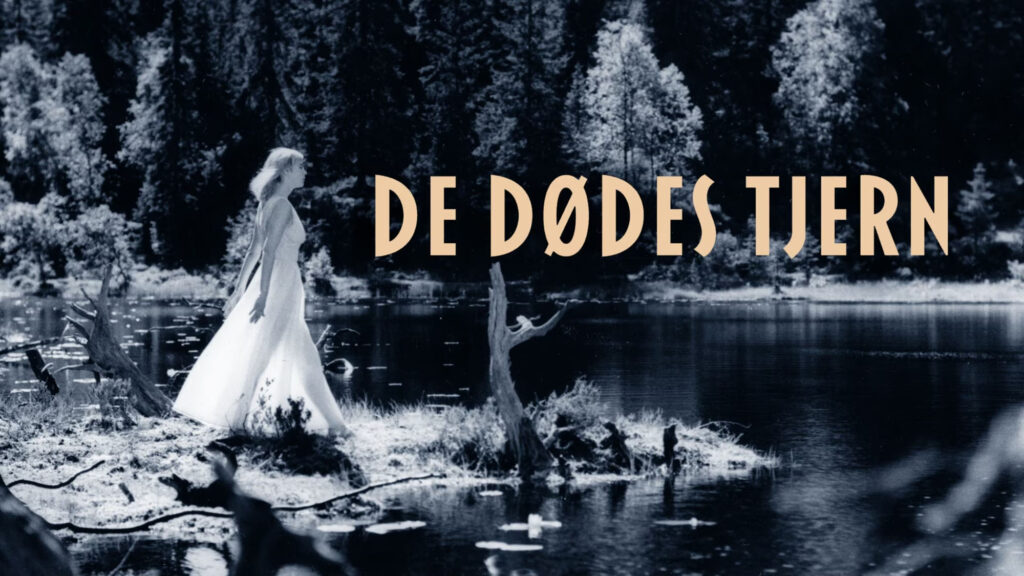
De dødes tjern
De dødes tjern story is set in the Østerdalen forests, the film’s lake and cabin atmosphere was created by combining several real locations closer to Oslo.
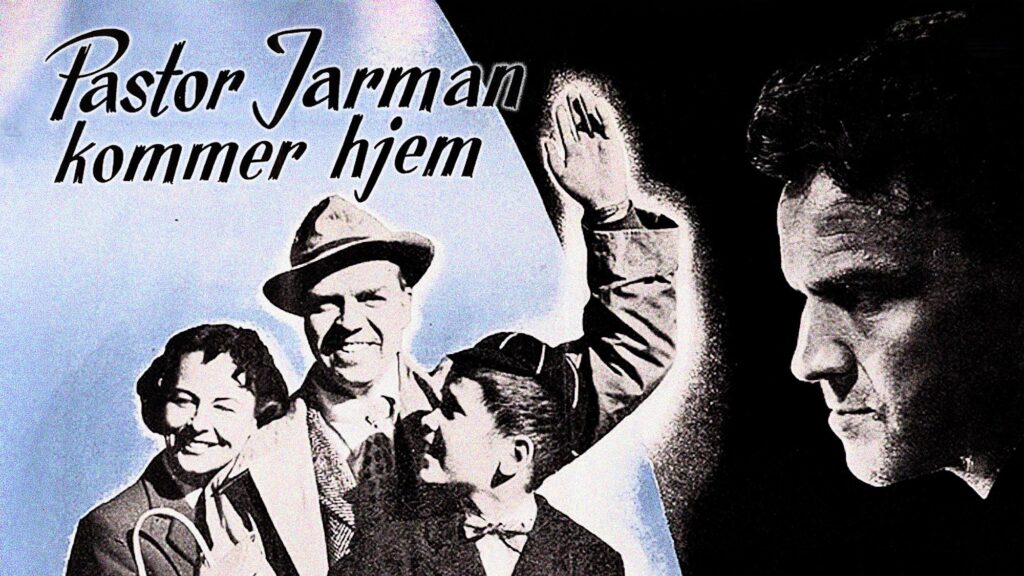
Pastor Jarman kommer hjem
Several scenes in Pastor Jarman kommer hjem were filmed around Vippetangen in Oslo, where the harbour setting plays an important part in the film’s atmosphere.
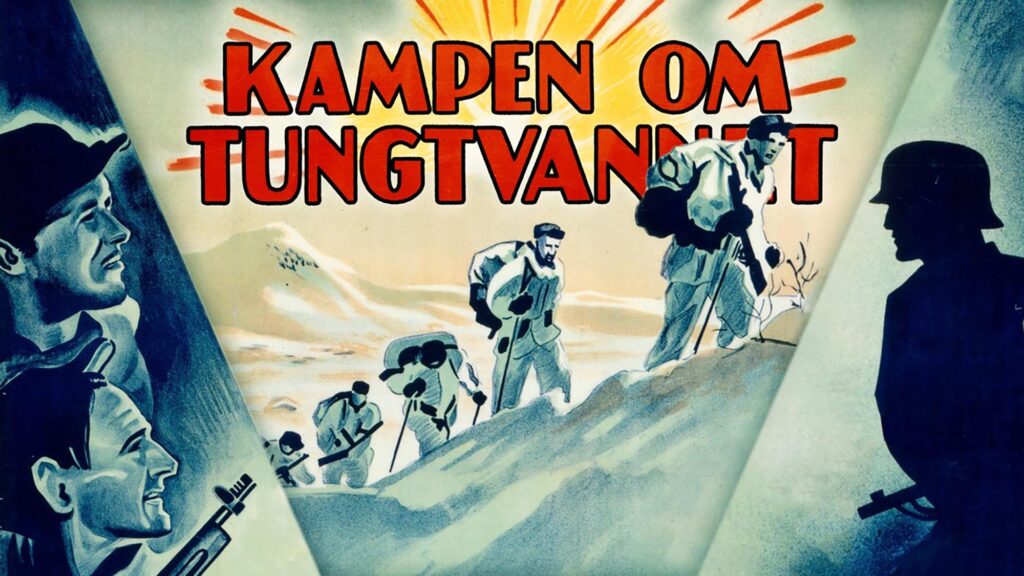
The Battle of the Heavy Water
The Battle of the Heavy Water was shot on location in Norway, with Rjukan and the Vemork area in Telemark at the centre of its visual identity.