
Timothy Dalton (born 21 March 1946) is a British actor whose career has encompassed more than six decades in theatre, film and television. He was born in Colwyn Bay, a coastal town in North Wales, where his father, Peter Dalton Leggett, was stationed during the final years of the Second World War. His father subsequently worked as an advertising executive, while his mother, Dorothy Scholes, was American, with Irish and Italian ancestry. Timothy was the eldest of five children, and the family moved to Belper in Derbyshire while he was still young. He attended Herbert Strutt Grammar School, where he developed an interest in literature, sport and science. Although several members of his extended family had theatrical connections, Dalton did not initially consider acting a realistic profession. That changed when, at sixteen, he attended a production of Shakespeare’s Macbeth at the Old Vic in London. The experience encouraged him to abandon his earlier academic ambitions and pursue a career on stage. His interest soon developed into a serious commitment, and he became involved with the National Youth Theatre, performing in productions including Coriolanus at the Queen’s Theatre in London in 1964.
Dalton subsequently enrolled at the Royal Academy of Dramatic Art in London, where he trained during the mid-1960s while continuing to work with the National Youth Theatre. His early performances included the title role in David Halliwell’s Little Malcolm and His Struggle Against the Eunuchs, presented at the Royal Court Theatre in 1966. That year, he completed his period at RADA and joined the Birmingham Repertory Theatre, one of Britain’s most established regional theatrical companies. Working under director Peter Dews, he appeared in productions of Richard II, Richard III, As You Like It, The Merchant of Venice and George Bernard Shaw’s Saint Joan. The Birmingham engagement provided regular professional work and allowed him to develop his skills through demanding repertory schedules. He also performed at London’s Vaudeville Theatre, where the Birmingham company’s production of As You Like It transferred in 1967. His early career was characterised by an unusually strong commitment to classical drama, and he continued returning to Shakespeare throughout his professional life, even after becoming internationally recognised through cinema.
Dalton’s first major film role came when director Anthony Harvey cast him as King Philip II of France in The Lion in Winter (1968), starring Peter O’Toole as Henry II of England and Katharine Hepburn as Eleanor of Aquitaine. The historical drama also featured Anthony Hopkins, making his feature-film debut as Richard the Lionheart. Although the story takes place in medieval France, filming was divided between several European countries. Ardmore Studios in Bray, County Wicklow, Ireland, provided the principal studio facilities, while exterior sequences were photographed at historic French locations including the Abbey of Montmajour near Arles, the Château de Tarascon and the medieval fortified city of Carcassonne. Additional filming took place in Wales. Dalton was still in his early twenties when he worked alongside O’Toole and Hepburn, and the experience introduced him to international filmmaking on a considerably larger scale than his previous theatre and television work. His performance attracted attention within the industry, and he was considered as a possible successor to Sean Connery in the James Bond series. Dalton declined the opportunity, believing he was too young to portray the experienced secret agent.
His next substantial film role returned him to northern England for Wuthering Heights (1970), directed by Robert Fuest and adapted from Emily Brontë’s novel. Dalton portrayed Heathcliff opposite Anna Calder-Marshall as Catherine Earnshaw, assuming a role previously played by Laurence Olivier in the 1939 adaptation. Principal photography began in April 1970, with filming in the Yorkshire countryside around Blubberhouses, Otley, Pateley Bridge and Brimham Rocks, near Harrogate. The distinctive rock formations at Brimham Rocks were used for scenes involving Heathcliff and Catherine, while Weston Hall near Otley provided additional locations. The production also used Shepperton Studios in Surrey for interior work. Dalton’s interpretation of Heathcliff emphasised the character’s anger, social isolation and destructive relationship with Catherine, drawing on the psychological complexity of his Shakespearean training. During the same period, he appeared as Prince Rupert in Cromwell (1970), directed by Ken Hughes, and subsequently portrayed Henry Stuart, Lord Darnley, in Mary, Queen of Scots (1971), opposite Vanessa Redgrave as Mary Stuart and Glenda Jackson as Elizabeth I. The latter production was filmed at historic locations in Britain and France, including Alnwick Castle, Bamburgh Castle, Hermitage Castle and the Château de Chenonceau.
Mary, Queen of Scots also marked the beginning of an important personal relationship. Dalton and Redgrave became romantically involved during the production, beginning a partnership that continued intermittently for approximately fifteen years. Both were established theatre performers with strong interests in Shakespeare and contemporary drama, and their professional lives frequently brought them together in London and elsewhere. Rather than concentrating exclusively on films following his early successes, Dalton deliberately returned to the stage during the 1970s. He worked with the Royal Shakespeare Company and the Prospect Theatre Company, appearing in productions of King Lear, Henry IV and Love’s Labour’s Lost. One of his most significant theatrical engagements was Romeo and Juliet, performed at the Royal Shakespeare Theatre in Stratford-upon-Avon in 1973, with Dalton playing Romeo opposite Estelle Kohler as Juliet. He also appeared as Berowne in Love’s Labour’s Lost during the same Stratford season. His theatre work involved touring with classical productions, taking him to regional British theatres and international venues while maintaining his connections with London’s theatrical community.
Although Dalton’s screen appearances became less frequent during this period, he continued accepting selected film assignments. He appeared in the international espionage thriller Permission to Kill (1975), directed by Cyril Frankel, before playing Archie Christie, the unfaithful husband of novelist Agatha Christie, in Agatha (1979). Directed by Michael Apted and starring Vanessa Redgrave in the title role, the film dramatised the circumstances surrounding Christie’s disappearance in December 1926. The production was filmed in England, including locations associated with the writer’s journey to Harrogate in North Yorkshire. Dalton and Redgrave’s appearance together connected their private relationship with another historical drama, although the film fictionalised substantial aspects of Christie’s disappearance. He also appeared alongside Mae West and Tony Curtis in Sextette (1978), one of West’s final films, before accepting the role of Prince Barin in Mike Hodges’s science-fiction adventure Flash Gordon (1980). Based on the comic-strip character created by Alex Raymond, Flash Gordon was filmed principally at Shepperton and Elstree Studios, where elaborate sets represented the fictional planet Mongo. Dalton appeared alongside Sam J. Jones, Melody Anderson, Max von Sydow and Brian Blessed, playing a rebellious prince who initially opposes the title character before joining him against Emperor Ming.
During the early 1980s, Dalton continued dividing his professional commitments between theatre, film and television. He portrayed Edward Rochester in the BBC adaptation of Charlotte Brontë’s Jane Eyre (1983), opposite Zelah Clarke in the title role. The eleven-part series was directed by Julian Amyes and produced by Barry Letts, with Deene Park near Corby in Northamptonshire used to represent Thornfield Hall, Rochester’s country residence. The production provided Dalton with another major literary character whose difficult personality and troubled romantic relationships offered substantial dramatic material. He subsequently played Dr Thomas Rock in Freddie Francis’s historical horror film The Doctor and the Devils (1985), inspired by the nineteenth-century murders associated with Burke and Hare in Edinburgh. Preparing for the part, Dalton observed surgical procedures and attended an autopsy, experiences he later described as disturbing but useful for understanding the medical world of the character. His theatrical work continued, including an appearance as Hotspur in Henry IV, Part One with the Royal Shakespeare Company at London’s Barbican Theatre in 1982.
One of Dalton’s most substantial theatrical commitments during this period was a season of Shakespeare presented at the Theatre Royal Haymarket in London in 1986. He appeared opposite Vanessa Redgrave in Antony and Cleopatra, playing Mark Antony to her Cleopatra, and in The Taming of the Shrew, portraying Petruchio opposite Redgrave’s Katherina. The productions were initially developed at Theatre Clwyd in Mold, North Wales, before transferring to the West End. Dalton and Redgrave were closely involved in organising the season, and the project brought together their personal and professional relationship shortly before they separated. At the same time, the producers of the James Bond films were searching for a successor to Roger Moore, who had retired from the role following A View to a Kill (1985). Pierce Brosnan had initially been selected but was unable to accept because of contractual obligations connected to his television series Remington Steele. Dalton was approached again and, after considering the implications of accepting such a widely recognised role, agreed to become the fourth actor to portray James Bond in the official Eon Productions film series.
Dalton’s first Bond film was The Living Daylights (1987), directed by John Glen and featuring Maryam d’Abo as cellist Kara Milovy. Dalton approached the character by returning to Ian Fleming’s original novels, developing a portrayal that emphasised Bond’s professional discipline, emotional conflicts and capacity for violence. He was concerned that the series had become increasingly dependent on elaborate gadgets and comedy, and wanted to restore some of the tension he associated with the early books. Principal photography began in September 1986, with Dalton filming the opening action sequence in Gibraltar. The sequence required Bond to participate in a training exercise on the Rock of Gibraltar before becoming involved in a confrontation with an assassin. Dalton worked on location alongside stunt specialists, while other portions of the sequence were filmed at Beachy Head in East Sussex and at Pinewood Studios in Buckinghamshire. The production subsequently moved to Austria, where Vienna and its surrounding region became central to the film’s European setting.
Dalton spent several weeks filming in Vienna with d’Abo, including scenes around the Volksoper opera house, Schönbrunn Palace and the Prater amusement park. The historic Wiener Riesenrad Ferris wheel provided the setting for a romantic sequence involving Bond and Kara, while other city streets and buildings were used for the investigation into a Soviet defection. The production also travelled to the Austrian Alps, where winter sequences involving Bond’s Aston Martin were filmed around Lake Weissensee in Carinthia. Further filming took place in Morocco, with Ouarzazate and the surrounding desert representing Afghanistan during the film’s final act, while Tangier supplied locations associated with the arms dealer Brad Whitaker, played by Joe Don Baker. Additional interiors and action sequences were constructed at Pinewood Studios. The Living Daylights was released in June 1987 and became an international commercial success, establishing Dalton as James Bond while introducing a more serious interpretation of the character than audiences had become accustomed to during the later Roger Moore films.
His second Bond film, Licence to Kill (1989), took the character in an even darker direction. The story follows Bond after the attack on his friend Felix Leiter, portrayed by David Hedison, and Leiter’s wife, leading him to abandon his official duties and pursue revenge against the drug trafficker Franz Sanchez, played by Robert Davi. Unlike most previous films in the series, Licence to Kill was produced principally outside Britain. Filming began in Mexico during July 1988, with Estudios Churubusco in Mexico City providing extensive studio facilities. Actual buildings around the Mexican capital were used to represent the fictional Latin American city of Isthmus, including the Palacio Postal, the Teatro de la Ciudad and the Gran Hotel Ciudad de México. A coastal residence near Acapulco represented Sanchez’s luxurious home, while the Otomí Ceremonial Centre near Toluca was used for the religious institute concealing his drug-manufacturing operation.
Dalton also worked in Florida during a substantial location shoot in the Keys, where the film’s opening events and Bond’s confrontation with his superiors take place. The production used locations around Key West, including the Basilica of St Mary Star of the Sea, Mallory Square, Garrison Bight Marina and the Seven Mile Bridge. One of Dalton’s most important scenes was filmed at the Ernest Hemingway Home on Whitehead Street, where Bond meets his superior, M, portrayed by Robert Brown, and is stripped of his licence to kill. The film’s climactic pursuit involving petrol tankers was staged in the mountains of La Rumorosa in Baja California, Mexico, where extensive second-unit filming involved specially modified trucks and dangerous driving sequences. Licence to Kill was released in July 1989 and became Dalton’s final Bond film. Although it performed reasonably well internationally, its relatively violent approach and competition from other major summer releases affected its reception, particularly in the United States.
Dalton had originally been expected to return for a third Bond film, and preliminary development was underway by 1990. However, legal disputes involving the franchise’s rights holders and distributor delayed production for several years. The prolonged interruption eventually allowed him to reconsider his commitment. Dalton remained on friendly terms with producer Albert R. Broccoli but decided that he did not want to make the further films being discussed once the legal problems were resolved. He formally announced his departure in April 1994, and Pierce Brosnan was subsequently cast in GoldenEye (1995). Dalton later explained that the delay, rather than dissatisfaction with the character itself, had been the principal reason for leaving. His two Bond performances continued to attract reassessment, particularly after Daniel Craig adopted a similarly serious and physically demanding approach to the character from Casino Royale (2006) onwards.
Following Licence to Kill, Dalton returned to a wider variety of characters. He portrayed King Vittorio Amadeo II of Sardinia in The King’s Whore (1990), directed by Axel Corti, before playing the fictional Hollywood actor Neville Sinclair in Joe Johnston’s adventure film The Rocketeer (1991). Set in Los Angeles during 1938, the film follows a young pilot who discovers an experimental rocket pack and becomes involved with a glamorous film star secretly working for Nazi Germany. Dalton appeared opposite Billy Campbell, Jennifer Connelly and Alan Arkin, with production taking place across Southern California. The Ennis House in Los Feliz, designed by Frank Lloyd Wright, represented Sinclair’s residence, while Griffith Observatory provided the setting for the climactic confrontation. Other locations included Santa Maria Airport and historic Hollywood buildings. Dalton’s character combined the appearance of a classical Hollywood leading man with the secret activities of an international spy, allowing him to play a substantially different figure from Bond while retaining the physical confidence associated with his earlier roles.
During the early 1990s, Dalton also returned to television with Framed (1992), a British crime drama starring opposite David Morrissey, and the international miniseries Scarlett (1994). Adapted from Alexandra Ripley’s sequel to Gone with the Wind, Scarlett featured Joanne Whalley in the title role, with Dalton replacing Clark Gable as Rhett Butler. The production was filmed across the American South, Ireland and England, reflecting the story’s movement between Charleston, Atlanta and Europe. Locations included Boone Hall Plantation and Middleton Place near Charleston, South Carolina, while St Stephen’s Green in Dublin and other Irish properties were used for the sections set in Ireland. Twickenham Studios in London provided additional interiors and a reconstruction of Tara, the plantation associated with the original story. Although Scarlett received mixed reviews, the miniseries attracted a large international television audience and demonstrated Dalton’s continued willingness to accept characters previously made famous by other actors.
His personal life also developed during this period. Following his separation from Redgrave, Dalton became involved in other relationships, including a long-term partnership with Russian-born pianist and singer Oksana Grigorieva, whom he met during the 1990s. Their son, Alexander, was born in 1997. Dalton and Grigorieva subsequently separated in the early 2000s but continued sharing parental responsibilities. He maintained residences and professional connections in both Britain and the United States, with Los Angeles increasingly important as a family base during his later career. Unlike many actors associated with a major international franchise, Dalton generally avoided extensive publicity concerning his private life. His longstanding personal interests included reading, music, sport and travel, while he remained particularly attached to theatre and the opportunities for sustained character development it provided.
His later film work included The Beautician and the Beast (1997), a romantic comedy starring Fran Drescher, in which he portrayed Boris Pochenko, the authoritarian leader of a fictional Eastern European country. Dalton subsequently appeared as the detective Allan Pinkerton in American Outlaws (2001) and joined Brendan Fraser, Jenna Elfman and Steve Martin in Looney Tunes: Back in Action (2003), playing Damien Drake, a film star who secretly works as a spy. These lighter roles allowed him to draw on his comic abilities after becoming internationally associated with serious characters. One of his more memorable performances came in Edgar Wright’s action comedy Hot Fuzz (2007), starring Simon Pegg and Nick Frost. Dalton played Simon Skinner, the outwardly charming manager of a supermarket in the fictional Somerset village of Sandford. The film was shot extensively in Wells, Somerset, where actual streets, shops and historic buildings represented the village. Dalton filmed a scene introducing Skinner to Pegg’s police officer Nicholas Angel near the junction of High Street and Sadler Street, overlooking the Market Place. The exterior of Skinner’s supermarket was a former Somerfield store in the town centre, while its larger interior was recreated using a disused supermarket in Hounslow, west London. The film became an international success and introduced Dalton to another generation of viewers through a character combining charm, menace and deliberately exaggerated comedy.
Dalton continued appearing in British and American television, including a role as Rassilon, the Lord President of the Time Lords, in the Doctor Who two-part special The End of Time (2009–2010), starring David Tennant as the Tenth Doctor. The production was based in Cardiff, Wales, where the BBC had established substantial facilities for the revived science-fiction series. His performance introduced him to another long-running British franchise, while his character’s authoritarian ambitions recalled several of his earlier screen villains. He subsequently joined the American spy comedy Chuck (2007–2012), portraying Alexei Volkoff, a dangerous international arms dealer whose real identity becomes central to the fourth season’s storyline. The programme was produced in the Los Angeles area, including at Warner Bros. Studios in Burbank. Dalton appeared in several episodes between 2010 and 2011, again moving between threatening dramatic material and comic exaggeration. He also played Chief Inspector Jones in The Tourist (2010), starring Johnny Depp and Angelina Jolie, which was filmed in Paris and Venice.
Voice acting became another important part of Dalton’s later career. He joined the cast of Pixar’s Toy Story 3 (2010), providing the voice of Mr Pricklepants, a theatrical stuffed hedgehog belonging to the young girl Bonnie. The character’s exaggerated commitment to dramatic performance provided a comic contrast with Dalton’s own serious theatrical background. He returned for several Toy Story short films and television specials, including Toy Story of Terror! (2013) and Toy Story That Time Forgot (2014), before reprising the role in Toy Story 4 (2019). He also voiced Lord Milori in Disney’s animated fantasy Secret of the Wings (2012). The success of these projects allowed Dalton to work in family entertainment without the lengthy location schedules associated with his earlier film and television productions. Mr Pricklepants subsequently returned in Toy Story 5 (2026), although the character was voiced by John Hopkins rather than Dalton in that instalment.
One of Dalton’s most substantial later television roles came with Penny Dreadful (2014–2016), created by John Logan and starring Eva Green, Josh Hartnett, Billie Piper and Rory Kinnear. Set in Victorian London, the gothic horror series brings together characters inspired by nineteenth-century literature, including Dracula, Frankenstein and The Picture of Dorian Gray. Dalton portrayed Sir Malcolm Murray, an explorer whose search for his missing daughter draws him into a world of supernatural threats. The part allowed him to return to the emotionally demanding dramatic material he had pursued throughout his theatre career, portraying a character whose authority and confidence conceal guilt and difficult personal relationships. Although the series was set in London, all three seasons were filmed in Ireland. Ardmore Studios in Bray, County Wicklow, provided the principal production facilities, while Dublin’s historic streets and buildings were used to represent the Victorian capital. Filming began in October 2013, with substantial sets constructed to recreate the interiors of Sir Malcolm’s residence and other fictional locations.
Dalton spent extended periods living in Ireland during the production, including in Dalkey, a coastal suburb south of Dublin. He later recalled the difficulties of spending months filming dark, psychologically demanding scenes during the Irish winter, when short daylight hours and persistent rain affected his daily routine. Nevertheless, he praised the quality of the scripts and the complexity of Sir Malcolm’s character, whose attempts to protect the people around him are complicated by the consequences of his earlier actions. The production also brought him into contact with Irish filmmakers and crews, including directors Dearbhla Walsh and Brian Kirk. Penny Dreadful ran for three seasons before concluding in June 2016, earning recognition for its production design, costumes and performances. Dalton’s involvement marked one of his longest sustained television commitments and brought him back to a genre closely connected to the nineteenth-century literature and theatre he had studied as a young actor.
He subsequently joined the DC Comics television adaptation Doom Patrol (2019–2023), portraying Dr Niles Caulder, known as the Chief, a scientist responsible for bringing together a group of people transformed by unusual accidents and scientific experiments. Dalton appeared during the first three seasons, working alongside Brendan Fraser, Matt Bomer, April Bowlby and Diane Guerrero. The production was filmed principally in Georgia, with its main facilities at Third Rail Studios in Doraville and location work around Atlanta. Dalton spent considerable time filming in Conyers, a community east of Atlanta, where buildings and surrounding areas were adapted for the series. He later explained that his experience of working on Doom Patrol differed considerably from the familiar environments of British theatre and traditional film drama, although he approached the unusual characters through the same process of developing believable relationships and motivations. The series continued after his character’s departure, eventually concluding in 2023.
In 2022, Dalton appeared as Group Captain Peter Townsend in the fifth season of Netflix’s The Crown (2016–2023), portraying the former royal equerry whose relationship with Princess Margaret had created a constitutional and personal controversy during the 1950s. Ben Miles had played Townsend as a younger man during the series’ earlier seasons, while Dalton portrayed him decades later, when he briefly re-entered Margaret’s life. Lesley Manville played the older Princess Margaret, with their reunion forming an important part of the episode Annus Horribilis. The production returned Dalton to British historical drama, bringing him into another project concerned with the relationship between private experience and public responsibility. His performance was relatively brief but gave him an opportunity to portray a real historical figure whose life had been shaped by the restrictions associated with the British monarchy.
A more substantial role followed in 1923 (2022–2025), the Western drama created by Taylor Sheridan as a prequel to Yellowstone. Dalton played Donald Whitfield, a wealthy and ruthless businessman attempting to gain control of land belonging to the Dutton family, whose members are portrayed by Harrison Ford and Helen Mirren. The series is set in Montana during the early twentieth century and was filmed extensively in the state, with Butte serving as one of its principal production centres. Other locations included Whitehall, Dillon, Pony and the surrounding countryside, where the production used surviving historic buildings and constructed sets to recreate the period. Whitfield’s mansion was represented by the historic Daly Mansion near Hamilton, Montana, a substantial Victorian residence originally developed by copper industrialist Marcus Daly. The property provided the exterior of the fictional businessman’s home, while additional scenes were filmed on constructed interiors. Dalton spent time working in Montana during the first season, later recalling the harsh winds and cold temperatures encountered on exposed locations.
The second season of 1923, which premiered in February 2025, brought Dalton back to the character as Whitfield’s campaign against the Dutton family became increasingly aggressive. Production took place during 2024 in Montana and Texas, with filming around Austin, Fort Worth and other locations representing different parts of the story. Dalton worked alongside Ford, Mirren, Brandon Sklenar and Julia Schlaepfer, portraying a character whose considerable wealth and political influence are central to the conflict. In interviews accompanying the second season, he discussed his interest in playing antagonists who appear outwardly charming and reasonable rather than relying entirely on expressions of anger. The role attracted renewed attention to his ability to portray morally compromised characters, an aspect of his career that could be traced back to The Lion in Winter and his early Shakespearean performances.
Dalton also continued speaking publicly about the James Bond films, particularly after the announcement in February 2025 that Amazon MGM Studios would assume creative control of the franchise through a new arrangement with longtime producers Barbara Broccoli and Michael G. Wilson. He expressed surprise at the development and praised the Broccoli family’s stewardship of the series, recalling his own professional relationship with Albert R. Broccoli during the 1980s. Dalton maintained that his interpretation of Bond had been based on Fleming’s original character rather than an attempt to reproduce the performances of Sean Connery or Roger Moore. In a lengthy interview with Vanity Fair published in February 2025, he also reflected on his early career, the difficulties of major productions and his changing attitude towards villains and heroes. The interview accompanied his work on 1923 and demonstrated his continued engagement with acting and the characters he had portrayed over more than sixty years.
Dalton turned eighty on 21 March 2026, having spent most of his adult life working between British theatre, European film productions and American television. Although his international reputation remains closely associated with the two James Bond films, his career began with classical repertory theatre and continued through historical dramas, literary adaptations, comedy, animation and supernatural television. His professional life has taken him from the theatres of Birmingham, Stratford-upon-Avon and London to film productions in Austria, Morocco, Mexico, Ireland and the American West, while his personal connections have extended across Britain and California. His later roles in Penny Dreadful, Doom Patrol and 1923 have allowed him to continue working with substantial dramatic characters long after his departure from the Bond series.
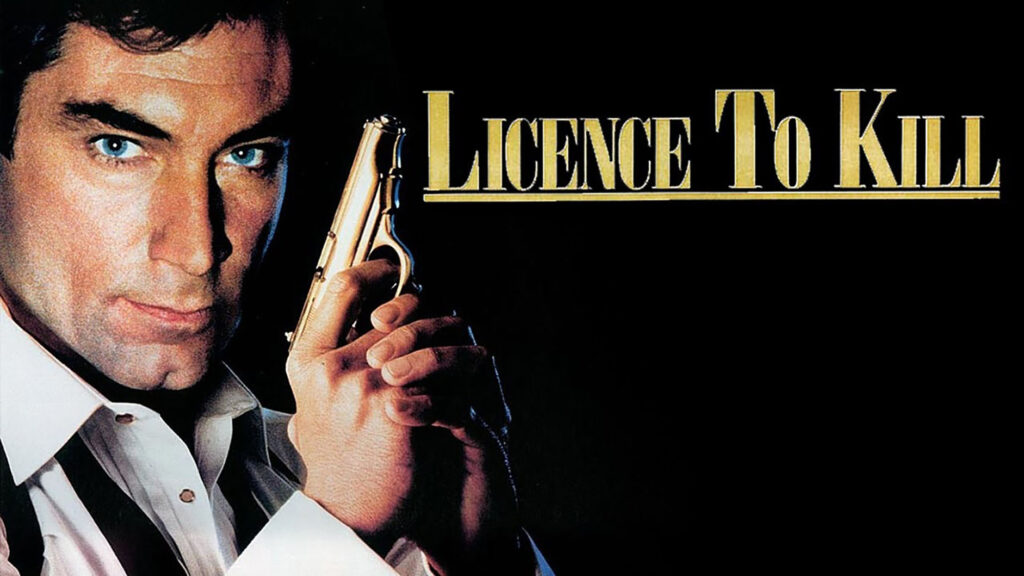
Licence to Kill
Licence to Kill was shot entirely outside the United Kingdom, making it the first Bond film not to use Britain for principal photography.
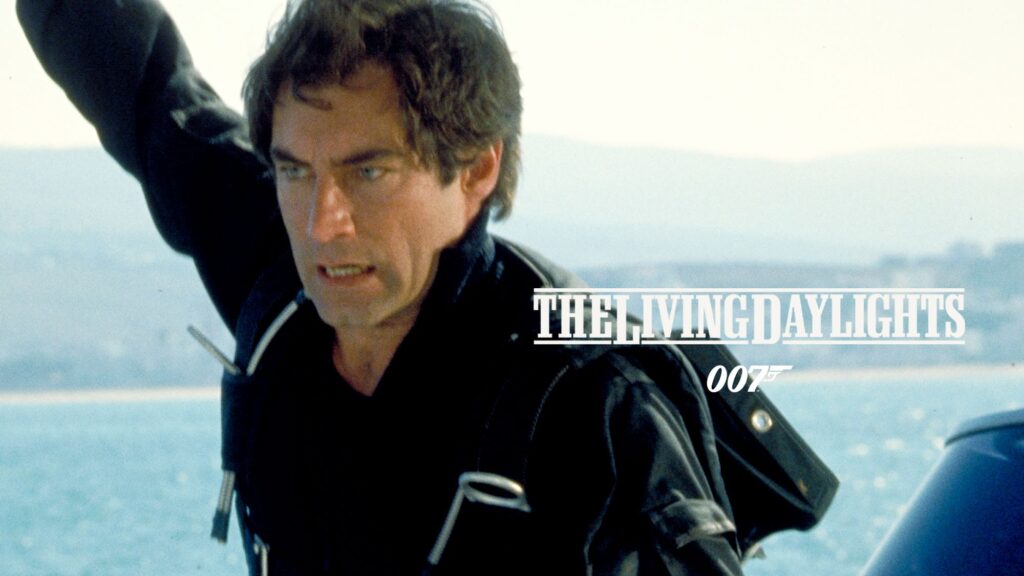
The Living Daylights
The Living Daylights was filmed across several countries, with Gibraltar, Austria, Morocco and the United Kingdom forming the main production base.