
Jeffrey Leon Bridges (born 4 December 1949) is an American actor, musician and photographer whose career has extended across more than seven decades in film and television. He was born in Los Angeles, California, the son of actors Lloyd Bridges and Dorothy Simpson Bridges, and grew up in the Holmby Hills neighbourhood of the city. His older brother, Beau, also became an actor, while their sister, Cindy, pursued a career in the arts. Another brother, Garrett, had died in infancy before Jeff was born. Their parents encouraged creativity within the household, and the children became familiar with the film industry through their father’s professional work. Lloyd Bridges was already an established actor when Jeff was born, having appeared in numerous Hollywood productions during the 1940s, and later became particularly well known through the television adventure series Sea Hunt (1958–1961). Although Jeff’s childhood was relatively comfortable, his parents placed considerable emphasis on discipline, education and developing interests outside acting. He grew up surrounded by music, painting and photography, pursuits that eventually became important parts of his adult life.
Bridges made his screen debut as an infant in The Company She Keeps (1951), appearing briefly alongside his mother and older brother. During childhood, he and Beau occasionally appeared in Sea Hunt, which starred their father as underwater investigator Mike Nelson. The programme was filmed at locations in Florida and California, including underwater sequences photographed around Catalina Island. Jeff subsequently appeared in The Lloyd Bridges Show (1962–1963) and other television productions, gaining experience in front of cameras without initially deciding to become a professional actor. He attended University High School in West Los Angeles, graduating in 1967, and participated in music and theatrical activities during his teenage years. At seventeen, he toured with his father in a stage production of Anniversary Waltz, an experience that introduced him to the demands of performing before live audiences. Following graduation, he moved to New York City to study acting at the Herbert Berghof Studio in Greenwich Village. The move allowed him to establish an identity away from his father’s Hollywood reputation, although he initially remained uncertain whether acting would become his principal occupation.
In 1967, Bridges also joined the United States Coast Guard Reserve, following the example of his father and brother. He served until 1975, reaching the rank of boatswain’s mate second class. His principal assignment was at the Coast Guard Reserve Centre in San Luis Obispo, California, where he attended regular training while pursuing acting opportunities. His duties included maintaining vessels, learning seamanship and spending time aboard Coast Guard cutters. Bridges later recalled that the experience was physically demanding and occasionally uncomfortable, particularly during periods at sea when rough weather made him seasick. The reserve commitment nevertheless provided structure during his early professional career, when acting opportunities were still uncertain. In 1969, he appeared in Halls of Anger (1970), a drama concerning racial tensions during the integration of an American high school. The film gave him one of his first substantial adult screen roles, although the production that transformed his career followed soon afterwards.
Director Peter Bogdanovich cast Bridges as Duane Jackson in The Last Picture Show (1971), adapted from Larry McMurtry’s novel about teenagers approaching adulthood in a declining Texas community. The film starred Timothy Bottoms, Cybill Shepherd, Ellen Burstyn, Cloris Leachman and Ben Johnson, with Bridges portraying an athletic young man whose confidence conceals considerable uncertainty about his future. Bogdanovich chose to film in Archer City, Texas, McMurtry’s hometown, which became the fictional town of Anarene. Principal photography took place during October and November 1970, using the community’s actual streets and buildings rather than elaborate studio constructions. The Royal Theatre on East Main Street represented the picture house whose closure gives the film its title, while Archer City’s school buildings and other local properties provided the setting for the characters’ everyday lives. Bridges spent several weeks working in the town alongside the ensemble, encountering a rural environment considerably different from the Los Angeles neighbourhood where he had grown up. The film was photographed in black and white and became a major critical success, earning eight Academy Award nominations. Bridges received his first Oscar nomination for Best Supporting Actor at the age of twenty-two.
The attention surrounding The Last Picture Show brought him further opportunities with directors associated with the emerging New Hollywood movement. He portrayed Ernie Munger, a young boxer struggling to establish himself professionally, in John Huston’s Fat City (1972), adapted from Leonard Gardner’s novel and filmed extensively in Stockton, California. The production used actual boxing gyms, bars and working-class neighbourhoods, placing Bridges opposite Stacy Keach and Susan Tyrrell in a story about ambition and disappointment. During filming, he began a relationship with actress Candy Clark, who had also worked on the production. He subsequently appeared in Robert Benton’s Western Bad Company (1972), playing a young man attempting to avoid military service during the American Civil War. His next major success came with Michael Cimino’s Thunderbolt and Lightfoot (1974), in which he portrayed an inexperienced criminal who develops an unlikely friendship with an older bank robber played by Clint Eastwood. Filming took place during the summer of 1973 in Montana, particularly around Great Falls, Fort Benton, Hobson, Augusta and Choteau. The production used actual roads, small towns and rural buildings, with the former St John’s Lutheran Church in Hobson providing the setting for the opening sequence. Bridges’s performance earned another Academy Award nomination for Best Supporting Actor, establishing him as a leading performer despite his relatively young age.
Montana became particularly important to Bridges during the next production. In Rancho Deluxe (1975), directed by Frank Perry and written by novelist Thomas McGuane, he played Jack McKee, a young cattle rustler operating around the ranching communities of the American West. The film was shot during 1974 in and around Livingston, Paradise Valley and Yellowstone National Park, with Sam Waterston portraying his accomplice. During location work at Chico Hot Springs, a historic resort north of Yellowstone, Bridges noticed a young woman working there as a waitress. Her name was Susan Geston, and she had recently been involved in a car accident that left her with a broken nose and two black eyes. Bridges later recalled being immediately attracted to her, although she initially declined his invitation to go out. They subsequently met again at a local bar and began a relationship. Geston, originally from Fargo, North Dakota, was then studying and working in Montana, with little connection to the Hollywood industry. Their meeting became one of the most significant events of Bridges’s personal life, and he later retained a photograph taken by a member of the film crew during their first encounter.
Bridges and Geston married on 5 June 1977, beginning a partnership that continued throughout his professional career. Their first daughter, Isabelle, was born in 1981, followed by Jessica in 1983 and Hayley in 1985. The couple established their family life principally in California while maintaining a longstanding attachment to Montana, where they acquired a ranch in Paradise Valley. Bridges later acknowledged that he had initially been hesitant about marriage, fearing that it would restrict his independence, but came to regard the relationship as central to his personal life. Susan remained largely outside the entertainment industry, although she occasionally accompanied him to filming locations and public events. His work frequently required extended periods away from home, and the family developed routines that allowed them to spend time together between productions. Montana became a particularly valued retreat, where Bridges could pursue music, photography and outdoor activities without the demands of Hollywood publicity.
His films during the second half of the 1970s included Stay Hungry (1976), directed by Bob Rafelson, in which he played a wealthy young man who becomes involved with a bodybuilding gym in Birmingham, Alabama. The film featured Sally Field and Arnold Schwarzenegger, whose performance helped introduce him to American cinema audiences. Bridges subsequently starred as palaeontologist Jack Prescott in John Guillermin’s King Kong (1976), opposite Jessica Lange in her feature-film debut. The production was filmed partly on Kauai, Hawaii, where the island’s forests and coastal landscapes represented Skull Island, with additional work at Paramount Studios in Hollywood and other locations. Bridges took on the role after establishing himself primarily through relatively modest character-driven dramas, and the film became one of the largest commercial productions of his early career. He continued working with established directors in Winter Kills (1979) and Michael Cimino’s Heaven’s Gate (1980), an ambitious historical Western filmed extensively in Montana and Idaho. The latter encountered major production difficulties and financial losses, but Bridges continued accepting films that interested him for their characters and directors rather than concentrating exclusively on commercial potential.
A new phase began when he was cast as Kevin Flynn in Steven Lisberger’s Tron (1982), a science-fiction adventure about a computer programmer who becomes trapped inside a digital environment. Bridges also portrayed Flynn’s computer-generated counterpart, Clu, appearing in a production that combined live-action photography, traditional animation and early computer-generated imagery. Filming took place principally at Walt Disney Studios in Burbank, California, where elaborate sets and unusual lighting techniques were used to represent the electronic world. The production also employed locations in Los Angeles and Culver City, including the Hull Building on Culver Boulevard, which represented the exterior of Flynn’s Arcade. Although Tron achieved only moderate commercial success on its original release, its pioneering visual effects influenced subsequent science-fiction cinema and computer-generated filmmaking. Bridges later returned to the character in Tron: Legacy (2010), which was produced principally in Vancouver, British Columbia, and required him to portray both an older Kevin Flynn and a digitally rejuvenated version of Clu.
His most acclaimed performance of the middle of the decade came in John Carpenter’s Starman (1984), a science-fiction romance in which he played an extraterrestrial visitor who assumes the appearance of a woman’s deceased husband. Karen Allen portrayed Jenny Hayden, the widow who reluctantly agrees to help the visitor travel from Wisconsin to a rendezvous point in Arizona. The production involved extensive location work across the United States during 1984, with filming in Tennessee, Nevada, Arizona and California. The opening scenes involving the spacecraft’s arrival were photographed around Prentice Cooper State Forest near Chattanooga, Tennessee, while additional sequences followed the characters through communities around Manchester and Nashville. In Arizona, filming took place around Winslow, Monument Valley and Meteor Crater, the location associated with the story’s conclusion. Bridges developed the visitor’s unusual speech and movements by imagining a being who had learned human behaviour through observation rather than experience, deliberately avoiding conventional expressions of emotion. His performance earned an Academy Award nomination for Best Actor, demonstrating his ability to develop an emotionally engaging character within a large science-fiction production.
Bridges continued moving between different genres during the remainder of the 1980s. He appeared opposite Jane Fonda in Sidney Lumet’s mystery thriller The Morning After (1986), before portraying automobile designer Preston Tucker in Francis Ford Coppola’s Tucker: The Man and His Dream (1988). Based on the real industrialist who attempted to challenge established American car manufacturers during the late 1940s, the film was produced in the San Francisco Bay Area, with locations including San Francisco, Oakland and other Northern California communities. Bridges subsequently appeared alongside his brother Beau in Steve Kloves’s The Fabulous Baker Boys (1989), playing Jack Baker, a talented but disillusioned jazz pianist who performs in hotel lounges with his more commercially minded brother Frank. Michelle Pfeiffer joined them as singer Susie Diamond. Although the story takes place in Seattle, principal photography was conducted largely in Los Angeles, where hotels and other buildings represented the Pacific Northwest city. The Biltmore Hotel in downtown Los Angeles provided several interiors, including the ballroom used for Pfeiffer’s performance of Makin’ Whoopee. Some location photography was also undertaken in Seattle. Bridges had suggested Beau for the role of Frank, creating an opportunity for the brothers to portray a fictional partnership shaped by professional disagreements and longstanding family loyalty.
He returned to contemporary urban drama with Terry Gilliam’s The Fisher King (1991), portraying Jack Lucas, a New York radio presenter whose careless remarks contribute to a tragedy. After withdrawing from public life, Jack develops an unlikely relationship with Parry, a homeless man played by Robin Williams, whose experiences have left him psychologically traumatised. The production was filmed extensively in Manhattan during the summer of 1990, using Central Park, Grand Central Terminal, Park Avenue and other locations. Bridges worked with Williams and Amanda Plummer in several demanding street sequences, while the filmmakers temporarily transformed Grand Central Terminal for an elaborate scene in which commuters begin dancing through the station. The contrast between Jack’s guilt and Parry’s imaginative understanding of the city became central to the film’s emotional development. Bridges earned a Golden Globe nomination for his performance. He subsequently starred in American Heart (1992), playing a former prisoner attempting to rebuild his relationship with his teenage son, portrayed by Edward Furlong. The film was shot in the Seattle area and became particularly important to Bridges because he was involved as a producer, taking a greater role in the development and financing of the project.
A more psychologically complex performance followed in Peter Weir’s Fearless (1993), in which Bridges portrayed Max Klein, a San Francisco architect who survives a catastrophic plane crash and subsequently develops an altered understanding of mortality. The film examines his relationships with his wife, played by Isabella Rossellini, and another survivor portrayed by Rosie Perez. Production took place in California, with San Francisco and the surrounding region providing important settings for the characters’ lives after the accident. Bridges’s restrained performance contrasted with the more eccentric characters he had played earlier in his career, while the film’s treatment of trauma and emotional isolation allowed him to explore themes that would gain personal significance many years later. He subsequently reunited with his father Lloyd in Stephen Hopkins’s action thriller Blown Away (1994), starring Tommy Lee Jones as a former Irish Republican Army explosives specialist who begins attacking members of the Boston police bomb squad. Bridges played the central police officer, while Lloyd portrayed his uncle. The production was filmed around Boston and at other locations, including sequences near the waterfront and the city’s historic streets. Working together allowed father and son to develop an on-screen relationship informed by their longstanding personal connection.
His next films included Walter Hill’s Wild Bill (1995), in which he portrayed the legendary American gunfighter Wild Bill Hickok, and Barbra Streisand’s The Mirror Has Two Faces (1996), playing an intellectually accomplished mathematics professor who attempts to establish a marriage without sexual intimacy. The latter production was filmed in New York, including at Columbia University, where the fictional characters teach. Bridges subsequently accepted the role that became perhaps the most enduring of his career when Joel and Ethan Coen cast him as Jeffrey Lebowski, known as the Dude, in The Big Lebowski (1998). The film follows an unemployed Los Angeles resident whose life is disrupted when criminals confuse him with a wealthy businessman sharing his name. Bridges developed the Dude’s relaxed manner, clothing and speech partly from people the Coens had known in Los Angeles, while also drawing on his own familiarity with the city’s countercultural communities. The production was filmed entirely in Southern California during the early months of 1997, with numerous actual buildings and businesses appearing in the story. The Dude’s apartment was represented by a property at 606 Venezia Avenue in Venice, while the Hollywood Star Lanes bowling alley on Santa Monica Boulevard provided the principal location for scenes involving the Dude and his friends. The Sheats-Goldstein Residence in the Hollywood Hills was used for the home of pornography producer Jackie Treehorn, while a bluff in San Pedro provided the setting for the scene in which the characters scatter Donny’s ashes.
The Big Lebowski initially received mixed reviews and attracted a comparatively modest cinema audience, but gradually developed an international following through home video, television and repertory screenings. The Dude became one of the most recognisable characters of the Coen brothers’ career, with his clothing, speech and unconventional approach to life inspiring fan gatherings and cultural references far beyond the original film. Bridges continued discussing the character with audiences but resisted attempts to treat the Dude as an exact reflection of his own personality. Although he shared some of the character’s relaxed manner and interest in music, he had maintained a demanding professional career and family responsibilities for decades. His later work included The Contender (2000), a political drama directed by Rod Lurie, in which he played President Jackson Evans opposite Joan Allen and Gary Oldman. Bridges earned another Academy Award nomination for Best Supporting Actor, demonstrating his ability to portray an authoritative political figure shortly after playing one of cinema’s most famously unemployed characters.
During the early 2000s, Bridges continued accepting supporting and leading roles in films of varied scale. In Seabiscuit (2003), directed by Gary Ross and adapted from Laura Hillenbrand’s book, he portrayed Charles S. Howard, the American businessman who owned the racehorse Seabiscuit during the 1930s. Tobey Maguire played jockey Red Pollard, with Chris Cooper portraying trainer Tom Smith. The production involved substantial filming at historic American racetracks, including Saratoga Race Course in New York, Keeneland in Lexington, Kentucky, and Santa Anita Park in Arcadia, California. The filmmakers used actual racing facilities and large numbers of period vehicles, costumes and horses to recreate the sport during the Depression. Bridges prepared by studying photographs and other materials associated with the real Howard, developing a character whose financial success and personal grief influence his relationship with the horse and its racing team. He subsequently appeared opposite Kim Basinger in The Door in the Floor (2004), directed by Tod Williams and adapted from John Irving’s novel A Widow for One Year. Set in East Hampton, New York, the film was produced extensively on Long Island, using actual coastal homes and communities to portray a wealthy family whose marriage has deteriorated following the deaths of two children.
Bridges’s interest in photography had developed during the early part of his career and became increasingly important as his film work took him around the world. He began using a Widelux panoramic camera during the 1970s, photographing actors, directors and crew members between takes rather than concentrating on conventional publicity portraits. The camera’s rotating lens allowed him to capture unusually wide images of film sets, rehearsal spaces and the people working within them. Bridges initially assembled the photographs into private albums that he gave to colleagues when productions ended, gradually creating an extensive record of several decades of filmmaking. In 2003, he published Pictures, a collection of panoramic photographs taken during productions including The Last Picture Show, The Fabulous Baker Boys, The Fisher King and other films. Selected images were exhibited at the RoseGallery in Santa Monica, with proceeds supporting the Motion Picture & Television Fund. He subsequently published Pictures: Volume 2, extending the photographic record to projects including Seabiscuit, Crazy Heart and Bad Times at the El Royale. The work provided an unusual visual account of film production from the perspective of a leading actor rather than an external photographer.
Music also remained central to his life. Bridges had played guitar since childhood and frequently worked with musician friends between acting assignments, recording informal sessions at home and performing occasionally in public. In 2000, he released the album Be Here Soon, developed with collaborators including Michael McDonald. His role as musician Bad Blake in Scott Cooper’s Crazy Heart (2009) subsequently brought these interests into direct contact with his film career. Adapted from Thomas Cobb’s novel, the story follows an ageing country singer whose career has declined through years of drinking, unsuccessful relationships and exhausting tours. Bridges portrayed Blake opposite Maggie Gyllenhaal as journalist Jean Craddock, with Colin Farrell playing a younger country star and Robert Duvall appearing as Blake’s longtime friend. Much of the film was shot in New Mexico during 2008, including in Albuquerque and Santa Fe, where actual bars, restaurants and concert venues represented the places encountered during Blake’s travels. Bridges filmed scenes at Evangelo’s Cocktail Lounge on West San Francisco Street in Santa Fe and at the large outdoor concert facility south of Albuquerque, then known as the Journal Pavilion, as well as numerous smaller locations throughout the region. He performed the songs himself, collaborating with producer T Bone Burnett and musicians including Stephen Bruton and Ryan Bingham.
Crazy Heart became one of the most significant films of Bridges’s career. His portrayal of Bad Blake combined a convincing musical performance with the physical exhaustion and emotional vulnerability of a man attempting to recover from years of self-destructive behaviour. The film was released in December 2009 and earned Bridges widespread critical recognition, culminating in the Academy Award for Best Actor at the ceremony held in Hollywood on 7 March 2010. He also won a Golden Globe and a Screen Actors Guild Award for the performance, while the song The Weary Kind received the Academy Award for Best Original Song. Bridges subsequently released the album Jeff Bridges (2011), produced by Burnett, and continued performing with his band, the Abiders. The album’s restrained country and folk arrangements reflected the music he had played privately for years, although his professional singing career now attracted considerably greater attention following the success of Crazy Heart. He also collaborated with younger musicians and occasionally performed songs associated with his films during concerts.
Shortly after winning his Oscar, Bridges reunited with the Coen brothers for True Grit (2010), adapted from Charles Portis’s novel about a teenage girl seeking revenge for her father’s murder. He played Rooster Cogburn, an ageing United States Marshal previously portrayed by John Wayne in the 1969 adaptation. Rather than attempting to reproduce Wayne’s performance, Bridges developed his own interpretation of the character, emphasising Cogburn’s drinking, physical deterioration and unconventional sense of justice. Hailee Steinfeld portrayed Mattie Ross, with Matt Damon appearing as Texas Ranger LaBoeuf. The film was shot in Texas and New Mexico during the spring of 2010, with the town of Granger, north-east of Austin, transformed to represent Fort Smith, Arkansas, during the nineteenth century. Bridges also filmed at the historic Old Blanco County Courthouse in Blanco, where Cogburn gives testimony during the courtroom sequence. Additional locations around Santa Fe and Las Vegas, New Mexico, provided the wilderness settings associated with the pursuit of Tom Chaney, played by Josh Brolin. True Grit earned ten Academy Award nominations, including Best Actor for Bridges, giving him a second consecutive nomination in the category.
His later films included the science-fiction drama The Giver (2014), directed by Phillip Noyce and adapted from Lois Lowry’s novel. Bridges played the title character, an elderly man responsible for preserving memories in a society that has deliberately eliminated personal differences and emotional complexity. He had been interested in adapting the novel for many years, originally imagining his father Lloyd in the title role before the project eventually reached production. The film was shot principally in South Africa, with Cape Town and its surrounding region providing facilities and environments for the fictional community. He subsequently voiced the Aviator in the animated adaptation of The Little Prince (2015), continuing the pattern of occasional work in family-oriented productions alongside more demanding live-action drama. He also accepted smaller roles in fantasy and action films, including R.I.P.D. (2013), Seventh Son (2014) and Kingsman: The Golden Circle (2017).
One of his most acclaimed later performances came in David Mackenzie’s Hell or High Water (2016), written by Taylor Sheridan. Bridges played Marcus Hamilton, a veteran Texas Ranger approaching retirement who pursues two brothers involved in a series of bank robberies. Chris Pine and Ben Foster portrayed the brothers, while Gil Birmingham appeared as Hamilton’s partner Alberto Parker. Although the story is set in West Texas, principal photography took place in New Mexico during 2015. Clovis, Portales and Tucumcari provided streets and businesses representing the fictional Texas communities, while the Route 66 Casino near Albuquerque was used for a sequence involving the brothers’ attempts to conceal their stolen money. Bridges worked extensively in the region, using the relationship between Hamilton and Alberto to explore a friendship defined by years of shared professional experience and constant verbal provocation. The role earned him another Academy Award nomination for Best Supporting Actor, his seventh nomination overall. He also appeared as Prescott Fire Department official Duane Steinbrink in Joseph Kosinski’s Only the Brave (2017), a drama about the Granite Mountain Hotshots who died during the Yarnell Hill Fire in Arizona in 2013. The production was shot largely in New Mexico, using locations around Santa Fe and Albuquerque to represent communities in Arizona.
Bridges returned to crime drama with Drew Goddard’s Bad Times at the El Royale (2018), portraying a mysterious man who arrives at an isolated hotel on the boundary between California and Nevada. The ensemble included Cynthia Erivo, Dakota Johnson, Jon Hamm, Chris Hemsworth and Lewis Pullman. Although the story takes place at a fictional resort in the American West, the film was produced largely in British Columbia, Canada. An elaborate recreation of the hotel was constructed at studio facilities in the Vancouver area, allowing the filmmakers to control the building’s unusual layout and the scenes occurring on opposite sides of the state boundary. Bridges appeared as a character whose outward religious identity conceals a complicated criminal history, continuing his interest in roles that initially appear familiar before revealing more troubling aspects. The same year, he received the Cecil B. DeMille Award at the Golden Globe Awards, recognising his contribution to cinema. In 2024, he was also honoured with the Chaplin Award at Film at Lincoln Center in New York, bringing him back to the city where he had studied acting as a young man.
Throughout his career, Bridges maintained substantial commitments outside entertainment. In 1983, he helped establish the End Hunger Network, an organisation dedicated to drawing attention to hunger and encouraging practical efforts to improve access to food. He subsequently became involved in numerous charitable projects and served as national spokesperson for the No Kid Hungry campaign from 2010. His work included visits to schools and community organisations, public discussions with policymakers and participation in fundraising campaigns. He also supported environmental causes and became involved with organisations concerned with climate change, wildlife and the preservation of natural landscapes. These interests were closely connected to his experiences in Montana and California, where he and Susan spent much of their private time. His attachment to the American West, evident in numerous films from Thunderbolt and Lightfoot to Hell or High Water, also developed through years of living and travelling in the region rather than exclusively through his screen characters.
His family life continued to be centred on California, although the ranch in Montana remained important. Bridges and Susan spent many years living in Montecito, near Santa Barbara, where they owned a substantial estate that provided space for family gatherings, music and artistic work. Their home was affected by the destructive mudslides that struck the community in January 2018, and they subsequently sold the property in 2019. Bridges continued maintaining a residence and creative workspace in the Santa Barbara area, using a garage and studio for painting, ceramics and music. His relationship with his parents also remained personally significant. Lloyd Bridges died in March 1998, while Dorothy Bridges died in February 2009. The family’s longtime Malibu beach house, originally acquired by his parents during the 1950s, was inherited by Jeff, Beau and their sister Cindy. The property was destroyed during the Palisades Fire in January 2025, leaving the family without a residence associated with several generations of their history. In January 2026, the remaining beachfront parcel was listed for sale.
A substantial return to television came with The Old Man (2022–2024), an FX drama created by Jonathan E. Steinberg and Robert Levine and adapted from Thomas Perry’s novel. Bridges played Dan Chase, a former CIA operative whose carefully concealed past returns to threaten his present life. The series also starred John Lithgow, Amy Brenneman and Alia Shawkat, combining espionage, family relationships and an ageing protagonist forced to confront the consequences of earlier decisions. Although parts of the story take place in New England, Morocco and Afghanistan, much of the production was filmed in California. Idyllwild, in the San Jacinto Mountains, provided the setting for Chase’s isolated residence during the first season, while Santa Clarita and surrounding landscapes were used to represent Afghanistan during the second. Bridges participated in physically demanding action sequences, including close-quarters fighting scenes, despite being in his seventies. The series began production in 2019 but experienced substantial delays following the COVID-19 pandemic and Bridges’s subsequent health problems.
In October 2020, Bridges publicly announced that he had been diagnosed with lymphoma and was beginning treatment. Chemotherapy weakened his immune system, and in January 2021 he contracted COVID-19, developing a serious illness that required an extended period in hospital. He later described being unable to walk or stand for more than brief periods, while the gradual process of recovery required extensive physical rehabilitation. His wife Susan and other family members provided support throughout the experience, which he subsequently discussed in interviews as a major change in his understanding of everyday life. By September 2021, he announced that his lymphoma was in remission, allowing him to resume professional work. He returned to complete The Old Man, which premiered in June 2022 and earned him nominations for both a Primetime Emmy Award and a Golden Globe. The programme continued for a second season, released in September 2024, but FX announced in December that year that it would not be renewed for a third. Bridges later acknowledged that the experience of serious illness had made him more appreciative of family relationships, creative work and the opportunities available to him.
The years following his recovery also brought renewed attention to his music. In April 2025, Light in the Attic Records released Slow Magic, 1977–1978, an album assembled from recordings Bridges had made with friends nearly fifty years earlier. The material included experimental songs and informal performances recorded during the period when he was establishing his acting career and beginning his marriage to Susan. Rather than attempting to recreate the original sessions, the producers preserved their spontaneous character, allowing listeners to hear music Bridges had previously regarded as private recordings. The album also reflected his longstanding friendships with musicians, including composer and producer Keefus Ciancia. Bridges discussed the release in interviews conducted at his Santa Barbara studio, explaining that recovering the recordings had encouraged him to reconsider the relationship between acting, music and the creative experiments he had pursued during his younger years. He continued playing music regularly, often describing informal performances with friends as an important part of his daily life.
His association with the Tron franchise continued in Tron: Ares (2025), directed by Joachim Rønning and starring Jared Leto, Greta Lee, Evan Peters and Gillian Anderson. Bridges returned as Kevin Flynn, connecting the new film with the original production released more than four decades earlier. Principal photography was based in Vancouver, British Columbia, during 2024, with actual city buildings representing the contemporary technological environment of the story. The production also used the exterior of the historic Hull Building in Culver City, the location associated with Flynn’s Arcade in the first film. Bridges attended the world premiere at the TCL Chinese Theatre in Hollywood on 6 October 2025, returning to a franchise that had begun before computer-generated imagery became a standard part of commercial filmmaking. His appearance was relatively limited, but it re-established the character within the story’s continuing mythology.
Bridges also continued working in animation and documentary production. In Minions & Monsters (2026), an animated comedy produced by Illumination and directed by Pierre Coffin, he provided the voices of Frank and Elwood Bright, characters associated with the film industry’s treatment of the Minions as prospective movie stars. The production was released theatrically in July 2026, bringing him into another major family-film franchise alongside voice performers including Christoph Waltz, Allison Janney and Jesse Eisenberg. He also narrated In the Company of Wolves: An American Journey (2026), a documentary directed by Susan Kucera exploring the relationship between human settlement, domesticated animals and wild wolves throughout American history. The film premiered at Cannes in May 2026 before receiving a limited theatrical release and becoming available digitally in July. His participation reflected his longstanding interest in environmental issues and the landscapes of the American West.
Another project announced during this period was Grendel, a fantasy film developed by the Jim Henson Company and adapted from John Gardner’s novel, which retells the Beowulf legend from the monster’s perspective. Bridges was cast as Grendel, with Dave Bautista attached as Beowulf, Bryan Cranston as King Hrothgar and Sam Elliott as the Dragon. Robert D. Krzykowski was announced as director, while T Bone Burnett joined the project as a performer and composer. The production brought together collaborators associated with several different parts of Bridges’s career, including Burnett, whose work on Crazy Heart had been central to the actor’s Academy Award-winning performance. By October 2026, the film had not received a confirmed release date.
By October 2026, Bridges was seventy-six and remained active in acting, music, photography and charitable work. His professional life had begun in the Los Angeles studios where his parents worked and subsequently taken him through the theatres of New York, the rural communities of Texas and Montana, the streets of San Francisco and Manhattan, and film productions throughout North America. His marriage to Susan, their three daughters and the family’s connections with California and Montana continued to occupy an important place in his life. Although The Big Lebowski remains one of his most familiar films, his performances in The Last Picture Show, Starman, Fearless, Crazy Heart and Hell or High Water demonstrate the breadth of a career in which he has repeatedly moved between unconventional independent films and major studio productions. His later work has continued alongside the music and photography he began pursuing during his youth, activities that have remained important regardless of his changing professional circumstances.
8 Million Ways to Die
8 Million Ways to Die was filmed in both Los Angeles and El Segundo, with scenes spread across a range of distinct settings.
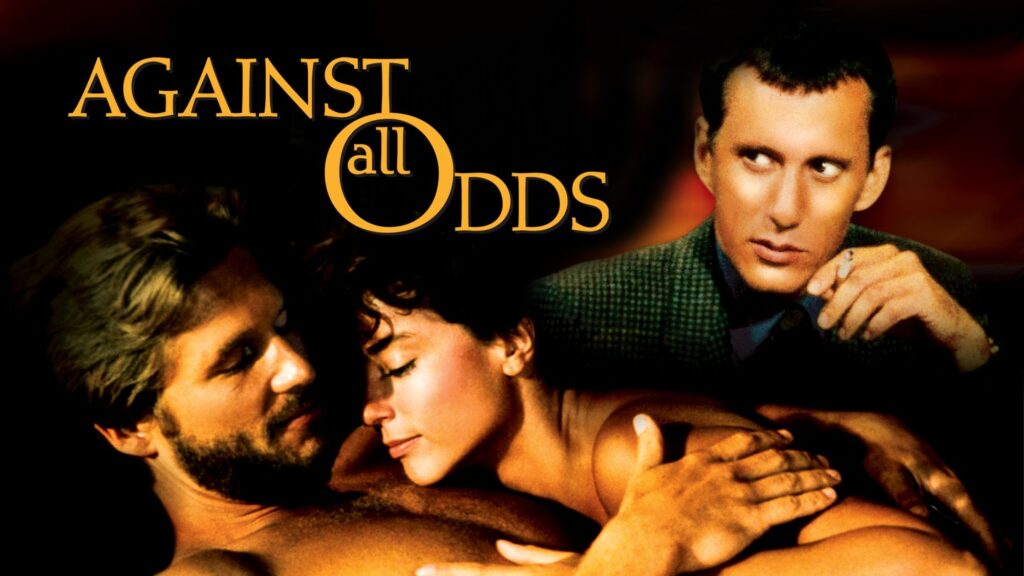
Against All Odds
Against All Odds was filmed in California and Mexico, between Los Angeles power games and the more sensual world Terry enters while searching for Jessie.