
Königsplatz is a monumental neoclassical square in the Maxvorstadt district of Munich, Germany. The ensemble was conceived in the early nineteenth century as part of Crown Prince Ludwig’s ambition to transform Munich into an “Athens on the Isar”, with Karl von Fischer producing the original urban plan and Leo von Klenze subsequently developing much of the architectural scheme. The square is framed by three buildings inspired by ancient Greek architecture: the Ionic Glyptothek, the Corinthian Staatliche Antikensammlungen and the Doric Propyläen, the latter completed in 1862. Königsplatz acquired a very different significance after the Nazis came to power. Books by authors condemned by the regime were burned here on 10 May 1933, and in 1935 the lawns were removed and the square covered with approximately 20,000 granite slabs to create a vast parade ground for Nazi rallies and ceremonies. Two Ehrentempel, or Temples of Honour, were erected on its eastern side beside the new Nazi Party buildings, including the Führerbau, where the Munich Agreement was signed in September 1938. The temples were demolished after the Second World War, but the granite-covered square survived for decades and was used largely as a car park. Between 1987 and 1988 the paving was finally removed and the lawns restored, returning Königsplatz much closer to its nineteenth-century appearance. The changing character of the square is particularly visible on film, with productions made before and after the restoration presenting noticeably different versions of the same location.
Königsplatz has appeared in Raumpatrouille – Die phantastischen Abenteuer des Raumschiffes Orion (1966), Wenn die tollen Tanten kommen (1970), Derrick (1974–1998), Suspiria (1977), Die zweite Heimat (1992), Ein Vater zu Weihnachten (2001), Fack ju Göhte 2 (2015) and Munich – The Edge of War (2021). Productions have used the open square, the Propyläen, the Glyptothek and the former Führerbau on its eastern side for settings ranging from a futuristic underwater spacecraft base and a deserted supernatural murder scene to a fictional school and the political centre of Nazi Germany. Particularly striking are Raumpatrouille – Die phantastischen Abenteuer des Raumschiffes Orion (1966) and Suspiria (1977), both of which preserve the austere granite-covered version of Königsplatz that disappeared when the square was restored in the late 1980s.
In Raumpatrouille – Die phantastischen Abenteuer des Raumschiffes Orion (1966), commonly known as Raumpatrouille Orion, Königsplatz is transformed into part of Tiefseebasis 104, the enormous underwater base from which Commander Cliff McLane and the crew of the spacecraft Orion depart on their missions. When filming took place in 1965, the square was still covered by the broad granite slabs installed during the Nazi period and was largely being used as a car park. By clearing away the cars and avoiding the surrounding classical buildings, the production obtained a vast geometrically paved surface that could convincingly become a futuristic landing platform. Live-action footage of tiny-looking personnel and vehicles moving across Königsplatz was combined with miniatures, matte work and optical effects to create the illusion of the Orion standing inside a gigantic underwater installation. The spacecraft’s launch from Base 104 became one of the series’ recurring visual motifs. The effect was considerably more complicated than the apparently simple finished image suggests: the launch sequence reportedly combined thirteen separate visual elements, five of them devoted to the Orion itself. Because the granite slabs were removed during the restoration of Königsplatz in 1987–1988, the real location today looks radically different from the futuristic base preserved in the series.
In Wenn die tollen Tanten kommen (1970), Königsplatz was one of the Munich locations used during the opening part of Franz Josef Gottlieb’s musical comedy before the story moves largely to the Wörthersee in Austria. Rudi and Paul begin the film in Munich, where Paul works for a travel agency and discovers that he must travel to Velden to prevent an important hotel contract from going to a rival company. The production filmed around several recognisable parts of Munich, including Königsplatz and Viktualienmarkt, before following the two friends south in their VW-Porsche 914. Königsplatz is specifically documented as a filming location, although surviving public production records do not isolate the precise shots filmed there sufficiently to assign an individual conversation or piece of action to the square without speculation.
In Derrick (1974–1998), Königsplatz appears in the episode “Zeichen der Gewalt”, broadcast in 1975. Lawyer Dr Manfred Rieger is blackmailed into secretly delivering a pistol to imprisoned criminal Günter Hausmann because Rieger’s wife is being held hostage. After carrying out the delivery, Rieger is ordered to go to Königsplatz and wait for confirmation that his wife will be released. He stands beside the Propyläen on the largely empty granite-covered square until a park attendant approaches and tells him that he may return home. Rieger finds his wife alive and bound at their house, but soon learns that Hausmann has used the smuggled weapon to escape from prison and kill a guard. Rieger had removed five bullets before handing over the gun, believing this would prevent anyone being shot, but had failed to realise that a sixth cartridge was already in the chamber. Overcome by guilt over the guard’s death, he later attempts suicide. The Königsplatz sequence is therefore not simply an establishing shot but an important stage in the blackmail operation, with the vast and relatively deserted square emphasising Rieger’s isolation while he waits for news of his wife.
In Suspiria (1977), Königsplatz provides the setting for one of the film’s most memorable deaths. Daniel, the blind pianist employed by the Tanz Akademie, has been dismissed after his guide dog is accused of attacking Madame Blanc’s young nephew. After spending the evening at Munich’s Hofbräuhaus, Daniel walks home with the dog and eventually reaches the enormous, almost deserted Königsplatz. His dog suddenly becomes nervous and begins barking as Daniel senses that someone or something is nearby. Unable to see what surrounds him, he repeatedly calls out while the camera explores the empty square, the monumental Staatliche Antikensammlungen and the Propyläen around him. The supernatural presence apparently overwhelms the animal, which suddenly turns on its owner, knocks Daniel to the ground and tears out his throat. Dario Argento makes particularly effective use of the version of Königsplatz that existed at the time: instead of today’s lawns, Daniel is stranded in the middle of an immense expanse of dark granite paving, making the square feel unnaturally empty and hostile. The sequence was filmed during Suspiria’s German location work, which also used Munich-Riem Airport, the Hofbräuhaus, Müller’sches Volksbad and the BMW complex.
In Die zweite Heimat (1992), Königsplatz appears in the opening episode, “Die Zeit der ersten Lieder – Hermann 1960”. Hermann Simon has recently left his home in the Hunsrück and arrived in Munich hoping to study composition. Shortly before his entrance examination he meets the multilingual Chilean musician Juan, and the two encounter young filmmakers Stefan, Reinhard and Rob working on a film at Königsplatz. They are filming a project called “Brutalität in Stein”, using the monumental architecture and enormous open space as their subject. Hermann is fascinated by the sight of film crews working in the city, commenting on how closely the experience matches his expectations of Munich. The sequence also establishes several members of the artistic circle that will become central to Hermann’s new life. The choice of Königsplatz has an additional historical resonance within a story set in 1960: the square had only recently ceased being one of the most symbolically loaded architectural remnants of the Nazi period, and its monumental architecture becomes part of the young filmmakers’ attempt to confront the relationship between buildings, politics and Germany’s recent past.
In Ein Vater zu Weihnachten (2001), Königsplatz appears through the Glyptothek during the film’s wintertime depiction of Munich. The television film follows journalist Julia Letowski, who has raised her daughter Taffy alone after Taffy’s American father Robert left before she was born. Julia has avoided explaining the truth by telling her daughter that Robert is an important polar explorer, but her story begins collapsing when Taffy demands to spend Christmas with her father. The production filmed throughout Munich in 2000, using locations including the Christmas market at Marienplatz, Munich Airport and the Glyptothek at Königsplatz. The museum’s monumental classical exterior contributes to the succession of recognisable Munich settings surrounding Julia’s increasingly complicated attempt to deal with her daughter’s request. Publicly available production records confirm filming at the Glyptothek but do not identify its individual scene in enough detail to justify assigning specific dialogue to the location.
In Fack ju Göhte 2 (2015), the former Führerbau on the eastern side of Königsplatz becomes the prestigious Schillergymnasium, the principal rival of the chaotic Goethe-Gesamtschule. School director Gudrun Gerster is determined to improve Goethe’s reputation by securing a partnership with a school in Thailand, but the elite Schillergymnasium and its teacher Hauke Wölki are competing for the same arrangement. The present Hochschule für Musik und Theater München, which occupies the historic Führerbau, was used for scenes at the rival school. Its monumental entrance, corridors and formal architecture provide a deliberate contrast with the less disciplined environment associated with Zeki Müller and his students. The building carries considerable historical weight beneath the comedy: it was constructed for the Nazi Party in the 1930s and was the building in which Adolf Hitler, Neville Chamberlain, Benito Mussolini and Édouard Daladier met during the Munich Conference in September 1938. Eight decades later, its imposing architecture is repurposed on screen as the home of an overly respectable German secondary school.
In Munich – The Edge of War (2021), Königsplatz and the former Führerbau are returned to their actual historical role during the recreation of the Munich Conference of September 1938. The film follows fictional British civil servant Hugh Legat and German diplomat Paul von Hartmann as their governments converge on Munich while Neville Chamberlain attempts to prevent Hitler from invading Czechoslovakia. For the production, the Hochschule für Musik und Theater was temporarily transformed back into the Führerbau, with period banners and Nazi flags installed across the façade. One sequence shows Chamberlain’s official car crossing Königsplatz and arriving in front of the building, where he steps out beneath the flags before the political negotiations begin. This was not merely a visually convenient period location: the real Munich Agreement was negotiated and signed inside the same building on 29–30 September 1938. Filming in November 2020 therefore allowed the production to place its fictional characters and recreated historical figures directly within one of the surviving sites of the event being dramatised. Other Munich sequences were filmed around Odeonsplatz, while locations in Potsdam, Berlin and England were used to complete the film’s recreation of Germany and Britain on the eve of war.
Suspiria (1977)
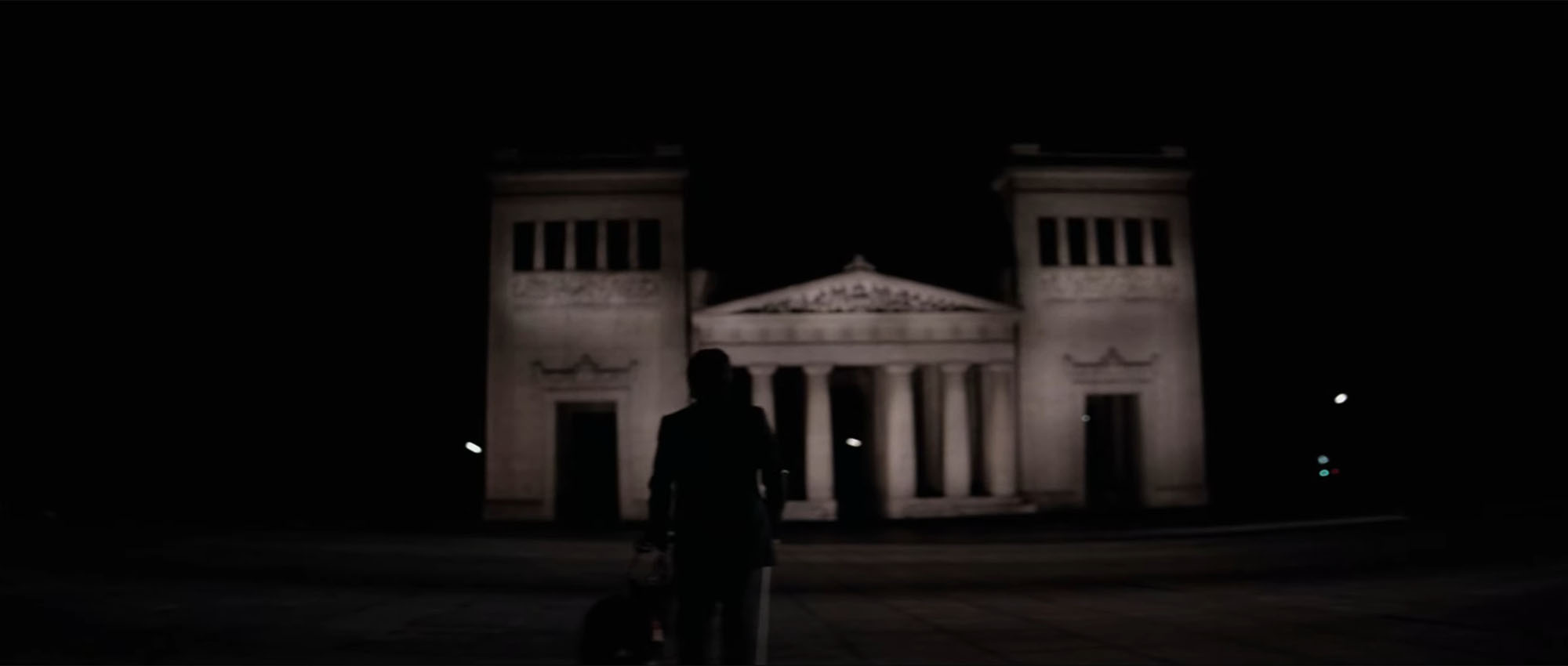
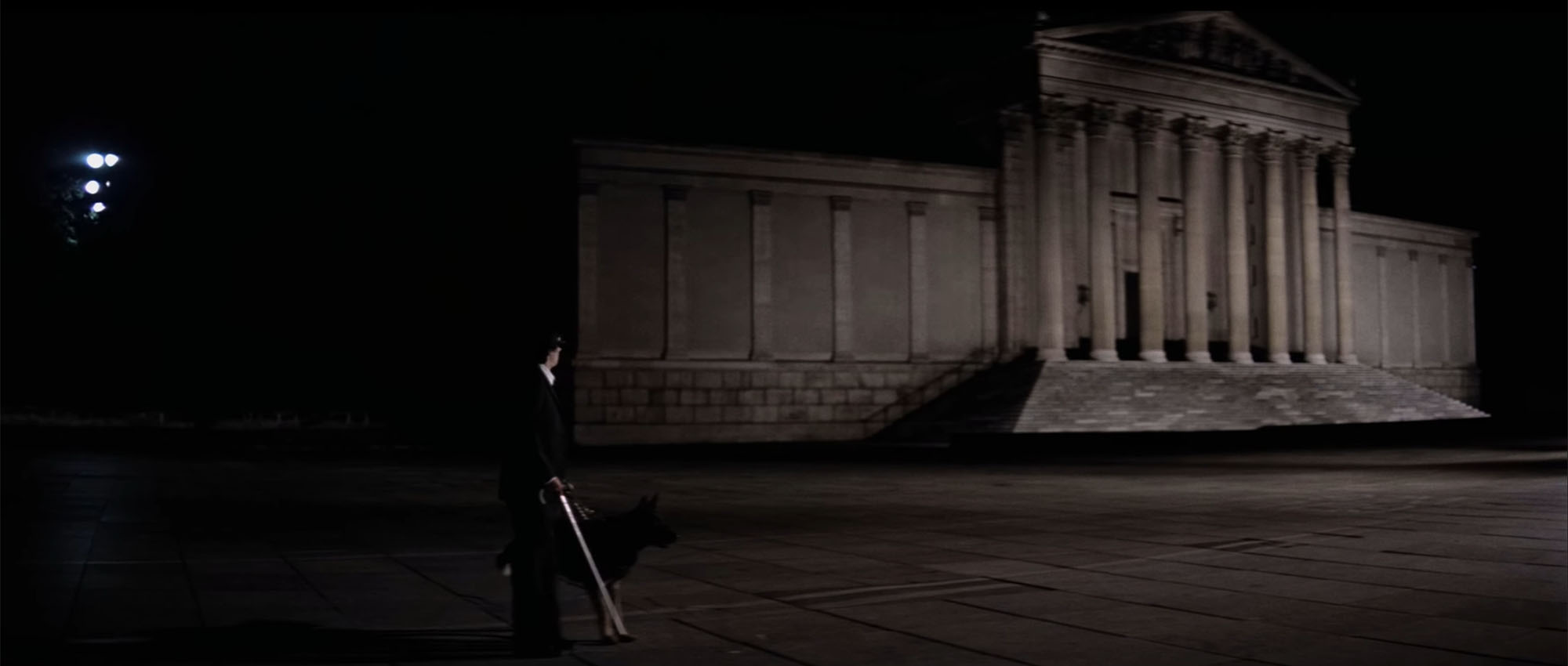
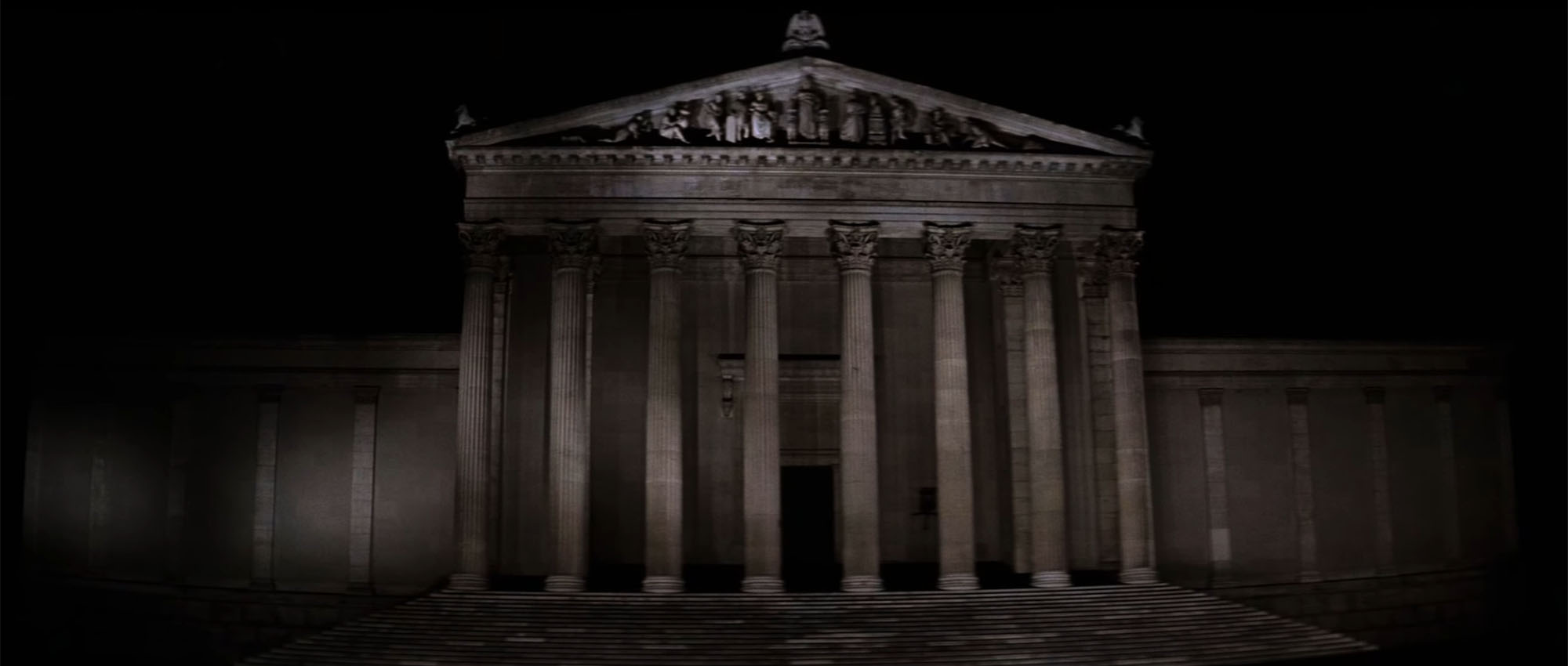
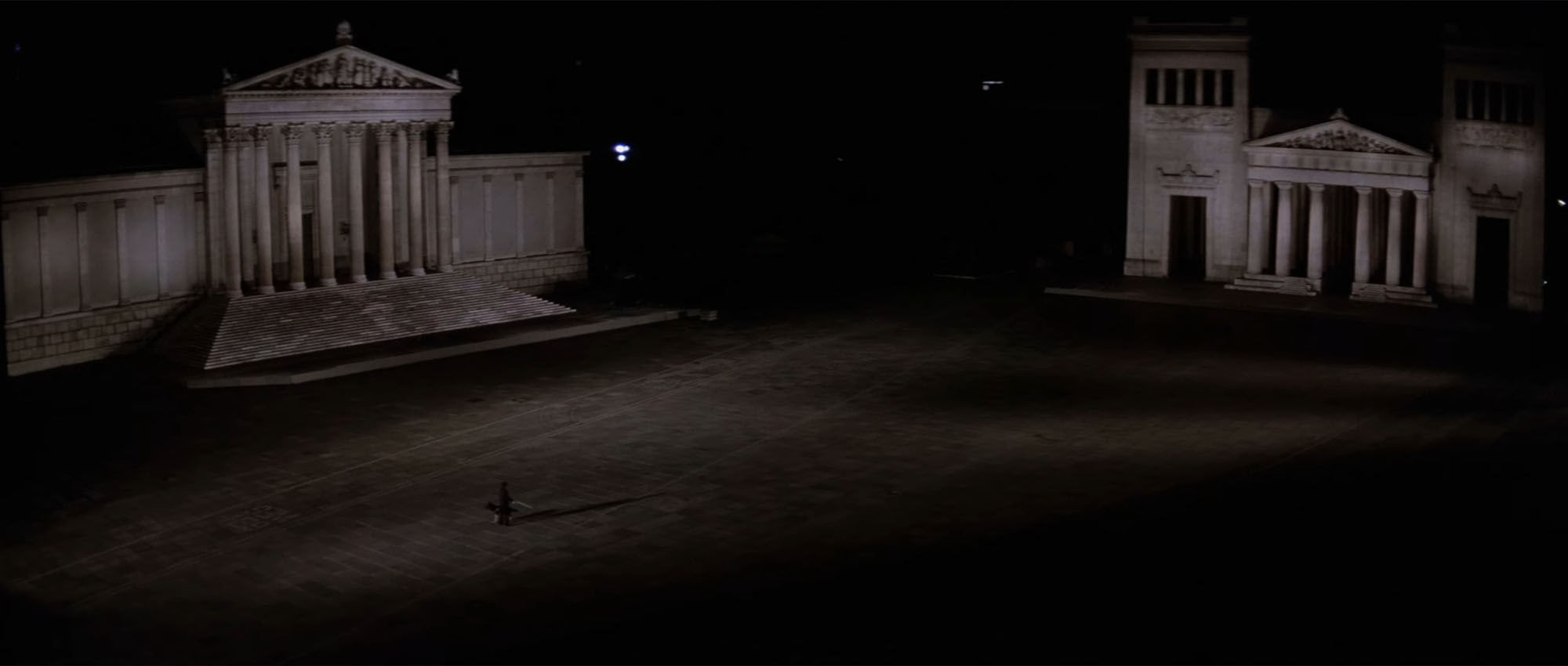
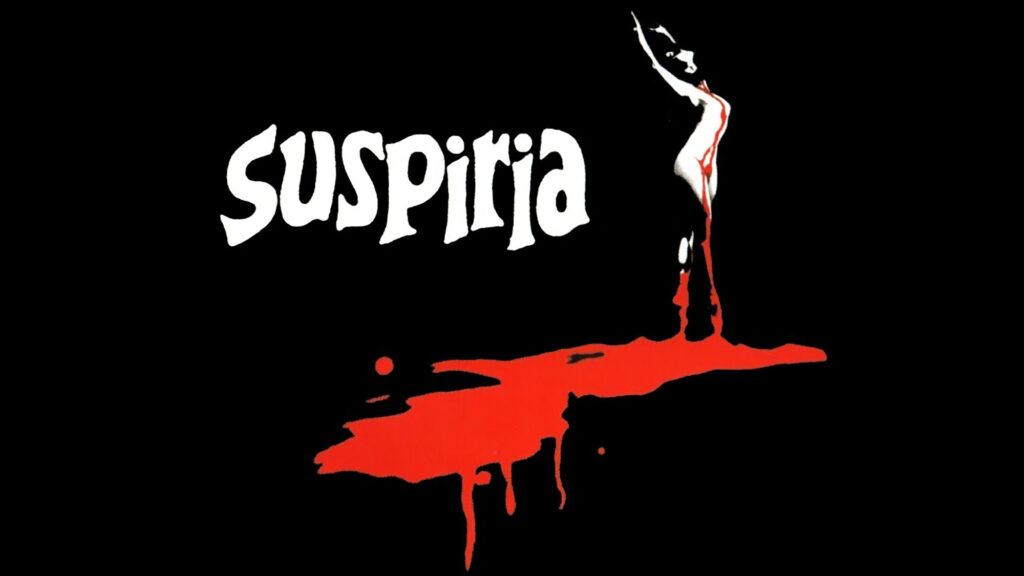
Suspiria
Suspiria (1977) was primarily filmed in Italy, with studio work done at De Paolis Studios in Rome and exteriors shot in Munich, Germany.
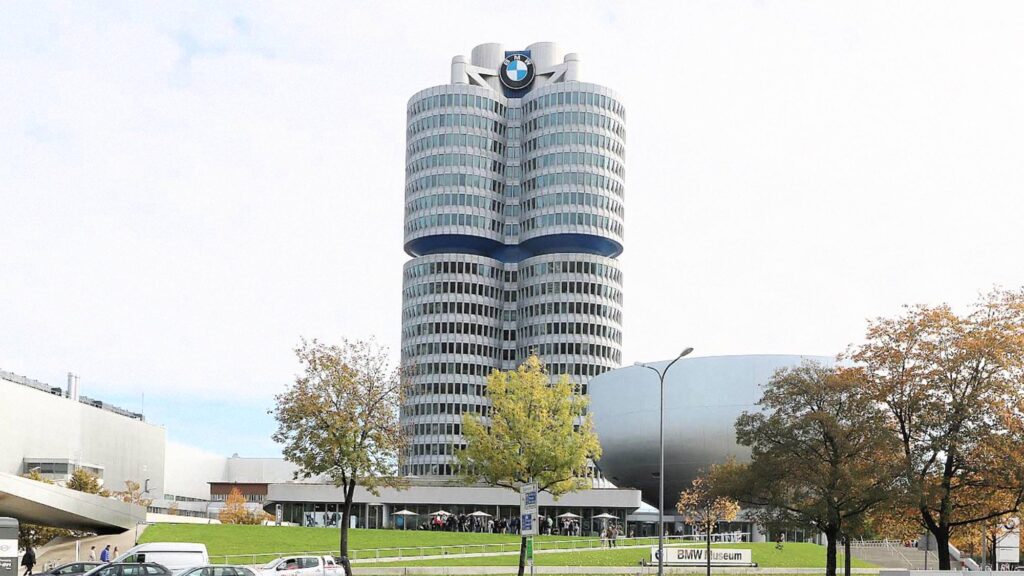
BMW Headquarters
BMW Headquarters, also known as the BMW Tower or BMW-Vierzylinder, is best known from Rollerball (1975) and Suspiria (1977).
Zürich Hauptbahnhof
Zürich Hauptbahnhof appeared in Kohlhiesels Töchter (1962), Assignment to Kill (1968), The Bourne Identity (1988) and The Girl with the Dragon Tattoo (2011).
Grandhotel Pupp
Grandhotel Pupp has appeared in Waiter, Scarper!, The Death of the Beautiful Deer, Shanghai Knights, Last Holiday, Casino Royale, La Vie en Rose and Nobel.
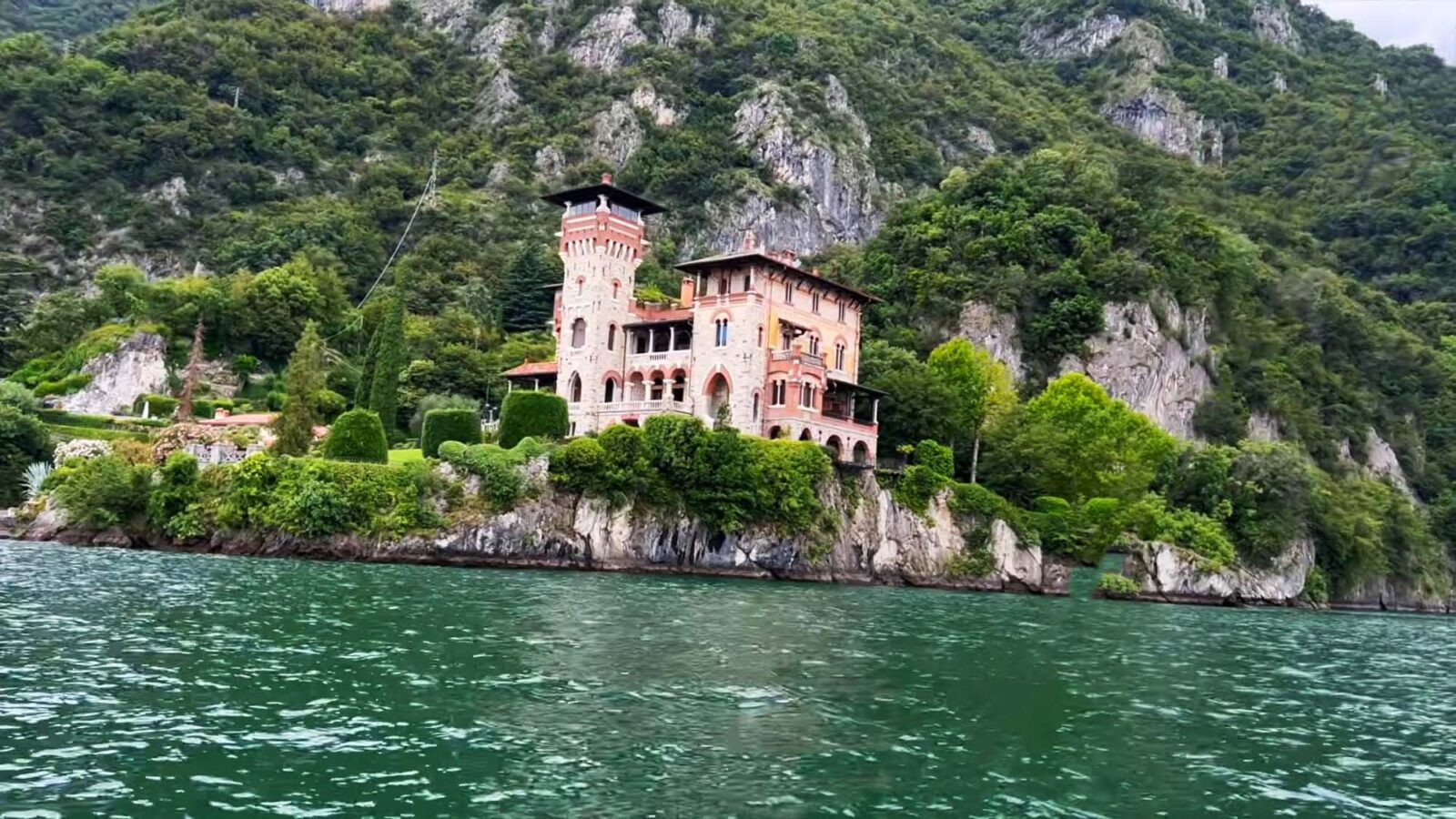
Villa La Gaeta
Villa La Gaeta, an early twentieth-century villa on the western shore of Lake Como, has appeared in The Final Contract (1993) and Casino Royale (2006).
Furka Pass
Furka Pass is a high mountain pass in the Swiss Alps, and has appeared in Goldfinger (1964) and the short film Under the Ice (2024).

Villa del Balbianello
Villa del Balbianello has appeared in several films, most famously A Month by the Lake, Star Wars: Episode II – Attack of the Clones and Casino Royale.

Olšany Cemetery
Olšany Cemetery is in Ferat Vampire, Náhrdelník, From Hell, Bad Company, The League of Extraordinary Gentlemen, Hellboy, Van Helsing, Kriminálka Anděl and more.
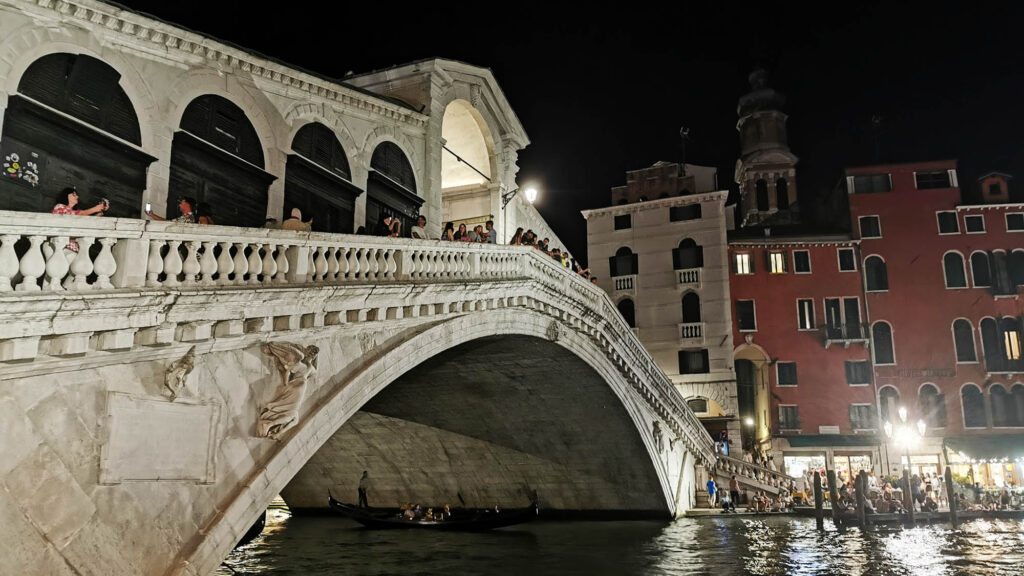
Rialto Bridge
Rialto Bridge appears in Summertime (1955), Spider-Man: Far From Home (2019), and A Haunting in Venice (2023).
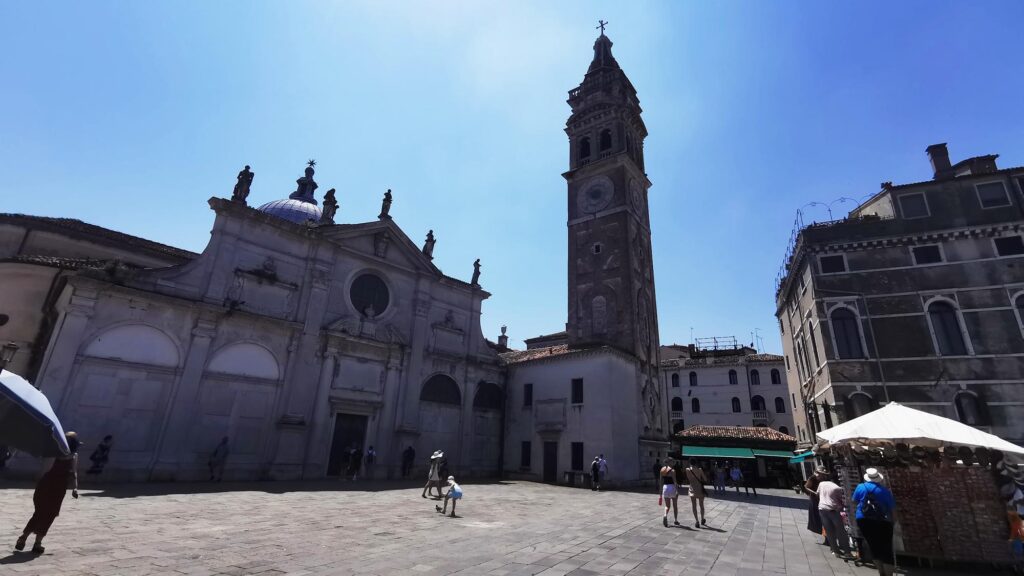
Santa Maria Formosa
Films associated with Santa Maria Formosa are A Little Romance (1979), The Wings of the Dove (1997) and Spider-Man: Far From Home (2019).