
The Texas Chain Saw Massacre (1974) is an American horror film directed by Tobe Hooper and written by Hooper and Kim Henkel. The film follows a group of young friends travelling through rural Texas after reports of grave-robbing in the area. Their trip leads them to an isolated farmhouse, where they encounter Leatherface and his cannibalistic family. Marilyn Burns stars as Sally Hardesty, with Gunnar Hansen as Leatherface, Edwin Neal as the hitchhiker, Jim Siedow as the cook, and Paul A. Partain, Allen Danziger, William Vail and Teri McMinn as the other young travellers. Made on a low budget and shot in harsh summer conditions, The Texas Chain Saw Massacre became one of the most influential horror films of the 1970s. Its documentary-like texture, rural setting, extreme sound design and sense of physical decay helped define a new kind of American horror, even though much of the violence is suggested rather than shown directly.
The Texas Chain Saw Massacre was filmed in Central Texas, mostly around the Austin area, using real rural locations rather than purpose-built horror sets. The most famous location is the Sawyer family farmhouse, which originally stood near Round Rock, close to Quick Hill Road, in an area that has since been heavily redeveloped. The house was later moved to Kingsland, where it has operated as a restaurant, first known as Grand Central Café and later as Hooper’s. Bagdad Cemetery in Leander was used for the opening cemetery scenes, where the story begins with reports of grave desecration. The gas station and barbecue stop was filmed at the former Ryan’s Hills Prairie Grocery at 1073 State Highway 304 near Bastrop, a location now strongly associated with the film’s horror-tourism legacy. Other Texas locations connected to the production include Watterson, used for the slaughterhouse material, and rural roads around Round Rock for the van journey and final escape. The film’s locations are central to its power: empty roads, sun-bleached fields, old farm buildings, cemeteries, meat-industry spaces and roadside businesses make the horror feel rooted in an ordinary Texas landscape rather than a gothic fantasy world. The later relocation of the farmhouse has also made The Texas Chain Saw Massacre unusual among horror classics, since its most iconic house no longer stands where it was filmed, but still survives as a recognisable building that fans can visit in a completely different Texas town.
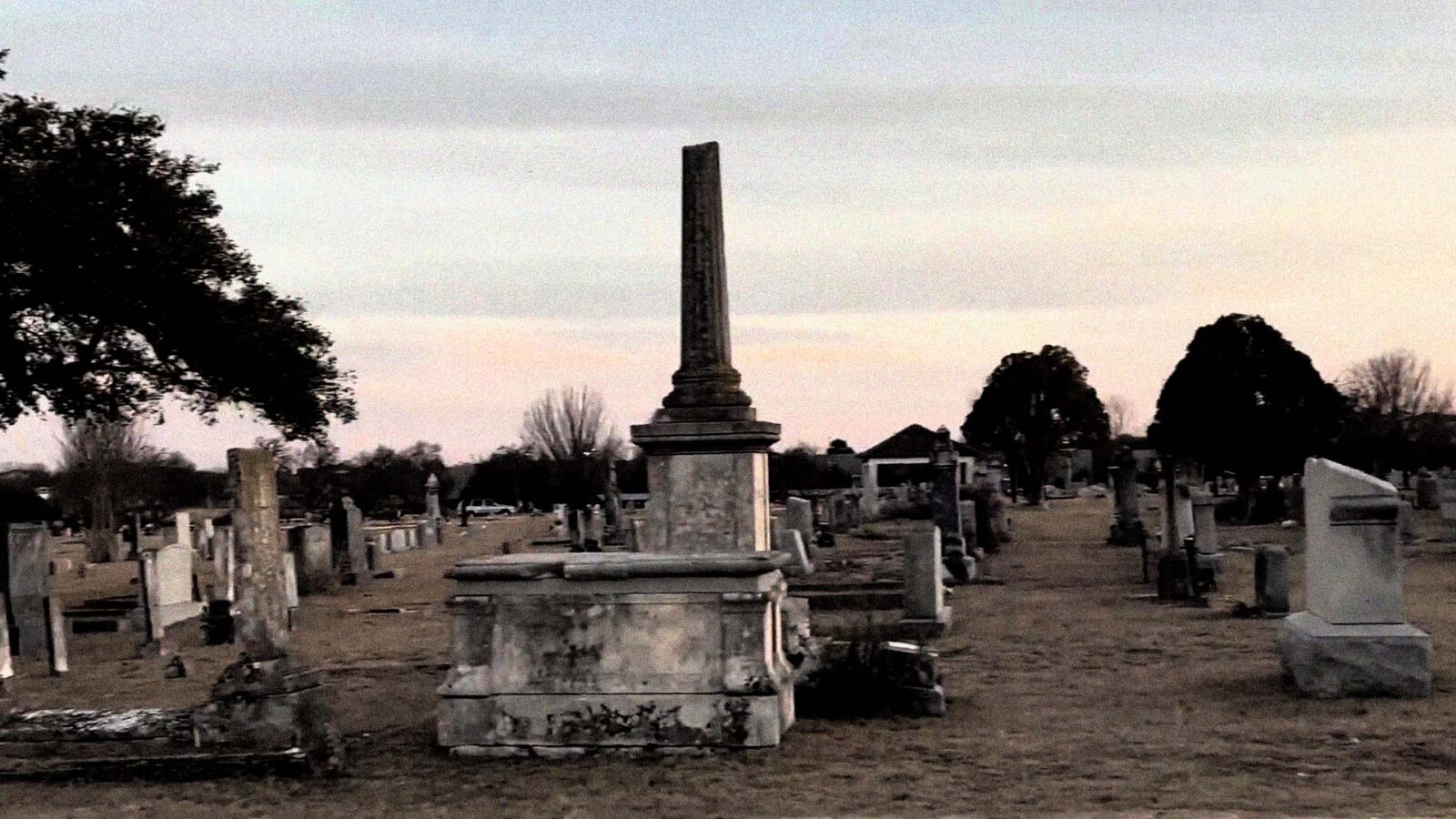
Bagdad Cemetery
Bagdad Cemetery has appeared in The Texas Chain Saw Massacre (1974). The cemetery is used for the film’s disturbing opening images of grave desecration.

Hooper’s
Hooper’s appears in The Texas Chain Saw Massacre. The film was not shot at the house’s current Kingsland location, but the building itself is the same house.
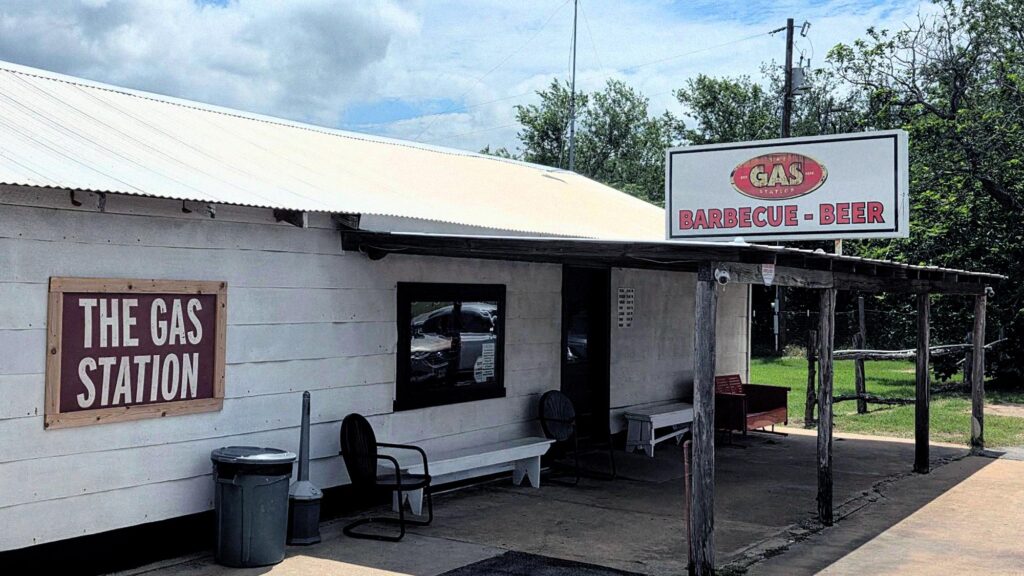
The Gas Station
The Gas Station appears in The Texas Chain Saw Massacre (1974), where it is used as the Last Chance Gas Station. The location is one of the main stops.