
Gregory Peck (5 April 1916 – 12 June 2003) was an American actor and producer best known for his performances in Roman Holiday (1953), Moby Dick (1956), The Guns of Navarone (1961), Cape Fear (1962), To Kill a Mockingbird (1962) and The Omen (1976). Born Eldred Gregory Peck in La Jolla, a coastal community in San Diego, California, he was the son of Gregory Pearl Peck, a pharmacist, and Bernice Mae Ayres, who came from Missouri. His family had strong connections to Ireland, particularly the Dingle Peninsula in County Kerry, where his paternal grandmother, Catherine Ashe, originated. Peck’s father had also spent part of his childhood on a farm near Minard, outside Dingle.
Peck’s parents separated during his early childhood and divorced in 1922. His mother returned to Missouri, while he remained in La Jolla with his maternal grandmother, who regularly took him to the cinema. At the age of ten, he was sent to St. John’s Catholic Military Academy near Los Angeles, where he spent four years as a boarding student. Following his grandmother’s death, he returned to San Diego to live with his father and attended San Diego High School. After graduating in 1934, he enrolled at San Diego State Teachers College, now San Diego State University, before transferring to the University of California, Berkeley, the following year.
At Berkeley, Peck initially studied medicine, following his father’s wishes, while also taking English literature courses and participating in the university’s rowing team. His interest in acting developed during his final year, when he appeared in several student theatre productions. After graduating in 1939, he travelled across the United States to New York City, where he won a scholarship to the Neighborhood Playhouse School of the Theatre. He studied acting under Sanford Meisner and movement under choreographer Martha Graham, supporting himself through various jobs, including working as a barker at the 1939 New York World’s Fair and as an usher at Radio City Music Hall. During periods of financial hardship, he sometimes slept outdoors in Central Park.
Peck began working professionally in regional theatre, including engagements at the Barter Theatre in Abingdon, Virginia, and the Cape Playhouse in Dennis, Massachusetts. In 1941, he toured with Katharine Cornell in George Bernard Shaw’s The Doctor’s Dilemma before making his Broadway debut in The Morning Star (1942). He subsequently appeared in The Willow and I and Sons and Soldiers (1943). His performances attracted the attention of Hollywood producers, and in 1944 he moved to California to begin his film career. Unlike many actors of the period, he resisted signing a long-term exclusive studio contract, allowing him to work with several production companies.
His first feature film was Days of Glory (1944), directed by Jacques Tourneur, in which Peck portrayed a Russian partisan fighting German forces during the Second World War. His next major role, as a Scottish missionary serving in China in The Keys of the Kingdom (1944), earned him his first Academy Award nomination for Best Actor. The film’s Chinese settings were recreated primarily at Twentieth Century Fox Studios in Los Angeles, establishing an early example of geographical substitution in his filmography.
Peck subsequently worked with Alfred Hitchcock in Spellbound (1945), starring opposite Ingrid Bergman in a psychological thriller set around a psychiatric institution in the northeastern United States. Much of the film was produced at Selznick International Studios in Culver City, California, with exterior scenes photographed in the surrounding region. Its elaborate dream sequence, designed by Salvador Dalí, was created using specially constructed sets rather than actual locations. The film was followed by Duel in the Sun (1946) and The Yearling (1946), two productions that took Peck into the rural landscapes of the American West and South.
The Yearling, adapted from Marjorie Kinnan Rawlings’s novel, was set in the Florida scrub country during the nineteenth century. Peck portrayed Ezra “Penny” Baxter, a farmer whose son adopts an orphaned deer. The production incorporated actual Florida locations, including Silver Springs near Ocala and the countryside around Hawthorne. The landscapes of the Ocala National Forest had inspired Rawlings’s original novel, and an earlier attempt to film the adaptation had taken place in the Juniper Prairie Wilderness. Additional scenes were filmed in California, including the Los Angeles County Arboretum in Arcadia and the mountain communities around Big Bear Lake and Lake Arrowhead. The film combined locations from both sides of the United States to recreate a single rural Florida environment.
In 1947, Peck returned to La Jolla to establish a theatre company with fellow actors Dorothy McGuire and Mel Ferrer. The La Jolla Playhouse initially operated at the auditorium of La Jolla High School, presenting summer productions featuring established Hollywood performers. Its first season included plays such as Night Must Fall, Dear Ruth and Angel Street, the latter starring Peck himself. The company became an important cultural institution in the San Diego region, attracting performers including Groucho Marx, Vincent Price, Olivia de Havilland and Eve Arden.
After its original period of activity ended, La Jolla Playhouse was revived in 1983 on the campus of the University of California, San Diego. It subsequently developed into one of America’s leading regional theatres, presenting productions that transferred to Broadway, including The Who’s Tommy and Jersey Boys. Peck’s involvement in founding the institution gave him a lasting connection to the theatrical development of his hometown beyond his own acting career.
Peck continued appearing in major Hollywood productions throughout the late 1940s. In Gentleman’s Agreement (1947), directed by Elia Kazan, he portrayed a journalist investigating antisemitism in American society. The story moves between New York City and Connecticut, reflecting the social environments in which the central character conducts his investigation. The production was based largely at Twentieth Century Fox Studios in Los Angeles. Peck received another Academy Award nomination for the performance, while the film won Best Picture.
His wartime drama Twelve O’Clock High (1949) provided another distinctive geographical production. Peck portrayed Brigadier General Frank Savage, commander of an American bomber group stationed in England during the Second World War. Although the story takes place at fictional RAF Archbury, the filmmakers created the airfield using military installations in Florida and Alabama rather than filming in Britain.
Duke Field, an auxiliary installation of Eglin Air Force Base near Fort Walton Beach, Florida, served as the principal filming location. The production constructed approximately fifteen buildings, including a replica wartime control tower, to recreate the English airfield. However, the runways at Eglin were considered too light in colour to resemble those used by the Royal Air Force during the war. The filmmakers therefore moved the takeoff and landing sequences to Ozark Army Airfield in Alabama, where darker runways and an overgrown military environment provided a more convincing wartime setting. Actual B-17 Flying Fortress bombers were supplied with assistance from the United States Air Force. The film received particular attention for its use of genuine military aircraft and installations.
Peck’s international career expanded considerably during the 1950s. One of his most important films was William Wyler’s Roman Holiday (1953), in which he portrayed American journalist Joe Bradley opposite Audrey Hepburn as Princess Ann. Unlike many Hollywood films set in Europe during the period, Roman Holiday was filmed extensively in the actual city where its story takes place. The production travelled to Rome, Italy, in the summer of 1952, using historic streets, squares, restaurants and monuments rather than recreating the entire city on a Hollywood backlot.
One of the most recognisable Roman Holiday locations is the apartment at 51 Via Margutta, where Joe takes the exhausted princess after discovering her asleep in the street. The narrow road, historically associated with artists and painters, became one of the film’s principal residential settings. The Spanish Steps and Piazza di Spagna appear during Princess Ann’s exploration of Rome, while other scenes were filmed around the Pantheon, Piazza Venezia, the Colosseum and the River Tiber.
Another famous sequence was filmed at the Bocca della Verità, the ancient marble sculpture located in the portico of the Church of Santa Maria in Cosmedin. Joe pretends that his hand has been bitten off after placing it inside the sculpture’s mouth, provoking a startled reaction from the princess. The scene became one of the film’s best-known moments. The final press conference was filmed inside the Galleria Colonna at Palazzo Colonna, while additional interiors were completed at Cinecittà Studios. Roman Holiday established a particularly strong connection between Peck and the historic architecture of the Italian capital.
Peck returned to Asia for The Purple Plain (1954), portraying a Canadian pilot serving with the Royal Air Force in Burma during the Second World War. Although the story takes place in Burma, now Myanmar, the production was filmed partly in Ceylon, now Sri Lanka. Exterior scenes were photographed around Sigiriya, the ancient rock fortress in central Sri Lanka, where tropical vegetation and open landscapes represented the Burmese countryside. Interior scenes were completed at Pinewood Studios in Buckinghamshire, England. The production used aircraft and personnel provided with assistance from the Royal Air Force, combining actual military equipment with locations thousands of kilometres from the story’s intended setting.
One of Peck’s most geographically ambitious productions was John Huston’s Moby Dick (1956), an adaptation of Herman Melville’s novel in which he portrayed the obsessive whaling captain Ahab. Although the story begins in New Bedford, Massachusetts, the production recreated the nineteenth-century American whaling port in Youghal, a historic harbour town in County Cork, Ireland. Huston selected Youghal because much of its waterfront had retained an older appearance, making it suitable for a film set more than a century earlier.
During the summer of 1954, Youghal’s harbour was transformed for the production, with temporary façades, period vessels and maritime equipment installed along the waterfront. The harbour basin represented New Bedford, while the town’s lighthouse appeared during the departure of the whaling ship Pequod. Other sequences were filmed along the Welsh coast, including Ceibwr Bay in Pembrokeshire, and around the Canary Islands and Madeira, where maritime scenes and footage of actual whaling activity were recorded. Studio work was completed at Elstree Studios in Hertfordshire.
One of the buildings most closely associated with the Moby Dick production was Linehan’s pub on Market Square in Youghal. Director John Huston used part of the premises as a temporary production office, and the establishment became a gathering place for cast and crew. It was subsequently renamed Moby Dick’s in recognition of the film, retaining memorabilia and photographs from the production for many years. The pub remained in the Linehan family for generations before closing on 1 January 2026, following the retirement of its owners. The building remains a physical connection between the town and one of Peck’s most ambitious film productions.
Peck returned to the American West in William Wyler’s The Big Country (1958), co-starring Charlton Heston, Jean Simmons and Burl Ives. The film follows a former sea captain who travels west to join his fiancée’s family, becoming involved in a dispute between rival cattle ranchers. Rather than filming the entire Western on studio backlots, Wyler used large agricultural properties and desert landscapes across California.
The expansive ranch scenes were filmed around Stockton and Farmington in the San Joaquin Valley, including the Drais Ranch and surrounding cattle country. The distinctive rock formations used for the climactic confrontation were filmed at Red Rock Canyon State Park in the Mojave Desert, north of Los Angeles. Additional scenes used Canyon de Chelly in Arizona. Peck had developed a personal interest in cattle ranching during the 1950s and leased grazing land in several California counties, including Santa Barbara and San Luis Obispo. His own involvement with the region’s ranching industry consequently gave him a personal connection to the landscapes represented in the film.
His next major international production was Stanley Kramer’s On the Beach (1959), a post-apocalyptic drama set in Australia after a nuclear war has devastated the Northern Hemisphere. Peck portrayed Commander Dwight Towers, an American submarine captain whose crew arrives in Melbourne while waiting for the approaching radioactive fallout. Unlike many American productions filmed abroad, On the Beach was shot extensively in the actual country where its story takes place, incorporating recognisable Australian streets, military installations and coastal landscapes.
Melbourne provided many of the principal locations, including Flinders Street Station, the former General Post Office and other civic buildings. The surrounding communities of Frankston, Berwick and Mount Eliza were also used extensively. Canadian Bay Beach in Mount Eliza became an important location for scenes involving Peck and Ava Gardner, who portrayed Moira Davidson. Filming took place during unusually hot weather in January 1959, with the cast and crew working on the exposed beach while local residents watched.
Another significant On the Beach location was the Williamstown Naval Dockyard in Melbourne, where the production received assistance from the Royal Australian Navy. Peck filmed scenes aboard the aircraft carrier HMAS Melbourne, while the British submarine HMS Andrew was also used. The actual naval vessels and dockyard facilities provided a realistic setting for the fictional American submarine crew. The production became one of the most significant international films shot in Australia during the 1950s.
Peck subsequently travelled to Greece for J. Lee Thompson’s wartime adventure The Guns of Navarone (1961), starring alongside David Niven and Anthony Quinn. The story follows a group of Allied commandos attempting to destroy an enormous German coastal artillery installation on a fictional island in the Aegean Sea. Much of the production was filmed on Rhodes, where historic fortifications, coastal cliffs and harbours provided the setting.
Rhodes Harbour was used for the departure of the commando team, while the Acropolis of Lindos featured in scenes involving local resistance fighters. The rocky coastline around the island provided locations for the group’s dangerous approach to the German-held fortress. Additional filming took place at Elstree Studios in England, where sections of the military installation and its interiors were constructed. The production also incorporated locations elsewhere in the Mediterranean. The film established a strong connection between Peck and Rhodes, which became one of the most recognisable locations associated with his international career.
He returned to the United States for Cape Fear (1962), a psychological thriller directed by J. Lee Thompson and co-starring Robert Mitchum. Peck played Sam Bowden, a lawyer whose family is threatened by a convicted criminal seeking revenge. The film was shot partly in Savannah, Georgia, where historic streets, squares and civic buildings provided the setting for the escalating confrontation.
Savannah City Hall and the surrounding Factors Walk district were used for courthouse scenes, while Forsyth Park provided the setting for a sequence in which Mitchum’s character, Max Cady, stalks Bowden’s daughter. Other filming took place on Tybee Island, Georgia, where a beachfront pavilion was used during a confrontation. The climactic houseboat sequences were filmed partly at Ladd’s Marina in Stockton, California, with studio interiors completed at Universal Studios. The production therefore combined two geographically distant American regions to create its coastal Southern setting.
Peck’s most celebrated performance came in Robert Mulligan’s To Kill a Mockingbird (1962), adapted from Harper Lee’s novel. He portrayed Atticus Finch, a lawyer defending a Black man falsely accused of rape in a small Alabama community during the 1930s. Although the story takes place in the fictional town of Maycomb, inspired by Lee’s hometown of Monroeville, Alabama, the film was produced primarily at Universal Studios in Universal City, California.
The filmmakers visited Monroeville to study its architecture, particularly the historic Monroe County Courthouse. Rather than filming the courtroom scenes inside the actual building, production designers photographed and measured the courthouse interior, then constructed a detailed recreation on a Universal sound stage. The resulting set reproduced many of the original building’s architectural features, including its galleries and courtroom arrangement.
The fictional streets of Maycomb were also constructed at Universal Studios. To create the appearance of a Southern town during the Great Depression, the production acquired several older wooden houses from a Los Angeles neighbourhood scheduled for demolition. The buildings were dismantled, transported to the studio and reconstructed as part of the town set. Universal’s Courthouse Square backlot provided additional exterior locations, with specially constructed residential streets and interiors used throughout the production. The film therefore recreated the architecture of Alabama using actual houses from California and a studio-built courthouse based on a real building more than 3,000 kilometres away.
Peck won the Academy Award for Best Actor for his portrayal of Atticus Finch. Harper Lee, whose own father had practised law in Monroeville, developed a friendship with the actor and gave him her father’s pocket watch following the production. The original Monroe County Courthouse subsequently became an important literary landmark and museum, partly because of its association with the novel and film, even though the courtroom sequences had been filmed in California.
Peck continued appearing in large-scale productions during the 1960s, including Mackenna’s Gold (1969), a Western in which he portrayed a sheriff searching for a legendary canyon filled with gold. The film was shot extensively in the American Southwest, using some of the region’s most distinctive geological formations. Canyon de Chelly National Monument in Arizona provided major locations, including the towering Spider Rock formation, while Monument Valley and Glen Canyon were also used.
Additional Mackenna’s Gold locations included Kanab and Paria in Utah and landscapes around Medford, Oregon. The filmmakers combined sandstone canyons, open desert and mountainous terrain to create the fictional search for the gold. The production was one of several Westerns to make use of the dramatic landscape around Canyon de Chelly, a location associated with numerous films and the history of the Navajo Nation.
After a period in which he appeared less frequently on screen, Peck returned to international prominence in Richard Donner’s supernatural horror film The Omen (1976). He portrayed Robert Thorn, an American diplomat whose adopted son Damien is revealed to have a terrifying connection to biblical prophecy. Although the film begins in Rome and follows an American family, most of its production took place in England, particularly London, Surrey and Berkshire.
The Thorn family’s English residence was represented by South Hill Park in Bracknell, a historic country house surrounded by landscaped gardens. The exterior of the mansion and its grounds provided the setting for several important sequences, including Damien’s birthday celebration. The production also used Guildford Cathedral in Surrey, where Damien reacts violently to approaching the church.
Several London locations became central to The Omen. Grosvenor Square in Mayfair represented the area surrounding the American Embassy, while Bishops Park in Fulham was used for the scene in which Father Brennan, played by Patrick Troughton, warns Robert Thorn about Damien. The priest’s death was filmed at All Saints Church in Fulham, where a lightning rod falls from the roof and fatally impales him.
The film also used the former Windsor Safari Park, now occupied by Legoland Windsor, for the sequence in which animals react violently to Damien. Northwick Park Hospital in Harrow provided the exterior of the hospital where Katherine Thorn is killed, while St. Peter’s Church in Staines-upon-Thames was used for the climactic confrontation between Robert and Damien. The final funeral scene was filmed at Brookwood American Cemetery in Surrey, a burial ground associated with American military personnel who died during the First World War. The Omen therefore connected Peck to a wide collection of historic British churches, estates and institutions.
Peck took on another historical role in MacArthur (1977), portraying American General Douglas MacArthur during the Second World War and the Korean War. He subsequently played the Nazi physician Josef Mengele in Franklin J. Schaffner’s The Boys from Brazil (1978), a thriller adapted from Ira Levin’s novel. The story follows an investigation into a conspiracy involving former Nazi officials in South America, but production took place across several European and American locations.
Lisbon, Portugal, provided much of the film’s urban setting, including the historic Palacete Henrique Mendonça, which was used for a meeting between former Nazis. The Tivoli Hotel and Hotel Palácio in nearby Estoril also appeared, while additional filming took place in Vienna and Salzburg in Austria. In Pennsylvania, locations around Lancaster were used for scenes set in rural America, including Zook’s Mill Covered Bridge. Studio work was completed at facilities in Vienna and Shepperton, England. The production combined Portugal, Austria and the northeastern United States to create its international conspiracy story.
Another historically based production took Peck to India for The Sea Wolves (1980), directed by Andrew V. McLaglen. Co-starring Roger Moore and David Niven, the film dramatises Operation Creek, a covert British raid against German shipping in the Portuguese-controlled territory of Goa during the Second World War. Unlike many international wartime productions, The Sea Wolves was filmed extensively in Goa itself, using actual coastal landscapes, harbours and surviving colonial architecture associated with the region’s Portuguese history. The setting gave the production a direct geographical connection to the wartime operation on which it was based.
In the television film The Scarlet and the Black (1983), Peck portrayed Monsignor Hugh O’Flaherty, an Irish Catholic priest who helped Jews and escaped Allied prisoners of war in Rome during the German occupation of Italy. The international production was filmed in Rome and associated locations in Vatican City, incorporating the historical setting of the events. The role also provided another connection to Peck’s Irish family background, as O’Flaherty was originally from County Cork and had grown up in County Kerry.
Peck returned to Mexico for Old Gringo (1989), starring alongside Jane Fonda and Jimmy Smits in a historical drama inspired by the disappearance of American writer Ambrose Bierce during the Mexican Revolution. The production was shot extensively on location in Mexico, using surviving colonial buildings, haciendas and rural landscapes to recreate the country during the early twentieth century.
One of the film’s most significant locations was Hacienda de Santa María Regla near Huasca de Ocampo in the state of Hidalgo. The eighteenth-century property represented the headquarters of revolutionary leader Pancho Villa. Other scenes were filmed in Zacatecas, whose historic streets were transformed into the city of Chihuahua during a New Year’s Eve celebration in 1913. Additional filming took place around Mapimí in Durango and other communities in Hidalgo. Rather than constructing an entirely fictional Mexico in an American studio, the production used the country’s historic architecture and landscapes as the foundation for its setting.
Peck made a notable return to one of his earlier films with a supporting appearance in Martin Scorsese’s remake of Cape Fear (1991). While Robert De Niro and Nick Nolte took over the central roles associated with the original film, Peck appeared as attorney Lee Heller. The production again used locations in the American South, including Savannah, Georgia, creating a direct connection between Peck’s film career in the early 1960s and one of the major Hollywood remakes of the 1990s.
His later screen work included a television adaptation of Moby Dick (1998), starring Patrick Stewart as Captain Ahab. More than forty years after portraying the obsessive whaling captain in John Huston’s film, Peck returned to the same story in the supporting role of Father Mapple, the preacher who addresses the sailors before their departure. His performance earned him a Golden Globe Award, and the production created an unusual connection between two adaptations of the same novel separated by more than four decades.
Outside his film career, Peck maintained a lifelong connection to Southern California. During his first marriage to Finnish-born Greta Kukkonen, he lived in Pacific Palisades, where the couple owned a ranch-style house designed by architect Cliff May. The residence reflected the emerging Californian architectural style of the period, with open living spaces, broad windows and a connection between the interior and surrounding garden. They had three sons, Jonathan, Stephen and Carey, before their marriage ended in 1954.
Peck subsequently married French journalist Véronique Passani on New Year’s Eve 1955. The wedding took place at the ranch of their friend, painter Channing Peake, near Lompoc in Santa Barbara County, California. They later had two children, Anthony and Cecilia, and remained married for the rest of his life. The couple established a longtime family home in Holmby Hills, Los Angeles, one of the city’s historic residential neighbourhoods situated between Beverly Hills and Bel-Air.
Their Holmby Hills residence was a Colonial Revival-style house built in 1932 on approximately 1.3 acres of land. The property included extensive gardens, mature trees, a swimming pool and traditional architectural details. Peck and Véronique lived there for many decades, maintaining the estate as a family residence rather than treating it as a short-term property investment. Following their deaths, the house was placed on the market in 2013 with an asking price of approximately $25 million.
Peck also maintained connections with Europe, particularly France and Ireland. He and Véronique spent periods at a residence on Cap Ferrat on the French Riviera, where their social circle included several prominent international actors and entertainers. In London, Peck maintained a relationship with the historic Savile Row tailor Huntsman, which produced clothing for both his personal wardrobe and several film roles. His regular work at Elstree, Pinewood and Shepperton Studios further strengthened his association with Britain during the 1950s, 1960s and 1970s.
His Irish ancestry remained personally important throughout his life. Peck visited Dingle and the surrounding countryside in County Kerry on several occasions, returning to the region where his grandmother Catherine Ashe and other relatives had lived. Through the Ashe family, he was related to Thomas Ashe, an Irish republican who participated in the Easter Rising of 1916 and died during a hunger strike the following year. Peck was born less than three weeks before the uprising began, making the events of that year a particularly notable part of his family history.
The connection between Peck and Dingle later became part of the local film festival’s identity. In 2008, the Dingle International Film Festival established the Gregory Peck Award for Excellence in the Art of Film with the support of his family. The award’s design was based on the Aglish Pillar Stone, an early medieval monument originally from the Minard area of the Dingle Peninsula. Recipients included Gabriel Byrne, Jim Sheridan, Stephen Frears and Laura Dern. The award was subsequently associated with the San Diego International Film Festival, reconnecting the family’s Irish heritage with Peck’s Californian birthplace.
Peck also made significant contributions to cultural institutions beyond acting. He served as the founding chairman of the American Film Institute in 1967 and was president of the Academy of Motion Picture Arts and Sciences for three terms. He also helped establish the Inner City Cultural Center in Los Angeles, which provided theatrical opportunities for performers from diverse backgrounds. In 1995, he launched the Gregory Peck Reading Series in association with the Los Angeles Public Library, supporting literature and public reading programmes. These activities extended his influence from film production into the cultural life of Los Angeles and his home region.
Peck died at his home in Los Angeles on 12 June 2003, aged 87. His funeral took place at the Cathedral of Our Lady of the Angels in downtown Los Angeles on 16 June, with a eulogy delivered by actor Brock Peters, who had portrayed Tom Robinson opposite Peck’s Atticus Finch in To Kill a Mockingbird. Peck was interred in the cathedral’s Crypt Mausoleum, located one floor below the main church. The cathedral had opened in 2002 and was designed by Spanish architect Rafael Moneo. Its mausoleum includes historic stained-glass windows transferred from the former Cathedral of Saint Vibiana, making Peck’s final resting place part of a significant modern architectural landmark.
Gregory Peck’s life and career remain connected to an unusually wide range of geographical locations, from La Jolla, Berkeley and the theatres of Manhattan to the historic streets of Rome, the harbour of Youghal, the beaches of Australia and the Greek island of Rhodes. His work also demonstrates the different ways filmmakers recreated real places, with Florida airfields representing wartime England, Sri Lanka standing in for Burma and a Los Angeles studio recreating the courthouse and wooden houses of Alabama. Beyond film, his founding role at La Jolla Playhouse, family connections to County Kerry and final resting place in downtown Los Angeles provide lasting physical links to his life outside the screen.
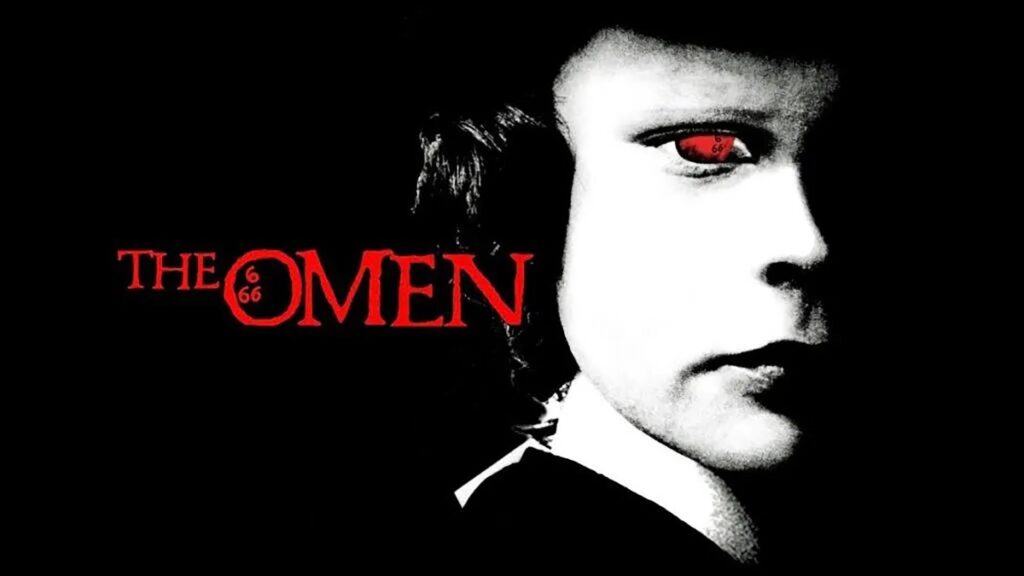
The Omen
The Omen was primarily filmed in England, with key locations including London, Surrey, and Berkshire. Additional scenes were shot in Rome and Jerusalem.