
Jim Carrey (born James Eugene Carrey on 17 January 1962) is a Canadian-American actor, comedian, writer and visual artist whose career has encompassed stand-up comedy, television, film and painting. He was born in Newmarket, Ontario, a town north of Toronto, as the youngest of four children of Percy Joseph Carrey and Kathleen Oram. His father was an accountant and talented amateur saxophonist who had once considered a professional music career, while his mother was a homemaker who experienced recurring health problems. Carrey grew up in the Toronto suburbs with his older siblings, John, Patricia and Rita, developing an interest in comedy and impersonation during childhood. His father encouraged his performances, and Carrey spent hours practising facial expressions and imitating television personalities in front of a mirror. By the age of ten, he had written to Carol Burnett asking for an opportunity to demonstrate his impressions on her television programme. Although the invitation never came, performing became an increasingly important part of his life, particularly as he discovered that making people laugh could provide relief from difficulties within the family.
The family’s financial circumstances deteriorated when Carrey was a teenager. His father lost his accounting job, and the family was forced to sell its home and seek cheaper accommodation. During the following period, they lived in a Volkswagen camper van and temporarily in tents before finding accommodation connected to a factory manufacturing steel wheels near Toronto. The family took jobs as security guards and cleaners at the factory, with Carrey working long hours after school. He later recalled becoming increasingly angry about the family’s circumstances, particularly the sight of his father performing exhausting manual work after losing his professional position. Carrey attended several schools in the Toronto area, including Aldershot High School in Burlington, but left formal education at sixteen to help support his family. The experience had a lasting influence on his ambitions. He subsequently described poverty as an important motivation behind his determination to become a successful performer, while his father’s abandoned musical aspirations became a personal reminder of the consequences of giving up a creative career.
Carrey’s professional comedy career began in Toronto during the late 1970s. His father helped him prepare an impressionist act and encouraged him to perform at Yuk Yuk’s, the comedy club established by Mark Breslin. His first appearance, at the age of fifteen, was unsuccessful, and he spent the following years improving his material and stage confidence. By the end of the decade, he had become a regular performer on the Toronto comedy circuit, appearing at Yuk Yuk’s and other clubs around Ontario. His ability to imitate celebrities became the foundation of his act, although he gradually incorporated more physical comedy and unusual characters. The young comedian attracted attention beyond Canada, and in 1981, aged nineteen, he moved to Los Angeles to pursue opportunities in the American entertainment industry. He began appearing at the Comedy Store on Sunset Boulevard in West Hollywood, where owner Mitzi Shore encouraged his development. The club was one of the most important venues in American stand-up comedy, with performers including Richard Pryor, Robin Williams, David Letterman and Andy Kaufman having established reputations there. Carrey’s impressions and extraordinary facial flexibility soon attracted attention, and Rodney Dangerfield invited him to perform as his opening act on tour.
Los Angeles became Carrey’s professional and personal base during the 1980s, although his early years there were financially uncertain. He developed a more experimental stage act, sometimes abandoning celebrity impressions in favour of deliberately strange characters and physical routines. This change occasionally alienated audiences who expected conventional stand-up comedy, but it reflected his desire to establish an identity beyond imitating other performers. He began receiving television opportunities, including an appearance on The Tonight Show Starring Johnny Carson, and was cast in the NBC sitcom The Duck Factory (1984), playing Skip Tarkenton, a young cartoonist working in an animation studio. The programme lasted only one season but introduced Carrey to American television audiences. His early films included the vampire comedy Once Bitten (1985), Francis Ford Coppola’s Peggy Sue Got Married (1986), the musical science-fiction comedy Earth Girls Are Easy (1988) and Clint Eastwood’s crime thriller The Dead Pool (1988). These productions provided regular work but did not immediately establish him as a leading film actor.
During this period, Carrey met actress Melissa Womer, who was working at the Comedy Store. They married in 1987, and their daughter, Jane Erin Carrey, was born in September that year. As his family responsibilities increased, he continued auditioning for television and film roles while developing material for live performances. A decisive opportunity came when Keenen Ivory Wayans selected him for In Living Color (1990–1994), a sketch comedy series created for the Fox network. The programme featured an ensemble of comedians and performers, including several members of the Wayans family, Jamie Foxx and David Alan Grier. Carrey became known for characters such as Fire Marshal Bill and Vera de Milo, using the exaggerated physical movements and facial expressions he had developed during his years in comedy clubs. The programme was filmed in Los Angeles and became an important part of the emerging Fox network’s identity. Carrey remained with the series through its final season, although his growing film career increasingly occupied his attention. In Living Color provided the national exposure that had been missing from his earlier work and established him as a distinctive performer within American television comedy.
His transition to major Hollywood stardom came in 1994, when three films released within the same year became substantial commercial successes. The first, Ace Ventura: Pet Detective (1994), directed by Tom Shadyac, featured Carrey as an eccentric private investigator specialising in missing animals. He contributed extensively to the character’s personality and dialogue, developing the unusual mannerisms that became central to the film. Set and filmed principally in Miami, Florida, the production used locations including the former Campton Apartments on Washington Avenue in Miami Beach, which represented Ventura’s home, and Vizcaya Museum and Gardens in Coconut Grove, where Carrey and Courteney Cox filmed scenes involving a party and the search for a missing dolphin. Other locations included the Orange Bowl and Joe Robbie Stadium, then home to the Miami Dolphins. The film’s unexpected financial success was followed by The Mask (1994), directed by Chuck Russell, in which Carrey played Stanley Ipkiss, a timid bank employee transformed by a magical mask. Although its fictional city was called Edge City, filming took place around Los Angeles. The former Ambassador Hotel on Wilshire Boulevard was used for the Coco Bongo nightclub, while the historic Fire Station No. 23 on East Fifth Street represented Ripley’s Auto Finishing. Carrey’s performance combined physical comedy with extensive visual effects and earned him his first Golden Globe nomination.
The third film, Dumb and Dumber (1994), directed by Peter and Bobby Farrelly, paired Carrey with Jeff Daniels as two friends travelling across the United States to return a briefcase. Although the story begins in Providence, Rhode Island, and moves towards Aspen, Colorado, filming took place across several states, with much of the production concentrated in Utah and Colorado. Park City and nearby ski resorts represented Aspen, while the Stanley Hotel in Estes Park, Colorado, provided the exterior of the luxury hotel where the characters stay. Salt Lake City International Airport was used to represent Providence Airport. The success of all three films established Carrey as one of the highest-paid performers in Hollywood. In the same year, his father died, shortly after Carrey had achieved the financial success he had spent years pursuing. Carrey later recalled writing himself a cheque for $10 million in 1990, dated several years into the future, as a symbolic expression of his ambitions. When his father died in September 1994, he placed the cheque in his burial suit, acknowledging the encouragement Percy Carrey had provided throughout his life.
Carrey’s subsequent films consolidated his position as a major commercial actor. He played the Riddler in Joel Schumacher’s Batman Forever (1995), opposite Val Kilmer and Tommy Lee Jones, working principally at Warner Bros. Studios in Burbank and other Southern California locations. He also returned as the animal detective in Ace Ventura: When Nature Calls (1995). In Ben Stiller’s The Cable Guy (1996), Carrey portrayed an increasingly obsessive television installer who becomes attached to a customer played by Matthew Broderick. The film was shot around Los Angeles and Orange County, including at Medieval Times Dinner & Tournament on Beach Boulevard in Buena Park. Carrey and Broderick filmed the extended restaurant sequence there in January 1996, with Carrey participating in a staged medieval combat performance. The film received a mixed response, partly because its darker comedy differed from the characters audiences had come to expect. He subsequently reunited with Shadyac for Liar Liar (1997), playing a Los Angeles lawyer who becomes temporarily incapable of lying. The production used Los Angeles City Hall and other actual buildings, with additional filming at Universal Studios in Universal City and residential locations in South Pasadena. Its commercial success demonstrated that Carrey remained a major box-office attraction despite his interest in less conventional material.
His personal life changed during the same period. His marriage to Womer ended in divorce in 1995, and he subsequently married actress Lauren Holly, whom he had met while filming Dumb and Dumber. Their wedding took place in September 1996, but the marriage lasted less than a year. Carrey continued living primarily in Los Angeles, where he had purchased a substantial property in the Brentwood neighbourhood in 1994. The estate became his principal residence for many years, providing a private base while his professional commitments took him to locations across North America and overseas. Although he was closely associated with Hollywood, he maintained a strong connection to his Canadian background and periodically returned to Ontario to visit relatives and participate in professional events.
A major departure from his established screen image came when Australian director Peter Weir cast Carrey as Truman Burbank in The Truman Show (1998), a satirical drama about a man whose entire life has unknowingly been broadcast as a television programme. Carrey played an ordinary insurance salesman who gradually discovers that his hometown, family and personal relationships are part of an elaborate artificial environment. Rather than relying on conventional studio construction for the fictional town of Seahaven, Weir selected Seaside, a planned coastal community in Walton County, Florida. Principal location filming began in December 1996 and continued through early March 1997, with Carrey and other cast members working in the town’s actual streets, shops and residential buildings. Truman’s house was a property on Natchez Street, while additional scenes were filmed around Seaside’s central square and beachfront. The production subsequently moved to California for studio interiors, constructed environments and the film’s concluding maritime sequences, which used facilities at Universal Studios. Carrey also contributed to Truman’s characteristic greeting, drawing on a phrase associated with his father. The Truman Show became one of the most important films of his career and earned him the Golden Globe Award for Best Actor in a Motion Picture Drama in January 1999.
He followed it with another dramatic role in Miloš Forman’s Man on the Moon (1999), portraying American comedian and performance artist Andy Kaufman. Carrey had admired Kaufman’s unconventional approach to comedy during his early career and became intensely involved in the project. Rather than portraying Kaufman only while cameras were recording, he frequently remained in character throughout the production, including when interacting with crew members and colleagues. He also adopted Kaufman’s abrasive stage alter ego Tony Clifton, sometimes creating confusion and conflict on set. The film was shot during 1998, with production centred in Los Angeles and additional work in New York and other locations associated with Kaufman’s career. Filming sites included the historic Los Angeles Theatre on South Broadway and locations connected to his appearances on American television and at Carnegie Hall. Carrey worked alongside Danny DeVito, Courtney Love and Paul Giamatti, while members of Kaufman’s family and former collaborators participated in the production. His performance earned a second consecutive Golden Globe, this time for Best Actor in a Motion Picture Musical or Comedy. The unusual working methods were subsequently examined in Jim & Andy: The Great Beyond (2017), a documentary constructed from extensive behind-the-scenes footage recorded during the original production.
By the end of the 1990s, Carrey had established that he could move between broad physical comedy and more restrained dramatic performances. He returned to comedy opposite Renée Zellweger in Me, Myself & Irene (2000), again working with the Farrelly brothers. Set largely in Rhode Island, the film was produced across New England, including towns in Vermont such as Waterbury, Burlington, Essex Junction and Williston. Actual buildings, including Williston Town Hall and the Ben & Jerry’s factory in Waterbury, appeared during the production. Carrey and Zellweger began a relationship during this period and were briefly engaged before separating in 2000. He also took the title role in Ron Howard’s How the Grinch Stole Christmas (2000), adapted from Dr Seuss’s children’s book. The elaborate production was based at Universal Studios in California, where the fictional town of Whoville was constructed across several sound stages and backlot areas. Carrey endured a demanding daily make-up process involving prosthetic facial appliances, coloured contact lenses and a full-body costume. He spent more than ninety filming days wearing the Grinch make-up and later described the physical discomfort as one of the most difficult aspects of his career. The film became a major commercial success and earned him another Golden Globe nomination.
Carrey continued exploring dramatic characters with Frank Darabont’s The Majestic (2001), portraying Peter Appleton, a Hollywood screenwriter who suffers memory loss and begins a new life in a small California town during the political atmosphere of the early 1950s. The fictional town of Lawson was represented by Ferndale in Humboldt County, northern California, where the production spent several weeks filming in March 2001. Carrey worked on Main Street, where modern signs and street furniture were temporarily replaced with period fittings. An elaborate cinema façade was constructed to represent the Majestic Theatre, while the actual interiors were recreated elsewhere. Additional scenes were filmed around Fort Bragg and Point Cabrillo Lighthouse in Mendocino County. The film’s historical subject, involving accusations of communist sympathies during the Hollywood blacklist, differed markedly from Carrey’s usual comedy material. Although it attracted a modest commercial audience, it provided him with another substantial dramatic role outside the physical comedy for which he remained best known.
His commercial film career continued with Bruce Almighty (2003), in which he reunited with Tom Shadyac and starred opposite Jennifer Aniston and Morgan Freeman. Carrey played a television reporter who temporarily receives divine powers after complaining about his life. Although the film is set in Buffalo, New York, the production took place principally in Southern California, with Buffalo footage used for establishing shots and visual effects. Many of the city streets and buildings were recreated on the Universal Studios backlot, while actual Los Angeles locations included the James Oviatt Building in downtown Los Angeles, used for a restaurant sequence, and The Japanese Garden in the San Fernando Valley. Carrey subsequently accepted the role of Count Olaf in Lemony Snicket’s A Series of Unfortunate Events (2004), directed by Brad Silberling. The production was filmed mainly at Paramount Studios in Hollywood and Downey Studios in California, where extensive fantasy environments were constructed. The role allowed Carrey to portray several disguises and exaggerated personalities within a single character, returning to the kind of transformation-based performance that had established his reputation during the early 1990s.
One of his most critically acclaimed performances came in Michel Gondry’s Eternal Sunshine of the Spotless Mind (2004), written by Charlie Kaufman. Carrey played Joel Barish, a quiet and emotionally withdrawn man who undergoes a procedure intended to erase memories of a failed relationship with Clementine Kruczynski, portrayed by Kate Winslet. The production took him to New York during the winter of 2003, with important sequences filmed in Montauk, at the eastern end of Long Island. Carrey and Winslet worked on the beach during extremely cold conditions, including scenes involving the Atlantic Ocean and abandoned seaside buildings. Other locations included Yonkers, where a residence on Valentine Lane represented Joel’s apartment, and streets and buildings in Manhattan and neighbouring New Jersey. Gondry frequently used practical camera effects rather than relying entirely on digital manipulation, requiring the actors to perform complicated sequences involving changes in perspective and location. Carrey later described the filming as demanding but particularly rewarding. The performance earned him another Golden Globe nomination and demonstrated a quieter dramatic range, while the film won the Academy Award for Best Original Screenplay.
Carrey’s work during the remainder of the decade included the crime thriller The Number 23 (2007), directed by Joel Schumacher, and the romantic comedy Yes Man (2008), in which he portrayed a bank employee who decides to accept every opportunity presented to him. Yes Man was filmed extensively around Los Angeles, particularly in Silver Lake, Los Feliz and Echo Park. Carrey also worked at Griffith Observatory and other recognisable locations, while scenes involving a fictional trip to Nebraska combined footage filmed at the University of Nebraska’s Memorial Stadium with material involving the principal actors shot at the Los Angeles Memorial Coliseum. The film reunited him with the kind of optimistic comedy associated with his earlier career, although he also continued accepting less conventional projects. In I Love You Phillip Morris (2009), based on the real experiences of American con artist Steven Jay Russell, Carrey portrayed a prisoner who falls in love with another inmate played by Ewan McGregor. Filmed largely in Louisiana, the production addressed material substantially different from his mainstream studio comedies. He subsequently appeared in Mr. Popper’s Penguins (2011), filmed in New York City, where the story’s Manhattan setting provided another opportunity to work away from his established home in California.
During the 2000s, Carrey also became increasingly involved in activities outside acting. He obtained United States citizenship in October 2004 while retaining his Canadian citizenship, explaining that he remained proud of the country where he had grown up. His relationship with actress and television personality Jenny McCarthy, which began in 2005 and ended in 2010, attracted considerable public attention. The couple regularly appeared together at events in Los Angeles and were involved in various charitable and public campaigns. Following their separation, Carrey devoted increasing attention to painting, sculpture and writing, interests that gradually became more important in his daily life. He had experimented with drawing and visual art since childhood, but began producing large canvases and sculptures on a more substantial scale during the early 2010s. He established a studio in New York City, where he worked on paintings combining vivid colours, expressive figures and personal symbolism. His activities were documented in the short film Jim Carrey: I Needed Color (2017), which showed him working inside the studio and discussing the personal importance of artistic expression.
Carrey returned to more familiar comedy with Dumb and Dumber To (2014), reuniting with Jeff Daniels and the Farrelly brothers twenty years after the original film. Although the story again involves the two characters travelling through several American states, the sequel was filmed principally in Georgia, with production based around Atlanta and its surrounding communities. Other work during the decade included a supporting role as Colonel Stars and Stripes in Kick-Ass 2 (2013) and an appearance in The Bad Batch (2016), an independent dystopian drama directed by Ana Lily Amirpour. He also starred in Dark Crimes (2016), an English-language crime thriller inspired by a real murder investigation in Poland. Filming took place in Kraków and surrounding locations, where Carrey portrayed a police detective investigating a case involving a novelist whose writings appear to resemble an unsolved crime. Released internationally under different distribution arrangements, the film received largely negative reviews and had a limited American theatrical release in 2018.
His personal life experienced another tragedy in September 2015, when his former girlfriend, Irish make-up artist Cathriona White, died in Los Angeles at the age of thirty. Carrey had maintained an intermittent relationship with White since 2012 and publicly expressed grief following her death. Legal disputes involving White’s family followed, but the civil lawsuits were dismissed in 2018. Carrey became increasingly selective about his screen appearances during this period, spending substantial time painting and writing rather than pursuing the demanding production schedules that had characterised his earlier career. His artwork was exhibited commercially, and he gained further attention for politically themed drawings and caricatures published online. Although these activities sometimes attracted controversy, they also reflected his growing interest in working independently of the Hollywood film industry.
In 2017, Carrey returned to the Los Angeles comedy scene in a different capacity as an executive producer of I’m Dying Up Here (2017–2018), a Showtime drama inspired by the city’s stand-up comedy community during the 1970s. Based loosely on William Knoedelseder’s book about the Comedy Store and its performers, the series explored the professional and personal difficulties facing young comedians attempting to establish careers. Carrey’s involvement drew directly on his own experiences at the Comedy Store, where he had performed alongside comedians who later became major figures in American entertainment. The following year, he reunited with Gondry for Kidding (2018–2020), a Showtime comedy-drama in which he portrayed Jeff Piccirillo, a children’s television presenter known professionally as Mr Pickles. The character struggles with a family tragedy while attempting to maintain the cheerful public image associated with his television programme. The series was produced in the Los Angeles area, with Gondry directing several episodes. Carrey also served as an executive producer, giving him a substantial creative role in a project that explored the relationship between entertainment, personal identity and private grief.
The renewed interest in his artistic activities also extended to publishing. In 2013, Carrey released How Roland Rolls, an illustrated children’s book about an ocean wave confronting the idea of individuality and impermanence. He subsequently collaborated with novelist Dana Vachon on Memoirs and Misinformation (2020), a fictionalised account of Hollywood celebrity featuring a character named Jim Carrey. Rather than a conventional autobiography, the novel combined personal experiences, satire and fictional events involving the entertainment industry. Carrey had also begun exhibiting his paintings and sculptures, with works presented through galleries including Signature Galleries in Las Vegas. His visual art increasingly reflected his interest in spirituality, identity and the relationship between the individual and the public image created through celebrity.
After several years of comparatively limited screen activity, Carrey returned to a major commercial franchise with Sonic the Hedgehog (2020), directed by Jeff Fowler and adapted from Sega’s video game series. He portrayed Dr Robotnik, an eccentric scientist attempting to capture the title character, with Ben Schwartz providing Sonic’s voice. The film was shot principally in British Columbia, Canada, including Vancouver, Burnaby and Ladysmith on Vancouver Island, which represented the fictional American town of Green Hills in Montana. The production marked a return to large-scale physical comedy, with Carrey using elaborate facial expressions, movement and improvised dialogue to develop Robotnik. He reprised the role in Sonic the Hedgehog 2 (2022), which was again filmed extensively in British Columbia. In April 2021, Carrey was photographed during location filming in Fort Langley, east of Vancouver, where Glover Road and the historic Fort Langley Community Hall represented part of Green Hills. His participation brought him back to Canada for a substantial film production more than forty years after he had begun his professional career in Toronto.
Following the release of Sonic the Hedgehog 2, Carrey publicly discussed the possibility of retiring from acting, explaining that he was satisfied with his professional achievements and interested in pursuing a quieter life. He nevertheless returned for Sonic the Hedgehog 3 (2024), again directed by Fowler, portraying both Dr Ivo Robotnik and his grandfather, Gerald Robotnik. Principal production was based in England, with substantial studio work and additional location photography. The dual performance required extensive prosthetic make-up and visual effects, with Carrey helping develop the appearance of the older character. The film was released in December 2024 and became another major commercial success. His return demonstrated that he remained willing to accept selected roles despite his earlier comments about retirement, particularly when a project offered opportunities for unusual characterisation and comedy.
Carrey’s longstanding connection with Los Angeles also underwent changes during the 2020s. In February 2023, he listed the Brentwood estate he had owned since 1994 for sale, initially asking $28.9 million. The property included a main residence, tennis court, swimming pool and a private cinema, and had served as his principal home during much of his career. The asking price was subsequently reduced several times, including another reduction in May 2025. The decision to sell attracted attention because the estate had been closely associated with Carrey’s years as one of Hollywood’s leading commercial stars. Although he increasingly limited his public appearances, he continued maintaining professional connections in both Los Angeles and Canada, while devoting considerable time to painting, writing and personal interests outside cinema.
In February 2026, Carrey travelled to Paris to receive an honorary César Award in recognition of his contribution to international cinema. The ceremony took place at L’Olympia on Boulevard des Capucines, where he was introduced by his longtime collaborator Michel Gondry. Carrey delivered his acceptance speech entirely in French, having spent several months preparing the language and pronunciation. He also discussed his family’s French ancestry, identifying an ancestor, Marc-François Carré, who had emigrated from Saint-Malo in Brittany to Canada during the eighteenth century. The appearance brought together several generations of his family, including his daughter Jane and grandson Jackson, and marked one of his most significant public honours outside North America. His speech also paid tribute to his father, whose encouragement had been central to his early career. The award followed earlier recognition including two Golden Globe Awards and his induction into Canada’s Walk of Fame in 2004.
His screen career remained active through selected projects. In March 2026, Paramount confirmed that Carrey would return for Sonic the Hedgehog 4, scheduled for theatrical release on 19 March 2027. The production brought together returning cast members and several new performers, including Kristen Bell, Ben Kingsley and Nick Offerman. In June 2026, Universal Pictures and Imagine Entertainment also began developing a sequel to How the Grinch Stole Christmas, with Carrey and Ron Howard in discussions about returning to the project. Howard subsequently discussed the proposed film at the Hamptons International Film Festival in October, explaining that the idea remained at an early stage and would require further development before production could proceed. Carrey had previously indicated that technological advances might make returning to the Grinch more appealing, particularly if motion-capture techniques could reduce the lengthy and uncomfortable make-up process required for the original film.
By 2026, Carrey’s career had extended from the comedy clubs of Toronto to some of Hollywood’s largest productions, while his professional interests had increasingly included painting, sculpture and writing. His early years in Ontario, the Comedy Store in West Hollywood, the studios of Los Angeles and the communities used for productions such as The Truman Show and Eternal Sunshine of the Spotless Mind remain closely connected to his professional history. Although he has become considerably more selective about accepting acting roles, he has continued working in the entertainment industry while maintaining interests beyond the screen.

Ace Ventura: Pet Detective
Ace Ventura: Pet Detective was filmed mainly in and around Miami, Florida, where the story is also set. Miami Beach and South Beach are especially important.

Dumb and Dumber
Dumb and Dumber was shot across Rhode Island, Utah and Colorado, with several places standing in for other parts of the story.
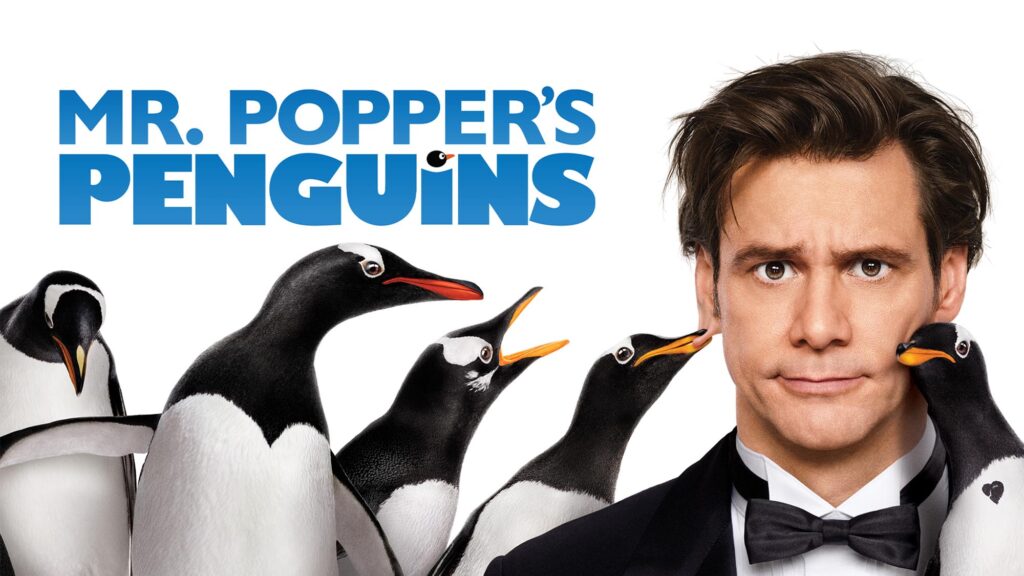
Mr. Popper’s Penguins
Mr. Popper’s Penguins is closely tied to New York City, and it uses recognisable Manhattan landmarks to give Popper’s world a distinctly upscale urban identity.